,,The rewriting spree has not left untouched RSS’s own history itself.
The biggest manifestation of this exercise is evident in the way we have before us a new look Dr Keshav Baliram Hedgewar (1888-1940) founder member of RSS and its first Supremo.
He is being called as ’‘born patriot’’, one amongst the ‘great revolutionaries who fought for India’s independence, ’’social reformer’ , ’maker of Modern India’ etc etc. disregarding the fact that all his life he focussed his attention to build Hindu Unity, to usher India into a Hindu Rashtra and never once gave a call to the organisation he founded with others – namely RSS – that it joins the anti colonial struggle. He did go to jail during the anti colonial struggle but not as a member of the RSS but as a member of Congress Party.
Many monographs, books .. – are also before us which are trying to emphasise this new image, obliterating many inconvenient aspects of his tumultous life or maintaining tactical silences over them. The latest in series is the way he is being projected as a leader of the “jungle satyagraha” at Pusad, Maharashtra which was organised as part of the Civil Disobedience Movement led by Congress. [10]
Kshama Sawant honoured in absentia by Canadian Radio station for standing up against caste-based oppression. Former Seattle City Councillor was presented with the annual Hands Against Racism award by Spice Radio at a well-attended event in Surrey on Sunday, March 30. Born and raised in India, Kshama Sawant was instrumental behind the historic anti-caste ordinance brought by the City of Seattle in 2023. Since then, she has been under attack from supporters of the right-wing Hindu nationalist Modi government in New Delhi. For doing that she had to pay a heavy price, as the Indian government denied her visa and an opportunity to go and see her ailing mother in Bengaluru. Sawant couldn’t make it to the event organized at Surrey City Hall, due to the current tensions between Canada and US caused by the trade war. Spice Radio broadcaster and her vocal supporter Gurpreet Singh accepted the award on her behalf. He earlier introduced her before her video message was played. In her greetings, Sawant revealed that because of the hostile political environment, including ongoing arrests of pro-Palestine activists in the US, especially those who are naturalized American citizens like her, she had been advised not to travel outside the country. However, she pulled no punches in criticising the Liberals and Democrats on either side of the border for their complacency and opportunism, enabling the extreme right wing forces to grow powerful. Her speech received a huge applause from the audience. Spice Radio CEO Shushma Datt started the campaign in 2015, on the birth anniversary of Martin Luther King Jr. It coincides with Holi, a Hindu festival of colours, and encourages participants to colour their hands and leave a palm print on a white sheet of paper with a message against racism. A practicing Hindu herself, she believes in diversity and inclusion and greeted everyone Happy Eid at the Sunday program. Every year, individuals are also shortlisted and awarded for their anti-racism work as part of this initiative. This year Sawant and Bob Rennie were honoured. Rennie is a famous art collector and a strong advocate against xenophobia and homophobia, besides gender discrimination. The very first recipient of the award, Senator Baltej Singh Dhillon, who served as the first turbaned Sikh Royal Canadian Police officer and faced racism from within the force, was also present and addressed the gathering. Other past recipients also spoke on the occasion, including Attorney General Niki Sharma, anti-racism educator Annie Ohana and prominent journalist Charlie Smith.
Indian federalism is on the verge of breakdown for multiple reasons. A crucial contributor is the collapse of the system of revenue sharing between the Centre and the States and the weaponization of vertical transfers as an instrument for political contestation.
The conflict over resources in India’s quasi-federal political structure is by no means new. Framers of the Constitution, who recognised that the division of taxation rights and spending responsibilities between the two principal tiers of government in India was asymmetrical, sought to partially resolve this problem by providing for a share for the States in a defined set of tax revenues garnered by the Centre, with the principles governing the share devolved and distributed to individual States recommended by successive Finance Commissions. But State governments have been increasingly disappointed with the actual experience with devolution, because of the concentration of resources mobilised in the hands of the Centre.
The issue, however, is not one of mere competition for resources between the Centre and the states. Having gained control over the Lok Sabha, the BJP has made it clear that it is keen on establishing an opposition-free political space. To realise this objective, it has not only sought to undermine the legitimacy of individual opposition politicians with charges of corruption or “anti-national” activity, but of opposition-ruled State governments by eroding their ability to adopt economic policy measures and initiatives that could win them political legitimacy. Expenditures on building State infrastructure or social expenditures on subsidised food provision, a modicum of social protection, and employment guarantee schemes, do contribute to winning a party in power in a State a degree of political legitimacy. The attack on the fiscal capacity of the State governments helps limit such expenditures, even while Central claims on expanding infrastructural investments and social sector spending are advanced, with an increase in ‘central’ schemes, especially those attributed to the patronage of the highest authority, the Prime Minister.
Speaker :
Prof C P Chandrasekhar
Prof C. P. Chandrasekhar is emeritus professor at the Centre for Economic Studies and Planning, Jawaharlal Nehru University (JNU), New Delhi. He has published widely in academic journals and is the coauthor of Crisis as Conquest: Learning from East Asia (2021, Orient Longman), When Governments Fail – A Pandemic and Its Aftermath (with Jayati Ghosh et al) , 2021 ; Interpreting the World to Change It – Essays for Prabhat Patnaik (with Jayati Ghosh), 2018 ; After Crisis : Adjustment, Recovery and Fragility in East Asia ( with Jayati Ghosh) 2009 ; The Market that Failed: Neo-Liberal Economic Reforms in India (2002, Leftword Books), and
He received his MA and Ph.D (economics) from Jawaharlal Nehru University, where he served as a professor from 1997 until his retirement. He is a member of the executive committee at International Development Economics Associates (IDEAs) and the World Economics Association, as well as a contributor to Frontline, Economic and Political Weekly, and Businessline.
Chandrasekhar received the Malcolm Adiseshaiah Award for 2009 for contributions to economics and development studies.
Yesterday, the summer rain struck Thiruvananthapuram city with the fury of thunder and lightning and wind. Those of us whose hearts are in that small protest-space in front of the State Secretariat open to the skies, where the police forbid even a temporary tarpaulin shelter, trembled as lightning tore through the skies and the skies poured, each drop a bucket. The striking workers continued to sit under the branches of old trees by the roadside. What if one of those ageing branches collapsed? What if lightning struck? The roads filled up with rainwater rapidly. The workers sat with their feet in the rushing rivulets of rainwater on the ground under the branches of great old trees, with the lightning swishing above.
Veena George, the Kerala Health Minister, and her supporters keep demanding incontrovertible proof for the claim that the Sikkim government is paying the ASHAs higher sums. In the spirit of extraordinary cruelty towards the poor and the powerless that has been characteristic of the present government in Kerala, the CPM minions online demand that the striking workers find the proof.
The ASHA workers’ strike in Kerala is entering its third week. We are appalled by the CPM-led government’s apathy and the disgusting ignorance of the CPM’s own history of trade unionism displayed by their spokespersons in the media. Maybe the forgetfulness of history is deliberate, because the CPM can no longer continue to nurture even minimally the ‘party of the poor’ image that it built in the middle decades of the twentieth century. While the ASHA workers were on strike in front of the State Secretariat and an ASHA Workers’ mass meet called by the striking association drew a very large number of such workers to the capital city, the government was busy holding an investors’ meet. Such a government cannot be expected to be attentive to the needs and rights of the workers, perhaps.
On 25 January 2025, major newspapers in Kerala carried an advertorial on their front pages, styled as an imagined news feature from the year 2050. While a corner warning noted it was not actual news but a creative feature tied to a seminar by a deemed to be university, the format closely mimicked a genuine front-page report. The headline announced the ban of currency notes and a complete shift to digital currency starting February 1st, complete with fabricated names for officials such as the Reserve Bank Governor and opposition leaders. Despite slightly altered typography, the resemblance to legitimate news was convincing enough that many readers overlooked the disclaimer and were deeply alarmed.
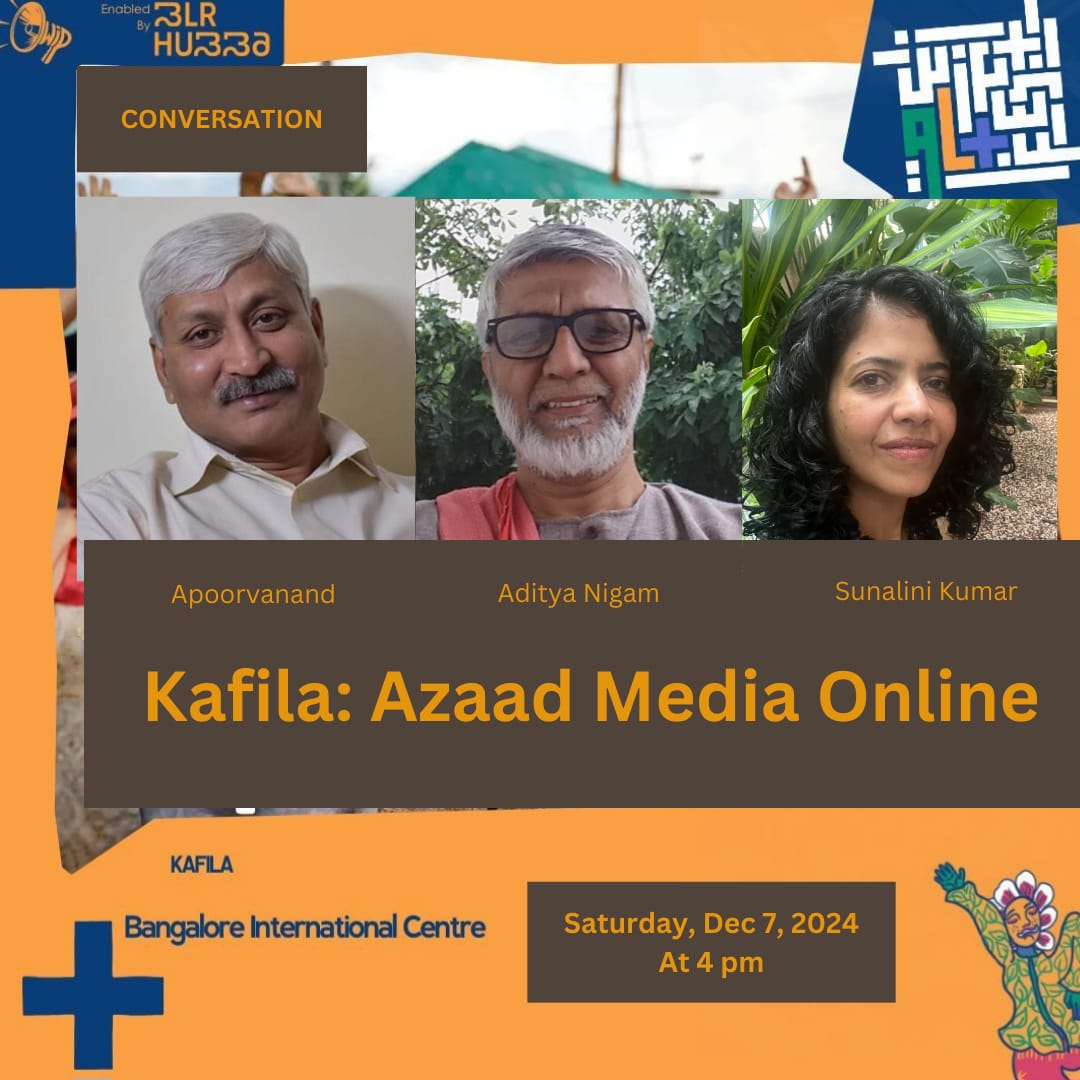
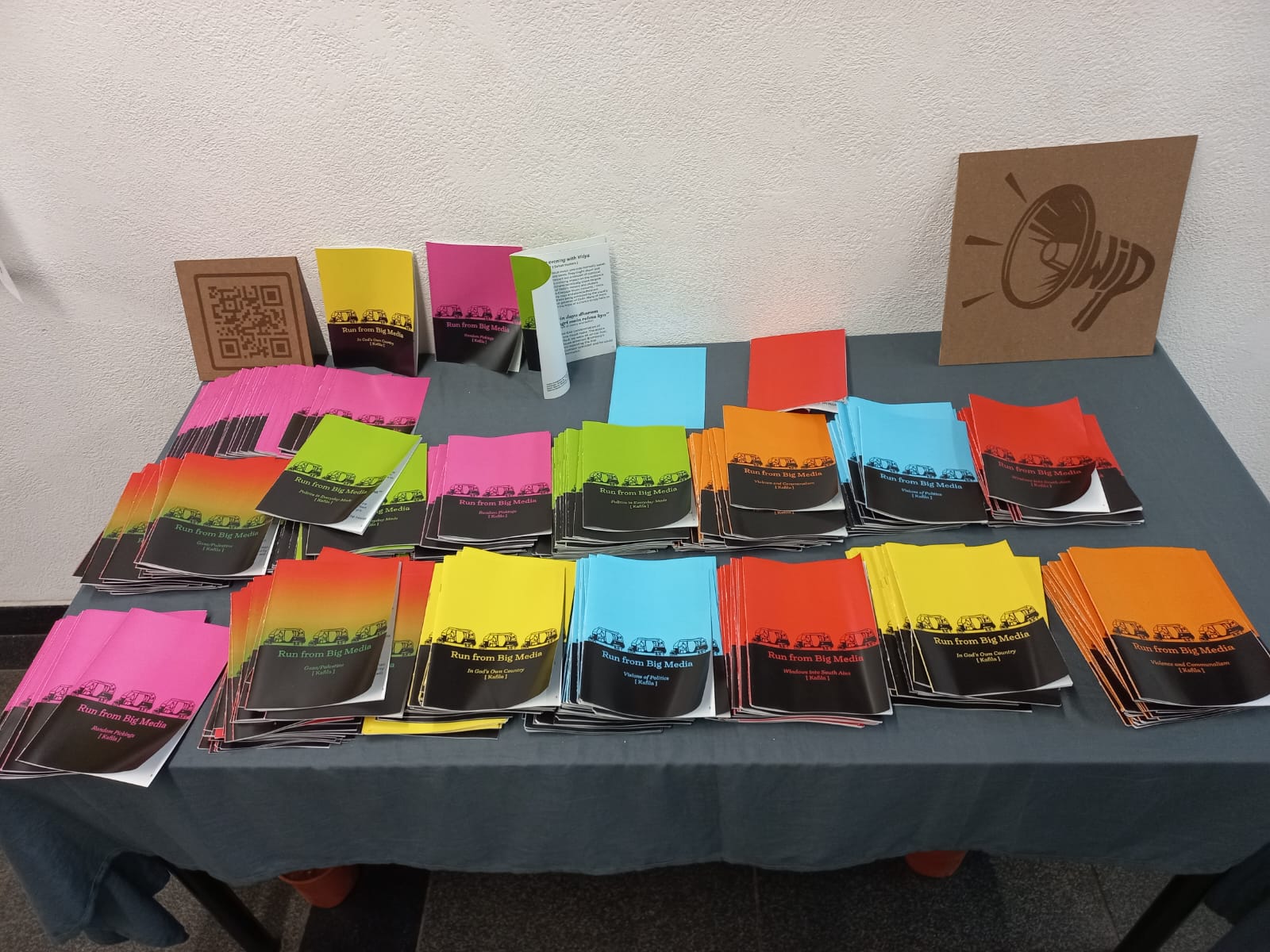
An expanded version of the presentation at the panel on Kafila held as part of the W.I.P alt.FEST held in Bangalore and Delhi in December 2024. While the first post in this series by Subhash Gatade is linked below in the text, the third by J. Devika can be read here.
Kafila was formally launched on 6 November 2006 at a session of the India Social Forum in Delhi, though its first post had gone up a couple of weeks earlier, on 19 October. However, there is a prehistory to the actual formal formation of Kafila which goes back to two earlier movements that had brought many of us together.
As rightly mentioned by Subhash Gatade in his reflections, the first of these was the movement against the relocation of polluting/ hazardous industries starting from late 1996. It was this movement that, perhaps for the first time in India brought the issue of workers’ rights into the discourse on urban pollution and environment. It took the discussions on urban planning, linking air and water pollution, zoning, transport policy and questions of workers’ occupational health, outside the charmed circles of urban planners. Initiated by the Indian Federation of Trade Unions, the formation of the Delhi Janwadi Adhikar Manch was the platform that had enabled this by bringing all of us together.
Following is a statement issued by 250 organizations and individuals, including the National Alliance of People’s Movements (NAPM) against arrests and intimidation of activists raising concerns regarding the ecological impact of so-called “developmental” projects. The statement was issued on 13 November 2024
Stop Arbitrary Detentions and Intimidation of Social & Environmental Activists in Jammu & Kashmir
Save Ecology & Uphold Democratic Rights in J&K and entire Himalayan Region
National Alliance of People’s Movements (NAPM), along with other people’s organizations and concerned citizens from across India strongly condemns the arbitrary detention of social and environmental activists in Jammu & Kashmir under the Public Safety Act (PSA). Those detained under the provisions of J&K Public Safety Act, 1978, include Mohammad Abdullah Gujjar (resident of Sigdi Bhata), Noor Din (resident of Kakerwagan), Ghulam Nabi Choppan (resident of Trungi – Dachhan), Mohammad Jaffer Sheikh (resident of Nattas, Dool) and Mohammad Ramzan (resident of Dangduroo – Dachhan), trade union leaders from Kishtwar district.
Professor of Economics at the University of Massachusetts Amherst
Time and Date:
Sunday, 17 th November 2024l, at 6 PM (IST)
Topic : ‘Democracy and the logic of capitalism: The recent Indian experience
Abstract :
Many analyses of the recent erosion of democracy in India have dwelt on political and social forces. I will examine the role of economic forces unleashed by a particular form of capitalist development, and how they may have contributed to this process in recent decades.
About the Speaker
Professor Jayati Ghosh, Professor of Economics at the University of Massachusetts Amherst, a member of the Club of Rome’s Transformational Economics Commission and Co-Chair of the Independent Commission for the Reform of International Corporate Taxation, Formerly a Professor with the Centre for Economic Studies and Planning, JNU, Delhi, has also worked as a Consultant with the Planning Commission of India. Recipient of many awards including UNDP Award for Excellence in Analysis 2005, she has authored- co edited around twenty books on Economics.
Here is a list of a few of her recent books :
-Women, Gender and Work (Volume 2): Social choices and inequalities, (volume coedited with Mark Lansky, Dominique Meda and Uma Rani, 2016, Geneva: International Labour Office.
-Interpreting the World to Change It: Essays for Prabhat Patnaik (volume co-edited with C. P. Chandrasekhar), New Delhi: Tulika books, 2017.
– Demonetisation Decoded (with Prabhat Patnaik and C. P. Chandrasekhar) New Delhi: Routledge Taylor and Francis India, 2017.
– Indian Banking: Current challenges and alternatives for the future, AIBOC, Chennai, 2018.
– Informal Women Workers in the Global South: Policies and Practices for the Formalisation of Women’s Employment in Developing Economies, (edited volume) Routledge, 2020
– The making of a catastrophe: The Covid-19 pandemic and the Indian economy, New Delhi: Aleph Book Publishing, Forthcoming 2021.
– Development: A collection of articles from the International Labour Review, ILO Centenary Volumes, Geneva: ILO, forthcoming 2021 (co-edited with Uma Rani)
[Maya John has been part of the Left Movement for the past two decades and this piece is in response to ongoing dialogues with Sri Lankan comrades.]
Anura Kumara Dissanayake, photo courtesy AP News
The recent presidential election has installed Anura Kumara Dissanayake (“AKD”) from the Janatha Vimukthi Peramuna (JVP)-led National People’s Power (NPP) alliance as the new president of Sri Lanka. This victory is seen as a result of rising popular hostility towards mainstream parties and rogue dynasts. Consequently, we find that AKD garnered an overwhelming share of the votes from those same electoral constituencies which had earlier voted in bulk for the corrupt Rajapaksas. Prior to this presidential election, the frustrated Sri Lankan masses, plagued by growing economic and political crises, generated the powerful people’s movement – the janatha aragalaya – that ushered in a huge legitimacy crisis for the ruling elites.
Truth, as they say, has an uncanny ability of bursting out into the open, unannounced. This seems to have happened with the controversial Agniveer Scheme – the introduction of contract based employment in the military for four years – which even cost the ruling dispensation a few seats in the recent parliamentary elections.
What Prafulla Ketkar, who has been editor of ‘Organiser’ for the last eleven years, underlined in an event merits close attention in this connection. To a pointed question where he was asked ‘[w]hether India should prepare civilians for situations similar to those faced by Israel’, he specifically mentioned that ‘[t]he Agniveer scheme was introduced for this purpose only. The scheme aims to train military-ready individuals who can be deployed during crises.’
It has been more than four days since Ketkar made this explosive statement, which obviously contradicts what the government wants us to believe. But there has been neither any denial of the statement from the highest level nor has he been reprimanded by top bosses of the Sangh Parivar for making such outrageous statements.
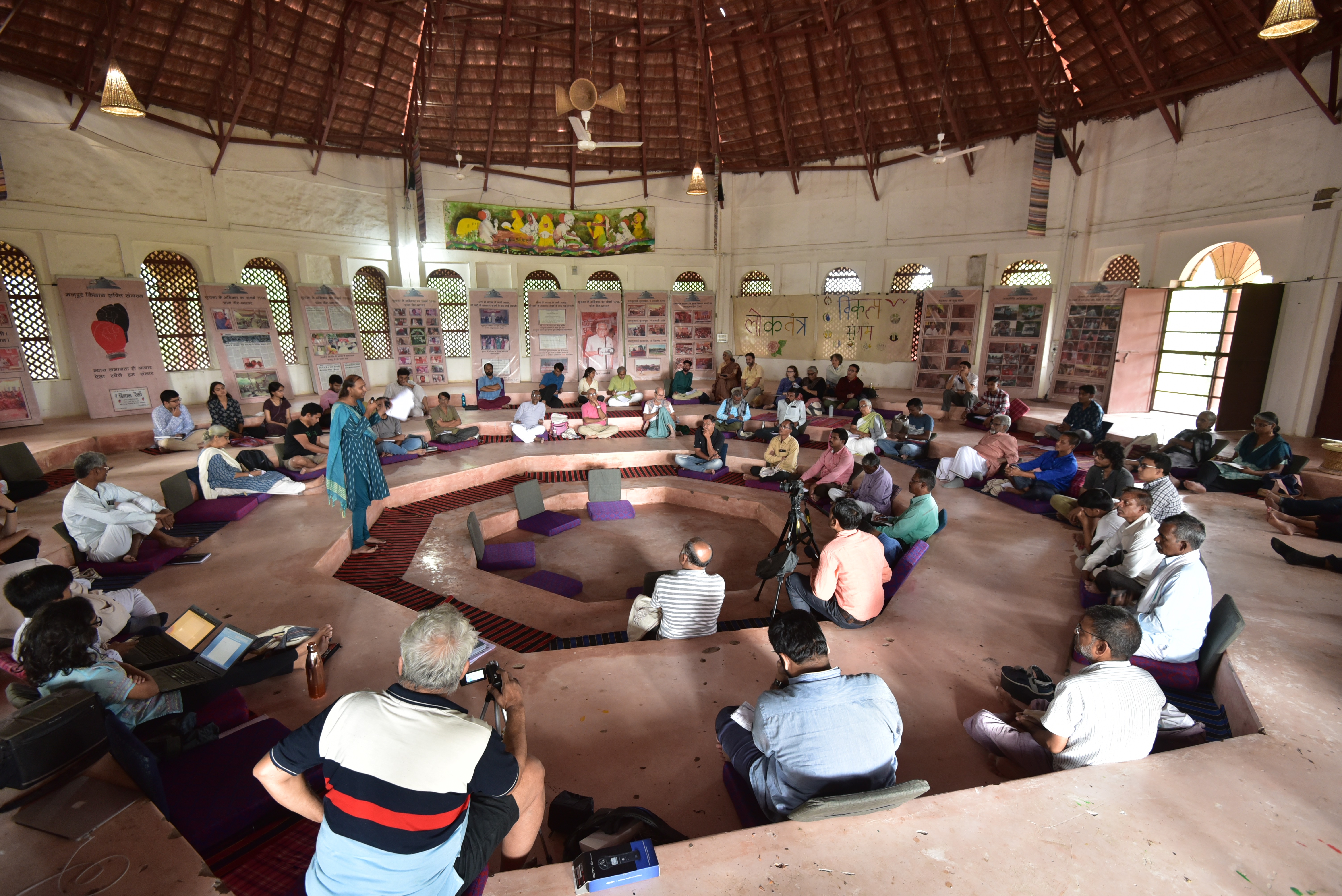
The multiple crises humanity confronts require fundamental shifts in how we relate to the Earth and to each other. This entails tackling the roots of these crises head-on, including the structures and relations of patriarchy, racism, colonialism, capitalism, statism, and anthropocentrism. This in turn needs to be done within the context of visions of the ideal society we want. This essay presents a process in India, Vikalp Sangam (Alternatives Confluences), that has attempted for a decade to document, visibilise, network, and create collaborations amongst movements and groups involved in alternative approaches for justice, equity, ecological sustainability. It describes the process and its various components, the challenges and opportunities of bringing very diverse groups from different cultural contexts together, the potential of a bottom-up and participatory visioning process, and the excitement of attempting to bridge conventional traditional-modern, practitioner-intellectual, urban-rural, and other divides.
Keywords: Democracy; Visioning; Alternatives; Environment; Civil society
Introduction: The Making of Vikalp Sangam
A decade is not a short span of time – and yet, it is too short. These are the contrasting thoughts I have as I contemplate a process that I have been part of since its initiation, as I and my colleagues enter into a phase of reviewing whether it is on course to meeting the objectives it began with. This is Vikalp Sangam, or Alternatives Confluence, a national platform established in India in 2014.
Democracy Vikalp Sangam, School for Democracy, Rajasthan, October 2019
Where are Indians, who like the conscience keepers of Israeli society or the legendary Rachel Corrie, are ready to swim against the tide?
‘Our Problem is Civil Obedience…’
These words of the legendary American historian, playwright, philosopher and socialist intellectual, Howard Zinn (1922-2010), are still repeated the world over whenever people living in a country have no qualms in gulping whatever the rulers do or say.
Not much is known about the brief history of this speech which was delivered in the Baltimore campus during the heyday of the anti-war movement in the US, (1971). That was the period when a mass movement had emerged opposing the US government’s participation in the Vietnam war, where Zinn was invited to address students in one of the universities. ……………..
Zinn left for Baltimore, where he delivered the said speech, which received a thunderous applause from students and teachers, and when he presented himself before the courts the next day, as expected, he was sent to jail for a few weeks.
Time and again, as the phenomenon of, what is popularly known as “bulldozer justice, raises its head in India, which is now called the ‘biggest country that regularly holds elections’, this poser by Zinn in his Baltimore speech sounds more and more appropriate.
The Establishment’s desperation is becoming clearer by the day. And by ‘Establishment’ here, I do not mean simply the ruling duo in power today but a constellation of forces, many of whom congregated at a mega-wedding event in Mumbai recently. The embryonic New Congress thankfully stayed out of it – though the Old Congress is pretty much part of the Establishment, as we will see below.
Popular Delhi chief minister, Arvind Kejriwal has finally got bail from the Supreme Court – both interim and regular – in the totally fictitious Enforcement Directorate (ED) case in which he has been framed. Yet he must remain in jail because on the eve of his release by a Delhi court and Additional Sessions Judge Nyay Bindu, the Central Bureau of Investigation (CBI) went and arrested him while he was still in jail!
Image courtesy The Economic Times
This arrest-within-arrest shows a desperation of the Establishment that has rarely ever been seen before. The desperation was even more evident in the fact that the High court judge, Justice Sudhir Kumar Jain went ahead to uphold the ED plea against the bail order by Judge Nyay Bindu, even before the order had been uploaded to their website. 157 lawyers wrote to the CJI alleging that the brother of the Judge, Anurag Jain is one of the counsels for the ED, which showed a clear conflict of interest. More importantly, referring to the urgent listing, hearing and stay of the trial court’s bail order by the high court, the lawyers’ letter said,
अपनी जनतांत्रिक छवि चमकाने के लिए ‘मदर आफ डेमोक्रेसी’ होने के दावों से शुरू हुई भारत सरकार की यात्रा फिलवक्त डेमोक्रेसी रेटिंग गढ़ने के मुक़ाम तक पहुंची है. अभी वह किन-किन मुकामों से गुजरेगी इसके बारे में भविष्यवाणी नहीं की जा सकती.
‘भारत- जिसने औपनिवेशिक हुकूमत से आज़ादी के बाद जनतांत्रिक संरचनाओं को अपनाया और हर नागरिक को संविधान के तहत बुनियादी अधिकार प्रदान किए- वहां जनतंत्र की परंपरा कमजोर की जा रही है….’
दुनिया के अग्रणी विद्वानों- जिनमें से कई भारतीय मूल के हैं – द्वारा पिछले दिनों जारी बयान में प्रगट सरोकार काबिलेगौर हैं. बयान में साफ कहा गया है कि किस तरह यहां ‘मूलभूत आजादियों को भी कुचला जा रहा है या कमजोर किया जा रहा है. ’
गौरतलब है कि साझे बयान का फोकस न्यूज़क्लिक न्यूज़ पोर्टल पर हुए संगठित हमले, भीमा कोरेगांव मामले में पांच साल से अधिक समय से हुई गिरफ्तारियों और उत्तर पूर्व दिल्ली में हुए दंगों के बाद इसी तरह जेल में डाले गए लेखकों, कार्यकर्ताओं पर रहा हैे, लंबे समय तक जेल में रखने के बावजूद चार्जशीट तक दाखिल न होने पर है, लेकिन वह यहां की बद से बदतर होती स्थिति को ही रेखांकित कर रहा है.
तय बात है कि एक ऐसे समय में जबकि चुनाव आसन्न हैं और मोदी सरकार द्वारा देश के अंदर उठाए जा रहे दमनात्मक कदमों को लेकर मामला सरगर्म है, यहां तक कि चुनावों का ऐलान होने के बाद विपक्ष के नेताओं की गिरफ्तारी, प्रमुख विपक्षी पार्टी कांग्रेस के बैंक खातों को बहाना बनाकर सील देने के कदम ने देश-दुनिया में चिंता प्रगट की जा रही है, उस समय इस बयान ने निश्चित ही मोदी की अगुवाईवाली हुकूमत को कत्तई खुश नहीं किया होगा.
आधिकारिक तौर पर इस बयान को लेकर मुल्क के मौजूदा हुक्मरानों की तरफ से कोई प्रतिक्रिया नहीं आई है और न ही उनके हिमायतियों ने इसके बारे में कुछ कहा है. उसकी पूरी कोशिश यही होगी कि हुकूमत के प्रति आलोचनात्मक रुख रखने वाले अन्य बयानों, रिपोर्ट की तरह इस बयान को भी भुला दिया जाए या दफना दिया जाए. ( Read the full article here : https://thewirehindi.com/271640/why-does-the-mother-of-democracy-need-its-own-democracy-index/)
It is an interesting coincidence that ‘Best Friends’ Netanyahu and Modi have been put on the defensive by the judiciary, which they so tried to control.
..[t]here is another way to break a democracy. It is less dramatic but equally destructive. Democracies may die at the hands not of generals but of elected leaders—presidents or prime ministers who subvert the very process that brought them to power. Some of these leaders dismantle democracy quickly, as Hitler did in the wake of the 1933 Reichstag fire in Germany. More often, though, democracies erode slowly, in barely visible steps.
How Democracies Die – Steven Levitsky and Daniel Ziblatt
The greatest danger the tyrant can inflict is to limit us to his range of options, not only “for how to live, but also for how to exercise our options.”
– Hisham Matar
(American born British-Libyan writer)
Every hurried and ill-thought attempt to browbeat the judiciary on the basis of legislative majority hides the possibility of a backfire.
Israel’s Prime Minister Benjamin Netanyahu, popularly known as ‘Bibi’, is learning this lesson the hard way, in the midst of a genocidal war he has unleashed against the Palestinians — a war which has already killed more than 30,000 people — mostly women and children.
Gone are the days when he was riding the popularity charts. Today, after the attacks on Gaza, there is increasing discontent among the Israeli people themselves against this ‘unending war’ which has manifested itself in the demand of Bibi’s quitting to ‘Save Israel’. Massive protest demonstrations have been held in different parts of Israel.
The recent judgements of the Supreme Court of Israel have further added to Netanyahu’s discomfort. ( Please read the complete article here)
People for Himalaya campaign is an initiative of progressive groups, civil society organisations and activists from the region. The campaign is not affiliated with any political party.For the list of supporting organizations, please scroll to the bottom of the post.
[Last year we witnessed the hills of Himachal Pradesh, Uttarakhand and Sikkim in virtual revolt against the mindless development that they have been subjected to. It was against the backdrop of these frightening developments that discussions began among groups across the Himalayan states in February this year, leading to the adoption of the Charter for the Himalayas. We also just saw environment activist from Ladakh, Sonam Wangchuk sit on a 21-day hunger strike in freezing minus 10 degrees Centigrade, demanding that the Sixth Schedule of the Constitution be implemented in Ladakh and it be protected from being handed over to corporate interests for so-called Development projects. Wangchuk’s hunger strike was withdrawn but the movement continues with women continuing their sit-in and other sections of the population, especially youth, preparing to join in soon. The movement is not about one person’s hunger strike but to prevent Ladakh meeting the same fate as Himachal Pradesh, Uttarakhand and Sikkim. – AN]
STRENGTHEN REGULATION, MONITORING AND PLANNING OF LAND USE, LAND-USE CHANGE AND FORESTRY (LULUCF)
A complete moratorium on all mega infrastructure projects like railway, dams, hydro projects and four lane highways, tunnelling, transmission lines – and conduct a 360-degree multi- disciplinary review of the impacts of existing projects
Democratic decision making through referendums and public consultation on large infrastructure by strengthening the Environment Impact Assessment Notification 1994 (Scrapping the EIA 2020 Amendments & FCA 2023 Amendments); Free Prior informed consent of Gram Sabhas to be mandatory for all developmental projects
Terrain Specific Disaster and Climate Risk Studies and land susceptibility assessments to be mandatory for land use change for urbanisation, commercial development and public infrastructure construction
Just Implementation of 2013 Right to Fair Compensation and Rehabilitation Act
To ensure participation of citizens, civic bodies and Gram Sabhas in monitoring pollution and land use change works like stone crusher, sand-gravel mining, mineral mining, debris dumping, construction of local roads and every commercial construction work.
2. GRANTING COMMUNITIES CONSTITUTIONAL, LAND AND FOREST GOVERNANCE RIGHTS
Strengthening of state laws and regulations that protect the private and community resource rights of nature dependent communities – example Van Panchayat Rules in Uttarakhand
Complete the Unfinished land reforms and land regularisation agendas to provide secure land tenure to landless and displaced communities to practice land based livelihoods – example Nautor rules in Himachal Pradesh
Just implementation of constitutional provisions and laws that support the decentralised, autonomous and democratic governance and decision making – example the Scheduled Tribes and Other Traditional Forest Dwellers Act 2006 and other constitutional provisions
Protection of pastoral communities especially minority communities like the Van Gujjars and Bakarwals in migratory routes
Strengthen floral and faunal biodiversity through Community Forest Resource Rights governance framework under FRA 2006 – convert pine monocultures into broad leaf forests to address fodder scarcity, forest fires and soil erosion. Five ‘f’ species should drive plantations i.e. fruit, fodder, fertilizer, fuel, fiber and medicinal plants. Weed eradication programs for pasture development.
3. TRANSPARENCY, KNOWLEDGE BUILDING, SHARING AND EXCHANGE
Anantkumar Hegde, BJP MP from Uttari Karnataka, is again in the news.
Close on the heels of his controversial statement about demolition of a mosque and his invoking of Hindu community who would not rest ‘until more mosques are reclaimed ‘ (1) he has delivered another explosive statement.
This time the whole edifice of Constitution is under his attack, which according to him has ‘distortions introduced by the Congress to suppress Hindu society’. (2) ..
..Critics have rightly said how this suggestion exhibits real intentions of the saffron regime which wants to usher us into Hindu Rashtra, end reservation for scheduled and backward communities, reinforce caste system and also replace Constitution drafted by Dr Ambedkar with a worldview inspired by Manusmriti. The main opposition party Congress has expressed fear that all such statements, steps just go to vindicate how a ‘cloud of dictatorship’ now hovers over India. (3)
It is a different matter that neither BJP top guns nor PM Modi – who had famously declared way back in 2014 that for him ‘Constitution is the most sacred book’ deemed it important to condemn Hegde’s statements or ordered him to seek apology for his claim.
One learns that it has merely distanced itself from Hegde’s controversial statement to convey an impression that what he said was his ‘Mann ki Baat’ and not BJP’s Dil ki Baat’ .
A Joint Statement and Appeal issued by people’s organisations, intellectuals and concerned citizens from Uttarakhand about the violent incidents on 8 th February
( This is an attempt at English translation of the original statement issued by writers, journalists, social activists and people’s organisations. For original statement , please see here )
Developments on 8th February are serious, condemnable as well as tragic. We would like to express our deep concern for the dead as well as the injured and demand proper compensation for them
We appeal to people in Uttarakhand and rest of India to maintain peace and harmony . We condemn all sorts of violence and want that an impartial legal action be taken about the incident. We are of the opinion that every type of resistance, opposition should always remain in the bounds of law and constitution.
We also appeal to the administration that no action should be contrary to Constitutional principles and values.
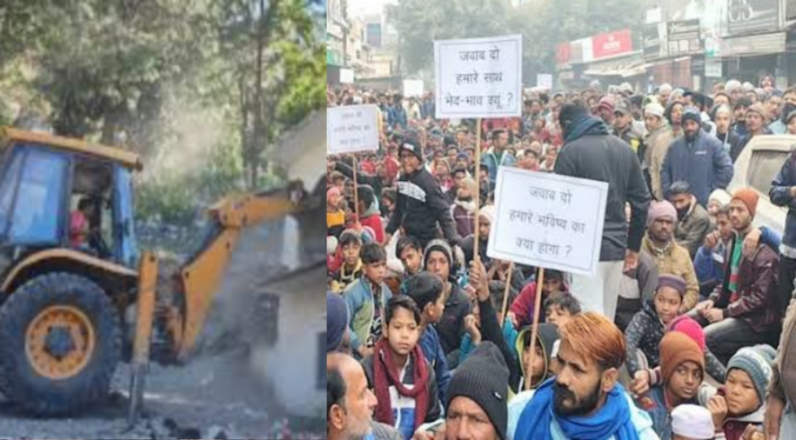
Negligence, hurry and biased approach of the administration can be clearly seen in these developments. Even the language of the administration sounds sectarian. When the allegedly illegally built mosque and madarsa were in the control of the administration itself and the next hearing in the case was scheduled to be heard on 14 th February, what was the necessity to go for demolition in such a hurried manner. It is time that the District Magistrate and Senior Superintendent of Police are immediately transferred and a judicial enquiry be done about the whole incident.
We need to bear in mind that since 2017 the Uttarakhand government has desisted from taking an impartial legal action against vigilante violence and hate speeches. Right from citizens groups, people organisastions, opposition parties, leading intellectuals, advocates of Supreme Court to ex generals of the army from the state have been raising their voices in this connection. When the government does not appear impartial it emboldens anti-social elements. In this background voices have been raised to underline how use of hate, communal and violent incidents for political benefits ultimately engenders further challenges to social harmony and rule of law. It is high time that steps on war footing be taken to strictly implement decisions of the Supreme Court in 2018 and later, regarding hate speeches and violence.
We have always maintained that the “anti encroachment drive” is plagued by unnecessary hurry and a biased approach. Hundreds of such incidents have occurred since last one year . We are of the opinion that without resettlement nobody should be made homeless and every such action be undertaken in proper legal manner and with enough sensitivity. As far as Uttarakhand is concerned today lakhs of people are living on 4 lakh hectare Nazul land. In Haldwani itself a large population has settled on Nazul land which comprises people belonging to all religions. It has been a long time demand that people living on nazul land be given the ownership of the land. The state government has even sent proposal to the central government in this connection. Despite all this it is beyond comprehension to see that government seems to be in an unnecessary hurry regarding the issue of encroachment. Since quite some time the state government is engaged in these efforts under the name of anti encroachment drive. We feel that the government is pushing its sectarian agenda under the name of anti encroachment drive. This should be immediately stopped.
Say No To Hate, We need Jobs
Rajiv Lochan Sah, Uttarakhand Lok Vahini; Naresh Nautiyal, General Secretary, Uttarakhand Parivartan Party ; Tarun Joshi, Van Panchayat Sangharsh Morcha; Bhuvan Pathak and Shankar Dutt, Sadbhavna Samiti Uttarakhand; Shankar Gopal and Vinod Badoni, Chetna Aandolan; Islam Hussain, Sarvoday Mandal ; Lalit Upreti and Munish Kumar, Samajwadi Lok Manch ; Trilochan Bhatt, Independent Journalist; Heera Jangpani, Mahila Kisan Adhikar Manch ; Mukul, Mazdoor Sahyog Kendra
2024 की शुरूआत में भारत एक प्रचंड बदलाव की दहलीज पर खड़ा है। सभी जनतंत्र प्रेमी, इन्साफ पसंद और अमन के चाहने वालों के सामने यही बड़ा सवाल मुंह बाए खड़ा है कि 2024 के संसदीय चुनावों में- जो मई माह के अंत तक संपन्न होगा तथा नयी सरकार बन जाएगी (अगर उन्हें पहले नहीं कराया गया तो)- का नतीजा क्या होगा?
क्या वह सत्ता के विभिन्न इदारों पर भाजपा की जकड़ को ढीला कर देगा, क्या वह जनतंत्र की विभिन्न संस्थाओं को निष्प्रभावी करने की या उनका हथियारीकरण करने की सोची समझी रणनीति को बाधित कर देगा, क्या वह धर्म के नाम पर उन्मादी तक हो चुकी जनता में इस एहसास को फिर जगा देगा कि 21वीं सदी में धर्म और राजनीति का घोल किस तरह खतरनाक है या वह भारतीय जनतंत्र की अधिकाधिक ढलान की तरफ जारी यात्रा को और त्वरान्वित कर देगा, भारत के चुनावी अधिनायकतंत्र ( electoral autocracy) की तरफ बढ़ने की उसकी यात्रा आगे ही चलती रहेगी