
These photographs were taken at Delhi’s Jantar Mantar on Sunday, 22 April, by MUKUL DUBE. This protest was organised by the Aseem Trivedi led Save Your Voice campaign against India’s IT Rules 2011 that, as has been explained earlier on this blog, are a set of procedures that are already causing internet censorship in India bypassing the right to legal remedy and natural justice. Trivedi’s website, http://www.cartoonsagainstcorruption.com, was taken down by its domain registrar and he was not even informed in advance, thanks to these rules. The Rajya Sabha, upper house of the Indian Parliament, will debate these rules any time between 24 April and 9 May. You can urge all Rajya Sabha MPs to vote for the motion in a petition here or write directly to Rajya Sabha MPs from your state, in just a few clicks, here.
Category Archives: Centre watch
Press Release Against IT 2011 Rules
PRESS RELEASE
The notification of the Information Technology (Intermediaries Guidelines) Rules 2011 in April 2011 has resulted in the creation of a mechanism whereby intermediaries (such as Google, Facebook, Yahoo, etc) receive protection from legal liability in return for trading away the freedom of expression and privacy of users.
The Rules demand that intermediaries, on receiving a complaint that any content posted online is considered grossly harmful, harassing, blasphemous, defamatory, obscene, pornographic, paedophilic, libelous, invasive of another’s privacy, hateful, or racially, ethnically objectionable, disparaging, relating or encouraging money laundering or gambling, or otherwise unlawful in any manner, have to disable the content within 36 hours of receipt of complaint. The rules also require the intermediaries to provide the Government agencies information of users without any safeguards.
Continue reading Press Release Against IT 2011 Rules
What’s up with India’s IT Rules?
*
The IT Rules of 2011 will come up for discussion in the Rajya Sabha very soon under an annulment motion.
Urge all Rajya Sabha MPs to vote for the motion in a petition here or write directly to Rajya Sabha MPs from your state, in just a few clicks, here.
Here’s an FAQ on the IT Rules by SFLC.in and here’s an analysis of the rules by PRS Legislative Research.
Is India’s HRD Ministry Barking Up The Wrong Tree?
Guest post by RAM KRISHNASWAMY
HRD Minister Kapil Sibal seems to be getting a lot of flak from so many quarters on Jan Lok Pal Bill, HRD Computer Tablet Aakash and now his backing of ISEET, one common national entrance exam for science and engineering. Now as HRD Minister he has inadvertently attracted the wrath of over 1,75,000 IIT alumni globally; as also faculty and students of all IITs who are opposed to his idea of killing IIT-JEE and replacing it with a common national exam called ISEET.
Yes, Kapil Sibal is the HRD Minister but he is a lawyer and a politician and is not a technologis. It appears that he is being advised by technologists who are misleading him and telling him what he wants to hear, as opposed to giving him solid advice in the interest of the nation.
Let us just look at IITs and JEE alone.
Let us see what truly is wrong with IITs & JEE and what recommendations the HRD Minister has received and from whom.
If we were to simplify the problem with JEE as it is administered in 2012 they can be listed as follows (not a comprehensive list):
Continue reading Is India’s HRD Ministry Barking Up The Wrong Tree?
Rajya Sabha to consider repealing Kapil Sibal’s IT Rules
When the Parliament’s budget session re-opens on April 24, the Rajya Sabha will vote on an annulment motion against the IT Rules promulgated in April 2011 that provide for “intermediaries” to remove the online content they are asked to by anyone. The motion has been moved by P Rajeeve, Rajya Sabha member from the Communist Party of India-Marxist.
Speaking on the phone from Thrissur, Rajeeve said, “The IT Rules go against the Fundamental Rights of the Constitution and against the principles of natural justice which are the foundation of our criminal justice system. The rules ask intermediaries to remove content without giving the content owner an opportunity to defend it. They will cause private censorship.”
The Left parties have decided to back the motion and efforts are on to mobilise members of Parliament across party lines. If the motion is accepted by the Rajya Sabha, it will be sent to the Lok Sabha, probably in the monsoon session. Continue reading Rajya Sabha to consider repealing Kapil Sibal’s IT Rules
Updates from Koodankulam
Via NITYANAND JAYARAMAN
Koodankulam: Curb on Free Speech
Video Interviews with eminent legal scholar Dr. Usha Ramanathan and Adv. R. Vaigai, a senior lawyer from the Madras High Court.
Since March 19, 2012, when Tamil Nadu Chief Minister Jayalalithaa announced that work on the controversial Koodankulam nuclear plant could be resumed, and even before that actually, the protesting villagers have been at the receiving end of a vicious state led campaign to paint their non-violent struggle as a violent one, and to crush their campaign into silence by using harsh sections of the Indian Penal Code. More than 7000 cases of “sedition” and “waging war against the Government of India” have been filed just in the Koodankulam police station just between September and December 2011. These are part of 107 cases filed against 55,795 people during the same period. That is probably more than in any other police station in India. Certain sections of the media too have played the role of a willing partner in propagating the State’s propaganda. In pursuing this counter-campaign against its own people, the State Government has placed itself above the law of the land and pursued an openly anti-democratic agenda.
See interviews in two parts at at
PRESS RELEASE
Cases against K-protestors a parody of law: Fact Finding Team
18 April, 2012. CHENNAI – A fact-finding team headed by senior journalist Sam Rajappa confirmed that the Government had indeed restricted movement of essential goods and people in the days following the Chief Minister’s March 19th declaration announcing her support to the nuclear plant. The report, which was released at a press conference in Chennai, noted that the spirit of opposition to the nuclear power plant was very high, and warned that arresting the leaders could lead to a serious law and order problem in the region.
A turning point in Nepal
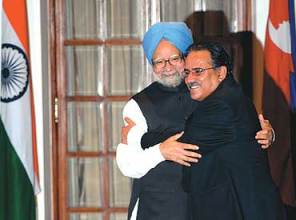
Prashant Jha interviews the Nepali Maoist leader Prachanda:
All of us reviewed the situation. I presented a document in my party last April stating that the 12-point agreement must be the basis, and we must conclude the peace and the constitution process. India then changed the way it viewed Maoists, and realised it must help the process succeed. It was a realisation that we must revert to the environment of trust that existed during the 12-point pact.
Would it be right to say that Nepal’s peace process and the constitution would not have been possible without Indian support?
Definitely. Saying that the 12-point understanding was signed in Delhi means that there was India’s active support — otherwise it was not possible. CA elections would not have been possible. There could have been problems with the declaration of a republic. Now also, to take peace and the constitution to a logical conclusion, without Indian support, it will be very complex and difficult. [Full interview]
Kanak Mani Dixit critiques such a conclusion of the peace process: Continue reading A turning point in Nepal
Why does Ratan Tata have a diplomatic passport?
Update: Tata Sons has clarified that Mr Ratan Tata does not hold a diplomatic passport. See comments section.
*
Is he an Indian diplomat?
“After all, you have given Ratan Tata a diplomatic passport. He always travels with the red passport,” the American continued.
[…]
The American told him that he had once travelled first class with the industrialist, he had seen Tata’s diplomatic passport and when they both alighted at New York, Tata went to the special immigration enclosure for diplomatic passport-holders .
When S.M. Krishna became external affairs minister in May 2009, one of his earliest discretionary decisions was to issue a diplomatic passport to Tata, recognising his emergence as a global investor and industrialist who has to travel extensively worldwide, some of those trips on behalf of the government or representing his country. [KP Nayar]
And that is not the only shocking thing there. There’s also the revelation that the Maharashtra government allowed an American government group to fly out without security check!
The Indian state is India’s biggest embarrassment.
क्या खलील चिश्ती अपने जीवन में पाकिस्तान वापिस जा पाएंगे?: आशीष महर्षि
आशीष महर्षि

बीस साल बाद भले ही डॉक्टर खलील चिश्ती खुली हवा में सांस ले रहे हों लेकिन उन्हें अभी भी सरकार की दया की दरकार है। उम्र के ८क् बरस गुजार चुके डॉ. खलील अब अपने वतन लौटना चाहते हैं। खलील साहब की जमानत भले ही हो गई हो लेकिन उन्हें और उनके परिवार को इंतजार है संपूर्ण रिहाई का। Continue reading क्या खलील चिश्ती अपने जीवन में पाकिस्तान वापिस जा पाएंगे?: आशीष महर्षि
After extracting US apology over Shahrukh Khan, the Indian Government owes several apologies too: JTSA
This release comes from the JAMIA TEACHERS’ SOLIDARITY ASSOCIATION
15th April 2012
After extracting US apology over Shahrukh Khan, the Indian Government owes several apologies too
The Indian government has rejected the ‘mechanical apology’ being offered by the US for detaining the super star Shahrukh Khan at the airport for 90 minutes too long. The US Deputy Chief of Mission has been summoned, and institutional mechanisms to ensure that there is no repeat of such an incident.
Now, may we ask the hyper active and sensitive Indian government to tender apologies—and genuine apology please, not a mechanical one—for detaining (illegally), incarcerating, torturing—in short, destroying and tearing apart the lives of hundreds of its own citizens in supposedly fighting terror.
- The government could do well by starting with apologizing to Md. Amir Khan, who has spent half his life in prisons before 17 of the 19 blasts cases in which he was accused, fell apart because there was simply no evidence against him. Could someone please say sorry to him: for a lost childhood, for his grief-crazed mother’s paralysis, for his heartbroken father’s early death, for his broken, crumbling home. Continue reading After extracting US apology over Shahrukh Khan, the Indian Government owes several apologies too: JTSA
India must reciprocate Pakistan by sending back Dr. Chishty and Pakistani fishermen
This is a statement put out by some of us; names of signatories is given at the end
We, the undersigned, welcome the decision of Pakistan government to release 26 Indian fishermen on humanitarian grounds. They were in Pakistani prison for more than two years for allegedly violating territorial border. The Pakistani gesture came in the background of a meeting, which took place in New Delhi, between the Indian Prime Minister Manmohan Singh & the Pakistani President Asif Ali Zardari on last Sunday. The poor Indian and Pakistani fishermen find it extremely difficult to recognize other country’s territorial border in the mid-sea.
We appeal to the Government of India to reciprocate Pakistani gesture by sending Dr. Khaleel Chishty and Pakistani fishermen back home. This will be a major confidence building measure. It will help in creating a conducive atmosphere in taking forward peace process. Continue reading India must reciprocate Pakistan by sending back Dr. Chishty and Pakistani fishermen
Support the annulment of IT Rules 2011, protect internet freedom in India
Given below is the text of a petition put out by SFLC.in. You can sign it here. Do urge others to sign it too. Please also consider writing directly to your or any or all Members of Parliament urging them to annul IT Rules 2011. You can read SFLC.in’s very brief primer on the IT Rules here. The web address www.IT2011.in also redirects you to the petition page.

Dear Member of Parliament,
The Constitution of India praovides the citizens of this country the fundamental right to freedom of speech and expression subject to reasonable restrictions as laid down in the Constitution itself. Now, with the spread of the Internet and the availability of tools like blogs and social networks we are able to enjoy this freedom to the fullest and have a true participatory democracy.
You, as legislators recognised the importance of intermediaries like Google, Facebook, Twitter and Internet Service Providers for e-commerce as well as for free expression, helping us to express ourselves and provided them protection from any legal liability that could arise out of content generated by users. Such a protection provided in the Information Technology Act, 2000 was important for these intermediaries to operate freely without threats of frivolous legal action. Continue reading Support the annulment of IT Rules 2011, protect internet freedom in India
Eviction of Slum Dwellers and Repression of Anti-Eviction Demonstrators in West Bengal
[We are publishing below the following report based on materials received courtesy Sanhati, whose members were also arrested in the course of the struggle]
“If Didi could rush to the scene for one Tapashi Mallik, then she could surely hear the voices of 800 poor people and come here to see us” –Residents of Nonadanga slum in Kolkata
It is the same story once again. Cleaning up and beautification of cities in the clamour for urban space for consumption and the luxury of the rich. And as we have seen, it makes little difference whether the government/s are Leftist or Rightist, whether they claim to represent the oppressed poor or not. Thus, on 30th March, 2012 the TMC government forcefully evicted around 300 poor families from the Nonadanga slum area in South 24-Parganas, in the name of ‘development’ and ‘beautification’ of Kolkata. Their shanties were razed to ground by the Kolkata Metropolitan Development Authority. The homeless slum-dwellers have been staying in an open field and are facing constant police harassment. Despite these harsh conditions, they have refused to depart and are presently on hunger strike. Their demand has to date failed to draw any favourable attention from the government. This neglect comes on the heels of the Planning Commission agreeing to annual Bengal plan around 16 per cent more than last year’s.
Review: ‘Behind the Beautiful Forevers’ by Katherine Boo
Guest post by MITU SENGUPTA
In a remarkable book about slumdwellers in Mumbai, Katherine Boo brings to light an India of “profound and juxtaposed inequality” – a country where more than a decade of steady economic growth has delivered shamefully little to the poorest and most vulnerable. But though indeed a thoroughgoing and perceptive indictment of post-liberalization India, the book fits into a troubling narrative about the roots of India’s poverty and squandered economic potential.
This is a beautifully written book. Through tight but supple prose, Boo offers an unsettling account of life in Annawadi, a slum near Mumbai’s international airport. In Boo’s words, this “single, unexceptional slum” sits beside a “sewage lake” so polluted that pigs and dogs resting in its shallows have “bellies stained in blue.” It is hidden by a wall that sports an advertisement for elegant floor tiles (“Beautiful Forevers” – and hence the title). There are heartrending accounts of rat-filled garbage sheds, impoverished migrants forced to eat rats, a girl covered by worm-filled boils (from rat bites), and a “vibrant teenager,” who kills herself (by drinking rat poison) when she can no longer bear what life has to offer.
Continue reading Review: ‘Behind the Beautiful Forevers’ by Katherine Boo
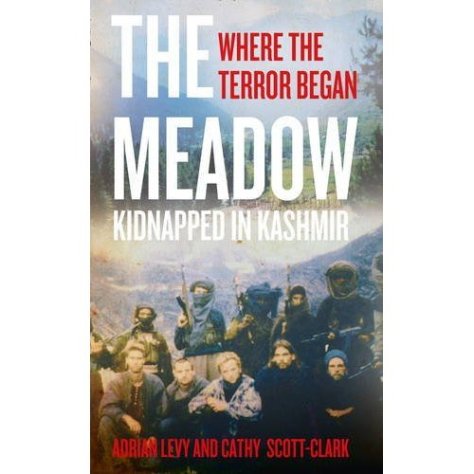
Who killed four foreign tourists in Kashmir in 1995?
Given below is the text of a petition submitted to the Jammu & Kashmir State Human Rights Commission by the INTERNATIONAL PEOPLE’S TRIBUNAL ON HUMAN RIGHTS AND JUSTICE IN INDIAN-ADMINISTERED KASHMIR (IPTK) together with the ASSOCIATION OF PARENTS OF DISAPPEARED PERSONS. A Division Bench of the SHRC will hear the case on 17 April
To,
Mr. Tariq Ahmad Banday,
Secretary,
Jammu and Kashmir State Human Rights Commission,
Srinagar
Date: 6 April 2012
Dear Mr. Banday,
The International People’s Tribunal on Human Rights and Justice in Indian-administered Kashmir [IPTK] (a brief on the Tribunal’s premise and objectives may be found here) and the Association of Parents of Disappeared Persons [APDP], present before you the following submission:
- In July 1995, during a trekking expedition, six persons were reportedly kidnapped by a group that referred to itself as “Al-Faran” [a front of the Harkat-ul-Ansar]. The six persons kidnapped were: John Childs [Simsbury, Connecticut, USA], Dirk Hasert [Bad Langensalza, Germany], Don Hutchings [Spokane, Washington State, USA], Keith Mangan [Teesside, Middlesbrough, England], Hans Christian Ostrø [Oslo, Norway], and Paul Wells [Blackburn, Lancashire, England]. Continue reading Who killed four foreign tourists in Kashmir in 1995?
Who are the real stakeholders of Indo-Pak peace?: Ayesha Siddiqa
This guest post by AYESHA SIDDIQA is the text of a speech delivered by her at a recent civil society review of the India-Pakistan peace process, organised by the Centre for Policy Analysis in Delhi.
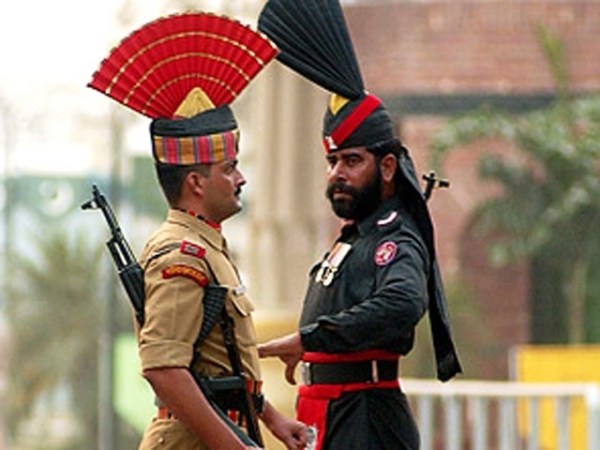
This time it seems better then last time! I suppose this is what we said the last time as well. India–Pakistan relations have a cycle of ups and down: a crest followed by a trough and then a crest again. Although there is increased frustration on both sides for not being able to solve the ‘relationship’ mystery, the leadership and people in general remain eager to have peace rather than war. However, we also remain elusive regarding our threshold of peace, or what would be the cut-off point in settling for peace with each other. This cyclic peace of war and peace has remained primarily due to the peace process being elitist and confined to the strategic/security community. Therefore, I would like to argue three points: Continue reading Who are the real stakeholders of Indo-Pak peace?: Ayesha Siddiqa
The Many Uses of a U.P Election
I live in Noida, which is the child of an extra-legal union between Delhi and Uttar Pradesh. Noida is not-quite Delhi, not-quite U.P, not quite itself on most days. Living in a cusp has several advantages, however, the main one being that one can look either way, up at Delhi and right down over U.P’s scruffy head. I found myself doing both in the recently-concluded U.P election. Curiously it seemed, for Delhi people, U.P’s 2012 elections were flush with new meaning. For decades the favourite whipping boy of Delhi, U.P had overnight become its favourite gap-toothed angel. For Pratap Bhanu Mehta of the Delhi-based Centre for Policy Research, the U.P election was a historic battle between empowerment and patronage, the future and the past, performance and rhetoric, sincerity and cynicism, and (this is my favourite) ‘rootedness over disembodied charm’. Mehta believes that while voters ‘carefully assessed’ candidates through the ‘prism of local circumstances’, they were no longer prisoners of their identity. Most confounding is Mehta’s view of democracy, “In a democracy, where you are going should be more important than where you are coming from”. These U.P elections “redeemed that promise” according to Mehta, since they were “without a trace of community polarisation: no one felt on the edge or under siege, all could exercise options without being unduly burdened by the past.”
Happy Kapil Sibal’s Day
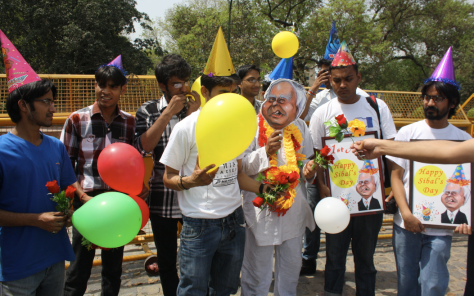
Aseem Trivedi is a cartoonist in Kanpur. Or was. He has, for some months, been a full-time activist against internet censorship in India. As 2011 was turning into 2012, the Maharashtra police got his domain registrar to suspend his domain, http://cartoonsagainstcorruption.com, which was in support of the Anna Hazare-led Lokpal movement. His website wasn’t blocked, but the domain name suspended – the equivalent of shutting down a printing press. This was done in no time, and he wasn’t given an opportunity to defend his content. This was done thanks to the IT Rules 2011, a simple FAQ about which can be found here. Today, 1 April, Trivedi celebrated “Kapil Sibal’s Day,” calling the Communications minister the fool that he is. In the image below, taken at Delhi’s Rajghat today, Trivedi is standing on the extreme right. For more on Trivedi’s campaign, see http://www.saveyourvoice.in.
Hindi Press Release:
पुलिस प्रशासन के अवरोध के बावजूद राजघाट पर मनाया गया सिब्बल्स डे, पहुचे ब्लोगर्स और सोशल एक्टिविस्ट
1 अप्रैल के दिन पर राजघाट पर सेव योर वाइस की टीम ने आईटी मिनिस्टर कपिल सिब्बल को प्री सेंसरशिप पर दिए गए उनके बयानों के लिए मूर्ख दिवस की शुभकामनाएं दीं. राजघाट परिसर में बड़ी संख्या में पुलिस बल, आईबी, सीआईडी और सीबीआई के लोग मौजूद थे और सेव योर वाइस के सदस्यों को बापू की समाधि पर जाने से रोका गया. केवल कुछ गिने चुने लोग ही चुपचाप राजघाट पर पहुच पाए. पुलिस ने पूर्व अनुमति होने के बावजूद सिब्बल दिवस का आयोजन नहीं होने दिया. कारण पूछने पर उच्चस्तरीय आदेशों का हवाला दिया गया और कहा गया कि उन्हें पीएमओ . और आईटी मिनिस्ट्री से आदेश दिए गए हैं. काफी गहमागहमी के बाद टीम के सदस्य राजघाट के बाहर समता स्थल पर एकत्र हुए. Continue reading Happy Kapil Sibal’s Day
Will Sri Lanka now get on with the job?: Kusal Perera
Guest post by KUSAL PERERA
Its now post-Geneva in Sri Lanka. Prime Minister of neighbouring Bharat Ganarajya, the Republic of India, Dr. Manmohan Singh thus wrote to His Excellency the President of Sri Lanka on 24 March, to say, “Your Excellency would be aware that we spared no effort and were successful in introducing an element of balance in the language of the resolution” and the Indian delegation to the UNHRC had been advised to keep close contact with its Sri Lanka counterparts “in an attempt to find a positive way forward”. The implied message is that New Delhi played its role to hook Sri Lanka to a US sponsored resolution in Geneva, over post war reconciliation and rehabilitation and on accountability during war.
The resolution in short, requires the SL government to, Continue reading Will Sri Lanka now get on with the job?: Kusal Perera
How India made it easy for everyone to play internet censor: A primer from SFLC.in
This FAQ has been put out by the Delhi-based SFLC.in
The Central Government notified the Information Technology (Intermediaries Guidelines) Rules, 2011 in April, 2011. The rules which seek to control the intermediaries end up controlling the actions of users. As these rules attempt to cover a wide range of activities through a duplicate, complicated structure, neither the industry nor the end users are able to understand the boundaries of their rights and duties.
This FAQ aims at making these rules easy to understand and at sensitising the beneficiaries to the problems that the rules raise.
Who are intermediaries? Continue reading How India made it easy for everyone to play internet censor: A primer from SFLC.in
Urgent Action Alert: Koodankulam – Call/ SMS ADGP and SP
Dear all,
The Tamilnadu police in alliance with the paramilitary, rapid action force, Industrial security force has laid an utterly illegal and anti democratic siege on the peaceful struggle by fisherpeople and others in Idinthakarai village. In an attempt to terrorise the people and weaken their struggle the police in a nexus with civil administration has suspended electricity and water supply to the village. Vital supplies like milk powder, medicines and food stuff have been blocked entry. When neighbouring villagers tried to bring in firewood through the sea route they were blocked this morning. A pregnant woman who was in labour pain was detained by the police for quite some time and her admission into the hoispital was delayed. There are thousands of children, women, elder people and men in the protest site surrounded by layers and layers of police of every possible denomination and this is a peaceful struggle waged by the poor people of idinthakarai to safeguard their livelihoods and also to protect all of us all of humanity from yet another nuclear disaster.
So please take time and call/ message
Vijendra Bidari, SP, Tirunelveli : 09940193494
George, ADGP: o9442200913
Register your protest.
Demand them to stop intimidating the peaceful protesters.
SMS message: “Do not block media, food, water, medicines or movement of people in and out of Idinthakarai. Restore access to basic facilities and media freedom”
 KAFILA - COLLECTIVE EXPLORATIONS SINCE 2006