[निम्नलिखित बयान साठ से ज़्यादा ऐसे संगठनों और कार्यकर्ताओं की तरफ़ से 15 फरवरी को जारी किया गया है जिनका मनरेगा के कार्यान्वयन से संबंध रहा है। ]
हम, नीचे दस्तखत करने वाले एक्टिविस्ट्स, जो भारत के कोने-कोने में मनरेगा मजदूरों के साथ काम करते हैं, महात्मा गांधी राष्ट्रीय ग्रामीण रोजगार गारंटी अधिनियम (मनरेगा) को खत्म करने की कड़ी निंदा करते हैं, जो माँग पर मिलने वाला ‘काम के अधिकार‘ का प्रोग्राम था। हमारा मानना है कि:
– मनरेगा महाराष्ट्र की रोजगार गारंटी योजना से सीख लेकर भारी समर्थन और बातचीत के बाद शुरू किया गया था।
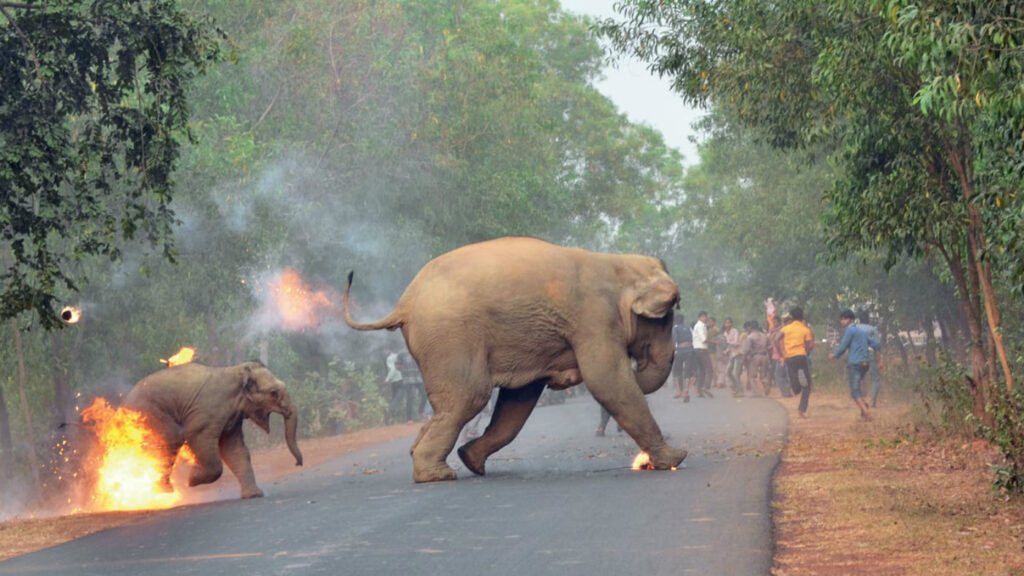
[Earlier this year, Kerala government sought the permission of the central government to kill wild animals that “post a threat to life and property”, declaring human-wildlife conflict a state-specific disaster. As wildlife-human conflicts rage with a new intensity across different parts of India, the author underlines the need to go beyond knee-jerk reactions and put in place proper policy measures. The issue itself is highly controversial and even emotive and we present this essay here to put things in perspective and proposes some measures that are currently being debated among wildlife enthusiasts. – AN]
Photo courtesy Biplab Hazra and Think Wildlife Foundation
On the 24th of Nov 2025, a 70-year-old Adivasi woman was tending her goats on revenue lands near Masinagudi in Tamil Nadu, when she was killed and dragged into the bushes by a Tiger. It paid little heed to the shouts of witnesses who saw it moving the body to a nearby waterhole. Between late October and November, multiple attacks on people and livestock were reported from the Nugu region near Nagarhole in Karnataka, leaving 3 farmers dead and one critically injured. Including one farmer who had just recovered from a broken hip bone caused by an earlier elephant attack. In response to intense public pressure, over 23 tigers (including many cubs) have been captured from non-forest areas in a span of one month. A huge number for a small rural landscape around two sanctuaries. In many cases, operations were hindered by mobs, who screamed and pelted stones upon sighting the animal, leading to heightened aggression. One of the tigers was found to have a festering snare wound, while another was the mother of 5 healthy cubs. Things took an interesting turn, when experts found it hard to match one of the Tigresses to existing wildlife databases. Raising the possibility that she might have been completely raised outside protected areas. Nor were they all transitionary, weak or infirm animals. Some of them were found to be healthy individuals, simply finding new spaces to eke out a living. It is unclear what the department intends to do with all the captured tigers and cubs. If they end up in captivity, that would be a tragic outcome that serves neither the individual animal nor the species. Continue reading Wildlife-Human Conflict – Non-intervention is No Longer a Choice: Sandeep Menon→
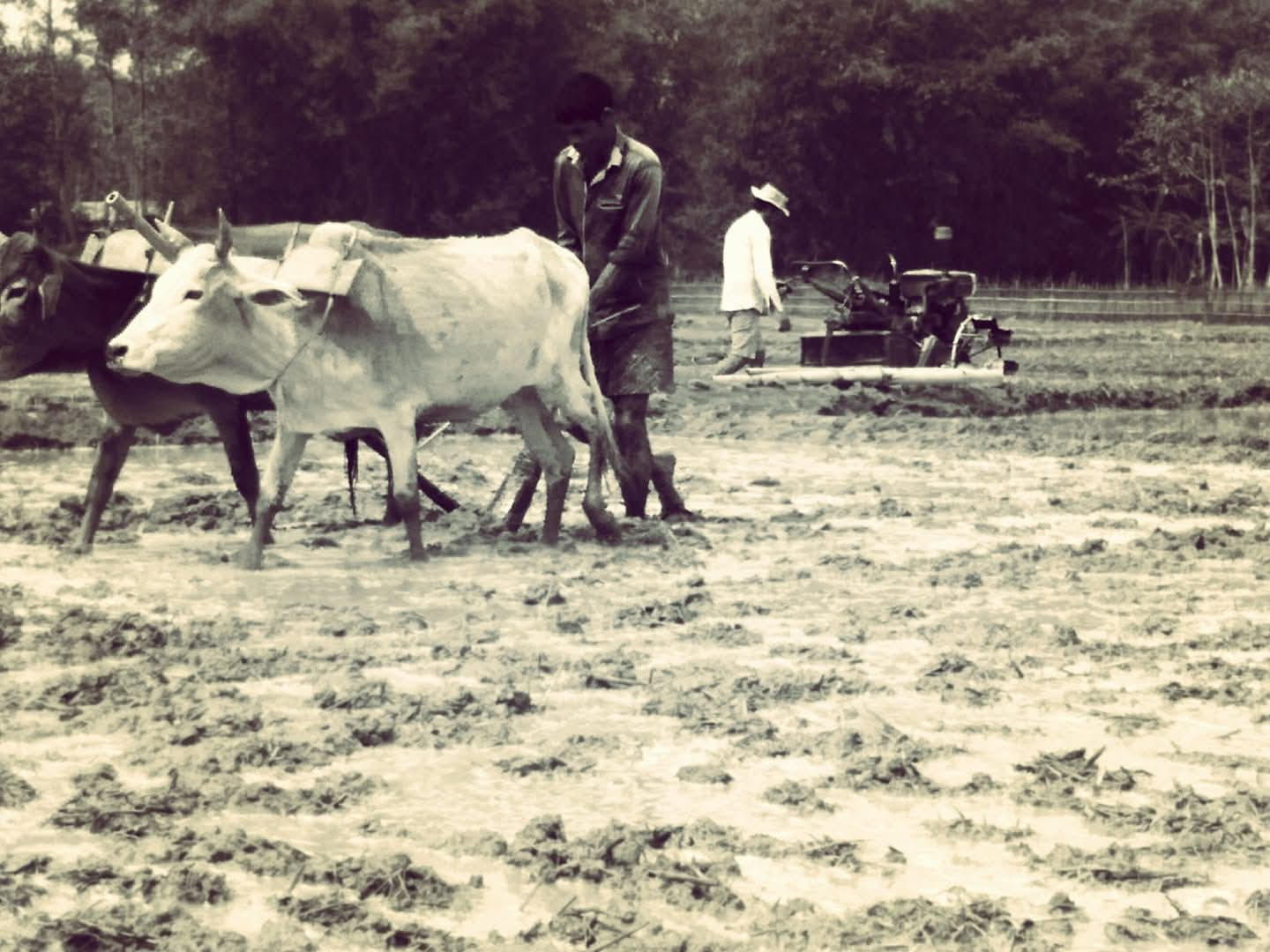
I did not come to the village to do research. I came to farm for the market—and to do it without breaking the village’s social and ecological ledger. I returned as a nephew and a neighbour. For six years I have lived inside this world of muddy fields, failed pumps, anxious harvests, and commonsense wisdom passed across haat stalls. Six years on, I am only now seeing a glimmer of hope for a workable path.
Photograph by Bonojit Hussain of his own farm
What I write here is not sociology in the professional sense, but a testimony from within the living contradictions. My focus is on the choices and constraints of the khilonjiya peasant household—native, often subsistence-oriented communities whose economic logic is deeply tied to ecological and social reproduction. This is a distinct reality from the highly commercialized production systems found in some other parts of the state.
Following is a statement on the violent displacement and dispossession in Dhubri, Assam by some leading civil society members of the state who were also the conveners of the Assam United Citizens Convention.
We strongly condemn the inhuman, brutal and cruel eviction of more than thousands of farmers and labourers from Chap Revenue Circle of Dhubri district by the government of Assam. Such atrocities against innocent people are unusual and indicative of a perverted mind. We don’t know who could be the next victims of such atrocities. The government says the people are ‘encroachers’. However, the attitude of the ruling classes towards land has been exploitative since the colonial times. Although the direct use of land is for settlement, agriculture, and other productive livelihoods of citizens, but for the government it is primarily a means of generating revenue. Since the colonial era, the government has not focused on the leasing and resettlement of landless indigenous people and other legal residents. However, the preceding governments at least allowed the people residing on government land to live in peace with some degree of humanitarian sympathy. But the BJP government has evicted these citizens like heartless zamindars. They are planning to hand over the land of the indigenous residents of Assam to the big capitalists at home and abroad. Thus, the poor tribals, backward castes and char people have been turned into s beggars on the streets within a day. It is supposed to be a step forward for ‘development’ and ‘industrialisation’. The ‘development’ of the state by killing people has assumed a demonic form now. We have also seen an anti-Muslim propaganda campaign openly and sometimes subtly launched day and night by the government-owned media to cover up this evil character. Therefore, we demand the government to stop such evictions and warn the people to be vigilant against this evil government conspiracy.
Hiren Gohain, Harekrishna Deka, Ajit Kumar Bhuyan, Paresh Malakar, Abdul Mannan, Santanu Borthakur Conveners, Assam United Citizens Convention
[We are publishing below a report of a press conference by the NATIONAL ALLIANCE FOR CLIMATE AND ECOLOGICAL JUSTICE that details the status of struggles for ecological justice from across the country. Lifting the mask off ritualistic official observances of the World Environment Day, while the government continues to wreak havoc on the ecology and the commons, this report gives a sense of the struggles in different parts of the country. At the end of this report is the link to its full online recording.]
As the world marked yet another Environment Day on 5th June, the National Alliance for Climate and Ecological Justice (NACEJ), a pan Indian forum of NAPM, brought together voices from different parts of the country in an online press conference on 6th June, to share the current status of ecological justice struggles. Speakers from Kashmir, Sikkim, Tamil Nadu, Madhya Pradesh, Maharashtra, Telangana, Rajasthan, Chhattisgarh, Haryana, Odisha, and other states addressed the Press Conference. These voices reinforced the reality that both the Central Govt and different states governments are majorly complicit in environmental violations, enabling large profiteering, extractive agendas of mega-corporations, unleashing repression on democratic movements. Moderated by well-known environmental activist Soumya Dutta, the meeting saw good participation from both media and movements.
Following is a statement of All India Solidarity with Siang Indigenous Farmers’ Forum, endorsed by 43 organizations and fifty individuals.
The Siang river in Upper Siang district, Arunachal Pradesh. Photo courtesy Anupam Chakravartty, Down to Earth
We, the undersigned, express our solidarity with the Siang Indigenous Farmers’ Forum (SIFF), which has been spearheading the people’s protest against the proposed 11,500 MW Siang Upper Multipurpose Project (SUMP) of the National Hydro-electric Power Corporation (NHPC) in Arunachal Pradesh, which will be disastrous for this whole area. We support the demands of SIFF for withdrawal of Central Armed Police Forces (CAPF) deployed in Beging village for doing the Pre-Feasibility Report (PFR) of the project.
The multiple crises humanity confronts require fundamental shifts in how we relate to the Earth and to each other. This entails tackling the roots of these crises head-on, including the structures and relations of patriarchy, racism, colonialism, capitalism, statism, and anthropocentrism. This in turn needs to be done within the context of visions of the ideal society we want. This essay presents a process in India, Vikalp Sangam (Alternatives Confluences), that has attempted for a decade to document, visibilise, network, and create collaborations amongst movements and groups involved in alternative approaches for justice, equity, ecological sustainability. It describes the process and its various components, the challenges and opportunities of bringing very diverse groups from different cultural contexts together, the potential of a bottom-up and participatory visioning process, and the excitement of attempting to bridge conventional traditional-modern, practitioner-intellectual, urban-rural, and other divides.
Keywords: Democracy; Visioning; Alternatives; Environment; Civil society
Introduction: The Making of Vikalp Sangam
A decade is not a short span of time – and yet, it is too short. These are the contrasting thoughts I have as I contemplate a process that I have been part of since its initiation, as I and my colleagues enter into a phase of reviewing whether it is on course to meeting the objectives it began with. This is Vikalp Sangam, or Alternatives Confluence, a national platform established in India in 2014.
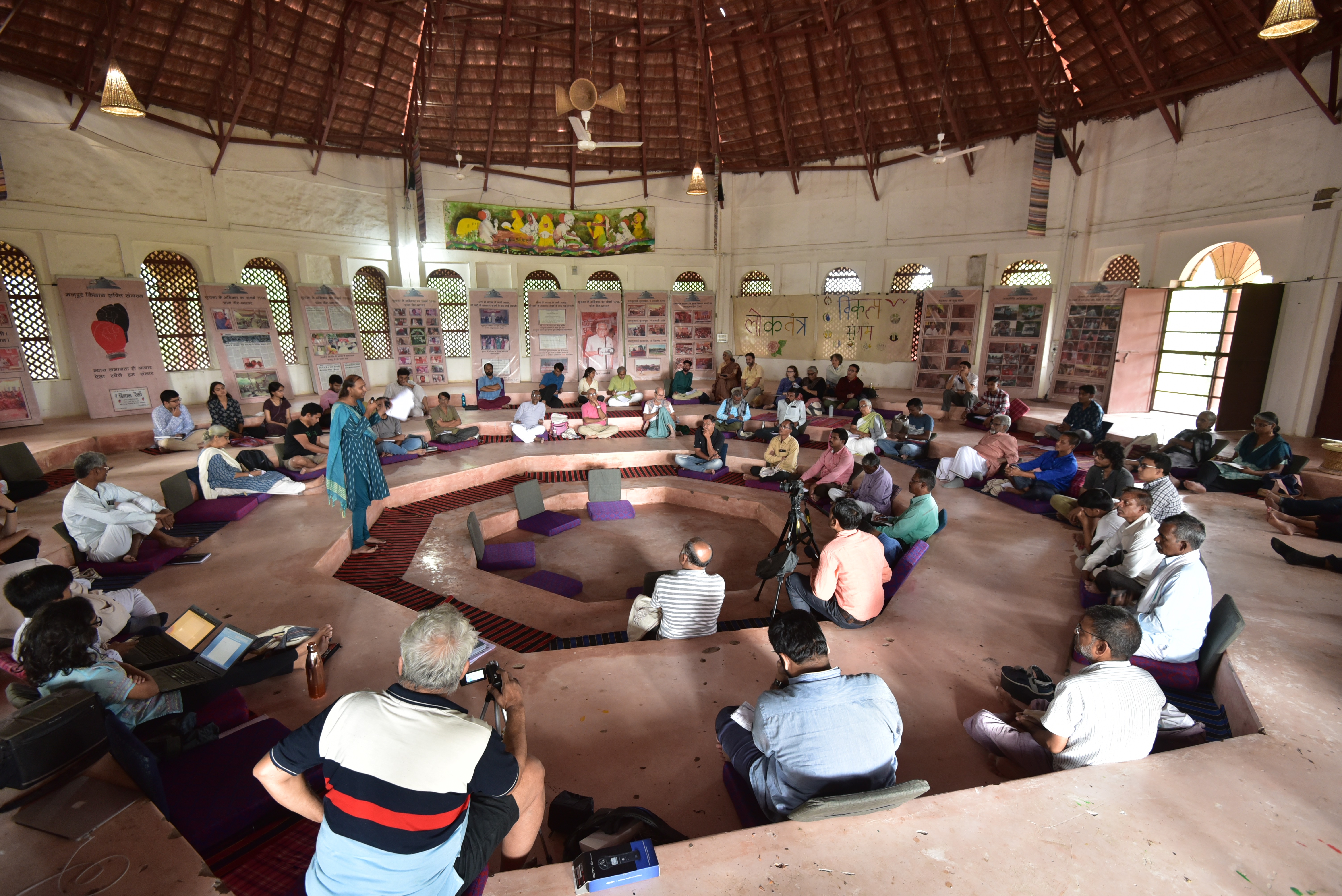
Democracy Vikalp Sangam, School for Democracy, Rajasthan, October 2019
People for Himalaya campaign is an initiative of progressive groups, civil society organisations and activists from the region. The campaign is not affiliated with any political party.For the list of supporting organizations, please scroll to the bottom of the post.
[Last year we witnessed the hills of Himachal Pradesh, Uttarakhand and Sikkim in virtual revolt against the mindless development that they have been subjected to. It was against the backdrop of these frightening developments that discussions began among groups across the Himalayan states in February this year, leading to the adoption of the Charter for the Himalayas. We also just saw environment activist from Ladakh, Sonam Wangchuk sit on a 21-day hunger strike in freezing minus 10 degrees Centigrade, demanding that the Sixth Schedule of the Constitution be implemented in Ladakh and it be protected from being handed over to corporate interests for so-called Development projects. Wangchuk’s hunger strike was withdrawn but the movement continues with women continuing their sit-in and other sections of the population, especially youth, preparing to join in soon. The movement is not about one person’s hunger strike but to prevent Ladakh meeting the same fate as Himachal Pradesh, Uttarakhand and Sikkim. – AN]
STRENGTHEN REGULATION, MONITORING AND PLANNING OF LAND USE, LAND-USE CHANGE AND FORESTRY (LULUCF)
A complete moratorium on all mega infrastructure projects like railway, dams, hydro projects and four lane highways, tunnelling, transmission lines – and conduct a 360-degree multi- disciplinary review of the impacts of existing projects
Democratic decision making through referendums and public consultation on large infrastructure by strengthening the Environment Impact Assessment Notification 1994 (Scrapping the EIA 2020 Amendments & FCA 2023 Amendments); Free Prior informed consent of Gram Sabhas to be mandatory for all developmental projects
Terrain Specific Disaster and Climate Risk Studies and land susceptibility assessments to be mandatory for land use change for urbanisation, commercial development and public infrastructure construction
Just Implementation of 2013 Right to Fair Compensation and Rehabilitation Act
To ensure participation of citizens, civic bodies and Gram Sabhas in monitoring pollution and land use change works like stone crusher, sand-gravel mining, mineral mining, debris dumping, construction of local roads and every commercial construction work.
2. GRANTING COMMUNITIES CONSTITUTIONAL, LAND AND FOREST GOVERNANCE RIGHTS
Strengthening of state laws and regulations that protect the private and community resource rights of nature dependent communities – example Van Panchayat Rules in Uttarakhand
Complete the Unfinished land reforms and land regularisation agendas to provide secure land tenure to landless and displaced communities to practice land based livelihoods – example Nautor rules in Himachal Pradesh
Just implementation of constitutional provisions and laws that support the decentralised, autonomous and democratic governance and decision making – example the Scheduled Tribes and Other Traditional Forest Dwellers Act 2006 and other constitutional provisions
Protection of pastoral communities especially minority communities like the Van Gujjars and Bakarwals in migratory routes
Strengthen floral and faunal biodiversity through Community Forest Resource Rights governance framework under FRA 2006 – convert pine monocultures into broad leaf forests to address fodder scarcity, forest fires and soil erosion. Five ‘f’ species should drive plantations i.e. fruit, fodder, fertilizer, fuel, fiber and medicinal plants. Weed eradication programs for pasture development.
3. TRANSPARENCY, KNOWLEDGE BUILDING, SHARING AND EXCHANGE
Anantkumar Hegde, BJP MP from Uttari Karnataka, is again in the news.
Close on the heels of his controversial statement about demolition of a mosque and his invoking of Hindu community who would not rest ‘until more mosques are reclaimed ‘ (1) he has delivered another explosive statement.
This time the whole edifice of Constitution is under his attack, which according to him has ‘distortions introduced by the Congress to suppress Hindu society’. (2) ..
..Critics have rightly said how this suggestion exhibits real intentions of the saffron regime which wants to usher us into Hindu Rashtra, end reservation for scheduled and backward communities, reinforce caste system and also replace Constitution drafted by Dr Ambedkar with a worldview inspired by Manusmriti. The main opposition party Congress has expressed fear that all such statements, steps just go to vindicate how a ‘cloud of dictatorship’ now hovers over India. (3)
It is a different matter that neither BJP top guns nor PM Modi – who had famously declared way back in 2014 that for him ‘Constitution is the most sacred book’ deemed it important to condemn Hegde’s statements or ordered him to seek apology for his claim.
One learns that it has merely distanced itself from Hegde’s controversial statement to convey an impression that what he said was his ‘Mann ki Baat’ and not BJP’s Dil ki Baat’ .
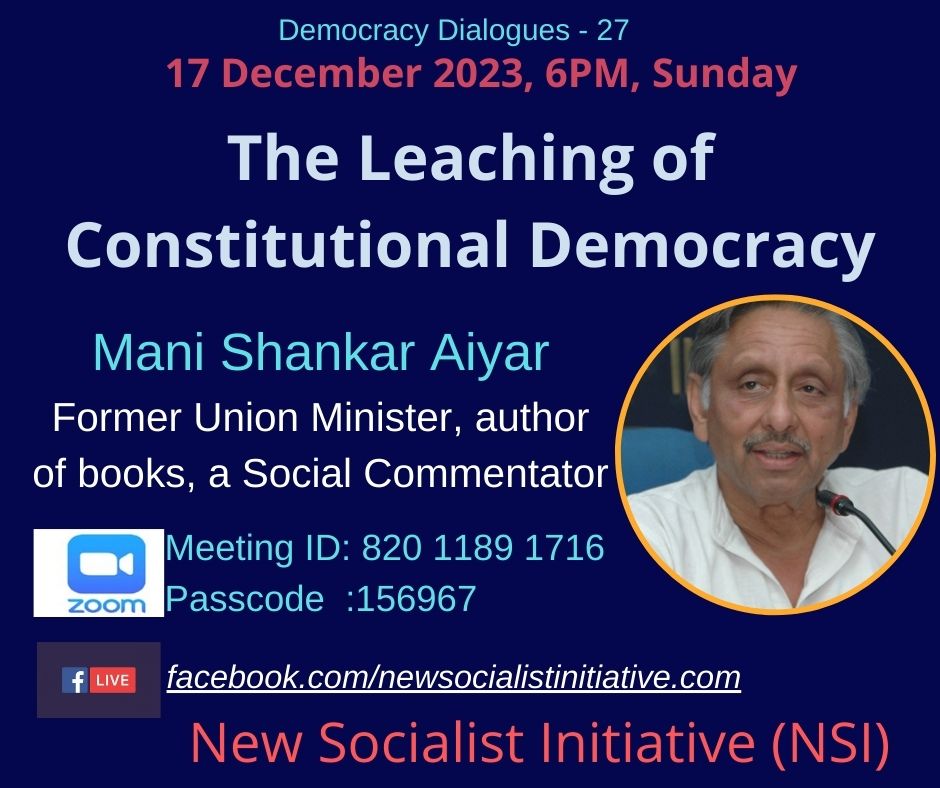
On the face of it, we are an on-going democracy. We have a Constitution which has been honoured by the present government declaring 26 November as Constitution Day. We have regular elections at national, State and panchayat levels. We have the various institutions of democracy in place: an elected Parliament; an independent judiciary; an accountable executive; and a functioning, non-governmental media. Yet, there is fear all around. a new fear, a fear not seen since the Emergency, that has been spreading over the past decade. Why? Is it perhaps because the “spirit of constitutionalism”, as Fali Nariman has put it in his latest work, missing? Can we continue to be the nation envisaged by Gurudev Rabindranath Tagore: “Where the mind is without fear/And the head is held high”? Are we progressing towards or in retreat from that “Heaven of Freedom” of which Tagore sang?. Are the institutions of democracy functioning? Is the Preamble being venerated or violated? Are our civil servants really free? Is our civil society being muzzled? Is the media glowing in the light of freedom of expression? Is the investigative and judicial process being made the punishment? Is the economy in any meaningful sense “socialist” as enjoined by the Preamble? Is the Constitution being reduced in practice to a non-justiciable set of Directive Principles of State Policy? Above all, are we as a nation still ‘secular” – again as enjoined by the Preamble? Is Hindutva compatible with the basics and parameters of the Constitution? Is our ‘unity in diversity” threatened or is it being revered?What are the challenges ahead that need to be addressed before we cease being the world’s largest democracy?
Speaker :
Mani Shankar Aiyar
Author of many books and a regular social commentator, Mani Shankar Aiyar, has had a distinguished foreign service career , he was Union Ministers during Congress led government (2004 till 2009) and has handled different ministries. Ministry of Petroleum and Natural Gas, ( 2004-06) Youth Affairs and Sports (2006-08), and Development of North Eastern Region ( 2008-09).
Here is a list of few of his publications :Memoirs of a Maverick Juggernaut, 2023 ; A Time of Transition: Rajiv Gandhi to the 21st Century, Penguin, 2009 ; Confessions of a Secular Fundamentalist, Penguin, 2004; Rajiv Gandhi’s India, 4 vols. (General Editor), UBSPD New Delhi, 1997, Knickerwallahs, Silly-Billies and Other Curious Creatures, UBS Publishers, 1995 . Pakistan Papers, UBSPD, New Delhi, 1994 ; One Year in Parliament, Konark, New Delhi, 1993 ; Remembering Rajiv, Rupa & Co., New Delhi, 1992 ; Rajiv Gandhi: The Great Computer Scientist of India, Mughal Publishers, New Delhi, 1991 ; How To Be A Sycophant, NBS, New Delhi, 1990
Abstract: Indigenous and other local communities across India have had traditional systems of local governance as unwritten or sometimes written codes of conduct and decision making. Many such systems are still being followed in parallel with the panchayat systems, or getting re-invented by combining the modern forms of governance with the traditional ones, especially in the case of communities still practising traditional occupations and ways of life (forest-based, pastoral, fishing, and/or farming). There are, however, very few studies of these systems interacting with modern state institutions, their current or continuing relevance, and their role in achieving goals of justice, well-being, and ecological sustainability.
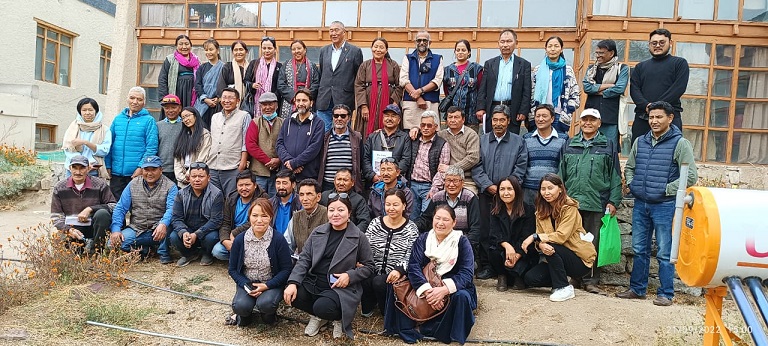
Goba meeting to discuss study results, Leh Aug 2022.
This study focuses on documenting the present status and relevance of the traditional governance system of Ladakhi villages, with a focus on the goba (or lambardar/nambardar). For this, the study also looked at the interface between the local/traditional and new/modern governance systems, viz. the goba with the panchayat, Ladakh Hill Council and UT Administration.
Keywords: traditional governance, goba, democracy, natural resources, indigenous knowledge, environment
Following is the text of an open letter sent by the Bisthapan Birodhi Jana Andolon Mancha, a coalition of people’s organizations, activists, journalists and citizens to the Governor of the Odisha. It was released in Bhubaneswar yesterday the 3rd of December 2022.
Respected Sir,
We as concerned citizens, social activists, political and human rights activists, environmentalists and journalists and the leaders of twelve mass organizations on behalf of Bisthapan Birodhi Jana Andolon Mancha, Odisha appeal for the protection of natural resources and an immediate end to the continuous forceful displacement of people from their lands and dwelling places.
We express our protest and dissent against the Odisha government’s Make-in-Odisha Conclave in Bhubaneswar. Inviting more investments in the name of development will uproot the lives and livelihoods of people dependent on these land, forests and coasts. We appeal to your conscience to intervene and prevent the exploration and exploitation of natural resources through unmindful and unwanted mining of bauxite, iron ore, chromite, coal, river sand, china clay and other resources in the name of development. People are struggling against all odds and hardships to protect the same for future generations even as they remain deprived of access to basic needs like education, health and nutritional food security.
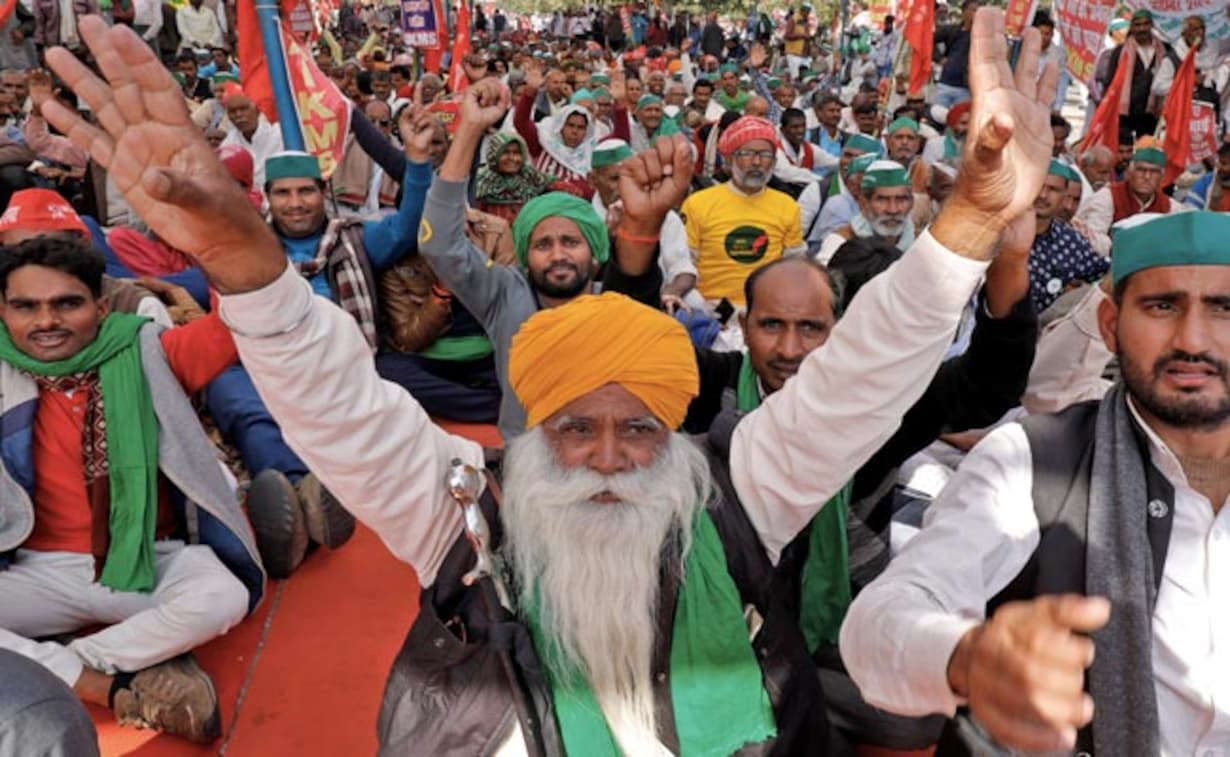
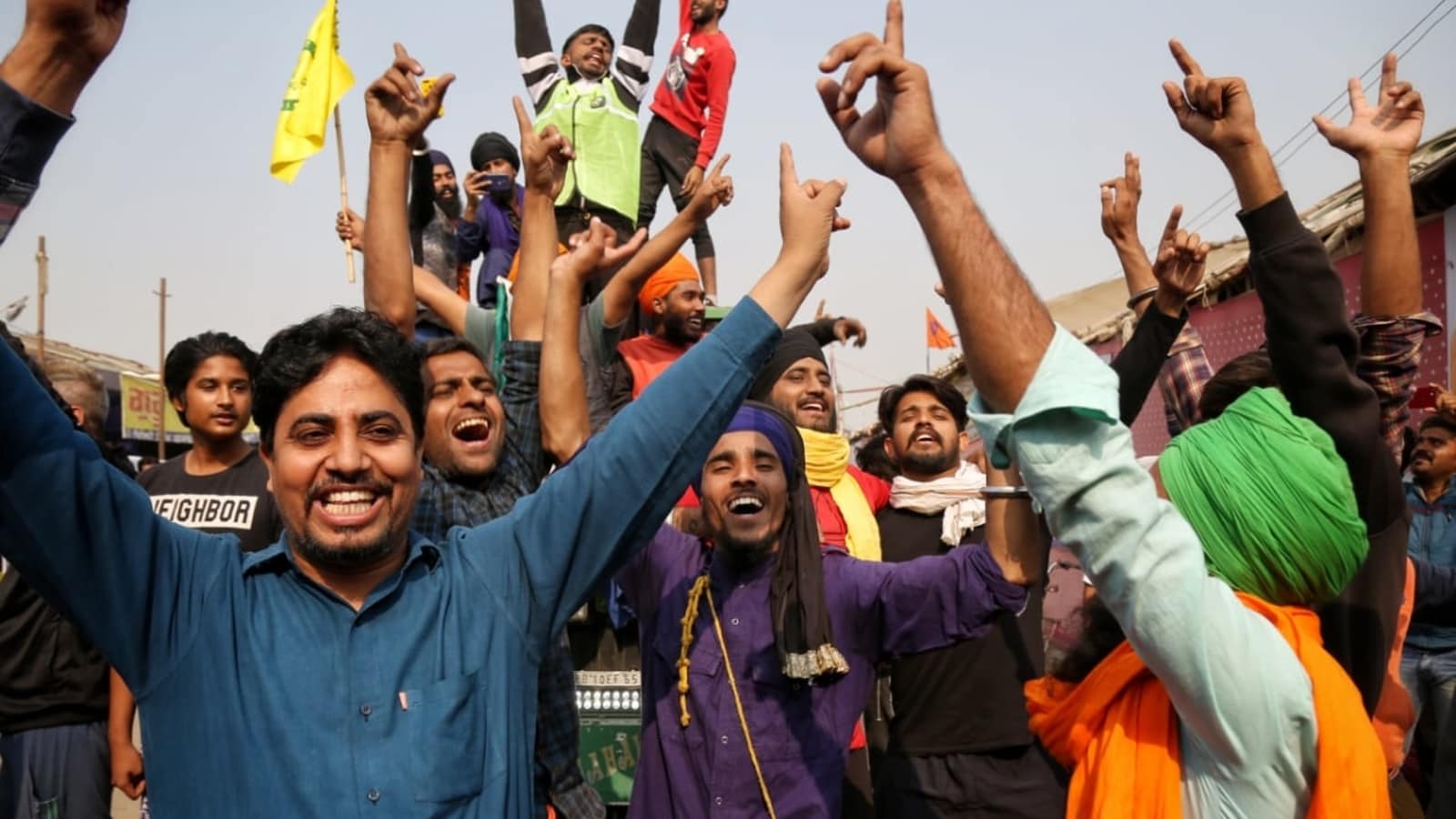
The victorious farmers at Delhi borders, image courtesy NDTV
It is a time for rejoicing and celebration. It is a time for thanksgiving. For the victory of the farmers is not just theirs. Theirs was not just a struggle to protect their own livelihoods but also a valiant battle fought for all of us, so that we continue to get our food at affordable prices. It is a time for thanksgiving also because the movement has broken the hubris of an arrogant government that has absolutely no accountability whatsoever. It has given us some breathing space.
Even as this piece is being written, the victorious farmers camping at the Delhi borders for the last one year are preparing to leave for their homes. It has been a long haul for them in the course of which over 700 have died. It has been especially trying for the Punjab farmers who had started the stir months before they decided on their march to Delhi on 26 November 2020. Nobody had expected that the shifting of the venue to Delhi would end up being one long ordeal, continuing months on end, through the freezing winter, scorching Delhi heat and torrential rains. Not to mention an intransigent government that had already started the ground work for corporatization of agriculture and handing over parts of it to Adani and Ambani, even before the laws were formally promulgated.
What the farmers’ movement has achieved is nothing short of historic, even if the authoritarian government had not gone back on its intent for uncompromising implementation of the laws meant to reinforce major structural changes for facilitating corporate dominance of the farm sector. The inflexible approach of the government and the massive repression has claimed almost 700 lives since agitation began nearly one and half years back. Be it celebration or analysis, we must pay sincere homage and tributes to all those dead.
[‘Parapolitics’ began on 16 January 2020 as a weekly column at the height of the anti-CAA movement. After eight weeks, it was made into a fortnightly column and now, eighteen months and 44 posts later, beginning with this post, this column will now appear once a month, on the second Saturday of every month.]
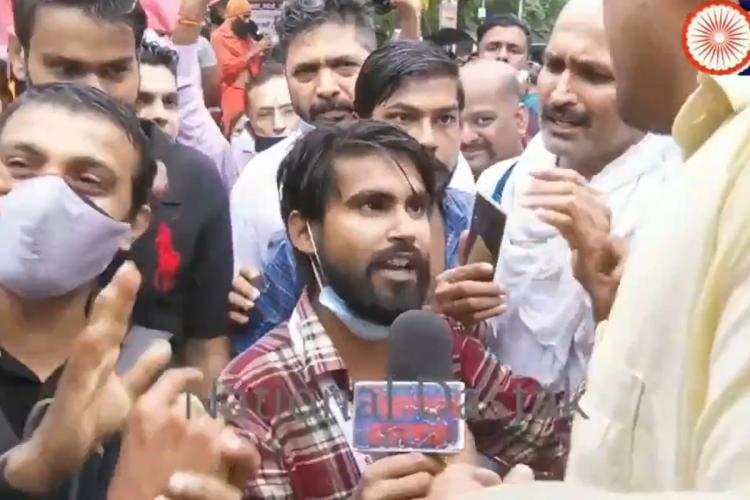
The courageous National Dastak reporter Anmol Pritam was being forced by the demonstrators to chant their slogans. Image courtesy The News Minute
What happened at Jantar Mantar on 9 August – the anniversary of the Quit India movement – was not just violently anti-Muslim in the slogans raised; it was also symptomatic of the larger counter-revolutionary shift that has taken place in our politics. That Quit India or the ‘August revolution’ day was sought to be taken over as a final gesture of that grand victory that the Sangh Combine believes it has already won, is telling. It is telling also because it is a formation that studiously stayed away from the mainstream of the anticolonial struggle but now wants to take over that legacy and saffronize it. How the rally was organized and continued to be held despite the police claiming it had no permission to do so, does not remain so much of a mystery once you realize that the key organizers are Sangh/BJP leaders or parts of the larger network of terror associated with them. But that is another matter. It is important to recognize that incidents like these are but signs of a new stage in the ongoing counter-revolution where the Hindu Right is no longer content with claiming its own distinctiveness in opposing mainstream (Congress-led) nationalism but is out to make a determined bid to appropriate the entire legacy of that nationalism. The insistence, in recent times, on the national tricolour as a sign of its aggressive nationalism, is entirely of a piece with this attempt to occupy the mainstream.
This piece was originally published in Bangla in the Ananda Bazar Patrika and has been translated into English by Arundhati Ghosh
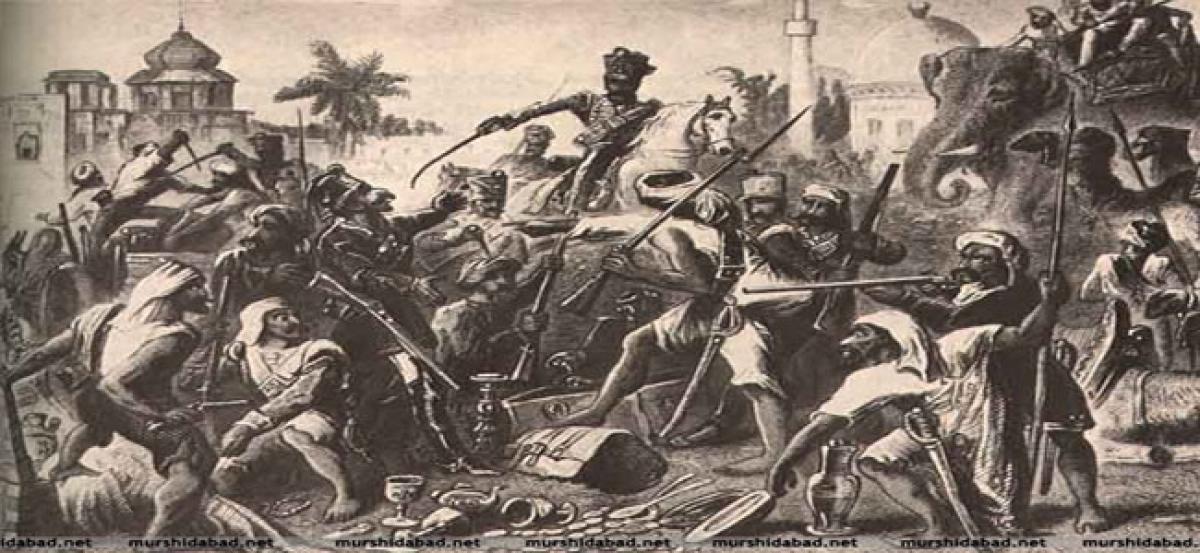
The 1857 Revolt, representational image courtesy TheHansIndia
“Freedom – you are a room in the garden, the song of the koel, the sun drenched leaves of the old banyan tree, the page of my book of poetry where I can write as I wish.” Poet Shamsur Rahman wrote this immortal poem Freedom You during the war of the independence of Bangladesh. It could be said that this poem that arose from deep within Bangladesh’s struggle for liberation is a universal manifesto of freedom. Bangladesh has crossed its 50th year of independence. And in India we are standing at the threshold of our 75th. But where is that song of the koel, that book of poetry where one can write anything one wants? The rally of death that we are witnessing during this Covid-19 era has left the koel woeful, the leaves of the banyan devoid of its sparkle and the pages of our book of poems imprisoned under the UAPA or sedition laws or subjected to the surveillance of the snooping Pegasus vision of conspirators passing for ministers.
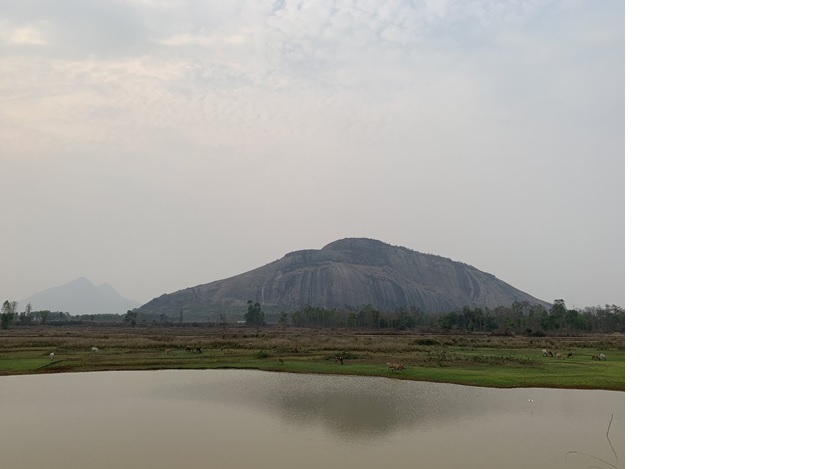
Bodikonda is a monolithic stone hill in Lakshminarayanapuram village in Parvathipuram mandal in Vizianagaram district. This has been in the news on and off over the last two years or so, because local people have been protesting the lease given to private companies for mining colour granite, without their being consulted nor any sort of public hearing.
Three leases for quarrying coloured granite were granted and executed in favour of MSSS Srinivas for an extent of nine hectares, M Madhupriya for an extent of six hectares and Kishore Granites Pvt. Ltd. for another nine hectares ( total of 24.29 hectares) for a period of 20 years. This comprises almost 50% of the area of the total hill. These companies applied for a lease in 2010 to the Assistant Director of Mines and Geology, Vizianagaram, and new licences were given in December 2019.
Fr. Stanislaus Lourduswamy aka Stan Swamy, image by Sarah Modak, courtesy Article 14
There are just no words left to express the anger and helplessness that overcame hundreds and thousands of people like me when they heard of the custodial murder of an ailing, frail, octogenarian, Fr Stanislaus Lourduswamy, known to the world as Stan Swamy. The various issues that arise from the virtual judicial abdication of responsibility has been powerfully articulated by former Delhi High Court Chief Justice, AP Shah and one can hardly add to that. What is perhaps the most shocking is not that the judiciary abdicated in observing its duty of upholding the Constitutional rights of a citizen but that it seems to have lost even the minimum grace and human concern.
“Medical reports taken on record clearly showed that Fr Swamy had the degenerative Parkinson’s disease, and could not even do basic tasks, such as holding a spoon, writing, walking or bathing. Indeed, the court noted that he had a severe hearing problem, and was physically very weak. But even that did not move them. Every regular bail application that was filed by his lawyers was unequivocally rejected.”
This is shocking beyond words – or used to be once upon a time. But as each day of this regime passes, our threshold of taking shock increases by leaps and bounds. Are we really surprized now, that while this was how they treated Stan Swamy, a goon who had just the other day openly called for mob violence and “shooting down anti-nationals” has now been promoted to the Central ministry?
We had reported earlier on the call for a convention to commemorate the anniversary of the historic Santhal Rebellion associated the immortal names of Sidhu and Kanu. The convention was organized by the recently constituted forum in West Bengal, Ekusher Dak – Call of 21 – which was formed in the run up to the recently held elections in the state. ’21’ of course, refers to the year 2021 when the elections were held and the initiative for a new/ different Left platform in the state was launched. But ’21’ also recalls the date 21 February 1952, the historic day of the Bhasha Andolan (the Language Movement) in what is now Bangladesh. It recalls the assertion of Bengali identity that overrides the religious divide that the BJP made every effort to exacerbate. The convention was held yesterday and really came like a whiff of fresh air. The film we embed below is a very short but powerful telling of the story of the revolt with graphics. Ekusher Daak Film Team – Arjun, Debalina, Maroona, Boro, Laboni, Malay, Mitali, Arundhati, Saikat, Baijayanta, and Swarnava -have produced the film. For those who would like to watch the proceedings of the Convention, the YouTube streaming link is here.
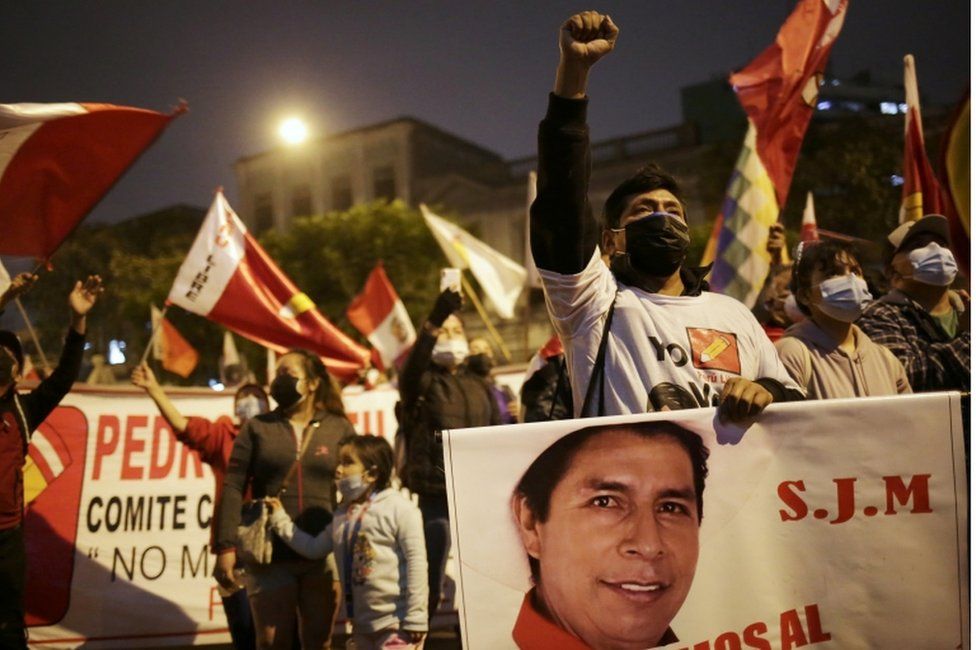
Supporters of Left Presidential candidate Pedro Castillo take to the streets, image courtesy BBC and Reuters
It seems quite clear from the latest reports coming in from Peru that the Left-wing candidate Pedro Castillo is all set to win in what has been described as the most polarized election till date. With over 99 percent of the ballots counted, Castillo had taken a lead of approximately 80, 000 votes (50. 2 of the total) over his Right-wing rival Keiko Fujimori. The counting process, reports say, has already been considerably slowed down as ballots seem to be still arriving from abroad as well as from the remote rural areas. Votes of expatriates arriving from abroad are mostly right wing votes for Fujimori whereas the ones from the rural areas are likely to be overwhelmingly for Castillo. There also seem to be a huge number of contested votes that might need to be recounted, further slowing down the process.
History apparently allows freaks, whims and hypocrisy, but only temporarily. After all, Hegel as very succinctly stated, ‘History is a slaughter house’. It spares none, not excluding India’s once most powerful Leftist party in the parliamentary arena, Communist Party of India (Marxist) that once had 44 MPs in the lower house of Indian parliament, Lok Sabha. It now faces a crisis of identity and existence. Hypocrisy and falsehood in politics and ideological positions have been two main reasons for the vertical decline of party’s influence and image. Ten years ago, Indranil Chakraborty in his Master’s thesis –“The Market Odyssey: Why and How Was ‘The Market’ Discourse Incorporated in the Party Program of the Communist Party of India (Marxist) During the Days of the Communist Party of China’s ‘Market Socialism’?” referred to CPI(M)’s open criticism of ‘the development of the personality cult of Mao( Tse Tung) , and the problem of left adventurism during the Cultural Revolution. He pointed out that the criticism evaded ‘the question of the relationship between socialism and democracy, and the role of the Chinese people in deciding policy matters of the state’. He quoted Harkishan Singh Surjeet’s article in the party’s theoretical monthly, The Marxist in 1993 commemorating Mao’s birth centenary – ‘We cannot make a subjective analysis of a personality in cases where errors have been committed in the application of the theory to practice.’



 KAFILA - COLLECTIVE EXPLORATIONS SINCE 2006