Category Archives: Countryside

Emami’s Bitter Harvest

In August this year, I moved to Ethiopia to cover the growth of Indian investment in Africa. As many of our readers may know, a flurry of reports by groups like Human Rights Watch and the Oakland Institute have implicated Indian companies in what they call “land grab” in Africa. While it is too early for me to pronounce any sort of verdict on the modalities and support for large-scale land investments in Ethiopia and elsewhere in the continent; one of my early reports suggests that things havent quite worked out as some Indian companies expected. 

Indian companies which invested in controversial deals involving hundreds of thousands of acres of land in Ethiopia have found themselves out of their depth in a fast-growing African economy that is still in the process of building critical transport and irrigation networks.

Documents related to one such transaction reveal how Emami Biotech, a subsidiary of the Rs.2,200-crore Emami Group, pulled out of a Rs. 400-crore, 40,000-hectare, bio-fuel plantation only a year after the project was announced.

Indian companies are the second largest investors in the Ethiopian economy with approved investments worth nearly $5 billion.

While a majority of the businesses are small manufacturing and trading enterprises run by business families long settled in East Africa, the big money has come with the recent entry of large Indian investors.

A number of Indian companies have signed agreements to lease more than 4,40,000 hectares of land across Ethiopia, 1,00,000 hectares of which has been granted to a single Bangalore-based company, Karuturi Global Ltd. International. Rights organisations and NGOs have characterised the deals as instances of land grab and have accused the government of forcibly resettling pastoral communities.

Read the rest here:

What Development Means: Dilip D’Souza

This guest post by DILIP D’SOUZA is an excerpt from his book, The Curious Case of Binayak Sen

On a recent trip to the central Indian state of Chhattisgarh, I visited a village called Bamhni. The Jan Swasthya Sahyog (JSS; People’s Health Collective, a rural hospital) of Ganiyari runs an outreach clinic there. Every Tuesday, one or two JSS doctors and a small team of health workers get into a Mahindra Bolero SUV in Ganiyari and drive an hour-and-a-half to reach Bamhni.

I spent much of the day with an even smaller JSS team that reaches out even beyond this outreach clinic. The area we were in is part of the Achanakmar Wildlife Sanctuary, which has existed since the mid-70s. As happens with several Indian wildlife reserves, this one has several villages located inside its boundaries. In 2009, Achanakmar was declared part of Project Tiger, the more stringent Indian effort to save that splendid animal. More stringent, that is, in the conditions it spells out for villages in designated sanctuaries. When Achanakmar joined Project Tiger, the residents of Bamhni and several other villages were told they would have to move out of the “core zone” of the sanctuary, so as to leave the tigers an area where they would be undisturbed. Continue reading What Development Means: Dilip D’Souza

The Beginning of the Middle of the End: Haseeb Asif

Guest post by HASEEB ASIF

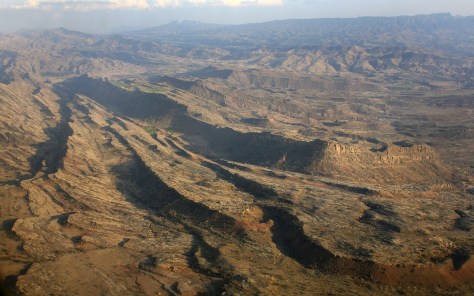
Pakistan’s remote North Waziristan tribal area is seen from the air Feb. 17, 2007. Photo by John Moore/Getty Images

One day as I walked to the market to buy some eggs, I noticed strange graffiti on a wall. Emblazoned in red paint was an invitation to join the fight against zionist subversion, western imperialism and painful hemorrhoids; the end having been muddled with a physician’s note.

It was an open call to Jihad by a militant Islamic organization. Jihad! The camaraderie, the righteousness, the third degree burns; it’s all I’d ever wanted. I was tired of being oppressed. There I was, in the prime of my youth, jobless, eggless, with subnormal visual acuity and four strands of the dengue virus, and who was to blame? I could imagine the conversation with my therapist.

“Doctor, I’m moody, I can’t sleep and I never seem to have enough energy to do anything.”

“Why, I believe you’re suffering from oppression”

I called their toll free number and signed myself up. They sent me a brochure and a medical plan; both had pictures of the same mutilated bodies.

‘Jihad summer camp, three months, graduating candidates get a certificate of martyrculation and up to 72 virgins in heaven (note: amount varies according to stock), HEC accredited, facial hair mandatory’.

I consulted with my parents, my mother was thrilled; she’d always wanted a martyr in the family. Father just grunted and made a time honoured gesture with his middle finger.

Two days later a brother Mehsud showed up at my door, he’d been sent by the organization to escort me back to their base.

“It’s a great thing you’re about to do, brother.” I was only packing my clothes. Continue reading The Beginning of the Middle of the End: Haseeb Asif

An open letter to the jury of The Economic Times Awards for Global Excellence: G. Ananthapadmanabhan

This open letter has been put out by G. ANANTHAPADMANABHAN of Amnesty International (India)

Dear Mr Deepak Parekh, Mr Kumara Mangalam Birla, Mr K V Kamath, Mr Kris Gopalakrishnan, Mr A M Naik, Ms Chanda Kocchar and Mr Cyril Shroff,

We at Amnesty International India are deeply disappointed by your decision to give the Economic Times Business Leader of the Year 2012 award to Mr Anil Agarwal, Chairman of Vedanta plc.

The Business Leader award is given to individuals who have demonstrated “a strategic direction for success, and pursued a vision”. But Vedanta, in its efforts to have a bauxite mine opened at the Niyamgiri hills in Orissa and expand an aluminium refinery near Lanjigarh, has demonstrated an utter lack of both leadership and vision. What it has shown instead is a brazen disregard for Indian law and an utter lack of respect for the rights of local communities. Continue reading An open letter to the jury of The Economic Times Awards for Global Excellence: G. Ananthapadmanabhan

The Unreality of Wasseypur: Javed Iqbal

Guest post by JAVED IQBAL

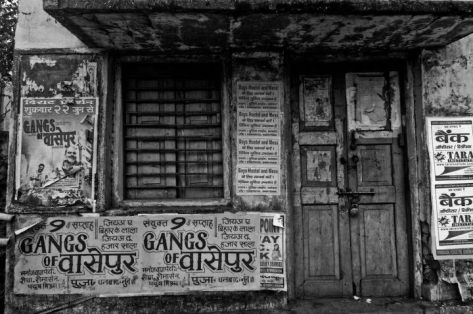
Posters for ‘Gangs of Wasseypur’ in Dhanbad. All photographs by Javed Iqbal.

‘The ending of the film was shown properly,’ speak unanimous voices, the well-known folklore of Wasseypur, Dhanbad, ‘Gangster Shafiq Khan was really gunned down at the Topchachi petrol pump like it was shown in the first part of the film.’

‘That’s how it’s done in Dhanbad.’ Continue reading The Unreality of Wasseypur: Javed Iqbal

Reading the Violence in Assam: Here and There: Musab Iqbal

Guest post by MUSAB IQBAL
… the fact that violence was not merely transitional, a birthmark or a departure, but a much more general and continuous aspect of modern life – Gyanendra Pandey

1.

The misreading or out of place reading of any local and contextual issue and putting it in a wrong frame can be very catastrophic. The recent episode of violence in Assam and the fury it triggered across the country is a classic example of such misreading. But apart from the misreading this complete episode is certainly indicator of certain other phenomenon underlying our fragile society.

Moreover it looks that this is not only adding to verbal construction of abuse but also a very controlled confusion working at someone’s behest. The rally and violence in Mumbai, Ranchi, and Jamshedpur whose motivating factor was this violence happening in northeast and cross border against “Muslims”. The other episode, which adds to cynicism, is through popular newspapers in South India and in Assam publishing that Assamese will be subject to target and then under the cloud of rumor and suspicion these residents of the state is forced to run.

Continue reading Reading the Violence in Assam: Here and There: Musab Iqbal

Memories of Drought: Bharat Patankar

Guest post by BHARAT PATANKAR

English translation of Marathi article published in Sakal

Some years had passed since the completion of the Koyna dam which was the basis for the all-round development of Maharashtra.   Electricity had begun to be produced from the water stored in the dam.   The campaign to bring electricity to the villages had begun.  An increase in industrial development also began to be felt; however the situation of agriculture was as shown in the film, “Mother Krishna is flowing calmly”.   The situation is described in the song, “Mother Krishna is flowing calmly, unaware of happiness or sorrow on her banks/ Limitless water flows without a break; nobody diverts it for irrigating the land/ how can this Ganges become fruitful to the lazy people?”   Such was the situation.  It was not only true for the Krishna.  It was also the case for the Godavari and Tapi.  Agriculture was still dependent on wells and rainfall for irrigation.  Aside from Mulshi, Rajewadi, Bhatghar and other dams of the British period and a few dams after independence, all of Maharashtra was like this.

The 1972-3 drought was general.  Continue reading Memories of Drought: Bharat Patankar

The Myth of the Bangladeshi and Violence in Assam: Nilim Dutta

Guest post by NILIM DUTTA

Map credit: idsa.in

The recent spate of violence that began in the Kokrajhar district of Assam in the month of July 2012 and then spread to the adjoining districts of the Bodoland Territorial Council, primarily between the Bodos and the Muslim community of immigrant origin settled in these districts, has once again unleashed a vicious debate on the perils posed by alleged unrestricted illegal immigration from Bangladesh, this time even on the floor of the Lok Sabha.

The situation has been further complicated by a ‘protest’ in Mumbai against ‘violence on Muslims in Assam’ turning into a riot or by sundry attacks as ‘retaliation’ against people from North East elsewhere in India. Thanks to either shockingly uninformed or brazenly motivated opinions being aired around incessantly, much of it in the national electronic and print media, the dominant discourse that has evolved around the issue has created three distinct perceptions:

First, that illegal immigration of Bengali Muslim peasants from neighbouring Bangladesh into Assam has been continuing unabated, leading to skewed demographic profiles of Assam’s districts bordering Bangladesh and thereafter, turning several adjoining districts of Assam to Muslim majority. Continue reading The Myth of the Bangladeshi and Violence in Assam: Nilim Dutta

Yo, Yo Honey Singh and Other Implied Learnings: Aprajita Sarcar

Guest post by APRAJITA SARCAR

Kudiye ni tere brown rang ne, munde patt te ni saare mere town de…..Hun bach bach ke, tenu rab ne husn ditta rajj rajj ke/Main keha kaali teri Gucci, te Prada tera laal/ Kithe challo oh sohneyo, sajh dajh ke ke/ Tere wargi naar ni honi, mainu munde kehnde si /Hoge ni tere charche Star News to BBC /Ho brown brown skin wali, let me tell you one thing /Rab di saunh you so sexy! Continue reading Yo, Yo Honey Singh and Other Implied Learnings: Aprajita Sarcar

The Nightmare of the Chaavunilam and the Illusions of Well-Meaning Scholars


Chaavunilam (“Dead Land”)is the title of one of Sarah Joseph’s well-known short-stories in Malayalam. In it she relates a myth of devastation and revival — it describes a scene of terrible devastation through the eyes of the last woman left there, the Mother — who witnesses the terrible violence between her children which leaves the earth shattered, verdure destroyed, and which ends in the death of all the combatants. This is the tale of her immense suffering — she is torn apart by birthing-pains, at the same time as she is devastated by the death of all her children. Continue reading The Nightmare of the Chaavunilam and the Illusions of Well-Meaning Scholars

Fallacious perceptions of development – a tribal view from Jharkhand: Richard Toppo

Guest Post by RICHARD TOPPO

Almost a century ago, Katherine Mayo published a book titled ‘Mother India’ that criticized the Indian way of living, and Rudyard Kipling  spoke of the ‘White Man’s Burden’. These writings reflected the colonial perspective that what colonizers did was in the best interest of the colonized people. Consequently, most well-meaning citizens of colonial powers were alienated from the horrible plight of the colonized. Purpose well served – unopposed exploitation.

Years later, independent India seems to walk the same line. The tribal communities in central areas of Jharkhand, Orissa and Chhattisgarh have faced rampant exploitation, displacement and dispossession from their resources at the hands of the state. However, the government has successfully produced  an illusionary perception of ‘development’ that has alienated the middle classes of India from the miseries of tribals. As a result, the government in alliance with corporate interests ruthlessly exploits the tribal population, almost unchallenged by other sections of  society. Continue reading Fallacious perceptions of development – a tribal view from Jharkhand: Richard Toppo

Creating Happiness – Rijul Kochhar

Guest post by RIJUL KOCHHAR


It is a minute and a half long, and from the moment you see it, you will know that there is something sinister about it—a scenario of forced forgetfulness. It is displacement incarnate, and what is it doing, this aesthetic of obscenity? Is this retribution or charity, or retribution through charity, the developmental discourse of murderous sustainability through erasure? You will be puzzled and worried, harried and then it will make you sleep again in pious numbness, for isn’t the world—its deep blue sky and crystal fluid and cleansing sunlight, and bright flowery faces, its innocent time—just so beautiful! You will find that you cannot respond to it, physically, humanly, for it is not receptive to the organic. It cannot be mediated. It is a ghoul, perched to haunt and hypnotize us out of the memory of its past terrors. You remember, lenore, and wasn’t it to be nevermore? It is an electrical transmission and nothing more, or is it? It is a triumph of pre-postmodern, oily chic, so cloaked in ancient blood, that the blood has caked and turned black and fallen off, revealing the identical colour of the master’s heart, now you see it, now you don’t. The laceration has been hidden by the three-day apoptosis—the extra-cellular matrix, the forgetful memory’s collagen. But you will need to dig outward and inward from here, and very deep. It is there on my screen, this light of blood-lust, “Vedanta: Creating Happiness”, and every time a new or repeated tale from half way across the world is beamed, news every quarter of an hour, this monstrosity accompanies those facts like some leech feeding on reality. You remember Sontag, and isn’t she who had her way with those words: “Now there is a master scenario available to everyone. The color is black, the material is leather, the seduction is beauty, the justification is honesty, the aim is ecstasy, the fantasy is death.”

Continue reading Creating Happiness – Rijul Kochhar

Swami Sahajanand Saraswati – A Contested Legacy: Manish Thakur and Nabanipa Bhattacharjee

Guest post by MANISH THAKUR and NABANIPA BHATTACHARJEE

Observers of the political scene in Bihar would have hardly failed to notice a renewed interest in the life and works of Swami Sahajanand Saraswati (1889-1950), the founder president of the All India Kisan Sabha, and arguably the most influential peasant leader of Bihar in the 1930s and 1940s. Over the last decade or so, his birth (22 February, 1889) and death (26 June, 1950) anniversaries have been celebrated with great pomp and show with full attendance of political luminaries of the state including Nitish Kumar, its present Chief Minister. Not only have glowing tributes been paid to his legacy but there has also been a spurt of writings on his life and times.

Swami Sahajanand Saraswati

New biographiesi have been released, and his collected works been published in six volumesii. In fact, there is a Swami Sahajanand Saraswati Foundation based in New Delhi as well as a Swami Sahajanand Saraswati Forum on the internet. Curiously enough, Swami Sahajanand Saraswati figures prominently on the internet in the caste-specific web-portals such as www.bhumihar.com; www.bhumiharmahasangh.com and www.bhumihar.net where his name appears along with Bhagwan Parashuram, Chanakya, Mangal Pande, Sri Babu, Ramdhari Singh Dinkar, C.P Thakur, and so forth in the long list of supposedly Bhumihar icons. Indeed, Saraswati’s legacy has always been the bone of contention between the Bhumihars and the communists. What needs explanation is the BJP’s concerted efforts in appropriating this iconic peasant leader as ‘samajik samrasta ke sant’.

Continue reading Swami Sahajanand Saraswati – A Contested Legacy: Manish Thakur and Nabanipa Bhattacharjee

Mangoes and me

My childhood memories are so deeply intertwined with mango eating that it is difficult to separate the two. One reason for this is probably because the season of mangoes and the summer breaks in school coincided. We took our last exam and the schools closed their doors, to reopen after two and a half months. Educationists had not yet discovered Holiday Homework, the Summer Break torture, For parents and children and the summer vacations were an unmitigated joy. Those days we stayed at Aligarh, and every year we travelled to Delhi to spend time with our aunts and uncles, all cousins of our father.
Continue reading Mangoes and me

How Essar, Teamwork Productions and the Chhattisgarh government changed the lives of Dantewada’s children

Any moment now I expect India’s litfest mafiosi to describe this article on the ‘Essar Kahani Utsav’ by Akshay Pathak as an ‘attack on free speech’:

Money was not the only thing coloured there. Long pieces of cloth in different colours hanging outside the venue— in classic Teamwork Productions style (the event management company organising this festival)—conjured a sense of celebration. The packaging was good. It mostly is—like that of the DSC Jaipur Literature Festival, also organised by the same company.

The mood inside, though, didn’t match. That is, if you set aside the sight of visibly uninterested festival organisers and district administrators finding ways to pat their backs. And there was certainly no festive air around the 600-odd Adivasi children who had travelled hours on foot and buses to hear stories on an empty stomach—“the district administration miscalculated the numbers”, the organisers explained to me later, and so they had run out of food for the children. [Read the full article.]


सत्ता और हिंसा : बद्री नारायण

बद्री नारायण का यह लेख लखनऊ के एक हिंदी अख़बार को दिया गया था पर उन्होंने छापने से मना कर दिया.

शक्ति अपने संस्थागत रुप में सत्ता में तब्दील हो जाती है। सत्ता अपने मूल अर्थ में भय एवं हिंसा पर टिकी होती है। सत्ता का अभ्यांतरिकरण हो या सत्ता का प्रतिरोध, दोनों ही अर्थो में हिंसा उसके सह उत्पादक के रुप में दिखाई पड़ती है। जनतंत्र को एक ऐसी प्रक्रिया के रुप में परिकल्पित किया गया था जो सत्ता को उसके हिंसक पक्ष से मुक्त कराके सेवाभाव के एजेन्सी के रुप में सक्रिय रखे। यह माना जा रहा था कि जनतंत्र सत्ता को रेशनालाइज कर उसे सेवा-भावि प्रशासकीय स्वरुप में तब्दील कर देती है। यह काफी कुछ हुआ भी किन्तु अपने कार्य-प्रक्रिया में इस जनतांत्रिक समय में भी सत्ता हिंसा को उत्पादित करते रहने वाली शक्तिस्रोत के रुप में सामने आई है। सत्ता पहले अपने भीतर अपने ही कारणो से क्राइसिस को जन्म देती है, फिर उससे उबरने के लिए हिंसा रचती है। बंगाल, झारखण्ड, आन्ध्र के जंगलों में पहले तो बाजार शासित विकास के तहत आदिवासी जीवन के संसाधनों पर कब्जा कर उन्हे बहुराष्ट्रीय कम्पनियों को बेचना, फिर उसके विरोध में आदिवासी जनता का नक्सलवादी विचारों एवं नेतृत्व में हिंसक प्रतिरोध का बढ़ते जाना, पुनः उसे दबाने के लिए राज्य द्वारा की जाने वाली ज्यादा आक्रामक एवं खुंखार हिंसा को इसी रुप में देखा जा सकता है। Continue reading सत्ता और हिंसा : बद्री नारायण

The Many Uses of a U.P Election

I live in Noida, which is the child of an extra-legal union between Delhi and Uttar Pradesh. Noida is not-quite Delhi, not-quite U.P, not quite itself on most days. Living in a cusp has several advantages, however, the main one being that one can look either way, up at Delhi and right down over U.P’s scruffy head. I found myself doing both in the recently-concluded U.P election. Curiously it seemed, for Delhi people, U.P’s 2012 elections were flush with new meaning. For decades the favourite whipping boy of Delhi, U.P had overnight become its favourite gap-toothed angel. For Pratap Bhanu Mehta of the Delhi-based Centre for Policy Research, the U.P election was a historic battle between empowerment and patronage, the future and the past, performance and rhetoric, sincerity and cynicism, and (this is my favourite) ‘rootedness over disembodied charm’. Mehta believes that while voters ‘carefully assessed’ candidates through the ‘prism of local circumstances’, they were no longer prisoners of their identity. Most confounding is Mehta’s view of democracy, “In a democracy, where you are going should be more important than where you are coming from”. These U.P elections “redeemed that promise” according to Mehta, since they were “without a trace of community polarisation: no one felt on the edge or under siege, all could exercise options without being unduly burdened by the past.”

Continue reading The Many Uses of a U.P Election

Oru Kili Iru Kili – A Party in Dubai: Alia Allana

Guest post by ALIA ALLANA

For the Pilipino there was no escaping the Indian song and dance.

A tube-light flickered as loud music blared from a room at the far end of the corridor. The flickering light and the ensuing cacophony gave the corridor in Sonapur Labour Camp a surreal discotheque feel: one that the Pilipino was no longer game to. Nearer the door, voices of men dipped low and then travelled high past the room in which the tired labourer from Cebu lived.

“Oru Kili Iru Kili,” they bellowed in Malayalam and the tune filtered through the flimsy plywood door. The tired looking Pilipino pulled a face as he described the scene he had once encountered when the door was left ajar. The “party” room was clouded over with smoke and six Indian labourers from Kerala lounged cross-legged in a circle, smoking cigarettes and drinking from steel cups, writhing their bodies and shaking their hands up in the air. A bottle with no label was passed around and the brouhaha escalated to a feverish pitch. Once again the merry men burst out, “Oru Killi Iru Killi”. Continue reading Oru Kili Iru Kili – A Party in Dubai: Alia Allana

Kerala and Kudankulam: The Media Sleeps

It is amazing how the very same Malayalees and their media, which made Mount Everest out of that molehill of Mullaperiyar, remain sweetly calm in comparison at the events unfolding in Kudankulam. In fact the amnesia is so complete that it is as if few remember (except the anti-nuclear activists in Kerala who have been consistently supporting the struggles of the local people) that it was common knowledge in the late 1980s that the plant would affect both Tamil Nadu and Kerala.There was far greater awareness of the special problems of locating the plant in Kudankulam for Kerala, where natural radiation levels are already very high. The violence too had an early start, with the police firing on a people’s rally against the plant in 1989, which killed one person.

Continue reading Kerala and Kudankulam: The Media Sleeps

Will Naveen Patnaik please wake up to atrocities against Dalits in Odisha?

This memorandum was submitted on 22 March 2012; see full list of signatories at the end

A Memorandum of Demands Seeking Chief Minister’s Immediate Intervention to stop the Ongoing Brutal Atrocities/ Crimes against Dalit Communities in Odisha

Date: 22/03/12

Dear Sir,

We, the undersigned victims of human rights violation, representatives of various mass organisations, Non-Governmental Agencies, Community Based Organisations, Human Rights Activists, journalists and citizens belonging to the marginalised communities would like to draw your attention to the ongoing atrocities against Dalit Communities in Odisha. Continue reading Will Naveen Patnaik please wake up to atrocities against Dalits in Odisha?

Let’s not count the poor (seriously)

As someone recently commented on a Kafila post, we live in a post-fact world where there are no facts. Everyone believes what they want to. So depending on your  ideology, poverty in India has reduced or increased. But such is the debate on poverty that the definition of poverty itself is subject to debate. How poor do you have to be, so that the government will say you are poor? This poverty debate has been on around the same lines for about ten years now, with the economic left arguing that India isn’t shining, and the economic centre-right arguing that millions of people have been lifted out of poverty by India’s super-successful economic growth. The debate will go on forever, there will be no certainty in numbers, and perhaps there shouldn’t be – perhaps counting the poor cheapens the issue of poverty. Counting the poor leads us to ask, what about the only -slightly-better-than-the-poor? Counting the poor leads us to compare poverty numbers and give us relief. Ah, only 30% Indian poor now, as opposed to 50% in such and such decade, nice! Great job India! No, this is not what the poor deserve, whether they are 30% or 50%. Perhaps we should stop counting the poor. Continue reading Let’s not count the poor (seriously)