Category Archives: Countryside

Hydro Power Projects and Northeast India: Ecology and Equity at Stake

This is a guest post by RICHARD KAMEI

Recently a two-day North East People’s Convention on water and dams was held at Bethesda Youth Welfare Centre, Dimapur (on 17th May-18th May 2013) which brought together a group of 26 organisations from North East India under the banner of the North East Dialogue Forum. This forum called for a focus into the objectives raised in this two day convention, by writing to leaders of India, China and Bangladesh over the imminent adverse impact of the issue of water, impacts of constructing big dams and mining in various regions of North-East India. The outcome of this two-day North East People’s Convention on water and dams, is the joint appeal known as ‘Dimapur Declaration’.  At the time of this declaration, prime address was made to the Prime Minister of Bangladesh, Sheikh Hasina; the Premier of China, Li Keqiang and Prime Minister of India, Dr Manmohan Singh. The main objectives of Dimapur Declaration are:  to protect the inherent rights of local people over their water, land, forest and other resources based on customary and international laws as guaranteed by the Universal Declaration of Human Rights and UN Declaration on the Rights of the Indigenous People 2007 etc., and their self-determined development of their water bodies in the region. The recommendations of the World Commission on Dams, 2000 have also been given a special mention in terms of its implementation in all decision making processes on dam constructions over Brahmaputra (Tsangpo) River. “The Thatte-Reddy Expert Committee said the present hydropower work on Subansiri contravenes the basic premise of the Brahmaputra Board Act with regard to flood control, irrigation and other benefits. The report agreed that the present planning of the project ignored the flood control aspect. Therefore, the committee agreed that the very purpose of the project and purpose of the Brahmaputra Board Act is defeated and the mandate of the board diluted by this action,” opined Akhil Gogoi, Krishak Mukti Sangram Samiti ( KMSS). Continue reading Hydro Power Projects and Northeast India: Ecology and Equity at Stake

The Greater Common Omelette

This is a guest post by NITYANAND JAYARAMAN

Governments like victims. Distressed people make for thankful recipients of public largesse. Within a week of Uttarakhand’s watery disaster of June 16 and 17, the Tamil Nadu Chief Minister announced a Rs. 5 crore relief in solidarity with the “Government and people of Uttarakhand.”

This generous gesture stands in stark contrast with the way the Chief Minister is dealing with people in her own state who are concerned about their increased vulnerability to natural disasters. Around the time that she handed out her cheque to Uttarakhand, 19 fishermen from Sulerikattukuppam, a hamlet about 40 km south of Chennai, begged their way to bail after spending a month in prison. They were arrested for demanding relocation and rehabilitation; the celebrated 100 million litres per day Nemmeli seawater desalination plant constructed by Chennai Metrowater had triggered severe sea erosion and brought the sea dangerously close to their homes. The highly toxic brine rejects were polluting their seas. Continue reading The Greater Common Omelette

दो कठ्ठा ज़मीन : किशोर

Guest post by KISHORE

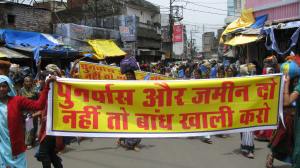
बच्चा मुसहर को सन 1986 में भूमि सुधार अधिनियम 1961 के तहत 0.26 डेसिमल (लगभग एक चौथाई एकड़) ज़मीन बिहार सरकार द्वारा दी गयी थी. इस एक्ट के तहत भूमिहीनों को ज़मींदारों से अर्जित अधिशेष भूमि दी जानी थी. बच्चा मुसहर ज़िंदगी भर सरकार द्वारा उनके नाम पर करी गयी ज़मीन पर हल चलाने को तरसते रह गए पर उन्हें अपनी ज़मीन पर कदम रखने का अवसर नहीं मिला. उन्होंने  ब्लाक, जिला और राजधानी तक ना जाने कितने दफ्तरों के चक्कर लगाये पर ज़मीन पर उनका मालिकाना हक, उस कागज़ के पुर्जे तक ही सीमित रहा.

सन 2000 में बच्चा मुसहर अपनी ज़मीन के मालिकाना हक़ के अधूरे सपने के साथ इस दुनिया से चले गए. बच्चा मुसहर को गुज़रे 13 साल बीत गए पर उनकी विधवा आज भी उस कागज़ के टुकड़े को संभाले बैठी है पर उनको ज़मीन पर कब्ज़ा नहीं मिल सका. दफ्तरों के चक्कर लगाने का सिलसिला बच्चा मुसहर के बाद उसकी विधवा और बच्चों ने भी जारी रखा पर ज़मीन की बंदोबस्ती के लगभग तीन दशकों के बाद आज भी ज़मीन उनके कब्जे में नहीं है. Continue reading दो कठ्ठा ज़मीन : किशोर

When the Levee Breaks: A report from a very large farm

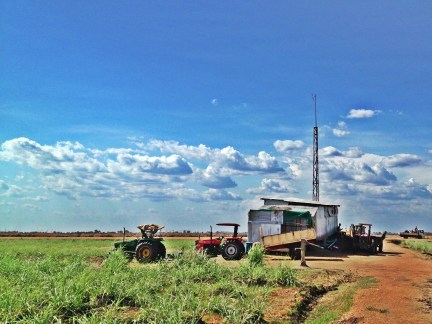
IMG_0980 Earlier this month, I travelled to Gambella in South West Ethiopia to visit the 100,000 ha farm managed by Karuturi Global Ltd ; an Bangalore-based company that hopes to use its farm in Ethiopia to become one of the largest food producers in the world. Karuturi has become the most visible symbol of what activists have termed “land grab” in Africa; a term that is as contentious as the process itself. At various times, Kafila has also carried pieces on the subject. Some the material put out by groups like Human Rights Watch has been  hard to verify, but the process itself is worth following. Appended below, my Sunday story for The Hindu.
Gambella (Ethiopia): Last August, Ojulu sat smoking a cigarette outside his thatch-roofed hut in Pino village when a rising tide of water seeped through the reed fence. “The water came in the morning,” Ojulu said, “And stayed for a month.”

As Ojulu and his neighbours scrambled to higher ground the Baro river swirled through the village, gathering in force until it breached a series of dykes, built by Bangalore-based Karuturi Global, and swamped the company’s vast 100,000-hectare farm. “Karuturi blocked the natural route of the water [with the dyke], so the water came into our village,” Ojulu said. “Karuturi was the cause of the flood.” Read the rest of the story here

Food Security Bill – MPs clueless: Ankita Aggarwal

This is guest post by ANKITA AGGARWAL: Last week a group of about fifteen of us (students who have been working on the right to food in various capacities) met Members of Parliament to discuss the amended National Food Security Bill and how it can be improved. We knocked on the doors of more than a hundred MPs, but managed to meet only about twenty of them. Most of the MPs were away from Delhi, in their constituencies or elsewhere, and a few were “too busy” or “too tired” to meet us.

Our overall experience was quite disappointing. Most MPs were quite clueless about the Bill. But instead of using our visit as an opportunity to inform themselves about the Bill and its shortcomings, most of them preferred to indulge in rhetoric, making statements like “we will raise your demands in the Parliament” or “it’s shameful that there is hunger in the country even so many years after independence”. A few MPs talked to us at length about issues ranging from the demand for Telangana to the impossibly high cut-offs in colleges, but not about how the Bill can be salvaged. Some MPs were of the opinion that there was no scope for discussion of the Bill in Parliament, and that it was pointless to discuss it with us. Continue reading Food Security Bill – MPs clueless: Ankita Aggarwal

The Bastar Land Grab: An Interview with Sudha Bharadwaj

This intervew with SUDHA BHARADWAJ of Chhattisgarh Mukti Morcha was conducted by JUSTIN PODUR in Raipur on 5 March 2013

JP: As a lawyer and an activist, how do you see the relationship between legal work and activism?

SB: I see myself primarily as a trade unionist. I joined the union movement over twenty years ago, and it was the union that made me a lawyer. They felt that workers needed a good lawyer in their fight with the corporations. Our union is one of contract workers and has been striving to overcome divisions in the working class. Here, workers have a close connection with the peasants. So, we believe that working with the peasants is part of unionism.

When I got to the High Court, I found that all the people’s organizations were in a similar situation. The laws that give you rights are poorly implemented. When you fight, the status quo has many legal weapons, launches malicious litigation, etc. So we have a group of lawyers now (Janhit), and we work on group legal aid, not individual legal aid. The idea is that if you help a group, that can bring about some kind of change, create some space. I’ve also gotten involved with the People’s Union for Civil Liberties (PUCL), for which I am the General Secretary in Chhattisgarh. Continue reading The Bastar Land Grab: An Interview with Sudha Bharadwaj

The urban-rural divide in Modi’s Gujarat

Christophe Jaffrelot gives us perspective on why Gujarat’s development numbers don’t look as impressive as Gujarat’s economic growth – it’s about Modi’s neglect of the rural:

Modi’s policy, over the last 10 years, has benefited the urban middle class more than anybody else. If Gujarat ranks only 11th out of 23 states in terms of the human development index, it’s because groups in rural Gujarat continue to lag behind. Indeed, Gujarat is a case of social polarisation with the new rich in the cities and most of the groups that are at the receiving end concentrated in the villages. There, the number of families below the poverty line has jumped from 23.39 lakh in 2000 to 30.49 lakh in July 2012, according to the rural development commissioner. Unsurprisingly, 9 lakh of the 11 lakh houses without electricity, according to the Gujarat 2011 census, are in rural areas. In terms of education, the excellent report of the NGO, Pratham, shows that rural Gujarat was lagging behind states like Haryana.

Dalits and Adivasis (11.3 and 16.5 per cent of the state population, respectively) are particularly affected. For instance, the percentage of tribal underweight children (0-5 years old) is much higher in Gujarat than the tribal average at the national level (64.5 per cent compared to 54.5 per cent). The under-five mortality rate of tribal children is also much higher. Similarly, the percentage of Dalit participation in the NREGA programme is three times less in Gujarat (7.83 per cent) than in India at large (22.67 per cent). In fact, development has meant socio-economic polarisation, because Gujarat is a typical case of growth without development for all. The Gujarat chapter of the India Human Development Report of 2011 concluded that “the high growth rate achieved by the state over the years has not percolated to the marginalised sections of society, particularly STs and SCs, to help improve their human development outcomes”. [Full article here]

More on Gujarat from Kafila archives: Continue reading The urban-rural divide in Modi’s Gujarat

Mining in Goa and Odisha and the CPI, Then and Now: Hartman de Souza

Guest post by HARTMAN DE SOUZA. The article was written a few days before April 12, the CPI’s day of solidarity with Odisha mine workers.

When the Goa State Committee of the erstwhile Communist Party of India (CPI) and its national secretary, our very own Comrade Christopher Fonseca, tells you that April 12th will be observed all over India as a day of solidarity with the Adivasi people of Odisha struggling for seven years to save more than 4000 acres of their ancestral lands from falling to mining conglomerates as rapacious as their Goan counterparts, ageing leftists in the village bar are not too sure whether they should laugh or just weep.

Perhaps one needs to paint the larger picture to highlight the irony that lurks in the shadows.

There was a time it needs to be said, when the CPI ran a long, hard and lonely battle in Goa, led by Comrade George Vaz who it is hard to believe was once Comrade Fonseca’s mentor. He was a short, somewhat portly, soft-spoken, widely-travelled man fluent in at least four languages. Not many Goans would know that Comrade Vaz ran a free kitchen in his home at Assenora open to anyone in need of a simple, nourishing meal, or that some of us who now want to weep in our glasses have eaten there several times…

Continue reading Mining in Goa and Odisha and the CPI, Then and Now: Hartman de Souza

Children of Kollegal: Blassy Boben

This is a guest post by BLASSY BOBEN

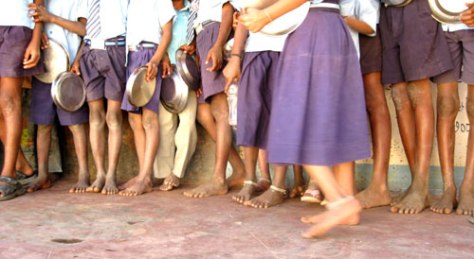
Loud voices singing the alphabet ring clear through the otherwise silent morning at Ardhanaripura. Bright eyed children assemble themselves in the school’s only classroom, chattering excitedly while waiting for their teacher to arrive. The school compound is alive with the laughter of the children. The only other sound in the village is that of the wind blowing through the locked, empty houses.

1298953987071-government school kids

Children at a school in another village of Kollegal district lining up for the midday meal (Image by  Junaid A Tagala)

As is the case in most villages in the taluk, the only residents of Ardhanaripura in Kollegal district of Karnataka are the aged and the very young, as all able bodied persons go out of the villages in search of work. Continue reading Children of Kollegal: Blassy Boben

Plucked, Consumed and Discarded: Dhruba Jyoti Purkait and Deepshikha Hooda

Guest post by DHRUBA JYOTI PURKAIT and DEEPSHIKHA HOODA.

Sakhra (Yavatmal): Deep in the heartland of Maharashtra’s suicide-ravaged Yavatmal district, the Gond tribal settlement of Sakhra holds a surprise. “There are no husbands here, just children,” explains Kishore Tiwari, president of the Vidarbha Jan Andolan Samiti. A member of the VJAS accompanies us on the bumpy two-hour ride out of Pandarkawada.

We turn onto a dirt trail that runs through a forest clearing; an hour passes before we start spotting cotton fields. We stop and our guide calls out to two female labourers. Only then does it strike us. Most of the labourers picking cotton are women.

It has been 10 years since Laxmi, now 24, gave birth to a son. She met a rich, upper caste boy who had promised to marry her. “Pyaar jataya tha mujhse,” After the delivery, he refused to acknowledge the parentage of the baby. “Congressi tha woh,” she says.

Continue reading Plucked, Consumed and Discarded: Dhruba Jyoti Purkait and Deepshikha Hooda

Dhinkia and Govindpur Mothers go Naked to Protest against Forcible Land Acquisition for POSCO: Minati Dash

Guest post by MINATI DASH

On 7th March 2013, at least two mothers of Dhinkia and Govindpur (Patna village in this panchayat) villages in Jagatsinghpur went naked before the paramilitary station in Mangalpada near Govindpur village. In a rally led by mothers, hundreds of women and children went to the temporary paramilitary station that has more than 5 platoons of forces at the moment. While taking off their clothes, they constantly shouted, ‘why have you come here?, what do you want to see?’.

What must be the extent of desperation and provocation that our mothers decide to become naked before outside men?  In such a site (Eastern Odisha), where women bodies are constructed dominantly as private objects to hide, what does it mean to dare to bare? It is important to read this shocking act as an act of mediation of their political voices. It is in a desperate bid to express their furore, frustration & anger over intrusive presence of police & paramilitary in the area that they bared their bodies to shame them.

But shockingly, instead of recoiling with shame in response to such an act, the paramilitary chose to strike physically. They did not spare even these protesting women and brutally lathicharged them. Continue reading Dhinkia and Govindpur Mothers go Naked to Protest against Forcible Land Acquisition for POSCO: Minati Dash

Crude Questions about Crude Bombs: Biju Mathew

This is a guest post by BIJU MATHEW

Tarun Mandal, Narahari Sahu and Manas Jena are dead, blown up by what the media has described as a “crude” bomb. All bombs are crude. They kill. They are meant to destroy flesh and bone. They are aimed at sucking out life. Lakshman Mandal battles for his life in a Cuttack hospital. He knows how crude a bomb is. Hopefully he will live to tell the tale of its crudeness.

This is a partisan piece. But it aims to produce balance. Almost all media reports so far have had a strong spin that the three – Narahari, Tarun and Manas – were killed while making a crude bomb. So says Mr. Satyabrata Bhoi, Jagatsinghpur SP. Nobody has bothered to ask him any further questions. It’s quite understandable. Asking any more questions might make the entire spin untenable. For instance, they could have asked: why is it that something illegal, such as crude bomb making, was being done out in the open and not within the confines of a house? Especially given that for the last month, the police have been constantly in and out of the village? Especially because there are at least a few dozen pro-POSCO folks in the village? Why would three leaders of an oppositional movement sit outside on the porch of a house that is fully identified with POSCO Pratirodh Sangran Samiti (PPSS) and make bombs – openly, for all to see – at 6.30 PM when there is enough light for anybody to see them? Isn’t crude bomb making normally confined to the indoors? How many incidents do we know of where crude bomb making was happening outside in broad daylight? Isn’t the RSS, the most famous outfit that makes crude bombs and occasionally manages to blow up its own, always known to make its bombs indoors? Continue reading Crude Questions about Crude Bombs: Biju Mathew

When Che Guevara came to India: Om Thanvi

Update: The Hindu has acknowledged the problem with Mr Manash Bhattacharjee’s article not crediting the source of its information, and has edited his article online to give credit to Mr Thanvi. The paper has also added this note at the end of the article: “This article has been edited to include the original source of Che Guevara’s remarks on India, made during the revolutionary’s first visit to the country. All of his quotes have been drawn from Om Thanvi’s ‘The Roving Revolutionary,’ published originally in Hindi in Jansatta and later in English in Himal magazine in December 2007.”

Also see Mr Bhattacharjee’s response in the comments section of this post.

"Prime Minister Mr Jawaharlal Nehru welcoming Che Guevara in his Teen Moorti residential office on July 1, 1959)." Photo by Kundan Lal of Photo Division, Government of India.
“Prime Minister Mr Jawaharlal Nehru welcoming Che Guevara in his Teen Moorti residential office on July 1, 1959).” Photo by Kundan Lal of Photo Division, Government of India.

(In August-September 2007, Om Thanvi, editor of Jansatta, a Hindi daily of the Indian Express group, published in his paper a series of articles giving a vivid account of Ernesto ‘Che’ Guevara‘s historic 1959 visit to India. The articles were accompanied by a few photographs of Che in India: Che talking to peasants in a north Indian village; Che being interviewed by All India Radio at Hotel Ashok where Che and his six Cuban colleagues were staying; Che in a warm handshake with Prime Minister Jawaharlal Nehru at Teen Murti Bhawan, and so on. Jansatta even carried a sketch drawn by the famous cartoonist Abu Abraham, on which Che put his initials on the collar in 1962. Continue reading When Che Guevara came to India: Om Thanvi

Some Urgent Considerations on Genetically Modified Crops and Food Security: Neha Saigal

This is a guest post by NEHA SAIGAL: The Budget Session is upon us and we might be witness to one of UPA’s most ambitious flagship programmes, the National Food Security Bill (NFSB), becoming a reality. So it seems like Food Security is the flavour of this session with President, Mr Pranab Mukherjee, reiterating UPA 2’s commitment to food security in his maiden speech at the start of the Budget Session.

But this commitment comes under serious question when one of the responsible agencies of the Government dilutes the issue of food security and further misleads the debate on an important issue like hunger and malnutrition. I am referring to the Ministry of Agriculture (MoA) under Sharad Pawar mindlessly promoting GM crops as a solution to food security. Continue reading Some Urgent Considerations on Genetically Modified Crops and Food Security: Neha Saigal

January 6, 1993 – A Town Torched: Remembering the Sopore Massacre Twenty Years After: Sameer Bhat

Guest post by SAMEER BHAT

In Memory of the Massacre in Sopore, Kashmir, by the 94th Battalion of the Border Security Force on January 6, 1993.

[YouTube Video – Compiled from various sources – including a report by Savyasachi Jain, now with NDTV, for Eyewitness – a VHS delivered video news magazine active in the early 1990s.]

There was sound of a huge bang that morning, like someone blowing up a cartful of dynamite. Just before the cockcrow. Most of the townspeople were asleep. The dawn prayers had thin attendance, mostly because it gets very cold in January. By nine o’clock a military patrol was out, doing rounds of the main marketplace. Suddenly gunmen emerged from a narrow alley and shot random bullets at the party before quickly disappearing in the maze that old Sopore is. Taken rather off guard, the security detail ran back to their barracks only to emerge again as Frankenstein’s monsters, spitting hell fire. In the next fifty odd minutes, they murdered fifty five people in cold blood. And burnt the town down. Continue reading January 6, 1993 – A Town Torched: Remembering the Sopore Massacre Twenty Years After: Sameer Bhat

Appeal to Dalit Groups for Solidarity with Laxmipet Dalit Victims: Hyderabad Political Economy Group

Statement issued by the HYDERABAD POLITICAL ECONOMY GROUP, received via RAVICHANDRAN BATHRAN

It is necessary for all of us to look beyond whatever we do. The killing of Laxmipet Dalits on 12th June 2012 and subsequent events indicate that divided houses of Andhra Pradesh Dalit Mahasabha must re-examine the nature of political divisions that have long since afflicted it leading to numerous splinter dalit groups and the formation of two major groups, the Mala Mahanadu demanding status-quo and the Madiga Dandora claiming for categorisation in reservation policy. There are three major issues emerging over the last six months after Laxmipet events unfolded which is why we appeal to both political groups of Dalits to show support and solidarity with each other.

First, time has now come for these Dalit organisations to realise how their persistent bickering has divided them and has weakened their struggle for justice.  The Dalit organisations, especially the Mala Mahanadu and the Madiga Dandora, must realise that a full-fledged reservation system in Laxmipet, ensuring representation of  Dalits in administration and politics, have failed to protect  Dalits from atrocities committed by dominant castes over land issues.  Continue reading Appeal to Dalit Groups for Solidarity with Laxmipet Dalit Victims: Hyderabad Political Economy Group

Jharkhand, twelve years later: Mahtab Alam

Guest post by MAHTAB ALAM

The state of Jharkhand was created after several decades of struggle. On 15 November, the state  completed 12 years of its formation. The day is considered to be the birth anniversary of the legendary leader Birsa Munda. The state, famous for its rich mineral resources, occupies an area of 28,833 square miles (74,677 square km) and has a population of nearly 330 lakh people according to 2011 estimates. Like every year, the formation day was celebrated with the great pomp and show by the government and the political elite in the state capital Ranchi and elsewhere.

However, this year, greater effort was made to bolster its ever declining public image due to mass displacement, brutality by police and security forces and rampant corruption in the state over the years, by giving advertisements not only in local and Hindi newspapers but also in major national dailies. On 15th of November, in the Times of India (Delhi edition), a full page advertisement was published with smiling faces of Shibu Sonren, once a popular leader and referred as Dishom Guru or the Great Leader of Tribal, Jharkhand Mukti Morcha (JMM) chief and also head of the ruling alliance, along with chief minister Arjun Munda and his team, in Hindi with the heading, ‘Vikas ke path par agrasar Jharkhand: Zameen par utri Haqeeqat’ (Jharkhand on the path of Development: Reality on the ground), enumerating ‘landmark works of development’ of the government. I was also told by friends that similar advertisements appeared in other newspapers as well. Continue reading Jharkhand, twelve years later: Mahtab Alam

A Case of Dalit Assertion Over Adivasi Land: Agrima Bhasin

Guest post by AGRIMA BHASIN

“We won’t beat you at your house, we will beat you in the bazaar, in front of everyone!” A common caveat, often hurled at a dalit by an upper caste. But in this case, they were dalit men who spat this warning at a tribal family. A group of dalits in Alampur village, Sagar district, Madhya Pradesh are forcefully asserting their rights (since 2003) over a belt of forest land belonging to Balram, a tribal resident and his family. The family have farmed the five acres of land for 40 years and were finally awarded forest rights over it by the state government of Madhya Pradesh in 2009. Continue reading A Case of Dalit Assertion Over Adivasi Land: Agrima Bhasin

Imagined Immunities: The Cure of Idinthakarai

The power of imagined communities was never so evident to us as on the other day, when a group of us — Malayalee people of different political affiliations — made our way to Idintakarai in southern Tamil Nadu. In many ways,we were representative of contemporary Malayalee society — we were from districts spanning the length and breadth of Kerala, had very vocally-expressed mutual differences of opinions and interests, and belonged to of different socioeconomic classes, faiths, and castes, were composed of local residents, NRIs, and Malayalees settled elsewhere in the country. Of course, we were also representative of the gender imbalances that characterize even the oppositional civil society here — there were just two women in a group of nearly thirty. We went there to express solidarity with the people of Idinthakarai who have been struggling valiantly against the monstrosity that the government of India is determined to foist on them — the Koodankulam nuclear power plant — and who have been described as traitors to the Nation by the very people who have ripped apart our sense of what a nation should mean to ordinary people. Continue reading Imagined Immunities: The Cure of Idinthakarai

A Journey in the Punjab: Sohail Abid

Guest post by SOHAIL ABID

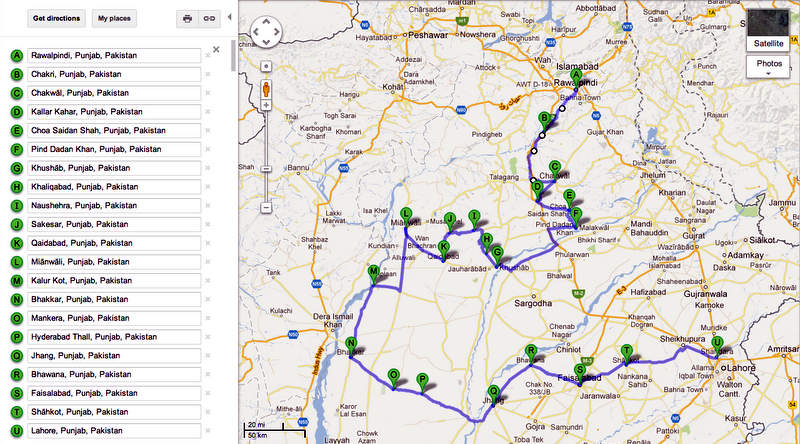
In 2010, I embarked on an ambitious bike trip of Punjab, visiting 30 cities in 30 days, covering 5,000km. That was a wonder experience but limited to big cities and towns. This time I want to see the rural side of Punjab. The idea is to avoid highways and travel through the roads connecting villages and small towns of Punjab. The following photographs are from the first phase of this trip, from Rawalpindi to Lahore through the towns and villages in west Punjab, away from the G.T. Road. I quit my day-job a few months ago. The 9-6 life wasn’t meant for me, I guess. Folklore and Punjab are the two things that fascinate me the most. That’s the reason I founded folkpunjab.com. These travels will one day provide me the base for writing something substantial on the folklore of Punjab. Continue reading A Journey in the Punjab: Sohail Abid

Petition – End the Scourge of Manual Scavenging

This statement is based on a Seminar attended by representatives of Safai Karamchari Andolan, Republic Trade Union of India, Centre of Indian Trade Unions, Tamil Nadu Untouchability Eradication Front; Advocates, Doctors and Health Activists; Faculty and Students of MIDS, IIT-M, New College, ACJ, MSE, Madras University among others. The discussion was one among many incidents happening across the country to support the struggle for abolishing manual scavenging and rehabilitation of manual scavengers.

Others who would wish to endorse this statement may please use the link attached along with this post (from change.org) to sign it.  http://www.change.org/en-IN/petitions/end-the-scourge-of-manual-scavenging-now.

More than a million people (mostly Dalit women and children) in India are still being ordained by the caste-ridden social order to clean the refuse of society with their bare hands. They are systemically forced to sell their labour-power, at a minimal price, to perform this inhuman task – what is termed as “Manual Scavenging”. People from particular Dalit communities, cutting across region and religion, are vulnerable to early death due to fatal infections, disease and exposure to toxic gases that manual scavenging entails. Further, age old casteism, continues to stigmatize and humiliate manual scavengers suppressing them to the status of “lesser humans”. Continue reading Petition – End the Scourge of Manual Scavenging