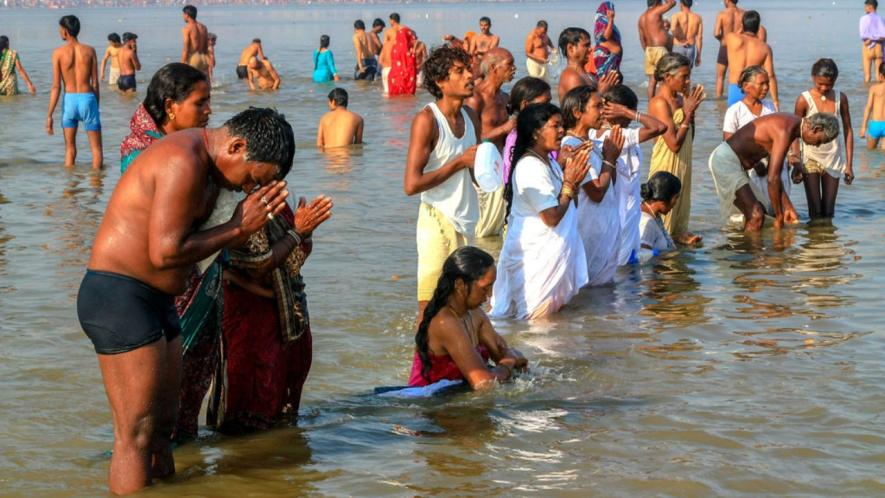
Did Hindutva supremacists make devotees bathe in polluted sewage water during the Mahakumbh?
Faith and filth have an uncanny existence together
The latest in series happens to be the report by the Central Pollution Control Board (CPCB) underlining how they have found high faecal bacteria levels in Prayagraj river water, which fails bathing standards and the summoning of the Uttar Pradesh PCB (UPPCB) authorities by National Green Tribunal (NGT) over non-compliance of directives regarding ‘serious water quality violation in Ganga, Yamuna at Prayagraj’
The fact is that NGT has repeated itself when it said that high levels of faecal and total coliform were found at various locations at the Maha Kumbh, during a hearing on allegations that untreated sewage has been discharged into Rivers Ganga and Yamuna in Prayagraj.
Will the UP Chief Minister Yogi Adityanath’s rejection of this report on the floor of the House and underlining that the water at the Sangam was fit for ‘drinking’ serve any purpose when NGT grills the UPPCB authorities over non-compliance of their directives issued earlier over the quality of water?
Any sane person would know the answer.
May be in a bid to appear uncompromising or cover his own nervousness over the developments, Adityanath tried to question the veracity of this report – in an indirect way – by condemning people who spread misinformation against “Sanatan Dharma, Maa Ganga, and India” and warning them that they were attacking the “faith of those 56 crore people who had taken a bath there.”
“ Do Not Put Each Foot in a Different Boat.” – Chinese Proverb
A defeat in elections should not be The End of politics for a political party.
There are examples how parties who were humbled in one election could bounce back with huge majority in next elections.
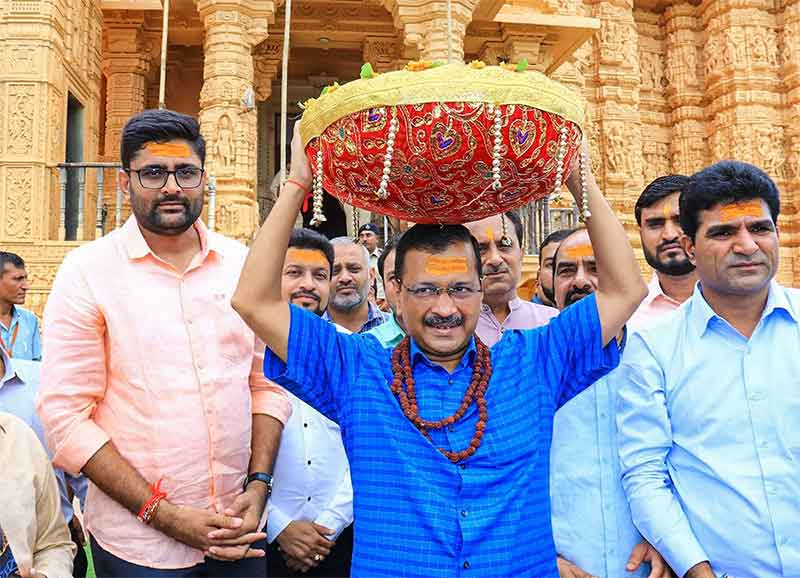
It is a different matter that with AAP ( Aam Aadmi Party) things seem to be unfolding in rather unpredictable ways, thanks to its rather unceremonious exit from the citadels of power in Delhi and defeat of all its top leaders in the recently held elections to the assembly.
Nobody would have imagined that its Supreme Leader would feel so insecure after the loss that he will summon all MLAs of his party – which is leading the government in neighbouring Punjab – to the national capital the very next day for consultation or may be sweet talk.
No doubt it did give way to speculations about increasing disgruntlement within his party and its legislators and their being in search of greener pastures.It also rekindled debate about the personality centric functioning of the AAP or how a close confidante of Kejriwal was appointed on a key post under Bhagwant Mann – Chief Minister of Punjab – last year itself which was construed as clipping of his wings by the opposition. ( Read the full article here : https://countercurrents.org/2025/02/whether-aaps-defeat-can-become-a-wake-up-call-for-new-cheerleaders-of-hindutva-lite-politics/
[मध्ययुग में पश्चिमी जगत में आधुनिकता के आगमन ने धर्म के वर्चस्व को जो चुनौती दी थी, भारत में अंग्रेजों के आगमन के बाद पैदा हुई परिस्थितियों और राजनीतिक आजादी ने यहां धर्म के प्रभाव को और अधिक सीमित कर दिया। रूढ़िवादी, प्रतिक्रियावादी ताकतों ने समय-समय पर इस बदलाव को बाधित करने की कोशिश की। संविधान निर्माण से लेकर स्त्रियों को अधिकार-संपन्न करने के लिए ‘हिन्दू कोड बिल’ को सूत्रबद्ध एवं लागू किए जाने का हिन्दुत्ववादी ताकतों ने जिस तरह से विरोध किया, ऐसी ही बाधाओं का ही परिणाम रहा कि डॉ. आंबेडकर को नेहरू के मंत्रिमंडल से इस्तीफा देना पड़ा। यह आलेख संविधान-निर्माण के दौरान स्पष्ट तौर पर उजागर हुए राष्ट्रीय स्वयंसेवक संघ के स्त्री-विरोधी विचारों एवं सक्रियताओं की पड़ताल करता है]
वह 1936 का साल था, जब राष्ट्रीय स्वयंसेवक संघ (RSS) के विचारों एवं कार्यों से प्रभावित होकर नागपुर निवासी लक्ष्मीबाई केलकर (1905-1978) ने संघ के संस्थापक सदस्य डॉ. केशव बलिराम हेडगेवार से मुलाकात की और संघ से जुड़ने की इच्छा जाहिर की थी। सुश्री केलकर- जिन्हें बाद में लोग मौसीजी नाम से पुकारने लगे थे- को यह कतई उम्मीद नहीं रही होगी कि संघ सुप्रीमो इस प्रस्ताव को ठुकरा देंगे और उन्हें सिर्फ स्त्रियों का संगठन बनाने की सलाह देंगे। ‘’राष्ट्र सेविका समिति’’ की स्थापना की यही कहानी बताई जाती है, जिसे आरएसएस का पहला आनुषंगिक संगठन भी कहा जा सकता है।
राष्ट्र सेविका समिति की जब स्थापना हुई, तब RSS का निर्माण हुए 11 साल का वक्फा गुजर चुका था। वह दौर औपनिवेशिक शासन के खिलाफ तथा सामाजिक उत्पीड़न से मुक्ति के लिए उठी हलचलों का था, जिसमें स्त्रियों ने बढ़-चढ़ कर हिस्सा लिया था। भारतीय राजनीतिक-सामाजिक जीवन में जबरदस्त सरगर्मियों के इस दौर में संघ संस्थापक महानुभावों में से किसी को भी यह खयाल तक नहीं आया था कि आबादी का आधा हिस्सा स्त्रियां उनके नक्शे से गायब हैं। वैसे, उन्हें इस बात का एहसास होता भी कैसे क्योंकि इन दोनों किस्म की हलचलों से उन्होंने दूरी बना कर रखी थी और अपने बेहद संकीर्ण व असमावेशी नजरिये के तहत संगठन बनाने में जुटे थे। धर्म आदि के आधार पर जिन्हें वह ‘अन्य’ समझते थे, उनको लेकर अपनी एकांगी सोच के प्रचार-प्रसार में सक्रिय थे। ( Read the full article here : :https://followupstories.com/politics/women-in-hindutva-ideological-realm-and-historical-blunder-of-rss/)
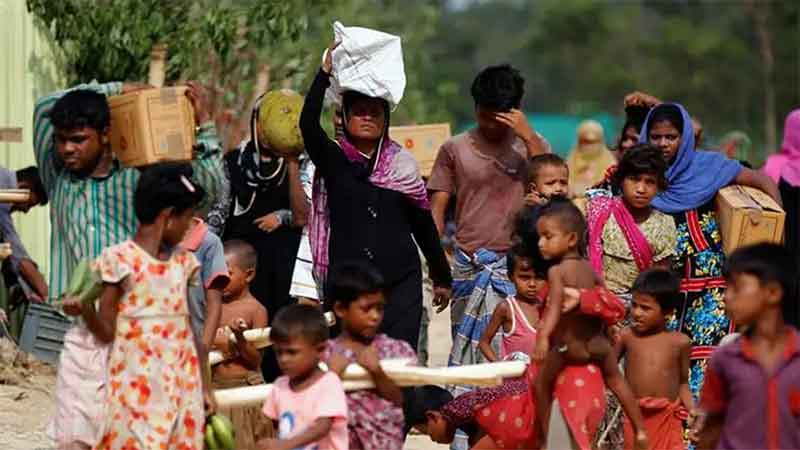
Aisha, a 7 year old girl living in Khajuri Khas Colony of Delhi, is yearning for a day when like her elder sister Asma, she would also be admitted to a nearby government school.(1)
This possibility is growing dimmer by the day, as the school has refused her admission and asked for Indian documents like Aadhar – which refugees do not possess.
Aisha is the younger daughter of Ahmad, a Rohingya refugee who has finally reached Delhi and has duly received his UNHCR card – which refers to the document issued by the UN refugee agency.
Thanks to the circular issued by Delhi government ( Dec 24) led by AAP asking schools to ensure strict guidelines during admissions perhaps Aisha will have to remain satisfied with the same private school which lacks facilities.With a drive underway to ensure that children of “illegal Bangladeshi immigrants” are not allowed enrolment, Aisha knows very well that her fate is sealed. (2)
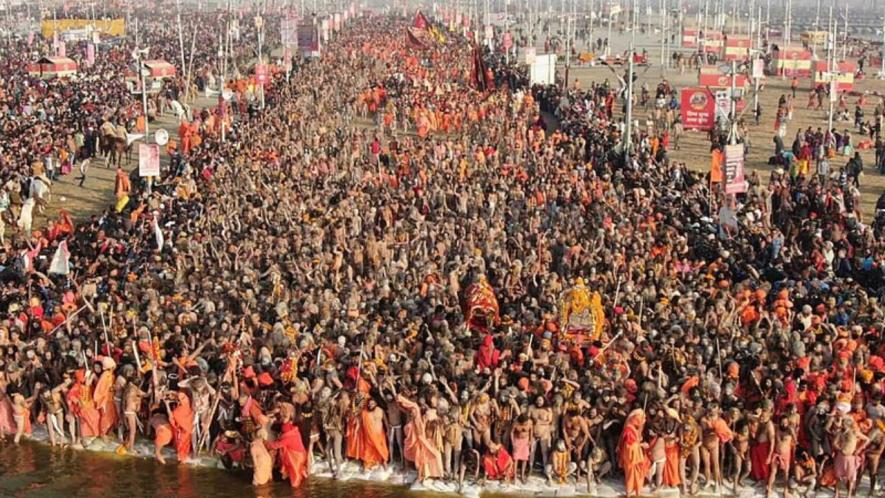
The Mahakumbh has provided Hindu Supremacist forces an opportunity to further marginalise and invisibilise Muslims, and further push for a ‘Hindu Constitution’.
Whether Uttar Pradesh Chief Minister Yogi Adityanath will be able to recover his image after the tragedy at Mahakumbh, which officially killed more than 30 people and wounded many, many more, is a question being raised in hushed voices in the corridors of power in Delhi.
Obviously, questions are also being raised about the great hiatus between the massive propaganda undertaken around the Mahakumbh and the level of preparations for this ‘biggest congregation on earth’….
For Chief Minister Adityanath, who had ‘positioned himself as the ‘host of the biggest congregation on earth’, the path ahead looks challenging, with the tremendous ineptness of the administration led by him on full display. Much has been reported about conscious attempts made allegedly to downplay the tragedy and how it continued for the whole day. A UP minister, supposed to be close to the Chief Minister, even made a controversial statement that “such small events keep happening in large gatherings.” The statement caused so much uproar that he had to issue an apology. The mainstream media added another page of shame to its track record when it continued to publish government handouts, and did not even deem it necessary to report the tragedy. ( Read the full article here : https://www.newsclick.in/road-kumbh-paved-hindu-rashtra-intentions)
In the past weeks, the Malayalam press has been abuzz with a case of gruesome murder — by a young, highly-educated woman named Greeshma who plotted murder to end a relationship that she did not wish to continue. In 2022, she poisoned her boyfriend who was apparently reluctant to end the relationship. He died a slow and painful death. It was subsequently found that the murder was a family conspiracy — and that the woman’s mother and maternal uncle were accomplices. The police investigation revealed that Greeshma had committed premeditated murder; the Neyyatinkara Sessions Court awarded the 24-year-old the death sentence, calling the murder “brutal, gruesome, diabolical, and revolting.”
“..Consume less food, purchase a cheaper mobile phone, anything, only promise to have five tridents in a home”.
– Another VHP leader addressing a meeting in Delhi.
Provocative speeches and distribution of what is being peddled as ‘legally permissible weapons’ , very much in the heart of the national capital ; detailed plans to hold similar events all over the city, on the eve of elections – all this has not stirred the deep slumber in which the law and order machinery found itself in.
Thanks to the inaction, now the campaign to arm a section of radical Hindus has reportedly spread to the womenfolk as well. Plans are afoot to distribute 20,000 daggers to women from the majority community under what is being billed as ‘Shastra Deeksha Samaroh’. In fact, media was agog with footage of daggers being distributed to Hindu women in the second week of January itself.
No doubt, it would be height of innocence to presume that the silence of the officers/ personnel entrusted with maintaining law and order in the city – which is directly under the purview of the Ministry of Home – is inadvertent. ( Read the full article here : https://www.newsclick.in/tridents-men-and-daggers-women)
The erosion of democracy worldwide has placed all those who self-identify as democrats in a conundrum. We are loath to recognise the inherent imperfections of democracy because it is by championing democracy that we seek to challenge authoritarian rule. However, the failure to acknowledge the potential distortions of democracy has consequences, obliging us to confront the question of the ways in which democracy must be safeguarded, if necessary against itself.
About the Speaker :
Niraja Gopal Jayal joined King’s India Institute as Avantha Chair in October 2021. She was formerly Professor at the Centre for the Study of Law and Governance at the Jawaharlal Nehru University, New Delhi and presently also Centennial Professor (2019-23) at The London School of Economics, in the Department of Gender Studies.She has also held visiting appointments at, among others, Princeton University, King’s College, London, and the EHESS, Paris.
Her book Citizenship and Its Discontents (Harvard University Press and Permanent Black, 2013) won the Ananda Kentish Coomaraswamy Prize of the Association of Asian Studies in 2015. She is also the author of Representing India: Ethnic Diversity and the Governance of Public Institutions (Palgrave Macmillan, 2006) and Democracy and the State: Welfare, Secularism and Development in Contemporary India (OUP, 1999). She has co-edited The Oxford Companion to Politics in India, and edited, among several others, Democracy in India (OUP, 2001) and Re-Forming India: The Nation Today. (Penguin Random House, 2019) Her most recent book is Citizenship Imperilled: India’s Fragile Democracy (Permanent Black).
How to denigrate India’s historic freedom struggle and humiliate the sacrifices of martyrs, and keep sermonising happily ever after
Image Courtesy: Wikimedia Commons
‘Though this be madness yet there is method in it…’
–‘Hamlet’, Shakespeare I.
The search for the real Independence Day has perhaps become longer in the Hindutva supremacist circles.
Close on the heels of the likes Kangana Ranaut, film actress and ruling Bharatiya Janata Party (BJP) Member of Parliament, who had (in)famously said that “India attained freedom in 2014 and 1947 was ‘bheek’”, or alms and Vikram Massey, another flop Bollywood hero, questioning the freedom of 1947 as “so-called” Independence, has come the news that the numero uno of the Sangh Parivar, Mohan Bhagwat, has joined the ranks.
Speaking on the first anniversary of the Ram Temple inauguration day in Indore (as per the Hindu calendar), the Rashtriya Swayamsevak Sangh (RSS) chief underlined that this day of consecration should actually be celebrated as “true independence” of Bharat, which faced enemy attacks “parachakra” for several centuries.
As expected, Bhagwat’s remarks have received widespread condemnation in Opposition circles. Congress leader Rahul Gandhi has even called it an act of “treason” and asserted that they were an affront to every Indian. He even underlined that the “[R]SS chief would have been arrested in any other country” for such controversial remarks.
Looking at the fact that Bhagwat happens to be the supremo of the ‘biggest cultural organisation in the world’, whose ideology drives India today, who has the complete liberty of sharing his pearls of wisdom whenever he deems it necessary, at times even boomeranging on the organisation, it is difficult to imagine that any action would be taken against him, or whether he will be censured for his controversial remarks, which are an attack on the sacrifices and historic legacy of the freedom fighters as also on the Constitution. ( Read the full text here :https://www.newsclick.in/bhagwat-puran-different-kind)
(This is the fourth in a series of articles looking back at the Kafila experience over the last nearly two decades. Previous articles in this have been written by Subhash Gatade, Aditya Nigam and J Devika.)
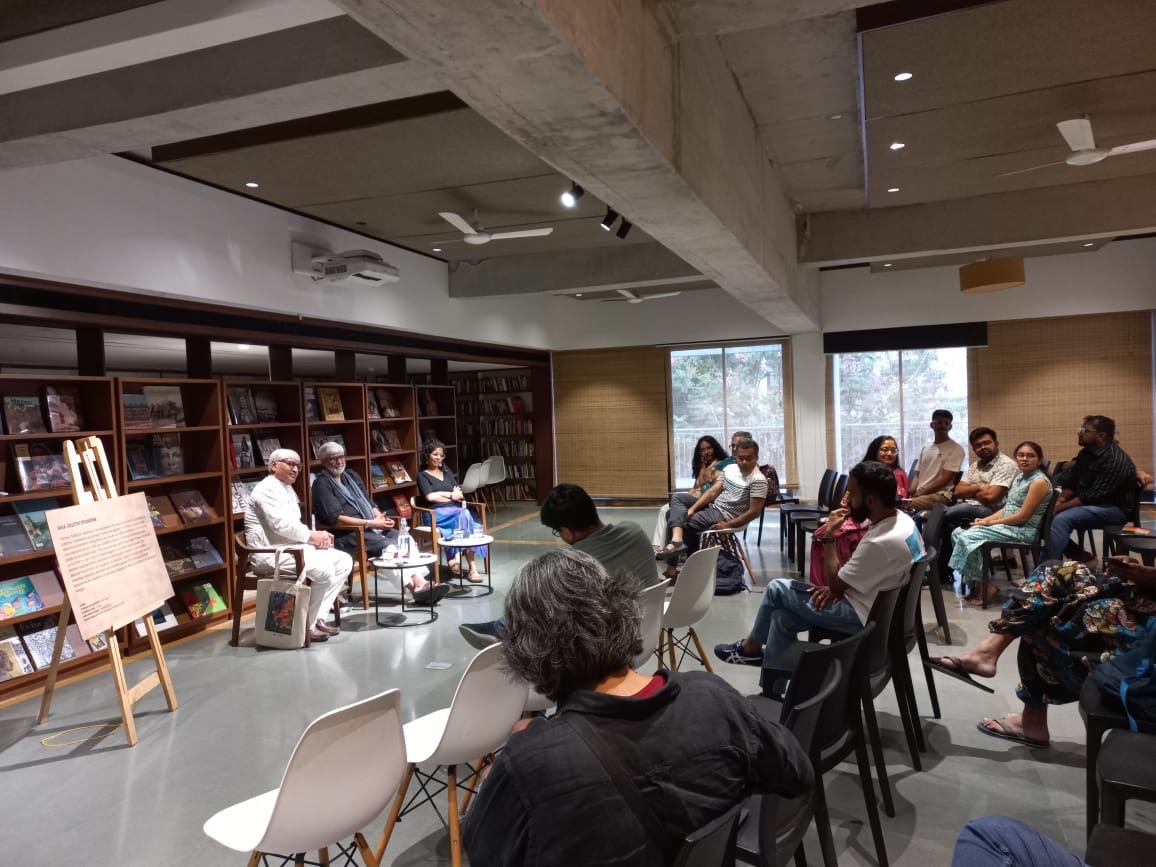
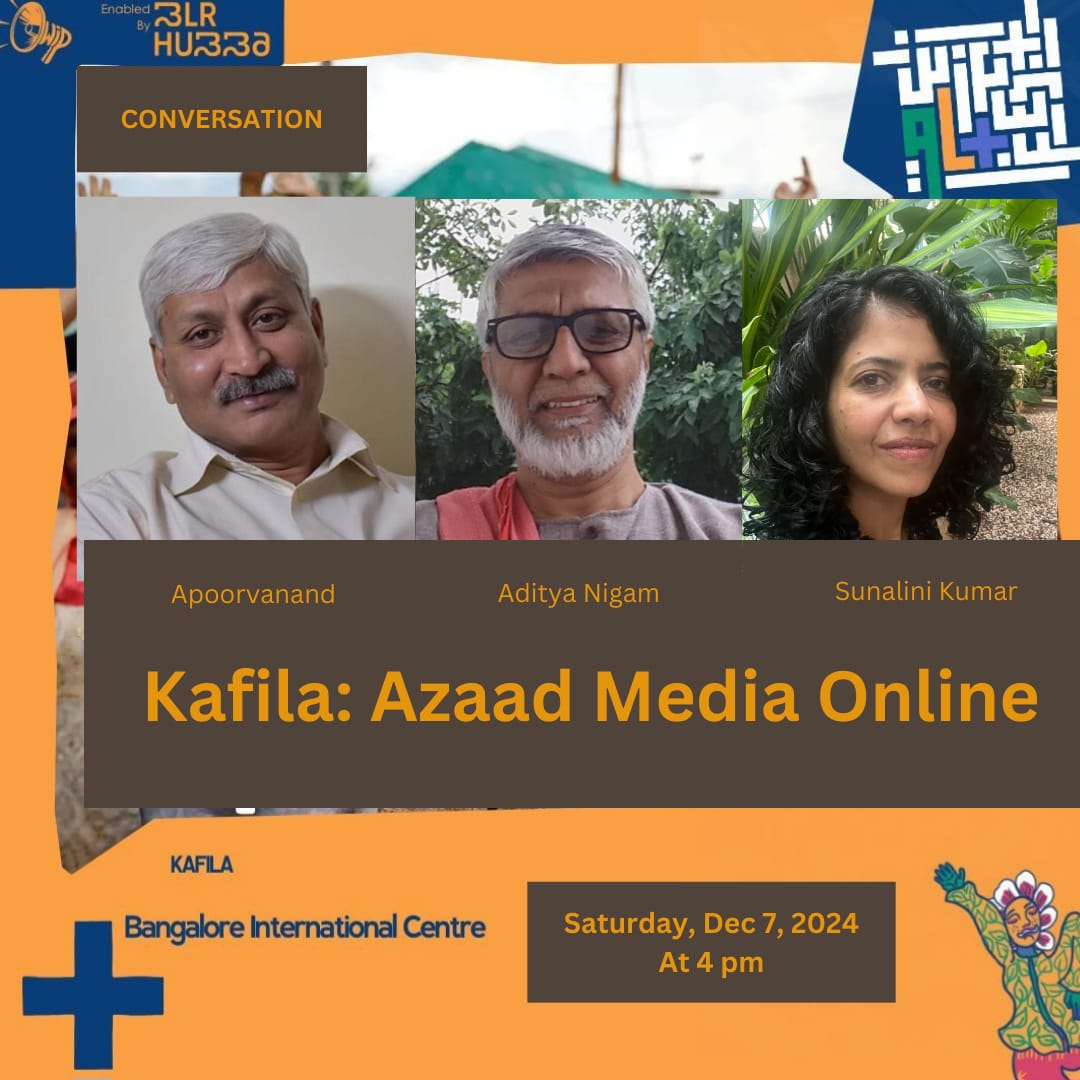
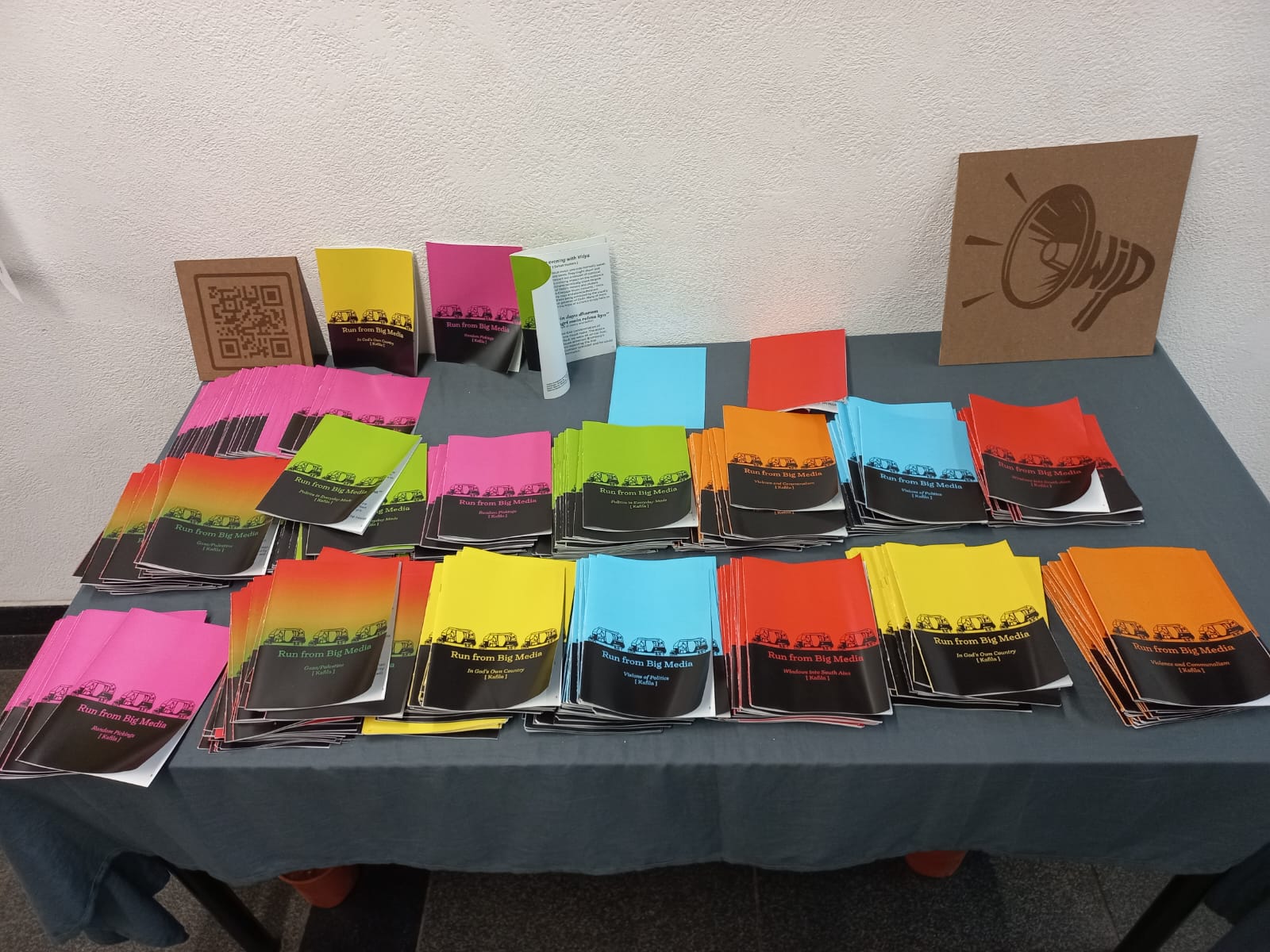
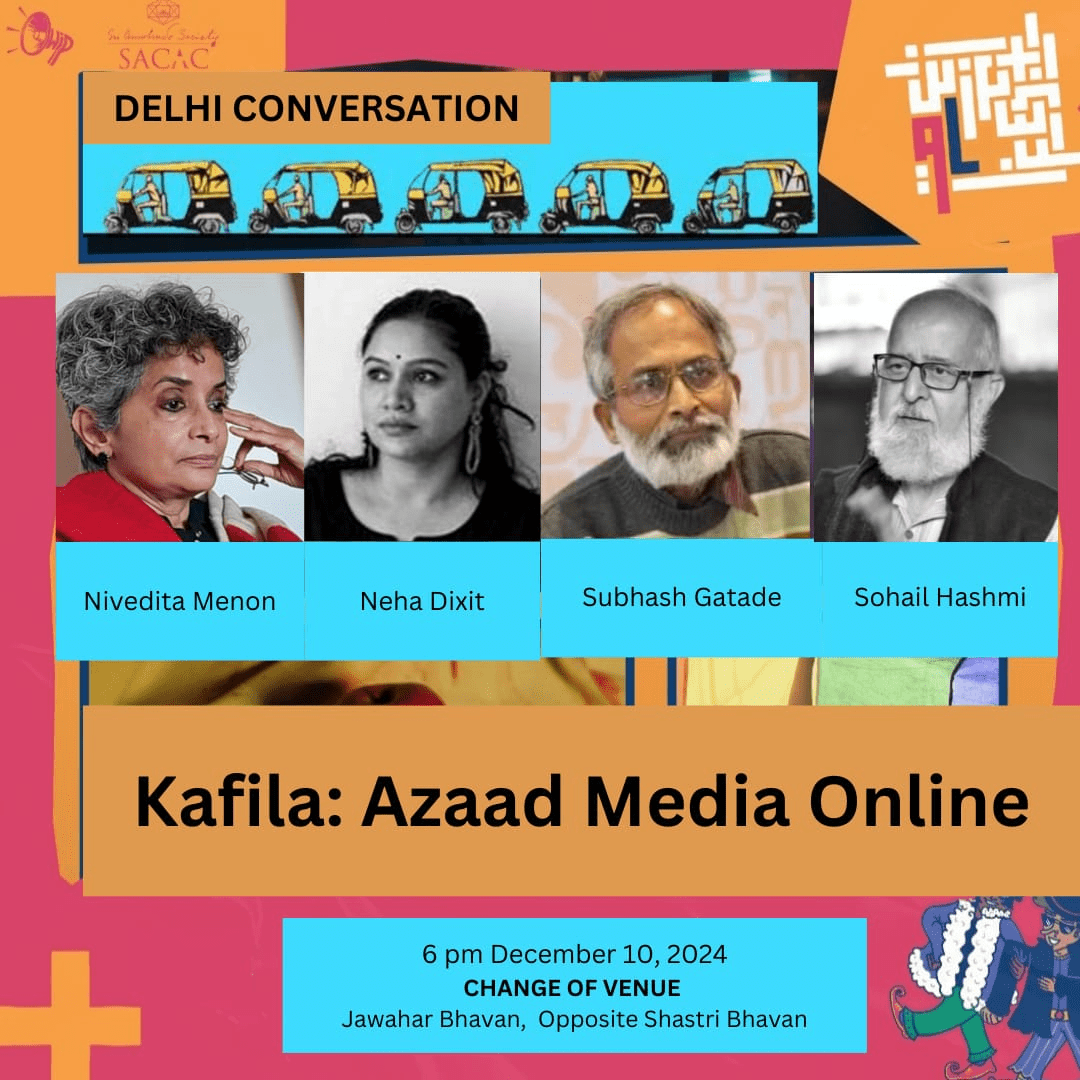
Kafila:Azaad Media Online Panel at the Alt Fest, Bangalore, December 7, 2024
Time has a funny way of flowing, stopping, or vanishing altogether. Looking back at 2008 I cannot believe it’s been a decade and a half and a little more since I joined a motley group of friends and strangers writing for a collective blog called Kafila., who had in their own way responded to a particular historical and political moment, as Aditya has written. At the time, I was ill-informed about the possibilities of online media in general, and in particular, of blogging as a way to Run from Big Media – our tagline. Perhaps it was for the best, since trawling through mine and others’ early essays I am struck by the sheer anarchy of topics on display. My own concerns at this prelapsarian moment ranged from the Disneyfication of childhood in America, to the global media orientalism on the solar eclipse, and student suicides and the seductions of the film industry in Mumbai. Over time, the articles on the blog became more directly political for most of us, a function possibly of the increasing polarisation in the country and region at large. I also developed some pet obsessions – sewer deaths, industrial accidents and deaths in general, and the state of higher education and teacher’s movements in India. On the whole I see now that I wanted to write most about labour.
When it started, Kafila to me was as a way to run from rigid editorial guidelines, the urgency of 24×7 news cycles and sometimes from one’s own intellectual and journalistic obsessions, to an open pasture where you had the space to explore a range of ideas. It did mean we unleashed ourselves on an unknown audience, but in the sixteen years that have followed since that early pasture grazing, the audience has come through and come back again and again, forming and unforming around authors, ideas, hashtags and events. The inchoate, often anonymous readership and the autonomous, deeply impassioned, even frequently explosive nature of those interactions remain to me the most treasured parts of being part of Kafila. In the posts, the comments section and in guest posts written independently or in response to one of the Kafila authors posts, the conversations would start and continue sometimes for months. Naturally, this was much more the case during ‘peak moments’ – events that the entire country and region was focused on including the IAC/Anna Movement; the Singur-Nandigram events, the Delhi gang rape of 2013 and other equally heinous rapes around the country that suddenly began to capture mainstream media’s attention; the JNU attacks and arrests and protests that followed; the suicide of Rohith Vemula; the CAA protests.
Looking back again, when the disillusionment with big media has not only deepened in these times but been additionally seasoned with suspicion about fake viewerships and bot troll armies, even the worst, most bruising of those reader vs author or reader vs reader fights seems like a gift the readership bestowed unknowingly on us, and on time as it passed. A stupendous archive of public engagement as it stands now – a kind of Kafilore.
Six years after my joining Kafila, the NDA coalition brought the Hindu supremacist BJP to power, and overnight, the sense of urgency in all of these conversations intensified manifold. To us at Kafila, even as we were getting smarter at reading the ground, and managing the technology and logistics of running an online blog, the election of 2014 brought up serious new concerns around media ownership for the mainstream press. Sometimes this had the unintended effect of strengthening the alternate media space and some Kafila members began to write for other blogs; or co-write for them, so we could reach wider and more diverse audiences.
To many readers from around the country and the world, the Kafila homepage may have conveyed a sense of cosiness – as if all 22 of us were not only literally on the same page on the blog, but sharing a giant living room and many cups of tea, thrashing out “the Kafila position” on things. Nothing could be further from the truth. I still – sixteen years later – haven’t met many co-authors, and know them only by their names and posts. Authors didn’t always have the time to read each other’s posts and even the smaller group that handles admin can go weeks without communication. On top of this, the fights! The intense ideological, political, intellectual disagreements that took place amongst Kafila authors – on issues ranging from our political convictions and affiliations to how to deal with anonymous comments and commentators that were becoming exhausting trolls – they are an archive of Kafilore in themselves. I remember sometimes being in a trance of comments, moderation, disputes on moderation, counter-comments and posts and email avalanches that lasted for days.
And looking back now, how else could it be? If we were to run from big media and party politics, we couldn’t legislate these things. We had to work them out case by case however tiring it got. Further, we had to stand behind our word when we said we allowed open disagreement and full free speech. This sometimes meant guest posting an article furiously critical of something we had written. When it happened to me, it was a sobering and humbling experience. And for that reason, likely more valuable than the posts in which I got thousands of views. I was forced to think about my unconscious prejudices, my location, and always, the question of reception in a polity as large and diverse as ours. Sadly, for many, many readers and observers and commentators on the outside, Kafila could never quite shake its image of being a clique. I hope when more histories from this incredible archive of Kafilore are written – both about the blog and the times it was responding to – that image is dented and eventually fades away.
In sum, I don’t think any of us – even the founding members and indefatigable warriors still active on the blog – really understood what a miracle it was to have a non-funded, independent media collective functioning for so long and with such a wide impact. We had our day jobs and daily struggles, and we were often late to the party in terms of catching up with everything that was unfolding in the alternate media space. On the other hand, Kafila was sometimes the first to notice something that mainstream media would later pick up.
As others have written, the online and independent/new/social media space exploded in the decade that followed Kafila’s establishment. The question of relevance of a blog like this today is always in the air when we meet or communicate, as we did at the recent panels in Bangalore and Delhi looking back at eighteen years of Kafila. Multiple exciting suggestions were offered at these events by long-time supporters or new followers. Kafila may host long-form essays in the future; a podcast or a series of short videos could be in the offing. In any case, Kafila signals a moment in the life of the country/region/world and it made something unknown appear into the light. So we continue to Dissent, debate, create!
I started writing on Kafila in 2007. I met Nivedita at a conference in Delhi where she listened to my research on sexuality and development in Kerala; she took me by the arm gently, persuaded me to start writing in a non-academic but rigorous style, and showed me the possibilities of the new medium.
Abstract :As we celebrate the 75th year of the Constitution, it is important to remember that Indian federalism flowered late. In the initial years, the development of democracy overshadowed the federal provisions of the Constitution. Certain formulations of the Constitution and single-party dominance even cast doubts on its very existence.
Dismissed as quasi, much was made of the preference for the term Union to question even the federal intent of the framers of the Constitution. As India’s federal polity developed, it became clearer that federalism was not merely intended but also an integral part of the basic structure of the Constitution. It was further defined and refined with asymmetrical provisions to accommodate its burgeoning diversity.Is it being denied today?
The federal fact is central to the understanding of contemporary Indian politics. Federalism has imparted resilience to Indian democracy. Traditionally, the concept of federalism involved relationships between central governments and federated units. Defined in legal- constitutional terms as different power distributions between the central government vis-à-vis the states and local governments, they typically limited relationships to those between governments, notably between various actors in the executive branch. We seek to go beyond this framework to look at federalism as a democratic process.
The threats to the federal essence of the polity are many, majoritarianism being the foremost. Majoritarian democracy is incompatible with the federal principle, which is based on the recognition of the right to self-rule for all constituents of the federal polity. Is this under siege today by an integrationist vision that seeks unity through uniformity? How can federal democracy be protected and preserved under these conditions? Can it be made more secure?
About the Speaker : BALVEER ARORA is Chairman, Centre for Multilevel Federalism and Former Professor of Political Science and Rector, JNU. Earlier, he was a visiting fellow at the National Political Science Foundation, Paris and the Center for the Advanced Study of India, University of Pennsylvania, USA. He has edited / co edited many books : Here is a list of few of his publications : – Transforming India: Social and Political Dynamics of Democracy – Multiple Identities in a Single State: Indian Federalism in Comparative Perspective – Party System in India: Emerging Trajectories , – Federalism in India: Origins and Development – The Value of Comparative Federalism: The Legacy of Ronald L. Watts – Federalism and Public Health in India: Dissonant Discourses
An expanded version of the presentation at the panel on Kafila held as part of the W.I.P alt.FEST held in Bangalore and Delhi in December 2024. While the first post in this series by Subhash Gatade is linked below in the text, the third by J. Devika can be read here.
Kafila was formally launched on 6 November 2006 at a session of the India Social Forum in Delhi, though its first post had gone up a couple of weeks earlier, on 19 October. However, there is a prehistory to the actual formal formation of Kafila which goes back to two earlier movements that had brought many of us together.
As rightly mentioned by Subhash Gatade in his reflections, the first of these was the movement against the relocation of polluting/ hazardous industries starting from late 1996. It was this movement that, perhaps for the first time in India brought the issue of workers’ rights into the discourse on urban pollution and environment. It took the discussions on urban planning, linking air and water pollution, zoning, transport policy and questions of workers’ occupational health, outside the charmed circles of urban planners. Initiated by the Indian Federation of Trade Unions, the formation of the Delhi Janwadi Adhikar Manch was the platform that had enabled this by bringing all of us together.
Times when the space for debate and discussion had not shrunk as we it witness today, when stigmatisation of ‘others’ or ‘criminalisation of differences’ had not yet started; times when one had rarely heard about writers. rationalists or cultural workers coming under murderous attacks in this part of South Asia, just because they dared to speak the truth.
Perhaps it is better to begin from the beginnings.
One still remembers the very first meeting we had at CSDS, Delhi in Aditya’s room to discuss the idea of a blog and its launching. Apoorvanand was there, a young blogger Shivam Vij – was also present ( who became a ‘Guru’ of many of us ‘oldies’ for sometime, who were then taking baby steps in this virtual world of self publishing).
For me it was my first experience to be directly associated with a blog.
None of us had any premonition that we are in for interesting times and would be helping catalyse conversations on various issues of concern among a wide spectrum of writers, activists, scholars and concerned individuals.
All of us had our own teething troubles then, in fact initially I found it extremely difficult even to upload my posts on the blog and had to take the help of a close friend in the IT sector to do it.
What is worth underlining about Kafila
Looking back, one today feels mesmerised the way it could attract people of various shades to contribute for the blog . Thanks to the wide network of contacts of a few among us- the number of admins reached the figure of twenty two . What connected them was their unflinching opposition to communalism, capitalism, casteism, patriarchy etc and their yearning to enhance and enrich the intellectual atmosphere in their own way and promote a culture of discussion and debate in the rest of the society.
Nirbhaya movement and the India against Corruption campaign – popularly called as Anna Movement were the two high points when Kafila reached its peak. One can still recall Shuddho returning from a rally in Jantar Mantar and on his way back home, posting an article on the theme which used to gather scores of comments the next morning
It was a period when even the mainstream magazines, publications felt it necessary to pay attention to the debates happening there and gladly rerepublished pieces which had earlier appeared on Kafila or even referred to Kafila post. Another important facet of Kafila was that there were occasions when the views of Kafila admins themselves differed but what was remarkable that it did not create any bad blood or any rancour among us. We continued to remain friends / comrades as earlier.
Perhaps it also had its genesis in the long bonding which had emerged between many of us during various social political interventions in the capital since mid nineties. Campaigns for defence of rights of workers (Delhi Janwadi Adhikar Manch) or struggles against communalism (Aman Ekta Manch) or issue of caste (Durban Abhiyan) etc
Anna movement was the high point also because it clearly witnessed a clear division of opinion between us – few of us were completely opposed to the movement for its politics, who felt that it was a RSS inspired movement but others were equally vehement supporters of the movement, who felt that it provided a ray of hope in those times.
Another important point was the impact it could generate across a large sections of people.
It was the year 2014 ( elections were yet to be held) and one fine morning I got a call from an officer associated with a Eurozone country that he wanted to meet me. This gentleman – who was much familiar with Kafila – who had even read the morning article which had appeared in Kafila, felt that someone like me could provide him with necessary details and analysis of the unfolding situation and also the possibility of Modi’s coming to power.
What one observed that influence of Kafila was not restricted to only lefts and liberals, it was also read by the Rightwing.
A close relative of mine – who was then associated with a Hindutva Rightwing organisation but had started having doubts about their project – then had shared with me about the discussion he heard in the ‘family’ office.
He heard two of the seniors talking, ‘ we should learn from Kafila, look how they write and polemicise’
दुनिया में जनतंत्र पर मंडराते खतरों की तरफ हाल के समय में बार-बार लिखा गया है। जानकारों ने इस बात को साफ किया है कि किस तरह जनतंत्र का कवच साबित होने वाली उसकी संस्थाओं को अंदर से कमजोर करके, कार्यपालिका, विधायिका या न्यायपालिका को अंदर से खोखला करके या इन सुरक्षा कवच ( guardrails of democracy) का अपहरण करके भी इसे बखूबी अंजाम दिया जा सकता है।
भारत में जहां हम कार्यपालिका का, अर्थात उसकी विभिन्न संस्थाओं को प्रभावहीन बनाने या उन्हें सत्ताधारी पार्टियों के मातहत करने की परिघटना को बारीकी से देख रहे हैं, मगर अभी तक न्यायपालिका में आ रहे बदलावों की तरफ हमारी निगाहें कम गई हैं।
गौरतलब है कि भारत में ऐसे बहुत कम कानून के विद्वान हैं या वकील हैं जिन्होंने भारत की न्यायपालिका के गति विज्ञान को बारीकी से देखा है और उसके रास्ते हमारे सामने रफ्ता-रफ्ता नमूदार हो रहे ख़तरों की तरफ इशारा किया है। जनाब डॉ. मोहन गोपाल, का नाम ऐसे लोगों में शुमार है।
कानून के यह आलिम और प्रैक्टिशनर हिन्दुत्व वर्चस्ववादी ताकतों के नज़रिये के बारे में और उनकी रणनीतियों के बारे में बारीक समझ रखते हैं और संविधान के हिसाब से एक धर्मनिरपेक्ष, लोकतांत्रिक, समाजवादी और संप्रभु भारत को हिन्दू राष्ट्र में तब्दील करने के उनके इरादों के बारे में बताते हैं कि ‘वह संविधान को उखाड़ फेंक कर नहीं बल्कि सर्वोच्च अदालत द्वारा उसकी एक हिन्दू दस्तावेज के रूप में व्याख्या करके’ अमल में लाना चाहते हैं।
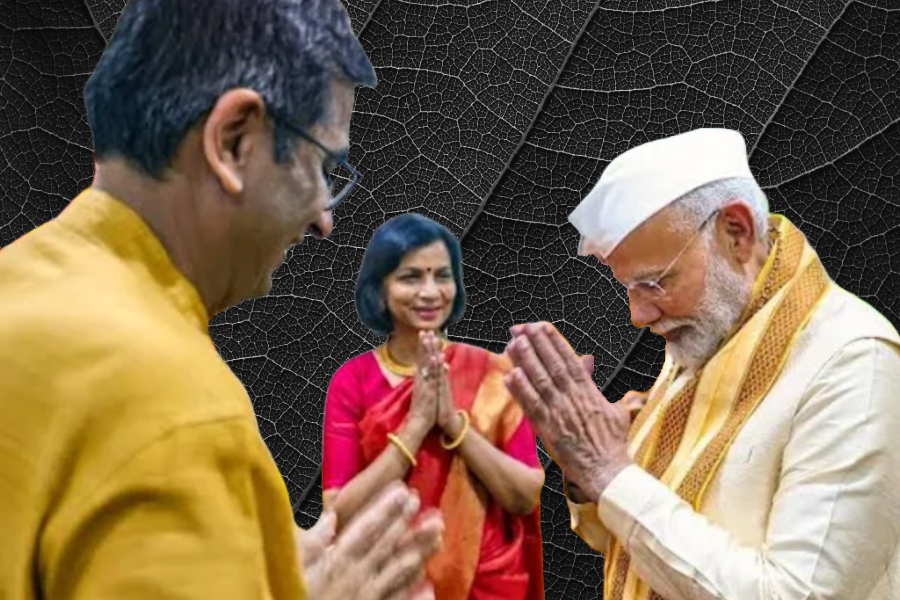
Is the judiciary being internally hijacked to usher in Hindu Rashtra?
There are a very few legal scholars or advocates who have perceptively looked at the dynamics of India’s judiciary and cautioned us about the dangers that can come our way through those routes only.
Dr Mohan Gopal, is an exception.
This noted scholar who has been very clear about the worldview and strategies of the Hindutva Supremacist forces to achieve the goal of establishing Hindu Rashtra, explains their strategy of executing it “not by overthrowing the Constitution but by interpretation by the SC as a Hindu Document”
Speaking in a programme organised by Live Law, Gopal had explained its dynamic as a two-step process:
One, appointing judges who are ready to look beyond the Constitution.
Two, how with an increase in the number of theocratic judges who find the source of law in religion rather than the Constitution, it will be easy to declare India as a Hindu theocracy under the same Constitution.
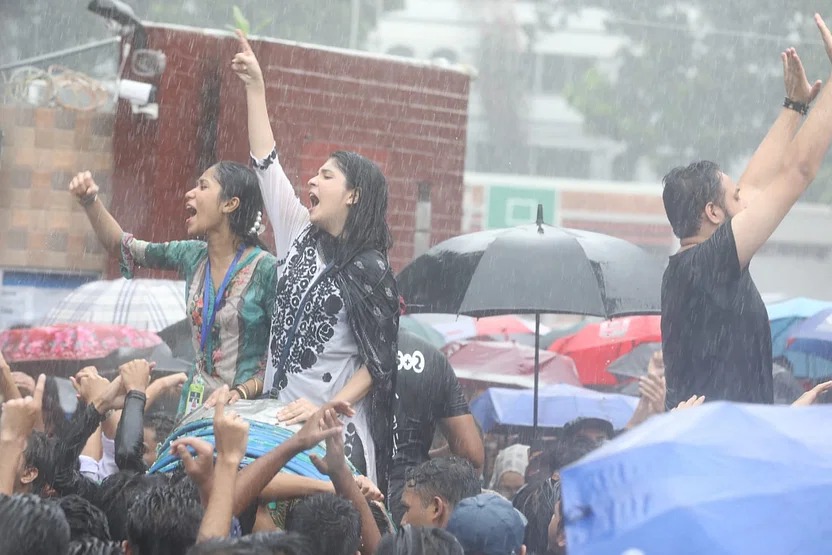
Students protesting in Uttara, Dhaka, August 2, 2024. Photo: Ashraful Alam
Sheikh Hasina, often labelled as fascist and autocratic leader in Bangladesh, was forced to flee the country following a popular uprising in July-August 2024. Many writings have appeared exploring the character of the movement and the consequent developments. Recently, renowned Indian historian and journalist Vijay Prashad published an article titled ‘Will Bangladesh be another Egypt?’, where he expressed the concern that Bangladesh could follow a path similar to Egypt’s. Vijay presents the popular uprisings as both a continuation and, to some extent, a counter-response to the Shahbagh movement, while drawing parallels to the Arab Spring. However, his disregard for certain political realities in Bangladesh—such as the country’s long tradition of democratic movements and the presence of major centrist parties like the BNP—makes his comparison uneven and incomplete in some respects.
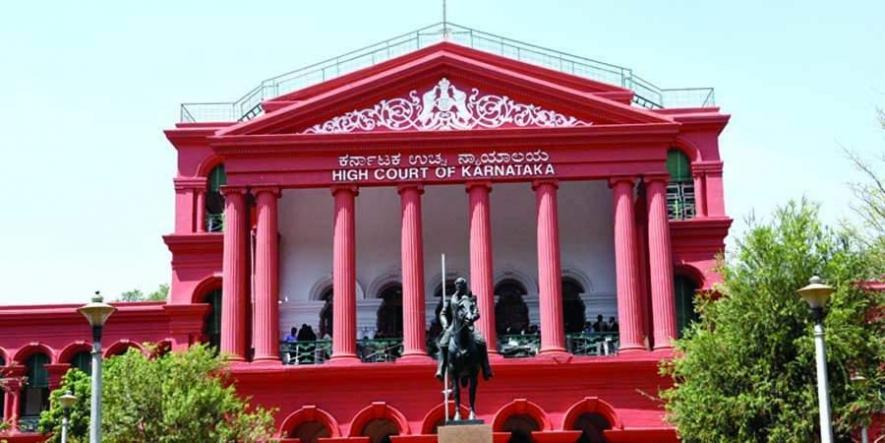
The judiciary in Karnataka is once again the focus of discussion in the national media.
The judiciary in Karnataka is once again in the news.
The latest case in a series of such cases is the Karnataka High Court’s recent judgment saying that shouting ‘Jai Shri Ram’ inside a mosque does not outrage religious feelings.
In an ambience where Right-Wing forces are hell bent upon creating more discord in the society, this judgement can easily be used by those who wish to further vitiate the atmosphere in the country. There are instances galore when such elements have tried to mount atop religious places of ‘other’ communities and deliberately create tension.
There is a feeling of sadness and surprise that despite the incident being caught live on CCTV, where the duo was seen entering a mosque late at night on their motorcycle, the courts did not look into the intention behind their act.
No doubt legal eagles in the country or civil liberty activists would be looking into the Karnataka HC judgement to formulate a suitable response and possibly challenge it at higher levels. For example, at the immediate level, it is being argued by analysts that the single-judge bench’s comparison of this issue with the highest court’s ruling in ‘Mahendra Singh Dhoni vs. Yerraguntla Shyamsundar’ case was notably different. ( Read the full article here : https://www.newsclick.in/who-entitled-hurt-religious-sentiments)
Ahead of Maharashtra Assembly polls, announcement of schemes like the Ladki-Bahin scheme reduce citizens to being ‘subjects’ rather than persons with basic constitutional rights.
Image Courtesy: PTI
Times have definitely changed.
There was a time earlier when a postcard sent by an ordinary citizen had spurred the judiciary into action, not any more.
One does not know whether the legal notice sent by a conscientious journalist to the Maharashtra government will similarly have any impact or not.
The focus of this legal notice is on the recent scheme launched by the Maharashtra government, called Ladki Bahin, under which women will be given Rs 1,500 per month. Launched on the eve of the elections to the state, the notice raises issues of the scheme’s timing, the claim that Rs 1,500 given to women would be sufficient; how such doles create a dependency culture and how it effectively punctures the whole idea of a welfare state. (Read the full article here :https://www.newsclick.in/goodbye-welfare-state-welcome-labharthis)—————————-
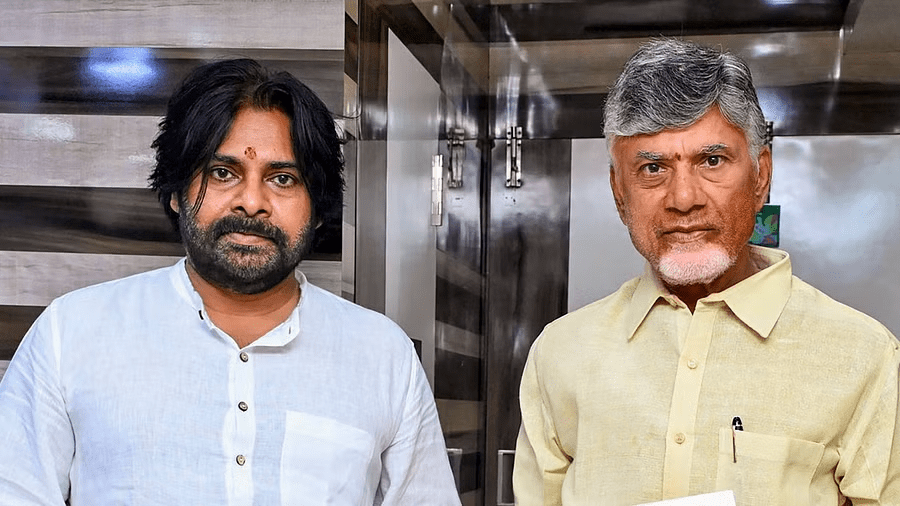
नरम हिन्दुत्व या ‘सेकुलर’ दलों की लड्डू पॉलिटिक्स?
Credit: PTI photo
(क्या आंध्र प्रदेश दक्षिण में हिंदुत्व प्रयोग की नई प्रयोगशाला बनाने जा रहा है। दक्षिण के अग्रणी अख़बार डेक्कन हेराल्ड ने पिछले दिनों इस मसले पर विशेष सामग्री पेश की थी ा गौरतलब है कि इस सूबे की आंतरिक गतिविधियों पर शेष मुल्क की तब निगाह पड़ी, जब तिरुपति के लड्डू के मसले को सुर्खियां मिली . मगर ‘हिंदुत्व लाइट’ का यह सम्मोहन महज वहीं तक सीमित नहीं है )
सियासत भी अजीब होती है। अकसर इस बात का अंदाजा भी नहीं लग पाता कि कैसे वह शैतानों के सन्त में रूपांतरण को मुमकिन बना देती है और कैसे अन्य समुदायों के जनसंहारों को अंजाम देने वालों को ‘अपने लोगों’ के हृदयसम्राट या रक्षक के तौर पर स्थापित कर देती है।
शायद इसी विचित्रता की यह निशानी है कि अमेरिका के पूर्व राष्ट्रपति डोनाल्ड ट्रम्प द्वारा हैती से आए आप्रवासियों को लेकर फैलायी जा रही झूठी ख़बरें कि वे कुत्तों का भक्षण करते हैं, अमेरिका की आबादी के अच्छे-खासे हिस्से को अविश्वसनीय नहीं लग रही- जिनका लगभग अस्सी फीसदी हिस्सा साक्षर है। इन झूठी और नफरती ख़बरों को लेकर हैती से जुड़े समूहों को ही अदालत का दरवाजा खटखटाना पड़ रहा है।
जहां दुनिया का सबसे ताकतवर जनतंत्र कुत्तों को लेकर पैदा किए गए एक विवाद में उलझा दिखता है, वहीं खुद को दुनिया में डेमोक्रेसी की माता कहलाने वाले भारत में लड्डू के इर्द-गिर्द खड़े किए गए इसी किस्म के एक फर्जी विवाद में पिछले दिनों लचीले हिन्दुत्व की राजनीति के नए रणबांकुरे उलझे दिखे थे । ( Read the full article here : https://junputh.com/open-space/soft-hindutva-and-laddoo-politics-of-naidu/)



 KAFILA - COLLECTIVE EXPLORATIONS SINCE 2006