Category Archives: Debates

How is Savita Bhabhi a Threat to India’s National Security?

“Ask the Home Ministry, because this is a security issue.”
That is what India’s Minister for Communications and Information Technology said recently when asked about the lack of transparency in the blocking of websites in India.

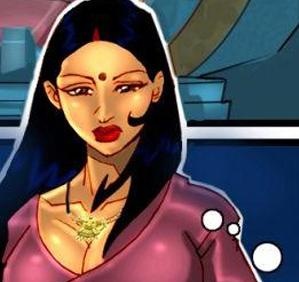
Now, one of the websites blocked in India is Savita Bhabhi, as also several mirror websites of the same. Savita Bhabhi, as you doubtless know, was a soft-porn web comic. All I want to ask Kapil Sibal is: How is Savita Bhabhi a threat to India’s national security? Wait, I have another question: Continue reading How is Savita Bhabhi a Threat to India’s National Security?

Madan Gopal Singh on the Jugni debate

Guest post by MADAN GOPAL SINGH


Arif Lohar sining a Jugni with multiple beat instruments – dholak, dhol and bongo and chimta. Even the alghoza – two short and narrow reed flute like instruments – used to keep fast rhythm between three to four notes.
*

With extreme reluctance, I am trying my hand at English even though my command of this language remains highly suspect. After a recent discussion on Kafila, I felt encouraged to contribute my two-penny bit to the lively debate about Jugni… Continue reading Madan Gopal Singh on the Jugni debate

A Brief Introduction to Indian Secularism

The Telegraph's "File picture of suspected illegal migrants detained by police"

I think that should be the title of a poem, but since I can’t write poetry, I want to bring to your attention in pithy prose the Congress party’s time-worn ‘soft Hindutva’ election strategy is back in Assam. Which means that while the Congress, BJP and others in Assam want to welcome Hindus from Bangladesh, the Muslims from there are as ever the “illegal” immigrants, the terrorists, the jehadis, the infiltrators.

They want citizenship for Bangladeshi Hindus and the Bangladeshi Muslims kicked out.

As per India’s non-existent refugee policy, Hindus from Pakistan and Sikhs from Afghanistan have been getting citizenship, but so many other persecuted peoples from all over the world come to India and find it very difficult to get by and soon seek resettlement in a developed country.

This, then, is how I want to introduce Indian secularism to you.

Thanks.

Thinking about ‘the Contemporary’: Between Interdisciplinarity and Indisciplinarity

[An earlier version of this note was presented as keynote lecture for the Arts Faculty Seminar on Interdisciplinary Research in Humanities, Benaras Hindu University, 9-10 September 2010]

It cannot be emphasized enough how critically important the theme of the Seminar is – especially for us in India today but more generally in the world at large. We need to think of the idea of interdisciplinarity in much more fundamental and radical ways today if we are to even begin to meet the intellectual challenges posed by ‘our contemporary’.

Before I proceed, let me also clarify that the term ‘indisciplinarity’ in the title of my talk, is not simply there for its shock-value. I believe that we are today at the threshold of a fundamentally new condition where there is a serious question mark over old knowledges and disciplines as they emerged in the course of the last few centuries. Continue reading Thinking about ‘the Contemporary’: Between Interdisciplinarity and Indisciplinarity

Reflections on Sudipta Kaviraj’s ‘Marxism in Translation’

[The following is a revised version of some comments made during a discussion with Sudipta Kaviraj at the Centre for the Study of Developing Socoeties, Delhi on 21 October 2010. Kaviraj made a presentation based on a recent essay of his ‘Marxism in Translation: Critical Reflections on Indian Political Thought’ (published in Political Judgement: Essays in Honour of John Dunn, Eds Raymond Geuss and Richard Bourke) to which some of us responded. AN]

It is interesting to revisit, with Sudipta Kaviraj, the field of ‘Indian Marxism’. It is an abandoned field, a piece of haunted land where no living beings go – at least not in their senses. What is more, it is a field that ‘Indian Marxists’ themselves are afraid of revisiting. It is their past – the land of the dead, of unfulfilled ancestral spirits, where the ghosts of yesteryears hang like betaal from every tree. The terror of this forbidden territory has redoubled, after the collapse of socialism. It is as if some deep secrets of the past lie buried there which they would rather not bring back to life, for fear of what might be revealed to them of their own selves. It is strange but true that Marxists who swear by history are perhaps as afraid of it as anybody else.

Read the full post in Critical Encounters.

You fill up my Census…

…quipped my brother Dilip in response to the following mail from my sister Pramada:

So the bell rings this afternoon. desperate clanging. i open the door and there is a man with forms in his hand and a general irritated demeanor. figured that this was the census man. he comes in and settles down. starts by wanting to know who the head of the household is. i say there is no one. he insists. i continue to say no one.

Census of India 2011 mascot

He proceeds to explain that if the parents live in the house, then they are the head of the household, if married then the husband is. I proceed to ask for definition and say that all three of us who live in the house are head of the household since we all earn and take decisions. he promises to erase what he has written since he was sure my mother was head of household.

He seemed to find my gender a bit dubious so questioned my mother if i was a boy or a girl and then repeatedly said “ladki” to me. having established that i indeed was a woman, he wanted to know date of birth, which was not difficult, but place of birth he found extremely challenging. he could not get his spellings right, or did not know districts or states in the country so tattamangalam in palghat district in kerala was as baffling as mysore in karnataka. calcutta was easy to deal with and he said calcutta was in calcutta!!! mother tongue caused him more angst because he had to write malayalam and again the spelling eluded him.

Continue reading You fill up my Census…

The myth of India’s Hajj subsidy: Muhammad Farooq

Guest post by MUHAMMAD FAROOQ

Recently the Supreme Court of India upheld the constitutional validity of extending subsidy on air fare to the Hajj Pilgrims. This year Rs.280 Crores were reportedly spent by the Government of India to subsidise the air fare of one lakh pilgrims. This amounts to a subsidy of Rs.28000/- per pilgrim. The subsidy provided to the pilgrims has understandably generated a lot of debate within political and social circles in India. While the right wing political parties, when not in power, consider it as an unnecessary appeasement of Indian Muslims, the governments formed by any party have always seen it as a necessary expenditure to help Muslims perform their religious obligation of Hajj.

Since I have also performed my Hajj this year, I decided to do some quick calculations to check the veracity of the tall claims made by the GoI and the Hajj Committee regarding the subsidy amount (see box). The results were quite shocking. I checked with one of the service providers —‘makemytrip.com’— and it showed up the Saudi Airline’s fare of a little over Rs.26000/- for a return Delhi-Jeddah ticket with a gap of around forty days. It was amazing to find that the total airfare of Rs.26,000 for a hajj pilgrimage is even lower than the subsidy amount  of Rs.28,000 thousand which is allegedly paid by GoI to airlines to subsidise the “high cost” of the air tickets. Continue reading The myth of India’s Hajj subsidy: Muhammad Farooq

“dissenting dialogues” on Egypt, Sri Lanka and other debates

The editorial and the list of articles in the dissenting dialogues Issue No 2, February 2011 are posted below. The entire issue can be downloaded as a pdf file from the Sri Lanka Democracy Forum website.

Editorial

As the second issue of dissenting dialogues goes to press, we join in worldwide celebrations of the ongoing democratic revolution in Egypt, itself sparked off by an uprising in Tunisia. The Egyptian uprising, which has tremendous regional and possibly global consequences, came against a background of simmering unrest directed at a dictator who presided over a brutal, authoritarian regime. This regime was distinguished by its incarceration and torture not only of its own dissidents but of prisoners “renditioned” to it by the CIA, the denial of basic democratic rights on the pretext of fighting Islamism, and rising youth unemployment and inflation.

Although the timing and form of Egypt’s popular revolt could not have been predicted, an examination of the recent history of Egypt contextualises the forces at work. For a start, we cannot avoid looking at the recent history of neoliberalism in Egypt, its relationship to the authoritarianism of President Hosni Mubarak’s government, and the regime’s relationship to imperialism. The post-war history of Egypt also charts and indeed defines the historical trajectory of Third World sovereignty. Egypt’s revolt has to be understood in the context of the progressive socialist, anti-colonial struggle for national self-determination of the Bandung era from the 1950s until the liberalisation of the economy in the 1970s, the International Monetary Fund’s “restructuring” in the early 1990s, and the recent capitulation to the accumulation strategy of global finance capital.
Continue reading “dissenting dialogues” on Egypt, Sri Lanka and other debates

National Alliance of People’s Movements: Resolution on LGBTQ issues

We oppose persecution and discrimination on the basis of sexuality and gender orientation in all formsand strive towards full social and political equality of all individuals who identify as Lesbian, Gay, Bisexual,Transgendered, Intersex and Queer (LGBTQ).

While welcoming the July 2nd 2009 judgment of the Delhi high court to decriminalize homosexuality NAPM recognizes that the LGBTQ community continues to be discriminated against in schools, colleges, workspaces,homes, the streets and before the law. We affirm that sexual orientation and gender identity are innate andcannot be consciously changed and we oppose attempts to convert LGBTQ individuals into heterosexuals orforce them to conform to dominant notions of masculinity or femininity on the grounds of morality, religion ornature. Continue reading National Alliance of People’s Movements: Resolution on LGBTQ issues

The disappearing body and feminist thought

Presented at conference organized by  Department of English (Delhi University)  February 14, 2011. The title of the  conference was “Postfeminist Postmortems?  Gender, Sexualities and Multiple  Modernities”.

Cross-posted on Critical Encounters

To paraphrase Anthony Appiah’s famous and oft-quoted question – Is the post of postfeminist the post of postmortem? That is, as in postmortem, does “post” mean definitively over, after, having transcended, gone beyond? To those who would answer “yes”, those privileged young women who float through their empowered lives in the wake of over a century of feminist struggles but disown their own heritage, to them I can only say – I’ll be a post-feminist in post-patriarchy. Or – not for a long time yet, baby.

But my answer to that question is “no”. I understand the post of postfeminism in the sense that Laclau and Mouffe understand their postmarxism. That is, post-feminist as indicating “having passed through” that body of thought; having lived through, experienced, feminist theory and politics in such a way that the terrain one now inhabits has been decisively transformed; but also post-feminist in the sense that in the course of this passage new objects have been configured that the old feminism could not have seen, or recognized.

It is in this kind of postfeminist moment that I locate my presentation today.

Continue reading The disappearing body and feminist thought

JNU and the ‘sex scandal’: Aprajita Sarcar

This is a guest post by APRAJITA SARCAR

As a former JNU student, it is a pity that I have to write this post in order to draw attention to a crisis that needs urgent attention: the inability to talk about intimacy.  I say intimacy, as against sex, as against scandal, as against molestation, as against the “professionally shot” footage that made it to the front pages of newspapers.

Jawaharlal Nehru University (JNU) has a crisis to face that has been imminent for a while, and it comes from the inability to talk intimately, about intimacies. Because intimacies are distinct from rhetoric. Continue reading JNU and the ‘sex scandal’: Aprajita Sarcar

A Moment of Revelation: Prasanta Chakravarty

Guest post by PRASANTA CHAKRAVARTY

[A Report on ‘The Everyday Life of a Discipline’- a colloquium on contemporary English Studies that took place on February 4, 2011, at the Department of English, University of Delhi]

Unlike the social sciences, humanities in India at least, have been less systematic and meticulous about introspection. This is slightly odd owing to the fact that the onslaughts on humanitities, from both outside and from within its own quarters, have been quite relentless and ballistic of late. Besides, it is a good idea to take stock of things from time to time as disciplines morph and change gear. So, when I was asked to be part of a group of practitioners of humanities who were at the forefront of the last bit of stock-taking that took place during the late nineteen-eighties, I was curious to know how they see their own transition at this point of time and also get a sense about their assessment of English studies now, apart from my own contribution to the current debates.

Continue reading A Moment of Revelation: Prasanta Chakravarty

‘How Leaving the Internet Fueled Our Revolution’

For those who worry themselves sick about laptop radicalism, this is essential reading:
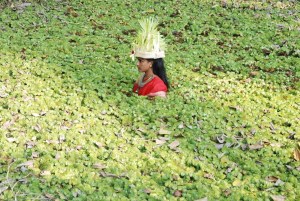
The web is in many ways a more modern, much larger version of the kinds of public spaces and forums that have made citizenship possible throughout history. Losing it for a week didn’t stop Egyptians from protesting or airing their frustrations; we still know how to use physical public spaces, after all. But it did remind us that a forum for the open exchange of words and ideas is central to any sustainable democracy; alternatively, we end up in a perilous cycle of control and chaos. Instead of expressing pent-up opinions with fists and bullets, as is happening now in the streets of Cairo, people who can express them freely in conversation, even in a virtual one, have a chance to hear one another and deliberate together about the future. Never mind the vacant symbolism of “Twitter revolutions” and Youtube activism: losing the Internet at the hand of our own government simply offers us a powerful reminder of why we actually want the Internet to begin with, and why we’re doing any of this. [Read the full article by Haisam Abu-Samra]

Excellent as the al-Jazeera coverage is, if you’re tired of it, see videos from Egypt on YouTube, created and uploaded by the people whose revolution it is. It will give you the closest possible feel of what it’s like to be there. Not even al-Jazeera can manage that!

And if you’ve been watching the events in the Arab world and consoling yourself that it’s not that bad in India, consider this: India recently gave Hosni Mubarak an award in Nehru’s name for ‘international understanding’ and Vice President Hamid Ansari addressed him thus:

Your support for regional and international efforts to promote and maintain peace in the West Asian region is eloquent testimony to your commitment to the promotion of international peace and goodwill. I feel deeply privileged to convey my warmest greetings to you. [Press Information Bureau]

Chitrasutram: Post-modern Cinema?

Months ago, while watching what was in effect a docu-hagiography about a prominent literary icon in Malayalam and wondering about its structure, I was enlightened by a little voice that piped up from a few rows behind. “Nyoosh” (news), it said. On screen, the literary icon appeared and began to talk. A few minutes later, the little voice trilled again, “Parshyam” (commercial). And lo! The icon dissolved, followed by what looked exactly like a commercial, a sequence of visual tricks, visual hallelujah to the wisdom of the revered sage. The little voice thus revealed to me that the structural rhythm of the docu-hagiography was effective precisely through its prayer-like repetitiveness; it also alerted me to the fact that it was extraordinarily similar that to the visual strategy of television (Truth-dream-Truth-dream…), which again is perhaps vital to its sway over viewers. Continue reading Chitrasutram: Post-modern Cinema?

Thus Sudan Splits, What’s Next for the Aspiring Rest?: Tanmoy Sharma

Guest post by TANMOY SHARMA

Pro-separation activists hold signs and chant pro-independence slogans outside the Juba airport in southern Sudan, on Jan. 4, where Sudanese President Omar al-Bashir arrived. Photo credit: Pete Muller/AP/File

To add to the tumultuous political dynamics of Africa, the world is most likely to see a new country adorning its map by the middle of this year with the two-way split of the continent’s largest country, Sudan.  For Africa, which has again hit the international headlines for fresh troubles in Ivory Coast, Tunisia and most recently in Egypt, civil wars based on identity and protests against despotic governments are nothing new. However the larger question that has kept many wondering is whether the world is going to see a new era of a large-scale statebirth with the formation of South Sudan, a process that almost stopped barring the examples of Kosovo two years back or East Timor ten years back. As millions of jubilant south Sudanese in the city of Juba, went to vote in a long awaited independence referendum in the second week of January to see their war torn region emerge as a new nation, it will be important to revisit the troubling status quo of other regions of the world demanding secession. Continue reading Thus Sudan Splits, What’s Next for the Aspiring Rest?: Tanmoy Sharma

The doom-sayers are wrong about Pakistan. Here’s proof


If you click on it, you can also see the rest 3 parts of the show with Veena Malik and a maulvi on Pakistan’s Express TV.

Taking Back Pakistan: Beena Sarwar

Text of article by BEENA SARWAR
Reproduced from Viewpoint, January 14, Issue 33;
courtesy South Asia Citizens’ Web

“There are no less than 24 groups as of now supporting Qadri on FB and 1 against what he did, that says it all.”

So went a tweet from a fellow Pakistani early morning on Jan 5, the day after the assassination of Salmaan Taseer, the governor of Punjab who took a courageous stand against religious extremists in Pakistan.

Continue reading Taking Back Pakistan: Beena Sarwar

Would the secession of South Sudan be good for Africa?

On January 6th, it is almost certain that a referendum in South Sudan will lead to a vote to secede from the rest of the country, thus paving the way to the formal inauguration of Africa’s 54th sovereign state. The vote comes after many years of discord between Sudan’s Arab-and-Muslim north and its black, animist and Christian south, and civil war in which almost 2m have died. Thus, divorce seems the only option in Sudan’s case. However, many in Africa, including the African Union, which has long inveighed in principle against secessionist tendencies in Africa, worry that it could set a trend that encourages other self-determination movements on the continent, potentially causing instability and worse. Others argue that the right of all peoples to self-determination must be allowed to hold good. In these terms, would the secession of South Sudan be good for Africa?

Well, you can cast your vote here.

See also: Celebrations across south as millions flock to polling stations.

New Delhi – A Heritage Zone at 80!

[This article by Sohail Hashmi was earlier inadvertently posted under the name of Shivam Vij. The error is regretted.]

Connaught Place renovation for the Commonwealth Games, September 2010. Photo credit: AP

In 1988 Lutyen’s Delhi, was declared a heritage zone by prohibiting building activity within the 26 square kilometre area out of the 43 Sq. Km. area that falls within the civic control of New Delhi Municipal Committee (NDMC). A move has now been initiated to get the entire area declared a UNESCO World Heritage site.

The very logic of an area being declared a Heritage Zone should preclude any interference with the layout and design of the entire zone. Non-interference also means that, future building and development activity, if at all permitted, has to conform to the original parameters of design, materials, fittings and fixtures used, building techniques, landscaping and the kinds of trees planted in the heritage zone.

Even before the 1988 freeze on construction, there was a master plan for Delhi and it clearly identified the Lutyen’s Bungalow Zone as an area where high rises were not to be permitted. Continue reading New Delhi – A Heritage Zone at 80!

Ayodhya for Buddhists: All India Confederation of SC/ST Organisations

Press release from the ALL INDIA CONFEDERATION OF SC/ST ORGANISATIONS

Neither Hindus nor Muslims are entitled to the disputed land at Ayodhya. SLP filed in Supreme Court claming the title for the Buddhists.

New Delhi, 7th January, 2011

Dr. Udit Raj, Chairman of Buddha Education Foundation and the All India Confederation of SC/ST Organisations, told the press that Special Leave Petition (SLP) no. DC 466/2011 has been filed in the Supreme Court against the judgment of Allahabad High Court, Lucknow Bench in the much disputed matter of Ayodhya.

Continue reading Ayodhya for Buddhists: All India Confederation of SC/ST Organisations

Who is a Dilliwala?

Chhat Puja at India Gate, Delhi. Photo credit: S. Subramanium / The Hindu

For most residents of New Delhi, the region known as Old Delhi falls within the realm of the unknown. Aside from business people and those who earn a living inside the walled city only a few from outside the walled city used to venture into, what is derisively called Dilli 6. At least this was the picture till very recently.

With the introduction of the Metro entry into and exit from the heart of the city, it has become less daunting. More and more people from outside the “walled city area” have begun to tentatively explore the narrow winding lanes of Shahjahanabad. Except for those who come to explore ‘history and heritage’ and their numbers are small, consisting mostly of fair skinned tourists, most others arrive to explore the fabled flavours of the street food of Old Delhi or Shahjahanabad to give the place its correct name.

Continue reading Who is a Dilliwala?