The National Alliance for Climate and Environmental Justice (NACEJ) strongly condemns the raids, searches, and intimidation of climate activists Harjeet Singh and Sanjay Vashisht by Indian enforcement agencies.
Recent actions by the Enforcement Directorate (ED) and allied agencies—reportedly based on alleged violations of foreign exchange regulations, vague claims of threats to “energy security,” and unsubstantiated intelligence inputs—have been carried out without transparency or disclosure of credible evidence. Public reporting indicates reliance on anonymous official briefings, rumoured intelligence reports, and speculative allegations, with officials unwilling to come on record. Continue reading Deal With the Problem, Not the Activists; Control Polluters, Not Those Demanding Accountability! – NACEJ→
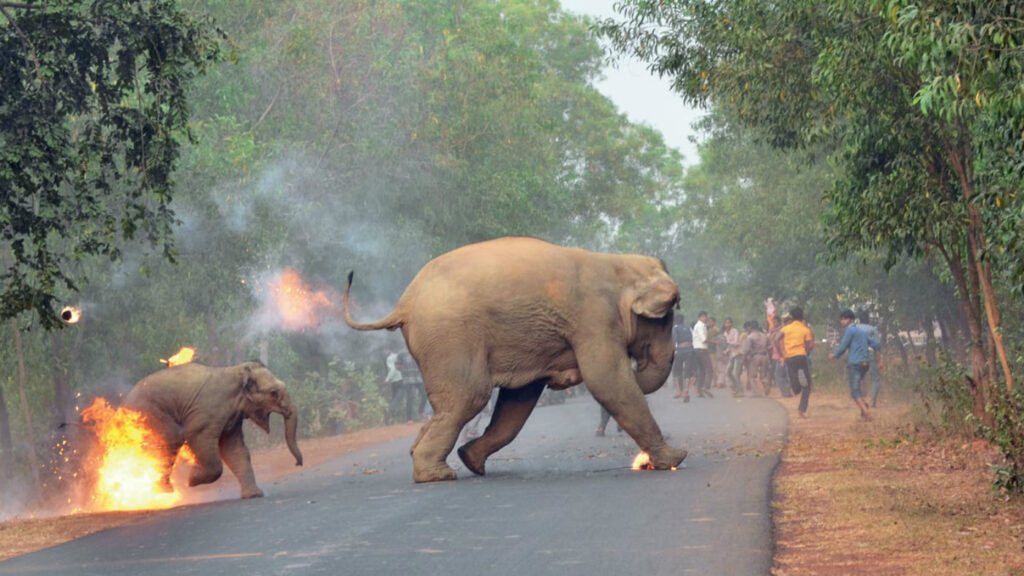
[Earlier this year, Kerala government sought the permission of the central government to kill wild animals that “post a threat to life and property”, declaring human-wildlife conflict a state-specific disaster. As wildlife-human conflicts rage with a new intensity across different parts of India, the author underlines the need to go beyond knee-jerk reactions and put in place proper policy measures. The issue itself is highly controversial and even emotive and we present this essay here to put things in perspective and proposes some measures that are currently being debated among wildlife enthusiasts. – AN]
Photo courtesy Biplab Hazra and Think Wildlife Foundation
On the 24th of Nov 2025, a 70-year-old Adivasi woman was tending her goats on revenue lands near Masinagudi in Tamil Nadu, when she was killed and dragged into the bushes by a Tiger. It paid little heed to the shouts of witnesses who saw it moving the body to a nearby waterhole. Between late October and November, multiple attacks on people and livestock were reported from the Nugu region near Nagarhole in Karnataka, leaving 3 farmers dead and one critically injured. Including one farmer who had just recovered from a broken hip bone caused by an earlier elephant attack. In response to intense public pressure, over 23 tigers (including many cubs) have been captured from non-forest areas in a span of one month. A huge number for a small rural landscape around two sanctuaries. In many cases, operations were hindered by mobs, who screamed and pelted stones upon sighting the animal, leading to heightened aggression. One of the tigers was found to have a festering snare wound, while another was the mother of 5 healthy cubs. Things took an interesting turn, when experts found it hard to match one of the Tigresses to existing wildlife databases. Raising the possibility that she might have been completely raised outside protected areas. Nor were they all transitionary, weak or infirm animals. Some of them were found to be healthy individuals, simply finding new spaces to eke out a living. It is unclear what the department intends to do with all the captured tigers and cubs. If they end up in captivity, that would be a tragic outcome that serves neither the individual animal nor the species. Continue reading Wildlife-Human Conflict – Non-intervention is No Longer a Choice: Sandeep Menon→
Statement by NATIONAL ALLIANCE OF PEOPLE’S MOVEMENTS demands principled investigation to establish command responsibility. It also demands that Govt review the unsustainable and unjust ‘development’ model fuelled by land mafias and casino interests in Goa .
National Alliance of People’s Movements (NAPM) unequivocally condemns the heinous assault on adivasi youth leader, Rama Kankonkar on 18th September, the subsequent intimidation against another activist Swapnesh Sherlekar, and the alarming descent into lawlessness that these incidents in Goa exemplify. We extend unwavering solidarity to Rama Kankonkar, Swapnesh Sherlekar and the people of Goa who continue to fight for justice, environmental protection, and the preservation of their collective identity. We also demand adequate protection to these activists, principled investigation to establish command responsibility and a review of the current unsustainable, unjust and unsafe ‘development’ model; fuelled by land mafias and casino interests. Continue reading Protest Assault on Adivasi Youth Leader Rama Kankonkar, Lawless Casino-based Development in Goa: NAPM→
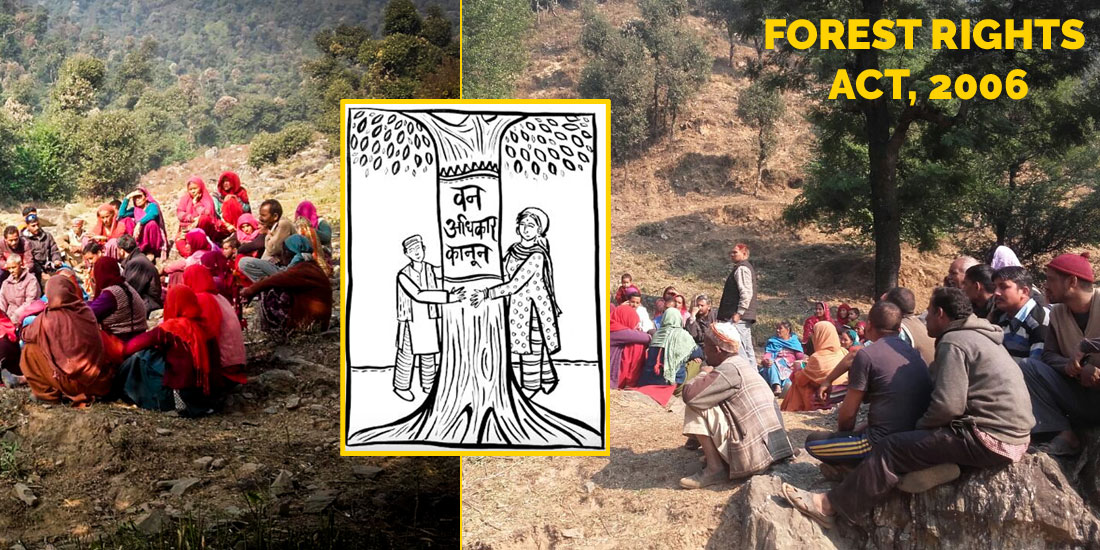
The road to hell is paved with good intentions. That’s the first, visceral reaction that many passionate wildlife conservationists have, when you utter the 3 letters: FRA. The Forest Rights Act (2006) aims to give native tribal and forest dwelling populations ownership of, and decision-making rights over what happens in the wildlife areas that they are residents of. But many conservationists see it as a gateway for rampant encroachment into protected areas.
I was initially a bit more circumspect, having been a longtime advocate for community-based conservation. Having always believed that ivory tower conservation can never work, without putting the people involved at the center of it. But I have also had to temper my position over time, as I witnessed the complexities of how it was playing out on the ground. (ref- https://india.mongabay.com/2020/07/commentary-making-communities-central-to-conservation/ )
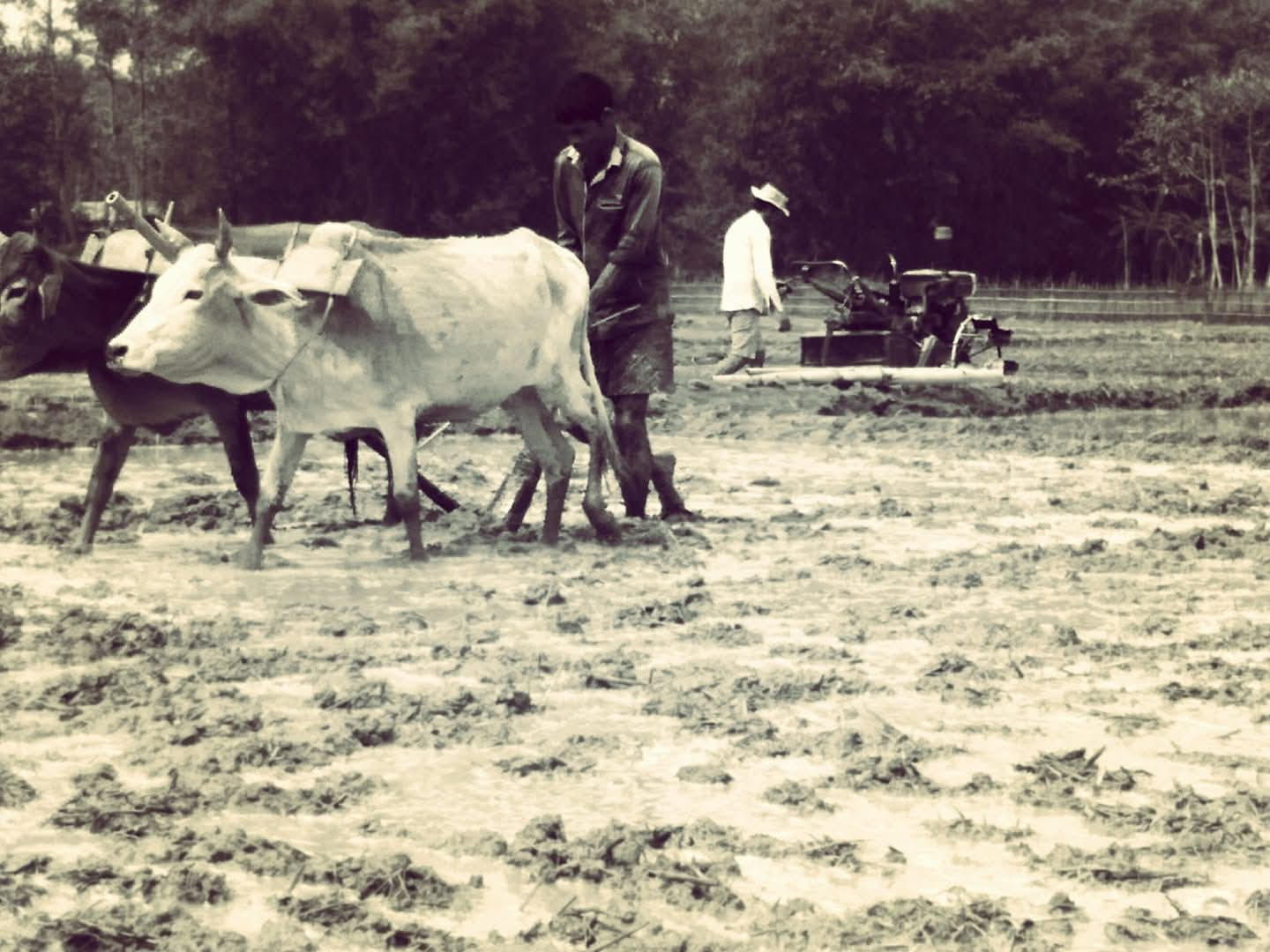
I did not come to the village to do research. I came to farm for the market—and to do it without breaking the village’s social and ecological ledger. I returned as a nephew and a neighbour. For six years I have lived inside this world of muddy fields, failed pumps, anxious harvests, and commonsense wisdom passed across haat stalls. Six years on, I am only now seeing a glimmer of hope for a workable path.
Photograph by Bonojit Hussain of his own farm
What I write here is not sociology in the professional sense, but a testimony from within the living contradictions. My focus is on the choices and constraints of the khilonjiya peasant household—native, often subsistence-oriented communities whose economic logic is deeply tied to ecological and social reproduction. This is a distinct reality from the highly commercialized production systems found in some other parts of the state.
I will share what I have learned about the process of transforming complex systems, the changes necessary in ideologies, and in the way in which public policies are being made, for India to progress towards its vision of poorna swaraj. The following points indicate an outline of the argument I plan to make in the talk:
• Global governance has broken down. The world is in disorder.
• India is strategically vulnerable. It is a long way off from its ‘tryst with destiny’ of poorna swaraj.
• India must become much more self-reliant, and less dependent on the US and China to protect its strategic autonomy. It must find its own democratic path to strengthen its society and economy. The US (and the West) cannot provide a blueprint.
• Development and progress are processes of learning.
• Nations are complex ‘self-adaptive’ systems.
• Power and wealth in a system accumulate by a process of cumulative causation.
• The process of change must be democratic for new ideas to emerge.
I have explained such ideas in my book, Reimagining India’s Economy: The Road to a More Equitable Society,published this year, and in some previous books.
About the Speaker:
Arun Maira is an eminent author, a strategic thinker and a former member of the Planning Commission of India. He had joined the Commission at the invitation of then Prime Minister Dr Manmohan Singh himself. Mr. Maira has had a distinguished career as an enlightened business leader and management consultant. He worked as Executive Director on the Board of Tata Motors and later as the Chairman of Boston Consulting Group. He has authored many books including Transforming Systems: Why the World Needs an Ethical Toolkit; Transforming Capitalism: Improving the World for Everyone; Redesigning the Aeroplane While Flying: Reforming Institutions; Shaping the Future: A Guide for Systems leaders; and most recently, Reimagining India’s Economy: The Road to a More Equitable Society, published in June 2025.
Following is a statement on the violent displacement and dispossession in Dhubri, Assam by some leading civil society members of the state who were also the conveners of the Assam United Citizens Convention.
We strongly condemn the inhuman, brutal and cruel eviction of more than thousands of farmers and labourers from Chap Revenue Circle of Dhubri district by the government of Assam. Such atrocities against innocent people are unusual and indicative of a perverted mind. We don’t know who could be the next victims of such atrocities. The government says the people are ‘encroachers’. However, the attitude of the ruling classes towards land has been exploitative since the colonial times. Although the direct use of land is for settlement, agriculture, and other productive livelihoods of citizens, but for the government it is primarily a means of generating revenue. Since the colonial era, the government has not focused on the leasing and resettlement of landless indigenous people and other legal residents. However, the preceding governments at least allowed the people residing on government land to live in peace with some degree of humanitarian sympathy. But the BJP government has evicted these citizens like heartless zamindars. They are planning to hand over the land of the indigenous residents of Assam to the big capitalists at home and abroad. Thus, the poor tribals, backward castes and char people have been turned into s beggars on the streets within a day. It is supposed to be a step forward for ‘development’ and ‘industrialisation’. The ‘development’ of the state by killing people has assumed a demonic form now. We have also seen an anti-Muslim propaganda campaign openly and sometimes subtly launched day and night by the government-owned media to cover up this evil character. Therefore, we demand the government to stop such evictions and warn the people to be vigilant against this evil government conspiracy.
Hiren Gohain, Harekrishna Deka, Ajit Kumar Bhuyan, Paresh Malakar, Abdul Mannan, Santanu Borthakur Conveners, Assam United Citizens Convention
[We are publishing below a report of a press conference by the NATIONAL ALLIANCE FOR CLIMATE AND ECOLOGICAL JUSTICE that details the status of struggles for ecological justice from across the country. Lifting the mask off ritualistic official observances of the World Environment Day, while the government continues to wreak havoc on the ecology and the commons, this report gives a sense of the struggles in different parts of the country. At the end of this report is the link to its full online recording.]
As the world marked yet another Environment Day on 5th June, the National Alliance for Climate and Ecological Justice (NACEJ), a pan Indian forum of NAPM, brought together voices from different parts of the country in an online press conference on 6th June, to share the current status of ecological justice struggles. Speakers from Kashmir, Sikkim, Tamil Nadu, Madhya Pradesh, Maharashtra, Telangana, Rajasthan, Chhattisgarh, Haryana, Odisha, and other states addressed the Press Conference. These voices reinforced the reality that both the Central Govt and different states governments are majorly complicit in environmental violations, enabling large profiteering, extractive agendas of mega-corporations, unleashing repression on democratic movements. Moderated by well-known environmental activist Soumya Dutta, the meeting saw good participation from both media and movements.
Following is a statement of All India Solidarity with Siang Indigenous Farmers’ Forum, endorsed by 43 organizations and fifty individuals.
The Siang river in Upper Siang district, Arunachal Pradesh. Photo courtesy Anupam Chakravartty, Down to Earth
We, the undersigned, express our solidarity with the Siang Indigenous Farmers’ Forum (SIFF), which has been spearheading the people’s protest against the proposed 11,500 MW Siang Upper Multipurpose Project (SUMP) of the National Hydro-electric Power Corporation (NHPC) in Arunachal Pradesh, which will be disastrous for this whole area. We support the demands of SIFF for withdrawal of Central Armed Police Forces (CAPF) deployed in Beging village for doing the Pre-Feasibility Report (PFR) of the project.
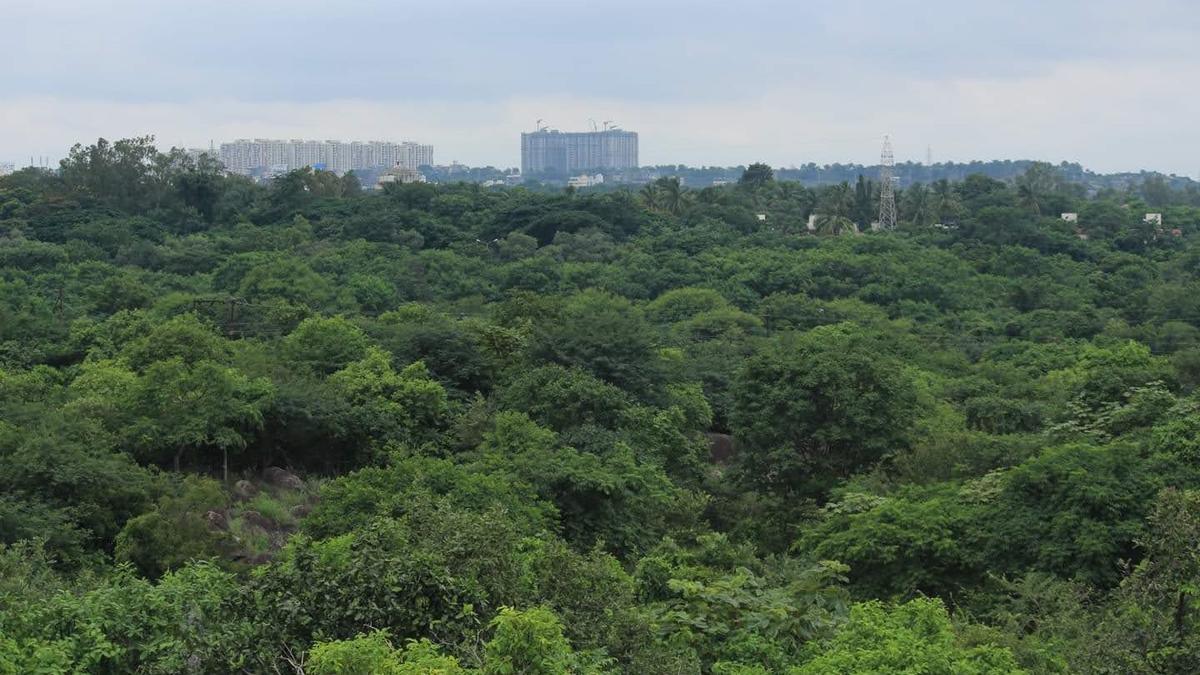
Recently, the students of the University of Hyderabad were protesting the Telangana state government’s bulldozing of 400 acres of ecologically vibrant, species-rich land within the university, undertaken as a preparatory step to auction it off. The state government sought to quell the protest by force, asserting that the land does not belong to the university and that it is within its rights to auction it. However, the Supreme Court has intervened and stayed the activities for the time being. Ego-bruised by the setback they have faced at the hands of the campus community, the Telangana government has now proposed that the entire 2300 acres of the university be turned into an eco-park, uprooting the campus in toto to a hundred-acre campus on the city’s outskirts.
Kancha Gachibowli forest, image courtesy The Hindu
Strangely, the university has not secured legal rights for the land it has occupied for several decades. However, the emphasis in the following note is on an aspect of the protest that lies beyond the legal dispute over ownership. It rather seeks to articulate the inarticulable—why the preservation of the ecology of these 400 or 2300 acres is not a standalone question but one that co-constitutes the very question of preserving the university itself.
Land forms one of the most important planks of private property, because the appropriation of land (or ‘soil’ if one is to follow Karl Marx’s usage) forms the core of capitalist development, and since capitalism cannot sustain without the creation of class antagonisms and the appropriation of productive capacities of workers,[1] capital further uses the appropriation of land as a tool to exploit the non-capitalist classes. This results in the gradual separation of the worker from nature and thus eventually from the society itself, resulting in a state of alienation, which is used to create a ‘certain quantity of labour stocked and stored up’.[2] This stocked up/stored-up labour, as Marx explains, becomes capital. The relationship between manufacturing – the foundation of industrial capitalism – and nature – reflected in Marx’s usage of ‘soil’ – was an integral part of Marx’s definition of ‘capital’ under advanced capitalism. For example, in the discussion on ‘Bonds, or stock’, Marx had quite explicitly put up the relationship that capitalist development shares with the ecological world: ‘Bonds, or stock, is any accumulation of the products of the soil or of manufacture. [This] Stock is only called capital when it yields its owner a revenue or profit’.[3] The struggle for ecological justice thus constitutes an important aspect of the broader social justice movement because land relations constitute an integral part of the social relations, which in turn constitute the basis of not only capital but also the working class itself.[4] It is interesting to view the recent agitation against the auctioning of land within the campus of the University of Hyderabad (UOH), or the Hyderabad Central University (HCU), surrounding the proposed construction of IT parks by deforesting the Kancha Gachibowli Forest (KGF) in this context.
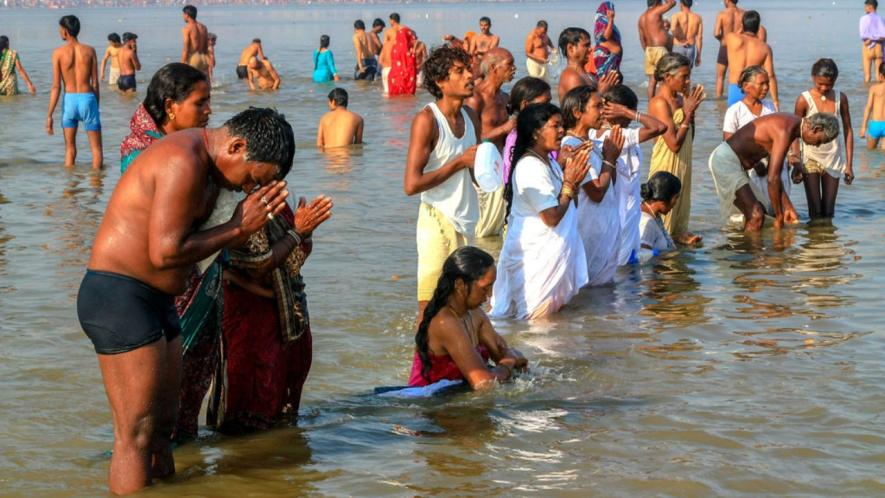
Did Hindutva supremacists make devotees bathe in polluted sewage water during the Mahakumbh?
Faith and filth have an uncanny existence together
The latest in series happens to be the report by the Central Pollution Control Board (CPCB) underlining how they have found high faecal bacteria levels in Prayagraj river water, which fails bathing standards and the summoning of the Uttar Pradesh PCB (UPPCB) authorities by National Green Tribunal (NGT) over non-compliance of directives regarding ‘serious water quality violation in Ganga, Yamuna at Prayagraj’
The fact is that NGT has repeated itself when it said that high levels of faecal and total coliform were found at various locations at the Maha Kumbh, during a hearing on allegations that untreated sewage has been discharged into Rivers Ganga and Yamuna in Prayagraj.
Will the UP Chief Minister Yogi Adityanath’s rejection of this report on the floor of the House and underlining that the water at the Sangam was fit for ‘drinking’ serve any purpose when NGT grills the UPPCB authorities over non-compliance of their directives issued earlier over the quality of water?
Any sane person would know the answer.
May be in a bid to appear uncompromising or cover his own nervousness over the developments, Adityanath tried to question the veracity of this report – in an indirect way – by condemning people who spread misinformation against “Sanatan Dharma, Maa Ganga, and India” and warning them that they were attacking the “faith of those 56 crore people who had taken a bath there.”
Following is a statement issued by 250 organizations and individuals, including the National Alliance of People’s Movements (NAPM) against arrests and intimidation of activists raising concerns regarding the ecological impact of so-called “developmental” projects. The statement was issued on 13 November 2024
Stop Arbitrary Detentions and Intimidation of Social & Environmental Activists in Jammu & Kashmir
Save Ecology & Uphold Democratic Rights in J&K and entire Himalayan Region
National Alliance of People’s Movements (NAPM), along with other people’s organizations and concerned citizens from across India strongly condemns the arbitrary detention of social and environmental activists in Jammu & Kashmir under the Public Safety Act (PSA). Those detained under the provisions of J&K Public Safety Act, 1978, include Mohammad Abdullah Gujjar (resident of Sigdi Bhata), Noor Din (resident of Kakerwagan), Ghulam Nabi Choppan (resident of Trungi – Dachhan), Mohammad Jaffer Sheikh (resident of Nattas, Dool) and Mohammad Ramzan (resident of Dangduroo – Dachhan), trade union leaders from Kishtwar district.
The multiple crises humanity confronts require fundamental shifts in how we relate to the Earth and to each other. This entails tackling the roots of these crises head-on, including the structures and relations of patriarchy, racism, colonialism, capitalism, statism, and anthropocentrism. This in turn needs to be done within the context of visions of the ideal society we want. This essay presents a process in India, Vikalp Sangam (Alternatives Confluences), that has attempted for a decade to document, visibilise, network, and create collaborations amongst movements and groups involved in alternative approaches for justice, equity, ecological sustainability. It describes the process and its various components, the challenges and opportunities of bringing very diverse groups from different cultural contexts together, the potential of a bottom-up and participatory visioning process, and the excitement of attempting to bridge conventional traditional-modern, practitioner-intellectual, urban-rural, and other divides.
Keywords: Democracy; Visioning; Alternatives; Environment; Civil society
Introduction: The Making of Vikalp Sangam
A decade is not a short span of time – and yet, it is too short. These are the contrasting thoughts I have as I contemplate a process that I have been part of since its initiation, as I and my colleagues enter into a phase of reviewing whether it is on course to meeting the objectives it began with. This is Vikalp Sangam, or Alternatives Confluence, a national platform established in India in 2014.
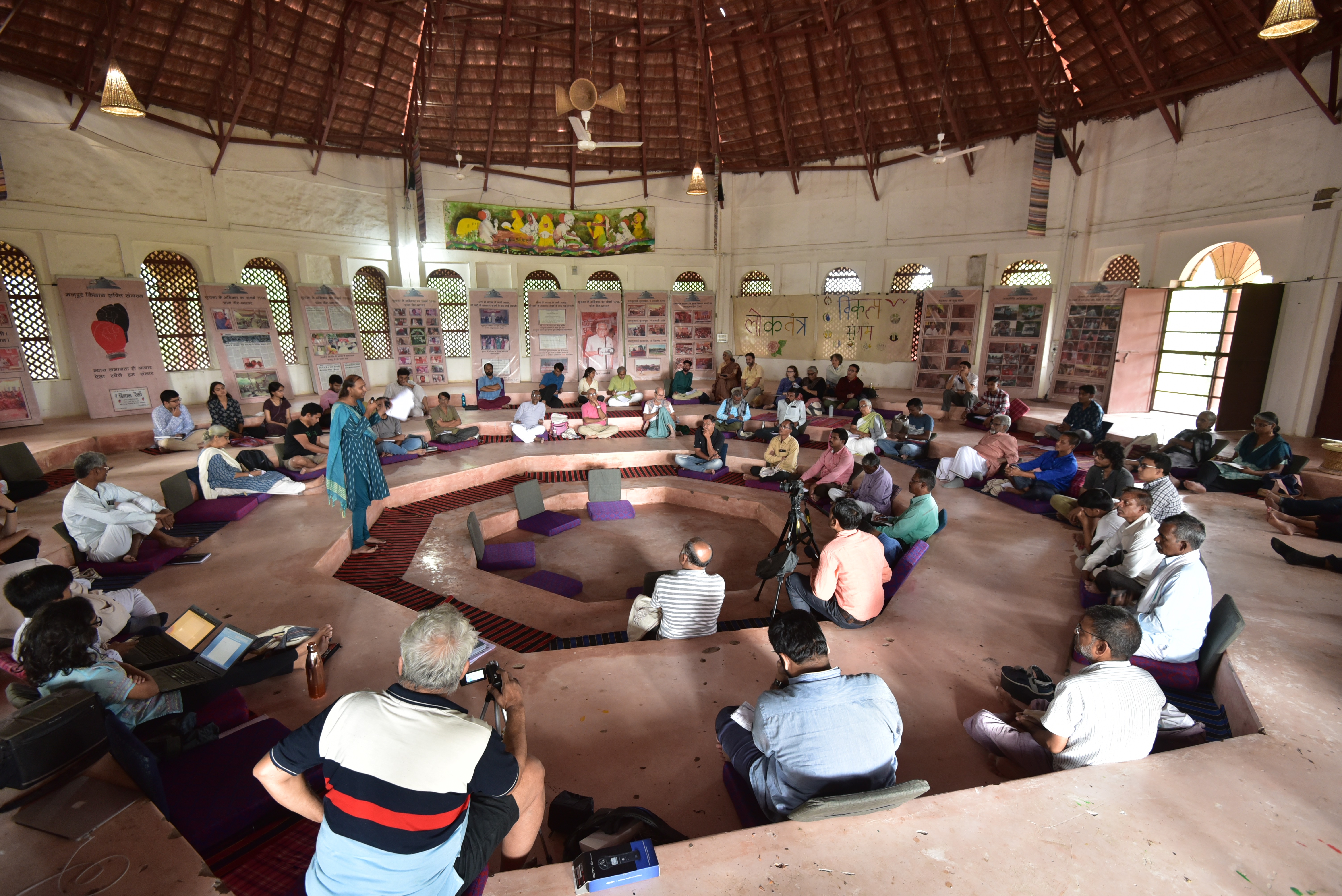
Democracy Vikalp Sangam, School for Democracy, Rajasthan, October 2019
I don’t have to offer any details of what happened at Wayanad. It is the worst disaster of its kind, or perhaps of any kind, that has ever happened in Kerala. But how could it have been so unexpected to the Malayali mainstream? This is what galls me.
People for Himalaya campaign is an initiative of progressive groups, civil society organisations and activists from the region. The campaign is not affiliated with any political party.For the list of supporting organizations, please scroll to the bottom of the post.
[Last year we witnessed the hills of Himachal Pradesh, Uttarakhand and Sikkim in virtual revolt against the mindless development that they have been subjected to. It was against the backdrop of these frightening developments that discussions began among groups across the Himalayan states in February this year, leading to the adoption of the Charter for the Himalayas. We also just saw environment activist from Ladakh, Sonam Wangchuk sit on a 21-day hunger strike in freezing minus 10 degrees Centigrade, demanding that the Sixth Schedule of the Constitution be implemented in Ladakh and it be protected from being handed over to corporate interests for so-called Development projects. Wangchuk’s hunger strike was withdrawn but the movement continues with women continuing their sit-in and other sections of the population, especially youth, preparing to join in soon. The movement is not about one person’s hunger strike but to prevent Ladakh meeting the same fate as Himachal Pradesh, Uttarakhand and Sikkim. – AN]
STRENGTHEN REGULATION, MONITORING AND PLANNING OF LAND USE, LAND-USE CHANGE AND FORESTRY (LULUCF)
A complete moratorium on all mega infrastructure projects like railway, dams, hydro projects and four lane highways, tunnelling, transmission lines – and conduct a 360-degree multi- disciplinary review of the impacts of existing projects
Democratic decision making through referendums and public consultation on large infrastructure by strengthening the Environment Impact Assessment Notification 1994 (Scrapping the EIA 2020 Amendments & FCA 2023 Amendments); Free Prior informed consent of Gram Sabhas to be mandatory for all developmental projects
Terrain Specific Disaster and Climate Risk Studies and land susceptibility assessments to be mandatory for land use change for urbanisation, commercial development and public infrastructure construction
Just Implementation of 2013 Right to Fair Compensation and Rehabilitation Act
To ensure participation of citizens, civic bodies and Gram Sabhas in monitoring pollution and land use change works like stone crusher, sand-gravel mining, mineral mining, debris dumping, construction of local roads and every commercial construction work.
2. GRANTING COMMUNITIES CONSTITUTIONAL, LAND AND FOREST GOVERNANCE RIGHTS
Strengthening of state laws and regulations that protect the private and community resource rights of nature dependent communities – example Van Panchayat Rules in Uttarakhand
Complete the Unfinished land reforms and land regularisation agendas to provide secure land tenure to landless and displaced communities to practice land based livelihoods – example Nautor rules in Himachal Pradesh
Just implementation of constitutional provisions and laws that support the decentralised, autonomous and democratic governance and decision making – example the Scheduled Tribes and Other Traditional Forest Dwellers Act 2006 and other constitutional provisions
Protection of pastoral communities especially minority communities like the Van Gujjars and Bakarwals in migratory routes
Strengthen floral and faunal biodiversity through Community Forest Resource Rights governance framework under FRA 2006 – convert pine monocultures into broad leaf forests to address fodder scarcity, forest fires and soil erosion. Five ‘f’ species should drive plantations i.e. fruit, fodder, fertilizer, fuel, fiber and medicinal plants. Weed eradication programs for pasture development.
3. TRANSPARENCY, KNOWLEDGE BUILDING, SHARING AND EXCHANGE
The 111th session of the International Labour Conference (ILC) held in Geneva from 5th to 16th June deliberated on climate change along with other issues concerning the situation of decent work in the globe. The issue of climate change was dealt with from the perspective of changes in the nature of work in future. The deliberations were based on a report issued by the ILO named “Achieving a Just Transition towards Environmentally Sustainable Economies and Societies for All”. After deliberations in the concerned committee for Just Transition, conclusions on the same have been published by ILO. The present article looks into the perspective on climate change adopted by the ILO based on the above mentioned documents.
Abstract: Indigenous and other local communities across India have had traditional systems of local governance as unwritten or sometimes written codes of conduct and decision making. Many such systems are still being followed in parallel with the panchayat systems, or getting re-invented by combining the modern forms of governance with the traditional ones, especially in the case of communities still practising traditional occupations and ways of life (forest-based, pastoral, fishing, and/or farming). There are, however, very few studies of these systems interacting with modern state institutions, their current or continuing relevance, and their role in achieving goals of justice, well-being, and ecological sustainability.
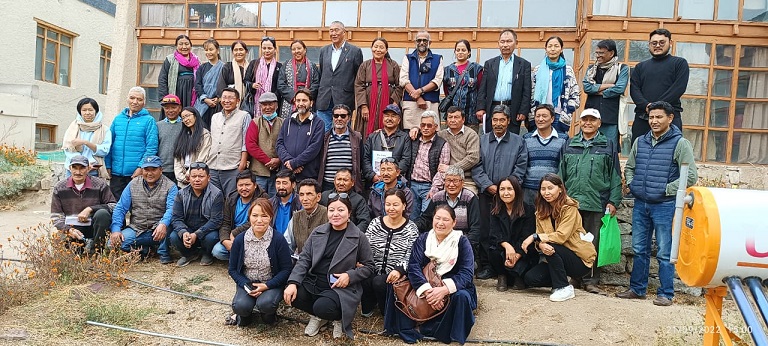
Goba meeting to discuss study results, Leh Aug 2022.
This study focuses on documenting the present status and relevance of the traditional governance system of Ladakhi villages, with a focus on the goba (or lambardar/nambardar). For this, the study also looked at the interface between the local/traditional and new/modern governance systems, viz. the goba with the panchayat, Ladakh Hill Council and UT Administration.
Keywords: traditional governance, goba, democracy, natural resources, indigenous knowledge, environment
Following is the text of an open letter sent by the Bisthapan Birodhi Jana Andolon Mancha, a coalition of people’s organizations, activists, journalists and citizens to the Governor of the Odisha. It was released in Bhubaneswar yesterday the 3rd of December 2022.
Respected Sir,
We as concerned citizens, social activists, political and human rights activists, environmentalists and journalists and the leaders of twelve mass organizations on behalf of Bisthapan Birodhi Jana Andolon Mancha, Odisha appeal for the protection of natural resources and an immediate end to the continuous forceful displacement of people from their lands and dwelling places.
We express our protest and dissent against the Odisha government’s Make-in-Odisha Conclave in Bhubaneswar. Inviting more investments in the name of development will uproot the lives and livelihoods of people dependent on these land, forests and coasts. We appeal to your conscience to intervene and prevent the exploration and exploitation of natural resources through unmindful and unwanted mining of bauxite, iron ore, chromite, coal, river sand, china clay and other resources in the name of development. People are struggling against all odds and hardships to protect the same for future generations even as they remain deprived of access to basic needs like education, health and nutritional food security.
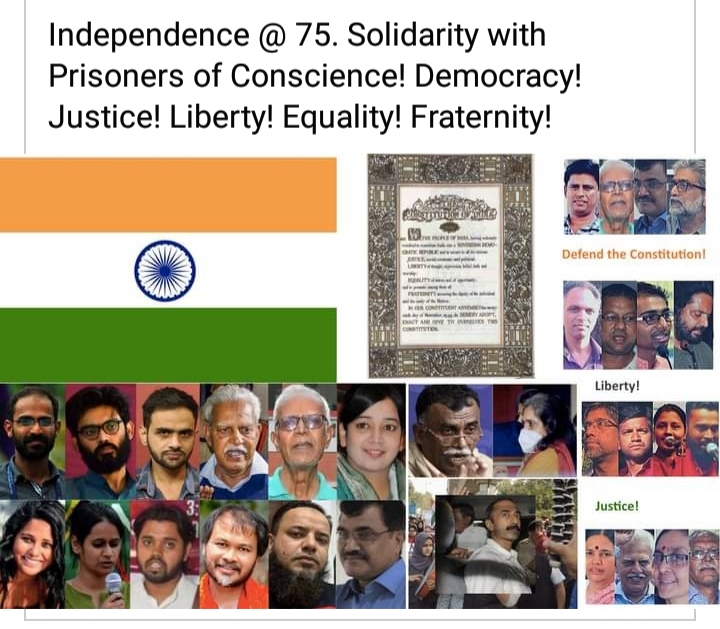
Students, journalists, writers, poets in jail on trumped up, false charges
Three potent symbols – the Azadi slogan, the Constitution and the National Flag – have formed the core of the battle against Hindu Rashtra and capitalist expropriation over the last decade. Continue reading The flag is ours! Azadi bhi!→
Feminist demonstration in Santiago – a crucial factor in the Boric victory, image NACLA
A New Left Resurgence
‘Leftists are Ascendant in Latin America as Key Elections Loom‘ announces a recent report in New York Times. And this report isn’t talking only of Leftist victories of the last two years but also of possible forthcoming ones in Brazil and Colombia, later this year. ‘Economic suffering, widening inequality, fervent anti-incumbent sentiment and mismanagement of Covid-19 have all fueled a pendulum swing away from the center-right and right-wing leaders who were dominant a few years ago’ underlines the report.
Close on the heels of the victory of Xiomara Castro as the first Left-wing, woman President in Honduras in the beginning of December 2021, came the news of the victory of Gabriel Boric in Chile (19 December). Unlike the socially conservative Left wing position of Peru’s Pedro Castillo, who stands opposed to abortion and same-sex marriage, the Chilean victory, in particular, has been strongly backed by the feminist and queer movements. Honduras’ Xiomara Castro too has legalization of abortion as one of her election planks, which is significant since it is one the few countries that has a complete ban on abortion as of last year.



 KAFILA - COLLECTIVE EXPLORATIONS SINCE 2006