Category Archives: Empire/ Imperialism

A Shadowed Present and the Onus of Thought – Remarks, Non-Polemical or Otherwise: Sasheej Hegde

[This concluding essay of the series in Kafila titled Decolonial Imaginations. Links to the previous essays are given at the end.

The terms ‘decolonization’ or ‘decolonial’ have become quite critical now, given that the impulse of justice lies at the core of these concepts. Neither postcolonial nor decolonial perspectives are compatible with right-wing ideologies but the fact that Hindutva ideologues in India and the rightwing globally are now trying to appropriate that language makes it seem to some that the very idea of the postcolonial or decolonial is suspect. We believe that this demonizing of decolonial theory from a position defensive of the European Enlightenment needs to be unpacked in the interests of a mutually productive debate. Kafila has been publishing a series of interventions on what the idea of the decolonial imagination involves, locating decolonial theory as speaking from the margins, drawing attention to identities which the orthodox Left subsumed under ‘class’ and which the rightwing in India seeks to assimilate into Brahminism. Additionally the orthodox Left’s rejection of spiritual beliefs and inability to engage with them is also a factor that may have produced the space for right wing appropriations of a field marked “religion”. 

We hope that these interventions will clear the ground for productive conversations on the Left rather than polarised and accusatory claims that mark some spurious claims to ‘correctness’.]

Register

In a superbly crafted, and provocative, essay titled ‘In Defense of Presentism,’ the historian David Armitage (2023) has tried to re-present the prospects of ‘presentism’ for historians particularly (even though the essay has its lessons for various practitioners across domains, critical or otherwise).  As he notes: ‘Historians are trained to reject presentism: we are likely to argue that our duty is to the past and its inhabitants – and not to the present and certainly not to the future.’  But, as he shows with great analytical acuity and detail, historians are deploying the word ‘presentism’ in a variety of ways, which he then goes on to unravel, while making a case for what historians ought to be opposing and what about the present they can comfortably be accepting.  My brief is surely not to detail the intricacies of Armitage’s argument for my readers here – although I would urge them to read and absorb the essay themselves (even as my moves here have been made possible by it).  Rather, my effort is to quickly address some critical aspects of the ‘presentism’ that underwrites contemporary scholarship in India (and elsewhere) – although, again, for the purposes of this formulation, I shall limit myself to Meera Nanda (2025) and the terms of her critique of postcolonial and decolonial theory (henceforth PDT).  My own relationship with PDT has been an ambivalent one – and, hopefully, a recent contribution will clarify that (Hegde 2025) – and there are also aspects of the critique mounted by Meera Nanda that I agree with.  But this is not the ground that I will be traversing here in this short note. Continue reading A Shadowed Present and the Onus of Thought – Remarks, Non-Polemical or Otherwise: Sasheej Hegde

When Decolonisation turns Inward – On the Dangers of Methodological Nationalism: Sabah Siddiqui

[This post is the eighth essay of the series in Kafila titled Decolonial Imaginations. Links to the previous essays are given at the end.

The terms ‘decolonization’ or ‘decolonial’ have become quite critical now, given that the impulse of justice lies at the core of these concepts. Neither postcolonial nor decolonial perspectives are compatible with right-wing ideologies but the fact that Hindutva ideologues in India and the rightwing globally are now trying to appropriate that language makes it seem to some that the very idea of the postcolonial or decolonial is suspect. We believe that this demonizing of decolonial theory from a position defensive of the European Enlightenment needs to be unpacked in the interests of a mutually productive debate. Kafila has been publishing a series of interventions on what the idea of the decolonial imagination involves, locating decolonial theory as speaking from the margins, drawing attention to identities which the orthodox Left subsumed under ‘class’ and which the rightwing in India seeks to assimilate into Brahminism. Additionally the orthodox Left’s rejection of spiritual beliefs and inability to engage with them is also a factor that may have produced the space for right wing appropriations of a field marked “religion”. 

We hope that these interventions will clear the ground for productive conversations on the Left rather than polarised and accusatory claims that mark some spurious claims to ‘correctness’.]

When I first encountered postcolonial theory as a young scholar, it felt like an opening into a new way of understanding the world. Much of my introduction came through Indian thinkers, some of whom were not located in India, yet their work spoke powerfully to questions of colonial legacies, subjectivity, and the politics of knowledge. These early engagements helped me grasp the goals of postcolonial scholarship: to make visible the structures of power that colonialism left behind and to explore the ways in which it continues to shape our systems of knowledge and self-representation. Over time, however, I noticed a subtle shift; the language of postcolonial studies seems to have receded somewhat, while the term decolonial has gained prominence as a way to address questions of knowledge and authority in the present moment. Other contributors to this blog series have traced the rise and relative decline of postcolonial thinking in South Asia. I still resonate with postcolonial analysis, and have used it within my own work, but for the purposes of reflecting on the current politics of knowledge in Indian universities, I am choosing to engage now with the decolonial project.

Continue reading When Decolonisation turns Inward – On the Dangers of Methodological Nationalism: Sabah Siddiqui

Colonialism, Modernity and Science: K. Sridhar

[This post is the seventh essay of the series in Kafila titled Decolonial Imaginations. Links to the previous essays are given at the end.

The terms ‘decolonization’ or ‘decolonial’ have become quite critical now, given that the impulse of justice lies at the core of these concepts. Neither postcolonial nor decolonial perspectives are compatible with right-wing ideologies but the fact that Hindutva ideologues in India and the rightwing globally are now trying to appropriate that language makes it seem to some that the very idea of the postcolonial or decolonial is suspect. We believe that this demonizing of decolonial theory from a position defensive of the European Enlightenment needs to be unpacked in the interests of a mutually productive debate. Kafila will be publishing a series of interventions on what the idea of the decolonial imagination involves, locating decolonial theory as speaking from the margins, drawing attention to identities which the orthodox Left subsumed under ‘class’ and which the rightwing in India seeks to assimilate into Brahminism. Additionally the orthodox left’s rejection of spiritual beliefs and inability to engage with them is also a factor that may have produced the space for right wing appropriations of a field marked “religion”. 

We hope that these interventions will clear the ground for productive conversations on the left rather than polarised and accusatory claims.]

It is impossible to think of modernity and colonialism, without thinking of their third sibling – science. They are not just siblings, in fact, but a set of triplets which took birth within the same western context and period – and hence, the adjectives ‘modern’ and ‘western’ are used to qualify science, often by the colonizers themselves. Just as the notion of ‘savage native’ was a part of colonial construction, so was the idea of ‘modern science’. Not only did the colonial powers conquer people and knowledge systems across the world, but they also established hegemony within their own societies, colonizing them from within. This was done using complex mechanisms of power, control and appropriation. Continue reading Colonialism, Modernity and Science: K. Sridhar

The Struggle for a ‘Coloured Modernity’: Meghna Chandra and Archishman Raju

[This post is the fifth essay of the series in Kafila titled Decolonial Imaginations. Links to the previous essays are given at the end.

The terms ‘decolonization’ or ‘decolonial’ have become quite critical now, given that the impulse of justice lies at the core of these concepts. Neither postcolonial nor decolonial perspectives are compatible with right-wing ideologies but the fact that Hindutva ideologues in India and the rightwing globally are now trying to appropriate that language makes it seem to some that the very idea of the postcolonial or decolonial is suspect. We believe that this demonizing of decolonial theory from a position defensive of the European Enlightenment needs to be unpacked in the interests of a mutually productive debate. Kafila will be publishing a series of interventions on what the idea of the decolonial imagination involves, locating decolonial theory as speaking from the margins, drawing attention to identities which the orthodox Left subsumed under ‘class’ and which the rightwing in India seeks to assimilate into Brahminism. Additionally the orthodox left’s rejection of spiritual beliefs and inability to engage with them is also a factor that may have produced the space for right wing appropriations of a field marked “religion”. 

We hope that these interventions will clear the ground for productive conversations on the left rather than polarised and accusatory claims.]

The excerpt published in The Wire of Meera Nanda’s “Decolonising Ourselves into a Hindu Rashtra” argues that postcolonial and decolonial theorists bear the blame, at least in part, for the rise of Hindu nationalism in India. In eschewing “Enlightenment Secular Humanism”, Nanda argues, these theorists have opened epistemic space for right wing ideologues to justify reactionary politics. Furthermore, she argues that the ideas of postcolonial theory have their roots in the “neo-Hindu revivalist strains of anti-colonial nationalism.”, who she identifies with “Gandhi, Vivekananda, Aurobindo, and even Tagore”. These thinkers were apparently seeking an escape from the idea of modernity present in the “legacy of the British Raj”. This, apparently against the “enlightenment thinkers” of India in which she presents a bizarre counter grouping of “Ambedkar, Periyar, Nehru, M.N. Roy, and Narendra Dabholkar”. This opposition that Nanda sets up is so ludicrous to someone who has even spent a minimal amount of time studying our freedom struggle or any of these thinkers that it requires little comment.

Continue reading The Struggle for a ‘Coloured Modernity’: Meghna Chandra and Archishman Raju

The hopeless quest for a pure incorruptible knowledge – decoloniality and its discontents

[This post by Nivedita Menon is the fourth essay of the series in Kafila titled Decolonial Imaginations. Links to the previous essays are given at the end.

The terms ‘decolonization’ or ‘decolonial’ have become quite critical now, given that the impulse of justice lies at the core of these concepts. Neither postcolonial nor decolonial perspectives are compatible with right-wing ideologies but the fact that Hindutva ideologues in India and the rightwing globally are now trying to appropriate that language makes it seem to some that the very idea of the postcolonial or decolonial is suspect. We believe that this demonizing of decolonial theory from a position defensive of the European Enlightenment needs to be unpacked in the interests of a mutually productive debate. Kafila will be publishing a series of interventions on what the idea of the decolonial imagination involves, locating decolonial theory as speaking from the margins, drawing attention to identities which the orthodox Left subsumed under ‘class’ and which the rightwing in India seeks to assimilate into Brahminism. Additionally the orthodox left’s rejection of spiritual beliefs and inability to engage with them is also a factor that may have produced the space for right wing appropriations of a field marked “religion”. 

We hope that these interventions will clear the ground for productive conversations on the left rather than polarised and accusatory claims.]

Introduction

As Hindutva ideologues and the rightwing globally, appropriate the idea of “decolonising”, it seems to many opposed to these trends, that scholarship around decoloniality is itself the problem. Such arguments tie in with earlier ongoing attacks on postcolonial scholarship since the 1990s that virtually accuse it of directly contributing to the rise of the right. Decolonial scholarship is relatively a new arrival in the Anglophone world (since the 2000s), and ever since the rightwing started using that language, the same charges are laid at its door as well. Indeed, the implication (and sometimes outright allegation) is that decolonial/postcolonial scholars were secretly rightwing all along.

This charge I will address in a somewhat different way in the first section, by way of analogies with other bodies of knowledge.

The second section will address another related critique of decolonial thought, that it is “merely epistemic” and does not consider the materiality of structures of power

Finally we will ask the question – when Hindutva claims to be “decolonising”, what is it doing exactly? Continue reading The hopeless quest for a pure incorruptible knowledge – decoloniality and its discontents

Anti-colonial Thought and the Global Right – An untenable alliance: Ishan Fouzdar

Guest Post by ISHAN FOUZDAR

[This post is the third essay of the series in Kafila titled Decolonial Imaginations. Links to the previous essays are given at the end.

The terms ‘decolonization’ or ‘decolonial’ have become quite critical now, given that the impulse of justice lies at the core of these concepts. Neither postcolonial nor decolonial perspectives are compatible with right-wing ideologies but the fact that Hindutva ideologues in India and the rightwing globally are now trying to appropriate that language makes it seem to some that the very idea of the postcolonial or decolonial is suspect. We believe that this demonizing of decolonial theory from a position defensive of the European Enlightenment needs to be unpacked in the interests of a mutually productive debate. Kafila will be publishing a series of interventions on what the idea of the decolonial imagination involves, locating decolonial theory as speaking from the margins, drawing attention to identities which the orthodox Left subsumed under ‘class’ and which the rightwing in India seeks to assimilate into Brahminism. Additionally the orthodox left’s rejection of spiritual beliefs and inability to engage with them is also a factor that may have produced the space for right wing appropriations of a field marked “religion”. 

We hope that these interventions will clear the ground for productive conversations on the left rather than polarised and accusatory claims.]

Introduction

Anti-colonial thought is under attack. Some scholars have accused decolonial and postcolonial theories of nativism. Interestingly, the phenomenon that provoked this accusation is stranger than the accusation itself. The global North and the global South have witnessed an unlikely alliance of anti-colonial rhetoric and right-wing discourse. While the Hindu Right in India deems Muslims to be colonial invaders, the Right Wing in Europe constructs the influx of refugees as a colonial invasion, which will lead to a ‘great replacement’ of White Europeans by West Asian and African refugees. The solution – ‘decolonise’ by expelling the colonisers and reviving the ‘glorious’ ‘indigenous’ past. This invokes several questions: How do European right-wing groups lay claims on decolonisation? Are there common links between these right-wing ‘decolonisation’ projects? More importantly, does the presence of anti-colonial language in right-wing discourse automatically translate to the conclusion that postcolonial and decolonial theories are inherently nativist?

I undertake two broad tasks. First, I lay forth the ‘anti-colonial’ rhetoric of these right-wing projects. Secondly, I condense their similarities and use them to show why anti-colonial thought should not be seen to be irredeemably polluted by this misappropriation.

Before I trace the right-wing appropriation of anti-colonial language, a caveat about the usage of the terms anti-colonial, postcolonial and decolonial is in order. I use anti-colonial thought to broadly bundle postcolonial and decolonial theories. The reason being that both theoretical schools present varying critiques of the socio-cultural and intellectual legacies of colonialism. The difference in the kind of critique separates postcolonialism from decolonial theory. Continue reading Anti-colonial Thought and the Global Right – An untenable alliance: Ishan Fouzdar

Beyond Philosophical Gaslighting – Seven theses on Decolonization/ Decoloniality

[This post by Aditya Nigam is the second essay of the series in Kafila, titled Decolonial Imaginations. The first essay can be read here.

The terms ‘decolonization’ or ‘decolonial’ have become quite critical now, given that the impulse of justice lies at the core of these concepts. Neither postcolonial nor decolonial perspectives are compatible with right-wing ideologies but the fact that Hindutva ideologues in India and the rightwing globally are now trying to appropriate that language makes it seem to some that the very idea of the postcolonial or decolonial is suspect. We believe that this demonizing of decolonial theory from a position defensive of the European Enlightenment needs to be unpacked in the interests of a mutually productive debate. Kafila will be publishing a series of interventions on what the idea of the decolonial imagination involves, locating decolonial theory as speaking from the margins, drawing attention to identities which the orthodox Left subsumed under ‘class’ and which the rightwing in India seeks to assimilate into Brahminism. Additionally the orthodox left’s rejection of spiritual beliefs and inability to engage with them is also a factor that may have produced the space for right wing appropriations of a field marked “religion”. 

We hope that these interventions will clear the ground for productive conversations on the left rather than polarised and accusatory claims.]

The question of decolonization/ decoloniality keeps surfacing periodically in ill-informed writings and tracts. The target may be postcolonial studies or more recently, decolonial theory, but the attack is always launched in the name of “the Enlightenment” (notice the definite article). The idea behind making what was the European Enlightenment into “the Enlightenment” for the whole world is to claim – as has been done for a couple of centuries since – that the world was lying in “darkness” and “superstition” before the dazzling light of the Enlightenment rescued the inhabitants of the different continents. What were Latin Christendom’s (Europe) “dark middle ages” became the convenient and imagined dark ages of all societies in the world.

Continue reading Beyond Philosophical Gaslighting – Seven theses on Decolonization/ Decoloniality

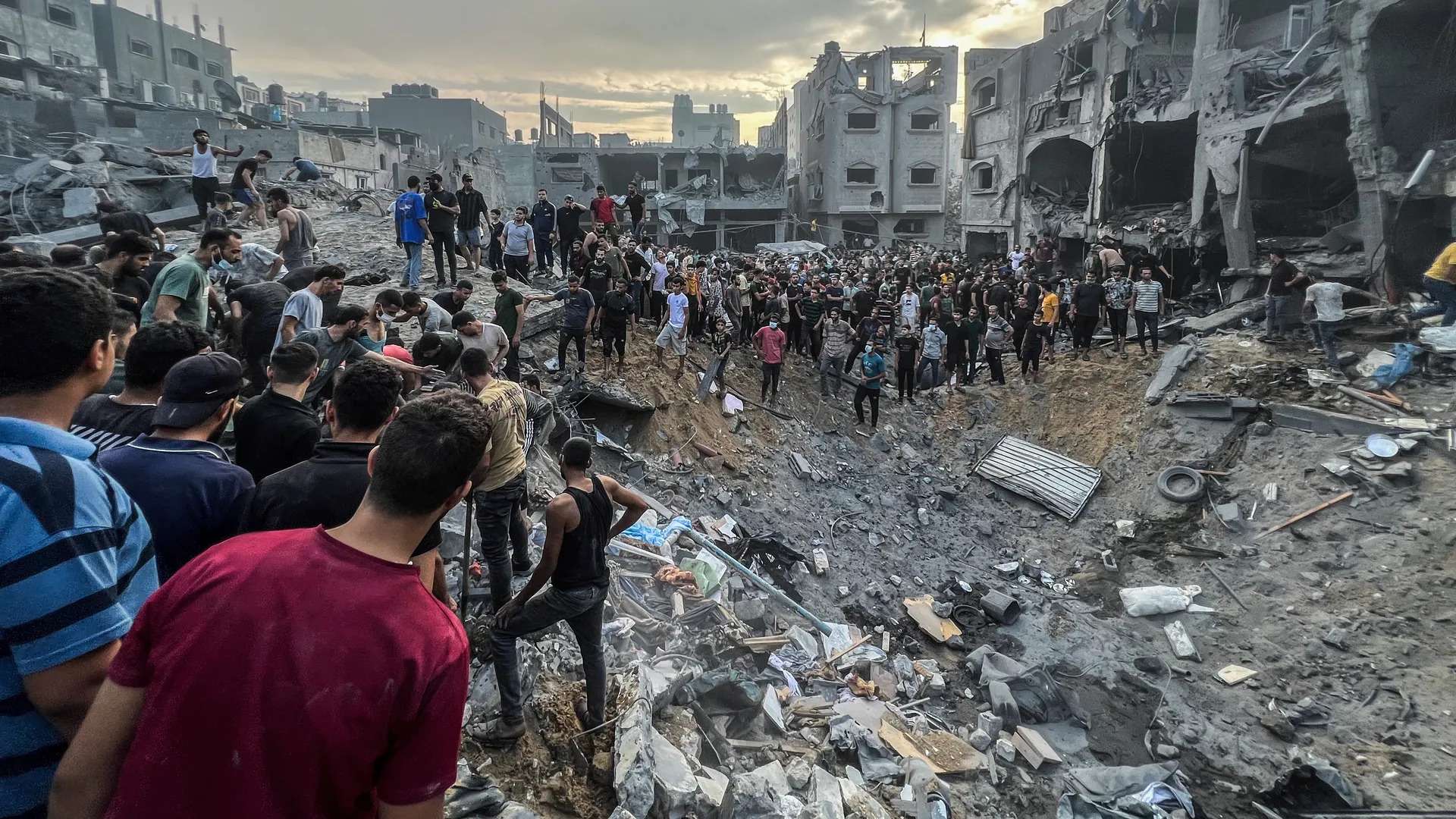
Genocide in Gaza – All the Perfumes of Arabia Will Not Sweeten These Hands…

As the ongoing livestreamed genocide in Gaza reaches its most despicable and horrendous phase of killing masses people through forced starvation, I am posting here a piece that I wrote for the art journal Art Deal last year. It was also delivered as a talk in a discussion organized by the All India Students’ Association (AISA) in JNU in September 2024. I am publishing it here with some minor additions/ changes.

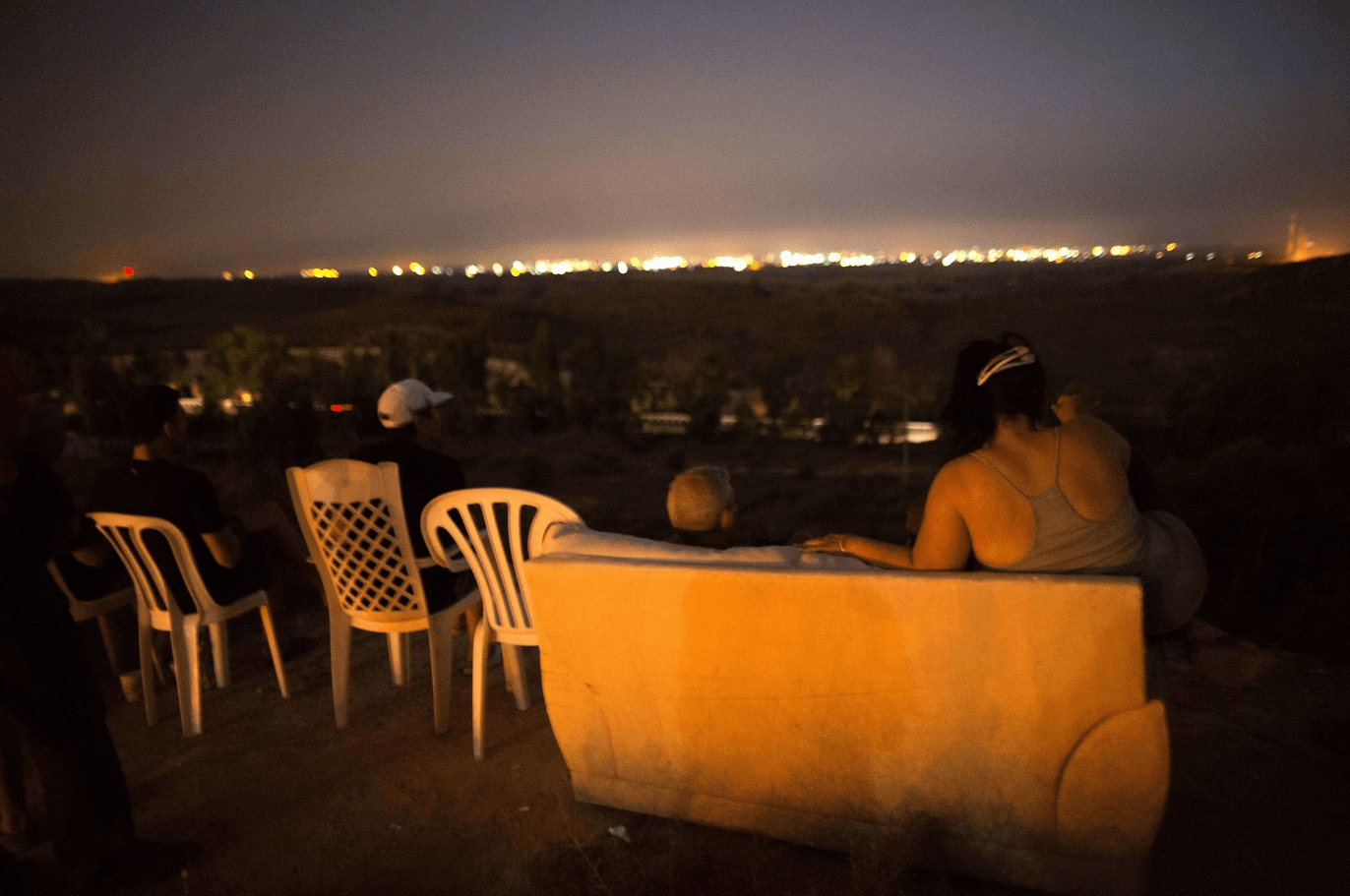
Israelis watch the bombing of Gaza in picnic mode outside a town called Sderot, in 2014, nine years before October 7, 2023. Image courtesy Menahem Kahana, Agence France-Presse.

‘Israel told U.S. officials in 2008 it would keep Gaza’s economy “on the brink of collapse” while avoiding a humanitarian crisis, according to U.S. diplomatic cables published by a Norwegian daily on Wednesday.

Three cables cited by the Aftenposten newspaper, which has said it has all 250,000 U.S. cables leaked to WikiLeaks, showed that Israel kept the U.S. Embassy in Tel Aviv briefed on its internationally criticized blockade of the Gaza Strip.’

 – Reuters, 5 January, 2011, Jerusalem.

I

No, it did not begin on 7 October 2023. Notwithstanding all the gaslighting by Israel and its guardians and arms-suppliers in the USA and Europe, the evidence says something else. The US cables leaked to Wikileaks show that not only had Israel been carrying out its genocidal activities for a very long time, its sponsors in the USA knew everything all along.

Continue reading Genocide in Gaza – All the Perfumes of Arabia Will Not Sweeten These Hands…

Conversations on Palestine: Teredide Mane O Baa Athithi

Conversations on Palestine with an activist, a poet, a scholar

Teredide Mane O Baa Athithi (Come in, I have opened my doors dear guest) is an offshoot of Mere Ghar Aakar Toh Dekho, a national campaign in India, in Karnataka. It aims to counter the forces of hate, bigotry and polarization that have gained ground in the country by redrawing boundaries and expanding notions of trust and community. The campaign involves participants from diverse backgrounds opening their own homes and hearts to guests from equally varied locations. Teredide Mane has grown as a community, learning and unlearning through practice the concepts of guest and host, home and house, consent and comfort, celebration and sharing, listening and observing—both commonalities and diversity. [Content and editing by Madhu Bhushan, Winnu and Anita Cheria. Illustrations and design by Winnu]

We invite you into this moving and powerful conversation that has been reproduced largely in the speakers’ own words, and hope that you will add to it and take it forward. Read the whole conversation here (https://shorturl.at/JzvI5). Or a shorter note on the conversation here (https://shorturl.at/NkLHz).

Over the past months, the genocide in Palestine has come up multiple times in our meetings. Apart from engaging in acts of protest and solidarity, there was a need to go beyond ‘news noise’, and meet people engaged with and from Palestine. We decided to create a virtual space, one that was safe and intimate, to be able listen deeply to friends we had connected with in the course of our work and life journeys. This conversation, with Lisa Suhair Majaj, Smadar Lavie and Issa Samander in October, 2024, came about as a result of this intention.

Lisa Suhair Majaj is a passionate Palestinian American poet whose writings and poetry echo with the spirit of the land and people that she was herself exiled and alienated from.

Continue reading Conversations on Palestine: Teredide Mane O Baa Athithi

The Racist Conspiracy Theory of “White Genocide” and Trump’s Supposed “Ambush” of Cyril Ramaphosa

Today happens to be Africa day and my friend Professor Sabelo Ndlovu-Gatsheni reminds us in a social media post that Africa’s is still a liberation struggle, for “strategic natural resources (minerals. oil, and others) are on the soil of Africa but not yet in our hands.” Something of how Africa is still sought to be kept in subjugation was evident in Trump’s meeting with the South African President in the White House recently.

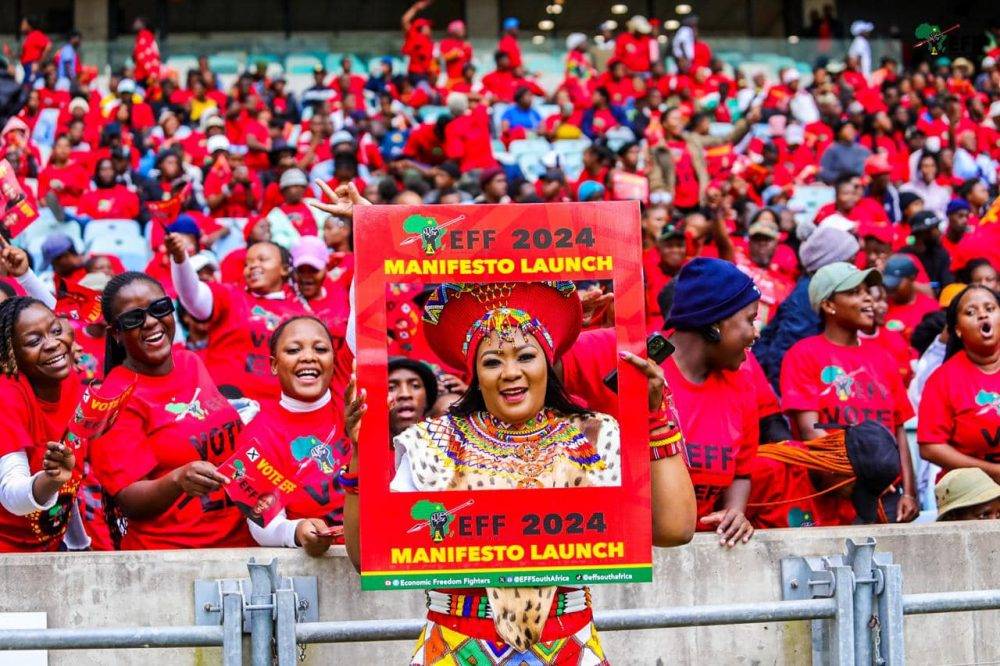
Julius Malema’s Economic Freedom Fighters, before the 2024 elections. Photo: EFF, courtesy Mail and Guardian

What happened in the White House meeting between POTUS Donald Trump and the South African President, Cyril Ramaphosa three days ago was quite appalling even for a non-South African to watch. The whole thing was a repeat performance, but far more humiliating, of what Trump and JD Vance had done with Volodymyr Zelensky, the Ukranian President. This meeting is being described as Trumps’ “ambush” of Ramaphosa. What is more, timed with this ambush was a staged “arrival” of some 49 families – men, women and children – claiming to be “farmers” fleeing the “white genocide” in South Africa. They were welcomed by US officials at the airport saying things like “Welcome to the United States, the land of freedom. It is such a pleasure to welcome you here” and so on.

Continue reading The Racist Conspiracy Theory of “White Genocide” and Trump’s Supposed “Ambush” of Cyril Ramaphosa

‘The Old is Dying’ – Notes on the Global Crisis of Democracy

Reflecting on what he called the “crisis of authority” or the “crisis of hegemony” from inside Mussolini’s prison, Antonio Gramsci had observed,

“The crisis consists precisely in the fact that the old is dying and the new cannot be born; in this interregnum a great variety of morbid symptoms appear.” (Selections from the Prison Notebooks, International Publishers, 1971, p. 276)

Reduced by Slavoj Zizek to a meaningless tweet that substitutes the last part with his own pop culture expression “now is the time of monsters”, it has become a kind of substitute for thinking what the crisis actually is all about.

Gramsci in fact, was hardly talking about pop culture “monsters”. He was thinking about a very new phenomenon of his time but which has become far more serious today – the crisis of the political party. The crisis of hegemony is tied in his above reflections, to the fact that “the great masses have become detached from their traditional ideologies and no longer believe in what they used to believe previously etc.” (SPN: 276)

Continue reading ‘The Old is Dying’ – Notes on the Global Crisis of Democracy

Class, Inequality, and the Current Political Moment in China and India : Prof Vamsi Vakulabharanam

Democracy Dialogues Series 39

Organised by New Socialist Initiative

Theme : Class, Inequality, and the Current Political Moment in China and India

Speaker : Prof Vamsi Vakulabharanam

Co-Director of the Asian Political Economy Program and Associate Professor of Economics at the University of Massachusetts, Amherst

Live streamed at Facebook ( facebook.com/newsocialistinitiative.nsi).
———————————-

Theme: Class, Inequality, and the Current Political Moment in China and India

This talk is based on a recently published book by the Oxford University Press – Class and Inequality in China and India, 1950-2010. China and India have seen a significant revival over the last three decades in terms of their place in the world economy. Two and a half centuries ago, they contributed 50 percent of the world output; after suffering a decline thereafter, their share fell to a paltry 9 percent in 1950 but has since resurged to over 25 percent today. Their growth and inequality experiences diverged for three decades following India’s independence (1947) and the Chinese revolution (1949). Thereafter, there are remarkable underlying similarities in the experiences of both countries, especially in terms of their rising inequality patterns analyzed through a class lens. Vamsi demonstrates that the mutual interconnectedness between Chinese and Indian growth and inequality dynamics and the transformation and evolution of global capitalism is key to understanding the within-country inequality dynamics in both countries over the 1950-2010 period. Based on this analysis of class-based inequalities, Vamsi reflects on the current political moment in both countries, from a political economy perspective.

Speaker : Prof Vamsi Vakulabharanam
Vamsi Vakulabharanam is Co-Director of the Asian Political Economy Program and Associate Professor of Economics at the University of Massachusetts, Amherst. He has previously taught at the University of Hyderabad (2008-14) and the City University of New York (2004-07). His recent research focuses on inequality in India and China and the political economy of Indian cities through the axes of gender, caste, class, and religion. In the past, he has also worked on agrarian change in developing economies, agrarian cooperatives, and the relationship between economic development and inequality. Vakulabharanam was awarded the Amartya Sen award in 2013 by the Indian Council of Social Science Research.

Release Prof Nadera Shalhoub-Kevorkian of Hebrew University Immediately

A Statement by Academics Worldwide on the Arrest of Hebrew University Professor Nadera Shalhoub-Kevorkian

Around 5 pm on Thursday, April 18, 2024, Hebrew University professor and internationally renowned feminist scholar Nadera Shalhoub-Kevorkian was arrested by Israeli police at her home in the Old City of Jerusalem on the charge of incitement to violence. The police raided and searched her home and she is currently undergoing harsh and dehumanizing interrogation. Her lawyer said the charges against her are serious. Information about her release is unknown. Palestinians in Israeli detention suffer physical, emotional, and mental violence. Professor Shalhoub-Kevorkian, who holds both Israeli and U.S. citizenship, has been subjected to violent repression and harassment by the Hebrew University for speaking out against the ongoing genocide in Gaza. Furthermore, she was suspended from her teaching duties in March, though later reinstated once it became clear that there is no basis for the allegations against her. 

Continue reading Release Prof Nadera Shalhoub-Kevorkian of Hebrew University Immediately

The Gaza Siege and Need for Subaltern Internationalism – Going Beyond Hanukkah of Uncle Sam: Maya John

Guest post by MAYA JOHN

Herodotus, widely considered as the father of history, mentioned the existence of Palaistinê between Phoenicia and Egypt, and still failed to condemn Hamas. Damn all historians! – An Anonymous Disappointed Liberal

But you are neither a Palestinian nor a Muslim. Why put yourself out there in this climate? –   An Anonymous Sanctimonious Liberal

When I look at the partition of Palestine in 1947 and 1967, the ghost of India and Pakistan rise like smoke from charred buildings of Karachi and Kolkata. Tithi Bhattacharya (A historian from partitioned Bengal)

The solidarity that is needed today will have to be built primarily by the peoples themselves. Only then can hope be reborn…– Samir Amin (Egyptian-French economist of Marxist persuasion)

                On 7 October 2023, the Hamas led an attack on the Gaza envelope, which is part of the southern district of Israel, killing reportedly 1200 people. The Hamas is a political and military organization governing the Gaza Strip of Palestinian territories that are under occupation by Israel. Many considered the military incursions of 7 October as an outright terrorist attack on civilians. Yet, others called this a ‘jail-break’ in terms of a reaction to Palestinian people bearing the burden of around seventy-five years of displacement, apartheid, surveillance, and endless other atrocities. Majority of inhabitants in the Gaza Strip are descendants of refugees who were displaced from the region which became Israel after the 1948 Arab–Israeli War. Nearly two million Palestinians have been notoriously cornered into this densely populated enclave where their movement has been severely restricted, and food, water and electricity supply has been controlled by the Israeli government; making such habitation the largest open-air jail in the world. After this attack, the Israeli military has launched a disproportionately brutal retaliation, resulting in massive suffering and a mounting death toll.  

                Some, of course, seek to rationalize the ensuing Israeli-Palestinian conflict by drawing on the belief that Israelis are the original inhabitants of this region and have suffered two millennia of exodus, and that they have the right to return and settle in what is considered as the ‘promised land’ as per the Biblical belief. Others consider that Israel is a settlers colony, and that Palestinians have all the rights to recover their country. Not so long back, the compromises of the Oslo Accords were thought to be a way forward in settling the crisis by creating two states, within which Israelis and Palestinians would achieve the long-lost peace in the region. Yet, such peace has failed to materialize. In the context of rising Islamophobia, conservative popular opinion asserts that the lack of peace in the region is due to a longer history of religious strife and supposed Muslim bigotry. Needless to say, history is more complex.

Continue reading The Gaza Siege and Need for Subaltern Internationalism – Going Beyond Hanukkah of Uncle Sam: Maya John

75th year of Nakba – In solidarity with the Palestinian struggle

Yesterday, May 15, 2023 marked the 75th anniversary of Nakba or the dispossession of the people of Palestine by the Zionist state of Israel. This is the text of a talk delivered at an event organized by India Palestine Friendship Forum.

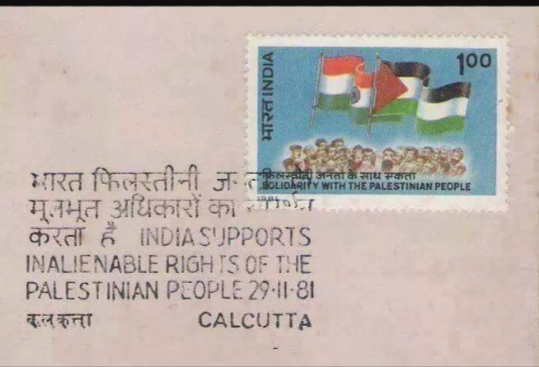
Stamp issued in 1981

In September 2012,  I had the incredible good fortune to visit Palestine. We stayed in Ramallah, visited and interacted with colleagues at Birzeit University and spoke at a conference organized by Muwatin, a research institute based in Ramallah. We met  a large number of inspiring people who pushed the frontiers of our minds, and we came away humbled and moved by the dignity of a people living through the brutal occupation of their lands by the  Zionist state of Israel, with limitless courage and bubbling sense of humour intact. Continue reading 75th year of Nakba – In solidarity with the Palestinian struggle

बहुध्रुवीयता – तानाशाही का मूलमंत्र : कविता कृष्णन

Guest post by KAVITA KRISHNAN

[यह लेख The India Forum में अंग्रेज़ी में छपा और उसके हिंदी अनुवाद का एक संक्षिप्त संस्करण सत्य हिंदी में छपा. यहाँ हिंदी में लेख को पूरा (बिना काट-छांट के) पढ़ा जा सकता है. हिंदी अनुवाद के लिए डॉ कविता नंदन सूर्य (सम्पादक, www.debateonline.in) को शुक्रिया.]

बहुध्रुवीयता अंतर्राष्ट्रीय संबंधों की वामपंथी समझ को दिशा देने वाला कम्पास है. भारत और वैश्विक वामपंथ की सभी धाराओं ने लम्बे समय से साम्राज्यवादी अमेरिकी वर्चस्व वाली ‘एकध्रुवीय’ दुनिया की अवधारणा के खिलाफ ‘बहुध्रुवीय’ विश्व की वकालत की है.

दूसरी ओर, ‘बहुध्रुवीयता’ वैश्विक फासीवाद और तानाशाही की साझी भाषा का मूल आधार बन गई है. यह निरंकुश शासकों के लिए एकजुटता का ऐसा आह्वान है, जो लोकतंत्र पर उनके हमले को साम्राज्यवाद के खिलाफ जंग की शक्ल में पेश करती है.  अंतर्राष्ट्रीय संबंधों के साम्राज्यवाद-विरोधी लोकतंत्रीकरण के नाम पर बहुध्रुवीयता को वैश्विक वामपंथ के गुंजायमान समर्थन ने, निरंकुशता का भेस बदलने और उसे वैधता दिलाने के लिए ‘बहुध्रुवीयता’ के इस्तेमाल को असीमित शक्ति प्रदान कर दी है.

राष्ट्र राज्यों के आतंरिक अथवा आपसी राजनैतिक टकरावों पर रुख तय करने लिए कितने आधार उपलब्ध हैं? इस प्रश्न के जवाब में वामपन्थ सिर्फ़ दो विकल्पों – या तो “बहुध्रुवीयता” या “एकध्रुवीयता” – को प्रस्तुत करती है. अगर आपने “बहुध्रुवीयता” को अपना मूल आधार नहीं बनाया तो वामपन्थ मानेगी कि आप ज़रूर अमेरिका/नाटो की दादागिरी वाले “एकध्रुवीयता” के पक्ष में हैं. पर   “बहुध्रुवीयता” या “एकध्रुवीयता” के बीच यह कल्पित बाईनरी हमेशा भ्रामक थी. लेकिन आज “बहुध्रुवीयता” बनाम  “एकध्रुवीयता” के बीच संघर्ष की मनगढ़ंत कहानी भ्रामक ही नहीं, खतरनाक है क्योंकि इस कहानी में फासीवादी और तानाशाह नेताओं को “बहुध्रुवीयता” बनाए रखने वाले नायकों का पात्र दिया गया है.

Continue reading बहुध्रुवीयता – तानाशाही का मूलमंत्र : कविता कृष्णन

The Popular Uprising in Sri Lanka – What Next?

Guest post by MAYA JOHN

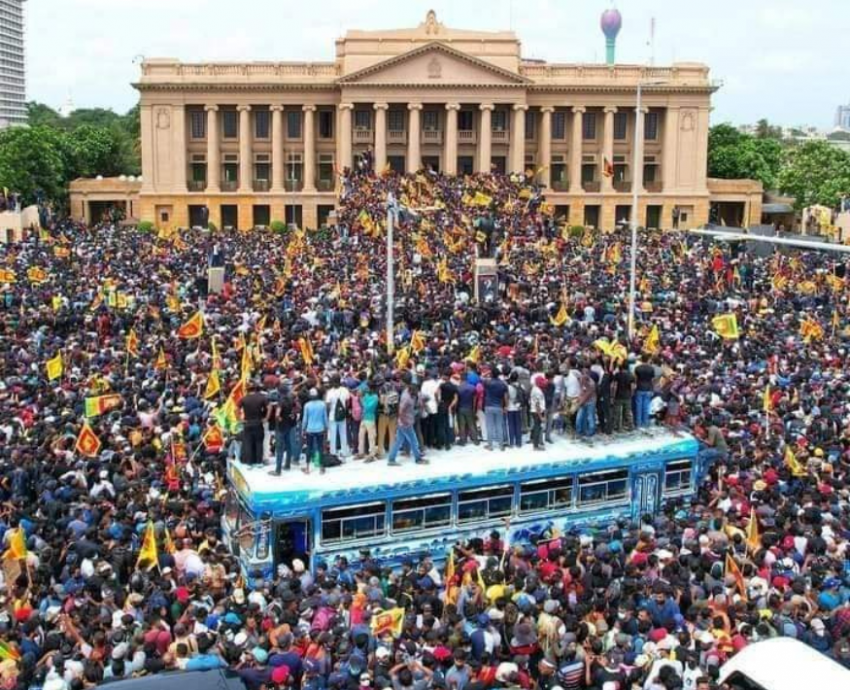
People converge at the Presidential building in Colombo, July 9, Photo: @UnionProtect/ Twitter, courtesy greenleft.org.au

A powerful Sri Lankan people’s movement, Janatha Aragalaya, has shattered the legitimacy of the ruling establishment of the country and has come to pose a serious challenge to the imperialist powers that have been backing the corrupt regime. Functioning from the Colombo’s Galle Face and numerous other centres which have surfaced across towns and villages, the movement amply reveals that the Sri Lankan people are questioning the misuse of the popular mandate by the country’s ruling elites. One can easily glean that the people’s aspirations go beyond the simply dethroning a few powerful politicians.

Continue reading The Popular Uprising in Sri Lanka – What Next?

US, Russia and Ukraine – The Death Trap beyond the New Cold War: Vishwas Satgar

This article by VISHWAS SATGAR was earlier published in the Daily Maverick, South Africa, Satgar has written for Kafila on earlier occasions.

Vladimir Putin’s regime, unlike Franco, Mussolini or Hitler, has a formidable nuclear arsenal. In this context, the contemporary world stands on the brink, facing extinction either through nuclear holocaust emanating from battle fields in Ukraine or worsening the climate crisis, while in our everyday lives prices for food and fossil fuels are skyrocketing.

Precariousness, uncertainty and complex risk have become the lived reality of deep globalisation in which markets for finance, energy, food and production have been integrated.

The fragility of this global economy was exposed in the “great financial crisis” (circa 2007-2009) from which the world economy has not recovered, by the ongoing Covid-19 pandemic, and now by the Russian invasion of Ukraine. These realities cannot be understood through simple memes, propagandistic binaries or abstract security concepts.

The full article can be read here.

Statement on the Russian Invasion of Ukraine: Radical Socialist

We publish below a statement by Radical Socialist on the Russian invasion of Ukraine. The statement minces no words in condemning the aggression as well as NATO but refuses to make the NATO the justification for Russia’s yearning for the lost empire.

1. We condemn Russia as an imperialist aggressor using the dreams of an old imperial epoch to justify expansionism, and are deeply concerned at this precedent  that may later affect any other former Soviet republic.

2. As when the US invaded Iraq, we do not use the language of diplomacy, we do not seek UN intervention, but call for the immediate and unconditional withdrawal of the aggressors.

3. This demand does not date only to 2022. We demand the Russian withdraw from every inch of Ukrainian territory. That includes Crimea, and the provinces in Eastern Ukraine even as we recognise the justice of demands for greater cultural and political autonomy so that Ukraine becomes a more democratic and federal set-up. Crimea had its own Constitution in 1992 which gave it greater powers of self-governance with some powers delegated to Kiev. Unjustifiably, President Kuchma subsequently annulled this Constitution.

Continue reading Statement on the Russian Invasion of Ukraine: Radical Socialist

COP(OUT)26, Climate Emergency and the Indian Left

Demonstration in Glasgow during COP26, image courtesy The Herald

We are in the midst of a climate emergency – and this is no longer a secret. In fact, in November 2019, 11,000 scientists declared in a signed statement, in no uncertain terms that “planet Earth is facing a climate emergency.” “Scientists”, they said, “have a moral obligation to clearly warn humanity of any catastrophic threat and to ‘tell it like it is’.” They noted that even 40 years after the First Climate Conference attended by over 50 scientists (in Geneva in 1979) had agreed that there were alarming trends of climate change that made it necessary to act, the situation has only worsened. “Alarming trends” have since given way to a full-on emergency. Although the 2015 Paris Agreement arrived at in COP 21 is considered a paradigm shift in that it produced a legally binding international climate treaty (adopted by 196 parties), the change since then has not been significant.

Continue reading COP(OUT)26, Climate Emergency and the Indian Left

Hul Dibosh Convention by Ekusher Dak (Call of 21) Marks Anniversary of Santhal Rebellion

Poster in Santhali language for the Convention

We had reported earlier on the call for a convention to commemorate the anniversary of the historic Santhal Rebellion associated the immortal names of Sidhu and Kanu. The convention was organized by the recently constituted forum in West Bengal, Ekusher DakCall of 21 – which was formed in the run up to the recently held elections in the state. ’21’ of course, refers to the year 2021 when the elections were held and the initiative for a new/ different Left platform in the state was launched. But ’21’ also recalls the date 21 February 1952, the historic day of the Bhasha Andolan (the Language Movement) in what is now Bangladesh. It recalls the assertion of Bengali identity that overrides the religious divide that the BJP made every effort to exacerbate. The convention was held yesterday and really came like a whiff of fresh air. The film we embed below is a very short but powerful telling of the story of the revolt with graphics. Ekusher Daak Film Team – Arjun, Debalina, Maroona, Boro, Laboni, Malay, Mitali, Arundhati, Saikat, Baijayanta, and Swarnava -have produced the film. For those who would like to watch the proceedings of the Convention, the YouTube streaming link is here.

The film on Hul Dibosh