Category Archives: Empire/ Imperialism

Justice for Soni Sori. Gathering at Jantar Mantar, 02/01/13

Protests against Sexual Violence continue in Delhi. Earlier this morning, there was a gathering to protest against the gruesome sexual violence committed on Soni Sori while in custody in Chhattisgarh under the supervision of Ankit Garg, Superintendent of Police, Dantewada. Ankit Garg was awarded with a presidential police medal on Republic Day (January 26) in 2012.

Soni Sori’s petition at the Supreme Court is due to be heard tomorrow. Continue reading Justice for Soni Sori. Gathering at Jantar Mantar, 02/01/13

Your rapists and ours

Two interesting articles:

Emer O’Toole in the Guardian CiF:

There’s something uncomfortably neocolonial about the way the Delhi gang-rape and subsequent death of the woman now known as Damini is being handled in the UK and US media. While India’s civil and political spheres are alight with protest and demands for changes to the country’s culture of sexual violence, commentators here are using the event to simultaneously demonise Indian society, lionise our own, and minimise the enormity of western rape culture. [Full article]

And Ananth Krishnan in The Hindu:

The rape case was one of the most discussed topics in Chinese microblogs over the past week, prompting thousands of posts and comments. By Sunday, however, the authorities appeared to move to limit the debate: on Monday, a search for the topic triggered a message on Sina Weibo – a popular Twitter-equivalent used by more than 300 million people – saying the results could not be displayed according to regulations. The message is usually seen as an indicator of a topic being censored by the authorities. [Full article]


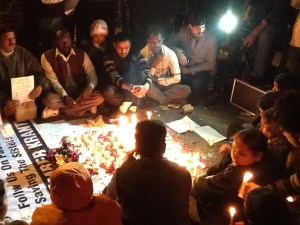
Evening at Jantar Mantar.

Candles at,Jantar Mantar
The Wake
The Wake
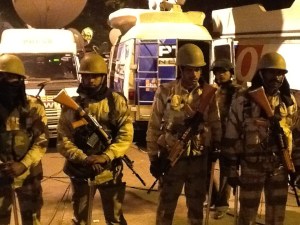
Armed, Cold, Bored
Armed, Cold, Bored

Stop Shielding Criminals in the Army and Security Forces in Assam: Bondita and Anjuman

This press release was issued on 23 December by BONDITA and ANJUMAN of WING and WSS, Guwahati

Aggravated sexual violence in Guwahati in July 2012 and gang rape in Delhi this month have led to public outrage and anger, compelling the media and the government to take serious note of the rampant sexual violence against women.  Even as the current attention on sexual violence on women raises several questions over laws, their enforcement and policing, there continues to be absolute silence and complete denial about sexual violence by the Army and the Central Armed Police Forces. It is high time to review and repeal laws and practices that promise complete impunity to the armed forces for sexual assault in counter insurgency conflict areas. Continue reading Stop Shielding Criminals in the Army and Security Forces in Assam: Bondita and Anjuman

Play Haze Kay not Honey Singh: Music from Kashmir against Rape for Delhi

“Justice to the girls who were so innocent,
Justice so our sisters can be roaming free,
Justice to Aasiya and Neelofar,
Justice to the girl from Delhi.”

– a song by HAZE KAY (Rapper from Kashmir)

Haze Kay
Haze Kay

Yesterday, we saw placards on Jantar Mantar that sought to draw linkages of solidarity between young people asking for justice for the gang-rape survivor in Delhi and those committed to the memory of the rape and murder of Neelofar and Aasiya in Shopian and many others in Kashmir.

Today, a Facebook post by Fahad Shah alerted me to a song by Haze Kay – a Kashmiri rapper that made the same linkage of solidarity, from Kashmir, to Delhi.

Here is the song. No further words are necessary. Except to say, call up radio stations in Delhi, and ask RJs to find and play Haze Kay, not Honey Singh.

LYRICS

In the memory of Aasiya and Neelofar and thousands of other girls and women who have been victimized by the crime called Rape ..

intro –

their guns and their clicks , i don’t fear all that .
when the police comes around , i don’t fear all that .
disappeared without a trace , i don’t fear all that .
cause i am from Kashmir so i don’t fear all that. Continue reading Play Haze Kay not Honey Singh: Music from Kashmir against Rape for Delhi

A song for snow: Arif Ayaz Parrey

Guest post by ARIF AYAZ PARREY

The beloved is like snow after a chilly wind. The beloved is a bright sun after snowfall. The lover is like the cinders in a kãger that refuse to die. The lover is the immortal heat of ashes.

     In the 2008 Hindi movie Oye Lucky! Lucky Oye! the playing out of virtues of theft in a world of (corrupt) systems is not the only delicious element. As a matter of fact, even more lovable is the song Tu raja ki raj dulari which echoes Shiv’s plea to Parvati after she has hopelessly fallen in love with him, and chosen a path of austerity competing with his asceticism. Tu raja ki raj dulari mein sirf langoti aala sun, bhaang ragd ke piya karoun mein kunde sote aala sun.  He tells her. “You are a king’s royal darling, I possess only a loincloth (Will tiger-cloth be a more helpful description here?), I drink ashes which I grind on a pistil and mortar.” Now there are several ways of looking at this parable. At the surface, and then again at its very core, it is a narration of one of the major themes of storytelling: An independent, beautiful and strong woman poignantly falling for a clumsy, reclusive and basically loser-type man, against better advice and to much heart-ache all around. But this characterisation holds only at the surface, the patriarchy of this theme works through the neat device of depth, the woman is strong, but only on the outside, quite literally when you know that Parvati once shed her outer mantle which became a powerful warrior-goddess in its own right, but in depth and beyond the obvious, she is a woman after all, while the man, clumsy, reclusive, scrawny on the surface, has an inner strength which can gulp Halahal (funnily enough called zahr-e-Hilal or ‘poison of the crescent-moon’ in Kashmiri) without much ado or do the Tandav when he feels like it. Continue reading A song for snow: Arif Ayaz Parrey

Full report: Alleged Perpetrators – Stories of Impunity in Jammu & Kashmir

Given below is a report put out this morning by the Srinagar-based INTERNATIONAL PEOPLES’ TRIBUNAL ON HUMAN RIGHTS AND JUSTICE IN INDIAN-ADMINISTERED KASHMIR [IPTK] and ASSOCIATION OF PARENTS OF DISAPPEARED PERSONS [APDP].

Given below is a press release and the executive summary of the report.

Continue reading Full report: Alleged Perpetrators – Stories of Impunity in Jammu & Kashmir

Can we solve Siachen without solving the Jammu and Kashmir dispute?

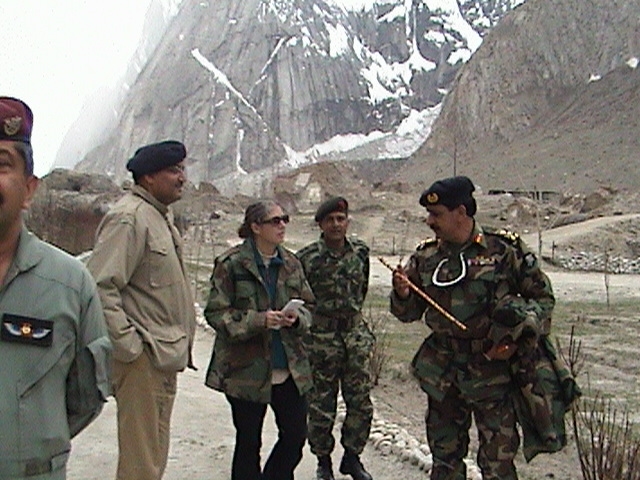
Myra MacDonald with Pakistani Army officers in the Gyari sector in 2004

Myra MacDonald is a London-based journalist with Reuters and a long-time observer of South Asia. She tracks the turning points in Pakistan politics at the Pakistan: Now or Never. MacDonald is best known for her book on the Siachen conflict, Heights of Madness: One Woman’s Journey in Pursuit of a Secret War. Published in 2007, the research for the book took her to both sides of the conflict, on helicopter and on ground. She was bureau chief of Reuters in India in 2000-2003. She then took leave-of-absence to research the Siachen conflict, becoming one of the very few people to visit the war zone on both the Indian and Pakistani sides. She has given presentations on Siachen to the Royal Military Academy Sandhurst and to the International Institute for Strategic Studies in London. Amidst alarmist rumours that track-two parleys between India and Pakistan are urging India to ‘give up Siachen’, MacDonald tells Shivam Vij in an e-mail interview why resolving Siachen without resolving the Jammu and Kashmir dispute may not be easy.

Q1) The idea of demilitarising Siachen is being seen by some in India as a demand to hand Siachen over to Pakistan, or at the very least, to ‘lose’ the territory for which Indian soldiers have made great sacrifices. Do you agree with such an interpretation of demilitarising the glacier? Do you think India has real strategic advantage with its occupation of the glacier? Continue reading Can we solve Siachen without solving the Jammu and Kashmir dispute?

Amitabh Bachchan in Gaza

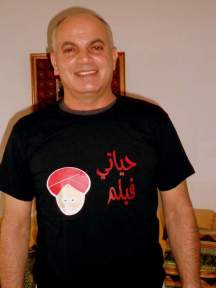
T shirt from shop in Ramallah. The Arabic text reads, “My life is an Indian film”. Photo by Sunaina Maira.

Radhika Sainath writes:

Palestinians in Gaza love Indians. They love Indian dancing, they love Indian music, they love Indian clothes. Whenever I walk out of the house, someone inevitably asks “hiyya hindeyee?” Is she Indian? ”I knew it!” they say when the response is in the affirmative. “Bheb al Hind,” I love India….

So Amitabh, Abhishek, Aishwarya, Amir, Hrithik, Kareena, Salman, Shahrukh, if you’re reading this, how about a shout out to 1.5 million of your biggest fans in the Gaza Strip? Israel has forbidden pasta, tea, cement and freedom flotillas from entering Gaza, but it hasn’t stopped Bollywood. We watch you under the Israeli drones and the F-16s, after being shot at by the Israeli navy and army while fishing, picking olives or going to school. You bring a sliver of joy to people living under the world’s longest occupation in the world’s largest prison, and for that we thank you.

Read the rest of this post by Radhika Sainath at Notes from Behind the Blockade Life: politics and nonviolent resistance inside the Gaza Strip.

Imagining Post-Zionist Futures – Israeli Apartheid and Palestinian Resistance III

This post is the third of a series based on a visit by Nivedita Menon and myself to Palestine in mid-September 2012. The first two are Nakba and Sumoud and Waiting for the Third Intifada.

It was the 18th of September, our third evening in Ramallah. We were at the Ramallah Cultural Palace to listen to Palestinian youth bands perform. The place was teeming with people, mostly young, in their twenties and thirties. The hall was packed, the atmosphere so electric that even if Magid had not been there to explain, there was no  way we could have missed the excitement and the anger that the songs evoked in the  audience. Interestingly, not all the songs were about Zionist oppression and the travails of everyday life in occupied Palestine.  When a song critical of the PA (Palestinian Authority) began, the hall went up in spontaneous applause, endorsing the  sarcastic lyrics directed at PA that has lately been involved in carrying out repression on its own population.

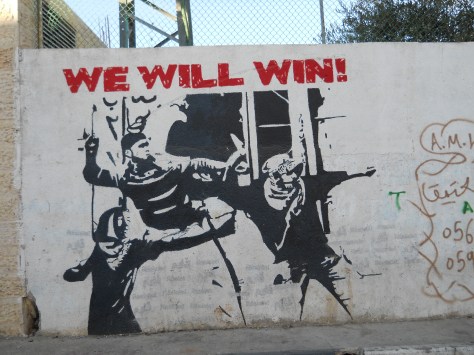
Liberation Graffitti on Wall in Ayda camp, Photos AN/NM

The complexity of the current phase of the movement arises from the fact that now, the new forces of Palestinian liberation are arrayed, not merely against Israeli occupation but also against this entity called PA and the Oslo Accords that put in place the political arrangements that mark the division of territories today. An arrangement that was supposed to be merely an interim one lasting but a few years, until the question of Palestinian statehood could be settled, has become a quasi-permanent one that is seen to threaten the longer-term goal itself.

Continue reading Imagining Post-Zionist Futures – Israeli Apartheid and Palestinian Resistance III

Chai, Autos and Sher Shah Suri: Shoaib Danyal

Guest post SHOAIB DANIYAL

Nothing good comes of having your status as capital snatched from you by Delhi. As a Calcuttan I know the pain. Of course, my city’s had it relatively easy when you consider the fate of Sasaram in Bihar. That’s where Afghan warlord (what a useful phrase: right from Bihar in the 16th century to the US invasion in the 21st) Sher Shah Suri had his capital, as ruler of Bengal and Bihar, before he overthrew Humayun and moved shop to the Purani Qila in Delhi. Unlike the Afghan warlords of today though, Sher Shah was a pretty impressive ruler. He introduced the rupiya. which was the predecessor of the modern rupee. More interestingly, he introduced a small denomination coin called the dam which probably gave rise to the English phrase “I don’t give a damn”. The administrative set-up introduced by him was so impressive that Akbar copied liberally from it and Sher Shah’s ideas therefore ruled India for centuries after the man’s death. Continue reading Chai, Autos and Sher Shah Suri: Shoaib Danyal

An open letter to the jury of The Economic Times Awards for Global Excellence: G. Ananthapadmanabhan

This open letter has been put out by G. ANANTHAPADMANABHAN of Amnesty International (India)

Dear Mr Deepak Parekh, Mr Kumara Mangalam Birla, Mr K V Kamath, Mr Kris Gopalakrishnan, Mr A M Naik, Ms Chanda Kocchar and Mr Cyril Shroff,

We at Amnesty International India are deeply disappointed by your decision to give the Economic Times Business Leader of the Year 2012 award to Mr Anil Agarwal, Chairman of Vedanta plc.

The Business Leader award is given to individuals who have demonstrated “a strategic direction for success, and pursued a vision”. But Vedanta, in its efforts to have a bauxite mine opened at the Niyamgiri hills in Orissa and expand an aluminium refinery near Lanjigarh, has demonstrated an utter lack of both leadership and vision. What it has shown instead is a brazen disregard for Indian law and an utter lack of respect for the rights of local communities. Continue reading An open letter to the jury of The Economic Times Awards for Global Excellence: G. Ananthapadmanabhan

To Build A Bridge in Kashmir: A fable by Abhijit Dutta

Guest post by ABHIJIT DUTTA

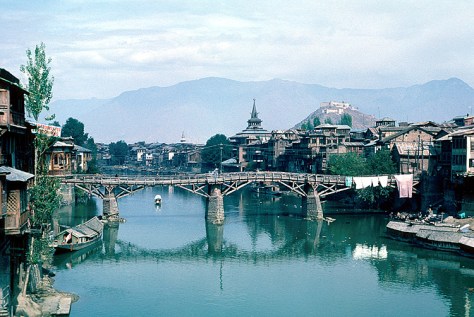
Once upon a time, a young politician – young enough to have a ‘baba’ appended to his name – came to Kashmir to build a bridge in Srinagar. Now as anyone who knows Srinagar knows, the city is filled with bridges. Some are famous, like Gawkadal, some are pretty, like Zero Bridge, and some are simply without charm, like the Abdullah Bridge that goes from fountain square to Rajbagh. There are several others too, each with their own unique character, their own unique relation to the Jhelum.

When he was told about the many bridges in Srinagar, the politician shouted, “I want to build a bridge.”

“But we don’t need a bridge,” said a man softly to him, wanting not to embarrass this well-meaning man who had come to Kashmir from aafar. In response, the young politician turned around and shouted once again: “I want to build a bridge.” Continue reading To Build A Bridge in Kashmir: A fable by Abhijit Dutta

Fifty villages

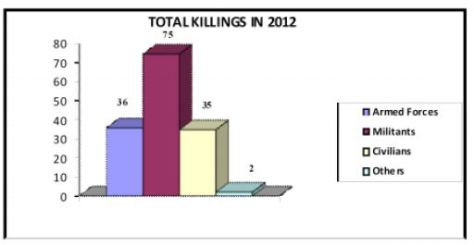
This report was released in Srinagar today by THE CITIZENS’ COUNCIL FOR JUSTICE. It is a statistical study of violence in north Kashmir between 1990 and 2011

The intruders were not found in possession of any objectionable material apart from a large cache of fish

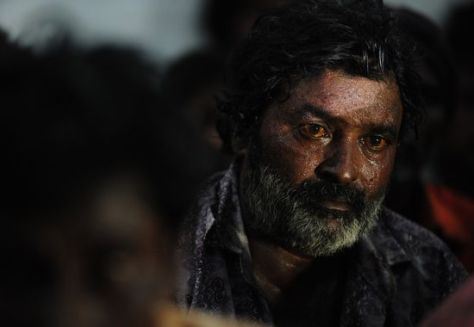
An arrested Indian fisherman sits at a police station in Pakistan’s port city of Karachi on October 1, 2012. Pakistan maritime security agency arrested 33 Indian fishermen and seized five boats for allegedly fishing illegally in Pakistan’s territorial waters. By Asif Hassan/AFP/Getty Images.

The insensitive governments of India and Pakistan are not moved even when one of their citizens dies in the other country, especially if the citizen was a poor fisherman arrested for the crime of inadvertently crossing a maritime boundary.

After 23 days of lying in the morgue of Ahmedabad’s Civil Hospital, the body of 32 year old Nawaz Ali Jat will finally reach Karachi on Monday by a Pakistan International Airlines flight. His family waited 14 years for his return, but they didn’t even get to know when he died of kidney failure on September 8. Continue reading The intruders were not found in possession of any objectionable material apart from a large cache of fish

Allow UNWGEID to probe disappearances in Jammu and Kashmir: APDP

This press release was put ou on 28 September 2011 by the ASSOCIATION OF PARENTS OF DISPLACED PERSONS, The Bund, Amira Kadal, Srinagar – 190001
In Pakistan the judiciary is attempting to provide justice to the family members of those who have been subjected to enforced disappearance. In 2008, the Chief Justice of Pakistan entered into confrontation with the then President of Pakistan for taking a pro-active stance against disappearances. That confrontation ultimately emboldened the judicial system in Pakistan to be more pro-active on human rights issues. This judicial intervention on enforced disappearances has created an atmosphere in Pakistan which has pushed Pakistani government to invite United Nations Working Group on Enforced or Involuntary Disappearances (UNWGEID). The UNWGEID recently concluded its first 10 day visit to Pakistan and have begun their investigations on enforced disappearances. Continue reading Allow UNWGEID to probe disappearances in Jammu and Kashmir: APDP

Joga’s disappearance: Amandeep Sandhu

Rupa Publications; pp 252; Rs 275

This guest post by AMANDEEP SANDHI is an extract from his new book, Roll of Honour, a novelset in the backdrop of the Indian Army’s Operation Blue Star in 1984

During the last summer vacation (from my military school), when I was at home in Patiala, the soldiers had taken away my friend Joga. The government had already censored the newspapers, but the airwaves sneaked in the news of what was happening elsewhere in Punjab. In our living room, Nanaji’s white beard had trembled when we listened to Mark Tully from the British Broadcasting Corporation on our Murphy radio:

The battle of the Golden Temple in Amritsar is being fought hard and constantly. At the height of the battle, there were three hours of hand-to-hand fighting. Weapons allegedly recovered from the separatist Sikh militants were displayed to the world. The fatalities are not… Unofficial estimates go into thousands… Continue reading Joga’s disappearance: Amandeep Sandhu

Borderline madness: Sajan Venniyoor


Guest post by SAJAN VENNIYOOR

Now that government agencies in India — some half a dozen of them working with the exceptional coordination we have come to expect from government agencies — have blocked Facebook accounts, Twitter feeds and YouTube videos supposedly originating in Pakistan, perhaps we could contemplate other trans-border electronic transgressions committed by our neighbours.

In August 2011, The Times of India reported that Punjab border farmers still tune into Pak FM radio stations. According to villagers on the fringes of Ferozepur, the limited range of India’s “national radio” broadcasts and the absence of any local FM station have made radio services from Pakistan the most popular source of entertainment in border areas.

About the same time last year, the Indian government had become alarmed by the popularity of Nepal’s FM radio channels in Bihar along the Indo-Nepal border. According to various sources, some half a dozen Nepal FM radio stations are broadcasting programmes – “anti-India advertisements and vulgar songs”, according to one outraged newspaper report – into Bihar, especially Madhepura, Supaul, Madhubani, Kishanganj, Araria, Sheohar, Saharsa, Muzaffarpur, and East and West Champaran districts.  Continue reading Borderline madness: Sajan Venniyoor

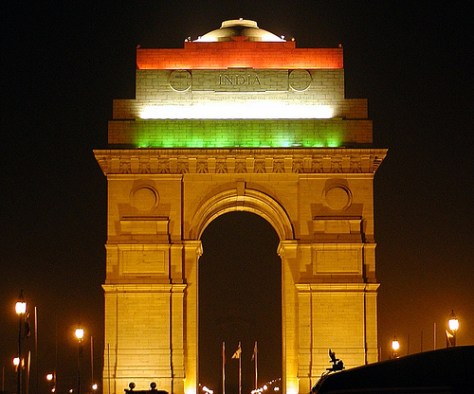
India Gate vs. India

August 15 marked the 65 anniversary of India’s Independence from foreign rule and colonialism. September 21 will mark the 155 anniversary of the recapture of Delhi by the British and the end of the first valiant rebellion against foreign rule.

Between May 11, 1857 and May 21, 1857, Delhi was free of the British. The rebel soldiers had chosen Bahadur Shah Zafar as their leader and since the Red Fort was where he lived, the Lal Qila came to be seen as the centre of the First War of Independence. Delhi was seen as the heart of India and Lal Qila was the heart of Delhi and that is why once the British recaptured Delhi they wasted no time in arresting Bahadur Shah Zafar and quickly moving into the fort. Continue reading India Gate vs. India

The Myth of the Bangladeshi and Violence in Assam: Nilim Dutta

Guest post by NILIM DUTTA

Map credit: idsa.in

The recent spate of violence that began in the Kokrajhar district of Assam in the month of July 2012 and then spread to the adjoining districts of the Bodoland Territorial Council, primarily between the Bodos and the Muslim community of immigrant origin settled in these districts, has once again unleashed a vicious debate on the perils posed by alleged unrestricted illegal immigration from Bangladesh, this time even on the floor of the Lok Sabha.

The situation has been further complicated by a ‘protest’ in Mumbai against ‘violence on Muslims in Assam’ turning into a riot or by sundry attacks as ‘retaliation’ against people from North East elsewhere in India. Thanks to either shockingly uninformed or brazenly motivated opinions being aired around incessantly, much of it in the national electronic and print media, the dominant discourse that has evolved around the issue has created three distinct perceptions:

First, that illegal immigration of Bengali Muslim peasants from neighbouring Bangladesh into Assam has been continuing unabated, leading to skewed demographic profiles of Assam’s districts bordering Bangladesh and thereafter, turning several adjoining districts of Assam to Muslim majority. Continue reading The Myth of the Bangladeshi and Violence in Assam: Nilim Dutta

Celebrating Tyranny and Victimisation in Kashmir: JKCCS

This press statement comes from the JAMMU AND KASHMIR COALITION OF CIVIL SOCIETY

Srinagar, 15 August 2012: It is despicable that the police officers responsible for serious human rights violations are receiving awards despite the crimes they have perpetrated. Today’s awards to some of the Jammu and Kashmir Police officers are an act of celebrating tyranny and victimization.

Superintendent of Police, Altaf Ahmad Khan is one of the officers who has been awarded with the President’s Police Medal for Gallantry. Altaf Ahmad Khan is notoriously known for perpetrating human rights violations in the areas where he has served. Continue reading Celebrating Tyranny and Victimisation in Kashmir: JKCCS