Category Archives: Everyday Life

Teachers, Straw, and the Combine Harvester – Peasant Household’s Ecological Ledger in Assam: Bonojit Hussain

Guest post by BONOJIT HUSSAIN

I did not come to the village to do research. I came to farm for the market—and to do it without breaking the village’s social and ecological ledger. I returned as a nephew and a neighbour. For six years I have lived inside this world of muddy fields, failed pumps, anxious harvests, and commonsense wisdom passed across haat stalls. Six years on, I am only now seeing a glimmer of hope for a workable path.

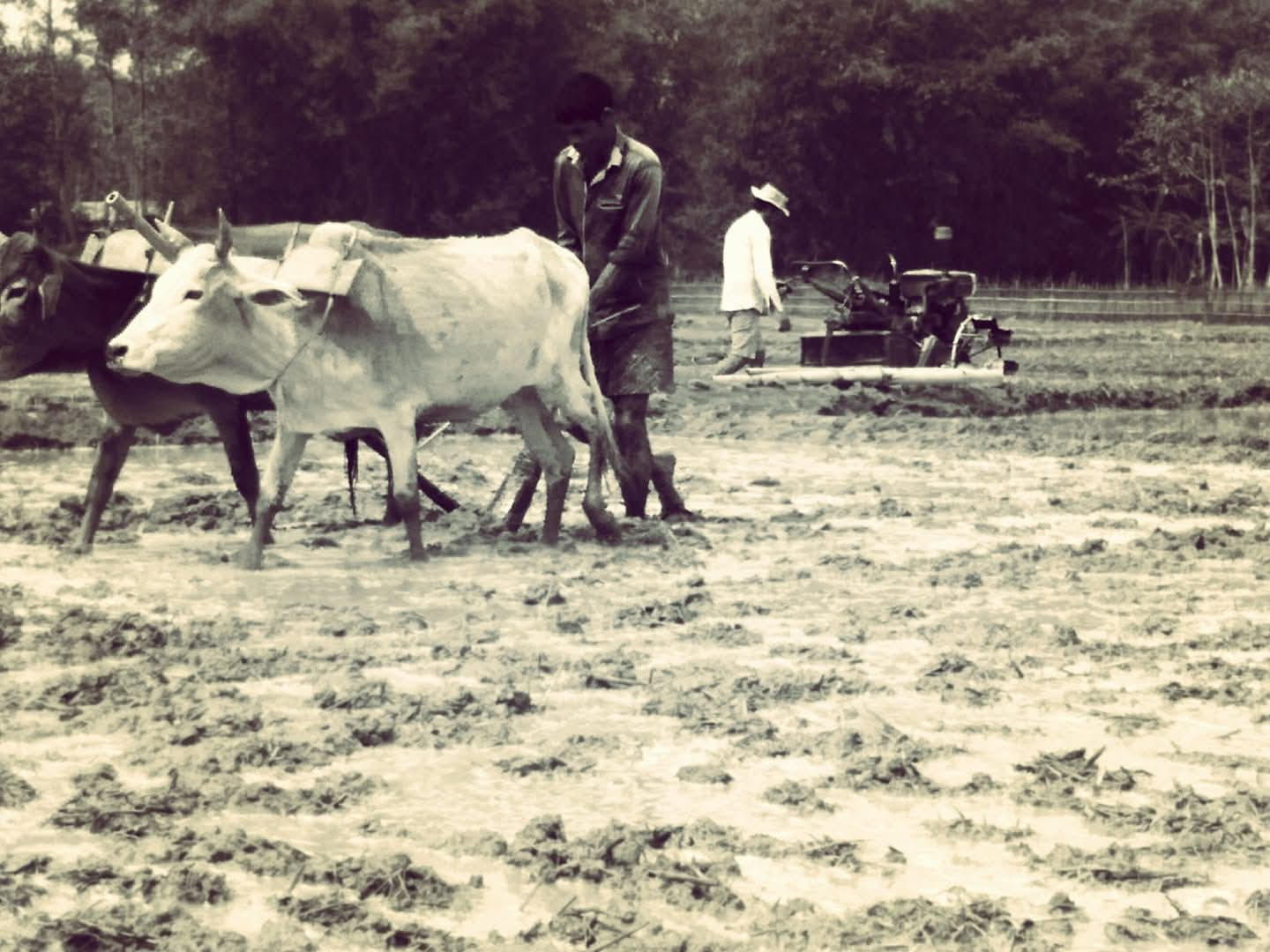
Photograph by Bonojit Hussain of his own farm

What I write here is not sociology in the professional sense, but a testimony from within the living contradictions. My focus is on the choices and constraints of the khilonjiya peasant household—native, often subsistence-oriented communities whose economic logic is deeply tied to ecological and social reproduction. This is a distinct reality from the highly commercialized production systems found in some other parts of the state.

Continue reading Teachers, Straw, and the Combine Harvester – Peasant Household’s Ecological Ledger in Assam: Bonojit Hussain

The Man Who Died at Gate Number Three: Avantika Tewari

This is a guest post by AVANTIKA TEWARI

It was night when the man died.

In the thick, humming night of a city that never truly sleeps — only flickers. Flickers between traffic signals and app pings, between delivery promises and the quiet violence of exhaustion.

He collapsed just beyond Gate Number Three in a residential colony in Delhi, somewhere between the parked dumpers and the weary under-construction site of the Metro.

He fell softly, without spectacle. The kind of death a city absorbs without noticing, like rain into dust.

In a few days, the Resident Welfare Association had drafted a statement — not out of grief, but out of inconvenience: “What if it had been one of us?”

The question hung in the air like a perfume of moral panic. A swift and bloodless message was delivered — the dumpers, it was agreed, would no longer be stationed near Gate Number Three. Continue reading The Man Who Died at Gate Number Three: Avantika Tewari

Will Asjad Babu Get Justice in Today’s India

“Our dead are never dead to us until we have forgotten them”

– George Elliot (English Novelist and Poet, 1819-1880)

Firdaus Alam alias Asjad Babu – age 24 years – is dead.

Details of this cold blooded killing have appeared in a section of the media and make chilling reading. (1)

Asjad – a native of a village in Kishenganj district of Bihar, married hardly 7 months back, worked as a tailor in Panipat, Haryana.That tragic evening, he was sitting with his friends including his brother Asad Raza in a playground when the accused approached him and started mocking him for wearing a skullcap.

None of the friends had any personal enmity with the accused Narendra alias “Susu Lala”.When confronted, he felt further agitated and attacked Asjad with a knife, inflicting serious fatal injuries.

Death of Asjad is no ordinary death.

It appears to be a hate crime.

Hate crime is a special crime where a person is targeted just because of hostility or prejudice towards that person’s colour, look, dress, which reveals the person’s community, religion or belief etc. One does not know whether the police or the law-and-order machinery would be ready to acknowledge this brutal murder as a hate crime (2) because that would entail stricter charges, which may be followed by stricter punishment.

What is even more disturbing, is to note that killings, like that of Asjad have become commonplace. ( Read the full article here : https://countercurrents.org/2025/06/will-asjad-babu-get-justice-in-todays-india/)

Stop This Insanity in the Name of Patriotism: Axom Nagarik Samaj

Statement by AXOM NAGARIK SAMAJ on the targeting of minorities today

Are we witnessing a textbook case of fascist tendencies being practised in Assam? How long can a section of religious minorities will be subjected to all kinds of atrocities and humiliation by branding them as Bangladeshi foreigners? They are being harassed and humiliated all the time. We have been told time and again that they are the cause of all our evils and they are a threat to our existence. How can the victims turn into victors? What a classic case of distorted logic.

We had a six-year-long Assam movement to get rid of the Bangladeshi foreigners. Then overnight AASU turned into AGP and ruled Assam for ten long years. Thereafter came  the Congress government which ruled Assam for 15 years when the present chief minister was in charge of the implementation of the Assam Accord. Then there was that famous declaration of Modi that all Bangladeshi foreigners would have to leave Assam with their baggage by 16 May, 2014. Now the BJP has been in power for the last 10 years. Nothing happened. Instead, the CAA was brought in to grant citizenship to a section of linguistic minorities. Come any elections, blame the religious minorities and do all kinds of nasty things to them and use them to win the votes of the majority community. The brandishing a particular religion as a threat and criminalizing the religious minorities has become a well-known tactic of the Hindutva brigade. Now they are going to issue weapons to the indigenous people against the religious minorities. Have we seen any civil war-like situation anywhere in Assam? Then why do you have to do this? Why promote this communal hatred and create tension among the common people? It is heartening that the people in Assam have generally maintained peace, except for a few minor incidents here and there, and have remained calm while maintaining amity among themselves everywhere in the state.

We appeal to all right-thinking people including the Opposition political parties and civil society organizations to condemn and oppose this nefarious design of the ruling combine. 

Ajit Kumar Bhuyan, President Paresh Malakar, General Secretary

Axom Nagarik Samaj

Digital Currency Panic in Kerala: How a Fictional Feature in Kerala Newspapers Triggered Real Fears: T T Sreekumar

[This is a guest post by T T Sreekumar]

On 25 January 2025, major newspapers in Kerala carried an advertorial on their front pages, styled as an imagined news feature from the year 2050. While a corner warning noted it was not actual news but a creative feature tied to a seminar by a deemed to be university, the format closely mimicked a genuine front-page report. The headline announced the ban of currency notes and a complete shift to digital currency starting February 1st, complete with fabricated names for officials such as the Reserve Bank Governor and opposition leaders. Despite slightly altered typography, the resemblance to legitimate news was convincing enough that many readers overlooked the disclaimer and were deeply alarmed.

Continue reading Digital Currency Panic in Kerala: How a Fictional Feature in Kerala Newspapers Triggered Real Fears: T T Sreekumar

Concerns arising from the suicide of Atul Subhash – A feminist response: Naveddu Nilladiddare, Karnataka

Statement by Naveddu Nilladiddare, Karnataka, a state wide network of organisations and individuals concerned with issues related to women and all human rights

The tragic suicides of Atul Subhash and police constable, Tippanna Alagur in Karnataka have once again given rise to volatile debates on the ‘misuse’ of the laws related to gender violence specifically the (erstwhile) IPC 498 A and the Dowry Prohibition Act. It has provoked a PIL in the Supreme Court that seeks reform of these laws to “prevent harassment of Innocent husbands.”  It has also given space for irrational and dangerous fears being unleashed by men’s rights organisations and a sensational media about “greedy and exploitative” women who are a threat to the institution of the family with their rapacious demands for maintenance and alimony. Even the Home Minister of Karnataka has legitimised these fears stating that the suicide has “opened up a debate about men’s rights” in the country.  These statements and debates betray an ignorance of the processes of law in addition to a denial of violent patriarchy that continues to impact on the lives and deaths of women and men. 

Continue reading Concerns arising from the suicide of Atul Subhash – A feminist response: Naveddu Nilladiddare, Karnataka

Freedom, not surveillance! Reclaim the Night Campaign Kolkata responds to measures suggested by the West Bengal government

Statement by Reclaim the Night Campaign, Kolkata 

‘Reclaim the Night’ is a mass movement demanding justice for the RG Kar rape and murder incident. It has united many people across West Bengal, across the country and even outside India in several places. It has brought people out onto the streets, united them in rage, and one could say it is making – not “history” – but her/queer/trans* story. This movement has brought school and college students, women working in call centres, nurses, doctors, health workers and women working in several other sectors out onto the streets to protest. Women from many villages and rural areas have added their voices to this movement and thousands upon thousands of people have occupied the streets at night, throughout the night, till the wee hours of morning. Muslim women have stepped out to reclaim the streets in several areas and Trans- queer persons have taken part and brought forward their demands. Everyone’s participation has really lifted ‘Reclaim the Night’ to a different height.

Our main objectives are to secure justice in all unresolved cases of sexual violence, including the RG Kar incident, and to secure safety and freedom for women and communities of marginalized genders/sexuality everywhere and at all times. We extend solidarity to all those who are working towards achieving this goal.

From what the combined voice of the movement has upheld, we wish to respond and clarify our standpoint regarding the statement made by Alapan Bandyopadhyay, Chief Administrative Advisor to the Chief Minister, Mamata Banerjee.

Continue reading Freedom, not surveillance! Reclaim the Night Campaign Kolkata responds to measures suggested by the West Bengal government

The Movement in Bangladesh is for a Radical Reform of the State – Interview with Sarwar Tusher

Interview with SARWAR TUSHER, writer and activist in Dhaka. Sarwar is one of the leading critical intellectuals associated with the important journal of political thought in Bangladesh, Rashtrochinta Journal and is also member of its editorial panel. In this detailed interview Sarwar explains not just the movement but also the larger politics of Bangladesh. The interview was taken by Aditya Nigam over email.

Turbulent July, Photo courtesy Rahat Karim

[After a round of massive repression and killings, the details of which the reader will find below, the movement is now back with renewed strength. This time it is not just the students and youth demanding an end to quotas but rather huge popular movement that is demanding nothing less than resignation of the Sheikh Hasina government and radical reform of the state. The conception behind this demand for “radical reform of the state” has been spelt out by Sarwar Tusher in detail below and the reader can see how it has grown in conjunction with mass movements of the past. Critical political thinking in tandem with the experience of mass movements has now led to the demand also of a new Constituent Assembly and the drafting of a fresh Constitution. It is also significant that “July” is no longer the name of a month but the name of the struggle itself as it reappears with greater vigour. I should add one more point here, which as to do with some misgivings in India about the quota and reservation question. Though Sarwar deals with it at greater length in different part of the interview, my own sense on reading his responses as well as following the discussions over the past one month, is that the situation is more akin to what might have been (and still is) in countries of state-socialism where the communist party certification was crucial in getting jobs and rising in the bureaucracy and other state institutions. The party certified whether you were “revolutionary” (muktijoddha) or “counter-revolutionary” (razakar) and it is not difficult to see why those regimes became so seriously unpopular (to put it mildly) in their own countries. AN]

Continue reading The Movement in Bangladesh is for a Radical Reform of the State – Interview with Sarwar Tusher

Anti Muslim violence after June 4th election results: APCR

Report prepared by Association for Protection of Civil Rights

Although the BJP came back with a much reduced majority (or perhaps because of that) the agenda of anti Muslim violence has been ramped up.  We, the people of India, who restored the dignity of the Constitution, must continue to bear witness, continue to fight against the hate filled politics of Hindu Rashtra, continue to assert  – Not in My Name.

Sab yaad rakha jayega, as the poet Aamir Aziz says.

We will remember these names, and the names of thousands of Muslims killed by lynch mobs, who have had their livelihoods destroyed, whose faith has been insulted, who suffer imprisonment without any basis till today.

Sab yaad rakha jayega.

There has been total of eight lynching incidents after the results of the General Elections were announced on June 4, 2024.

  • Twenty-three-year-old Salman Vohra, who had gone to watch a cricket tournament match in Chikhodra, Gujarat on 22 June, was mercilessly beaten to death by a group of men.
  • Three Muslim men, residents of Uttar Pradesh, were brutally attacked by a Hindutva mob in Chattisgarh’s Raipur on 7 June. Saddam Qureshi and his cousin Chand Miya Khan (23), both from Saharanpur district, and Guddu Khan (35) from Shamli district, were transporting cattle when they were allegedly chased by a mob in Raipur; two died on the spot, while one died after 10 days.

Continue reading Anti Muslim violence after June 4th election results: APCR

Nari Shakti – A report card for the 2024 Elections: Bahutva Karnataka

Statement released by Bahutva Karnataka, a forum of concerned citizens and organisations


“Nari Shakti” was invoked by Prime Minister Narendra Modi amid ‘Azadi Ka Amrit Mahotsav’ in 2022. Since then it has been highlighted as an important plank by the BJP. This report looks at how women have fared over the last decade and outcomes of key women focused initiatives.

Violence against Women

Claim: Women’s security will be given more priority (BJP Manifesto, 2019).

“India has been shamed by a string of high-profile rapes and sexual attacks on women….Our heads hang in shame when we hear about rapes….Why can’t we prevent this?”

–   Narendra Modi, 2014

“Women security is UP government’s top priority

  • CM Yogi Adityanath

Reality: Crimes against women and sexual violence have increased in 10 Years of Modi Rule Continue reading Nari Shakti – A report card for the 2024 Elections: Bahutva Karnataka

But what about Love? Hyderabad and the 2024 Elections PART II: R. Umamaheshwari

Guest Post by R UMAMAHESHWARI

Second part of a two part article. Part I A City Built on Love can be found here.

A wedding party travelling by night depicting Sultan Muhammad Quli Qutb Shah of Golconda (r.1580-1612) bringing home his bride, the beautiful Hindu dancing-girl Bhagmati. (Ashmolean Museum, University of Oxford)

Compared to the more complicated record of the last Nizam of Hyderabad, the popular memory of Mohammad Quli Qutb Shah continues to be one associated with love.

It was Muhammad Quli Qutb Shah who sincerely prayed for his city, his Fakhunda Buniyad (the city with fortunate foundations) or Bhagnagar – “mera shahar logan su mamur kar, rakhyan jun tun darya mein min ya sami” (fill my city with people, as you would a river with fish). And he did not pray for only certain species or kinds of fish.

And so, we now have Greater Hyderabad, starting from that one prayer. He ruled from 1565 to 1611 over the kingdom of Golconda – for 31 years and died at the age of 46. He built the capital city of Hyderabad and many architectural wonders, the most famous among them being Charminar (1591), the Jami (Mecca) Masjid (1597), and the Darush Shifa (1595) – which housed a Unani hospital, many gardens, palaces and so forth.

Muhammad Quli also poured his heart out in other ways, such as in ghazals, Marsiya (elegy), Rekhti (“women expressing sentiments for men in a language exclusively spoken by them”), and so on. Some of these (as recorded in the book by Narendra Luther, Prince, Poet, Lover, Builder Muhammad Quli Qutb Shah, The Founder of Hyderabad, Publications Division, Government of India, 1991), being relevant to the times, are reproduced below. Continue reading But what about Love? Hyderabad and the 2024 Elections PART II: R. Umamaheshwari

A City built on Love – Hyderabad and the 2024 elections PART I: R. Umamaheshwari

Guest post by R UMAMAHESHWARI.

First part of a two part article. Part II But What About Love? is available here.

[From a painting (artist not mentioned) in Narendra Luther, Prince, Poet, Lover, Builder Muhammad Quli Qutb Shah, The Founder of Hyderabad, Publications Division, Government of India, 1991]

Backdrop

This is a two-part article on the current electoral battle for the Hyderabad constituency between what is ostensibly being perceived (in some circles) as a contest between majority and minority fundamentalism, represented by BJP’s Madhavi Latha and AIMIM’s Asaduddin Owaisi, respectively. But this is a staid and limited perspective. More to it lies in its history being re-configured in a linear and straitjacketed manner by the Hindutva politics, to the exclusion of all else. Hence, this essay is in two parts: the present electoral contest set in context and second part (the final word) being that which always troubles Hindutva: Inter-faith Love, plural histories, of what made the city which is now contested, yet again.

Part 1 – Setting the Context

The entire stretch of Hyderabad between Golconda and Malakpet, approximately 20-25 kms, on the southern bank of the now slushy Musi River, is perceived as the ‘old’ city. The term itself has a relatively new genesis. Roughly 5 kilometers of road divides Charminar (in the ‘old’) from Abids (a commercial hub in the ‘new’ city), 5 kms from Golconda (in the ‘old’) to Mehdipatnam (in the new) and around 4 kms from Malakpet to Koti.

There are 16 revenue mandals in the Municipal Corporation of Hyderabad area, 6 of which are in the old city. These are – Charminar, Bandlaguda, Bahadurpura, Sayeedabad, Asifnagar and Golconda. Back in 2004, 500 of the 811 notified slums (of the 1800 squatter settlements) were in the old city.  Their numbers seem to have increased in recent times. Continue reading A City built on Love – Hyderabad and the 2024 elections PART I: R. Umamaheshwari

Call to participate in compiling information on disability access: Centre for Disability Studies, NALSAR, Hyderabad

Appeal sent by AMITA DHANDA and ANITA GHAI

Let us do it together!
The Supreme Court of India on 29th of November 2023 took up the long pending case of Rajive Raturi vs Union of India, and expressed dissatisfaction on the manner in which the Union, States and Union Territories were implementing their accessibility obligations. Since the reports submitted by the governmental authorities to the Court were also found unsatisfactory, the Court directed the Centre for Disability Studies (CDS), NALSAR Hyderabad:

to submit a report on the steps required to be taken in accordance with the guidelines and the Accessible India Campaign to, inter alia, make all State and Central Government buildings, airports, railway stations, public transport carriers, all Government websites, all public documents and the ICT eco system fully accessible to persons with disabilities.

The Court had asked the Union Ministry of Social Justice to take care of the logistics.

Continue reading Call to participate in compiling information on disability access: Centre for Disability Studies, NALSAR, Hyderabad

वह एक काला दिन था: विवेक आसरी

Guest post by VIVEK ASRI

वह एक काला दिन था
अंधेरे में जो चमकते कण नजर आ रहे थे
वे दरअसल, सूरज की रोशनी की कोशिश का अंजाम थे
जिसे धूल ने अपने आगोश में ले रखा था
यह धूल उड़ी थी
इंसानों को रौंदकर निकले जानवरों के कदमों से
दूर से देख रहे लोग चमकती धूल को देखकर
आह्लादित थे आनंदित थे
उन्हें रौंदे गए लोगों की चीत्कार सुनाई नहीं दे रही थीं
क्योंकि हर ओर उन जानवरों की आवाजें थीं
जो इंसानों को रौंद कर बढ़ रहे थे
हवा में बसी खून की महक उन तक नहीं पहुंच रही थी
क्योंकि उन्हीं के बीच के कुछ लोग जानवरों से समझौता किए बैठे थे
और उड़ा रहे थे हवा में इत्र
पूरी गहमा-गहमी में सिर्फ चमकती धूल का जिक्र था
जबकि अंधेरे को धूल के बैठ जाने का इंतजार था
क्योंकि वह एक काला दिन था
जो एक बहुत काली रात की तरफ बढ़ रहा था।।

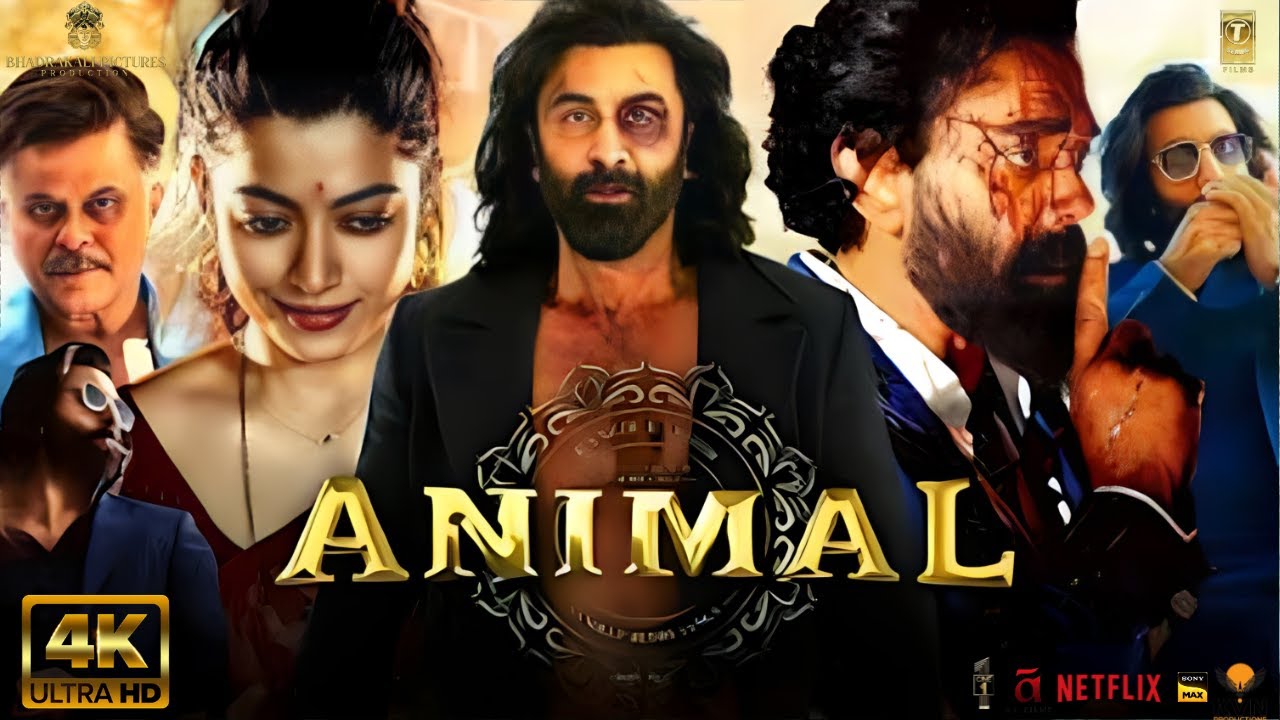
Patriarchy and Misogyny in Sandeep Reddy Vanga’s ‘Animal’: Bebaak Collective

This guest post was written by HASINA, with co-authorship contributions from Sanjhana and Mridul from Bebaak Collective, ‘Voices of the Fearless,’ a collective dedicated to addressing the citizenship rights of marginalized communities.

A thread of commonality that ties together Indian society – from familial space to the entertainment industry, from the personal sphere to the political sphere – is the oppression of gender minorities under patriarchy. The longstanding structures of patriarchy and misogyny subject women to various forms of violence and abuse within and outside the household. Such a harsh reality of society is reflected by the popular media and film industry very promptly. The new movies that are being directed and the new music that’s being produced are a great reflection of how we, as a society, have failed women and queer communities. The peppy lyrics that objectify and hyper-sexualise women’s bodies and the movies that glorify toxic masculinity do nothing but perpetuate and normalise gendered violence. As we step into the New Year, we must ask ourselves if we can leave these outdated notions behind and step into a society that fosters peace, equality, and love amongst all.

When we talk about violence, we cannot leave out the impact of mainstream popular media on the larger Indian society. Sandeep Reddy Vanga’s newest blockbuster- Animal, is a disturbing film laden with sexism, misogyny, and toxic masculinity. Continue reading Patriarchy and Misogyny in Sandeep Reddy Vanga’s ‘Animal’: Bebaak Collective

Public Libraries Must Be Free! Free Libraries Network (FLN) at the G20

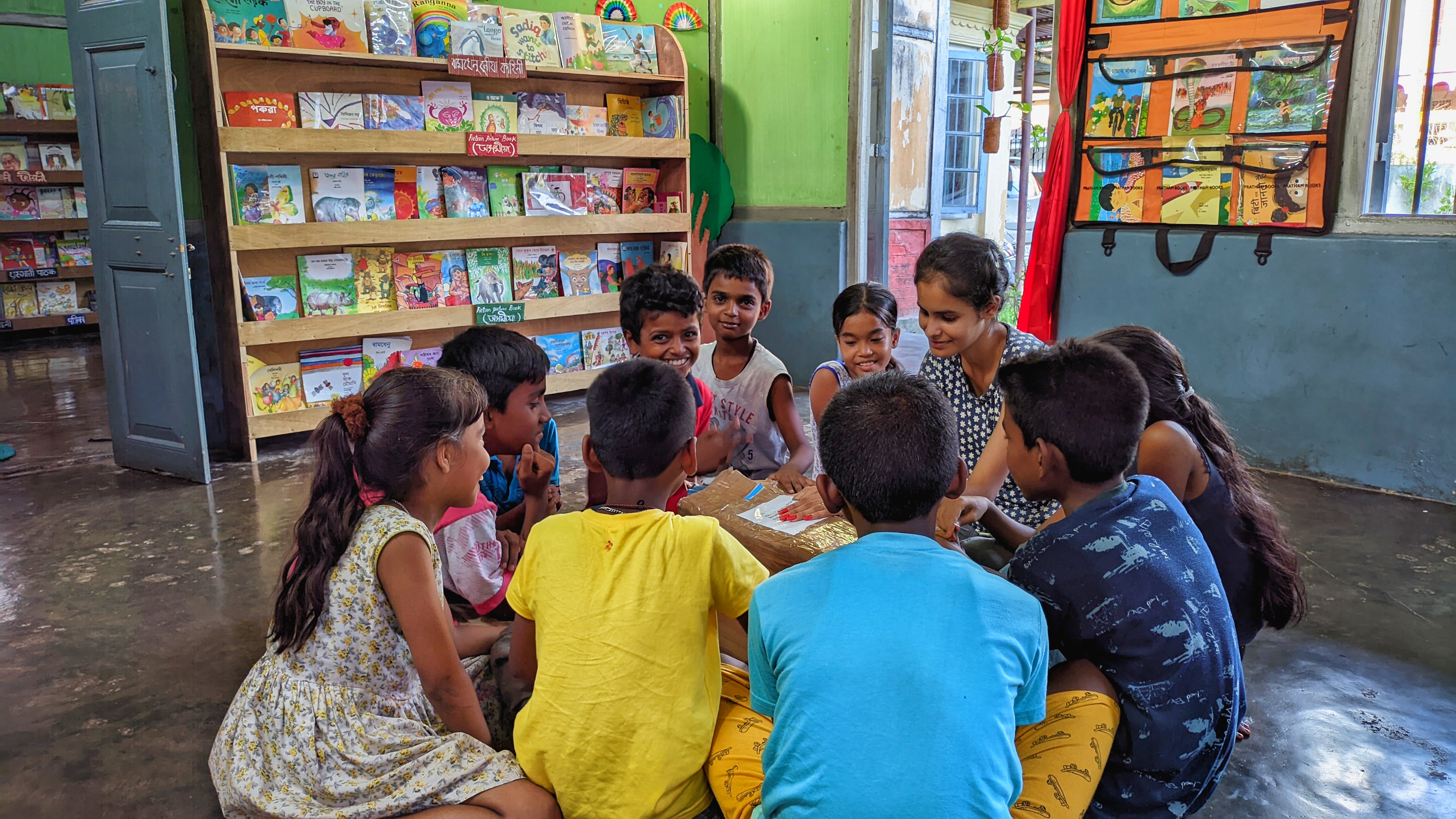
Katha Kanan Library, Nagaon, Assam

The “Rome Declaration of the G20 Culture Ministers” (2021) inserted culture in the G20 process, recognising it for its social and economic value, and stating a commitment to the protection of cultural heritage and expressions at risk. This Declaration recognises the need for strengthening and developing effective, sustainable, inclusive and coordinated management models and tools for protecting cultural heritage at risk. The International Federation of Library Associations and Institutions (IFLA) has recognised this as an opportunity for libraries and documentary cultural heritage experts to play a vital role in developing these models and tools, as well as benefiting from them. As a result the upcoming G20 meeting in India will showcase libraries. This statement is by the Free Library Network, a member of IFLA, drawing attention to the imperative need for India to have a free library policy.

The Free Libraries Network (FLN), is a coalition of free libraries and librarians advocating for free library access and the right to read in India and South Asia.  FLN believes in universal access to reading materials and information. FLN offers a platform for sharing resources, best practices, and insights about free libraries in India. Although it does not own or operate libraries, FLN plays an integral role in coordinating and acting on policy issues related to access to knowledge resources.

The FLN Statement

The Free Libraries Network (FLN) will participate in the Festival of Libraries by the Ministry of Culture, Government of India at Pragati Maidan, New Delhi on August 5 and 6, 2023. This conference, focused on the library landscape in India, is an opportunity for library advocates across the country to discuss the need for a public library system that offers free access to books and information to all people.

During the conference, FLN members will be contributing to three panels, aimed at sharing insights on free libraries’ potential in promoting reading, thinking and community discussions, as well as in such libraries’ potential to undo the historic exclusion of the vast majority of people from reading and to promote the Constitution’s vision of equality. Additionally, FLN members will engage in various advocacy activities both inside and outside the conference venue, appealing for a policy that guarantees free library access to all. Continue reading Public Libraries Must Be Free! Free Libraries Network (FLN) at the G20

Social Suffering in a World without Support – Report on the Mental Health of Indian Muslims: Bebaak Collective

Report by Bebaak Collective, December 2022

Bebaak Collective (‘Voices of the Fearless’) was founded in 2013 as an informal association of grassroots activists to advocate for the rights of Muslim women and community. It is a platform for engaging with feminist thought and practice, human rights issues, and the anti-discrimination struggle. It has been working in Uttar Pradesh, Gujarat, Maharashtra, and Rajasthan. With the rising onslaught against marginalised communities, the Collective has evolved into an advocacy group that strongly adheres to constitutional values and believes that the rights and principles enshrined in our constitution are inalienable from every Indian citizen, irrespective of their caste, gender, sexuality or religion.

Relatives of a victim of the Delhi pogrom 2020 in mourning. Source: The Guardian

Foreword

Mental health and its socio-political determinants are beginning to emerge from a shroud of silence and stigma into public discourse. There are several possible reasons for this, the most visible being the pandemic and the many narratives of suffering it brought to the fore from among the most vulnerable sections of society. Even before the pandemic, the relationship between social disadvantage and the mental health of certain communities and groups (some more than others) has been studied in the Indian context. Some examples of these include the mental health of women, homeless persons, Dalit, Bahujan, and Adivasi communities, and queer and trans persons. However, the mental health of Indian Muslims has been severely underrepresented and almost invisible within the mental health or development literature in India. Continue reading Social Suffering in a World without Support – Report on the Mental Health of Indian Muslims: Bebaak Collective

75th year of Nakba – In solidarity with the Palestinian struggle

Yesterday, May 15, 2023 marked the 75th anniversary of Nakba or the dispossession of the people of Palestine by the Zionist state of Israel. This is the text of a talk delivered at an event organized by India Palestine Friendship Forum.

Stamp issued in 1981

In September 2012,  I had the incredible good fortune to visit Palestine. We stayed in Ramallah, visited and interacted with colleagues at Birzeit University and spoke at a conference organized by Muwatin, a research institute based in Ramallah. We met  a large number of inspiring people who pushed the frontiers of our minds, and we came away humbled and moved by the dignity of a people living through the brutal occupation of their lands by the  Zionist state of Israel, with limitless courage and bubbling sense of humour intact. Continue reading 75th year of Nakba – In solidarity with the Palestinian struggle

G-20 – A Brutal Beautification of the City:  Glory Rose Roy

GUEST POST by GLORY ROSE ROY

The Delhi Durbar of 1911 has great significance in the history of India in terms of hosting King George V, along with the Queen and other guests. Undoubtedly, the entire occasion was recorded as a grand event and moreover, the decoration used on the way to Coronation Park to make it aesthetically beautiful, was magnificent. However, along with the preparations for the amplified royal visit, another incident that catches attention here is the hiding of an entire village, the ‘Dhakka village’.

People living near Dhakka village, 1911
People living near Dhakka village, 1911 (see source below)

The villagers of Dhakka were asked to evacuate the area as their dwellings were not up to the beauty expectations of British officials. The Dhakka village then, represented a strong site of resistance, as the villagers in Dhakka refused to vacate the region for the King’s visit. Thus in response to the recalcitrance of the villagers, the British officials decided to hide the entire village by using huge cloth sheets.. And that is how the village got its name ‘Dhakka’ from the hindi word dhaka which means hidden. The incident portrays to what extent the colonial state could go to welcome its guests. It mulled relocating an entire village and finally covered it out of sight.

Continue reading G-20 – A Brutal Beautification of the City:  Glory Rose Roy

In solidarity with the Iranian people fighting for democracy and justice: Ayesha Kidwai & Nivedita Menon

This post is jointly written by AYESHA KIDWAI AND NIVEDITA MENON

On this international day of solidarity with the Iranian people, two feminists from India send you our greetings, in complete awe of your courage, your creativity, your solidarity with one another, your relentless resistance in the face of cruel and brutal repression.

Watching the panel discussion on Jadaliyya on the ongoing struggle of the Iranian people against the authoritarian regime, we were struck by the complexity of the arguments being made. The struggle is not against Islam, and it is not about hijab everywhere and at all times. What we are witnessing in Iran is reflected all over the world wherever there is resistance to the gendered ways in which all states control populations – whether by compulsory conscription in wars the people have no interest in, or by making the hijab central to the reason of state – in Iran by compulsory veiling, in France and in India by compulsory unveiling of the Muslim woman; or in the USA by denying autonomy over their bodies to women by criminalizing abortion. Continue reading In solidarity with the Iranian people fighting for democracy and justice: Ayesha Kidwai & Nivedita Menon

Why Google News Does Not Want To Talk Caste ?

The Google episode shows the right-wing vision of unity is exclusionary. But this vision is increasingly being challenged in the United States and beyond.

On 9 May 1916, a young BR Ambedkar presented a paper at Colombia University in the United States titled Castes in India: Their Mechanism, Genesis and Development. He referred to caste as a “local problem, but one capable of much wider mischief”. He wrote, “…if Hindus migrate to other regions on earth, Indian caste would become a world problem.”

More than a century later, as one of the biggest corporations, Google, battles allegations of caste discrimination in the United States, the predictive value of Ambedkar’s words is evident. Recently, Google News cancelled a scheduled talk by Thenmozhi Soundararajan, the founder and executive director of Equality Labs, after many Google employees (of Indian origin or Indians) opposed it. The discussion was supposed to mark Dalit Equality Month, celebrated every April to mark the month Ambedkar, the first law minister of independent India and its leading anti-caste activist, was born. Equality Labs is a leading non-profit group in the United States that advocates Dalit rights. According to its 2016 survey, a third of Hindu students in the United States reported experiencing caste discrimination.

Thenmozhi was subjected to an organised campaign led by a section of Google employees, who called her “Hindu-phobic” and “anti-Hindu”. The name-calling went on in emails her opponents sent to company bosses and documents they posted on a mailing list that thousands of Indian employees access.

( Read the full article here)