Kudiye ni tere brown rang ne, munde patt te ni saare mere town de…..Hun bach bach ke, tenu rab ne husn ditta rajj rajj ke/Main keha kaali teri Gucci, te Prada tera laal/ Kithe challo oh sohneyo, sajh dajh ke ke/ Tere wargi naar ni honi, mainu munde kehnde si /Hoge ni tere charche Star News to BBC /Ho brown brown skin wali, let me tell you one thing /Rab di saunh you so sexy! Continue reading Yo, Yo Honey Singh and Other Implied Learnings: Aprajita Sarcar→
I am utterly shocked and pained to read about the violent rally that many Muslims took out at Azad Maidan in Mumbai on 11 August 2012 in protest against the recent communal carnage in Assam and Burma. More than the accidental death of two men and 50 injured in yesterday’s protest, what alarmed me was the public anger targeted on the media for “not reporting about the violence against Muslims in Assam and Myanmar”. Several vans of TV channels and their equipment were smashed or burnt besides a number of police vehicles destroyed. Of course, the authorities are still probing as to who really began the violence in an otherwise peaceful rally (and we are open to the results of such a probe). But my worst fear came true with this assertion of one of the protesters in a newspaper report: “Why is the media not covering Burma and Assam? We learnt about the incidents from videos posted on the Internet.” This seems to be a very disturbing statement on various accounts. Of course, the media can sometimes be biased, and the Muslims do feel victimised by it all the time. But are the random videos and images posted on the Internet any less biased or misleading? Continue reading How to start a riot out of Facebook: Yousuf Saeed→
A new product ’18 Again’ has hit the Indian market. A vaginal tightening gel, the advertisement left us mildly bemused.
With her newly tautened privates, the saree-clad lady seems in remarkably good cheer, given she apparently ‘feels like a virgin’ and ‘it’ (it presumably being sex), ‘feels like the very first time’. Namely awkward, painful, inexperienced fumbling? Ah well! There’s no accounting for tastes, not least the fantasies of the Indian man.
Regardless, we think this is a step in the right direction. Virgins being a scarce commodity these days, a handy at-home converter for any sacrifices you may have planned is a thoughtfully designed product indeed. (The makers of ’18 Again’ are unclear on what to do with those of us who escaped the wastelands of virginity before 18, but there you have it. You can’t please everyone, certainly not those sluts who didn’t even wait till they were legal). The makers of 18 Again are hoping for strong revenues on the back of exponential domestic demand.
As this article details, the Indian vagina now caters to a broad spectrum of consumer taste and preference. Backed by a strong commitment to product diversification, the Indian vagina is set to enter the 21st century with applications and appliances, room fresheners and Christmas trees. Needless to say, we are delighted; our only grouse being that the products are somewhat limited in scope and vision. And so with an eye to the future we present a small list of potential uses and a plea that we all broaden, rather than tighten, our imagination. Continue reading Gird Your Loins→
The end of the twentieth century saw the collapse of soviet-style state-socialism and the beginning of neo-liberalism’s triumphal march, which has ravaged the planet in a little over two decades. The destruction of the earth has proceeded with renewed vigour since, as has the dispossession of the poor. Cities have been re-made for the luxury living of the rich and the upwardly mobile middle classes. And for their luxury, for their ‘free movement’ across the city and beyond, settlements of the poor have had to make way, as shopping malls, freeways and expressways began defining the new imagination of the city.
If it took soviet-style socialism close to six-seven decades to finally face mass rejection, the neoliberal order has taken far less time. Faced with major opposition movements across the Western world, from the Occupy Wall Street movement to the Indignados in Spain and Greece and powerful new political formations in many parts of South America, the neoliberal order no longer seems as unchallengeable as it used to till just some time ago. Its advent on the horizon came as a new kind of theology that brooked no dissent. It came to us apparently telling us some elementary truths about ourselves and the world we inhabit. And it was quite amazing to see the speed with which the new religion gained converts in those early years.Continue reading Molecular Socialism – A Possible Future for Left Politics→
Early in July, Kashmala Tariq, Member of the National Assembly (MNA) of Pakistan, whom Wikipedia describes as “actively involved in women’s rights”, opposed the tabling of the Reproductive Health Bill 2012, saying that it was not in conformity with Islamic laws. The Bill was introduced by another MNA, Atiya Inayatullah, with the purpose of providing reproductive health services, including legal access to abortion, to women in Pakistan.
Tariq accused the Bill of following the agenda of foreign NGO’s and stated that such proposals that might be in contravention of Islamic injunctions should be sent to the Council of Islamic Ideology and every party’s opinion should be sought. The Bill has been sent to the Cabinet Division for further deliberations.
Does this mean that our women representatives don’t know what reproductive rights include? The responsibility of women parliamentary representatives in Pakistan is more challenging than that of men, as women are more often made victims of oppression either in the name of culture or religion.
The Sufi Courtyard: Dargahs of Delhi by Sadia Dehlvi; pp 252; Harper Collins Publishers, India, 2012
There is a sudden spurt of interest in Sufism among a section of our population that did not have such an interest a decade or two ago. Some were introduced to Sufism and its spiritual philosophical moorings through interactions with those who knew something about it, and realised that the ideas of Wahdat-ul-Wujood had parallels in the Adwait philosophy and it was this consonance that intrigued many to an extent that they got interested in exploring Sufism a little more. There were others who discovered Sufism through the west. Just as many had discovered Hindustani classical music when George Harrison began to learn the Sitar from Pandit Ravi Shankar in the ’60s, there are those who discovered Rumi when there was a spurt of interest in Jalal-ud-Din Rumi in the west, particularly in the US, with several translations appearing within a short span. Rumi has been known for centuries in our parts as Maulana Room; his poetry was quoted by Persian-knowing Indians till the 1950s and early 1960s, in conversations and writings, almost as often as Mir and Ghalib are quoted by the Urduwallas. An introduction to Rumi in the last decade or so has led eventually and inevitably to Sufism and a kindling of interest in our own indigenous Sufis. Continue reading Discordant notes: A review of Sadia Dehalvi’s “The Sufi Courtyard: Dargahs of Delhi”→
A petition from an organization called Change India invaded my Facebook wall today right before – rather ironically, it turns out— my morning auto ride. The petition is filed under a category on the site called “petitions for economic justice.” When you open it, the image pasted below opens. A sharp fanged, dark skinned “auto-rakshasa” demands one-and-a-half fare. The commuter is “harassed.” The petition that accompanies this image urges the ACP of police to create “an efficient system” so that complaints made to report auto-drivers who overcharge or refuse to ply can be tracked. How, it asks, can “concerned Bangalorean citizens” expect “justice” if their complaints are not tracked? We all must, it urges, “join the fight.”
Let me first say quite clearly that I do not mean to undermine the intentions and frustrations of those who launched this campaign and, yes, when the meter goes on without asking, it eases a morning commute significantly. The question is: if this does not happen at times (and indeed it doesn’t) then why is this so and what does one do about it? There is a lot to be said about the economics of the issue itself and I welcome others reading who know more to write about it more extensively. But this piece is not about that. It is about the campaign itself and how we articulate political questions in our cities. It is fundamentally about the easy, unremarked way in which a working urban resident and citizen – who is also, after all, a “fellow Bangalorean” and concerned with “economic justice”– can be termed and portrayed a “rakshasa” as if it were a banal utterance.
I am responding to the sense of despair expressed by some women’s groups and more specifically to the press conference called by Bharatiya Muslim Mahila Andolan (BMMA) to condemn the judgment of the Delhi High Court which permitted a minor (almost 16-year old) girl to marry the man of her choice rather than restore her back to her parental authority. In their campaign for codification of Muslim law, BMMA has asked for laying down 18 as the minimum age of marriage for girls (and 21 for boys), the underlying presumption being that all underage marriages must be declared as void.
Before we come up with a knee jerk response to the hype created by the media and bite the bait, we need to have greater clarity on whose side we (feminists) are batting in this confrontation between parental authority and the active agency expressed by a teenaged girl. Also I wish to raise a connecting question — if the Muslim law was codified and minimum age for marriage was stipulated, as has been done under the Hindu Marriage Act, would the High Court have responded differently? Would the judges have sent the girl back to her parental custody? And the last question – could that have been construed as a ‘progressive ruling’ by us, those claiming to be “feminists”? Continue reading Consent, Age and Agency: reflections on the recent Delhi High Court judgement on minors and marriage: Flavia Agnes→
Contrary to what they may tell you, they don’t really give a damn about the disabled in this country. Systemically flouted laws, polite terms substituted for impolite realities, and stony silences meted to those who seek to question—these comprise the working of the disability model in this nation, a model that only goes so far as the abundance of obligation and ‘feel-good’ eye-wash will take it. The juggling of words—‘disabled’ for handicapped, then annihilation of ‘crippled’, and finally that awful phrase regnant in contemporary fashionable use, ‘differently/specially-abled’—constitutes our single biggest achievement as far as dealing with the disabled as rights-bearing persons is concerned. Continue reading Disability Law Violations in Delhi University admissions – notes from the margins: Rijul Kochhar→
My childhood memories are so deeply intertwined with mango eating that it is difficult to separate the two. One reason for this is probably because the season of mangoes and the summer breaks in school coincided. We took our last exam and the schools closed their doors, to reopen after two and a half months. Educationists had not yet discovered Holiday Homework, the Summer Break torture, For parents and children and the summer vacations were an unmitigated joy. Those days we stayed at Aligarh, and every year we travelled to Delhi to spend time with our aunts and uncles, all cousins of our father.
My 8th standard final exams were nearing and they coincided with the1992 World Cup cricket match between India and Pakistan. It was the most important match for India, much more important than the final – defeating Pakistan was no less than winning the world cup. As I sat studying in the bedroom, I could hear Ratan’s peculiar whistle, and I rushed to the balcony. It was drizzling, and Ratan stood there in the shelter of the bus stop along with Uday, smiling sheepishly.
Abbajan sat on his armchair in the hall, fortunately he seemed to have dozed off watching TV, I sneaked past him. It was still drizzling, I was glad to see that Uday actually carried an umbrella with him. All three of us huddled under the black umbrella as we made our way towards Ratan’s house which was about 15 minutes walking distance from my house.
The math of this morality can be puzzling. Why should “sex worker mother” sound like an oxymoron to so many?
It was Mother’s Day recently – judgment time on who can be a mother, what makes a good mother. Time magazine’s provocative current cover shows a young Los Angeles mother breastfeeding her three year old son (standing on a stool to reach mommy’s breast) as the headline asks “Are you mom enough?” The accompanying article on “attachment parenting”, as put forward by “parenting expert” Bill Sears in his The Baby’s Book, encourages parents to keep their infants in constant bodily contact with the parent by wearing a baby sling, let their children wean themselves from the breast when they are ready and allow “co-sleeping” which aids a child to grow up to be well-adjusted adults.
Attachment parenting has been widely criticized for setting the bar for good parenting impossibly high, especially for parents who have to work full-time, but it is a bar quite easily reached by Radha – she is very “mom enough”. Amidst the din of the Delhi brothel where she works, she continues to suckle her four year old daughter. But if the judges of “good mothering” were policemen in Satara, Radha would not qualify. For them, a sex worker mother is a “shame”. This is why they dared to kick Anu Mokal, a four-months pregnant sex worker, leading to bleeding and an eventual miscarriage.
The 80 year old Pakistani virologist Dr Khalil Chishty just reached Pakistan. His son Tariq called me from Islamabad. “Sorry we couldn’t meet, it was all so rushed.” Tariq Chishty was worrying about getting a PIA ticket – President Zardari sent his special PAF plane to get them! Contrast this with the rank indifference with which the Indian government treats the issue of Indian prisoners in Pakistan.
Just a few days ago, Tariq Chishty was convinced his father is not going to be freed in the hearing on Thursday and was ready to return to Pakistan alone. But the Supreme Court of India, in an unprecedented judgement, allowed him to go home, on the condition that he must return by 1 November for the next hearing. Some months ago when his grandson had met him in jail, Dr Chishty had bid him goodbye as though it was the last time. This is not the end yet – the Supreme Court may uphold his conviction and god knows if he’ll again have to spend time in jail. 20 years in India have been jail-like for him even when he’s not been in jail. For details of his case, whether and why he should be granted mercy and so on, please see this article by me. Continue reading Dr Khalil Chishty is back home – three cheers for candle-light peaceniks→
Two friends and I had gone to interview an old lady born 90 years ago in 1922. We had hoped to jog her memory about events that she had seen unfold, and events that she had heard her parents and grandparents talk about. We were hoping to get a slice of history going back a century and a quarter, but things did not work out as well as we had thought. Nevertheless, we got lucky through Saeed-ur-Rehman, her 72 year old son. He told us much about Delhi and about a real life encounter that his maternal grandfather and uncle had with the Jinn of Ferozeshah Kotla.
This is how he related the encounter:
“My Nana [maternal grandfather] was a great one for fishing and his favourite spot for fishing was the Firozeshah Kotla. In those days the Jamuna used to flow right next to the Kotla wall, and my Nana would go there often. He would carry his huqqa with him, cast the line and sit puffing away at and wait for the fish to take the bait. He would spend the better part of the day there and return with a bagful of fish in the evening. One afternoon he asked our Mamu [maternal uncle] to accompany him and this is what our Mamu told us about the events of the day. Continue reading Where have all the ghosts gone?→
Press statement issued by Mitra Sanghatana (Collective of children of sex workers )and Veshya Anyay Mukti Parishad (VAMP), a collective of sex workers, Maharashtra.
File photograph of members of SANGRAM and VAMP, collective of sex-workers, celebrating Dr Ambedkar Jayanti
Women’s groups and progressive organisations in India are shocked that Ms. Anu Mokal, a pregnant sex worker in Satara, was beaten up by police inspector Dayanand Dhome on April 2, along with her friend Ms. Anjana Ghadge. Three days later, on 5th April, she suffered a miscarriage. The incident occurred on 2nd April 2012, around 7.30 pm, when Anu Mokal, who was four months pregnant, and Anjana Ghadge were bringing dinner for their friend who was admitted in the civil hospital. Near the Satara bus stand area, senior Police Inspector Dayanand Dhome accused them of soliciting and when they refuted it abused them and called them liars. Dhome and his subordinates started beating Anu and her friend Anjana. Dhome repeatedly kicked them and said that women like Anu are a ‘shame’. Her pleas that she was four months pregnant fell on deaf ears. Anu and Anjana were detained and put in a lockup. They were eventually released on April 3.
The recent post by Shohini Ghosh on the first episode of Satyameva Jayate has raised key questions around the complicated relationship between abortion as such and the selective abortion of female foetuses. This dilemma is one with which the women’s movement in India has been grappling since the late 1980’s. In this post, I would like to move away completely from the television programme, especially because there the focus was on women who were forced to have abortions after sex determination, on which there is little to debate. I am concerned here with the more troubling question that Shohini also raises, of how to understand a situation in which women themselves decide to have sex selective abortions. I outline here the main contours of feminist debate and activism over close to three decades, that have circled around complex understandings of ethics and agency in the context of women’s control over their bodies. I conclude by stating my own position on the issue, which is not necessarily the position taken by the movement as such.
Siddhartha Mukherjee, The Emperor of all Maladies: A Biography of Cancer, Fourth Estate, London, 2011, paperback, pp.572.Rs.499.
This book, a brilliant book, received extraordinary attention in India.
You might disagree with me, but I believe we do not have a rich literary culture. This is of course fundamentally related to India’s caste structure, and that we haven’t changed that much since Independence. There is little public space for books, a space that has shrunk in the last 20 years, even as book sales have increased. But there lies another story – of the dumbing down of publishing, of the Chetan Bhagatisation of reading. All leading English language newspapers – who have over the last 20 years dispensed with their book review editors, and indeed often book reviews unless they deal with fashion, food, fucking and the First World – discovered the book after Dr.Mukherjee had won the deserved Pulitzer Prize. They celebrated the book, highlighting the fact that it had been written by an Indian, with interviews of his family and school teachers in New Delhi and so on. Dr Mukherjee is also seriously good looking, and I heard, he is doing a role in a Bollywood film. I even know he has celebrity friends like Salman Rushdie. Continue reading The Teleology of Gilded Clinics: Mohan Rao→
मई दिवस और गणपति में सम्बन्ध ही क्या हो सकता है? दोनों की न तुक मिलती है और न ही अनुप्रास की छटा दोनों के पास–पास होने से बिखरती है. फिर गणपति शुद्ध हिन्दू देवता हैं, गणेश चतुर्थी के अवसर पर तो उनका नामजाप समझ में आता है, लकिन मई दिवस पर उनका आह्वान? इससे बड़ा दूषण हो ही नहीं सकता और इसका दंड उन्हें तो किसी न किसी रूप में भुगतना ही पड़ेगा. सो हुआ.
सती अनामंत्रित अपने पिता दक्ष के घर गई थीं और अपमान न सह पाने के कारण उन्हें यज्ञ वेदी में ही कूद कर जल मरना पड़ा . किसी भी जगह बिन बुलाए नहीं जाना चाहिए, इसकी सीख देने के लिए यह कथा वे सुनाते हैं जिन्हें इस समय भी कुछ कथाएँ याद रह गयी हैं. निश्चय ही त्रिथा को यह प्रसंग या तो पता न होगा या वे इसे भूल गईं जब मई दिवस पर जवाहरलाल नेहरु विश्वविद्यालय में एक वामपंथी छात्र संगठन द्वारा आयोजित एक संगीत संध्या में मंच पर वे अनामंत्रित गाने चली गईं. एक तो वे स्वयं अनपेक्षित , अतः किंचित अस्वस्तिकर उपस्थिति थीं , दूसरे आयोजकों और श्रोताओं को , जो मई दिवस पर संघर्ष और क्रान्ति के जुझारू गीत सुन कर अपने शरीर के भीतर जोश भरने आये थे इसकी आशंका थी कि वे इस पवित्र अवसर पर जाने क्या गा देंगी. और आखिरकार उन्होंने इस आशंका को सही साबित कर दिया, जब वे शास्त्रीय संगीत के नाम पर वक्रतुंड, महाकाय …. गाने लगीं. थोड़ी देर पहले जो सैकड़ों शरीर ‘हिल्लेले हिलोर दुनिया ‘ पर झूम रहे थे, उनसे नहीं–नहीं का शोर उठा. इस छात्र जनता के नेता जन–भावना का आदर करते हुए मंच पर पहुंचे और त्रिथा को अपना गाना बीच में रोक कर मंच से जाना पड़ा.Continue reading मई दिवस और गणपति→
Delhi, Or Dilli has been a city and a capital for a long time and even when it was not the capital, during the Lodi and early Mughal period, and later between 1858 and 1911, it continued to be an important city. We are of course talking of what is historically established and not of myths and legends. During this period there have been 7 major and several minor cities within the territories now identified as the National Capital Territory of Delhi (NCR-Delhi). New Delhi is the eight city. This piece marking the hundred years of the shifting of the colonial capital to Delhi from Calcutta in 1912, will talk about both Shahjahanabad and New Delhi. We will see how Shahjahanabad the once most powerful and rich city of its time and the last capital of the Mughals was gradually ruined, plundered and virtually reduced to a slum while next door arose, a new enclave of Imperial grandeur known now as New Delhi. Continue reading Delhi 1803-2012: A Brief Biography→
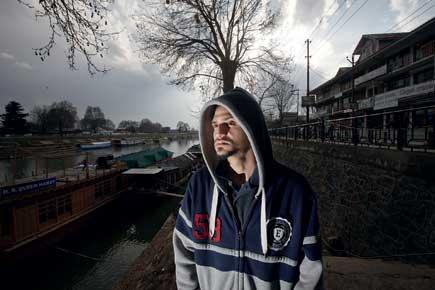
MC Kash - Photo by Ashish Sharma / Openthemagazine.com
It is not every day that you wake up to find your Twitter timeline flooding with the assertion that Kashmir – of all places – is happy. Dangerous? Of course. Beautiful? well, yes, the postcards are pretty enough. Angry? Sure, they look it. Radical? Oh god, yes. Happy?
If you ask Manu Joseph, author of Serious Men and editor of Open, the answer is yes. In this article, he talks about his interactions with “regular” people in the valley – the non elite, the non journalist, the non artist, the non writer – and is convinced that Kashmir is ready to move on. That it has already moved on. That Kashmir is happy. As proof, he offers these exhibits: (a) record high tourism numbers, (b) 2010 IAS topper Shah Faesal (who tells him “commonsense is finally winning”), (c) a meeting of a District Magistrate with elected leaders of a village (“not a word about politics”, says the DM to Mr. Joseph, “They want to talk about things that matter to them and their families”) and (d) the desire for city life (“we want KFC”).


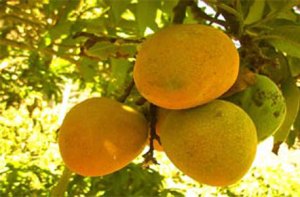 My childhood memories are so deeply intertwined with mango eating that it is difficult to separate the two. One reason for this is probably because the season of mangoes and the summer breaks in school coincided. We took our last exam and the schools closed their doors, to reopen after two and a half months. Educationists had not yet discovered Holiday Homework, the Summer Break torture, For parents and children and the summer vacations were an unmitigated joy. Those days we stayed at Aligarh, and every year we travelled to Delhi to spend time with our aunts and uncles, all cousins of our father.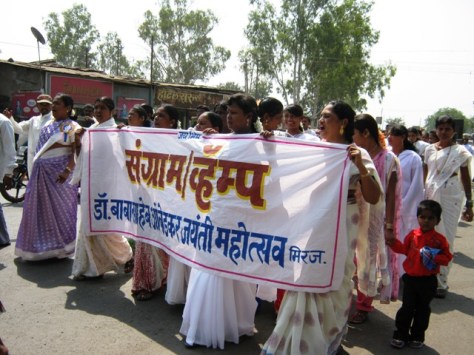


 KAFILA - COLLECTIVE EXPLORATIONS SINCE 2006