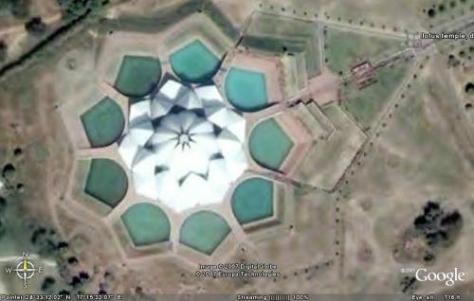
On a hot Sunday morning, tourists wait 30 minutes in a queue to get inside the House of Worship of the Bahá’í in Kalkaji, better known by its unofficial name, the Lotus temple. Once inside, they spend less than 30 seconds. The tourists, who include burqa-clad women and sadhus in saffron, don’t seem to be in need of a multi-faith prayer hall. The multi-faith prayer service, held thrice a day, is also sparsely attended. People are apparently disappointed there’s only a large hall inside that beautiful white Lotus building, and they can’t even take photos of this hall. Continue reading 25 Years of Delhi’s Lotus Temple→
John Emerich Edward Dalberg Acton is said to have said in 1887, “Power tends to corrupt, and absolute power corrupts absolutely.” After 124 years it is being felt that Lord Acton could have added one more thing; Power gives you the exclusive right to define and redefine things according to your convenience. The ‘all-possible-awards-winner’ chief minister of Bihar Mr. Nitish Kumar could have prompted Lord Acton to enrich this famous quotation for a couple of reasons.
The Delhi Traffic Police says women make better drivers:
“The number of women drivers is just a fraction of the number of men who drive. But even proportionately, women are involved in far fewer accidents and incidents of rash driving than their male counterparts,” said joint commissioner of police (traffic) Satyendra Garg.
“Our impression is women are far safer drivers, with a tendency to follow traffic rules. This disproves the contention that women cannot drive,” he added. [Don’t miss the colourful comments there!]
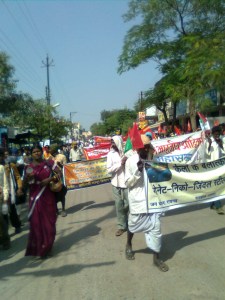
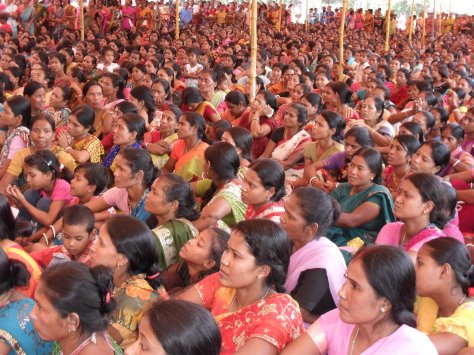
Last weekend, I attended a wonderful rally by the Adivasi Mahasabha in Raipur – some 10-15 busloads of people came from Dantewada and Bastar alone, while large numbers came from other parts of Chhattisgarh and even other states like Maharashtra, Orissa and West Bengal. The procession was flagged off by Dhurwa dancers while the rear end was brought up by Marias with their large dhols and bison horns. In between were thousands of militant marchers shouting slogans against militarization, demanding peace talks, the release of their arrested leaders, the implementation of the Supreme Court judgement on Salwa Judum, and all their constitutional rights with respect to land, forest and water. These were men and women who had lost everything to arson and loot by Salwa Judum, who had been interned in camps but managed to return home and pick up their ploughs again, who face the daily threat of arrests, beatings and encounters by the security forces, who have to negotiate with the Maoists everytime they wanted to access panchayat funds, who live a life on the razor edge of survival. And yet here they were, laughing, cheering and vowing to fight till the last breath, fight for their constitutional rights and in a constitutional way.
This remarkable struggle has been waged, not just over one weekend, but over years. Indeed, the Salwa Judum leaders themselves credit the CPI with the destruction of their movement – both through mass actions and through legal means.
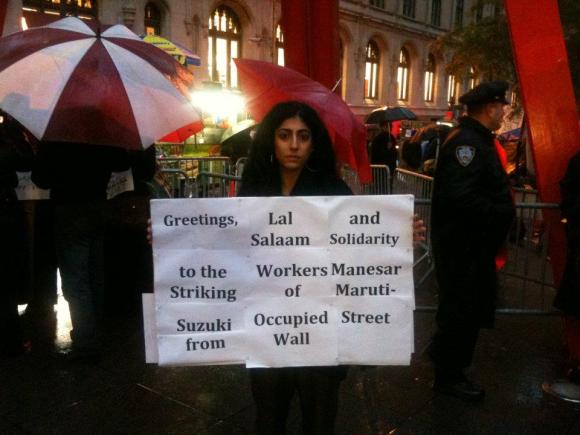
A big red river streamed out of the gates of Kamla Nehru Park in Gurgaon last evening (17th October, 2011). Several thousands of workers (according to one estimate – one hundred thousand workers), from many factories in the Gurgaon-Manesar belt had occupied the park from 4:00 pm onwards to stand in solidarity with the struggle of the Maruti-Suzuki, Suzuki Powertrain and Suzuki Motorcycle India Limited workers. In an unprecedented demonstration of solidarity, permanent workers are on strike to demand justice and re-instatement of their contract worker colleagues. The atmosphere at the meeting was of celebration, workers who had been occupying three different factories for more than a week had been evicted by an administration that had brought out all the police and coercive power at its disposal. But yesterday’s gathering was like a reunion, the workers of the three ex-occupied factories, and their comrades in other plants throughout the Gurgaon-Manesar belt were meeting, like old and new friends, to taste the heady experience of peacable solidarity. Continue reading A Big Red River: Solidarity Meeting with Maruti-Suzuki Workers→
I could have met Sebald.
I went to Britain in September 2001,
And he died in December.
East Anglia wasn’t all that far way
From London, nothing, really,
Is all that far away in Britain.
I could have met him, if I had known him
Then.
What I would have wanted to say, I think Continue reading Untitled: Najeeb Mubarki→
More than 3000 Domestic Workers Take to the Jaipur Streets
SHARE THEIR WOES AND DEMAND RIGHTS
PUBLIC HEARING PANEL:
• Aditi Mehta (Principal Secretary Social Justice and Empowerment),
• Anuradha Talwar. Trade Union Activist, Paschim Banga Khet Mazdoor Sangathan, Kolkata
• Jose Mohan, DCP, Jaipur Police Commissionerate
• Bhagwan Sahai Sharma, member Secretary, State Social Welfare Board,
Domestic worker women power made history today in Jaipur when they took to the streets of Jaipur and demanded their rights from the State and society. We are not “naukranis” they said. We are workers in free India and want the dignity of being a worker. We run two homes, yours and ours, can any of you in society do without our labour, they asked boldly. Ninety percent were Bengally with abotu ten percent from who had come from different parts of Rajasthan. Continue reading Bengal Power in Jaipur: Kavita Srivastava→
(On behalf of Krantikari Naujawan Sabha, part of the solidarity effort with struggling workers of Maruti Suzuki.)
The struggle of the workers in Maruti Suzuki India Ltd, IMT Manesar refuses to die, and just when quietening under settlement truce, has stood up again, gathering political edge and crucial concrete support among workers in the area. In a significant development this morning, 7th October 2011, the workers in seven nearby factories along with workers of MARUTI SUZUKI INDIA LTD, IMT MANESAR have gone on strike. These are workers in the nearby plants of SUZUKI POWERTRAIN INDIA LTD. and SUZUKI CASTINGS (Plot 1, Phase 3A), and SUZUKI MOTORCYCLE INDIA PVT. LTD (in the Gurgaon-Manesar road), along with the workers of LUMAX AUTO TECHNOLOGIES LTD (165, Sector-5), SATYAM AUTO COMPONENTS LIMITED (26 C, Sector – 3), ENDURANCE TECHNOLOGIES LTD ( Plot no. 400, Sector 8), HI-LEX INDIA PVT LTD, (Plot No.55 Sector-3) completely halting production. Continue reading Strike in Maruti-Suzuki and Seven Other Factories in Manesar: The Struggle Continues: Nayanjyoti→
Nothing seems to have changed in the past quarter decade. Past Jhargram, the town in the woods, the metal road connecting Lodhasuli to National Highway No. 6 wraps itself in a shady serenity. At occasional intervals, the artificiality of a clamour, emitted by a motor engine, creates an unquiet irritation, murdering the resonance of the forest and interrupting its slumber. The bus-stops at Kalabani and Boria are as lonely as they used to be; Gar-Salboni, a roadside village, is stuck in its eternal search for a path to survival. The mud road that breaks from the main road to meet the villages Sirsi, Joalbhanga and Lab-Kush, is as tranquil as it had been 25 years ago. Past the lush green rice fields by the road begins the forest that hems the horizon. The leaves that have just had a splash of shower glistens with the brilliance of the sun.
— Last year it was different, whispered the road.
— Yes, I have heard of it – there had been a drought. And it was the same in the year before the last. It used to follow a cycle like this 25 years ago. Rain ensures the crop. Hunger rides free when there is a drought.
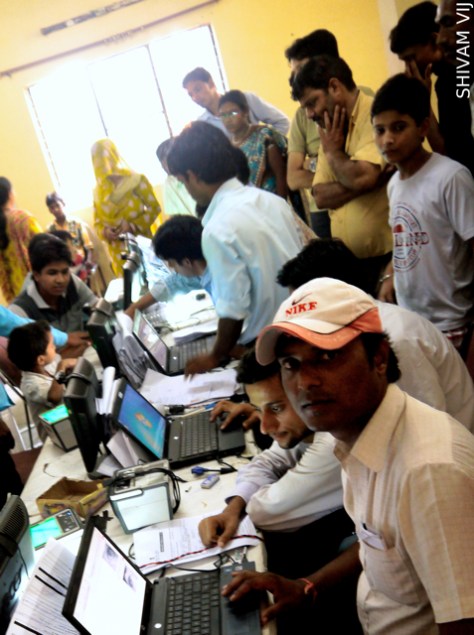
Contrary to what his name suggests, Bechu Lal Yadav, 29, isn’t a seller of goods. He is a recordist of identity. He is amongst a new breed of technical professionals that have come up overnight – the Biometricwallahs. Continue reading The Biometricwallah→
It is the sort of place you will not find unless you are looking for it. Even if you find the address in Hardevpuri near Shahdara, you will not know where to knock. There is no signboard that will tell you this is Gautam Book Center. “A signboard will attract the attention of those who don’t like our books,” explains AK Gautam.
Wars, insurgencies, floods, an economy in the doldrums, and now dengue. If Pakistan is not a “failed state,” some credit must go to the Pakistani sense of humour.
There’s been terrible out break of Dengue fever in Lahore. 39 have died and the toll keeps rising – it was 36 when I began collecting the material for this post. Sohaib Gulbadan tweets: “My Hizb-ut-Tahrir friend is sharing articles suggesting dengue outbreak in Lahore is a CIA strategy. Acha.”
Perhaps it is in response to that sort of stuff that Haseeb Asif writes this hilarious blog post:
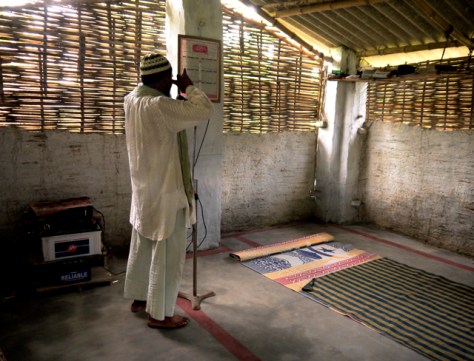
Imam Shamsuddin calls for prayer. Photo credit: Shivam Vij
Like nearly every village in South Asia, Allahpur, in the east Indian state of Bihar, is geographically divided on the lines of caste. On one side of a dirt track live the upper-caste Muslims (Syeds, Sheikhs and Pathans) and on the other side live the lower-caste Muslims (Ansaris, Dhunias and Raains). There are only four Hindu families in Allahpur, and they are all lower castes, their houses amid the low-caste Muslim houses.
For five years now, the low caste Muslims have been praying at a ramshackle mosque they built, boycotting the mosque in the upper-caste Muslim area, a stone’s throw away.
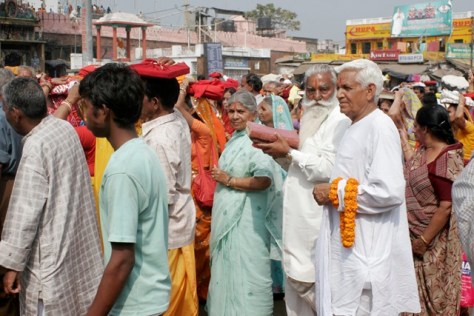
The Journey is an integral part of any pilgrimage, the manner in which it is conducted is crucial to the successful conclusion of the endeavour. An edited version of this article first appeared in the travel and culture magazine Terrascape, published from Delhi. Photos: Himanshu Joshi/Curun Singh
Pilgrims at Puri, outside Jagannath Temple
There is a scene in Mughal-e-Azam, the early 1960s blockbuster of a movie by K Asif, where Akbar and his queen, the mother of his first son Jahangir (wrongly identified by K Asif and also by Ashutosh Gowarikar as Jodha Bai) stumble through the hot sands of Rajasthan under the mid-summer day sun that seemed intent on drying up and burning everything in sight. The two are on a pilgrimage. The pilgrimage was to fulfill a vow that Akbar had taken.
Away from the revolution of direct to home (DTH) and cable TV networks, the nineties were the time of one channel, when Doordarshan was synonymous with Television for most Indians, especially in rural areas. There was not much on television for a kid growing up except the occasional cartoon clips and Shaktimaan. I was fond of Meena and her parrot Mithu. They were loveable unthreatening characters. The duo imparted important lessons on a variety of social issues. Movies were a strict no-no and the news was other things adults were interested in. Every evening my grandfather would tune in to the Hindi news which was followed by another news broadcast in English. Even as a kid I could sense the repetition but never the reason of watching the same news twice.
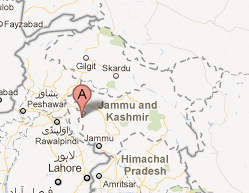
In my memory of those days, it’s not Doordarshan that I associate myself with. Luckily for many of us near the border there was PTV.
This guest post bySIMI CHACKOandPRATIKSHA KHANDURI is the full text of a booklet released in August 2011. A .pdf version of the booklet (41 pages, 304 KB) can be downloaded here.
A citizen gets her iris scanned for a UID 'Aadhar' card in Delhi.
Introduction
A. UID: The Basics
B. The Enrolment Process
C. Benefits of UID
D. Concerns: Biometrics, Privacy, Data security, Surveillance
In the Courtyard of the Beloved is a visual and aural portrait of Nizamuddin Auliya Dargah, a Sufi shrine in New Delhi, India. Made from over 18,000 still images and ambient sounds recorded on-site, rapid-fire bursts of kaleidoscopic imagery assemble into fractured collages.
Each day, hundreds of pilgrims travel by airplane, train, car, rickshaw and foot to reach this shrine, which honors a 12th century Sufi mystic who believed in drawing close to God through renunciation of the world and service to humanity. Beginning with imagery from these journeys, the film then enters the physical space of the shrine; a unique nexus of marketplace, social space and spiritual haven, where devotees come to offer their prayers and find a moment of reflection away from the din of Delhi traffic. As the sun sets behind the dome, musicians begin the qawwali, a style of Sufi devotional music that ranges from contemplative religious elegy to raucous crescendo.
Executive Producer Samina Quraeshi
Original tabla score by Suphala
Audio post-production by Paul Bercovitch
Produced by Sadia Shepard
Photographed and edited by Andreas Burgess




 Away from the revolution of direct to home (DTH) and cable TV networks, the nineties were the time of one channel, when Doordarshan was synonymous with Television for most Indians, especially in rural areas. There was not much on television for a kid growing up except the occasional cartoon clips and Shaktimaan. I was fond of Meena and her parrot Mithu. They were loveable unthreatening characters. The duo imparted important lessons on a variety of social issues. Movies were a strict no-no and the news was other things adults were interested in. Every evening my grandfather would tune in to the Hindi news which was followed by another news broadcast in English. Even as a kid I could sense the repetition but never the reason of watching the same news twice.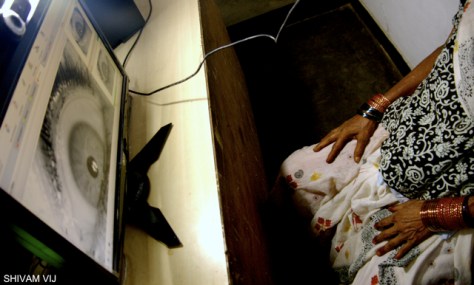
 KAFILA - COLLECTIVE EXPLORATIONS SINCE 2006