Category Archives: Everyday Life

Resist the Draconian and Undemocratic Ban Order on the Kashmir Reader Newspaper: Junaid Nabi Bazaz

Guest Post by Junaid Nabi Bazaz. Photos by Abid Bhat and from Kashmir Reader Online

kashmir-reader-ban-759


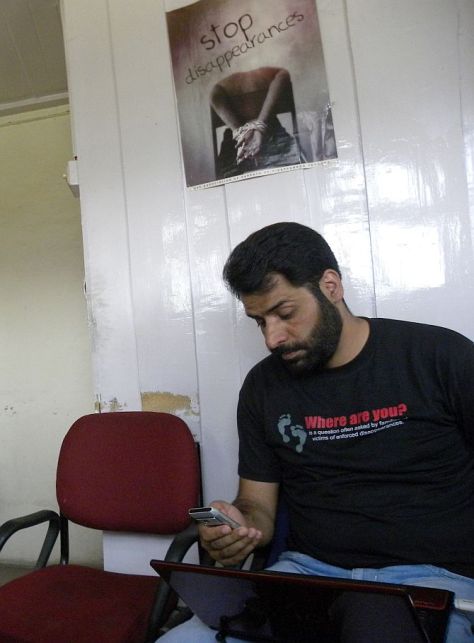
In a move unprecedented in the last three decades in the strife torn Kashmir valley, the Jammu and Kashmir government published an order in early October that stated that Kashmir Reader (KR), a vocal newspaper with circulation of less than10000 copies, contained material and content ‘which tends to incite violence and disturb public peace and tranquility.’ This was then used as a justification for placing a ban on the publication of KR. Today, on the 25th of October, Journalists assembled in Srinagar to protest this arbitrary ban.

Continue reading Resist the Draconian and Undemocratic Ban Order on the Kashmir Reader Newspaper: Junaid Nabi Bazaz

The Twitter Gherao of Mamidala90 on the 10th Day of Najeeb Ahmed’s Disappearance from JNU: Shehla Rashid

Guest Post by Shehla Rashid

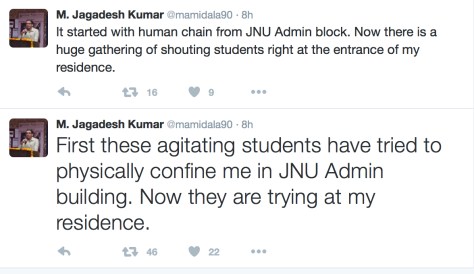
[ Between the 9th and 1oth day of the disappearance of Najeeb Ahmed from the JNU campus, the JNU Vice Chancellor, Mamidala Jagadesh Kumar decided to salvage his reputation on twitter, even as he squandered it on the grounds of the campus of the university he presides over. And so he let forth a volley of tweets, while sitting inside his office and his residence, even as he refused to meet or listen to the JNU students who have grown increasingly concerned and anxious at the university administrations callous laxity about the fate of Najeeb Ahmed, the missing students.

While students marched down the campus, forming a human chain that culminated at the gates of the VC’s residence near the university’s east gate, Mamidala90 (the handle with which the VC distinguishes himself in twitsville) began getting extremely active. While the students were peacefully assembled at the gates of the VC’s residence, very much not in ‘gherao’ or ‘blockade’ mode, Mamidala90 whined about being ‘blockaded’.

A Sample of Mamidala90's tweets while students gathered peacefully outside his residence. Is this what it felt like to hear Nero fiddle while Rome burnt?
A Sample of Mamidala90’s tweets while students gathered peacefully outside his residence. Is this what it felt like to hear Nero fiddle while Rome burnt?

Continue reading The Twitter Gherao of Mamidala90 on the 10th Day of Najeeb Ahmed’s Disappearance from JNU: Shehla Rashid

Bring Back Najeeb Ahmed to JNU: A Call to Resist Terror in Universities

14615765_679911288839993_8711625822412574391_o-1

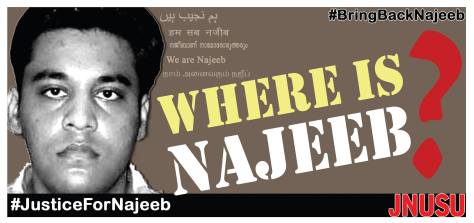
It is now more than a week since Najeeb Ahmed, an MSc (first year) student of Biotechnology at Jawaharlal Nehru University, Delhi has been reported missing, after an altercation with members of the RSS affiliated ABVP student organization, which reportedly left him injured and severely traumatized.

Continue reading Bring Back Najeeb Ahmed to JNU: A Call to Resist Terror in Universities

Seven of Us – The Other Side of the Armed Forces: Sanjeev Kumar

Guest Post by SANJEEV KUMAR

Seven of us in my family including me, along with 90% of the young men from my village, have tried to join the army at least once in our lives. Here I am using the term ‘army’ to include all armed forces and paramilitary forces.

Three members of my family succeeded and are now in the army along with around a hundred others from my village. More than two-thirds of them gave bribes of 1-2 lakh rupees, either by selling land or using family savings, to join the army. There are others who were cheated by dalals.  Hardly any of them would claim that they joined the army to serve the nation; rather, they joined the army to bring some relief to their starving families. Most of them teased and molested girls while travelling ticketless in trains to army recruitment centres in different parts of the country. Most of them including my brother, took 7-12 lakh rupees as dowry for marriage. Hardly any one of them wants their children to be in the army in preference to other civilian jobs.

My father also tried once to join the Indian army in the early 1980s but my grandfather hid his joining letter from him because my grandfather believed farming was better for him and for the family. Whenever they quarrelled in the early 2000s, I always heard my father blaming his father for the poverty of the family, because he did not allow him to join the army. It was around the same time that I first heard of anyone giving a bribe to join the army. It was my own uncle who was barely 5 to 7 years older than me, who  sold his agricultural land to pay 1 lakh rupees to a dalal as bribe through his mamaji who was also in the army. I also heard of two young boys in my village who had earlier given around 40000 rupees as bribe to join Bihar Police but lost all their money to a  dishonest agent. It was courageous of my uncle to risk his money even though the news of how two other village boys were cheated was fresh in the air. He had the courage to do that because his secondary dalal was his own mamaji. He had the courage to do that also because he had no other alternatives.

Continue reading Seven of Us – The Other Side of the Armed Forces: Sanjeev Kumar

मज़ाक मज़ाक में : किशोर

Guest Post by Kishore
(Summary: Article is about recent  racial comments on a  actress  and channel’s response to it.Now a days there is increasing trend of serving any thing in the name of comedy. This article raises questions on comedy. Is purpose of comedy is just to make us laugh or it has any social resposibility)
 पिछले दिनों तानिष्ता चटर्जी के रंग पर की गयी टिप्पणी के बाद वह एक मशहूर कॉमेडी शो को बीच में छोड़ कर चली गयी. बाद में उन्होंने इस टिप्पणी को नस्लवादी करार दिया. दूसरी तरफ इस चैनल ने इस आरोप को गलत बताते हुए कहा है वह तो बस “रोस्ट” ( एक तरह की खिंचाई) कर रहे थे और रोस्ट करना उनके शो में व्यंग करने करने का तरीका है . साथ में यह भी कहा कि उन्हें पहले ही बता दिया गया था कि उन्हें “ रोस्ट” किया जाएगा. किसी के रंग पर उलटे सीधे व्यंग करना कैसी  खिंचाई है इसका कोई स्पष्टीकरण नहीं दिया गया.
इसके बाद मुझे ध्यान आया कि पिछले कुछ सालों में टेलीविजन पर कॉमेडी शो की बाढ़ सी आ गयी है जो खुद ही कुछ कह कर खुद ही हँसते है. इन शो में किसी का मजाक उड़ाना कॉमेडी समझा जाता और इनमे किसी स्थिति से हास्य पैदा करने का सामर्थ् नहीं है. इन शो में कई बार किसी व्यक्ति या समूह को नीचा दिखा कर मजाक उड़ाया जाता है. अगर मैं कॉमेडी को एक विधा समझता हूँ या मैं उस समुदाय से सम्बन्ध रखता हूँ तो इस व्यंग पर मुझे हंसी नहीं आएगी.
वैसे मुझ जैसे अज्ञानियो को इन जैसे कॉमेडी शो से ज्यादा हंसी ए इस पर दिखाए जाने वाले होरर शो पर आती है जो डराने के मकसद से बनाये जाते हैं. खैर यह दीगर बात हएै पर एक बात तो तय है कि यह शो  बहुत लोकप्रिय हुए हैं और इनको देखने वालों की संख्या लाखो में है. भले ही तानिष्ता को उनके व्यंग करने के तरीके पर एतराज हो पर लोग इस अंदाज को बहुत पसंद कर रहे हैं.
मुझे उन लोगों की बात भी याद आई जो, जो मन में आये वह कह देते हैं और फिर कहते हैं इस बात को इतनी संजीदगी से लेने की क्या जरूरत है , यह तो महज एक मजाक था. इसी तरह किसी खास समुदाय और औरतो को लेकर बहुत से चुटकले चलते हैं जिनमें बहुत खराब खराब बातें होती है, और लोग हँसते भी है . आलोचना करने  पर इतना कह  कर बात टाल देते हैं कि यह चुटकला ही तो है. आखिर हम लोग कब कॉमेडी को संजीदगी से लेना शुरू करेंगे.
कॉमेडी का एक साधारण सा नियम तो समझ आता है कि कॉमेडी में जो हंसी का पात्र बनता है या बनती है उसे खुद भी अपनी उस स्थिति पर वैसे ही हंसी आनी चाहिए जैसे  की किसी और को आ रही है.  अर्थार्थ हंसी उसके रंग रूप , आकार या नैन नक्श से निरपेक्ष उस कलाकार के हाव भाव या उस परिस्थिति से आनी चाहिए. यह स्पष्ट है कि हंसी का कारण रंग रूप , आकार या नैन नक्श नहीं है.
दूसरी बात कि हंसी का कारण किसी समुदाय विशेष के प्रति पूर्वाग्रह नहीं होना चाहिए. हम यह कह कर मुक्त  नहीं हो सकते कि यह तो एक मजाक है. वास्तविकता यह है कि इस तरह के मजाक पूर्वाग्रहों को मजबूती देते हैं. यकीन ना हो तो अपने आसपास नजर दौड़ा कर देख लो. क्या इन पूर्वाग्रहों के सुदृढ़ होने मैं इस तरह के मजाक का हाथ नहीं है? क्या औरतों और पत्नियों के प्रति होने वाले मजाक ने समाज में उनकी स्थिति को प्रभावित नहीं किया ?
इन शो में से अधिकतर शो में कलाकार अपने हाव भाव और बातों से हंसाया जाता है. अब कोई पूछ सकता है कि हाव भाव या बातों से हंसाने में बुराई क्या है. सभी महान हास्य कलाकार बातों और हाव भाव से ही तो हंसाते थे या हैं. तो यह शो उन हास्य शो या फिल्मों से अलग कैसे हुए?
अंतर है कि किन बातों या किस हाव भाव से हंसाया जा रहा है. उस बात की विषय वस्तु  क्या है. कोई हाव भाव या बात फूहड़ या अश्लील  भी हो सकती है और सौम्य  भी. अब प्रश्न यह उठता है कि यह कौन तय करेगा कि यह विषय वस्तु फूहड़ या अश्लील है या सौम्य? हर समाज में फूहड़ या सौम्य होने के कुछ मानदंड होते हैं और कॉमेडी शो कि विषय वस्तु भी उसी से तय होगी. पर यह कहने में मुझे एक खतरा दिख रहा है? जिस तरह से किसी भी चीज को अश्लील या अनैतिक बता कर उस पर हमले हो रहे और कलाकारों की अभिव्यक्ति की स्वतंत्रता पर रोक लगाई जा रही  हैं उसमे इन शब्दों का प्रयोग बहुत संभल कर करना होगा.
मैं इस बात से आश्वस्त हूँ कि “ जाने भी दो यारों” नामक फिल्म में जो हास्य था वह उच्च कोटि का था और सौम्य था और जो मैं आजकल टी.वी. शो में देख रहा हूँ वह फूहड़ है. पर मैं यहाँ अपना तर्क गढ़ नहीं पा रहा कि क्या चीज “जाने भी दो यारों” को इन टी.वी. शो से अलग करती है. मेरा इस बात पे भी दृढ विशवास है  कि किसी के रंग रूप, नैन नक्श या किसी समुदाय के आधार मजाक उड़ाना गलत है . मैं पूरी तरह से इस शो के खिलाफ तानिष्ता का समर्थन करता हूँ.
बस मुझे बस इस बात पर संशय है कि किस आधार पर किसी बात को फूहड़ कहा जाएगा और किस आधार पर सौम्य?
(लेखक डेवलेपमेंट प्रोफेश्नल के रूप में  में कार्यरत हैं  और पिछले कई सालों से बाल अधिकारों के क्षेत्र में काम कर रहे हैं।)

A Fast That Ended in Hunger- Thoughts on Irom Sharmila and Hunger Strikes: Anirban Bhattacharya

Guest Post by Anirban Bhattacharya

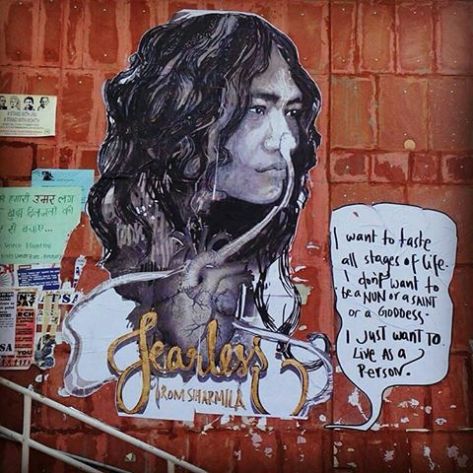
Iram Sharmila Mural at ‘Freedom Square’ JNU. Art by Shijo Suleman and the Fearless Collective. Photograph by Rebecca John. Image, courtesy, ‘The Great Walls of India’ blog on Graffiti and Wall Art

We may have differences in our political approach as to the way and means of the struggle, but what must be stated at the outset is the fact that Irom Sharmila has certainly been an icon of resistance and inspiration in the struggle against AFSPA.

Her 16 year long hunger strike has been a grim reminder of the crimes against the Manipuri people – rape, torture, fake encounters and massacres – committed by the armed forces with impunity under such draconian Acts like AFSPA. But her abrupt decision to end her fast accompanied with her willingness to contest elections in the upcoming assembly elections have met with a mixture of shock, scepticism, disappointment, puzzlement and even anger amongst her people in Manipur and even her close associates. There also seems to be a resentment against her being in a relationship and her plan to marry. Such scrutiny/dragging of her personal life are, however, quite deplorable. But overall, the disappointment with the decision of Irom to quit fasting and contest elections is so strong that, after breaking her fast in the hospital, when she tried to go to a local activist’s shelter, the locals disapproved. She had to seek temporary shelter in an ISKCON temple along with her police guards and then was shifted to a police station and finally she was forced to retreat to the same hospital that housed her for last 16 years. Now, this is telling. But what does it tell? The answer to this question would take us away from criticisms about any particular individual, but to the evaluation of the very method of struggle that she had been a part of, its scope, effectivity and limitations.

Continue reading A Fast That Ended in Hunger- Thoughts on Irom Sharmila and Hunger Strikes: Anirban Bhattacharya

Statement in Support of Khurram Parvez from Groups and Individuals in Karnataka

Over the past 70 days, there have been over 84 deaths, hundreds have lost their eyesight to pellet wounds and thousands have been injured in Kashmir. As news reports of the death of 11 year old Nasir Shafi, son of Muhammad Shafi, a resident of New Theed Harwan in Srinagar emerge, we also hear about Showkat Ahmed Misger, a person with mental disabilities from Safa Kadal who was admitted in hospital in a critical condition with pellet wounds. Though the people of Chandpora were told by the police that Nasir Shafi was mauled by a bear, pictures of his body with pellet wounds and torture marks stand in contradiction to this official version of events. The violence unleashed by the armed forces continue unabated in Kashmir inspite of extensive social media outrage and mass protests in  Indian cities like Patna, Kolkatta, Chennai, Bangalore, Delhi etc.

Continue reading Statement in Support of Khurram Parvez from Groups and Individuals in Karnataka

Free Khurram Parvez – An Open Letter to Civil Society: JKCCS

Guest Post by Jammu and Kashmir Coalition for Civil Society on behalf of the signatories of the statement in support of Khurram Parvez

14355569_670864076420404_7479719579066415935_n
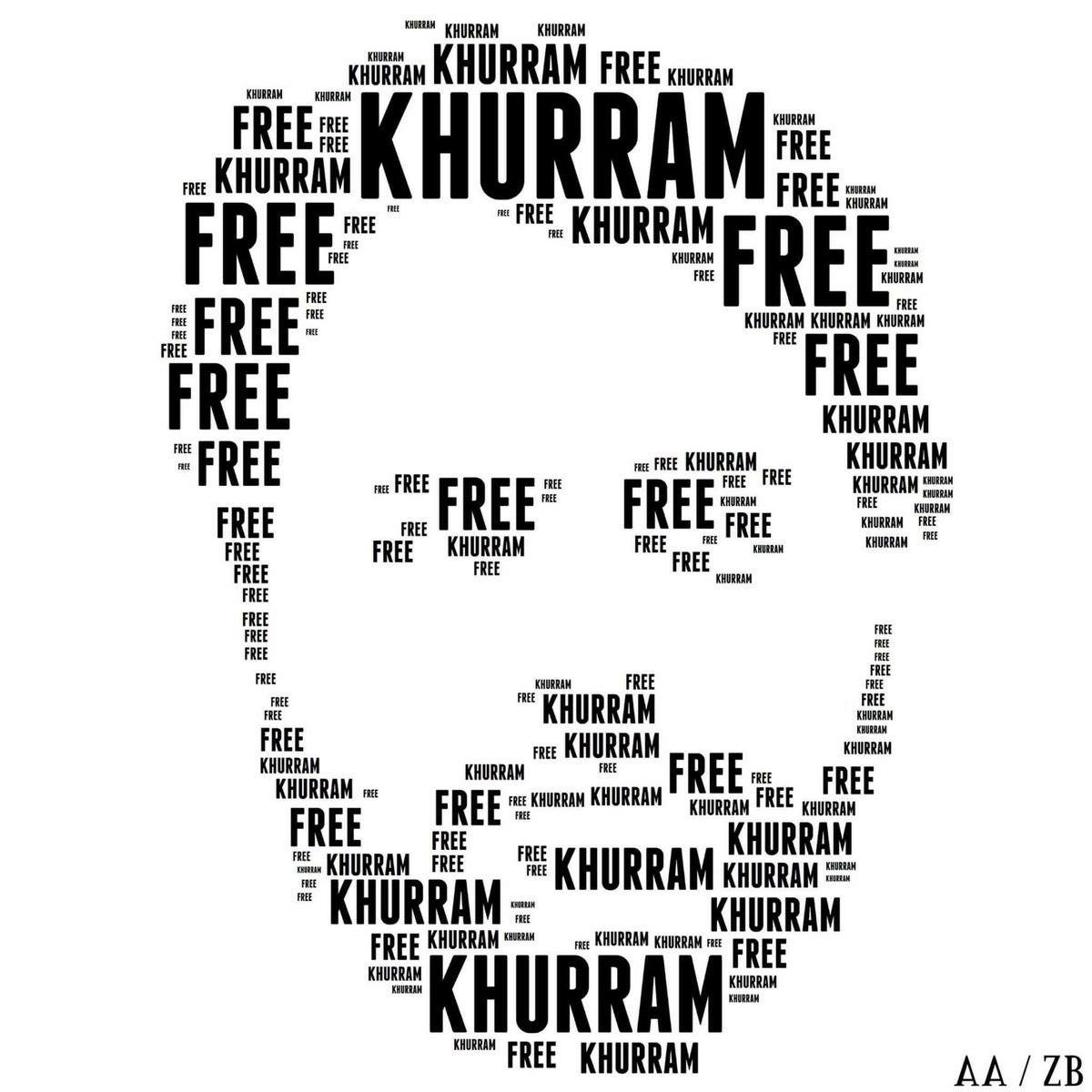
Khurram Parve, Image, courtesy JKCCS

We, the undersigned, call for the immediate release of Khurram Parvez, a distinguished and courageous human rights defender, and write in support of the enclosed statements issued by Advocate Parvez Imroz

As we write this, Khurram Parvez has been remanded to preventive custody in a sub-jail in the highly militarized Kupwara District of Kashmir. He is expected to be produced before the court on 21 September 2016.

An executive magistrate in Srinagar issued the order against Khurram Parvez, invoking Sections 107 and 151 of the Code of Criminal Procedure (CrPC) (pertaining to detention for breach of peace and design to commit a cognizable offence).

The actions against Mr. Parvez are symptomatic of the escalated repression in Kashmir by institutions of state since July 8.

We note with horror that since July 2016, over 80 persons have been killed, over 11,000 persons have been injured, over 1,000 persons have been arrested and over 100 ambulances have been attacked. For 70 days now, curfew has been imposed in various parts of Kashmir. Continue reading Free Khurram Parvez – An Open Letter to Civil Society: JKCCS

पवित्र नगरों की सियासत

Amritsar

जनाब अरविन्द केजरीवाल, जो इन दिनों पंजाब के दौरे पर हैं, उनके एक ऐलान ने एक पुरानी बहस को नयी हवा दी है. उन्होंने कहा कि अगर उनकी पार्टी जीतती है तो वह अमृतसर को ‘पवित्र नगर’ का दर्जा प्रदान करेगी. इतना ही नहीं वह स्वर्ण मंदिर के आसपास शराब, मीट और टुबैको के उपभोग पर भी रोक लगाएंगे.

उनके मुताबिक खालसा को जन्म देने वाले आनंदपुर साहिब को भी पवित्र नगर का दर्जा दिया जाएगा. वैसे यह पहली दफा नहीं है जब उन्होंने नगरों को ‘पवित्र’ घोषित करने की बात कही है. याद रहे जिन दिनों वह वाराणसी से चुनाव लड़ रहे थे, उन्होंने अपने बनारस संकल्प में अन्य कुछ मांगों के अलावा इस बात का भी विशेष उल्लेख किया था कि वह वाराणसी को ‘पवित्र नगरी’ का दर्जा दिलाएंगे.

(Read the full article here : http://hindi.catchnews.com/india/politics-of-holy-city-1473905440.html/fullview)

State Violence against Peaceful Assemblies in Kashmir: JKCCS

Guest Post by Jammu & Kashmir Coalition for Civil Society (JKCCS)

Over the last week – August 29 to 5 September, of uninterrupted curfew in Kashmir, the government’s unbridled use of force on peaceful public meetings/rallies, which are either funeral processions of the civilians killed by government forces or peaceful political rallies where people demand their right to self determination, across Kashmir valley has resulted in injuries to 1215+ people, many of whom are injured by pellets shot guns. The violence used by government forces against un-armed peaceful rallies deflates its claims that its forces only resort to violence when they are pelted with stones. Contrary to government claims, the use of force against the peaceful demonstrators acts as a provocation to people and youth in particular who then retaliate by stone throwing on Indian forces. The sheer number of peaceful pro-freedom rallies held in the last week alone symbolizes the nature of the current anti-India uprising which has seen lakhs of Kashmiris on streets to voice their demand for right to self-determination. Such attacks are against the internationally, and domestically, recognized fundamental rights of peoples to peaceful assembly and association, and freedom of opinion and expression, including India’s obligation under the ICCPR. Continue reading State Violence against Peaceful Assemblies in Kashmir: JKCCS

Kashmir Scholars Action Group Letter to the UN High Commission for Human Rights on the Situation in Jammu&Kashmir: KSAG

Guest Post by Kashmir Scholars Action Group

To Mr. Zeid Ra’ad Al Hussein

UN High Commissioner for Human Rights

Re: Urgent action needed to end state violence in Indian-controlled Kashmir

We are writing to you to express our concern about the situation in Indian-controlled Kashmir where the already subjected population is currently living in a state of siege due to the massive violence unleashed by the Indian forces. We appreciate your decision to create a fact-finding mission and deplore the refusal of the Indian government to allow access to UN human rights monitors (1). In the absence of such a mission, we feel it incumbent upon civil society groups to provide regular updates on the situation.

We, the Kashmir Scholars Action Group, are an interdisciplinary group of scholars of various nationalities engaged in research on the region of Kashmir. Our research on Kashmir, its history, its consequences for the region and beyond, and its possible resolution, delves into the implications for an internationally mediated political solution, and is of relevance to policy makers. Based on our long and active engagement with civil society groups in Indian-controlled Kashmir, we have undertaken to document and communicate the situation on ground since the Indian state’s violence against civilians has continued to mount from July 7th, 2016 onwards. Each of us has written about Kashmiri history, society and politics; and we are particularly concerned about the present conditions of violence. We write to you now as part of our urgent efforts to check the brutality of the state’s response to Kashmiris, scores of whom have mobilized in support of their demand for azadi (freedom). Even as we will go on to list some of the details of the humanitarian crisis, we wish to make clear that we are calling not only for the resumption of basic civil services, the rule of law, and the restoration of human rights in Kashmir, but, most importantly, for an internationally mediated political solution for this ongoing crisis. Continue reading Kashmir Scholars Action Group Letter to the UN High Commission for Human Rights on the Situation in Jammu&Kashmir: KSAG

Reaching for the Universe


“Universal” is a tricky word. It has an enormous appeal, an unquestioned romance of taking every one along. Universal human rights, universal access to basic services, housing for all. It is the barometer of inclusion done right. The dark side of the romance is that it’s one of the hardest things to actually achieve. Often the “universal” is a vanishing horizon and, like all horizons, the mirage is what makes you lose sight of the very real trade-off’s and constraints in your way.

This week the Delhi Jal Board announced a new horizon towards the idea of universal access to a basic urban service and human need: water. The “Jal Adhikar Connection” (a Right to Water Connection) promises to let households within slums in Delhi apply for legal, metered water connections “irrespective of the status of their residence.” This move – following the Government of Delhi’s already given pledge to extend water and sanitation services to unauthorized colonies – implies that legal, public and metered water could (like electricity) actually cover the city as it exists rather than as it is imagined in plans and laws.

Continue reading Reaching for the Universe

A secularism of despondency or a secularism of hope? Vikas Bajpai

Guest post by VIKAS BAJPAI

Mera abai watan, my ancestral home, the place to which I belong, is Lucknow.  Lucknow is ‘my city of joy’; and for me Lucknow’s identity derives from ‘old Lucknow.’ The newer part of the city is a creation of barely thirty to thirty-five years and bears little reflection of what Lucknow otherwise stands for.

There can be little conceptualization of Lucknow’s legendary culture, its tehzeeb, without any imagination of ‘old Lucknow’. As an instance of how deeply this tehzeeb had percolated into society, I still recall, on a few occasions that I happened to accompany my maternal uncle to the Raqabganj sabzi mandi, the hawkers would attract buyers for slender and delicate kakdis (skinny cucumbers) with the poetic call – ‘lijiye – lijiye, laila ki ungliyan, majnu ki pasliyan’ (‘Come, get these delicate fingers of Laila, Majnu’s slender  ribs’, referring to the legendary star-crossed lovers Laila-Majnu).

Old Lucknow’s lanes and by-lanes, its busy bazaars, the Chowk – famous for chikan embroidery and zari work; Prakash ki kulfi in Aminabad (a popular market in old Lucknow); the early morning doodh malai and jalebi stalls; the horse-driven ikkas and the tangas; the masjids and their aazaans; the Siddhanath Mandir next door to our house; burqa clad women and the Muslim men wearing dupalia topis, headgear sometimes worn by Hindu men too, especially on Holi; Chaar Bagh railway station; Hanuman Inter ‘Kalej’ and ‘Quins Kalej’ (colleges from where my mother and father matriculated respectively; in the Awadh area of Uttar Pradesh ‘college’ would typically be pronounced as ‘kalej’); and of course how can one forget the mangoes – all of these shall forever be etched as a part of my childhood memories.

Continue reading A secularism of despondency or a secularism of hope? Vikas Bajpai

Regulating the Surrogacy Industry – A Feminist Perspective: Sarojini Nadimpally, Deepa Venktachalam and Sneha Banerjee

Guest Post by SAROJINI NADIMPALLY, DEEPA VENKTACHALAM and SNEHA BANERJEE of SAMA, a resource group for women and health.

The press briefing on commercial surrogacy by Minister of External Affairs Ms  Sushma Swaraj, on 24th August 2016,  did not come as a surprise to many of us who have been advocating for the rights of surrogate mothers and the regulation of the Assisted Reproductive Technology (ART) industry. Many of the points mentioned in her speech were already in the Draft Assisted Reproductive Technologies (Regulation) Bill 2014. Since 2015, the Ministry of Home Affairs (MHA) had stopped issuing visas to foreigners for commissioning a surrogacy. The Supreme Court of India is currently hearing arguments in a Public Interest Litigation (PIL) demanding a prohibition or ban on commercial surrogacy.  In a recent hearing, the Supreme Court asked the government to develop the framework for the regulation of the  ART and surrogacy industry in India.

The latest regulatory move extends prohibitions in place in the draft ART Bill of 2014, banning commercial surrogacy altogether, and permitting only altruistic surrogacy (without payment), and only for one category of people – heterosexual Indian couples who have been married for five years and do not have any children, specifically excluding NRIs. Only close relatives can be surrogates and there are penalties that are absent in the Draft ART Bill of 2014. The draft ART Regulation Bills (2010, 2014) mentioned marriage as a mandatory clause, with ‘couple’ who could access surrogacy arrangements, defined as a man and woman living in a marital relationship for two years; the current Surrogacy Bill says 5 years.

This approach obviously discriminates against queer couples whose marriage is not legal in India; and as for ‘single’ persons – they are persona non grata. This is highly problematic, moralistic and discriminatory. The briefing was an outpouring of the nation-family-culture rhetoric and patronizing morality. We have not read the current Surrogacy Regulation Bill yet as it is not available in the public domain and hence our concerns are based on the media reports.

Continue reading Regulating the Surrogacy Industry – A Feminist Perspective: Sarojini Nadimpally, Deepa Venktachalam and Sneha Banerjee

Dalit Uprising and After …

Why Hindutva Would Not Be The Same Again ?

Image result for una struggle

(Photo Courtesy : newsclick.in)

When I was born I was not a child
I was a dream, a dream of revolt
that my mother, oppressed for thousands of years ,
dreamt.
Still it is untouched in my eyes
Covered with wrinkles of thousand years, her face
her eyes, two lakes overflowing with tears
have watered my body…..

– Sahil Parmar*

Well known Gujarati poet Sahil Parmar’s poem ‘When I Was Born’ perhaps reverberates these days in Gujarat when we are witnessing a Dalit Upsurge- a first of its kind at least in that regions history. It will be a talk of folklore for times to come how flogging of dalits in a village in Saurashtra by Hindutva fanatics suddenly erupted into a mass movement of dalits which could catch imagination of the people cutting across different sections of society. An attempt is being made here to understand the dynamics of the movement and its likely impact on the future trajectory of Hindutva.

Continue reading Dalit Uprising and After …

आज़ादी की एक लड़ाई चम्बल की घाटी में : अंकित झा

Guest post by ANKIT JHA

आज़ादी किसे पसंद नहीं है? सभी मनुष्यों कीआत्मा में निहित एक अधिकार आज़ादी. सभी बंधनों से मुक्ति, ना कोई शासक ना कोई शासन. स्वयं का स्वयं पर अधिकार. एक आज़ादी की लड़ाई चम्बल से.जाति संघर्ष के परे,वर्ग संघर्ष के परे. परन्तु सब को समाहित किये एक अनोखा संघर्ष. मध्य प्रदेश के चम्बल संभाग में स्थित जिला श्योपुर.और सतत चला आ रहा ज़मीन संघर्ष.  इस देश में किसी गरीब व वंचित वर्ग के लिए ज़मीन का अधिकार पाना कभी आसान नहीं रहा.हालाँकि समय-समय पर सरकार, समाजसेवी संगठन तथा कुछ आन्दोलनों द्वारा इसका भरसक प्रयास किया गया है कि समाज में सभी के पास सामान रूप से ज़मीन हो. लेकिन हर बार यह प्रयास किसी न किसी कारण से असफल रहा.इन असफलताओं का कारण अधिकाँश समय उच्च वर्ग का अपनी ज़मीन से मोह तथा वंचित वर्ग का निरंतर शोषण रहा है.सरकार हो या अधिकांश समाजसेवी संस्थाएं, इसी ख़ास वर्ग की नुमाइंदगी करते रहे हैं. ना ही संघर्ष को सफलता मिली और ना ही कोई रास्ता. अब जिस व्यक्ति को अपनी जीविका हेतु संघर्ष करना पड़ता हो, उसके अन्दर ऐसी संघर्ष की चाह पैदा करना पाना मुश्किल कार्य है. फिर यदि शोषित वर्ग वनों में रहने वाले आदिवासी वर्ग हो तो कार्य नामुमकिन सा प्रतीत होता है.यह नामुमकिन ही है, जबतक इच्छा शक्ति एकता परिषद सी ना हो.

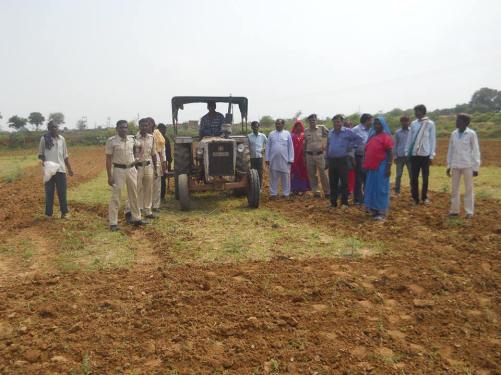
Ekta parishad leaders & administration demarcating formerly land for giving possession to the Sahariya tribal people

विगत 10 वर्षों से भी अधिक से श्योपुर में ज़मीन माफियाओं ने जबरन आदिवासियों की ज़मीन पर कब्ज़ा कर रखा था और कईयों ने तो इन ज़मीनों को हरियाणा, पंजाब तथा उत्तरी राजस्थान से आये बड़े किसानों को बेच दिया था. इन बाहरी किसानों ने आदिवासियों को उनकी ही ज़मीन पर मजदूर की नौकरी प्रदत्त करवा के उनपे शोषण का नया तरीका अपनाया.यह कतई किवदंती नहीं है कि खेत में कार्य कर रहा मजदूर उन बड़े किसानों के गुलाम से भी बदहाल स्थिति में कार्य करते हैं. ये दिहाड़ी मजदूर किसी संघर्ष की लालसा में अपने एक दिन के आय को नहीं खो सकते. ऐसे समय में एकता परिषद् ने संघर्ष को नया नाम दिया.उन्होंने इसे आज़ादी के लिए किये जाने वाला संघर्ष कहा. अपनी ज़मीन वापस पाने की आज़ादी. अपना अधिकार वापस लेने की आज़ादी.एकता परिषद् एक गांधीवादी संस्था है जो वंचित वर्ग के जल, जंगल व ज़मीन के लिए संघर्ष करती है. विगत 2 दशकों से भी अधिक समय से शोषित व वंचित वर्ग की सेवा तथा उनके सशक्तिकरण के लिए संस्था कार्यरत है.संस्था ने सबसे पहले ज़मीनी हकीकत पता किया तथा सभी जानकारी लेने के पश्चात सभी आदिवासी जिनकी ज़मीन पर कब्ज़ा था उन्हें आगे आने के लिए प्रेरित किया. जब आदिवासी तैयार हुए तो उन्होंने जिला कलेक्टर को तुरंत कार्रवाई तथा अपने स्वामित्व को पुनः प्राप्त करने हेतु ज्ञापन सौंपा. इस ज्ञापन का असर यह हुआ कि प्रशासन तुरंत हरकत में आया.

Continue reading आज़ादी की एक लड़ाई चम्बल की घाटी में : अंकित झा

What exactly happened in Jamia Millia Islamia on 13th August? Jamia Millia Islamia Students

Guest Post by Jamia Millia Islamia Students

What exactly happened in Jamia Millia Islamia on 13th August?

The sequence of events:

Just two days before Independence Day, all the hostel residents were informed personally by the administrative authorities to be careful as there may be some raid by IB or CBI or Delhi Police. Students were instructed not to keep any non-resident student in the hostel.

While it is okay to instruct students not to keep any non-resident student in the hostel, what is problematic is the atmosphere of fear that was created among students. Many of the students were told to be careful regarding ‘KASHMIRI STUDENTS’ in particular.

The hostel authorities repeatedly instructed the students not to come out of their rooms and to be careful.

On the 13th of August, at around 3 p.m., two police constables in uniform and around 15-20 officials in plain clothes were seen sitting just outside the hostel gate. Two constables came inside the gate and started having conversation with the guards while around 10 officials were sitting in their cars inside the hostel campus.
Continue reading What exactly happened in Jamia Millia Islamia on 13th August? Jamia Millia Islamia Students

The Mahmood Farooqui Rape Conviction – A Landmark Verdict: J Devika & Nivedita Menon

This post is jointly written by J DEVIKA and NIVEDITA MENON

Bitter arguments rage within the community that we may term as broadly secular, leftist, even feminist, around the Farooqui judgement – in many ways, this judgement and the case itself, may be to Left politics in India with regard to sexual violence, what “Nandigram” was with regard to the question of land, agriculture and environmental costs of industrialization. That is, the dismantling of an older framework of ethics and politics and the painful emergence of what one hopes will be a new consensus on what constitutes rape, but more importantly, on what the harm of rape and sexual violence is.

The authors of this post have read the judgement and followed the case closely, and that is the basis of our analysis here.

We believe that the judgement and verdict in the Mahmood Farooqui rape case indicates an unmistakeable and important shift in the way in which rape is viewed in a courtroom.

“She was bitter against the accused for committing a sin and taking what was most precious to her i.e her control over her sexuality.”

Judgement in the Mahmood Farooqui rape case

This is a radical break from the dominant discourse on rape. It does not focus on loss of honour or physical hurt as the most deeply felt loss by a rape survivor. It recognises, instead, that “sin” of rape is that it robs a woman of what is most precious to her: control over her own sexuality. Continue reading The Mahmood Farooqui Rape Conviction – A Landmark Verdict: J Devika & Nivedita Menon

Open Letter against Raids in Jamia Millia Islamia University Hostels: Protesting Students from Jamia Millia Islamia

Guest Post by Jamia Millia Islamia Students, Delhi

At the stroke of midnight Jamia Students are leading a massive protest against the administration at Jamia Millia Islamia university and while the concerned authorities are no where to be seen. The protests erupted following the intrusion of Delhi police personnals and some unknown people in plainclothes within the hostel premises. The proctor and the provost of Boys hostel who visited the protesting students stated that they had no information about any such “surprise raid” as it is being reported by a section of media. However, the same media reports are categorically mentioning that the Jamia administration says it was a routine exercise. The students who reside in the hostels are contradicting the administrations claim of being in no knowledge of the so-called “surprise raids” as they were warned by their care-takers that there will be a raid or search soon.

The proctor and the Provost along with other university officials came and assured the students that they are writing a letter to the DCP of Delhi police urging him to take cognisance of the matter and inquire into it. The students demand that the university officials shall call a press conference and tell the media that how without their permission the Delhi police entered the hostel premise. The students have vowed not to disperse from the main gate of the university as a mark of protest until the administration acts on the demands of the protesting students.

The students are articulating this incident with the larger attacks by the cohorts of this government and its various institutions upon universities and students. This incident has raised a plethora of question among students of the university. This institution on account of being a minority institution has been a target of this government and the party in power. Why only Jamia comes under the scanner? Why not such “surprise raids” in the premises of Delhi University, Jawaharlal Nehru University, Ambedkar University and scores of private institutions located in the NCR region? What makes Jamia, its hostel and students so suspicious elements that Delhi police needs to intrude into the premise without taking prior permission?
We students of Jamia Millia Islamia do not wish to be misquoted or misrepresented into the media therefore we take the onus upon ourselves to spread our word and request all democratic and progressive forces to stand with us. 
(A copy of this letter has been sent to Kafila, Wire, The Citizen and others)

A response to “Kashmir is Feminist Issue” by Sonam Mittal: Tupur Chatterjee

Guest Post by Tupur Chatterjee

Sonam Mittal’s recent piece in Kafila, “Kashmir is Feminist Issue” draws upon an oft-cited gendered analogy to describe the Kashmir’s relationship with India and Pakistan. Though it makes a few pertinent points about the nexus of power and patriarchy and the urgent need for Indian feminist solidarity with the Kashmiri resistance, I found the analogy deeply problematic and strongly feel that it needs further unpacking to underline its worrying implications.

Continue reading A response to “Kashmir is Feminist Issue” by Sonam Mittal: Tupur Chatterjee

Operation #BetiUthao – How the Sangh Parivar Hinduises tribal girls: Neha Dixit

An investigative report by NEHA DIXIT in Outlook on how the Sangh Parivar has flouted every law, to traffic 31 young tribal girls from Assam to Punjab and Gujarat to ‘Hinduise’ them, leaving their parents forlorn. In a three-month-long investigation, Outlook accessed government documents to expose how different Sangh outfits trafficked 31 tribal girls as young as three years from tribal areas of Assam to Punjab and Gujarat. Orders to return the children to Assam—including those from the Assam State Commission for the Protection of Child Rights, the Child Welfare Committee, Kokrajhar, the State Child Protection Society, and Childline, Delhi and Patiala—were violated by Sangh-run institutions with the help of the Gujarat and Punjab governments.

Excerpts from Neha Dixit’s five part story:

“I never wanted to send my daughter so far. What if she fell sick? What if she needed me? Where will I go looking for her? But this guy forced me,” says Adha Hasda, his eyes bloodshot with anger.

Mangal Mardi, his neighbour and a Rashtriya Swayamsevak Sangh (RSS) worker, stood by the barbed-wire fence marking out the small cowdung-plastered patch on which Adha Hasda’s house stood. He got me to meet Adha to hear for myself about the excellent welfare work that the RSS was doing in Bashbari village of Gossaigaon area in Kokrajhar district. Adha’s unexpected outburst has stunned him. He uttered something in Assamese but Adha was undeterred.

“Then where is Srimukti? Tell me? You sent her!” says Adha, breaking down. His wife Phoolmani consoles him.

“Do you plan to send the other three children too, like Srimukti?” I ask.

“No,” he says, looking up in anger. “Not even if they pay me money.”

Mangal smirks at this exchange, kneeling by the pillar of house as he twirls a smartphone in his hand.

Continue reading Operation #BetiUthao – How the Sangh Parivar Hinduises tribal girls: Neha Dixit