Category Archives: Feminism

NOT IN OUR NAME : JNU faculty for a gender-just campus

We the undersigned teachers of Jawaharlal Nehru University, and members of the JNU Teachers Association, hereby assert that in keeping with the best traditions of teacher politics of this university, we are committed to a gender-sensitive and gender-just university campus. This political understanding contributed to the formation of the GSCASH, and it is this politics that guides us to raise our voices AGAINST the current scenario in which:

  • Conduct of some teachers and officials does not recognise that each incident of sexual harassment results in violation of the fundamental rights of ‘gender equality’ and the ‘right of life and liberty’, wherein right to life means life with dignity.
  • University body decisions set up defendants’ representations as the benchmark against which the enquiry reports of GSCASH are to be judged, when in fact GSCASH is the sole inquiring authority into complaints of gender violence, as designated by the law of the land and the regulations of the University.
  • Confidentiality with regards to complaints enquired into by the GSCASH is blatantly violated by some teacher representatives.
  • Some teacher representatives assume that a ‘struggle for the rights of teachers’ can entail victim blaming and defamation of complainants.
  • Persons charged with (or found guilty of) sexual harassment/violence serve in statutory bodies and as teacher representatives.
  • The processes of GSCASH are perverted by some teachers’ campaigns on unfounded allegations of procedural infirmity.
  • The evaluation of a GSCASH enquiry report is done by persons not bound by the oath of confidentiality and impartiality.
  • The integrity of members of GSCASH is put on public trial in the name of guaranteeing the ‘principles of natural justice’ to defendants.

We stand FOR a campus atmosphere in which the health, and freedom of complainants is always primary and the fundamental rights guaranteed under Article 19(1)(g) of the Indian Constitution ‘to carry on any occupation, trade or profession’ are realised through the provision of a “safe” working environment for all.

Ayesha Kidwai                        

Brinda Bose                            

Chirashree Dasgupta   

Chitra Harshvardhan              

G. Arunima                              

Janaki Nair                    

Madhu Sahni                           

Mohan Rao                    

Mohinder Singh

Nilika Mehrotra                        

Nivedita Menon             

Parnal Chirmuley

Pratiksha Baxi                         

Ranjani Mazumdar                  

Rohit                    

Shambhavi Prakash               

Shankari Sundararaman        

Shukla Sawant

Surajit Mazumdar                    

Tiplut Nongbri                         

Urmimala Sarkar

Vikas Bajpai                  

ചീത്തകളെ തള്ളിക്കള: നഹാസ് മാളയ്ക്ക് തുറന്ന കത്ത്

പ്രിയ നഹാസ് മാള

‘ഓൺലൈൻ പെൺവാണിഭം:  വിശദമായ അന്വേഷണം വേണം – എസ് ഐ ഒ’ എന്ന തലക്കെട്ടോടു കൂടി താങ്കളുടെ സംഘടന പുറത്തിറക്കിയ പ്രസ്താവന ഇന്നത്തെ മാദ്ധ്യമം പത്രത്തിൽ കണ്ടു.  അതിൽ പറയുന്നു:

“കേരളത്തിലെ ചുംബനസമരം അടക്കമുള്ള സമരങ്ങളിൽ മുഖ്യപങ്ക് വഹിച്ചിരുന്ന രാഹുൽ പശുപാലനും രശ്മി നായരുമാണ് റാക്കറ്റിൻെറ പിന്നിലെന്ന പോലീസ് ആരോപണം ഗൌരവമുള്ളതാണ്. കേരളത്തിലെ രാഷ്ട്രീയ മാധ്യമമേഖലയിലെ പ്രമുഖരുമായുള്ള ബന്ധങ്ങൾ ഇത്തരം റാക്കറ്റുകൾ മറയായി ഉപയോഗപ്പെടുത്തുന്നുണ്ട് … വിദ്യാർത്ഥികളെ അടക്കം സ്നേഹം നടിച്ചും പ്രലോഭിപ്പിച്ചും തങ്ങളുടെ വലയിൽ കുരുക്കി ഉഭയസമ്മതപ്രകാരമെന്ന് പറഞ്ഞ് ചൂഷണം ചെയ്യുന്ന ഇത്തരം റാക്കറ്റുകൾക്കെതിരെ സമൂഹം ജാഗ്രത പുലർത്തണം.”

കഴിഞ്ഞ ദിവസം മനോരമ ചാനലിൽ യുവ മോർച്ചാ നേതാവ് രാജേഷ് ചുംബനസമരത്തിനെതിരെ തൊടുത്തുവിട്ട പൊട്ടശ്ശരങ്ങളോട് നിങ്ങളുടെ പ്രസ്താവന അടുത്തസാമ്യം പുലർത്തുന്നു എന്നു കണ്ടതുകൊണ്ടാണ് നിങ്ങൾക്ക് കത്തെഴുതാൻ തീരുമാനിച്ചത്.

Continue reading ചീത്തകളെ തള്ളിക്കള: നഹാസ് മാളയ്ക്ക് തുറന്ന കത്ത്

Two Trees Don’t Make a Forest: Leave KOL Alone

The latest assault on the Kiss Of Love movement, the last in the long list of assaults against its activists over the past one year in Kerala, involves the arrest of two former KOL activists, Rahul Pasupalan and Resmi Nair, over sex trafficking charges. While the media has been mixing up this case with that of a pedophilia FB page in a rather unwarranted way , the media has been screaming about the pair’s connection with KOL and some reports almost imply that their actions were because of their associations with KOL. Others, including the arch-conservative newspapers, have asked whether the KOL was a cover for sex work markets! Continue reading Two Trees Don’t Make a Forest: Leave KOL Alone

So that the Beating of Your Heart Kills No One: Statement of the First ICGE, Thiruvananthapuram

Below is the joint statement issued by the International Conference on Gender Equality that concluded today at Thiruvananthapuram in Kerala, organised by the Gender Park,  supported by the Department of Social Justice, Government of Kerala. The Gender Park represents a unique attempt to address gender inequality — understood in non-binary, inclusive terms — through skill-building and entrepreneurial innovation. It is refreshingly free from the burden of cultural ageing that is ubiquitous in Kerala now, and has a very young, dynamic team. The theme of the conference was ‘Gender, Governance, and Inclusion’, and that was not lip-service, as the statement clearly shows. The Statement embodies a vision that seeks to bring back questions of gender freedom and equality back into the heart of development interventions, but speaks of all marginalized genders, and not just women.

The Kerala Government’s Transgender Policy, pioneered by the Department of Social Justice was released the conference and transgender people were a major presence at all sessions. Speaking at the occasion, Kerala’s Minister for Social Justice, M K Muneer, declared that he would monitor the implementation of the policy personally and also fight to end Section 377 on all platforms of the government and outside, at state and national levels. 

Their remarkable interventions worked magic: if the pressure of neoliberal discourse is to continuously tie all development to the imperatives of market-led growth and gesture to its Promised Never-Never Land, transgender people’s questions cut through such instrumentalism to join it again with freedom and equality … and the  aesthetic in the fullest sense of the world. For the aesthetic does involve a heightened attention to the sensuous and to rhythm, to difference and to fit, to the entire range of kaleidoscopic formations! 

And it brought back into the heart of development, Love. Love as understood and celebrated by Alice Walker: 

love is not concerned/with who you pray to/or where you slept/the night you ran away/from home/love is concerned/that the beating of your heart/should kill no one.

Continue reading So that the Beating of Your Heart Kills No One: Statement of the First ICGE, Thiruvananthapuram

Girl, Get Back your Dignity NOW: Indulekha Writes to Sumathikkuttyamma

Dear great-great granddaughter Sumathikutty

I am sure you never expected this missive. Yes, you may even think it impossible. But here am I, writing to you, from the other side of J Devika’s computer screen at which she is staring now, mouth open and goggle-eyed, right now. I don’t have to introduce myself – most Malayalees know me as Chandu Menon’s Soul-Daughter, and the Grand (Old) Lady of Modern Kerala (alas, some of the youngest know of Indulekha hair oil only!). Continue reading Girl, Get Back your Dignity NOW: Indulekha Writes to Sumathikkuttyamma

Open Letter to FB : Change the Authentic Name Policy — Nameless Coalition

Nameless Coalition, a group of NGOs, has written an open letter to Facebook demanding justice for individuals who have been affected by it’s ‘authentic identity’ policy. Please read it at the Electronics Frontier Foundation Action Centre.Those interested in supporting this effort are requested to sign the petition.

In Kerala, the abuse of women online became a hotly-discussed issue over the heavy online abuse suffered by Preetha G P, which provoked a wider debate on FB policy and strong responses in support of Preetha from other women politically active on FB. The campaign For A Better FB was initiated by them.

I add below reflections by Anila Balakrishnan expressed on FB, on her support for the campaign. They have been translated from the Malayalam and posted here with her permission:

Facebook has never given me the feeling that it is a space where I can behave and speak out my views freely. On the contrary, it has always reminded me that I am a woman and must therefore tread carefully. That is the reason why I decided to reduce myself into someone who had nothing to say in public, someone who spoke only in the presence of friends. I just decided that I will not sacrifice my peace for the misogyny and hate-speech of the hordes who know nothing of me or my politics; I was not willing to spend time and energy on confronting them. When my posts became public because of sheer necessity or even by mistake, these hordes reminded me quickly that they should be confined to friends alone. Those were not ideological confrontations; they were vicious attacks the female gender itself. And so I have not felt brave enough to say anything that could invite public comment on FB. Women who have showed the courage to say such things have not been spared by the hordes, for sure.

But this was never my choice. I do believe that opinions ought to be public; that one must engage with each and every person in the crowd. But I am not willing to take on myself from the social media personal wounds that go beyond differences and diversity in views . So the decision to reduce myself is not my choice – it was imposed on me. I have not heard of any man who makes his views public being abused because of his body. I do not know of any man who has to maintain constant vigilance against such attacks. That’s how Facebook remains as patriarchal as any other social media, as society itself. And that’s precisely why I am part of this campaign for a better FB.

A Statement Protesting Approval to Introduce Injectable Contraceptives in the National Family Planning Programme

The following is the text of a letter written by activists and scholars working in the field of medicine, public health and women’s rights, to the Union Minister for Health and Family Welfare:

To

Shri Jagat Prakash Nadda,

Union Minister for Health and Family Welfare,
Ministry of Health and Family Welfare,
Nirman Bhavan, Maulana Azad Road,
New Delhi 110 011

22nd September 2015

Statement Protesting the Approval to Introduce Injectable Contraceptives in the National Family Planning Programme

We, the following health groups, women’s organisations, peoples’ networks and individuals are extremely disturbed by the news report published in the Times of India (dated 16th September 2015) that the Union Health Ministry has approved Depo Medroxy Progesterone Acetate (DMPA) for use in the National Family Planning Programme (FPP).

It may be re-called that following a Supreme Court case filed in 1986 by women’s groups regarding serious problems with injectable contraceptives like Depo and Net-En, the Court directed the government to monitor safety issues in use of injectable contraceptives but did not ban its use. While they are available in the private medical sector, the Drugs Technical Advisory Board (DTAB), the highest decision-making body on technical matters in the Ministry of Health &Family Welfare, in 1995 held that Depo-Provera is not recommended for inclusion in the FPP. Continue reading A Statement Protesting Approval to Introduce Injectable Contraceptives in the National Family Planning Programme

Kudumbashree in Chandydesham/Muneerland — In Three Parts

Part One: Prologue

In 2008, I reported the results of research on Kudumbashree women leaders at the village level, from seven districts in Kerala. Those were the days when Kudumbashree was being projected as the ultimate answer to all of women’s woes, and the chorus consisted of politicians, official feminists, researchers, bureaucrats, development experts – in other words, everyone, well, almost. What I had to say was not pleasant to their ears. However, implicit in my reporting was the essential changeability of Kudumbashree, which was after all a government programme. The discussions around the modifications of the Kudumbashree bye-law and its approval were on during our fieldwork, and even though we reported after it was finalised and approved, it was too early for us to assess its impacts.

Continue reading Kudumbashree in Chandydesham/Muneerland — In Three Parts

The Woman Worker Re-emerges – Lessons from Munnar

For once, the praise of the mainstream media in Kerala does not sound like empty hyperbole or sickening sycophancy. More than six thousand women workers were on strike in the Kannan Devan tea estates of Munnar in defiance of their trade union leaders, seeking higher wages — and equal wages with men workers who are paid more though their work is lighter — and alleging that the trade union leaders were pocketing benefits due to them. The workers receive very low wages and live under truly despicable conditions not far removed from colonial conditions despite the fact that the Kannan Devan Plantations in now technically under the workers who own sixty per cent of the shares. The blather about losses in the tea industry conceals the enormous control over land that the Tatas hold for a trivial sum paid to the government. It also deflects attention from the serious charges of encroachment made against the Tatas, which our political class has not pursued much. Continue reading The Woman Worker Re-emerges – Lessons from Munnar

For a Better FB: WomeninCampaign’s Press Release

August 26, 2015

Digital rights advocates demand a revision of Facebook’s policies that perpetuate violence against women in non-English speaking communities.

On July 28th a social activist, Preetha G, was brutally slut-shamed, harassed and abused in Facebook through a page which was in a native Indian language, Malayalam. The hate pages instigated a huge degree of violence, hurled abuses at her dignity and womanhood. It contained her morphed pictures with sexually explicit abuses, targetting even her autistic son. Preetha hailing from the state of Kerala in India, has around 22K followers on Facebook and uses the platform to to express her political opinions, her ideas on gender and other minority rights.

Many users including Preetha reported the hate pages (a total of 5 pages in a span of 3 weeks) to Facebook and also to the cyber crime wing of Kerala Police. Facebook replied with a generic message stating “The post doesn’t violate community standards”. The hate pages continued to update its content with threats and abuses to the women who publicly supported Preetha. Amidst all this, profiles of several supporters, especially women were suspended by Facebook. All these, including that of Preetha was blocked stating “violation of Real Name Policy” possibly due to reporting by those cyber-criminals who started the hate pages.

As the story of violence aided by Facebook policies spread, stories emerged from other countries as well. A recent incident occurred in Peshwar, Pakistan where a similar hate campaign was unleashed towards several young women through Facebook. When this was reported by users, Facebook responded in a similar fashion with the generic message that “no community standards were violated”. These young women’s lives were put to extreme risk and their own families did not protect them.

The women in countries like India and Pakistan do not get family support and Facebook refuses to understand the cultural complexities. With respect to this context, different individuals and organizations had several conversations with Facebook, but Facebook failed to take any measures until now to rectify these.

From the generic response that Facebook provides while hate pages in non-English language is reported, it is evident that the language experts that Facebook claims to have in place, is a myth. The actions or rather the lack of actions from Facebook, make it easier for several majoritarian forces to unleash violence against women and other marginalized sections. Facebook’s flimsy community policies are putting women’s lives in danger and this platform is used as a tool to silence women and bring forth more oppression.

It is high time we collectively inform Facebook about renegotiating its policies what adhere to majoritarian forces, and initiate a global mass campaign against those policies.

We, Women In Campaign, demand the following to Facebook:

a) Right to Privacy: To get rid of the real name policy and its associated proceedings.

b) Right for protection against hate crimes: A systemized responsive system or a set of language experts for assessing hate pages in non-English languages and a timely response and follow up in such situations.

c) Right to cultural diversity: Facebook needs to understand the complexity of non-English cultures and cannot impose its American corporate colonization into other societies. It urgently needs to appoint linguistic experts who can verify hate pages and understand regional languages and it nuances.

On Tuesday Aug 18th 2015, an online meeting was held with representatives from Facebook (India and US), Maya Leela and Inji Pennu (Women In Campaign) and members of a few other organisations who stand for Facebook policy revisions. We are waiting for a post-meeting response from Facebook. Depending on their response, we will disclose our future strategies.

We stand in solidarity against the invasion of Facebook into our right to privacy and political choices.

A Facebook page is started for the campaign: https://www.facebook.com/womenincampaign

hashtag for solidarity: #forabetterfb 

 Sincerely,

Women In Campaign, India

[Aswathy Senan, Inji Pennu, Jaseela Cheriyavalappil, Jina Dcruz, Kunjila Mascillamani, Maya Leela, Najma Jose, Preetha GP]

Digital Rights Foundation, Pakistan – Nighat Dad

Internet Democracy Project, India

Point of View, Bishakha – India

Phone Contact:Inji Pennu : (USA) +1-3212502484

Jaseela CV: (India) +91-9497550324

Email : forabetterfb@gmail.com 
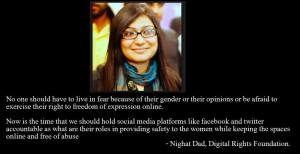
Nighat

Kavita

chomsky

The Medical (Un)profession : Caveat Empty

This is a guest post by CAVEAT EMPTY

As a twenty something year old it was not the first time I had gone to see a gynaecologist, and been asked what was now the question of the hour.

“Are you married?”

This question had bothered me even during the visits to the gynaecologists (and other doctors), which were prior to my abortion, and where I had not been horror-struck. This question was the doctor’s way of determining if I was sexually active. Apart from the warped moral high horse it was riding, it was completely unprofessional, and maybe even dangerous. There was the risk that someone may not make the connection that these doctors were making between marriage and being sexually active. I myself had only made the connection belatedly, and only after having responded to it instantly. And, even when I did understand the question I did not exactly want to scream “Hey you judgemental pig, I am having pre-marital sex!” Continue reading The Medical (Un)profession : Caveat Empty

Coming up! Must-have new products for women

Thanks to Kalyani Menon-Sen!


Porcupine Jacket – free hugs to molesters

https://youtube.com/watch?v=JzJdZKwT184%3Ffeature%3Dplayer_embedded


Bagzilla – portable monster assist

https://youtube.com/watch?v=BtVdbEjrvNk%3Ffeature%3Dplayer_embedded


Intergalactic Pest Control

https://youtube.com/watch?v=QBuVQflHGug%3Ffeature%3Dplayer_embedded

Tough Girls in a Rough Game: Normalizing public discussion of ‘She things’ in Bangladesh — Nazia Hussein

Guest post by NAZIA HUSSEIN

On 28- 29 May, 2015 the play titled It’s a She Thing was first staged in Dhaka, Bangladesh. Inspired by Eve Ensler’s Vagina Monologues, eleven young Bangladeshi women decided to develop a local adaptation with their own accounts of sexual, aesthetic, psychological and emotional experiences of being a woman. Many of the stories were written by the performers themselves while some were taken from Naripokkho, a nationwide women’s advocacy organization. Continue reading Tough Girls in a Rough Game: Normalizing public discussion of ‘She things’ in Bangladesh — Nazia Hussein

जसोदाबेन मोदी से क्यों ‘डरती है’ भाजपा ?

Image result for jashodaben modi

Image : Courtesy : Indiatoday

कल्पना करें कि किसी मुल्क के प्रधानमंत्राी की पत्नी, एक सूबे में जहां सत्ताधारी पार्टी की ही सरकार है, एक संगठन के कार्यक्रम में उसके बुलावे पर पहुंचती है और आयोजन अधबीच में ही समाप्त कर दिया जाता है।

ऐसी किसी ख़बर पर सहसा यकीन करना मुश्किल हो सकता है, मगर पिछले दिनों ऐसा ही वाकया 120 करोड़ आबादी के इस मुल्क में ही नमूदार हुआ जब ‘नमो इंडिया सेना’ – जो जनाब मोदी के मुरीदों का संगठन है – द्वारा सूरत में आयोजित एक सार्वजनिक कार्यक्रम में सुश्री जसोदाबेन नरेन्द्रभाई मोदी पहंुची और सात दिन के लिए चलनेवाला उपरोक्त कार्यक्रम तीसरे ही दिन समाप्त कर दिया गया। /देखें, ‘शी हू बीजेपी कनाट स्टमक’, द टेलीग्राफ, 12 जून 2015/

ख़बर के मुताबिक जैसे ही ‘बेटी बचाओ, बेटी पढ़ाओ’ शीर्षक उपरोक्त कार्यक्रम में जसोदाबेन पहुंची, जहां उन्हें बात रखने के लिए कहा गया था, मगर आयोजकों ने ही उन्हें मना कर दिया और कुछ समय बाद आयोजकों को स्थानीय भाजपा नेताओं ने बुलाया और उन्हें कार्यक्रम तत्काल खतम करने के लिए कहा। समाचार के मुताबिक आयोजकों की बात भाजपा अध्यक्ष अमित शाह से भी करवा दी गयी। आखिर अचानक ऐसा क्यों हुआ कि सूरत के भाजपा नेताओं ने एक ऐसे संगठन के कार्यक्रम में सीधे हस्तक्षेप किया जो किसी भी रूप में भाजपा का आनुषंगिेक संगठन नहीं था और किस वजह से मुख्य आयोजक को सहारनपुर स्थित अपने घर जाने की ‘सलाह’ भी दी गयी। Continue reading जसोदाबेन मोदी से क्यों ‘डरती है’ भाजपा ?

“New India’s’’ Inflexible Workforce – Caring is but Women’s Work: Shalini Grover, Ellina Samantroy, Nupur Dhingra Paiva

Guest post by SHALINI GROVER, ELLINA SAMANTROY and NUPUR DHINGRA PAIVA

A recent BBC article, ‘Why Motherhood Makes Indian Women Quit Their Jobs’ (http://www.bbc.com/news/world-asia-india-32377275), examines the factors that prompt large numbers of women to drop out of India’s workforce. Despite the country’s growing international reputation as the “new India,” with its allure of economic prosperity, globalized cities, and modern lifestyles, it is not clear how much of the female labour force is contributing to paid employment. Liberalization has indeed opened up opportunities for an entire cohort of young urban women who work in IT, outsourcing, hospitality, media, beauty parlours, cafes, and malls. Ironically, in a period of high growth and open markets, labour surveys such as those conducted by the National Sample Survey Office (NSSO) reveal an overall declining rate of female labour force participation, an issue that has become a serious concern for policy makers. A World Bank study (2013) found that only 27 per cent of Indian women over the age of 15 work outside the home. While such surveys have their limitations in that they often do not take into account informal employment, the World Bank study is significant because it indicates that India has the lowest rate of female participation in the workforce among the BRICS (Brazil, Russia, India, China, and South Africa) countries.

What makes the labour force in India so male dominated? And what makes the workplace so hostile to working mothers?

Continue reading “New India’s’’ Inflexible Workforce – Caring is but Women’s Work: Shalini Grover, Ellina Samantroy, Nupur Dhingra Paiva

Branding Mother India: Sarojini N, Anindita Majumdar, Veena Johari and Priya Ranjan

Guest post by SAROJINI N, ANINDITA MAJUMDAR, VEENA JOHARI AND PRIYA RANJAN

Indian motherhood is finally, officially being advertised. Recent news reports regarding the launch of the Japanese advertising conglomerate Dentsu Mama Labs in India, have left many of us working on women’s reproductive lives in a serious quandary. How does one explain the unthinking coverage that the firm has received?

This is their pitch (or ‘branding’, as the Corporation puts it):

Dentsu Mama Lab aims to be a thought leader on mothers, motherhood and mothering.

The beautifully shot launch advertisement of pregnant women in a scenic desert village in India, using Japanese products and living in evident prosperity belies the true nature of what Mama Labs is representing, or rather misrepresenting.

Continue reading Branding Mother India: Sarojini N, Anindita Majumdar, Veena Johari and Priya Ranjan

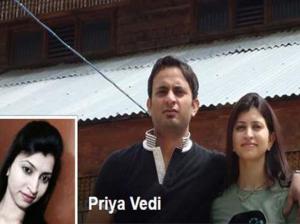
The Priya Vedi Suicide: Diwas Raja Kc and Alston D’Silva

This is a guest post by Diwas Raja Kc and Alston D’Silva

Image Courtesy: www.pardaphash.com
Image Courtesy: http://www.pardaphash.com

On the 18th of April this year, Dr. Priya Vedi of AIIMS tragically ended her life and left a Facebook note incriminating her husband—fellow doctor at AIIMS Dr. Kamal Vedi—for “torturing” her mentally, clearly implying that his homosexuality was the reason for her suicide. Her distress is apparent in the note as she recounts the lack of intimacy in her marriage and her discovery of the husband’s sexual activities as a gay man before and during the marriage. At the end she includes a plea to all gay men to not “marry to a girl to save yourself,” to not play with the emotions of a girl and her family. It should not be surprising that some condolent commentators have placed the blame specifically on Kamal Vedi’s alleged sexual orientation, even calling for legal action. Even within the LGBT community, the tendency has been to first put culpability on the man’s opportunistic participation in the institution of marriage. There is a sense that this incident ought to serve as a teaching moment for gay men, who are argued to require an ethical code, who need to fixate on the deliverance of their conscience, and whose rights—as Sandip Roy pointed out—”mean nothing without responsibility.” But despite Priya Vedi’s strongly felt sentiments, must we proceed as if the case of her fatal end is a logical and natural consequence of gay men’s irresponsible intrusions into the sanctum of marriage? After all, such intrusions are routine, and the ensuing heartbreaks are sometimes even known to be productive of powerful empathy between straight women and gay men.

Continue reading The Priya Vedi Suicide: Diwas Raja Kc and Alston D’Silva

My Name is Suzette Jordan

Our panel was a queer one in all the wonderful senses of that word. At trainings with lower court judges on sexual violence laws in the Saket District Courts in Delhi, the five of us would find ourselves next to each other every few months. On a dais surrounded by that distinctly sarkari flower arrangement, first sat Suzette, a survivor of a brutal rape in a moving car in Park Street in Kolkata. Then in line: a survivor of an acid attack; a representative of a sex workers union; a well known hijra activist and I, speaking as a gay man. We were usually on the third day, right after lunch, when we would face nearly a hundred slightly sleepy judges from the region. They had been updated on new sexual violence laws, gone through a case exercise on how to apply them, been given a CD, a folder, the requisite handouts. The boxes were ticked. Technically, they were up to date. Ours was a different job: to animate, if such a thing is possible, a sense of empathy in the judges, to shift even slightly the way they thought of the rainbow of dubious morality that we represented.

Continue reading My Name is Suzette Jordan

Fairy Tales and Feminist Theory in the Face of Fear: Indus Chadha

This is a guest post by INDUS CHADHA

For about a year now, I have been teaching 33 wide-eyed and wise middle schoolers. As we have read fiction, studied history, exchanged stories, and tried to understand the world together, I have found my students to be wonderfully curious and innately compassionate. As the school year drew to a close, I wondered how to conclude our time together. Because our parting at the end of a fulfilling year together was bittersweet, I was looking for something both lighthearted and meaningful. I settled on an old favorite of my own, The Paper Bag Princess, an unconventional fairy tale that turns the ‘prince saves princess from the dragon’ stereotype upside down. As always, I was amazed by my students’ heartfelt and fresh responses to the story. Continue reading Fairy Tales and Feminist Theory in the Face of Fear: Indus Chadha

An Open Letter to the Protestors at the National Law University: Space Theatre Ensemble

Guest post by SPACE THEATRE ENSEMBLE

Thank you for renewing this much needed dialogue on freedom of expression.

We happen to be, by sheer coincidence, a four-piece all-women theatre group that performs poetry, and have been following the correspondence over the sexist performance of stand-up comedian Avish Matthew with some interest – all the more so since we are now touring in Delhi and its environs.

The protestors are absolutely right when they point out that domestic violence is not a laughing matter and we completely endorse their views on why Avish’s jokes just weren’t funny.

We do not believe in laughter as just therapy to laugh off the stress of living the good life.

However, as a professional theatre ensemble we also strongly disagree with the predictable, and frankly irrelevant form of agitprop used by the protestors against Avish.  Protest need not be chaotic, so far more vehemently we condemn the supposedly liberal students and others who heckled, booed, poked and shoved but stopped just short of physically molesting the protestors. Continue reading An Open Letter to the Protestors at the National Law University: Space Theatre Ensemble

An Open Letter to Kerala Khap Managers and Madam Principal, CET, in Particular, and to Malayalees in General

Dear Madam(s) and Sirs

Greetings from a long-suffering woman, a shocked and appalled parent, a worried social scientist, an angered citizen, a furious teacher, a firm believer in the Indian Constitution determined to defend it, a irredeemable feminist — I greet you in all these capacities.

Respected Madam(s) and Sirs, my grievances are all about you, in fact, about the incalculable damage you are collectively doing to  young people in Kerala, to the future of democracy here. They are about your utter disregard for the spirit and the letter of the Indian Constitution and your and powerful hatred of young people in general and young women in particular, clearly manifest in your despicable efforts to deny them their rights as Indian citizens. My grievances are also about your utter lack of humane concern for the students under your care, your rank cruelty and disregard of their humanity and dignity.

Continue reading An Open Letter to Kerala Khap Managers and Madam Principal, CET, in Particular, and to Malayalees in General