Category Archives: Frontiers

Still Bangali: Reflections on a New Year: Jyoti Rahman

Guest post by JYOTI RAHMAN

Exactly ten years ago yesterday, upon arriving at a friend’s place, instead of ‘Shubho Nobo Borsho’ (Bangla new year greeting), I was greeted with: ‘Have you heard the news? Call home now. Hope family’s okay!’ Militant jihadis struck the new year’s dawn cultural events in Ramna, the major park at the heart of Dhaka, killing over half a dozen people. Since these events are attended by most of my family in Dhaka, and by most of my friends, we were worried. Frantic phone calls and MSN chats (or did we still do ICQ then, I forget) ensued. Fortunately, the families were safe. But this wouldn’t be the last time such phone calls were made.

Over the following years, militants bombed cinema halls, killed progressive politicians, carried out suicide attacks against judges, and tried to enforce shariah rule in rural northern parts of the country. Things got so bad that when a friend called to tell me about Muhammad Yunus winning the Nobel Peace Prize, upon hearing, ‘Have you heard about Yunus?’, my first reaction was ‘Oh no, another assassination’. Continue reading Still Bangali: Reflections on a New Year: Jyoti Rahman
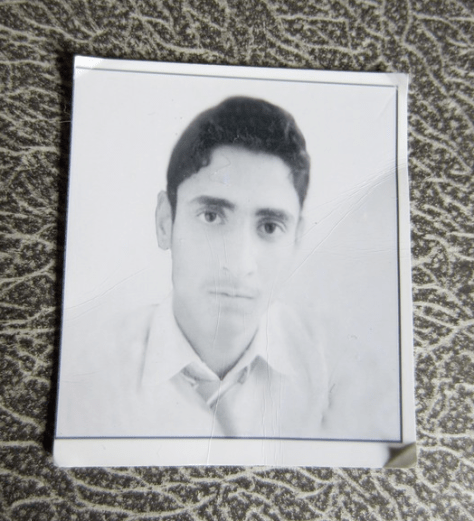
Free Murtaza Manzoor

This release comes from AMNESTY INTERNATIONAL
Urgent Action: Child Detained Without Charge or Trial

UA: 115/11 Index: ASA 20/015/2011 India Date: 14 April 2011

Murtaza Manzoor has been held in administrative detention since 8 February by police in Jammu and Kashmir, India. His official birth certificate states that he is only 17 years old.

Murtaza Manzoor was arrested on 21 January by police in Srinagar, the capital of Jammu and Kashmir. He was arrested in relation to a case from June 2010 on allegations of attempted murder, assault and rioting. According to the police, he is an “incorrigible antisocial element” who was leading a protest march that resulted in protestors pelting police with stones. Continue reading Free Murtaza Manzoor

A Lesson in Kashmiri: Hilal Mir

Guest post by HILAL MIR

On a clear spring day in the year 2000, the first year of my masters in journalism at Kashmir university, the class was taken to Sogam for a field trip. Zafar Hyderi, our esteemed teacher much respected for his integrity than scholarship was keen on students having practical experience. We were supposed to visit areas where only radio works because the mountains girding these areas don’t allow television signals from Srinagar Doordarshan to enter the homes. Imagine the relief of not having to watch 24X7 the official propaganda. Since Zafar Sir taught radio, these places provided him a cathartic vindication of the superiority of his medium (though secretly he might have aspired to make a name in TV). Such places are aptly called Shadow Zones. These could well be called shadow zones for other reasons too, as much of the barbarity unleashed by the state in such areas remains buried under shadows, itching to be put into words or images. Continue reading A Lesson in Kashmiri: Hilal Mir

Shiraz Hassan on cricket diplomacy

کرکٹ ڈپلومیسی، تنازعات کے پرامن حل کا عزم

پاکستان اور بھارت کی تریسٹھ سالہ تاریخ تنازعات کی ایک لمبی داستان ہے۔ دونوں ممالک کے تعلقات اس دوران کئی بات انتہائی کشیدگی کا شکار بھی رہے۔ قیام پاکستان اور ہندوستان کی انگریز حکومت سے آزادی کے بعد سے ہی دونوں ممالک کے مابین اعتماد کی فضا قائم نہ ہو سکی۔ اس ضمن میں دونوں ممالک کے مابین پہلا معرکہ 1948ءمیں کشمیر کے محاذ پر ہوا۔ جس کے بعد حالات مزید کشیدگی کی جانب مائل ہوتے گئے۔ 1965ءمیں ایک بار پھر دونوں ممالک کے افواج آمنے سامنے آئیں۔ 65ءکی جنگ کو ابھی چند ہی برس بیتے تھے کہ پاکستان کو 1971ءکے سانحے کا سامنا کرنا پڑا۔ اس جنگ میں پاکستان کو شکست کا خمیازہ دولخت ہونے کی صورت میں بھگتنا پڑا۔ پاک بھارت کے درمیان 1999ء میں کارگل کے محاذ پر بھی فوجیں آمنے سامنے آئیں اور حالات روایتی جنگ کے آغاز کے دہانے تک آپہنچے۔ البتہ موجودہ دور میں ممالک کے سرحدی علاقے اس وقت خاموش ہیں اور امن کی فضاء تیزی سے فروغ پا رہی ہے گویا دونوں ممالک کے سیاسی و دفاعی ماہرین نے تناو ¿ بھرے ماضی سے یہ سبق سیکھ لیا ہے کہ ”جنگ سے نہیں بلکہ امن سے ترقی ممکن ہے۔ “
پاکستان اور بھارت کے سفارتی تعلقات کے استحکام اور امن کے فروغ کے لئے کرکٹ کا کردار بھی نہایت اہم رہا ہے۔ ورلڈ کپ 2011ءمیں دونوں ٹیمیں موہالی کے میدان میں سیمی فائنل میچ میں آمنے سامنے آئیں ۔ پاکستان اور بھارت کی کرکٹ ٹیموں نے 2008ءمیں ہوئے ممبئی حملوں کے بعد ایک دوسرے کے مدمقابل نہیں کھیلا تھا۔ ان دہشت گرد حملوں میں کم و بیش ایک سو پچاس سے زائد افراد ہلاک ہوئے تھے اور بھارت کی جانب سے ان حملوں کے لئے پاکستان کو ذمہ دار ٹھہرایا گیا تھا۔ ممبئی حملوں کے بعد پاکستان اور بھارت کے درمیان تعلقات ایک بار پھر سخت کشیدہ ہوگئے تھے جس میں وقت گزرنے کے ساتھ کمی آئی ہے تاہم بھارتی وزیراعظم من موہن سنگھ کی جانب سے وزیراعظم گیلانی کو موہالی میں میچ دیکھنے کی خصوصی طور پر دعوت دی گئی جسے وزیراعظم نے قبول کیا اور اس عزم کے ساتھ موہالی پہنچے کہ ان کا یہ اقدام نہ صرف پاکستان بھارت کے درمیان پیدا شدہ کشیدگی کو کم کرنے بلکہ خطہ میں مستقل امن و استحکام کے لئے بھی معاون ثابت ہوگا۔ وزیر اعظم گیلانی اور بھارتی وزیراعظم من موہن سنگھ نے ایک ساتھ میچ دیکھا اور مختلف امور پر تبادلہ خیال بھی کیا۔ میچ کے بعد وزیراعظم گیلانی نے خصوصی عشائیے میں بھی شرکت کی جسے پاکستان بھارت کے درمیان بہتر تعلقات کے استحکام اور تنازعات کے حل کی جانب Continue reading Shiraz Hassan on cricket diplomacy

I dont love India but I love cricket: Sudipto Mondal

Guest post by SUDIPTO MONDAL

They don’t love the deftness of a late cut
or the terror of a snorter;
the authority of a cover drive
or the seduction of a flighted one.

They don’t love the smell of spit on leather.
They don’t love one eased through long leg
unless its Deepika Padukone we’re talking about.

They don’t love cricket but they say they love India.

They don’t love Inzamam’s hulking sixes.
They don’t love Hayden’s muscular heaves
or Ponting’s nervous shuffle.

They don’t love Lara because he was
as good as Sachin.
And Kambli was after all just an urchin

They don’t love cricket but they say they love India.

They don’t love the man who cleans their shit.
They don’t love the colleague that eats meat.
They don’t love the ‘backdoor entrant’ who shares their seat.

They don’t love the hungry protestors
who block their path at the height of summer’s heat.
They don’t love the vendor on the street.

They don’t love cricket but they say they love India.

They don’t love the lesbians, gays, bisexuals and transgenders either.
They don’t love the man who puts food on their plate
because he asks for food in turn.

They don’t love them jungle boys
because they wouldn’t give them their hill.

They don’t love the dark ones.
They don’t love the short ones.

They don’t love a nose that lacks precision.
They don’t love circumcision.

They don’t love cricket but they say they love India.

Indians who want Pakistan to win and Pakistanis who want India to win!

To make our point against jingoism.

To say that no one needs a cricket match to prove their patriotism.

To hope the best for those we’re told we should hope the worst for.

Please join this Facebook Event page and ask your friends across the border to do so, too.

Why Bangladesh?: Jyoti Rahman

Guest post by JYOTI RAHMAN

Singing Amar Shonar Bangla with the whole stadium — the highest point during a cricket match attended by fellow blogger Rumi Ahmed.

For those of us born in Bangladesh, which turns 40 today, along with the red-and-green flag, there is an instinctive, natural identification with Amar Shonar Bangla. Less recognised is the fascinating history of the song, which also tells us the twists and turns in the history of the 20th century Bengal. Continue reading Why Bangladesh?: Jyoti Rahman

India’s ‘Lawless Law’ that Keeps Dissidents ‘Out of Circulation’

Amnesty International has released a report calling on India to repeal the Jammu & Kashmir Public Safety Act. The report, called A ‘Lawless Law’: Detentions Under the Jammu and Kashmir Public Safety Act, can be downloaded here. Given below is the text of the Introduction and Summary of the report.

‘We have to keep some people out of circulation…’ – Samuel Verghese, (then) Financial Commissioner – Home, Jammu and Kashmir in a meeting with Amnesty International, Srinagar, 20 May 2010 Continue reading India’s ‘Lawless Law’ that Keeps Dissidents ‘Out of Circulation’

A Million March in Kashmir?: Suvaid Yaseen

Guest post by SUVAID YASEEN

A ‘March of Million’ in Egypt’s Tahrir Square picked up the momentum of the people’s movement in Egypt, and finally led to the ouster of the dictator who had ruled Egypt with an iron fist for thirty years. Hosni Mubarak, the US backed Egyptian President, fled the country on 11th of February.

In Kashmir, 11th of February is an important day. It was on this day in 1984, that Maqbool Bhat, the founding member of the Jammu Kashmir Liberation Front (JKLF), a militant group that started the armed struggle for Independence of Kashmir, was hanged at Delhi’s Tihar Jail. He is remembered every year on his death anniversary, which has been a day of strike and protest since then. His remains still lie in the premises of Tihar jail in Delhi, and Kashmiris every year ask for their return. An empty grave in Srinagar’s Martyrs’ graveyard waits with Maqbool’s name on the plaque. For Kashmiris, the date of the flight of the modern Pharoah of Egypt, with Maqbool’s date of martyrdom brought a melancholic delight to this date. Continue reading A Million March in Kashmir?: Suvaid Yaseen

Wikileaks: The India Cables – At Long Last

Mr. [Murli] Deora’s “long-standing connection” to the Reliance industrial group, which includes significant energy equities, was described by the cable as his “only vulnerability.” Besides Mr. Deora, the new entrants with strong pro-U.S. credentials, according to the cable, included Mr. Saifuddin Soz, Mr. Anand Sharma, Mr. Ashwani Kumar, and Mr. Kapil Sibal. [Link]

Gems like the one above should keep readers of The Hindu entertained for days. Congratulations to them on getting the whole set of 5,100 India-related cables from WikiLeaks. They’ve created a sub-site for this. Here’s N. Ram on how they got the cables. Makes you wonder if others tried.

Journalism of the People: You Feel Like You Gettin’ Real Noose!

And Director General of the al-Jazeera network explains why al-Jazeera could see the Arab revolution coming when the WEstern media could not: Continue reading Journalism of the People: You Feel Like You Gettin’ Real Noose!

10% Anthology: Tarun Bhartiya

A review by TARUN BHARTIYA

The Oxford Anthology of Writings From North-East India : Poetry and Essays
Edited by Tilottoma Misra
Oxford University Press
New Delhi, 2011, 332 Pages / Rs. 595 ISBN 0-19-806749-6

If you are on the marginalisation trip, and India’s North East is your illicit high, you should be worried. In the last ten years, trying to make up for the dark fifty years of Indian ignorance, anthologies of literature from the region have begun to appear almost annually.

But before I get accused of an inside job, a disclosure that I am loathe to make:

I know many of the poets (some of whose biographies smell of Shillong) who feature in The Oxford Anthology of Writings From North-East India : Poetry and Essays. We share little magazines, anthologies, dark bye-lanes of love, anger, feuds, booze, and journeys to find our next fix.  So, I promise to dull my taste and leash my judgment. And only occasionally lapse into pointless gossip. Continue reading 10% Anthology: Tarun Bhartiya

‘We are aware of India’s interests’: Jhalanath Khanal

Interview with Nepal Prime Minister Jhalanath Khanal.

After seven months of living with a caretaker government, Nepal’s Parliament on February 3 elected Jhalanath Khanal, chairman of the Communist Party of Nepal (Unified Marxist Leninist), as the Prime Minister, with the support of the Unified Communist Party of Nepal (Maoist). He spoke to Prashant Jha at the prime ministerial residence in Kathmandu on February 10. Excerpts, as first published in The Hindu:

What’ll be your priorities?

My first priority is to complete the ongoing peace process. Second, my aim is to help complete the Constitution-writing process. Third, I’ll strengthen the institutions of governance, improve law and order, and guarantee security to the common citizens. Fourth, my focus will be on taking the country towards an economic revolution through development, reconstruction and socio-economic transformation.

Your predecessors had similar priorities, and had pledged to complete the peace and constitutional process. What’s different about your government? Continue reading ‘We are aware of India’s interests’: Jhalanath Khanal

‘How Leaving the Internet Fueled Our Revolution’

For those who worry themselves sick about laptop radicalism, this is essential reading:
The web is in many ways a more modern, much larger version of the kinds of public spaces and forums that have made citizenship possible throughout history. Losing it for a week didn’t stop Egyptians from protesting or airing their frustrations; we still know how to use physical public spaces, after all. But it did remind us that a forum for the open exchange of words and ideas is central to any sustainable democracy; alternatively, we end up in a perilous cycle of control and chaos. Instead of expressing pent-up opinions with fists and bullets, as is happening now in the streets of Cairo, people who can express them freely in conversation, even in a virtual one, have a chance to hear one another and deliberate together about the future. Never mind the vacant symbolism of “Twitter revolutions” and Youtube activism: losing the Internet at the hand of our own government simply offers us a powerful reminder of why we actually want the Internet to begin with, and why we’re doing any of this. [Read the full article by Haisam Abu-Samra]

Excellent as the al-Jazeera coverage is, if you’re tired of it, see videos from Egypt on YouTube, created and uploaded by the people whose revolution it is. It will give you the closest possible feel of what it’s like to be there. Not even al-Jazeera can manage that!

And if you’ve been watching the events in the Arab world and consoling yourself that it’s not that bad in India, consider this: India recently gave Hosni Mubarak an award in Nehru’s name for ‘international understanding’ and Vice President Hamid Ansari addressed him thus:

Your support for regional and international efforts to promote and maintain peace in the West Asian region is eloquent testimony to your commitment to the promotion of international peace and goodwill. I feel deeply privileged to convey my warmest greetings to you. [Press Information Bureau]

The Flea Market of the Indian Media: Dibyesh Anand on the Karmapa story

Guest post by DIBYESH ANAND

India prides itself for having a free and vibrant media. A recent story around Tibetan exile leader Karmapa lama has exposed the Indian media scene as closely resembling a chor bazaar. One where uninformed assertions, distorted facts, libelous statements, ad hominem attacks, and lazy analysis are recycled again and again to create a sensation.
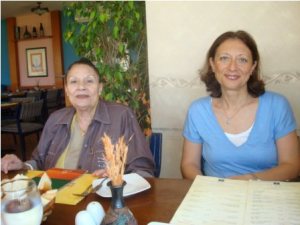
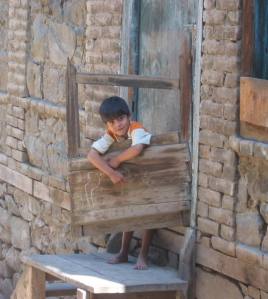
The remarkable convergence in how the different channels and newspapers covered the story of police raids and findings of unaccounted foreign currencies at Karmapa’s temporary establishment near Dharamsala is conspicuous. In the media, the unaccounted money is however presented in salacious and sensationalist manner. Money is not the focus, the Karmapa’s alleged China connection is. A possible financial irregularity of $1.6 million is a non-story in India where scams, schemes and scandals of billions erupt with the regularity of tides. The story becomes one of Karmapa as a probable Chinese spy. Continue reading The Flea Market of the Indian Media: Dibyesh Anand on the Karmapa story

Egypt today: A first hand account.

Transcript of a land line phone conversation between my friend NAHED MANCYP (based in Toronto) and her mother a (a blogger herself) and grandmother (both currently in Alexandria). Her mother will write a piece soon which can get to Nahed only after the ban on the internet is lifted in Egypt. Thank you Nahed.

My mom:

We arrived in Alexandria from Cairo right after Friday prayers. The streets where completely empty. I actually made a bet with dad. Dad said, I don’t think anything is going to happen. I said, no something will. Half an hour later I began feeling really embarrassed because it looked like nothing would happen. The streets where deserted, there were no officers or cars. Continue reading Egypt today: A first hand account.

‘As followers pushed to get close, the pole broke in several places and the flag tumbled down onto Mr. Joshi’

History repeats itself, and we learn so little from it. Or rather, we learn too much from it. I am excerpting below about half the text of a report dated 27 January 1992, written by EDWARD A. GARGAN in The New York Times, describing in detail Murli Manohar Joshi’s hoisting of the Indian flag in Srinagar’s Lal Chowk. Wish I had a picture!

He [Murli Manohar Joshi] had begun his trek, which he named Pilgrimage for Unity, 44 days before at India’s southernmost point. But the inability of the security forces to protect even their highest officials made it clear that there was no way, despite the presence of several hundred thousand troops in the Vale of Kashmir, to protect a convoy of cars and buses filled with zealous Hindus. So Mr. Joshi and a small contingent of his closest supporters were flown here on Saturday night. Continue reading ‘As followers pushed to get close, the pole broke in several places and the flag tumbled down onto Mr. Joshi’

“These are not stones these are my feelings”

An image taken in downtowon Srinagar.

Given below is a note written by a Kashmiri student from downtown Srinagar who calls himself ‘Kale Kharab’, meaning ‘hot headed’. Taken from his blog, the note reads like a personal manifesto, a statement of purpose, a testimony more telling than what the most patient interviewer can elicit. This note gives you more insight into what is happening in Kashmir than a lot of what you may have read or seen on TV news about the killing of 115 protestors across Kashmir in 2010 by Indian forces. This testimony, written early on during the uprising, on 30 August 2010, shows how irredeemably India has lost the plot in Kashmir all over again, with a new generation of Kashmiris.

How and why I became a stonepelter

by KALE KHARAB

I am from downtown srinagar born in 1991. I was admitted to one of the best school of valley. As a child I had dream to became engineer. Whenever somebody used to ask me about my aim I would proudly say engineer. As I started to grow up I started to became familar with many words which everyone used to talk about that among them few were “azadi” (freedom), “hartal” (shutdown) but I was unable to understand the meaning of these words. I loved the word hartal as it was holiday, so I always wished for hartal. As I grew up I came to know about mujahids. I used to listen stories of mujahids. I would oftenly ask my elders to tell me about mujahids. They told me stories of many mujahids like Issac, Ishfaq, Jan Malik which I liked to share with my friends.  Continue reading “These are not stones these are my feelings”

‘Kashmir ho ya Guwahati, Apna desh, apni maati’: Mahtab Alam

This is a guest post by MAHTAB ALAM

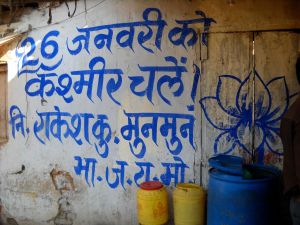
The graffiti reads: '26 Janwari ko Kashmir chalein. Nivedak: Rakesh Kumar Munmun, BJYM'. Trans: 'Let's go to Kashmir on 26 January. Appeal by Raksh Kumar Munmun, BJYM.''


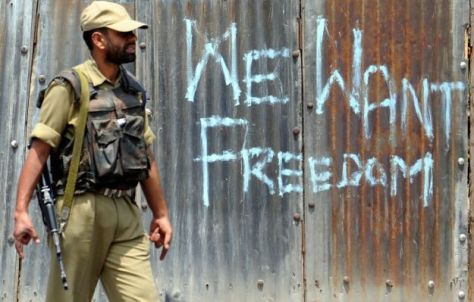
A policeman walks by a street in Kashmir, summer of 2010. Graffiti demanding azadi was all over the Valley this summer.

In Hazaribagh, one of the oldest cities of the newly formed state of Jharkhand, one is more likely to come across the word Kashmir than the name of the city itself these days. Kashmir, a place that most of the residents of Hazaribagh would have only heard of. At almost every nook and corner, teashop, wall of the city one would find an invitation to the ‘raashtriya ekta yatra’ from Kolkata to Kashmir to hoist the revered Indian flag at Lal Chowk. And this public invitation comes from none other than the youth wing of BJP, namely the Bhartiya Janata Yuva Morcha. Continue reading ‘Kashmir ho ya Guwahati, Apna desh, apni maati’: Mahtab Alam

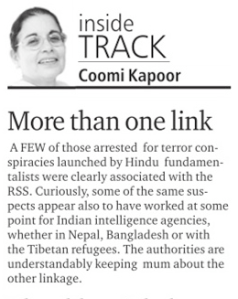
Is the cat out of the bag?

Veteran journalist Coomi Kapoor wrote this small snippet in the Indian Express yesterday. Hope it is only the beginning of more information on what this country’s intelligence agencies have been up to in the name of its citizens.

‘Islamic secularism’ in Bangladesh: Jyoti Rahman

'Bengal's mothers and daughters are all freedom fighters'

Guest post by JYOTI RAHMAN

Bangladesh will mark its 40th year of independence in 2011.  The celebrations have already begun, and will continue until next December.  The TV channels are already playing patriotic tunes.  One such tune is Shona shona shona.  The song says the land, mati, of Bangladesh is better than gold, and under this land sleeps many heroes: Rafiq, Shafiq, Barkat, Titu Mir and Isa Khan.

Who are these heroes?  Rafiq, Shafiq and Barkat were killed by the Pakistani authorities during the language uprising of 1952 — a milestone moment in Bangladesh’s nationalism. Titu Mir defied the East India Company and organised a peasant revolt in the 19th century. Isa Khan was a Bengali chieftain who resisted the Mughals in the 16th century.

Notice how all of these heroes are Bengali Muslim men?

Continue reading ‘Islamic secularism’ in Bangladesh: Jyoti Rahman