Category Archives: Frontiers

Open Letter to AAP and the Public on Continuing Racism in Khirkee Village: Aastha Chauhan, Malini Kochupillai & Friends
Guest Post by AASTHA CHAUHAN, MALINI KOCHUPILLAI, and several AFRICAN RESIDENTS OF DELHI

Dear Mr. Arvind Kejriwal, Mr.Yogendra Yadav and Aatishi Marlena,

Being witness to the events occuring in Khirkee this past month, we, a group of artists, architects, activists and local residents have felt  the need to frame an open letter addressed to your party, the AAP & the public. The media-frenzy associated with these events has been accompanied by the usual kind of misinformation and hyperbole. However, in the ensuing noise, the real stories of the underlying racism that afflicts our society and the negative repercussions of the raid on the African residents of the neighborhood, have been lost.  We hope this letter will clarify some facts and put across a few of our concerns.

Our intention is not to encourage confrontation, it is to propose solutions. Delhi is a tough place for all immigrants alike, how will we make this a more inclusive compassionate city? These are the larger questions. These were the issues we were hoping to tackle. Continue reading Open Letter to AAP and the Public on Continuing Racism in Khirkee Village: Aastha Chauhan, Malini Kochupillai & Friends
Ruins of the Living: the Rohingya Refugees: Akshita Nagpal

This is a guest post by Akshita Nagpal

A tree with deep roots, if uprooted and planted in alien soil, might live but often sans its vigour. The same can be said for refugees. A couple of weeks ago, along with a bunch of my classmates, I visited the refugee camp of Burmese Rohingya Muslims at Kalindi Kunj in the vicinity of our university campus. The visit was part of an initiative to help them with old winter clothing after hearing about the unliveable conditions of the camp.

IMG_3912

The Rohingyas, an ethnic group hailing from Myanmar (Burma), chiefly from its Rakhine (Arakan) State, happen to be one of the most oppressed people in the Asian sub-continent.

Continue reading Ruins of the Living: the Rohingya Refugees: Akshita Nagpal

Racist villagers versus hapless Africans and other simplistic binaries

The residents of Khirki are angry. They say they have been misrepresented, their grievances are not being given a patient hearing because the rest of us are doing politics over them. Nobody even wants to hear that they could have a case, that the story could be about more than just skin colour. Kafila and Times Now alike will tell you they are a bad, racist, evil lynch mob who deserve to be disenfranchised.

Even if that is what they are, will the summary dismissal of what they are saying be of help in resolving the situation? Forget the debates about the Aam Aadmi Party. As their elected representative, Somnath Bharti with all his vigilante zeal was doing what representative democracy makes representatives do. The people were making their voice heard through their elected representative. But we don’t want to hear their voice. If we did, we’d realise what the area needs is dialogue and understanding. All the problems with Africans and others in a 14th century ‘urban village’ next to 21st century shopping malls need a conversation that won’t come if we don’t want to appreciate the complexity of a social situation. By refusing to do so, we are being as unhelpful as the vigilantism of Somnath Bharti.

But at least we are thinking about Khirki. As for Sagarpur, where on earth is that?

These last few days, you have been fed one-sided angst by a media eager to help Narendra Modi overcome the pro-AAP mood, by pre-ideological leftists eager to bring down the AAP house so that Narendra Modi can come to power and they can do proper full-time chest-beating over fascism, by big industry already unhappy to see the AAP government move against Walmart. Is there a bigger picture?

AAP, Racism and Delhi – Perspective from a ‘North Eastern’ Citizen of Delhi: Anuraag Baruah

Guest Post by ANURAAG BARUAH

The recent ‘AAP’ state of affairs in the National Capital brought about by a dharna led by the Chief Minister Arvind Kejriwal has indeed shaken up the nation. Instead of judging and delivering a verdict on this so called ‘anarchism’, I stress upon something else here. The inherent racism prevalent in the mindset of our people actually found a shameless outlet through the antics of the new law minister of Delhi. The minister’s actions and words only reflect the mindset of the people of the concerned neighbourhood. His own words confirm that he was acting upon their complaints. This particular neighbourhood again reflects the mindset of any middle class neighbourhood in Delhi.

Continue reading AAP, Racism and Delhi – Perspective from a ‘North Eastern’ Citizen of Delhi: Anuraag Baruah

The Aam Aadmi Party and Animal Farm

The plot of George Orwell’s ‘Animal Farm’ can be summarized in a single sentence – “This novel demonstrates the consequences of the addition of four important words -‘but’,  ‘some’, ‘more’, and ‘others’ to the phrase – <all animals are equal>”.

In other words, it describes the transition from the axiomatic statement <all animals are equal> to the qualified formula <all animals are equal, but some animals are more equal than others>.

Aam Aadmi Party founder and Delhi’s new chief minister Arvind Kejriwal’s ruling out the possibility of referendums in Kashmir about the presence of the armed forces in Jammu & Kashmir (in response to his party colleague Prashant Bhushan’s endorsement of the idea of such a referendum during a recent television appearance) could signify a shift within the Aam Aadmi Party’s evolving political doctrine that parallels the transition that the pigs in Animal Farm made while turning their revolution into a counter-revolution. Continue reading The Aam Aadmi Party and Animal Farm

Beating AAP with the Kashmir stick

When Prashant Bhushan first made his remarks supporting a referendum in Kashmir to decide whether Kashmir will stay in India, a hooligan had gone to his office and slapped him. The Aam Aadmi Party made it clear that these were Bhushan’s personal views and were not endorsed by the AAP, but the stick was too good to ignore. At a loss of words to see the rise of the AAP, somewhat dimming the euphoria over the rising fortunes of Narendra Modi, the BJP has gone on and on over Bhushan’s views on Kashmir. Even when the AAP was proving its majority on the floor of the house, the leader of the opposition, Harsh Vardhan, made Prashant Bhushan’s personal views out be somewhat of a national security threat to India. Just saying that a people should be allowed to decide their fate is anti-national because we know that making such an allowance would bring results we’d rather not see. Continue reading Beating AAP with the Kashmir stick

Azadi in the Lexicon of the Aam Admi: Gowhar Fazili

Guest Post by GOWHAR FAZILI

During the swearing in speech at Ram Leela Maidan, the word Azadi found its place of pride on Arvind Kejriwal’s symbolic cap. ‘ Mujhe Chahiye Poori Azadi’ it said.   The word Azadi has travelled from the freedom struggle in Kashmir, to the movement against gendered violence in Delhi and is now entering the lexicon of Aam Aadmi.  The Aam Aadmi’s historic ascension to power through a referendum resonates well with the long standing demand in Kashmir seeking to let the people decide their political future directly.

Continue reading Azadi in the Lexicon of the Aam Admi: Gowhar Fazili

Hayaat-e-Azadi, The Life of Freedom: Suvaid Yaseen

Guest Post by SUVAID YASEEN

Ho Agar Khudnigar-o-Khudgar-o-Khudgeer Khudi
Ye Bhi Mumkin Hai Ke Tu Mout Se Bhi Mer Na Sake

[If the ‘ego’ is selfpreserving, selfcreating and selfsustaining, 
Then it is possible that even death may not kill you.]
— Allama Iqbal,  Hayaat-e-Abadi, Zarb-e-Kaleem

Hayaat / Life
Hayaat / Life

The News

On the evening of 14th July 2013, I received a text message from a friend saying Hayaat had been hit by pellets in the eyes. Both his eyes were damaged. As I read the text, I became numb. I was at loss how to respond, trying to sink in what had just happened.

Continue reading Hayaat-e-Azadi, The Life of Freedom: Suvaid Yaseen

Section 377 and the Love with Odd Edges: Pallavi Paul

A Guest Post by PALLAVI PAUL

It is like watching an 80’s slasher film on an old VHS. The gruesomeness of mangled bodies, extra slimy trails of thick blood, intestines plastered against the screen. Parts of the image are eaten up by the glitch-ghosts that hang above them.  The erased bits , however, intensify the onset of the apocalypse instead of putting it away. It is impossible to tell whether something is happening, happened or will happen. Time is put through a particle accelerator, and what follows is a journey through a dilapidated scene of crime, with pure tone for background score.

Continue reading Section 377 and the Love with Odd Edges: Pallavi Paul

An Incomplete Reunion – Ruining the Post-Partition Party: Archit Guha

Guest post by ARCHIT GUHA

Reproduced without Permission from Life

By this point, every Indian, Pakistani, and their grandfathers has watched the Google Partition ad, tears welled up in their eyes. For the uninitiated, Google’s recent advertisement tugs at heartstrings, telling the tale of two chaddi buddies, separated by Partition, and reunited by their grandchildren nearly seventy years later. When the ad went viral via Facebook, sitting thousands of miles away in America, I bawled as I watched the granddaughter listening to her grandfather’s nostalgic retelling of the idyllic life he led in Lahore, eating jhajhariya, with his buddy Yusuf, and his granddaughter’s instant Google fixes to reunite him with Yusuf in Delhi. Continue reading An Incomplete Reunion – Ruining the Post-Partition Party: Archit Guha

AAP Halts BJP Advance in Delhi

Over a year ago, I had written on Kafila about the (Ir)resistible rise of Arvind Kejriwal,  a phenomenon thoroughly misread from the beginning to this moment, by free radicals and Left devotees of Congress-style politics. Taking the risk of saying ‘I-told-you-so’, some lessons need to be underlined, learnt from the political developments of the last three years. That post said – referring back to the days of the Anna Hazare movement (itself dubbed reactionary, casteist, even RSS-sponsored and fascist, by pundits of all hues) –

But here was the political class  and the intelligentsia from Left to Right taking the protestors to task – asking them to tame their dissent and channel it through ‘proper channels’. Contest elections and let us see how much support you have, they challenged. Anna Hazare stuck to his guns, refusing the bait. Kejriwal however, seems to have decided to call their bluff. And much before the last hunger strike failed, his political mobilization started moving away from the single point agenda of the Lokpal Bill. Apparently taking up the challenge and moving towards the constitution of a political party, Kejriwal has entered the field in a manner that might even begin to pose an electoral challenge to ruling as well as opposition parties. How much of a challenge it will be we cannot say. However, one thing is quite clear: It will probably introduce an element of serious uncertainty in the coming elections, whenever they are held. Old formulas will cease to work. Equations are bound to change with new imponderables entering the scene.

Continue reading AAP Halts BJP Advance in Delhi

A tale of two passports, the year 1979, and walking to India: Fawzia Naqvi

Guest Post by Fawzia Naqvi

For the first time Pakistan’s elected President has completed his full five-year term and has willingly stepped down to transfer power to another elected President, a herculean achievement for a country with chronic dictatoritus.  The people of Pakistan must be congratulated for ensuring that democracy becomes an enduring grace and not just a good idea in some unforeseeable future.  So while there is earsplitting cacophony of debate and disagreement on virtually all issues, there is near unanimous political consensus that the army should remain in the barracks and that there should be peace with India. The time is now. And Pakistanis have accomplished this in an era when Pakistan is suffering its worst hellish nightmare of daily bombings and killings by terrorists, and a loss of over 40,000 of its own citizens in the last decade or so.  Pakistan teeters on the precipice of a very dark abyss, and has been inching ever closer to this dangerous edge for the last 34 years if not more. The first disturbing sign which I can remember was when the state institutionalized bigotry by officially declaring the Ahmadi community non-Muslim in 1974, opening up a hornets nest of discrimination, violence and unequal citizenship.  A tragic disaster, and fatal capitulation to right wing elements, by Prime Minister Zulfikar Ali Bhutto. No one is really safe in today’s Pakistan but clearly those less safe, those hunted and killed are the Shias, the Christians, the Ahmadis and the Hindus. Those doing the killings have given insidiousness to the meaning of “the land of the pure.”

Continue reading A tale of two passports, the year 1979, and walking to India: Fawzia Naqvi

Commonwealth giving Sri Lanka carte blanche for human rights abuses: Amnesty International

This release was put out by AMNESTY INTERNATIONAL on 27 September 2013

Sri Lanka’s disturbing human rights record means it should be barred from hosting a key Commonwealth summit in November or chairing the organization, Amnesty International said ahead of a key meeting of Commonwealth foreign ministers today.

The Commonwealth Ministerial Action Group – made up of foreign ministers and Secretary-General Kamalesh Sharma, who gather to address violations of the Commonwealth’s fundamental values, including human rights – is meeting in New York today.

“Today’s meeting is an opportunity for the Commonwealth to show some real leadership on human rights. The organization has been shamefully silent so far about Sri Lanka’s human rights crisis– including the persistent lack of justice for past crimes and ongoing attacks on human rights defenders and other activists,” said Polly Truscott, Amnesty International’s Deputy Asia- Pacific Director. Continue reading Commonwealth giving Sri Lanka carte blanche for human rights abuses: Amnesty International

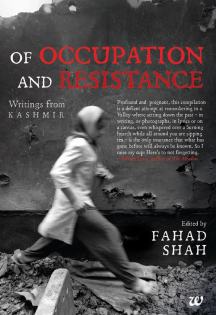
When the lid will burst: Fahad Shah

This is an excerpt from the introduction to the anthology Of Occupation and Resistance: Writings from Kashmir, edited by FAHAD SHAH
Once militancy took root in the Valley, it continued unabated, with a few exceptions in the years to come. The sentiment of the resistance movement prevailed across Jammu and Kashmir. At one point in time, blasts and encounters occurred almost every day. The first few years of the 1990s were the most brutal in the history of the conflicted Valley. After the 1996 assembly elections, when people were forced to vote at gunpoint, the National Conference Party and counter-insurgent groups ruled the state. People lived with trauma and threat – treating the injured, mourning for the dead and searching for those who had disappeared.

This was the story for more than a decade. A shift in the nature of resistance has been seen in the past few years; the generation that was born during the start of the war has been able to glean the nuances of the homeland’s political situation. Most of the youngsters from this generation, born between the late 80s and early 90s, choose stones over guns. Continue reading When the lid will burst: Fahad Shah

Why is Sachin Pilot in My Dreams? Or, Three Visas, and No More, to India: Fawzia Naqvi

Guest Post by Fawzia Naqvi

Sachin Pilot was in my dreams last night, with all due apologies to his wife, because I swear, I am not secretly fantasizing at all about India’s youngest cabinet minister. He just showed up. I think it was in Srinagar, though I’ve never been there, I swear. And why Srinagar? Well that’s another matter, requiring numerous sessions of therapy. But the good Minister made a cameo appearance and told me quite categorically that I had already been granted three visas to India and should expect no more. Don’t get me wrong. I like Minister Pilot. I admired the way he handled corporate America when he visited New York to deal with all the whining and complaining about Indian reforms and that pesky CSR Bill. But why is he in my dreams? An Indian friend tells me it’s because I’m constantly nervous about going to India. And herein lies the truth. I observe, analyze, obsess about, pontificate upon, call, email and travel to India more than most Pakistanis, without actually being a spy. Yes. Really. And I resent how easy the spooks have it. I’m guessing they aren’t dreaming about a finger wagging minister, ok Sachin Pilot, telling them they can’t get a visa! But such are the incessant covert and overt anxieties of Pakistanis like me who have careers involving India. And if Sachin Pilot, he of the new generation of Indian leaders is also telling me (in my dreams of course) that I can’t get a visa, then surely the news for Indo-Pak and hence my career, is not good. The twain of course is twinned.
Continue reading Why is Sachin Pilot in My Dreams? Or, Three Visas, and No More, to India: Fawzia Naqvi

To the German ambassador in India, a letter from Kashmir

This letter was faxed from Srinagar on 26 August 2013 to the German embassy in New Delhi and the Bavarian State Opera. List of signatories given at the end.

To,
Ambassador Michael Steiner,
German Embassy,
New Delhi, India.

Subject:  URGENT Protest Letter to German Embassy on scheduled Zubin Mehta concert in Srinagar, Jammu and Kashmir on 7 September 2013

On 22 August 2013, a press release was issued by the German Embassy that Zubin Mehta would be conducting an orchestra on 7 September 2013 at Shalimar Bagh, Srinagar, Jammu and Kashmir.

The press release quoted you as stating that the concert was for the people of Jammu and Kashmir by way of a cultural tribute. The press release also reads that the concert was intended to give a message of hope and encouragement to the people of Jammu and Kashmir. The concert, said to be a part of a “broader engagement” is being organized by the German Embassy and supported by the “competent authorities both at Central as well as at Union State level”. The costs of the concert are covered by “benevolent sponsors mainly from the business world in India and Germany, as well as “Incredible India‟ and the German Foreign Office”. Continue reading To the German ambassador in India, a letter from Kashmir

Communalisation in the name of Security and Sovereignt: JKCCS

As Kishtwar continues to be under curfew, this public statement put out on 15 August 2013 by the Srinagar-based JAMMU AND KASHMIR COALITION OF CIVIL SOCIETY is pertinent.
On 29 July 2013, Village Defence Committee [VDC] members were alleged to have killed 16 year old Shamim Ahmed Lone, resident of Noutaas, Thatri, Doda. Further, a few days prior to the murder of Shamim Ahmed, a 16 year old girl, resident of Kuntwara, Kishtwar, was kidnapped and raped by persons backed and protected by the VDC. According to newspaper reports from last over a month at many places in Doda-Kistwar region masked men have terrorized people. Over the last week, several places in the Jammu region, particularly Kishtwar, have been subjected to violence at the hands of VDC members, supported by Hindu communal groups, which resulted into loss of three lives, numerous injuries and loss of public property. The unabated support and encouragement to VDCs by Government of India, has ensured deepening communal strife. Continue reading Communalisation in the name of Security and Sovereignt: JKCCS

Nationalism in India: Rabindranath Tagore

From RABINDRANATH TAGORE‘s lectures on Nationalism, 1917

tagore-gandhi

Our real problem in India is not political. It is social. This is a condition not only prevailing in India, but among all nations. I do not believe in an exclusive political interest. Politics in the West have dominated Western ideals, and we in India are trying to imitate you. We have to remember that in Europe, where peoples had their racial unity from the beginning, and where natural resources were insufficient for the inhabitants, the civilization has naturally taken the character of political and commercial aggressiveness. For on the one hand they had no internal complications, and on the other they had to deal with neighbours who were strong and rapacious. To have perfect combination among themselves and a watchful attitude of animosity against others was taken as the solution of their problems. In former days they organized and plundered, in the present age the same spirit continues—and they organize and exploit the whole world. Continue reading Nationalism in India: Rabindranath Tagore

The Sunset of the Century: Rabindranath Tagore

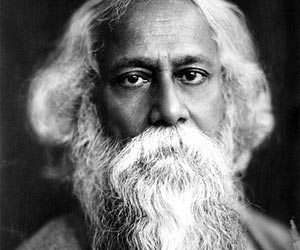
rabindranath-tagoreThe eve of India’s 66th Independence Day is a time as good as any to read this poem by RABINDRANATH TAGORE, even as India gets ready to sing to martial tune another Tagore poem, Jana Gana Mana. This English translation was published at the end of Tagore’s 1918 book, Nationalism.
THE SUNSET OF THE CENTURY

(Written in the Bengali on the last day of last century)

1

The last sun of the century sets amidst the blood-red clouds of the West and the whirlwind of hatred.
The naked passion of self-love of Nations, in its drunken delirium of greed, is dancing to the clash of steel and the howling verses of vengeance. Continue reading The Sunset of the Century: Rabindranath Tagore

The Curious Case of Hamid Ansari

large-p-9-aa

You may think he is a spy or a saboteur. If he is one, would he have spent months trying to reach Kohat from Mumbai and then get caught in just two days?

Sitting in Mumbai, Hamid Ansari fell in love with a Pakistani Pashtun girl over Facebook. He was a 26 year old management teacher, she was a B.Ed. student. After over a year of obsessing about each other over the internet, phone and phone messengers, she called him one day, crying. She had confided in her sister about this online affair, but the sister told the parents, who decided it was time to find her a husband. It was the last phone call. She soon disappeared from Facebook too. Continue reading The Curious Case of Hamid Ansari

Manmohan Singh must visit Pakistan

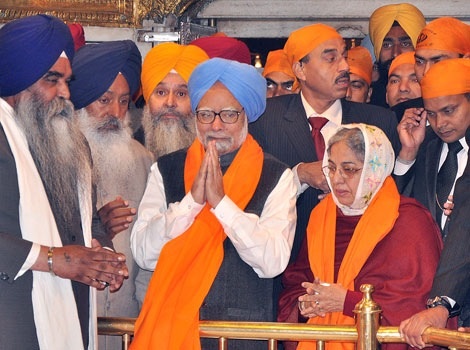
Dr Manmohan Singh with wife Gursharan Kaur at the Golden Temple in Amritsar on 1 January 2012

By SHIVAM VIJ: Which Indian or Pakistani premier has not desperately wanted to be the one to clinch peace between the two countries? Prime Minister Manmohan Singh has reportedly been keen, for years now, to go on a state visit to Pakistan.

Before the political climate could be conducive to Manmohan’s visit to Islamabad, 26/11 took place. Pakistan’s refusal to give Dr Singh even breathing space on the 26/11 investigations, followed by the LoC tensions in January and August this year, means that in his 10 years of prime ministership, Manmohan Singh will never have visited the country of his birth. Continue reading Manmohan Singh must visit Pakistan