Category Archives: Frontiers

India and Pakistan – Peace Now, a global vigil today

Events are planned today in Lahore, Delhi, Mumbai, Karachi, Cambridge MA, Washington DC, New York and Toronto to observe a vigil for India-Pakistan peace. More details given at this Facebook page. Event created by SAMIR GUPTA and disseminated by Aman ki Asha. Given below is a statement.

India – Pakistan Peace Now – Global Vigil

January 27, 2013

Lahore – Lahore Press Club, Shimla Pihari at 6 pm
Mumbai – Gateway of India 7 pm
Delhi – Gandhi Peace Foundation 5:30 pm
Karachi – Karachi Press Club, 5:30pm
Cambridge, MA – Harvard Square Pit, 4-5 pm
Washington, DC – Chutney Restaurant, Springfield, Virginia, 6 p.m
New York – Near Gandhi statue at Union Square, 5 pm
Toronto – 365 Bloor St. East, outside Indian Consulate, 5 pm

The hate mongers have had their moment of fame. It’s time to tell the political leadership of India and Pakistan what we stand for. We, peace-mongers around the world, are gathering on January 27, 2013, in different cities as part of a series of peace events. All we have is some candles, some placards and many hearts full of love. We want the governments of India and Pakistan know that people in dozens of cities across six continents want them to continue the dialogue and take forward the peace process. Continue reading India and Pakistan – Peace Now, a global vigil today
Reclaiming the Republic from the Alleged Perpetrators of Violence

As I sit writing this, on the 26th of January, 2013, in various parts of the territory of the Republic of India, soldiers either already have, or are about to begin marching in formation. In New Delhi, the capital of India, their parade is accompanied by tanks, heavy artillery and replicas of nuclear warheads. In the part of the province of Jammu & Kashmir administered by the Indian Union, in several provinces of the north-east, and other areas where the writ of the state runs entirely on the basis of its armed might, Republic Day, as this date is called, is an occasion for search and cordon operations, ‘crackdowns’ and the creation of a Potemkin village like ambience in the zones (usually heavily guarded stadia) where the republic insulates itself from the public. In New Delhi, the naked, obscene exhibitionism on the axial avenue of Rajpath of a nuclear weapons power that maintains the second largest armed forces in the world, even as millions of its subjects subsist at sub-Saharan levels, is an annual ritual. Apparently, this ritual is conducted to commemorate the founding of the Indian republic through the coming into force of its constitution in 1950.

Continue reading Reclaiming the Republic from the Alleged Perpetrators of Violence

A visit to the abode of Guru Nanak: Shiraz Hassan

Guest post by SHIRAZ HASSAN

This slideshow requires JavaScript.


Photographs by Shiraz Hassan

You can divide a piece of land but you cannot divide a belief. This was my first impression when I reached Kartarpur, a historic and sacred place, located just three kilometres away from the Indian border in the north-eastern city of Narowal, in Pakistani Punjab.

My journey started from Lahore and it was one of the most exciting journeys of my life. As I travelled, I saw  lush green rice fields on either side,and wondered why I had undertaken this journey. It was only when I reached Kartarpur that I got the answer. Continue reading A visit to the abode of Guru Nanak: Shiraz Hassan

In Multiples of Ten Ravanas

Some (more) thoughts on Indian and Pakistani soldiers beheading each other at the ceasefire line in Jammu & Kashmir

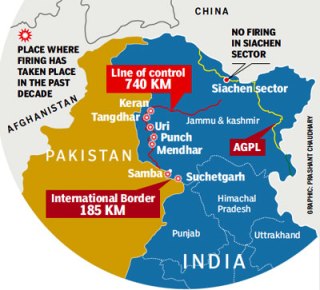
Hindustan Times Graphic
From the Hindustan Times

In the early hours of 10 January 2013, I published a post here that asked, “Was an Indian soldier decapitated at the Line of Control or not?” Soon thereafter, the family of Lance Naik Hemraj Singh of 13 Rajputana Rifles cremated his body and went on a hunger strike, demanding the government get the head. Several readers commented that now that it was clear a beheading did take place, I owe them an apology. I do not see why I owe them such an apology considering  I never said that an Indian soldier wasnot beheaded. I only pointed to the conflicting reports, the absence of official mention about whether or not a soldier was beheaded, a quoted a Reuters report that categorically said that according to the official spokesperson of the Northern Command, no soldier was beheaded, though the two soldiers’ bodies were mutilated. Despite such an official denial quoted in a trusted news source, I had written, “It is possible the anonymous sources are right, because this is not the first time both sides are blaming each other of showing disrespect to bodies of dead soldiers in violation of the Geneva convention.” Continue reading In Multiples of Ten Ravanas

Dear Barkha Dutt: The Buck Stops Where?

On the of latest edition, (telecast a few hours ago, on the evening of the 15th of January, 2013) of ‘The Buck Stops Here’, (a flagship news show on NDTV anchored by Barkha Dutt) – ‘India-Pakistan:Another Tipping Point‘, Admiral (Retd.) Ramdas, former chief of the Indian Navy said he knew that Indian forces have beheaded Pakistani soldiers in the past. Gen. (Retd.) V.P. Malik, former chief of the Indian Army contradicted him, and said this had never happened. Barkha Dutt was silent on this matter.

Below is a summary of some highlights of the discussion. Continue reading Dear Barkha Dutt: The Buck Stops Where?

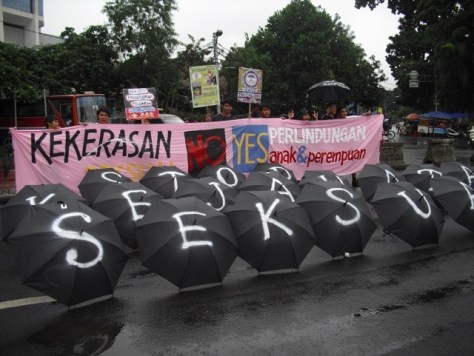
From Delhi to Djakarta, Protests Against Sexual Violence Across Borders: Bonojit Husain

Guest post by BONOJIT HUSAIN

20130115-211244.jpg

(Photographs courtesy: Pipit Apriani who is a Jakarta based activist and a blogger)

Protests against sexual violence are spreading across Asia. Last week demonstrations against rape and sexual violence were held in Nepal, Bangladesh, Pakistan and Sri Lanka.

Inspired by the protests held in Delhi for last three weeks, hundreds of university students and activists march on the streets of Jakarta few hundred meters away from the Presidential Palace for a world free of sexual violence. The call for the protest march was given by a coalition of University Students’ Unions and civil society organizations in response to the death of RI, a 11-year-old girl, who died last week after suffering severe vaginal and rectal injuries due to repeated sexual assaults. Continue reading From Delhi to Djakarta, Protests Against Sexual Violence Across Borders: Bonojit Husain

Suran: A poem by Uzair

This guest post is a poem by UZAIR, who grew up near the Indian side of the ‘Line of Control’ in Poonch

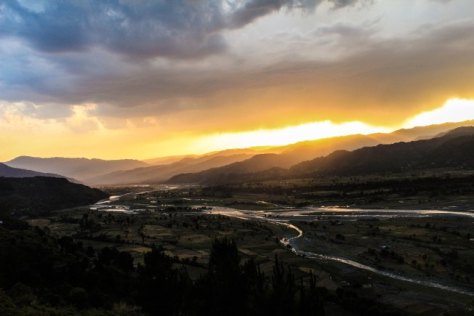
The poet took this photograph in Poonch by the river Suran last summer.Across the second ridge lies the Line of Control. Taken from the Indian side, the photo captures the sun setting on the Pakistani side.
The poet took this photograph in Poonch by the river Suran last summer. Across the second ridge lies the Line of Control. Taken from the Indian side, the photo captures the sun setting on the Pakistani side.

The river carries with it
Snow of distant peaks,
Floating memories
Twigs, leaves.

Only a few miles west
it would be stripped
at the border, asked
to produce a permit,
shot dead or may be not.

Waters were negotiated upon;
so the river travels seamlessly
only a few miles west
to another country.

On its bank, I heard
a cuckoo speak
“The sun shines during day
and stars illuminate the night sky
even across the border”

“And a few collect the twigs
like memories of childhood;”

“smell of dead wood, so familiar
grief and longing, so natural
decades of hope; still alive,
even across the border”

One day the river would flow
eastwards, said the old man
whose corpse floated across,
only a few miles west
and met his children
across the border.

(Uzair blogs at Untitled Untitled.)

See also:

Breaking the Collective – Notes from Jantar Mantar & Koodankulam: Vivek Vellanki

Guest Post by Vivek Vellanki

The death of the young girl brought incommensurable grief for the ‘Indian’ people. A national angst ensued with divergent voices seeking divergent ends: justice, death penalty, fast track courts, end to patriarchy, chemical castration, and a long list that cannot be spelt out here. There was a glimmer of hope that the discursiveness would ensue a quintessentially democratic process of debate, discussion, and deliberation amongst the people. The Indian state with its long-standing reputation wouldn’t allow for that to happen. It had to continue on its pet peeve of Breaking the Collective! The people’s movement in Koodankulam, the anti-corruption movement, the movement for seperate Telangana are some of the many instances that remind us of this pet avocation of the Indian state being pursued in recent times, almost, vocationally. However cynical it may sound, amidst the entire candle lighting and sloganeering, we failed to realise that the protest in Delhi was happening on the terrain that the government decided, in a manner that it wished for it to play out, and was party to the people it wanted to see there. I wish to argue that the closing down of the metro stations has a relation to the nature of the protests at Jantar Mantar. Furthermore it concurs with the tactics of chocking people’s movements logistically and stifling the collective by pathologizing the everyday life of masses. The tragedy of this lies in the fact that such actions of the state have become so recurrent that they have entered our common sense and they present themselves as normal and logical responses. Albeit they have been rationalized by invoking a specious reference to law, order, and safety, there is a need to unpack such a rationalization. My attempt is to extract these actions from that location of common sense and present them for public scrutiny. Through this essay, I would like to draw the connections between the democratic protests happening in locations across the country and state action in dealing with them. In doing so, I hope to bring to notice how the Indian state uses its machinery to purge protests of their democratic tenor and eventually, at least, attempts to break the collective. Continue reading Breaking the Collective – Notes from Jantar Mantar & Koodankulam: Vivek Vellanki

Was an Indian soldier decapitated at the Line of Control or not?

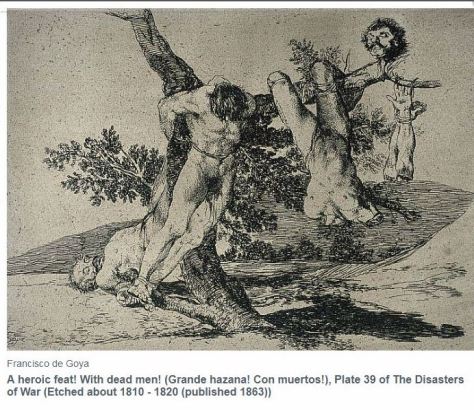
"In this sickening image, one of the most extreme in The Disasters of War series, the naked bodies of mutilated, tortured and castrated men are shown hung from a tree as a warning to others. Goya was one of the first artist to reveal the grim reality of warfare, stripped of all chivalry, romance and idealism. He captured something quintessential about modern war which has found resonance with succeeding generations of audiences. This print was controversially adapted in the 1990s by the artists Jake and Dinos Chapman. It formed the basis for one of their gory, three-dimensional tableaux, in which scenes from the series were recreated using dismembered mannequins covered in fake blood." - Image and caption via nationalgalleries.org
“In this sickening image, one of the most extreme in The Disasters of War series, the naked bodies of mutilated, tortured and castrated men are shown hung from a tree as a warning to others. Goya was one of the first artists to reveal the grim reality of warfare, stripped of all chivalry, romance and idealism. He captured something quintessential about modern war which has found resonance with succeeding generations of audiences. This print was controversially adapted in the 1990s by the artists Jake and Dinos Chapman. It formed the basis for one of their gory, three-dimensional tableaux, in which scenes from the series were recreated using dismembered mannequins covered in fake blood.” – Image and caption via nationalgalleries.org

*

In a skirmish on the Line of Control on Tuesday, 8 January 2013, did Pakistani soldiers behead an Indian soldier or did they not? Or did they behead two soldiers and take away the head of one of them? Or did they behead one and slit the throat of another? Reports in the Indian media have left me utterly confused. I’ll let you decide. Continue reading Was an Indian soldier decapitated at the Line of Control or not?

Indians and Pakistanis Condemn Exchange of Fire and Killings on LoC

List of signatories from both countries given at the end.

We, the undersigned Indians & Pakistanis, are deeply disturbed with the recent exchange of firings and killing of two Indian and one Pakistani soldier across the Line of Control (LoC). The incidence as reported is highly deplorable and no sane person or society can accept such unwarranted and gruesome incidences. The said incidences have a potential to derail the ongoing peace process that has shown remarkable progress in recent times in easing the visa regime, improving trade relations and securing many other confidence building measures that hold great promise for both the countries.

We are happy that the Director Generals of Military Operations (DGMOs) of both countries have spoken to each other after the incidents. We urge that suitable mechanisms must be evolved and implemented immediately to ensure that the concerned authorities on both sides are in constant touch to avert recurrence of any such incidence rather than meet after some damage is done. Continue reading Indians and Pakistanis Condemn Exchange of Fire and Killings on LoC

January 6, 1993 – A Town Torched: Remembering the Sopore Massacre Twenty Years After: Sameer Bhat

Guest post by SAMEER BHAT

In Memory of the Massacre in Sopore, Kashmir, by the 94th Battalion of the Border Security Force on January 6, 1993.

[YouTube Video – Compiled from various sources – including a report by Savyasachi Jain, now with NDTV, for Eyewitness – a VHS delivered video news magazine active in the early 1990s.]

There was sound of a huge bang that morning, like someone blowing up a cartful of dynamite. Just before the cockcrow. Most of the townspeople were asleep. The dawn prayers had thin attendance, mostly because it gets very cold in January. By nine o’clock a military patrol was out, doing rounds of the main marketplace. Suddenly gunmen emerged from a narrow alley and shot random bullets at the party before quickly disappearing in the maze that old Sopore is. Taken rather off guard, the security detail ran back to their barracks only to emerge again as Frankenstein’s monsters, spitting hell fire. In the next fifty odd minutes, they murdered fifty five people in cold blood. And burnt the town down. Continue reading January 6, 1993 – A Town Torched: Remembering the Sopore Massacre Twenty Years After: Sameer Bhat

A review of human rights in Jammu & Kashmir in 2012: JKCCS

This brief has been put out by the JAMMU AND KASHMIR COALITION OF CIVIL SOCIETY

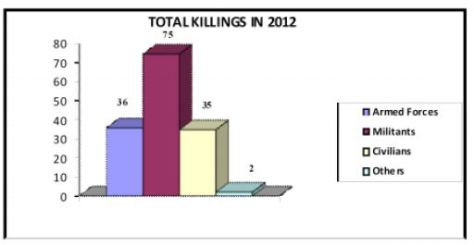
TOTAL KILLINGS

The year 2012 has just passed, and yet again like previous years, the government of Jammu and Kashmir has disgracefully claimed the year to be peaceful. This hyped peace is void of justice & peace and is packed with violence & injustice. In the year 2012 the people of Jammu and Kashmir in routine have witnessed unabated violence, human rights abuses, denial of civil and political rights, absence of mechanisms of justice, heightened militarization and surveillance. The figures of violent incidents suggest that 2012 as usual has been the year of loss, victimization, lies, mourning and pain for the people. Continue reading A review of human rights in Jammu & Kashmir in 2012: JKCCS

Your rapists and ours

Two interesting articles:

Emer O’Toole in the Guardian CiF:

There’s something uncomfortably neocolonial about the way the Delhi gang-rape and subsequent death of the woman now known as Damini is being handled in the UK and US media. While India’s civil and political spheres are alight with protest and demands for changes to the country’s culture of sexual violence, commentators here are using the event to simultaneously demonise Indian society, lionise our own, and minimise the enormity of western rape culture. [Full article]

And Ananth Krishnan in The Hindu:

The rape case was one of the most discussed topics in Chinese microblogs over the past week, prompting thousands of posts and comments. By Sunday, however, the authorities appeared to move to limit the debate: on Monday, a search for the topic triggered a message on Sina Weibo – a popular Twitter-equivalent used by more than 300 million people – saying the results could not be displayed according to regulations. The message is usually seen as an indicator of a topic being censored by the authorities. [Full article]


Naye Saal Mein Azaadi – Freedom from Fear in the New Year

[ Click to play above Youtube video of young women and men, led by Com.Lokesh (‘Lucky’) of Stree Mukti Sangathan (Women’s Liberation Organization) articulate their desires on the ‘Take Back the Night’ night walk and street party from Anupam PVR Complex to the road outside Select City Walk in Saket, New Delhi on the night of the last night of 2012 and into the early hours of 2013. ]

Delhi took back the night as we moved into the new year. Took it back from fear, from patriarchy, from misogyny and a stupid state. They said it loud and clear. This is what I remember, roughly in this order. Continue reading Naye Saal Mein Azaadi – Freedom from Fear in the New Year

Seeing Pakistan from Juhapura: Zahir Janmohamed

Guest post by ZAHIR JANMOHAMED

Since I started conducting research in March 2011 about the aftermath of the 2002 Gujarat riots, I have learned that the worst way to begin a conversation with a Muslim here in Ahmedabad is to ask about the 2002 riots. I was an eye-witness to the riots in 2002 and I thought my experiences might make some Muslims in Gujarat feel more comfortable speaking with me. I was wrong.

Sometimes I had to interview a person four or five times before they felt comfortable speaking about the 2002 riots. The reasons are varied. Some feel there is no use speaking about the riots as they know justice will never come under Narendra Modi’s watch. Others feel exploited by NGOs and Islamic groups who have used their stories to raise funds for their organizations abroad. And others, as one rape survivor told me, do not want to “relive the trauma.”

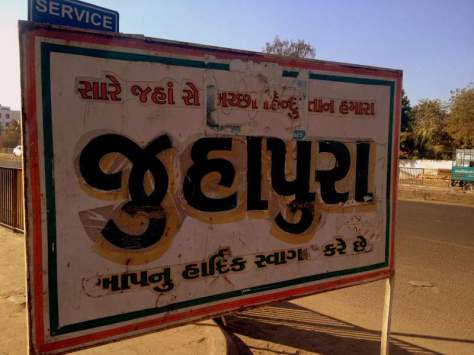
But if you ask Muslims in Ahmedabad about Pakistan, chances are you will walk home with a notebook full of comments. Earlier this week I went around my neighborhood of Juhapura—an area pejoratively known as “mini Pakistan”—and asked residents for their comments on Pakistan. The answers are telling. Continue reading Seeing Pakistan from Juhapura: Zahir Janmohamed

Play Haze Kay not Honey Singh: Music from Kashmir against Rape for Delhi

“Justice to the girls who were so innocent,
Justice so our sisters can be roaming free,
Justice to Aasiya and Neelofar,
Justice to the girl from Delhi.”

– a song by HAZE KAY (Rapper from Kashmir)

Haze Kay
Haze Kay

Yesterday, we saw placards on Jantar Mantar that sought to draw linkages of solidarity between young people asking for justice for the gang-rape survivor in Delhi and those committed to the memory of the rape and murder of Neelofar and Aasiya in Shopian and many others in Kashmir.

Today, a Facebook post by Fahad Shah alerted me to a song by Haze Kay – a Kashmiri rapper that made the same linkage of solidarity, from Kashmir, to Delhi.

Here is the song. No further words are necessary. Except to say, call up radio stations in Delhi, and ask RJs to find and play Haze Kay, not Honey Singh.

LYRICS

In the memory of Aasiya and Neelofar and thousands of other girls and women who have been victimized by the crime called Rape ..

intro –

their guns and their clicks , i don’t fear all that .
when the police comes around , i don’t fear all that .
disappeared without a trace , i don’t fear all that .
cause i am from Kashmir so i don’t fear all that. Continue reading Play Haze Kay not Honey Singh: Music from Kashmir against Rape for Delhi

A song for snow: Arif Ayaz Parrey

Guest post by ARIF AYAZ PARREY

The beloved is like snow after a chilly wind. The beloved is a bright sun after snowfall. The lover is like the cinders in a kãger that refuse to die. The lover is the immortal heat of ashes.

     In the 2008 Hindi movie Oye Lucky! Lucky Oye! the playing out of virtues of theft in a world of (corrupt) systems is not the only delicious element. As a matter of fact, even more lovable is the song Tu raja ki raj dulari which echoes Shiv’s plea to Parvati after she has hopelessly fallen in love with him, and chosen a path of austerity competing with his asceticism. Tu raja ki raj dulari mein sirf langoti aala sun, bhaang ragd ke piya karoun mein kunde sote aala sun.  He tells her. “You are a king’s royal darling, I possess only a loincloth (Will tiger-cloth be a more helpful description here?), I drink ashes which I grind on a pistil and mortar.” Now there are several ways of looking at this parable. At the surface, and then again at its very core, it is a narration of one of the major themes of storytelling: An independent, beautiful and strong woman poignantly falling for a clumsy, reclusive and basically loser-type man, against better advice and to much heart-ache all around. But this characterisation holds only at the surface, the patriarchy of this theme works through the neat device of depth, the woman is strong, but only on the outside, quite literally when you know that Parvati once shed her outer mantle which became a powerful warrior-goddess in its own right, but in depth and beyond the obvious, she is a woman after all, while the man, clumsy, reclusive, scrawny on the surface, has an inner strength which can gulp Halahal (funnily enough called zahr-e-Hilal or ‘poison of the crescent-moon’ in Kashmiri) without much ado or do the Tandav when he feels like it. Continue reading A song for snow: Arif Ayaz Parrey

Why Pakistan Loves Turkey: Saim Saeed

Guest post by SAIM SAEED

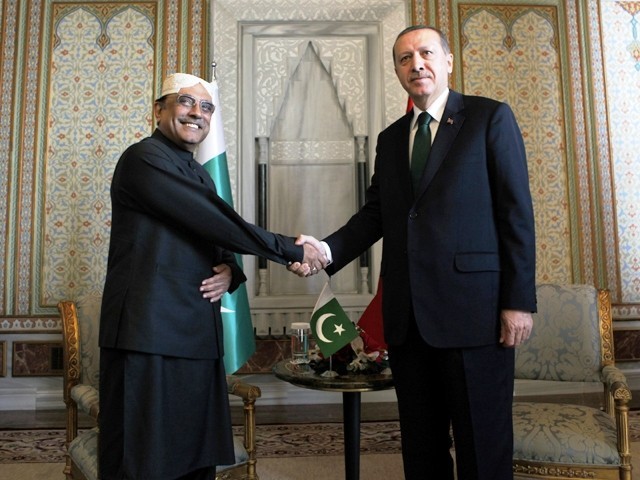
Pakistan's President Asif Ali Zardari with the Turkish Prime Minister Recep Tayyip Erdoğan. Reuters photo
Pakistan’s President Asif Ali Zardari with the Turkish Prime Minister Recep Tayyip Erdoğan. Reuters photo

Everybody loves Turkey. It’s where Pakistani families go for holidays, where students now go for education, where laborers go for work, where clerics go for counsel, and where both civilian and military officials and dignitaries go to find inspiration. Due to Turkey’s momentous economic and political rise, especially in the last decade, it is being held up to the rest of the Muslim world as a country worth emulating, and experts from everywhere have been referring to the “Turkish model” – an Islamic democracy with a robust economy – as the blueprint for a strong and stable (and still Muslim) country. Continue reading Why Pakistan Loves Turkey: Saim Saeed

Full report: Alleged Perpetrators – Stories of Impunity in Jammu & Kashmir

Given below is a report put out this morning by the Srinagar-based INTERNATIONAL PEOPLES’ TRIBUNAL ON HUMAN RIGHTS AND JUSTICE IN INDIAN-ADMINISTERED KASHMIR [IPTK] and ASSOCIATION OF PARENTS OF DISAPPEARED PERSONS [APDP].

Given below is a press release and the executive summary of the report.

Continue reading Full report: Alleged Perpetrators – Stories of Impunity in Jammu & Kashmir

Can we solve Siachen without solving the Jammu and Kashmir dispute?

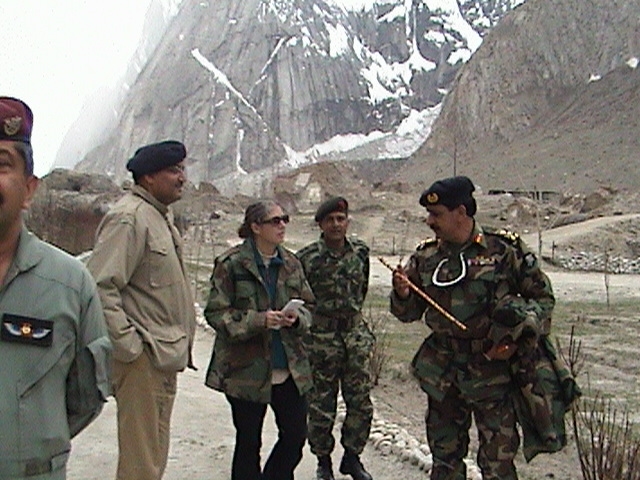
Myra MacDonald with Pakistani Army officers in the Gyari sector in 2004

Myra MacDonald is a London-based journalist with Reuters and a long-time observer of South Asia. She tracks the turning points in Pakistan politics at the Pakistan: Now or Never. MacDonald is best known for her book on the Siachen conflict, Heights of Madness: One Woman’s Journey in Pursuit of a Secret War. Published in 2007, the research for the book took her to both sides of the conflict, on helicopter and on ground. She was bureau chief of Reuters in India in 2000-2003. She then took leave-of-absence to research the Siachen conflict, becoming one of the very few people to visit the war zone on both the Indian and Pakistani sides. She has given presentations on Siachen to the Royal Military Academy Sandhurst and to the International Institute for Strategic Studies in London. Amidst alarmist rumours that track-two parleys between India and Pakistan are urging India to ‘give up Siachen’, MacDonald tells Shivam Vij in an e-mail interview why resolving Siachen without resolving the Jammu and Kashmir dispute may not be easy.

Q1) The idea of demilitarising Siachen is being seen by some in India as a demand to hand Siachen over to Pakistan, or at the very least, to ‘lose’ the territory for which Indian soldiers have made great sacrifices. Do you agree with such an interpretation of demilitarising the glacier? Do you think India has real strategic advantage with its occupation of the glacier? Continue reading Can we solve Siachen without solving the Jammu and Kashmir dispute?

Amitabh Bachchan in Gaza

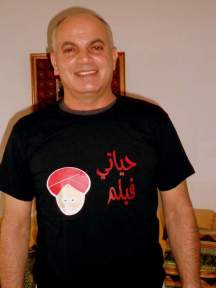
T shirt from shop in Ramallah. The Arabic text reads, “My life is an Indian film”. Photo by Sunaina Maira.

Radhika Sainath writes:

Palestinians in Gaza love Indians. They love Indian dancing, they love Indian music, they love Indian clothes. Whenever I walk out of the house, someone inevitably asks “hiyya hindeyee?” Is she Indian? ”I knew it!” they say when the response is in the affirmative. “Bheb al Hind,” I love India….

So Amitabh, Abhishek, Aishwarya, Amir, Hrithik, Kareena, Salman, Shahrukh, if you’re reading this, how about a shout out to 1.5 million of your biggest fans in the Gaza Strip? Israel has forbidden pasta, tea, cement and freedom flotillas from entering Gaza, but it hasn’t stopped Bollywood. We watch you under the Israeli drones and the F-16s, after being shot at by the Israeli navy and army while fishing, picking olives or going to school. You bring a sliver of joy to people living under the world’s longest occupation in the world’s largest prison, and for that we thank you.

Read the rest of this post by Radhika Sainath at Notes from Behind the Blockade Life: politics and nonviolent resistance inside the Gaza Strip.