This guest post by ALIA ALLANA is an account of polling day in Tunisia
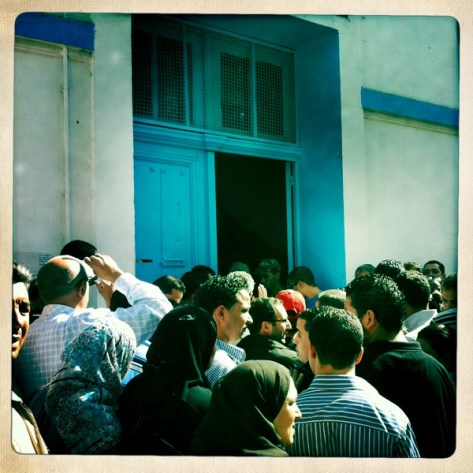
They had already waited so long, what was a few more hours? Continue reading “We are not like Iran here”: Alia Allana reports from Tunisia

This guest post by ALIA ALLANA is an account of polling day in Tunisia
They had already waited so long, what was a few more hours? Continue reading “We are not like Iran here”: Alia Allana reports from Tunisia
In light of the Planning Commission’s cruel joke of pegging the poverty level at an expenditure level of Thirty Rupees day, I wanted to bring our attention to a recent report compiled by Clifton D’Rozario in his capacity as an advisor to the Commisioners on the right to food. The report may be downloaded from here
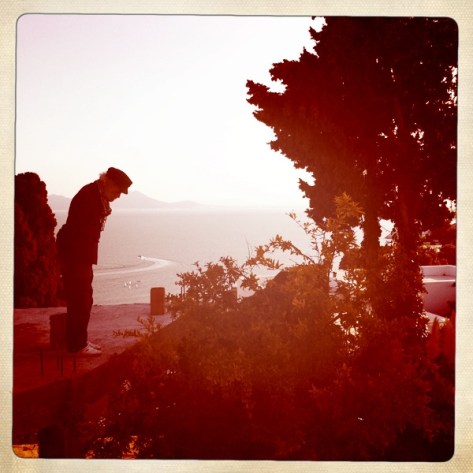
This guest post for Kafila by ALIA ALLANA from Sidi Bou Said on the outskirts of the capital Tunis captures the mood a day before Tunisia goes to the polls. Photos by Alia Allana
Continue reading Mickey wants to be the first one to vote: Alia Allana reports from Tunisia
This guest post by ALIA ALLANA is a despatch for Kafila from Damascus, the Syrian capital. All photos by Alia Allana
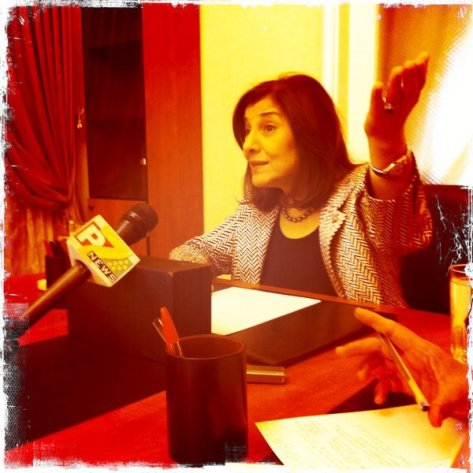
“You don’t think I’m afraid?” asked Bouthaina Shaaban, advisor to Syrian President, Bashar al Assad.
We were sitting in the Ministry of Protocol in Damascus and she tugged on her black pearl necklace and fidgeted with her black and white tweed jacket. She had more reason to be afraid, she said – not just because she was a woman but also because she is a supporter of the current regime.
This guest post by ALIA ALLANA is a despatch for Kafila from Homs, Syria. All photos by Alia Allana
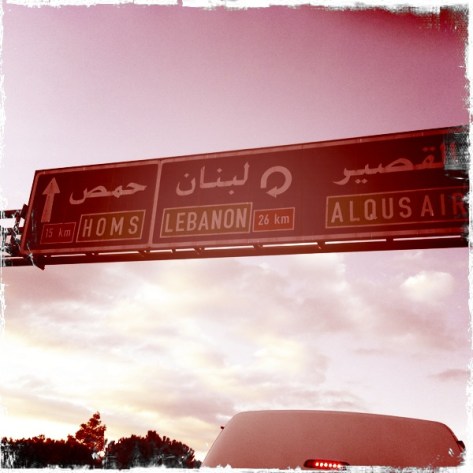
He was found shot in the chest, bleeding on the streets, alone.
He has no name. He’s just another struggling body in the hospital in Homs — only he’s much younger than most. He’s only four. He doesn’t move, his small frail body is gobbled by wires. The doctors say he hasn’t opened his eyes, hasn’t made a sound, nor has he called out for anyone. Saliva runs down his mouth but there is no one to wipe it off his face. This isn’t the first case and the doctors fear it won’t be the last. There will be other children who will take his place, there will be more victims of random shooting, more deaths and no one knows by whose gun. Continue reading A Despatch from Homs: Alia Allana
Guest post by SWAGATO SARKAR
Montek Singh Ahluwalia (MSA) has taken over the English news channels [okay, perhaps not all, but two “exclusive” interviews to Headlines Today and CNN-IBN’s FTN (F stands for ‘Face’, btw)] tonight to shoot back at his opponents and detractors, the likes of Roys, Drezes, Aiyars. The discourse had three parts: the sermon, gloss and proto-penance, and the affirmation of the revealed Truth.
The Planning of Commission of the sovereign, socialist, secular, democratic republic of India is not a Stalinist Planning Commission. It has the solemn duty of finding India’s rightful place in the world at the average rate of 8% per year. But India is a poor country [exclusive news which cannot be shared at Davos]. The GDP has to enlarge. Market is what will make it happen. But market has limits. Hence, welfare. But MSA is not happy that the Growth-Decline story did not work out as he would have wished. But that is no reason to be anti-Growth [now go to the first line of the para and read it all over again.]
As governments across the world prostrate themselves before corporations and corporate greed takes over the daily business of governing, mass struggles are breaking out all over the world. What started as the much propagated ‘Arab Spring’ – apparently the Arab world’s yearning for American and Western values represented by ‘democracy’, has now, after spreading through Europe (France, Greece, Spain, Portugal…) engulfed the heart of Empire – the United States of America. The Occupy Wall Street movement that started almost three weeks ago, with thousands of people assembling in Zucotti Park in Lower Manhattan, New York, has now spread amdist media blackout and police repression, to other parts across the United States. A glimpse of the situation about a week ago:
Continue reading Occupy Wall Street – An American Spring Amidst Media Blackout?
A note from KAVITA SRIVASTAVA
3rd October, 2011
Dear friends,
The police today raided my house between 6.30 and 7 am. I was out of the house when they did it. One of those days when I was not at home. They came with a search warrant and said that a khatarnak Naxalite was being shielded in my house.
My family was unable to gather the name, but they had come looking for a woman they said some Sunit / Sumit Sodi. The Bajaj Nagar police station of Jaipur, which very well knows my house, brought them. It was led by the DY SP of our area Rajendra Singh Shekhwat and they also sent police outside the People’s Union for Civil Liberties office. The Chhattisgarh raid was led by one Mr. Memon who was in plain clothes. His rank we do not know. He got papers from a court that my house has to be searched. Continue reading Kavita Srivastava: ‘Chhattisgarh Police Raided My House Today in Collusion with Jaipur Police’
The fishing season has begun couple of days ago and boats in a big number go to the mid-sea to catch and earn some money. Both the governments need to recognise the fact that these traditional fishermen go to the mid-sea for their livelihood. Arresting them and confiscating their boats means depriving their families from the livelihood, and causing them extreme distress. Continue reading Release Indian and Pakistani fishermen with their boats
This statement come from the RIGHT TO FOOD CAMPAIGN
October 3rd, 2011
Arbitrary Raid on Kavita Srivastava’s house: Latest act of harassment of human rights workers
We condemn in the strongest possible terms the arbitrary raid this morning (3 October), in Jaipur, on the house of Kavita Srivastava, General Secretary of PUCL and convenor of the Right to Food Campaign’s steering group. This is yet another instance of harassment of human rights workers under the cover of fighting Naxalism. Kavita Srivastava is the convenor of the Steering Committee of the Right to Food Campaign and PUCL is the petitioner in the Supreme Court case on the Right to Food which has recently challenged the Government on the issue of the poverty line. Continue reading Statement condemning raid on Kavita Srivastava’s house: Right to Food Campaign
Nothing seems to have changed in the past quarter decade. Past Jhargram, the town in the woods, the metal road connecting Lodhasuli to National Highway No. 6 wraps itself in a shady serenity. At occasional intervals, the artificiality of a clamour, emitted by a motor engine, creates an unquiet irritation, murdering the resonance of the forest and interrupting its slumber. The bus-stops at Kalabani and Boria are as lonely as they used to be; Gar-Salboni, a roadside village, is stuck in its eternal search for a path to survival. The mud road that breaks from the main road to meet the villages Sirsi, Joalbhanga and Lab-Kush, is as tranquil as it had been 25 years ago. Past the lush green rice fields by the road begins the forest that hems the horizon. The leaves that have just had a splash of shower glistens with the brilliance of the sun.
— Last year it was different, whispered the road.
— Yes, I have heard of it – there had been a drought. And it was the same in the year before the last. It used to follow a cycle like this 25 years ago. Rain ensures the crop. Hunger rides free when there is a drought.
Continue reading Silent changes amidst terror in the Jungle Mahal of West Bengal: Kumar Rana
Guest post by KAVERI GILL

“AIIMS is like my aging mother, whose clothes are in tatters, and I feel I must hold them together to cover and protect her”. A senior anaesthetist said this the evening before I was due to have a relatively small but complex surgery, and my search for the best surgeon had bought me to the institute’s doorstep. Fifty five years after Nehru’s dream of a medical centre of excellence materialised, with state of the art teaching, world class research and high quality patient care, the All India Institute of Medical Sciences in Delhi is mostly in the news for all the wrong reasons: fracas over reservation, cheating on entrance exams and charges of mismanagement.
Continue reading Sufi Doctors and Nehru’s Ailing Centre of Excellence: Kaveri Gill
Guest post by PRIYANKA NANDI
Urja aehi, swadha aehi, sunrita chirawatyehiti
[Come nutrition, come food, come truth, come security]
– Atharvasamhita 8.10.4
“Come nutrition, come food, come truth, come security”, invites the Atharvasamhita. Clearly, this is not the expensive military view of security we are encouraged to take these days. What, then, is this security?
This is the security that comes from having access to regular and adequate nutrition. From not having to starve, or suffer chronic hunger. There is no violence in this idea of security, except the quiet, steady violence done to generations of ‘common’ people by making something as basic as daily nutrition unavailable to them. Continue reading Nutritional Neglect: Starving Our Future: Priyanka Nandi
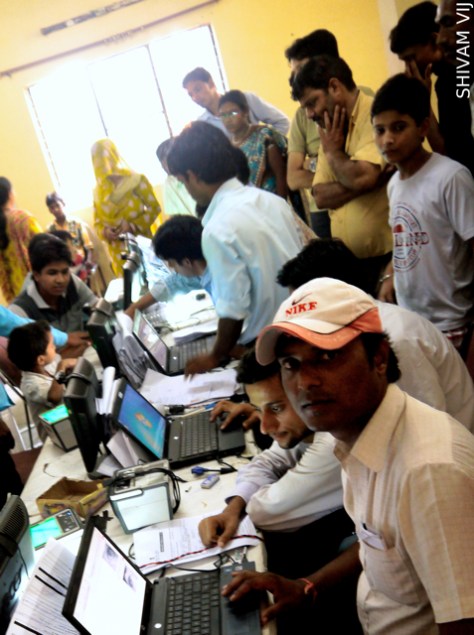
Contrary to what his name suggests, Bechu Lal Yadav, 29, isn’t a seller of goods. He is a recordist of identity. He is amongst a new breed of technical professionals that have come up overnight – the Biometricwallahs. Continue reading The Biometricwallah
This is a public statement by AMNESTY INTERNATIONAL
AI Index: ASA 20/046/2011 26 September 2011
As the session of the Jammu and Kashmir legislative assembly opens in Srinagar, Amnesty International is writing to all members of the legislative assembly (MLAs) to raise human rights concerns in the house and ensure that such issues are not ignored during the session.
Although there appears to be a consistent decrease in the overall numbers of members of armed groups operating in Jammu and Kashmir (J&K), human right violations continue to remain a significant and widespread concern in the state.
Amnesty International calls on all MLAs to raise human rights issues during the assembly session and call upon the state government to take immediate action required to remedy the situation. In particular, Amnesty International asks you to raise the specific issues below. While not an exhaustive list of human rights concerns in the state, discussion on these would indicate the commitment to human rights of the state legislative assembly and be an important step towards improving the human rights of all residents of Jammu and Kashmir.
Guest post by PARAYI
The Indian government’s planning commission has just told the Supreme court that about 31 rupees a day [slightly more than half a dollar] is enough for a family to live on. The news papers had the details of a diet which can be had on that money. Few grams of rice+ fewer grams of vegetable + no fruit + no fuel etc etc…. Continue reading How To Have Chicken Curry in Peace: Parayi
This release comes from the PEOPLE’S UNION FOR CIVIL LIBERTIES, Rajasthan
Gopalgarh (Bharatpur, Mewat) Police Firing Incident
Preliminary Findings of the Fact Finding Team released in the Press Conference on 19th Sept, 2011
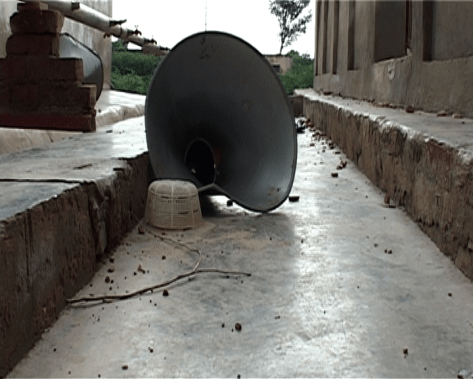
This preliminary report of the PUCL team pertains to the incident of the police firing in Gopalgarh, district Bharatpur, Rajasthan. As per the media reports, the police resorted to firing to quell rioting mobs. The government has acknowledged eight deaths and 23 injured in this incident. Following this, the PUCL, Rajasthan constituted a Fact Finding Team to conduct independent inquiry into this incident. The team comprised Kavita Srivastava, National Secretary, PUCL, Professor Shail Mayaram (Delhi), Professor Yogendra Yadav(Delhi), Ms. Nishat Hussain (Vice President, PUCL, Rajasthan) Mr. Sawai Singh (Organising Secretary PUCL, Rajasthan), Mr. Noor Mohammed (PUCL, Alwar), Mr Virendra Vidrohi (PUCL, Alwar), Adv. Ramjan Chowdhary (PUCL, Mewat district, Haryana), Mr Gaurav Srivastava(PUCL intern). Mr. Neelabh Mishra, Editor, Outlook (Hindi) and a section of progressive members of the Gurjar and Meo community also accompanied and assisted the fact finding team. Continue reading ‘Every eye-witness said there was no death before the police intervened’
This release comes via the NATIONAL ALLIANCE FOR PEOPLE’S MOVEMENTS
Nellore, September 18 : “Government of Andhra Pradesh has given licenses to 28 companies to establish thermal power plants with a total capacity of 32,000 MW. How can a fragile coastal zone can take up so much of ecological pressure ? Is this the way to plan the needs of electricity for development ?” asked the delegates who had come from different parts of the State and joined by eminent social activists Medha Patkar, Sandeep Pandey, Banwari Lal Sharma, Gabriele Dietrich, Sister Celia, Manoj Tyagi, Viveknanad Mathane, P Chennaiah, Ramakrishnam Raju and others. Jan Sansad was hosted by NAPM and Jana Vigyan Vedika at the premises of Nehru Yuva Kendra, Nellore. Continue reading ‘Jan Sansad demands a Development Planning Act not an Act to Facilitate Land Acquisition’
[with inputs from Baiju John]
Faced with the never-ending agony to which the members of the Dalit Human Rights Movement (DHRM) in Kerala seem to be subject to, it appears that that the more familiar ways of marginalizing of dalit people in Malayalee people do not work anymore. The past few days have seen horrendous attacks on these people near the town of Varkala in Thiruvanathapuram district. The DHRM has accused the Siva Sena and the BJP of violence, but it appears that both the authorities and the press are equally and irremediably deaf. Continue reading Out of Development’s Waiting Room, Out of Democracy: The Continuing Agony of the DHRM
This guest post by SIMI CHACKO and PRATIKSHA KHANDURI is the full text of a booklet released in August 2011. A .pdf version of the booklet (41 pages, 304 KB) can be downloaded here.
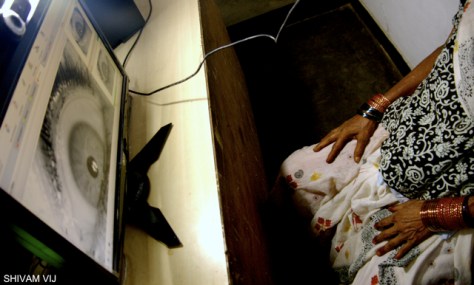
Introduction
A. UID: The Basics
B. The Enrolment Process
C. Benefits of UID
D. Concerns: Biometrics, Privacy, Data security, Surveillance
Continue reading A Critical Primer on India’s UID: Simi Chacko and Pratiksha Khanduri
 KAFILA - COLLECTIVE EXPLORATIONS SINCE 2006