Category Archives: Law

Is It Nineteen Eighty Four Already?

On 9 April 2011, 11 members of the English Department of Delhi University (almost the entire Department) resigned from various (non-statutory) work committees within the Department. They carried on all their other duties, including teaching, regardless. This mass resignation followed repeated requests from them to their Head of Department to call a meeting of the Department Council of the English Department. By resigning (only from the non-statutory committees), the members of the Department were hoping to bring largely symbolic and moral pressure to bear on the Head, to perform his duties!!

You know something is seriously wrong with a workplace when members of Department have to bring pressure to bear on a Head to perform his or her regular, statutory duties. You should really smell a rat when it’s not the minions and juniors but the bosses at the highest levels that are bending and twisting rules to their advantage; publicly ignoring long-standing statutes and conventions; inventing new ones almost overnight; and practising selective amnesia about procedures.

Continue reading Is It Nineteen Eighty Four Already?

Free Dr Khaleel Chishty: Amna Chishty

Update: A hopeful note from Kavita Srivastava

An appeal by AMNA CHISHTY

16th April 2011

My father is almost 80 years old. He received his PhD from University of Edinburgh, Scotland in 1968 in Public Health Virology. He had an illustrious career as a professor and head of department of virology and microbiology at Karachi University. In the late 80’s he retired from his last job as the Director of Public Health at King Abdul Aziz Airport in Jeddah Saudi Arabia. He is a principled man who is well‐read, well bred and well traveled. He worked hard to raise a family of six children – one son (oldest, with engineering diploma), five daughters (one is a doctor, one is a Pharmacologist, two are graduates and myself an MBA in marketing). He educated us and built a house for us in Karachi and supported his younger brother in India as well. After retirement he wanted to live in that house in Karachi and enjoy his retirement with his family and his grandchildren.

The following events led to his current plight: In 1992 my father went to Ajmer to visit his ailing mother at his brother’s house near Dargah Sharif.  Continue reading Free Dr Khaleel Chishty: Amna Chishty

Chidambaram khush hua: Mahtab Alam

Guest post by MAHTAB ALAM

On Friday morning, when I started for the Supreme Court to attend the bail hearing of Dr. Binayak Sen, like many of our friends and comrades I was not sure of whether he would be granted bail. I was afraid that the case would be adjourned once again, as many of us who are regular visitors of courts expect, aware of the delaying tactics of government counsels, and the history of tareekh par tareekh. Kavita Srivastava, who has been following the case closely and campaigning tirelessly for Binayak’s release along with others, put the spirit back in me. It couldn’t get any worse, she said.

Fortunately, it turned out to be a good Friday. I was happy, as were my friends and comrades. We wanted to scream out of joy and happiness but we restrained ourselves for we were in the court premises and could be booked for ‘contempt of the Court’. Naturally, it was one of the happiest moments our life. Binayak and Ilinia a source of inspiration for hundreds of students and youth like me. I am happy for Binayak, for his family, especially for his mother, for ordinary (read extra-ordinary) people of Chattisgarh and for thousands of his supporters and justice loving people. Continue reading Chidambaram khush hua: Mahtab Alam

Free Murtaza Manzoor

This release comes from AMNESTY INTERNATIONAL
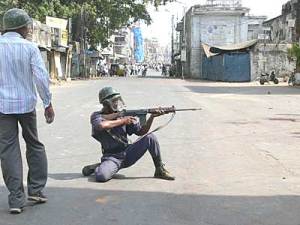
Urgent Action: Child Detained Without Charge or Trial

UA: 115/11 Index: ASA 20/015/2011 India Date: 14 April 2011

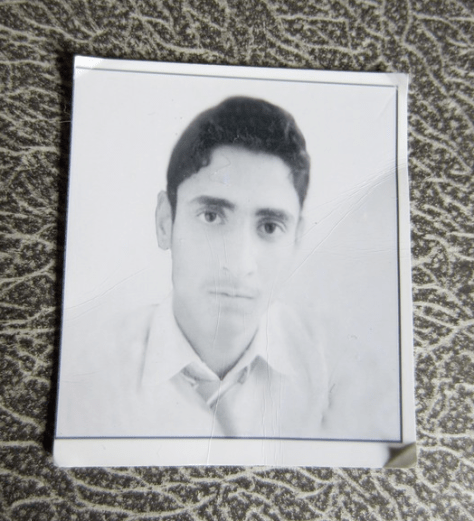
Murtaza Manzoor has been held in administrative detention since 8 February by police in Jammu and Kashmir, India. His official birth certificate states that he is only 17 years old.

Murtaza Manzoor was arrested on 21 January by police in Srinagar, the capital of Jammu and Kashmir. He was arrested in relation to a case from June 2010 on allegations of attempted murder, assault and rioting. According to the police, he is an “incorrigible antisocial element” who was leading a protest march that resulted in protestors pelting police with stones. Continue reading Free Murtaza Manzoor

‘Justice on Trial’ in the Times of Tilism: The Absence of Binayak Sen and the Presence of Anna Hazare on Television in April 2011

Sometime today, the Supreme Court bench of the honorable Justices H. S. Bedi and C.K. Prasad will hear arguments for and against the petition asking that  Dr. Binayak Sen, currently sentenced to life imprisonment by the Chhattisgarh High Court on charges of sedition and several other sections of the Indian Penal Code,  be given bail. Continue reading ‘Justice on Trial’ in the Times of Tilism: The Absence of Binayak Sen and the Presence of Anna Hazare on Television in April 2011

JKCCS demands probe into killings of political workers

Press release from the JAMMU KASHMIR COALITION OF CIVIL SOCIETY

11th April 2011

Jammu Kashmir Coalition of Civil Society (JKCCS) is concerned at the spate of killing of civilian political workers belonging to different religious and political parties. So far in this year, five civilian political workers have been killed.

Dastan-e-Sedition Banaam Hakim Sen

Dastangoi performed by Mahmood Farooqui and Danish Husain as part of Justice on Trial for the Free Binayak Sen Campaign, at the Alliance Francaise de Delhi on 6 April 2011. Video credit: Nicky Chandam.

At the Risk of Heresy: Why I am not Celebrating with Anna Hazare

At the risk of heresy, let me express my profound unease at the crescendo of euphoria surrounding the ‘Anna Hazare + Jan Lokpal Bill’ phenomenon as it has unfolded on Jantar Mantar in New Delhi and across several hysterical TV stations over the last few days.

This time around, I have to say that the print media has acted (upto now) with a degree of restraint that I think is commendable. Partly, this has to do with the different natures of the two media. If you have to write even five hundred words about the Jan Lokpal bill, you run out of platitudes against corruption in the first sentence (and who can speak ‘for’ corruption anyway?) and after that you have to begin thinking about what the bill actually says, and the moment you do that, you cannot but help consider the actual provisions and their implications. On television on the other hand, you never have to speak for more than a sound-byte, (and the anchor can just keep repeating himself or herself, because that is the anchor’s job) and the accumulation of pious vox-pop sound bytes ‘against corruption’ leads to a tsunami of ‘sentiment’ that brooks no dissent. Continue reading At the Risk of Heresy: Why I am not Celebrating with Anna Hazare

Mecca Masjid police firing report dumped in cold storage: Lateef Mohd. Khan

Guest post by LATEEF MOHD. KHAN

On Friday, 18th May 2007, the RSS terrorists planted bombs at historic Makkah Masjid and immediately after the bomb blast, a group of communal minded policemen started firing on the people who were helping the injured people in the blast. 9 people were killed and hundreds got injured in the blast. The sharp shooter policemen were chosen for firing on the people who came for prayers and who came forward to help the injured and this communal group of policemen was monitored by  the then Additional Commissioner of Police (Crime). Continue reading Mecca Masjid police firing report dumped in cold storage: Lateef Mohd. Khan
Compromise in Rape Cases: Whither Constitutional Morality?: Kalpana Kannabiran

Guest post by KALPANA KANNABIRAN

The Supreme Court judgement reported in some newspapers on 24 February 2011, legitimizing compromise in rape cases, is cause for serious concern.  For thirty years now human rights groups and women’s groups have fought difficult battles to have rape recognised as a serious offence both in communities and by courts.  Rights advocates have been concerned by the fact that all too often the view of the judiciary converges with the view of the community in seeing women’s sexuality as communally owned property, thus removing any articulation of violence from the crime of rape.

Some years ago, at a workshop of judicial officers, we had one senior officer arguing that if a man found guilty of raping a woman offered to marry her, this offer should be considered as a “mitigating circumstance,” and his sentence reduced to the bare minimum.  That done, since his continuing in jail will be detrimental to his new family life, he should be set at liberty under the provisions of the Probation of Offenders Act.  Fortunately in that gathering, the majority of officers, most of them junior to the officer concerned, felt strongly that this is a gross misapplication of the law.  But the existence of the possibility that a judge might actually rationalize the gross misinterpretation of a law as critical to women as this, has far reaching consequences.

Continue reading Compromise in Rape Cases: Whither Constitutional Morality?: Kalpana Kannabiran

Emboldening Khap Panchayats?

What does it mean to be a Muslim in India today?: Mahtab Alam

Guest post by MAHTAB ALAM

Shahina KK

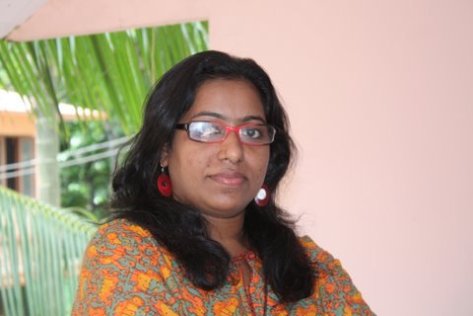
Recently, Shanina K K, a journalist from Kerala, who worked with Tehelka news weekly and now works with Open magazine, received the Chameli Devi Award for being an outstanding woman journalist. While receiving the award she said, “See, I happen to be a Muslim, but I am not a terrorist.” What made her say that and what was she trying to convey or explain? It means, as she explains, “If you belong to the minority community, they will also profile you. It is very difficult to prove that you are not a terrorist. It is equally difficult to prove that you are not a Maoist in our life and times.” Continue reading What does it mean to be a Muslim in India today?: Mahtab Alam

The Day India Will Shut Down the Internet

Sounds alarmist? Perhaps. But under the IT Amnedment Act of 2008, the Government of India gave itself the power to do so. The Economic Times reports: Continue reading The Day India Will Shut Down the Internet

Here’s what India’s Communications and IT Minister thinks about online freedom

Kapil Sibal said the following at a conference on social media in Delhi recently:

We’ve seen the power of the medium in the last six months or so seeking to perform a transformational role, but in the absence of a balance… this is really the danger of sites like these. What happens in the process is that all kinds of opinion get both elicited and taken forward, without the necessary wherewithal, and there’s a great danger, because this, I believe, is a part of freedom of speech. Continue reading Here’s what India’s Communications and IT Minister thinks about online freedom

The Murder of Niyamat Ansari

In the video above, Niyamat Ansari, NREGA/RTI activist in Jharkhand, speaks of the threats to his life. Ansari was murdered on 2 March 2011. You can watch more videos of him here.

Given below are facts of how and why Niyamat Ansari was killed, and the follow-up threafter. You can follow the campaign to get justice for Niyamat Ansari on this Facebook page set up in his memory and in pursuit of justice for him. Please share these links widely, because Your Channel will not organise a candle-light vigil at India Gate. See this statement calling for justice.

The struggle of the NREGA is regularly chronicled at Nrega.net.in. NREGA, the world’s largest rural employment guarantee scheme, recently completed five years.

Continue reading The Murder of Niyamat Ansari

Updated: Get Ready for India’s Blogger Control Act

Sanchar Bhawan, office of the Ministry of Communications and Information Technology in New Delhi

The Internet in India is regulated by the Information Technology Act (2000) to which amendments were passed in 2008 and in 2009 the IT (Amendment) Act 2008 was passed. The Ministry of IT has now gotten down to notifying additional rules for the Act. Amongst the set of rules is one specifically for cyber cafes, about which I’ll write another post, and there’s one on ‘due diligence on intermediaries’. Intermediaries in the context of internet means that if you post any comment on this blog, I am legally responsible for your comments too. Intermediary liability is a favourite tool of internet censorship by repressive regimes the world over.

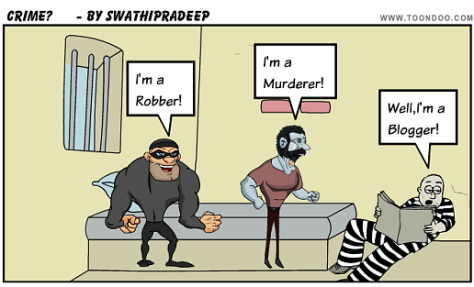
To those familiar with Indian laws, this will appear to be routine stuff, the sort of laws that regulate newspapers, for instance, or freedom of expression in India in general. However, three main problems here: one, the over-emphasis on blogs and bloggers, indicating the government’s anxiety over controlling blogs; two, the vagueness and vast scope of the reasons for which the government can block websites; and three, the utterly regressive move of introducing ‘intermediary due-diligence’, a favourite tool of repressive regimes against bloggers.

It is interesting that while “Blogs” and “Blogger” are defined in the Definitions section of this rule, the words aren’t used in the rules per se. In other words, they had blogs in mind while making the rules. These rules, if notified, will basically be India’s Blogger Control Act.

Continue reading Updated: Get Ready for India’s Blogger Control Act

Updated: Crazy internet censorship time in India, again

Update: Please see bottom of the post for several updates.

*

“Shivam!” Nikhil Pahwa of Medianama called this morning. “It’s 2006 all over again. They’ve blocked Typepad.” I instantly knew what this meant. They’ve done this at least twice before, the fellas at CERT-IN. In 2003, 2006 and now 2011.

Typepad.com is a blogging service, much like Google Blogger (Blogspot.com) or WordPress.com that this site, Kafila.org runs on. Now. Airtel users who go to Typepad.com find this:

Users of most ISPs can see this, but government-owned MTNL has ironically not caught up :) Continue reading Updated: Crazy internet censorship time in India, again

You fill up my Census…

…quipped my brother Dilip in response to the following mail from my sister Pramada:

So the bell rings this afternoon. desperate clanging. i open the door and there is a man with forms in his hand and a general irritated demeanor. figured that this was the census man. he comes in and settles down. starts by wanting to know who the head of the household is. i say there is no one. he insists. i continue to say no one.

Census of India 2011 mascot

He proceeds to explain that if the parents live in the house, then they are the head of the household, if married then the husband is. I proceed to ask for definition and say that all three of us who live in the house are head of the household since we all earn and take decisions. he promises to erase what he has written since he was sure my mother was head of household.

He seemed to find my gender a bit dubious so questioned my mother if i was a boy or a girl and then repeatedly said “ladki” to me. having established that i indeed was a woman, he wanted to know date of birth, which was not difficult, but place of birth he found extremely challenging. he could not get his spellings right, or did not know districts or states in the country so tattamangalam in palghat district in kerala was as baffling as mysore in karnataka. calcutta was easy to deal with and he said calcutta was in calcutta!!! mother tongue caused him more angst because he had to write malayalam and again the spelling eluded him.

Continue reading You fill up my Census…

You Fill in the Rest: Dilip D’Souza on the Godhra verdict

Guest post by DILIP D’SOUZA

Here’s a crime: February 27 2002, 59 people killed when a train is set on fire in Godhra. 90+ people are arrested and accused of the slaughter. Bail is denied to them all. The trial takes nine years, the trial verdict acquits 63 of them, finds the other 31 guilty. The judge sentences 11 of those 31 to death, the other 20 to life in prison.

Here’s another crime: February 28 2002 (the next day), 69 people killed when a building called Gulberg Society is set on fire and its residents attacked in Ahmedabad.

You fill in the rest. How many arrested and accused of this slaughter? How many denied bail? How long does the trial take? How many are acquitted? How many are found guilty? How many are sentenced to anything at all? Continue reading You Fill in the Rest: Dilip D’Souza on the Godhra verdict

What do the Maoists want?

The media has by and large focused on the Maoist demand of release of some of their own in exchange of the Malkangiri collector and junior engineer. The list of the total 8 of 14 demands of the Maoists that the Orissa government has agreed to makes for interesting reading:

(1) Orissa government will write to Jharkhand and Chhattisgarh to take action on the extremists demand for release of Maoist central committee members Sheela di (jailed in Jharkhand) and Padma (in Chhattisgarh) owing to their ill-health; (2) ST status for the Konda Reddy and Nukadora communities categorized as OBCs; (3) stopping the multi-purpose Polavaram project of Andhra Pradesh; (4) ‘pattas’ (record of rights) to tribals dispossessed of their land in Malkangiri and Koraput; (5) irrigation in Maribada and Maniamkonda villages in Malkangiri; (6) compensation based on HC order to Tadangi Gangulu and Ratanu Sirika who died of disease allegedly due to torture; (7) relevant laws for mining operations in Mali and Deomali bauxite mines; (8) minimum displacement of tribals and adequate compensation. [ToI]

‘We are aware of India’s interests’: Jhalanath Khanal

Interview with Nepal Prime Minister Jhalanath Khanal.

After seven months of living with a caretaker government, Nepal’s Parliament on February 3 elected Jhalanath Khanal, chairman of the Communist Party of Nepal (Unified Marxist Leninist), as the Prime Minister, with the support of the Unified Communist Party of Nepal (Maoist). He spoke to Prashant Jha at the prime ministerial residence in Kathmandu on February 10. Excerpts, as first published in The Hindu:

What’ll be your priorities?

My first priority is to complete the ongoing peace process. Second, my aim is to help complete the Constitution-writing process. Third, I’ll strengthen the institutions of governance, improve law and order, and guarantee security to the common citizens. Fourth, my focus will be on taking the country towards an economic revolution through development, reconstruction and socio-economic transformation.

Your predecessors had similar priorities, and had pledged to complete the peace and constitutional process. What’s different about your government? Continue reading ‘We are aware of India’s interests’: Jhalanath Khanal