Category Archives: Left watch

Violence and revolution

THIS note attempts to understand the nature of the politics behind the violent actions of the Maoists. There seems to be an agreement among human rights activists that Maoist violence is a ‘forced’ response to the extreme repression of the Indian state. The argument is that since the Indian state has been consistently ignoring or violently repressing various people’s movements, the people are left with no choice but to take recourse to the gun.

There is a fallacy in this argument. We know about people’s movements on issues of land rights or displacement which have not turned into armed insurrections, even though they have suffered major losses and have been treated in a very callous manner by the state. Apart from the Narmada Bachao Andolan there are hundreds of big and small peoples’ resistance movements in Jharkhand, Chhattisgarh, Orissa, Bengal, Tamil Nadu and other states which have not given up on the ‘parliamentary’ path of struggle.

Interestingly, we find that Maoist groups are also active in these areas and they constantly try to infiltrate and take control of such movements. We do not know of any movements organized by the Maoists which were initially ‘peaceful’ but compelled to turn to arms after all attempts at working with the state failed. I would suggest that the theory of ‘peaceful’ movements mutating into ‘violent’ insurrections appears flawed. Also that instead of using ‘Maoist’ as an adjective in a careless manner we should treat them as a political formation organized on the lines articulated in its political programme and constitution which is based on its own Marxian theory of revolution which is impossible without violence. Continue reading Violence and revolution

The Rumour of Maoism

This essay has been published in the current issue of Seminar (No. 607, March 2010).

In his classic Elementary Aspects of Peasant Insurgency in Colonial India, Ranajit Guha outlines a certain methodological imperative for the historian who wanted to ‘get in touch with the consciousness of [peasant] insurgency’ when access to it is barred by the discourse of counter-insurgency that structures official records. How does one look beyond this discourse of the state that frames the archives in order to gain access to the voice of the rebels? Guha’s solution was relatively simple: Counter-insurgency, he argued, derives directly from insurgency and is so determined by the latter that ‘it can hardly afford a discourse that is not fully and compulsively involved with the rebel and his activities.’1

Unlike British Marxist historian E.J. Hobsbawm who had tried to track the story of ‘social bandits’ through a somewhat problematic reading of folklore,2 Guha warned that ‘folklore relating to peasant militancy can be elitist too’, for many singers and balladeers belonged to upper-caste families who had fallen on hard times and were, therefore, often suspicious of the revolt of the lower castes or tribals. Guha underlined that though the records of the colonial state and its police officials registered the voice of those hostile to the insurgents – including landlords and usurers – they could not avoid being shaped by the will of the insurgents. His conclusion therefore was that the presence of rebel consciousness could be read in the body of evidence produced by the discourse of counter-insurgency itself.

The burden of Guha’s argument was that in order to decode the language of counter-insurgency, it was often enough to simply reverse the values in the terms used by the official discourse: thus ‘badmashes’ simply meant peasant militants and not ‘bad characters’; ‘dacoit village’ would indicate an entire village involved in the resistance and ‘contagion’ would most likely refer to the solidarity generated by the uprising.

Those were happier days from the historian’s point of view. For the peasant and tribal insurgencies that Guha was discussing were organic struggles which drew their leadership from amidst the peasants or tribal communities themselves. Whether it was Sidhu Kanoo, Birsa Munda or Titu Mir – the leadership of the movements and their ‘ideologies’ derived directly from the world of the tribals. The context of colonial India was also, in a significant sense, quite clearly polarized and the possibility of written records being produced from a multiplicity of sources was simply out of the question. It may, therefore, be possible to follow Guha’s suggestion and merely reverse the values in order to get a sense of that other discourse. Continue reading The Rumour of Maoism

A Believer’s Obeisance: Soumitra Ghosh

SOUMITRA GHOSH is with the National Forum of Forest Peoples and Forest Workers (NFFPFW). A guest post received via Dilip Simeon

Does the Outlook article [by Arundhati Roy] tell us anything new? The Maoists have built a dream world in Dandakaranya, and the gun has heralded that dream. The Green Hunt is meant to shatter this dream, period…Apart from good anecdotes, there’s no political analysis of the movement, and the problematique of the Maoist movement was cursorily mentioned.

It seems rationality is banished. You oppose Green Hunt means that you see in the Maoists an unending series of dreamers and visionaries, and the making of a new world order. She doesn’t even bother to be historical, the history is what her contacts tell her.

What is utterly unacceptable is this woolly-headed,mushy and journalistic portrayal of a political movement. The Maoist movement was never,and won’t be a ‘adivasi’ movement,in the sense we use the term to describe a range of social movements.

Continue reading A Believer’s Obeisance: Soumitra Ghosh

Moonwalking with the Comrades: Anirban Gupta Nigam

Guest post by ANIRBAN GUPTA NIGAM

The last book François Furet wrote before his death in 1997 was called The Passing of an Illusion. At the very beginning of the first chapter of that book, Furet spelt out the central question driving his study:

    What is surprising is not that certain intellectuals should share the spirit of the times, but that they should fall prey to it, without making any effort to mark it with their own stamp. […] twentieth century French writers aligned themselves with parties, especially radical ones hostile to democracy. They always played the same (provisional) role as supernumeraries, were manipulated as one man, and were sacrificed when necessary, to the will of the party. So we are bound to wonder what it was that made those ideologies so alluring, that gave them an attraction so general yet so mysterious.

Furet’s book emerged from an autopsy of his own past as a as a Communist “between 1949 and 1956.” He wrote, further, that his years as a Communist bequeathed to him an enduring desire to unlock the mystique of revolutionary ideology. Given this, it’s not difficult to see why he pioneered some of the most brilliant historiographical work on the French Revolution. The question we are concerned with here is the one I have quoted at length above; for it seems that in our own day, this strange romance between (formerly) fiercely independent intellectuals, scholars, activists and the – a – party, continues.

The latest document of this affair is a long essay by Arundhati Roy (once famous for her declaration of herself as an”independent mobile republic”), titled ‘Walking with the Comrades,’ published in the latest issue of Outlook. It makes for exciting reading, as a lot of well-written travel literature does; but it is significant for another reason: in the current debate over ‘Operation Green Hunt,’ with many versions of ‘ground realities’ fighting amongst themselves, this document is Roy’s attempt at producing an (her) authentic truth, so immersed in the charming details of revolutionary existence that everything else becomes secondary. If we were ever to perform an autopsy of our twentieth century’s ‘Communist’ pasts, ‘Walking with the Comrades’ would probably be as good a place to start as any. Continue reading Moonwalking with the Comrades: Anirban Gupta Nigam

Statement of Concerned Citizens and Feminists on the Death of W R Varadarajan

We, a group of concerned citizens and feminists wish to register our sorrow and shock at the death of W R Varadarajan, member CPI (M). We also wish to record our extreme unease at the manner in which crucial facts to do with the events and circumstances that preceded his death appear to have been deliberately ignored by the party leadership. That the party was aware of these facts is evident from a letter that the late Varadarajan addressed to CPI (M) General Secretary, Prakash Karat, and extracts from which were reproduced in the Indian Express, New Delhi edition, dated 24. 02.2010. Continue reading Statement of Concerned Citizens and Feminists on the Death of W R Varadarajan

“Living outside the track”: A woman worker’s struggle against caste and patriarchy in Kerala

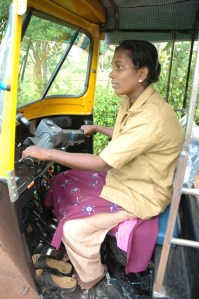
This is the report of a solidarity mission that was invited by Feminists Kerala Network to visit Payyanur and attempt to ascertain the facts around an incident of violence involving Chithralekha, a Dalit woman auto driver, on January 20, 2010.
Feminists Kerala Network is a loose network based in Kerala and outside, of feminists, Dalit activists, queer activists and other individuals involved with new social movements in Kerala.

The solidarity mission consisted of

Gail Omvedt, Professor, B. R. Ambedkar Chair at Indira Gandhi National Open University, Delhi; V Geetha , Publisher (Tara Books), author and social activist, Chennai; K.K Preetha, Advocate, Kerala High Court, Ernakulam; Nivedita Menon, Professor, Jawaharlal Nehru University, Delhi.

The team visited Payyanur on February 7-8, 2010.

Continue reading “Living outside the track”: A woman worker’s struggle against caste and patriarchy in Kerala

“Twenty million out of twenty-seven million Nepalis are with the Maoists”: Interview with Prachanda

(This interview of Pushpa Kamal Dahal by me appeared in the Nepali Times a few days ago, along with another report.)

A conversation with Maoist supremo Prachanda this week not only brought out the party’s new line, but also offered a glimpse into his analysis of current politics and future strategy.

The root of the problem, according to Prachanda, is that the 12-point understanding was ‘tactical’ for everyone who signed the agreement. “The other side felt they could get us into the mainstream and weaken us. We thought we could use the process to create a new mainstream, which would include political competition.” Neither side got what they wanted, entirely. This paradox has forced the parties to make a more fundamental strategic choice. “This was inevitable and we are now heading for a crisis climax.”

The army issue is key. Neither side feels it lost the war. Prachanda concedes that no one won the war in material terms, but believes the Maoists won the war politically. “It was the then Royal Nepalese Army’s mandate and goal to protect the monarchy and block a republic,” he says. “They failed, and the PLA played a big part in bringing about this change.” The way forward for these “recognised and legitimate” outfits, he says, is “sticking to the peace accord, democratising the army and professionalising the PLA.” Continue reading “Twenty million out of twenty-seven million Nepalis are with the Maoists”: Interview with Prachanda

The Many ‘Vices’ of Chitralekha

Chitralekha, a dalit woman from Payyanur, Kannur, has been in the news since 2005, for her open challenge to the CITU in that left bastion. An autorickshaw driver, she had protested at the CITU’s constant interference at work and the intensely male hostility against her presence in an almost exclusively male line of work. Braving ‘character-assault’ from the CITU which called her a ‘loose woman’, a ‘regular drunk’ and so on, she continued working until,in December 2005, her autorickshaw was burned down. She fought, however, and was supported by various Dalit, Feminists and Citizen’s initiatives. In June 2008, she procured a new autorickshaw with their support. This did not mean that she was now acceptable to the CITU . Now recently, she complained that the CITU had seized a chance encounter to beat her and her husband, and the police, who arrived on the scene, took them to the police station and unleashed even worse violence. Her complaints have been ignored or treated with hostility by the mainstream media in Kerala. Activists and concerned persons in and outside Kerala, however, have rallied to her support. Continue reading The Many ‘Vices’ of Chitralekha

Jyoti Basu and the Passing of an Era

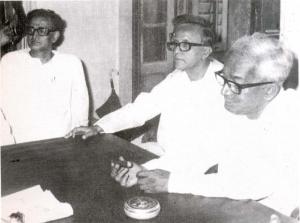
Jyoti Basu, Promode Dasgupta and Saroj Mukherjee

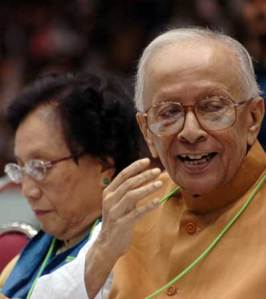
With the passing away of Jyoti Basu, the curtain comes down on an entire chapter of communist history in this country. Basu may have been the last of a generation that learnt its politics in the stormy days of the anticolonial struggle and who lived through the ups and downs of politics – from the underground days of the 1930s and 1940s to the initiation into the ways of parliamentary democracy. The long engagement with parliamentary democracy was to lead to Basu’s – and the communists’ – long stint in power. And Basu was one of those rare communists for whom democracy was not a mere strategic imperative but a value to be internalized.

Basu belonged to a generation of communists who worked their way from the bottom up. Trained in Law in England, Basu returned to India, determined to work in the communist movement. Muzaffar Ahmed, the then secretary of the undivided communist party sent him to work among the railway workers. It was there, working among and organizing the railway workers that Basu entered mass politics.  It was probably in this process that Basu developed his distinctive style of politics – a style that we have yet to understand fully.

Continue reading Jyoti Basu and the Passing of an Era

Remembering Jyoti Basu: Monobina Gupta

This is a Guest Post by MONOBINA GUPTA

Jyoti Basu
Jyoti Basu

While waiting endlessly at the CPI-M headquarters in Delhi, we, the Left-beat reporters, often used to say how incredibly dull the beat would be in the absence of Jyoti Basu, Indrajit Gupta, and Harkishen Singh Surjeet. With their distinctive personalities and distinct style, each one had livened up the tedious job of keeping track of the Left parties and their leaders. Indrajit Gupta would speak in a baritone voice, trotting out gruff answers; the ever-amiable Harkishen Singh Surjeet, never failed to pick up the phone, was always ready to share a laugh with us. But of these three colourful Communist stalwarts, it was Basu who used to keep us most preoccupied, with his ‘read-between-the-line’ one-liners, exasperatingly short, brusque replies, sometimes even with outright sarcasm or rudeness.

Continue reading Remembering Jyoti Basu: Monobina Gupta

Inaugurated: The Malabar Moral Police!

The dastardly attack on the eminent writer Paul Zachariah by the DYFI in the CPM fortress of Payyanur in north Kerala on 10 January has been roundly condemned across the political spectrum in Kerala. Zacharia was heckled and abused at a literary seminar organized by a publisher for  criticizing the moral policing  practiced by the official left in Kerala. He condemned the recent DYFI-PDP joint ‘moral action’ against the Congress leader Rajmohan Unnithan and a Sewa Dal leader which, according to the the DYFI leadership, were ‘provocative’. Zacharia was accosted by a gang of men when he was about to leave Payyanur and openly threatened. He was told that such talk was not permitted in the left bastion of Payyanur; when the threat did not produce the desired reaction, they resorted to physical intimidation, and relented only after the intervention of the organizers who are CPM sympathizers, and other writers present there. The day after, prominent leaders in the CPM, including the Chief Minister and the Minister for Education, condemned the action. Continue reading Inaugurated: The Malabar Moral Police!

Protest and Terrorism, Is there a Difference?

Sufiya Madani of the PDP has been granted conditional bail by the Ernakulam Sessions Court Judge after a tense wait following her arrest on 17 December. She was remanded to judicial custody by the first class magistrate court at Aluva which had refused her bail. Meanwhile, the mainstream media went on a speculation-spree, even publishing ‘evidence’ that she had abetted terrorism and violence — the burning of a bus owned by the Tamil Nadu Road Transport Corporation at Kalamassery in 2005 during protests against the PDP leader Abdul Nasser Madani’s (Sufiya’s husband) continued detention in the Coimbatore jail . Continue reading Protest and Terrorism, Is there a Difference?

Savarna Terror Erupts in Kerala

(with inputs from Mythri Prasad Aleyamma)
I admit, this title sounds sensationalist. But one can hardly avoid resorting to it when confronted with utterly stupefying news of attacks on dalit colonies almost next door to Kerala’s capital city and nerve centre of Malayalee politics, and that too, by a minor anti-political force that has a legacy of anti-South Indian hatred — the Siva Sena. And of course when one is confronted with the hard, stony silence of almost all sections of the media about this. The mystery of the murder of an elderly, innocent morning-walker in Varkala, a town close to Thiruvananthapuram (of which I wrote in an earlier post) still remains a mystery; the police story is so full of holes that it looks like a sieve. But the Guardians of our Free Press are still lapping police versions and not conducting independent investigation. Activists who have dared to do so have been heckled and hounded, even senior and respected human rights activists like B.R.P.Bhaskar, by the Siva Sena, and their protests have been ignored. Meanwhile violence continues to be unleashed against the supporters of the group that has been accused of murder, the Dalit Human Rights Movement (DHRM).

Continue reading Savarna Terror Erupts in Kerala

बीच का रास्ता नहीं होता, कॉमरेड!: ईश्वर दोस्त

This is a guest post by ISHWAR DOST

ध्रुवीकरण की खासियत यह होती है कि वह बीच की जगह तेजी से खत्म करता जाता है। चाहे वह सांप्रदायिक ध्रुवीकरण हो या अस्मिता पर आधारित या किसी और मुद्दे पर। राज्य की दमनकारी हिंसा बनाम माओवादी हिंसा एक ऐसा ही ध्रुवीकरण है। इस सरलीकरण में छिपी राजनीति पर सवाल उठाना जरूरी हो गया है। युद्ध की भाषा बोलती और बंदूक को महिमामंडित करती इस राजनीति के निशाने पर क्या जनसंघर्षों की लोकतांत्रिक जगह नहीं है? माओवादियों के सबसे बड़े दल पीडब्ल्यूजी के नाम के साथ ही जनयुद्ध शब्द लगा हुआ है। छत्तीसगढ़ सरकार ने एक सरकारी जनयुद्ध को सलवा जुडूम के नाम से प्रायोजित किया हुआ है। केंद्र सरकार ने पहली बार माओवाद के खिलाफ युद्ध की शब्दावली का इस्तेमाल किया है, फिर उस पर सफाई भी दी है। अगर माओवाद लोकतंत्र के प्रति अपनी नफरत नहीं छिपाता तो उत्तर-पूर्व से लेकर गरीब आदिवासी इलाकों तक कई सरकारें भी राजनीतिक-सामाजिक गुत्थियों को महज सुरक्षा के सवाल में तब्दील कर बंदूक की नली पर टंगे विशेष सुरक्षा कानूनों के जरिए सुलझाना चाहती हैं।

अन्याय के खिलाफ जनलामबंदी, संघर्ष और प्रतिरोध की सुदीर्घ परंपरा को युद्ध के अतिरेक में ढांपने की कोशिश की जा रही है। युद्ध सीधा सवाल करता है कि तय करो किस ओर हो तुम? यह सवाल एक-दूसरे से युद्ध करता या उसके लिए पर तौलता कोई भी पक्ष किसी से भी पूछ सकता है।
Continue reading बीच का रास्ता नहीं होता, कॉमरेड!: ईश्वर दोस्त

Maoist Revolution, Liberal Naivete

Responding to the call by the Home Minister and prime Minister of India to halt violence to facilitate talks, Maoist leaders ridiculed them and asked them to get their history right. According to them it was wrong to say that the ‘war’ that is now being played out in the theatre of the jungles of  Chhatisgarh, Jangalmahal of Bengal, Jharkhand , Orissa and other states is of recent origin. This is only the latest   phase of the “people’s war” that is being waged since 1967 and would not stop until the ultimate objective of establishing Communism is achieved.  The Constitution of the CPI(Maoist) is very unambiguous, “The ultimate aim or maximum programme of the party is the establishment of communist society. This New Democratic Revolution will be carried out and completed through armed agrarian revolutionary war i.e. the Protracted People’s War with area wise seizure of power remaining as its central task.”

Area wise seizure of power is what the Maoists are busy with. They have succeeded, partially or fully in many areas of different states. What needs to be understood is that it is not development they are opposed to as is evident from the statements of their leaders.  They are ready to let development activities take place, provided it is under their supervision. They are interested more in making themselves the lone political voice of the people. One should ask why do they keep abducting, harassing, threatening or killing the members and leaders of other political parties in the areas where they rule using the strength of their guns? Why do they force people to resign from other political parties? Their answer is very simple: whoever is seen to interrupt or impede the armed people’s war is either a class enemy or an agent of the class enemy represented by the state and is therefore on the other side of the war.
Continue reading Maoist Revolution, Liberal Naivete

माओवादी नेपाली कॉमरेडों से सबक लें

भारत के माओवादियों को नेपाल के माओवादियों से सबक लेना चाहिए, ऐसा पिछले दो साल से कहा जा रहा है. समझ यह रही है कि नेपाली माओवादियों ने सशस्त्र संघर्ष का रास्ता छोड़कर संसदीय लोकतंत्र में भागीदारी का फैसला किया . लेकिन नेपाली माओवादियों के प्रति भारतीय वामपंथियों के आकर्षण की वजह शायद यह भी रही है कि उन्होंने दीर्घ जनसंघर्ष के रास्ते वह हासिल कर लिया जो यहां की  कम्युनिस्ट पार्टियों ने  अलग-अलग समय में हथियारों के सहारे हासिल करना चाहा था और जिसमें वे सफल नहीं हो पाईं. संसद में हिस्सा लेने के उनके निर्णय को उनकी परिपक्वता का सबूत  माना गया. संसदीय लोकतंत्र को लेकर माओवादियों या आम तौर पर कम्युनिस्ट दलों का रुख क्या रहा है, यह उनके दस्तावेजों को पढ़ने से मालूम हो जाता है. वे इसे लोकतंत्र  की एक हेय या हीन अवस्था मानते हैं और इसे अपना ऐतिहासिक दायित्व मानते हैं कि वे लोकतंत्र को एक उच्चतर अवस्था पर ले जाएं. चूंकि समाज के विकास का एक नक्शा उनके पास है, जिसमें सामंतवाद के बाद पूंजीवाद का आना अनिवार्य है और तभी समाजवाद  के लिए आवश्यक  उत्पादन-पद्धति और उत्पादन संबंध की ज़मीन बन सकती है, यह जिम्मेवारी भी वे अपने ऊपर ले लेते हैं कि सामंतवाद से पूंजीवाद के संक्रमण को वे पूरा करें.
Continue reading माओवादी नेपाली कॉमरेडों से सबक लें

The New Face of Capitalist War and Duty of the Left:Progressive Students Union

This guest post is an appeal circulated by Progressive Students Union (PSU) – Jawaharlal Nehru University (JNU) – about the state’s war on “Maoist violence” , adding to the growing criticism of the CPI(Maoist) that cannot be conveniently dismissed as pro-state or anti-Left.

As has already been declared all across the national media, the state has declared war on “Maoist violence” across the country and is about to unleash its might on some of the most neglected regions and people of this country. While the Maoists are the declared target of the State, it is needless to say that they have hardly any qualms about “breaking a few eggs to make an omlette”! The thousands of adivasis and civilians going to be caught in the crossfire would be portrayed by the media as an inevitable but necessary price to pay for the eradication of the Naxal ‘menace’. That may well be only less than half the story, because another reason for state operations in this area is the immense mineral wealth there which can not be passed on to Indian capital unless adivasis living there are displaced, and their survival systems completely destroyed. According to reports from Chhatisgarh, the state sponsored Salwa Judum has displaced more than three hundred and fifty thousand adivasis in the old Bastar area. Fifty thousand have moved to neighbouring states, another fifty thousand are living under the surveillance of para-military forces in state controlled camps, the remaining two hundred and fifty thousand have moved deeper into the jungle to escape the violence and pillage of Salwa Judum. While the adivasis of Central India have faced, and resisted state violence for long, the Central Home Ministry – under the leadership of the suave and genteel Home Minister and Prime Minister –  has made plans for a larger offensive named ‘Operation Green Hunt’ (with the open possibility of aerial bombardment) to be launched in November this year. Progressive Students Union (PSU) condemns in the strongest terms these actions of the state which amounts to nothing but declaring war on its own citizens.

Continue reading The New Face of Capitalist War and Duty of the Left:Progressive Students Union

An encounter with Chhatradhar Mahato: Monobina Gupta

This guest post by MONOBINA GUPTA is the original of the article published in The Times of India today.

Monobina’s book on Left politics, Postcards from the Margins, is in press with Orient Blackswan, forthcoming in 2010.

The Delhi bound Rajdhani Express held up by supposed ‘Maoists’ for seven hours in West Medinipore had emblazoned on its body: Chhatradhar Mahato is a good man. He is not a criminal.

People’s Committee Against Police Atrocities (PCPA) Chief Mahato was put behind bars in the aftermath of waves of violence lashing West Bengal post 2009 general election results. There was speculation that the PCPA was demanding Mahato’s release. Equally, there was curiosity about Mahato who till a couple of months ago, did not seem to fit the bill of a gun-toting Maoist, a cold-blooded executioner.

When I met Mahato in Lalgarh on the eve of general elections in March earlier this year, he spoke a democratic language far removed from guns and killings. On my arrival that day I found Lalgarh abuzz with news of police picking up three villagers supposedly Maoists, and a murdered PCPA activist.  Mahato was in the midst of an organizational meeting under a tree in Lalgarh’s sublime, verdant surroundings. A tall, lanky man, smartly dressed, with a pair of sunglasses to beat the piercing July sun he was sitting with his comrades putting inside envelopes hand-written notices for PCPA’s next public meeting. Brother of Sashadhar Mahato, a Maoist fugitive, Chhatradhar was catapulted to the PCPA leadership virtually overnight, following a brutal police attack on villagers in the aftermath of a Maoist plot targetting Chief Minister Buddhadeb Bhattacharjee.
Mahato said he would talk to me after lunch. The PCPA was running a community kitchen inside a mud hut where activists had their meals – rice and vegetable curry. This was where I met Mahato relaxed, lying down on the refreshingly cold mud floor.

Continue reading An encounter with Chhatradhar Mahato: Monobina Gupta

What happened with the Bhubaneswar Rajdhani? Reflections on Dissent and Violence

From passengers’ eyewitness accounts, and those of the driver and assistant driver of the train (congratulations, for once, to Times of India and to Indian Express reporter Debabrata Mohanty for going beyond statements from police and other officials of the Indian state), this is what happened:

The train was running on schedule when the driver noticed logs on the tracks and a large mob of about 300 waving red flags,  rushing towards the train. As the train screeched to a halt, stones were pelted (some passengers reported minor injuries from shattered window glass) and some men climbed into the driver’s cabin.  Said the driver, K Ananth Rao and his assistant K G Rao to the ToI reporter, Sukumar Mahato, “They said they were holding up the train because the state had waged a war on tribals. We followed them and sat by the tracks.”

[The Indian Express story by Ravik Bhattacharjee and Kanchan Chakrabarty, unattributed to any source, claims “The Rajdhani Express was intercepted by a 1500 strong mob and its driver and his assistant were taken hostage.”]

The PCAPA (People’s Committee Against Police Atrocities) claimed

a) it was not hostage-taking, but a rail abarodha (a blockade) of the train for flouting the rail roko call, when an indefinite bandh against atrocities by the joint security forces in the district had begun since morning.

b) it was meant to draw attention to the arrest of Chhatradhar Mahato, the PCPA leader.  One of the slogans sprawling in red letters across the side of the train says, in English, Chhatradhar Mahato is a good man.

Continue reading What happened with the Bhubaneswar Rajdhani? Reflections on Dissent and Violence

दो पाटन के बीच

माओवादी हिंसा जायज़ है या नाजायज़? यह तसल्ली  की बात है कि  इस  सवाल पर अब बहस शुरू हो गई  है. इस प्रश्न पर बात करने का अर्थ यह नहीं है कि राज्य हिंसा का विरोध छोड दिया जाए. छत्तीसगढ़ में ”ऑपरेशन ग्रीन हंट” की व्यर्थता के बारे में और  कोई  नहीं , पंजाब के ” हीरो” के.पी.एस.गिल बोल रहे हैं. वे कोई  झोला वाले  मानवाधिकार कार्यकर्ता नहीं, जिनकी चीखो-पुकार को दीवानों की बड़ मान कर आज तक राज्य और पूंजी के पैरोकार नज़रअंदाज करते आए हैं.  दांतेवाडा  में दो दशकों से अधिक समय से काम कर रहे हिमान्शु ठीक ही पूछते हैं कि हर बार छत्तीसगढ़  के गाँवों  में राज्य की ओर से पुलिस या अर्धसैनिक बल ही क्यों भेजे जाते रहे हैं, डाक्टर, आंगनवाडी कार्यकर्ता या शिक्षक क्यों नहीं! इस देश के आदिवासियों के लिए राज्य का अर्थ क्या रह गया है?हमारे मित्र सत्या शिवरामन ने भी यह सवाल किया कि राज्य को आदिवासियों की सुध बीसवीं सदी के आखिरी दशकों में क्यों आयी? क्या इसका कारण यह था कि उसे यह अपराध बोध सालने लगा था कि उसकी विकास योजनाओं के लाभ से राष्ट्र का यह तबका छूटता चला गया है?  या क्या इसकी ज़्यादा सही वजह यह थी कि देश और विदेश की पूंजी को अब अपने लिए  जो संसाधन चाहिए, वे जंगलों की हरियाली में छिपे हुए हैं और उस ज़मीन के नीचे दबे पड़े हैं, जिन पर  आदिवासी ‘हमारे’ इतिहास के शुरू होने के पहले से रहते चले आ रहे है! क्या राज्य को यह अहसास हुआ कि वह इस संपदा से अब तक  वंचित रहा है और इसकी वजह आदिवासियों का पिछडे तरीके से रहना ही है? पूंजी की नए संसाधनों की खोज और  आदिवासियों के विकास में  राज्य की दिलचस्पी का बढ़ना, क्या ये दो घटनाएं एक ही साथ नहीं होती दिखाई देती ?

Continue reading दो पाटन के बीच

Mass Politics, Violence and the Radical Intellectual

With the debate on Maoist violence and Operation Green Hunt hotting up, things are taking a disturbing turn. The danger really is that all spaces of radical political movements and indeed the entire space of the Left, part of it gradually vacated by the parliamentary ‘Left’ in recent decades and finally completely abandoned in the last few years, will now be virtually erased. In its place will be installed the phantom of an ‘armed struggle’ that threatens to completely swallow up the spaces once occupied by different shades of the CPI(ML) and the Naxalite movement and other Continue reading Mass Politics, Violence and the Radical Intellectual