Category Archives: Media politics

Letter to the Press Council Chair Person Justice Markandey Katju about SUN News reportage of the arrest of the supporters of the Kudankulam Struggle

Guest Post by V.GEETHA

My name is V. Geetha, and I live in Chennai. I am a writer, with an interest in civil rights issues. I write this note to register my shock and bewilderment at some recent developments in my state. Given your concerns about the relationship between freedom and responsibility as far as the media is concerned, I felt it important to convey some of my – and other peoples’ – misgivings over media reporting of sensitive political events.

Throughout today, March 25, SUN News, part of the SUN TV network, while reporting on three men arrested over the last few days, for supporting the anti-nuclear plant struggle at Kudankulam has alleged they are all ‘Maoists. The channel has further gone on to note that it has got wind of a ‘ naxalite plot’ that is all set to take over the anti-nuclear plant protests at Idinthakarai. Continue reading Letter to the Press Council Chair Person Justice Markandey Katju about SUN News reportage of the arrest of the supporters of the Kudankulam Struggle

Mobile phone based report for Community Radio from Idinthakarai, Kudankulam

Recording of a report by Sundari from Idinthakarai, the village in Kudankulam where many are on fast unto death and 15000 people have gathered in protest of the Nucelar Plant. Sundari is a long time local activist in the region who has been part of the struggle against the Nuclear plant.

Police have cracked down on the village and there is now a complete blockade. Journalists are not being allowed at all. This is an effort to get news out regularly. This recording has been made possible by the efforts of activists who work with enabling reporting for community radio through mobile phones. These broadcast and others that will follow, will be sent to community radio networks within Tamilnadu and around the country. Please spread the news. A translation is available below.

Sundari reports from Idinthakarai here.

Continue reading Mobile phone based report for Community Radio from Idinthakarai, Kudankulam

Some thoughts on the “hawa” in Indian elections

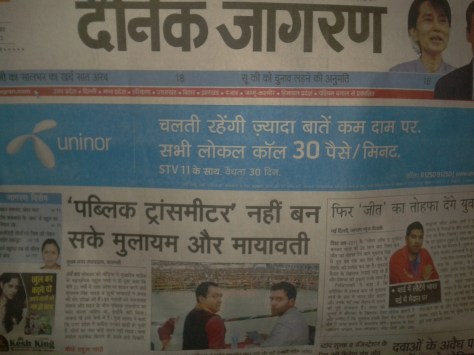
‘Public transmitter’ nahi ban sakey Mulayam aur Mayawati. (Mulayam and Mayawati could not become public transmitters.)

In the Hindi original of that line, the phrase public transmitter is in single quotes only because they are English words in a Hindi paper. The entire sentence is not in quotes. A sentence like this, if it were the title of a text, would count as an expression of opinion. And yet, it was a news headline in the Varanasi edition of UP’s largest selling daily, Dainik Jagran. In case you could not guess who it was trying to help, there was the photo of Rahul Gandhi below the headline. This was the lead story. Continue reading Some thoughts on the “hawa” in Indian elections

Batla House and the problem with the deluded journalist: Manisha Sethi

This guest post by MANISHA SETHI is a response to “Congress and the Problem with the Deluded Liberals” by Mihir Srivastava in Open magazine

Mihir Srivastava is very upset that the debate on Batla House refuses to die down. In his view, his piece in India Today – “Inside the Mind of the Bombers – appearing soon after the ‘encounter’ should have settled the debate once and for all. But he was surprised that it wasn’t received as a resolution. He is even more upset that deluded liberals (read Arundhati Roy) are no longer on talking terms with him.

“In the Batla House case, which I reported much the same way I had reported so many of the cases they were happy with, it is just that the facts I saw and reported did not mesh with what they wanted to believe.”

This is simply not true. The many stories that deluded liberals approved of, according to, Mr. Srivastava, and which he cites to bolster his own reputation, are in fact very different from his India Today’s ‘story’. His expose on the Red Fort terror attack in Tehelka, for example, critically examined the evidence produced by the police, verified and cross checked the statements made by the accused in court and even brought out the discrepancies in the observations made by the court and its eventual judgement which upheld the death sentence of Md. Arif alias Ashfaq alias Abu Hamad. ‘Wrong Man to the Gallows’ is an example of good investigative journalism, not because it confirms our worst suspicions about the ways in which investigative agencies frame innocents, but because it painstakingly pieces together evidence and doesn’t get swamped under nationalist hyperbole spun by the mainstream media to take a cold, hard look at the evidence. Continue reading Batla House and the problem with the deluded journalist: Manisha Sethi

Mass media and the Indian national project: Raza Rumi

Guest post by RAZA RUMI

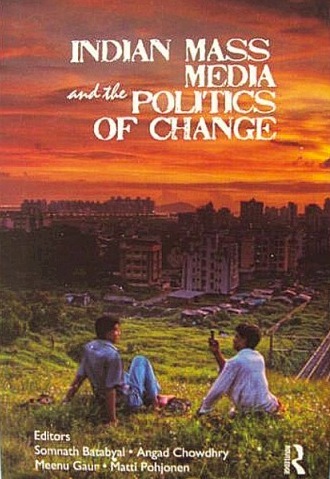
Indian Mass Media and the Politics of Change; Edited by Somnath Batabyal, Angad Chowdhry, Meenu Gaur and Matti Pohjoen; Routledge, UK; 230pp. £65

It has taken me some time to finish reading the assemblage book entitled Indian Mass Media and the Politics of Change. An overly long reading list has been haunting me for the past few months, but I was slow and self-indulgent as I read and re-read many sections of this insightful book which is path breaking in many ways. First, it is a unique collection which emanated from intense thinking and collaborative action; and second, given the fairly recent rise of Indian mass media (also applicable to South Asia in general) this is quite a seminal work of its kind. Continue reading Mass media and the Indian national project: Raza Rumi

Library.nu R.I.P

Amongst the competing visions of heaven offered by the various prophets and saints, my favourite remains the one conjured by St. Alberto Manguel. For him, heaven is a place where you can read all the books that you did not finish. It would be difficult for me – proud member of the tribe of bibliophiles- to imagine a better idea of paradise than this. I would even hazard a bet that many of you fellow tribe members would probably imagine yourself in this other world (with enough time) curled up in a  comfortable sofa, opening a copy of Joyce’s Ulysses for the 28th time – saying finally this time.

But even within the order of the saints, one must respect the subtle rules of hierarchy and pecking order, and by that count St. Manguel would have to make way for the highest ordained of them all- the blind seer who saw everything- Jorge Luis Borges, who had much earlier been granted a vision of paradise and he declared that it was shaped like a library.

Continue reading Library.nu R.I.P

What the Wall Street Journal Can’t See in India’s Forests: Aruna Chandrashekhar

 Guest post by ARUNA CHANDRASEKHAR

If we cut the entire forest down, where will we live?’- Muria adivasi, Warangal, Andhra Pradesh 

I don’t even know how to begin addressing a story as blindly biased in its premise as this one in the Wall Street Journal, which draws an obtuse line between loss of forest cover and land usage by adivasis, when it is land grab by industrialization that is endangering all we have left.

So I’m going to do this paragraph by paragraph.

India’s forest cover decreased by 367 square kilometers between 2007 and 2009, and it was primarily tribal and hilly regions that were to blame.

The tribal and hilly regions are the last vestiges of India’s forests.  How can you blame entire regions, without casting any aspersions on institutions or practices responsible? Continue reading What the Wall Street Journal Can’t See in India’s Forests: Aruna Chandrashekhar

My Abu Talha Moment: Sanjay Kak

Guest post by SANJAY KAK

Last week was my Abu Talha moment. That’s when dubious honours rain on you, unsolicited, undeserved. There I was, charged with wrecking a literary festival in Kashmir; links to the Parliament attack case; racism against Kashmiri pandits; scuttling a film screening in a women’s college in Delhi… And if that doesn’t create a frisson, I was also said to be on the radar of Mumbai’s Anti Terrorist Squad.

Unable to make the Abu Talha connection? Many in Kashmir know the name as a talisman, the kind that security forces brandish when they periodically feel its time to square their books. It doesn’t take much; they just have to produce a fresh corpse before a pliant media, although one with long hair and a beard, fatigues and an AK47, does make things easier. As Abu Talha, this all-purpose corpse can then be held responsible for fidayeen attacks, the murder of innocent civilians, the assassination of political workers, massacres, and explosions, whatever. Crucially, even as Abu Talha is lowered into the ground, all further investigations into those events can be safely laid to rest.

End of story: tamam shudh? Well, only sort of. Because Abu Talha will be called upon to perform again, dusted up and presented afresh to the world. Again. He’s not alone, for with so much happening in Kashmir, Abu Talha is part of a frequent fighters club: Abu Hamza, Abu Shakir, Abu Waqas, Ghazi Baba… The other day a friend from Kashmir invented one to cheer me up: Abu Tamam, he offered, Father of it All.

Continue reading My Abu Talha Moment: Sanjay Kak

Screening Jashn-e-Azadi at Presidency University, Kolkata: Waled Aadnan

Guest post by Waled Aadnan

It can be said that 86/1 College Street, Calcutta, has seen a microcosm of the history of modern India unfold within its walls. Since 1874 when the already fifty-nine year old Presidency College shifted to its current address, future Presidents and Prime Ministers of  India, Pakistan and Bangladesh; Nobel Laureates, freedom fighters, an Academy Award winner, Bharat Ratnas; the leadership of the Naxalite movement of the 60s and 70s; and eminent judges, writers, journalists, scientists and actors, have spent their student days at 86/1.

Two years ago, soon after I joined the institution, the Left Front government upgraded Presidency College to the status of a state University in a last-gasp bid to hold on to the votes of the bhadralok intellectuals. 2012 dawned with no Student Union elections having been held the previous year, and it is in this backdrop that the following events unfold.

Salman Rushdie’s well-publicised ostracism from the Jaipur Literature Festival was met not with outrage in Presi’s canteen addas, but with the absence of even a poster put up in protest. News filtered in of a seminar in Symbiosis University being “threatened.” But little awareness existed among students who were more inclined to read tabloid-like, unputdownable newspapers than their relatively austere counterparts, including The Hindu which broke the story.

Continue reading Screening Jashn-e-Azadi at Presidency University, Kolkata: Waled Aadnan

Beyond the Four Corners of the Law and the Diggy Palace: Faiz Ullah

Guest post by FAIZ ULLAH

I.

Highstreet Phoenix, an upscale shopping mall, rose from the ashes of Lower Parel’s semi-functional Phoenix Mills in the late nineties’ Bombay. It has since successfully emerged as one of the most popular shopping and leisure destinations for the city’s affluent set. Highstreet Phoenix is just one of the many mills in the South-Central Bombay’s Girangaon that have been leased, sold or redeveloped in contravention of industrial and land-use policies and court judgements especially in the last two decades. These large swathes of urban land, two thirds of which was meant for low-cost housing, civic amenities and open spaces, are being fast converted into exclusive housing societies, office complexes and recreation zones that only a few can access and afford. Such tensions, some like McKinsey & Company (of Vision Mumbai report fame) would say, are inevitable, even necessary, for the cities that aspire to be world class.

Continue reading Beyond the Four Corners of the Law and the Diggy Palace: Faiz Ullah

The Place of Dissent in the Campus: Akshath Jitendranath

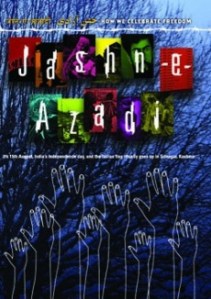
This is a guest post by AKSHATH JITENDRANATH, student at Symbiosis International University, Pune, where a screening of ‘Jahsn-e-Azadi’ by Sanjay Kak was cancelled under pressure from right-wing groups and the Pune Police.

The university campus is where nascent opinion moulds itself into ideological shape. Care must be taken to surround the student with ideologies of different shades. This is a prerequisite for any educational ideology that aspires to be holistic. Pursuant to this end the Symbiosis International University is guided by an ideology that reads, Vasudhaiva Kutumbakam, meaning the whole world is one family. This is a high ideal to be guided by.

However, the events that transpired over the last few days have left this vision a little blinded. Following threats received from the Akhila Bharati Vidyarthi Parishad  (ABVP henceforth), the Symbiosis College of Arts and Commerce have postponed indefinitely, ‘Voices of Kashmir’, a national symposium on Kashmir which was to be held with the support of the University Grants Commission. The ABVP’s major bone of contention was the screening of well known film maker Sanjay Kak’s film, Jashn-e-Azadi (This Is How We Celebrate Freedom). The ABVP claim that the film and the film maker represent an ideology that is anti-India. Further, they threatened violence if the film were to be screened. The administration of the Symbiosis International University, instead of being guided by their ideological vision, gave in to the ABVP threats. Continue reading The Place of Dissent in the Campus: Akshath Jitendranath

The untold stories of a political process

AP Photo by Altaf Qadri

Less than a month before the 2009 Lok Sabha elections, the wedding of a top Uttar Pradesh bureaucrat’s daughter at the Taj Hotel in Lucknow presented senior journalists invited from Delhi with an opportunity to interact with the state’s leading bureaucrats—who are, in Chief Minister Mayawati’s reign, more important than politicians. For a select few celebrity editors, there was even a rare durbar with Mayawati herself, who carefully arrived after the governor had left, presented flowers to the newly married, and proceeded to a barricaded enclosure to meet India’s opinionmakers. I don’t know what the conversation was like, but I saw the journalists’ lips move more than hers.

After the meeting was over, I asked one celebrity TV anchor what he thought the election results were going to look like. He said the Mayawati-led Bahujan Samaj Party (BSP) was very strong, and predicted she could win 50 of the 80 seats the party was contesting. The Delhi media’s awe of Mayawati was at a historic peak; they had taken her prime ministerial ambitions seriously. I told this studio journalist that the buzz in Lucknow was that the Congress could spring a surprise. “No chance,” he said. “They don’t have any organisation. Azharuddin is my friend and he called me to say he needs my help. Even a celebrity like Azharuddin is going to lose!” Read More…

All I want is war and peace

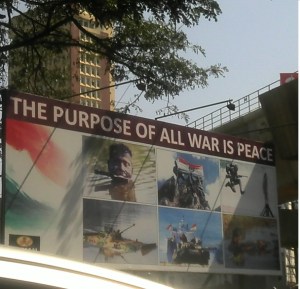
This poster on M.G.Road in the heart of Bangalore, reminded me uncannily of the lines in the marvellous scene in the Mel Brooks film To Be Or Not To Be where he sings All I Want is Peace:

The process is the bloody punishment

Sec. 153A of the Indian Penal Code – that favored child of the religious right- provides for punishment of upto three years imprisonment for the promotion by words (spoken or written) of disharmony, feelings of enmity, hatred or ill will between religious communities. The punishment laid down in this section has to one of the most redundant penal sanctions in the law since in this case the process is the bloody punishment.

There is a similar redundancy in Sec. 295A of the IPC which provides that “Whoever, with deliberate and malicious intention of outraging the religious feelings of any class of citizens of India, by words, either spoken or written, or by signs or by visible representations or otherwise] insults or attempts to insult the religion or the religious beliefs of that class, shall be punished with imprisonment of either description for a term which may extend to three years, or with fine, or with both.

Continue reading The process is the bloody punishment

Confuse and deceive – Email interception in Kerala and the formula for political survival: Yaseen Ashraf

Guest post by YASEEN ASHRAFassociate editor of the Malayalam weekly, Madhyamam

An article by Viju V Nair in Madhyamam Weekly (issue 727, 23 January 2011) has raised the hackles of the Kerala Government and its political allies. Strange, because the report was about the excesses of the police intelligence, something which can be – and should be – investigated and corrected. The investigative report claimed that 268 email accounts were ordered by the Kerala state intelligence to be tapped, out of which a huge majority belong to Muslims. None of these persons has any previous criminal history. So it is not clear why they are put under the cyber scanner. Continue reading Confuse and deceive – Email interception in Kerala and the formula for political survival: Yaseen Ashraf

The BSF as Pornographer: Bravehearts with Bluetooth

So, this is how the borders of the Republic of India are also defended. With sticks, ropes and bluetooth enabled mobile phones. Eight soldiers of the Border Security Force, hold down a young Bangladeshi man accused of cattle smuggling. He is stripped naked, hogtied and then thrashed. He screams in agony and humiliation. The soldiers act as if they are out on a picnic. They discuss whether or not to give him some tea. Where to hurt him, on which body parts. How big a stick to use on him. Someone says “cut his ear off”. They stroll casually around him as he is humiliated. They laugh. He cries, as people usually do in these circumstances, and seems to call for his mother. Someone, probably one of the soldiers, records it all on video, on the 9th of December, 2010, somewhere along the Indo-Bangladesh border in Murshidabad, West Bengal

Continue reading The BSF as Pornographer: Bravehearts with Bluetooth

Jaypee and Mahyco as Indian Express sponsors: There is conflict of Interest here, Sir

[The following is a statement issued by concerned individuals regarding the sponsorship of the ‘Excellence in Journalism’ awards organized by the Indian Express.]

On January 10 and 11, 2012, half page advertisements in the Indian Express (IE) newspaper (at least in the Delhi edition) announced that on Jan 16, 2012 the IE Excellence in Journalism Awards will be given. The advertisement also said that the main sponsor is Jaypee Group and among other sponsors include the Mahyco Monsanto.

One may recall that Indian Express has been on a campaign mode advocating big dams in general. It has been specifically campaigning against the movements like the Narmada Bachao Andolan. In March April 2006 the paper specifically ran a campaign against NBA and also against the then Union Minister Prof Saifuddin Soz[1]. In Oct 2010 the paper ran a campaign for large hydro projects in the North East India when the then Environment Minister Jairam Ramesh held an open public hearing on these projects in Guwahati and then wrote to the Prime Minister, raising concerns about so many hydro projects being taken up in NE India and the impacts thereof.

Continue reading Jaypee and Mahyco as Indian Express sponsors: There is conflict of Interest here, Sir

Invisible Censorship – How India Censors Without Being Seen: Pranesh Prakash

Guest post by PRANESH PRAKASH

The Indian government wants to censor the Internet without being seen to be censoring the Internet. This article by Pranesh Prakash shows how the government has been able to achieve this through the Information Technology Act and the Intermediary Guidelines Rules it passed in April 2011. It now wants methods of censorship that leave even fewer traces, which is why Mr. Kapil Sibal, Union Minister for Communications and Information Technology talks of Internet ‘self-regulation’, and has brought about an amendment of the Copyright Act that requires instant removal of content.

Power of the Internet and Freedom of Expression
The Internet, as anyone who has ever experienced the wonder of going online would know, is a very different communications platform from any that has existed before. It is the one medium where anybody can directly share their thoughts with billions of other people in an instant. People who would never have any chance of being published in a newspaper now have the opportunity to have a blog and provide their thoughts to the world. This also means that thoughts that many newspapers would decide not to publish can be published online since the Web does not, and more importantly cannot, have any editors to filter content. For many dictatorships, the right of people to freely express their thoughts is something that must be heavily regulated. Unfortunately, we are now faced with the situation where some democratic countries are also trying to do so by censoring the Internet. Continue reading Invisible Censorship – How India Censors Without Being Seen: Pranesh Prakash

Bhopal, Media and a “Training Manual”: Shalini Sharma

Guest post by SHALINI SHARMA

It hardly needs any corroboration that the Bhopal Movement led by survivors of the world’s worst industrial disaster adheres to the principles of non- violence as dearly as they adhere to their demands of justice and accountability. However, on the 3rd of  December 2011, as thousands of Bhopal gas victims walked towards the city’s railway lines they had little idea that their act of civil disobedience, marking the 27th Anniversary of the disaster, would be sabotaged by the government and that they would be treated like a violent mob.

Anniversary actions are usually treated as rituals by the media. This occasion was different because even though chakka jaam (block the road) has been organised on several previous occasions, the call for blocking the trains or rail roko was an unusual decision. These survivor-led groups were asking the State government to provide the Supreme Court with the right data related to the number of deaths and actual extent of injuries due to the gas exposure.

Continue reading Bhopal, Media and a “Training Manual”: Shalini Sharma

Kerala’s Lost and Found Object of Cinema: Bindu Menon M

Guest post by BINDU MENON M

The fascination for films by Kim Ki Duk, the iconoclast South Korean film maker, and his hold over cinematic imagination in Kerala has generated many anecdotal and apocryphal stories in the film festival circuit in Kerala. Given his popularity, its not surprising at all that Kim Ki Duk films are available in the original and pirated forms in electronic markets in major towns i the State. A recent Malayalam short film titled ‘Dear Kim’ is a letter written to Kim Di Duk by his fans from a remote village in the High Ranges of the Western Ghats. Against all odds, a small group of young men who are laborers set out to watch a Kim Ki Duk opening film in the city , but couldn’t make the journey. The CD that they procure of his film ‘Wild Animals’ turns out to be a pornographic film of the same name! They finally manage to send an email to Kim Ki Duk requesting for his original DVDs. The Korean wave , has taken distinct turns influencing mainstream Malayalam film production as well, prompting a wry and satirical remark from a popular internet portal film critic that at this rate Cochin might soon be declared as the capital of South Korea! Parodying another joke that pronounces Gabriel Garcia Marquez as the most popular Malayalam novelist, it is often said that Kim Ki Duk is the most popular contemporary Malayalam film maker!Kim Ki Duk wouldn’t have been a household name without the International Film festival of Kerala,the large number of film festivals that mushroomed all over the state in the last decade and the pirate DVD market.

Continue reading Kerala’s Lost and Found Object of Cinema: Bindu Menon M

News TV – Caught Between an Anna and a Hard Place: Abhishek Upadhyay

Guest post by ABHISHEK UPADHYAY

Taken in August 2011 at around 2 am one morning at Ramlila Maidan, this photo shows a news TV cameraperson taking sleeping on his chair.

Anna Hazare has returned with his protests and fasting. Should the media, particularly news TV, be more circumspect this time?

Is it time for the media to learn from the Ramlila Maidan experience in August, or should news channels stick to their earlier editorial line of broadcasting the Anna movement in great detail? Back in August, news TV broadcasted Anna’s “satyagrah” allegedly at the expense of the government. The stage is set again, the jury is out. Continue reading News TV – Caught Between an Anna and a Hard Place: Abhishek Upadhyay