Category Archives: Metropolis

Olympics, Art and the Orbit of Capital : Anirban Gupta Nigam

Guest post by ANIRBAN GUPTA NIGAM

The facts:

In 1992,  Prijedor – a mine in a place called Omarska in Bosnia – was transformed into a concentration camp by Bosnian Serb forces. The number of Bosnian and Croat people held in the camp varies between at least 3,334 and 5000-7000. Many of them – around 700-800 by some accounts, many thousands by others – were murdered.

A little over a decade later, in 2004, the world’s largest steel producing company, ArcelorMittal took control of 51% of the Ljubija mining complex, of which the mine of Omarska is a part. In the former concentration camp where thousands had been detained and many brutally killed, mining activity has now resumed. A year later – 2005 – ArcelorMittal promised it would financially back and oversee the construction of a memorial for the victims at Omarska. They never did. Not only that, according to some reports ArcelorMittal recently enclosed the space around the mine, denying people entrance and effectively privatising a place of great trauma and violence for exclusive reasons of commerce.

Meanwhile the company, through the artistic prowess of Anish Kapoor, spearheaded the construction of a massive public art monument meant to become one of the symbols of the forthcoming London Olympics. The Olympic Tower – also known as the ArcelorMittal Orbit – has, from its very beginning, been subject to both massive criticism and support. The back and forth over its status as genuinely “great art” or “fascistic gigantism” and a “waste of public money,” has centred on how people respond to the physical structure, as well as on the merits and demerits of having a large corporate house direct a public art initiative of this kind. On the 14th of April this year, Mladen Jelača, Director of ArcelorMittal in Prijedor, verified to Milica Tomic (from the Monument Group in Belgrade) and Eyal Weizman (professor in Goldsmiths, University of London) that iron from the same ore that was mined in Omarska had indeed been used in the construction of the ArcelorMittal Orbit.

Continue reading Olympics, Art and the Orbit of Capital : Anirban Gupta Nigam
KK Aziz and the Coffee House of Lahore: Chris Moffat

Guest post by CHRIS MOFFAT 

During a recent trip to Lahore, I visited the Sang-e-Meel bookshop on Lower Mall Road in search of K.K. Aziz’s The Coffee House of Lahore. Happily, the store was well stocked with the late historian’s final work, and I spent the afternoon reading the text at a table outside the nearby Tollinton Market. It was a betrayal, perhaps, to read the book in this way, sipping cold drinks from the Hafiz Fruit and Juice Corner rather than something appropriately caffeinated, purchased amidst a flurry of conversations in a busy café. I took some solace in the fact that I was sitting not a stone’s throw away from the former Pak Tea House, once a hub of cultural life in the city and among the many spaces of discourse and dissent mapped by Aziz in his narrative of mid-twentieth century Lahore.

Today, the Pak Tea House appears hollowed and shuttered, no longer decorated with a sign to declare its name or to suggest life inside. In spite of recent rumours of a revival, its vacant façade appears a testament to Aziz’s loud lament in The Coffee House of Lahore: that the city’s culture has “disappeared from view”, that its original landmarks “have been obliterated”. The book emerged out of the historian’s desire to capture, before it is lost, the memory of a period of free thought, argument and cultural effervescence, encapsulated in the life of institutions like the Tea House, the Indian Coffee House, the Arab Hotel, the Nagina Bakery, and other important places of assembly, all of which have now vanished from the urban fabric. Aziz chooses to focus on the particularly tumultuous period between 1942 and 1957, when he was an active participant in this culture as a student of politics and later as a lecturer in Lahore’s Government College.
Continue reading KK Aziz and the Coffee House of Lahore: Chris Moffat

Review: ‘Behind the Beautiful Forevers’ by Katherine Boo

Guest post by MITU SENGUPTA

In a remarkable book about slumdwellers in Mumbai, Katherine Boo brings to light an India of “profound and juxtaposed inequality” – a country where more than a decade of steady economic growth has delivered shamefully little to the poorest and most vulnerable.  But though indeed a thoroughgoing and perceptive indictment of post-liberalization India, the book fits into a troubling narrative about the roots of India’s poverty and squandered economic potential.

This is a beautifully written book.  Through tight but supple prose, Boo offers an unsettling account of life in Annawadi, a slum near Mumbai’s international airport.  In Boo’s words, this “single, unexceptional slum” sits beside a “sewage lake” so polluted that pigs and dogs resting in its shallows have “bellies stained in blue.” It is hidden by a wall that sports an advertisement for elegant floor tiles (“Beautiful Forevers” – and hence the title).  There are heartrending accounts of rat-filled garbage sheds, impoverished migrants forced to eat rats, a girl covered by worm-filled boils (from rat bites), and a “vibrant teenager,” who kills herself (by drinking rat poison) when she can no longer bear what life has to offer.

Continue reading Review: ‘Behind the Beautiful Forevers’ by Katherine Boo

The Many Uses of a U.P Election

I live in Noida, which is the child of an extra-legal union between Delhi and Uttar Pradesh. Noida is not-quite Delhi, not-quite U.P, not quite itself on most days. Living in a cusp has several advantages, however, the main one being that one can look either way, up at Delhi and right down over U.P’s scruffy head. I found myself doing both in the recently-concluded U.P election. Curiously it seemed, for Delhi people, U.P’s 2012 elections were flush with new meaning. For decades the favourite whipping boy of Delhi, U.P had overnight become its favourite gap-toothed angel. For Pratap Bhanu Mehta of the Delhi-based Centre for Policy Research, the U.P election was a historic battle between empowerment and patronage, the future and the past, performance and rhetoric, sincerity and cynicism, and (this is my favourite) ‘rootedness over disembodied charm’. Mehta believes that while voters ‘carefully assessed’ candidates through the ‘prism of local circumstances’, they were no longer prisoners of their identity. Most confounding is Mehta’s view of democracy, “In a democracy, where you are going should be more important than where you are coming from”. These U.P elections “redeemed that promise” according to Mehta, since they were “without a trace of community polarisation: no one felt on the edge or under siege, all could exercise options without being unduly burdened by the past.”

Continue reading The Many Uses of a U.P Election

The Gandhi Chawl Incident: Meena Menon

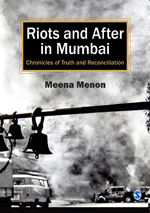
This guest post by MEENA MENON is an extract from her recently published book, Riots and after in Mumbai- Chronicles of Truth and Reconciliation

It was all in the eyes. Beneath the finely drawn brows, they were haunted and distant. For Naina Bane, the night of 8 January 1993 will remain a night of absolute terror. Her escape was miraculous as was her recovery. It took me several months and wrong leads before I met her finally at a family reunion in the suburbs. Dressed in a long mustard coloured ‘maxi’, her hair was drawn back tightly. I found it hard to recognize the same girl who was almost burnt alive on that fateful night in Gandhi chawl. Now 40, there is a faraway look about her and her eyes widen when I ask to speak to her. She got married in 1996 and lives outside Mumbai. Her 6-year-old son keeps her busy. Her husband worked for a mill which closed down, a typical story in Mumbai. He was a badli (temporary worker) and he lost his job. He now works as a watchman. Continue reading The Gandhi Chawl Incident: Meena Menon

From Dehli to New Delhi, it wasn’t 1911

Amidst the cacophony of celebrating 100 years of Delhi, several details seem to have escaped the attention of our ever vigilant media, both print and electronic. This post is to draw your attention to a few of these ‘details’ in an attempt to place the celebrations in what appears to this author to be the correct perspective.

The 12th of December, 2011, can not by any stretch of imagination be described the centenary of Delhi, because there were at least 7 Dehlis before New Delhi came up, in fact 9 Dehlis if one were to add Kilokhri and Kotla Mubarakpurpur, Dehlis in their own right, to the generally accepted list of Qila Rai Pithora, Siri, Tughlaqabad, Jahan Panah, Firozeshah Kotla, Din Panah or Sher Garh or Purana Qila and Shahjahanabad. All of these came up at different times from the  11th century to the 17th century and all of these were more than a 100 years ago.

All that the 12th of December 2011 can claim to be the centenary of, therefore, is New Delhi. Let us look at even that claim a little more closely. What exactly transpired on the 12th of December 1911 that is causing so much excitement a 100 years later? Continue reading From Dehli to New Delhi, it wasn’t 1911

A woman in Delhi Metro, two women in a bus

Many years ago, I was travelling in a DTC bus – or was it a private-run Blueline? – in which the usual sense of calm-with-commotion was disturbed by a sudden act of strategic, small-scale violence, followed by a moment of stunned silence, then some bickering.

Two women were travelling in a bus full of men, and one of them had slapped a man. The man tried to argue and claim innocence, but to no avail. It was obvious to everyone in the bus that the woman would not slap him without a reason. He must have molested her. Most passengers watched silently, eager to closely observe the tamasha so they could relate it to others, like I’m doing now. But quite a few voiced their support of the women, and the bus conductor asked the man in question to get down at the next stop, returning his entire fare. Continue reading A woman in Delhi Metro, two women in a bus

यहाँ से शहर को देखो…

(नई दिल्ली का सौवां साल शुरू होने पर हिंदी साप्ताहिक आऊटलुक  में यह लेख पहली बार प्रकाशित हुआ था.)

अब जबके हर तरफ यह एलान हो चुका है के दिल्ली १०० बरस की हो गयी है और चारों ओर नई दिल्ली के कुछ पुराने होने का ज़िक्र भी होने लगा है, इन दावों के साथ साथ के दिल्ली तो सदा जवान रहती है और देखिये ना अभी कामन वेल्थ खेलों के दौरान यह एक बार फिर दुल्हन बनी थी वगेरह वगेरह तो हमने सोचा के क्यों न इन सभी एलान नामों की सत्यता पर एक नजर डाल ली जाए, और इसी बहाने उस दिल्ली वाले से भी मिल लिया जाए जो इस अति प्राचीन/ मध्य कालीन/ आधनिक नगरी का नागरिक होते हुए भी वैशवीकरण के झांसे में इतना आ चुका है के वो अपने आप को २१वीं शताब्दी के पूर्वार्द्ध में आने वाले आर्थिक संकट को पछाड देने वाले चमचमाते भारत देश की राजधानी का शहरी  होने का भरम पाले हुए है. Continue reading यहाँ से शहर को देखो…

Arrested Development – a comparative study of Delhi’s schools and prisons: Sajan Venniyoor

Guest post by SAJAN VENNIYOOR

“Schools are prisons,” sang the Sex Pistols. “Another brick in the wall,” raged Pink Floyd, “Teacher, leave them kids alone!” Schools and prisons have been so frequently equated in the popular imagination that it has become a cliché almost never held up to scrutiny. But even a cursory study of Delhi’s schools and prisons belies the comparison.

Sure, Delhi’s schools and prisons are both dreadfully overcrowded. Delhi’s jails, built for 6250 prisoners, house 10500 on an average.  We cannot say with any statistical certainly just how overcrowded our schools are, as the Dept. of Education has no idea how many schools it runs or the actual number of teachers and students therein.

But in almost every major indicator of human development, the penal system far outperforms the public school system in Delhi. Continue reading Arrested Development – a comparative study of Delhi’s schools and prisons: Sajan Venniyoor

Dilli

Dilli, the name most people of Delhi use for their city, is “a multiple-award winning documentary that has played in over 50 international film festivals across North America, South America, Africa, Europe and Asia”. Recently released online.

Continue reading Dilli

A few questions about a few thousand new auto-rickshaws in Delhi: Simon Harding

Guest post by SIMON HARDING

On Friday, Supreme Court judges KS Radhakrishnan and CK Prasad gave the go-ahead for 45,000 new auto rickshaw permits to be issued in Delhi. The move has the potential to drastically improve the city’s auto-rickshaw service for passengers and drivers alike, but many unanswered questions about distribution, implementation and numbers remain.

There are currently around 55,000 auto-rickshaws in the capital. The number of autos has not grown since the Supreme Court stopped the issuing of new auto permits in 1997 due to concern about the pollution emitted from the old dirty two-stroke petrol engines (now replaced with CNG).

The number has not remained frozen. Evidence suggests that it has actually fallen since 1997 because around 20,000 autos were lost during the CNG switchover as many drivers had their permits cancelled as they were too slow to convert their autos to the new fuel or simply could not afford the conversion. The fall in numbers contrasts with the growing demand for autos from Delhi’s population, which grew 21.6% in the period 2001-2011.

Continue reading A few questions about a few thousand new auto-rickshaws in Delhi: Simon Harding

A Rickshaw Ride in Kolkata: Waled Aadnan

Guest post by WALED AADNAN

“Amar naam Chatterjee!” My name is Chatterjee! sounds like a proclamation from a fiery leader of the masses at a public rally, but it came from a rickshaw wallah plying his trade in the dusty bylanes of North Calcutta and addressed to no one in particular.

As I sat on his rickshaw, the frail old man launched into an indignant tirade against the ruling political party, whom he branded as a group of turncoats, insisting vehemently and repeatedly to nothing but the evening breeze that he had always been a Congressman.

Yes, he defended, petrol prices have been rising, but surely the bosses in Delhi would admit to that! What is the point of protesting about that in an insignificant meeting of rickshaw wallahs’ union? His tone of uncompromising understanding of world affairs drew me to listen to him, rather than plug in my earphones and switch off the world. Continue reading A Rickshaw Ride in Kolkata: Waled Aadnan

25 Years of Delhi’s Lotus Temple

On a hot Sunday morning, tourists wait 30 minutes in a queue to get inside the House of Worship of the Bahá’í in Kalkaji, better known by its unofficial name, the Lotus temple. Once inside, they spend less than 30 seconds. The tourists, who include burqa-clad women and sadhus in saffron, don’t seem to be in need of a multi-faith prayer hall. The multi-faith prayer service, held thrice a day, is also sparsely attended. People are apparently disappointed there’s only a large hall inside that beautiful white Lotus building, and they can’t even take photos of this hall.   Continue reading 25 Years of Delhi’s Lotus Temple

Be a man. Drive like a woman

The Delhi Traffic Police says women make better drivers:

“The number of women drivers is just a fraction of the number of men who drive. But even proportionately, women are involved in far fewer accidents and incidents of rash driving than their male counterparts,” said joint commissioner of police (traffic) Satyendra Garg.

“Our impression is women are far safer drivers, with a tendency to follow traffic rules. This disproves the contention that women cannot drive,” he added. [Don’t miss the colourful comments there!]

A Big Red River: Solidarity Meeting with Maruti-Suzuki Workers

(this video, courtesy, Pratyush, Correspondence Delhi)

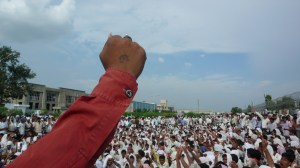
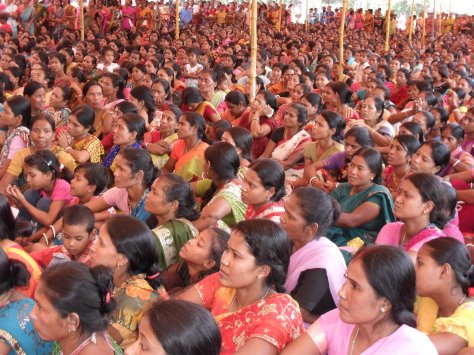
A big red river streamed out of the gates of Kamla Nehru Park in Gurgaon last evening (17th October, 2011). Several thousands of workers (according to one estimate – one hundred thousand workers), from many factories in the Gurgaon-Manesar belt had occupied the park from 4:00 pm onwards to stand in solidarity with the struggle of the Maruti-Suzuki, Suzuki Powertrain and Suzuki Motorcycle India Limited workers. In an unprecedented demonstration of solidarity, permanent workers are on strike to demand justice and re-instatement of their contract worker colleagues. The atmosphere at the meeting was of celebration, workers who had been occupying three different factories for more than a week had been evicted by an administration that had brought out all the police and coercive power at its disposal. But yesterday’s gathering was like a reunion, the workers of the three ex-occupied factories, and their comrades in other plants throughout the Gurgaon-Manesar belt were meeting, like old and new friends, to taste the heady experience of peacable solidarity. Continue reading A Big Red River: Solidarity Meeting with Maruti-Suzuki Workers

Bengal Power in Jaipur: Kavita Srivastava

Guest post by KAVITA SRIVASTAVA

4 October 2011

More than 3000 Domestic Workers Take to the Jaipur Streets
SHARE THEIR WOES AND DEMAND RIGHTS

PUBLIC HEARING PANEL:
• Aditi Mehta (Principal Secretary Social Justice and Empowerment),
• Anuradha Talwar. Trade Union Activist, Paschim Banga Khet Mazdoor Sangathan, Kolkata
• Jose Mohan, DCP, Jaipur Police Commissionerate
• Bhagwan Sahai Sharma, member Secretary, State Social Welfare Board,

Domestic worker women power made history today in Jaipur when they took to the streets of Jaipur and demanded their rights from the State and society. We are not “naukranis” they said. We are workers in free India and want the dignity of being a worker. We run two homes, yours and ours, can any of you in society do without our labour, they asked boldly. Ninety percent were Bengally with abotu ten percent from who had come from different parts of Rajasthan. Continue reading Bengal Power in Jaipur: Kavita Srivastava

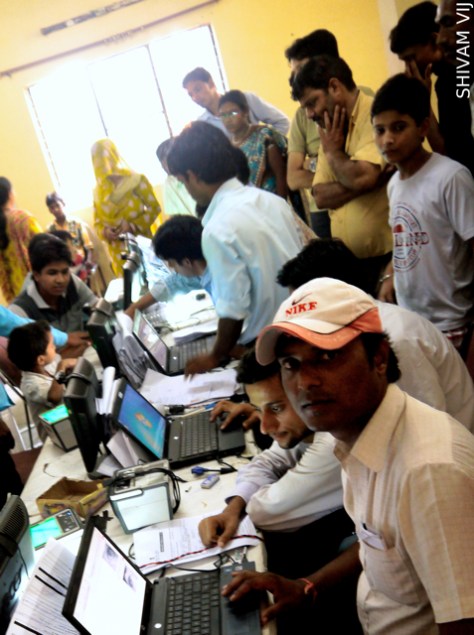
The Biometricwallah

Contrary to what his name suggests, Bechu Lal Yadav, 29, isn’t a seller of goods. He is a recordist of identity. He is amongst a new breed of technical professionals that have come up overnight – the Biometricwallahs.  Continue reading The Biometricwallah

The Utopian Instinct – Aflatoon, Kiran Bedi and Nandan Nilekani: Taha Mehmood

Guest post by TAHA MEHMOOD

A pilgrimage to the cave

One day Cleinias, a Cretan invites Athenian and Megillos, a Spartan for a religious pilgrimage. Cleinias proposes to visit the cave of Zeus, just as Minos used to do. Minos was the legendary Cretan king. Every nine years Minos would walk along a path to the cave where he will hear revelations on the laws from Zeus. Perhaps the act of a man going to the cave to seek revelations from God was part of an ancient Cretian tradition. In the islandof Crete Minos played the role of a Lawgiver, in Athens– Zeus, while in Megillos’s state Sparta this role was played by Apollo.

Magnesia: The last idolum of Plato

This was the setting of the last dialog of Plato. He called it The Laws. In this dialog Plato tries to define the legal framework of an imaginary state named Magnesia. Throughout his life Plato was preoccupied with the question of how to name and define things. He believed one could even name abstract entities like numbers and define it as even or odd. In this dialog Plato makes an attempt to name various types of laws and define it.

Continue reading The Utopian Instinct – Aflatoon, Kiran Bedi and Nandan Nilekani: Taha Mehmood

Speed and Control at Manesar: Why is the Maruti-Suzuki Management Keeping Workers Out of Its Factory

Protest Meeting at Maruti-Suzuki Factory, Manesar, September 01, 2011

Manesar is an emerging industrial hub roughly fifty kilometers from Delhi. Factories rise along the co-ordinates of a neat grid, overshadowed by the rocky Aravallis. The world is made here – cars, bikes, semiconductors, automotive parts, electronics, telecommunications equipment. Manesar has a little bit of everything. Even a bomb data analysis centre and a brain research lab and a military school and a heritage hotel. On a Maruti Swift, speeding down National Highway 8 towards Jaipur, you could make it to Manesar from Delhi, through Gurgaon, in less than an hour. Maruti’s ads are all about speed and control. Speed and control will cruise you to Manesar.

Continue reading Speed and Control at Manesar: Why is the Maruti-Suzuki Management Keeping Workers Out of Its Factory

Of Seven Cities and New Delhi

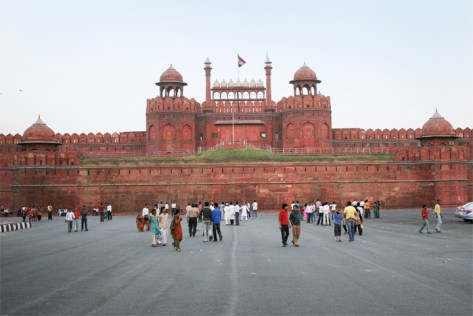
Historically, Delhi was a place that all its conquerors made their home, but for the British it was a city that only glorified the power of Imperialism. Photos: Sohail Hashmi/Himanshu Joshi

Red Fort

Continue reading Of Seven Cities and New Delhi

Maruti Struggle Continues Despite Repression: Statement

The following is a statement issued by the MARUTI SUZUKI EMPLOYEES UNION (MSEU) on 1 September 2011
The management of Maruti Suzuki Industries Limited, Manesar plant (Plot 1, Phase 3A) has terminated 11 and suspended 38 workers on 29th and 30th August 2011, on completely fabricated charges of go-slow in production and that workers have been ‘undisciplined’. It is doing this as a continuation of harassing workers for our struggle for the right of Union formation and other legitimate rights from June 4th to 16th. It is using brute police force to intimidate us, and is also continuing to pay and use bouncers and lumpen force to continuously threaten us. The management is also spreading a rumour that the production has resumed yesterday 31 August through a handful of contract workers, some supervisors, engineers and robots. This disinformation campaign has also been splashed across the media.

Continue reading Maruti Struggle Continues Despite Repression: Statement