Category Archives: Movements

Condemn the Arrest of Advocate Shanavas by “Hi-tech Cell”!

This statement has been released by Manisha Sethi, Adeel Mehdi, Ahmed Sohaib, Sanghamitra Misra and others foJAMIA TEACHERS’ SOLIDARITY ASSOCIATION

Demand his immediate release!

The undersigned condemn in strongest terms the arrest of Advocate Shanavas, a leading human rights activist of Kerala. Advocate Shanavas, who lives and practices in Trivandrum, was arrested on 1st May 2012, and his office raided and his files seized by the Crime Branch of the state. Ostensibly, his arrest has been made by the “Hi-tech Cell” of the Kerala Crime Branch for conspiring to leak intelligence communication in the infamous Email surveillance scandal that rocked the state a few months ago—where a leading daily of the state has alleged that the Hi-tech Cell was snooping on the emails of nearly 250 Muslim individuals and institutions. Continue reading Condemn the Arrest of Advocate Shanavas by “Hi-tech Cell”!

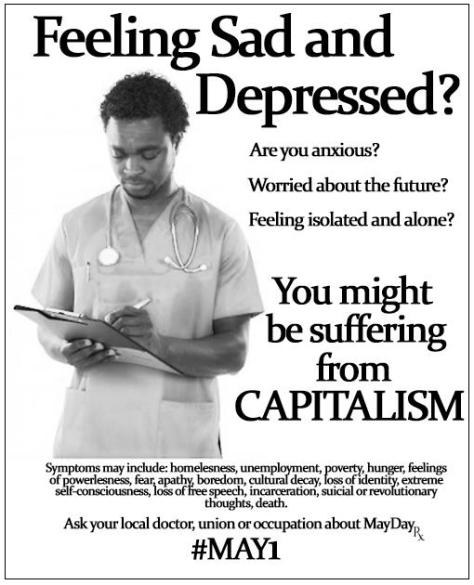
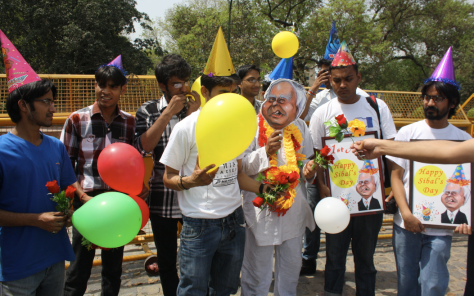
Happy May Day!

‘Sau Mein Pachees Haq Hamara’: Caste of a Scam

This press release was put out by the SC/ST BUDGET ADHIKAR ANDOLAN after a large protest in Delhi on 24 April

Massive uproar and agitation by over a thousand SC/ST’s marked the initiation of the campaign “Sau Mein Pachees Haq Hamara” at Jantar Mantar on 24 April, 2012. The protesters flooded the roads of Jantar Mantar as they marched along the high pitch drum beats, adding to the rhythm of the march. Even the scorching heat did not deter those who joined the protest march from several other states. They hooted in unison, “Hamara Haq Idhar Rakho!” Continue reading ‘Sau Mein Pachees Haq Hamara’: Caste of a Scam

On the India hand in Nepal

In an interview with this writer for The Hindu newspaper last week, Maoist chairman Prachanda explained the sudden decision to send the Nepal Army to the cantonments, revealed the possible meeting points on constitutional issues, said that he would have no objection to an NC-led government promulgating the constitution, and declared his personal ambition of wanting “5-10 years” to “implement his vision”. But the bit that has drawn the most attention here in Kathmandu is his public acknowledgment of India’s role in Nepal’s political transformation—from the 12-point agreement, to the CA elections, to the declaration of republic and the progress in the peace process.

Expectedly, ultra-nationalist websites have latched onto this as proof of Prachanda’s “subservience”; right wing stalwarts have the “We told you so” smug look about how they were right all along that this was an external plot. In a different context, there has also been commentary projecting India’s current phase of engagement with the Maoist as somewhat opposed to the Nepali people’s aspirations for peace and democracy.

It would be useful to look at the several issues enmeshed here separately, based on the evidence currently available. Continue reading On the India hand in Nepal

A turning point in Nepal

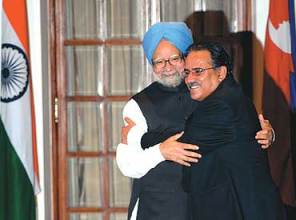
Manmohan Singh with Prachanda, circa 2008

Prashant Jha interviews the Nepali Maoist leader Prachanda:

All of us reviewed the situation. I presented a document in my party last April stating that the 12-point agreement must be the basis, and we must conclude the peace and the constitution process. India then changed the way it viewed Maoists, and realised it must help the process succeed. It was a realisation that we must revert to the environment of trust that existed during the 12-point pact.

Would it be right to say that Nepal’s peace process and the constitution would not have been possible without Indian support?

Definitely. Saying that the 12-point understanding was signed in Delhi means that there was India’s active support — otherwise it was not possible. CA elections would not have been possible. There could have been problems with the declaration of a republic. Now also, to take peace and the constitution to a logical conclusion, without Indian support, it will be very complex and difficult. [Full interview]

Kanak Mani Dixit critiques such a conclusion of the peace process: Continue reading A turning point in Nepal

Workers Struggle in Dehradun

The following is a statement from Uttarakhand Nav Nirman Mazdoor Sangh and the Inquilabi Mazdoor Sangh received via Shankar Gopalakrishnan

Between 12 and 1 yesterday, 15 April 2012, the Uttarakhand police lathi charged more than 300 workers who have been sitting on a protest in Dehradun for the last ten days. 11 workers who have been on hunger strike (six from April 6th and five who joined them on April 9th) have been forcibly hospitalised in Doon Hospital, where they are resisting attempts to force-feed them. 326 workers have been arrested and detained in various jails in the city.

The workers have been on strike for more than three weeks now. They are employees of the Rockman and Satyam Auto plants in Haridwar, both major suppliers of Hero Motors. As in Manesar, Haryana last year, these workers are being paid extremely low wages for more than 12 hours of work a day; when they sought to form a union to demand respect for labour laws, the five leaders of the union were illegally sacked immediately and the others threatened with a similar fate. On March 19th the majority of permanent workers at Rockman came out on strike in protest at this illegal brutality, and on March 22nd they were joined by all the permanent workers at Satyam. Continue reading Workers Struggle in Dehradun

Gurgaon workers – damned if they do, damned if they don’t: Anumeha Yadav

Guest post by ANUMEHA YADAV

In last three weeks, over a thousand workers went on a rampage on the streets of Gurgaon in two separate incidents.  On March 19,over 2000 workers from Orient Craft, India’s largest apparel-maker and exporter, attacked the office premises pelting stones at it and set 10 vehicles on fire, including a police van. They were reacting to the news that Naseem Ahmed a worker in his 20s in the hosiery unit in Sector 34 had been stabbed in the arm with a pair of scissors by Harinder ‘Lovely’ Singh, alabour contractor at Orient Craft. Continue reading Gurgaon workers – damned if they do, damned if they don’t: Anumeha Yadav

Happy Kapil Sibal’s Day

Aseem Trivedi is a cartoonist in Kanpur. Or was. He has, for some months, been a full-time activist against internet censorship in India. As 2011 was turning into 2012, the Maharashtra police got his domain registrar to suspend his domain, http://cartoonsagainstcorruption.com, which was in support of the Anna Hazare-led Lokpal movement. His website wasn’t blocked, but the domain name suspended – the equivalent of shutting down a printing press. This was done in no time, and he wasn’t given an opportunity to defend his content. This was done thanks to the IT Rules 2011, a simple FAQ about which can be found here. Today, 1 April, Trivedi celebrated “Kapil Sibal’s Day,” calling the Communications minister the fool that he is. In the image below, taken at Delhi’s Rajghat today, Trivedi is standing on the extreme right. For more on Trivedi’s campaign, see http://www.saveyourvoice.in.

Hindi Press Release:

पुलिस प्रशासन के अवरोध के बावजूद राजघाट पर मनाया गया सिब्बल्स डे, पहुचे ब्लोगर्स और सोशल एक्टिविस्ट
1 अप्रैल के दिन पर राजघाट पर सेव योर वाइस की टीम ने आईटी मिनिस्टर कपिल सिब्बल को प्री सेंसरशिप पर दिए गए उनके बयानों के लिए  मूर्ख दिवस की शुभकामनाएं दीं. राजघाट परिसर में बड़ी संख्या में पुलिस बल, आईबी, सीआईडी और सीबीआई के लोग मौजूद थे और सेव योर वाइस के सदस्यों को बापू की समाधि पर जाने से रोका गया. केवल कुछ गिने चुने लोग ही चुपचाप राजघाट पर पहुच पाए. पुलिस ने पूर्व अनुमति होने के बावजूद सिब्बल दिवस का आयोजन नहीं होने दिया. कारण पूछने पर उच्चस्तरीय आदेशों का हवाला दिया गया और कहा गया कि उन्हें पीएमओ . और आईटी मिनिस्ट्री से आदेश दिए गए हैं. काफी गहमागहमी के बाद टीम के सदस्य राजघाट के बाहर समता स्थल पर एकत्र हुए.  Continue reading Happy Kapil Sibal’s Day

Occupy Monsanto!

Some good news for a change…

Peru Passes Monumental Ten Year Ban on Genetically Engineered Foods

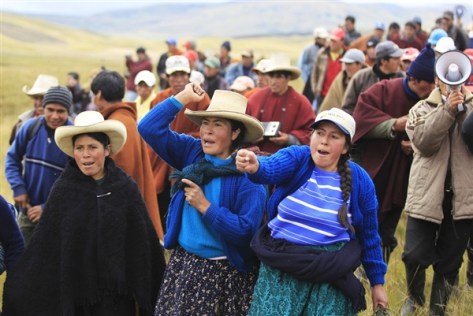
In a massive blow to multinational agribiz corporations such as Monsanto, Bayer, and Dow, Peru has officially passed a law banning genetically modified ingredients anywhere within the country for a full decade before coming up for another review. Peru’s Plenary Session of the Congress made the decision 3 years after the decree was written despite previous governmental pushes for GM legalization due largely to the pressure from farmers that together form the Parque de la Papa in Cusco, a farming community of 6,000 people that represent six communities. They worry the introduction of genetically modified organisms (GMOs) will compromise the native species of Peru, such as the giant white corn, purple corn and, of course, the famous species of Peruvian potatoes. Anibal Huerta, President of Peru’s Agrarian Commission, said the ban was needed to prevent the ”danger that can arise from the use of biotechnology.”

Read the rest of this story here.

Does democracy stop at the doorstep of the women’s hostel?

This appeal comes to us via MAYA JOHN

Friends,

Since January of 2012, residents of Delhi University’s largest postgraduate women’s hostel, University Hostel for Women (UHW) have been waging a battle against outright suppression of their democratic rights by, both, their hostel authorities and the University’s Proctorial Committee. Since the hostel’s Chairperson is also the Proctor of the University, the Proctorial Committee has been intervening in the matter, not as a neutral party, but in complete connivance with the hostel authorities. There are two issues which are central to the ongoing struggle of the women students, namely, the imposition of a union constitution by the authorities, and the existence of archaic and conservative rules in the hostel.

Continue reading Does democracy stop at the doorstep of the women’s hostel?

Kudankulam Update

Below is a note written by Udayakumar, one of the leaders in Kudankulam that is being circulated. Further below is an update from activist Nityanand Jayaraman on the Madras High Court interim orders in response to cases filed against all the illegal steps taken by the government on Kudankulam.
Please watch this blog for another audio broadcast from Sundari, an activist and member of the community in Idinthakarai. Continue reading Kudankulam Update

Mobile phone based report for Community Radio from Idinthakarai, Kudankulam

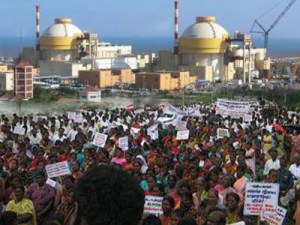
Recording of a report by Sundari from Idinthakarai, the village in Kudankulam where many are on fast unto death and 15000 people have gathered in protest of the Nucelar Plant. Sundari is a long time local activist in the region who has been part of the struggle against the Nuclear plant.

Police have cracked down on the village and there is now a complete blockade. Journalists are not being allowed at all. This is an effort to get news out regularly. This recording has been made possible by the efforts of activists who work with enabling reporting for community radio through mobile phones. These broadcast and others that will follow, will be sent to community radio networks within Tamilnadu and around the country. Please spread the news. A translation is available below.

Sundari reports from Idinthakarai here.

Continue reading Mobile phone based report for Community Radio from Idinthakarai, Kudankulam

Kudankulam: Letter from concerned activists in Chennai to Activists and Media persons

Dear friends

You must all be aware of the sustained struggle put up by the people of Idinthakarai and other neighbouring villages against the commissioning of the nuclear energy plant at Kudankulam. The struggle has been a concerted one, waged by fishers, agricultural labourers, small peasants and those in the artisanal trades. It has been a struggle for asserting people’s right to livelihood, life and liberty, all of which stand imperiled by the proposed nuclear reactor.
The struggle has now reached a crucial moment of crisis: the ministry of the ruling AIADMK government has passed a resolution asking for the plant to be reopened. This, after several months of promising support to the protesters, and offering to look into radiation effects, on human beings, the coastal environment and on the problem of nuclear waste.  Continue reading Kudankulam: Letter from concerned activists in Chennai to Activists and Media persons

Kudankulam: A brief history and a recent update

These are moments when spaces like Kafila become so important.

On the 19th of March, news came in that Tamilnadu Police men of six districts led by the ADGP for Crime of the Tamilnadu Police, Mr. O.S.George were sent to Kudankulam. This meant 6000 armed police men, 3 DIGs and 20 SPs were in Kudankulam. The TV reports, when they were still possible, showed police violence and extensive police presence in the village. We also saw women from Kudankulam, the backbone of the movement, declaring that there will be a strong people’s response to this violence and that they cannot be taken peaceful protest cannot be taken for granted. The first project taken up by the police seems to have bee to block off the village from any outsiders.  Nearby villagers who tried to approach the villages by sea were also arrested by the police. As of now, all roads to the village have been blocked. Communication systems have been tampered with.  Continue reading Kudankulam: A brief history and a recent update

Ambedkar – A poem by Ravikumar

Guest post by RAVIKUMAR

Under the scorching Sun
in the shadow of a tamarind tree
there assembled a small crowd
children, women and men
words about Ambedkar,
Dalit rights and Women’s rights
breezed over
sweating faces

When we sow
Some seeds fall in bushes
Some on rocks
Some on dry land
Some in ponds
Some on wet land
Who knows–
who is the wet land

(Ravikumar is a well-known activist and theoretician of the Dalit movement in Tamil Nadu. A former legislator in the Tamil Nadu legislature, he is general secretary of Viduthalai Ciruthaikal Katchi.)

Previously by Ravikumar in Kafila:

Why Mayawati’s defeat is the BSP’s victory

Satish Chandra Mishra with Mayawati at a rally near Delhi during the Lok Sabha elections in 2009, amongst the last such appearances together

Even before the results came out, the Mayawati cabinet passed a resolution to dissolve the assembly. Never before has an incumbent shown such confidence about losing. Mayawati’s body language during the campaign was proof of the same lack of confidence. Mayawati was going to lose, the Samajwadi Party was in the air. And yet, Mayawati must be relieved right now. She knows that this defeat of hers is, ironically, a victory of the Bahujan Samaj Party and what it stands for. Here’s how.

Continue reading Why Mayawati’s defeat is the BSP’s victory

Joint Statement on police atrocities and state repression on anti-POSCO struggle

See names of signatories below; please send your endorsement to asit1917 at gmail dot com

We strongly condemn the attack on and illegal abduction by the Odisha police of Umakanta Biswal, a famer belonging to Dhinkia village of Odisha, and an active member of POSCO Pratirodh Sangram Samiti (PPSS), that has been engaged over the last six years in resisting the forcible acquisition of their land by the Odisha government for handing over to the South Korean multinational corporation POSCO. This incident, which occurred on 2nd March 2012, is the latest in the series of atrocities inflicted by the Odisha government and by hired goons associated with the government and the POSCO company, on the people of these villages. Umakanta Biswal, who was engaged in agricultural activity in his paddy field at the time of his abduction, was pursued by a group of armed plainclothes policemen on a motorbike, and shot at when he tried to escape. He has reportedly been kept in Paradip prison, and has not been produced in front of a magistrate within 24 hours of his arrest, as is required under law. We have cause to fear that he is being tortured in police custody, and are gravely concerned about his safety. Continue reading Joint Statement on police atrocities and state repression on anti-POSCO struggle

Understanding Indian human rights movements through the lives of two human rights defenders: Jinee Lokaneeta

Guest post by JINEE LOKANEETA

Watching Advocate alongside Democracy Dialogues: a Tribute to Balagopal, both by Deepa Dhanraj, made for a powerful experience for its remarkable documentation of human rights movements in Andhra through the lives of these two human rights defenders and the collectives that they were a part of whether it was Andhra Pradesh Civil Liberties Committee, Human Rights Forum or People’s Union for Civil Liberties. There is of course a sharp sense of loss, since in the last few years we have lost both these incredible people but one was grateful for this effort to record and document their inspirational lives in such a beautiful manner. It also points to a further need for us to understand the connections of human rights groups to law, the relationship of human rights defenders to the courts, and their role in pushing for the realization of some of substantive aspects of the Indian Constitution in the process. Continue reading Understanding Indian human rights movements through the lives of two human rights defenders: Jinee Lokaneeta

Caste and Exploitation in Indian History: Bharat Patankar

Guest post by BHARAT PATANKAR translated by GAIL OMVEDT

Introduction: The Process of Exploitation

Exploitation arising from the caste hierarchy is a particular feature of the South Asian subcontinent. There was no such exploitative system in other continents or in countries outside of South Asia. But since caste exploitation has been a reality for 1500-2000 years this shakes the belief that only class can be the basis of exploitation. And because of this we have to transcend the attempt to find a way only pragmatically and deal with the issue on a philosophical and theoretical level. Class has been theorized extensively in terms of exploitation; to some extent gender also, but not caste. Exploitation as women in various forms has also been a reality for thousands of years; this also is not through “class”. This reality from throughout the world gives a blow to the idea that exploitation can only be class exploitation. This can also be said of exploitation arising on the basis of racial and communal factors. Continue reading Caste and Exploitation in Indian History: Bharat Patankar

Fuel Prices and Protesting Voices in Sri Lanka: Mahendran Thiruvarangan

Guest post by MAHENDRAN THIRUVARANGAN

The United People’s Freedom Alliance government’s inability to put forward economic policies that address the grievances of the downtrodden sections of the Sri Lankan polity, outside the frameworks of neo-liberalism, has led to chaos in the country. The government’s move to privatize the higher education sector created a major uproar in the country last year. The academic staff attached to Sri Lanka’s universities began a trade union action demanding higher wages in 2011. In the Katunayake Free Trade Zone, garment sector workers took to the streets against a pension scheme introduced by the government much against the interest of the workers. These protests have brought to light the government’s ill-conceived economic policies, and its indifference to the concerns of the working people. Financial mismanagement, corruption at the various levels of the state, the escalating expenditure on the militarization of the North and East provinces, and the government’s sheer disregard for the fundamental needs of the people have created an atmosphere of economic instability. This situation might lead to political unrest in the future, if the Sri Lankan government continues to lack the will to salvage the economy from neo-liberalism and mismanagement. The government’s move to increase the prices of fuels has aggravated this situation.

Continue reading Fuel Prices and Protesting Voices in Sri Lanka: Mahendran Thiruvarangan

Flashreads for Free Speech: Readings for 14 February

Let this 14 February be Free Speech Day – the text below comes to us via NILANJANA S. ROY; for more, see Akhond of Swat or follow #flashreads on Twitter. Flashreads are being organised across India – see Facebook event page.

Poster by Sanjay Sipahimalani


THE IDEA: To celebrate free speech and to protest book bans, censorship in the arts and curbs on free expression

WHY FEBRUARY 14? For two reasons. In 1989, the Ayatollah Khomeini issued a fatwa ordering the death of Salman Rushdie for writing the Satanic Verses. In GB Shaw’’s words: “Assassination is the extreme form of censorship.” Continue reading Flashreads for Free Speech: Readings for 14 February