Category Archives: Religion

Democracy and Religion in Modern India: Critical and Self-critical Reflections – Prof Rajeev Bhargava

Professor Rajeev Bhargava, noted political theorist will be delivering the 29th Democracy Dialogues Lecture on Sunday, March 31, 2024 at 6 PM ( IST)

Please reserve the time and date for the lecture. Details are given below

Democracy Dialogues Lecture 29:

Speaker: Professor Rajeev Bhargava

Date: Sunday, March 31, 2024, at 6 PM IST

Theme: 

Democracy and Religion in Modern India: Critical and Self-critical Reflections – Prof Rajeev Bhargava

– New Socialist Initiative

Abstract:

“It is widely accepted that ‘secular’ is an alien category in India. This is too simplistic a view. But even if we agree with it, how come no one has asked if ‘religion’ is alien to India? My claim is that it is or at least it is as foreign to India as secular is. What are the implications of this thesis? What have been the consequences of religionization on Indian society and polity? How has it shaped Indian democracy?  In my presentation, I shall expand these views and show why India  needs secularism and in what form.”

About the speaker :

Renowned political theorist and former director of  Centre for the Study of Developing Societies ( CSDS), Delhi Prof Rajeev Bhargava is currently an honorary fellow at the Centre and the director of its Parekh Institute of Indian Thought. He has taught at the University of Delhi and Jawaharlal Nehru University (Delhi) and has lectured, taught and held visiting professorships at several international universities. 

Prof Bhargava’s work on individualism and secularism is internationally acclaimed. His publications include Individualism in Social Science (1992), What Is Political Theory and Why Do We Need It? (2010) and The Promise of India’s Secular Democracy (2010). His edited works include Secularism and Its Critics (1998), Politics and Ethics of the Indian Constitution (2008) and Politics, Ethics and the Self: Re-reading Hind Swaraj (2022), Bridging Two Worlds : Comparing Classical Political Thought and Statecraft in India and China (2023) 

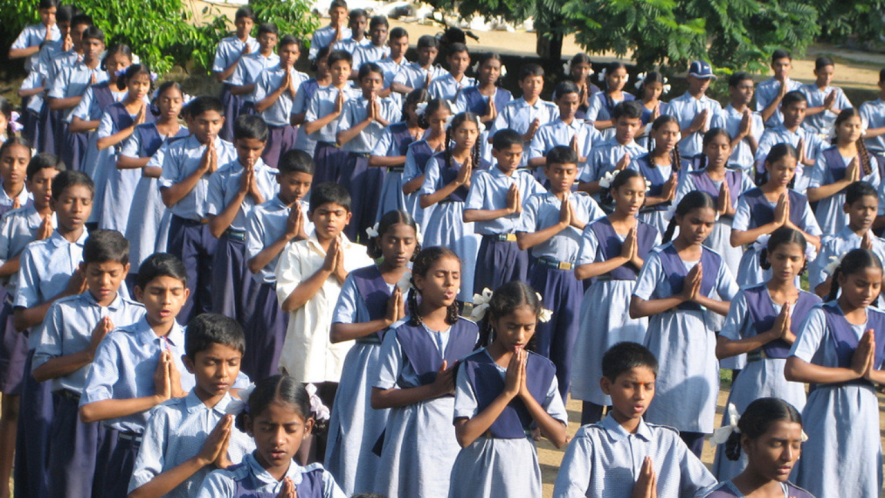
Can a Teacher be Compelled to Offer Prayers in School Premises ?

An atheist school teacher’s case in Nashik before the Bombay HC resonates with the recent case of a Dalit teacher’s suspension in Rajasthan.

Representational Image. Image Courtesy: Flickr

Can anyone compel a teacher to offer prayers inside a school?

This was a little vexed question before the Bombay High Court when a case came up before a two-judge bench led by Justice Abhay Oka and Justice Revethi Mohiti-Dhere. Sudhir Salve, an atheist teacher from a school in Nashik — who otherwise had an excellent record in his profession — had approached it for relief, because the school management where he worked had denied increment to him for ‘indiscipline’.

The teacher’s refusal to fold hands at the time of school prayer or even at the time of taking oath of the Constitution was construed as such an act. As it happens in most such cases, Salve’s case had lingered on for more than six years in the lower courts.

But it did not take much time for the two-judge bench to decide the case, which declared that any such compulsion to fold hands will be a ‘[v]iolation of the fundamental rights conferred on an individual under the Constitution’.

One was reminded of Salve’s case when the suspension of Hemlata Bairwa, a Dalit lady teacher from an upper primary school in Rajasthan’s Baran district, made headlines recently.

To recapitulate the turn of events, it was Republic Day (January 26, 2024) and Bairwa had garlanded the portraits of B.R. Ambedkar, Savitribai Phule and Mahatma Gandhi before the assembly of students in her school. Two of her fellow teachers interrupted the programme and asked her to put a photograph of Saraswati, goddess of knowledge as per Hindu mythology, which she plainly refused. Despite pressure by them, who even allegedly made casteist slurs against her and were even helped by the local head of the panchayat, Bairwa refused to relent.

When the video of the whole incident went viral, the state education minister Madan Dilawar announced her suspension in a public programme — an act that evoked a strong reaction within the Dalit community. Demonstrations were held in different parts of the state opposing this action by the education minister, demanding revocation of the suspension order and removal of the minister from the post.

The question arises: Will Bairwa similarly have to wait for a long period like Salve for justice? Or whether the Bombay High Court’s intervention would impel the Rajasthan High Court to take up her case suo motu.

Waiting to Become Eichmann? Unpacking the Moral Relativism of a People

“They took so much away from us that they ended up taking away our fear”
— Message scrawled on a placard in a women’s march in Spain

’How does Justice feel?’

A difficult query to answer but perhaps Bilkis Bano would be the best person to respond to it.

Yes the same Bilkis – survivor of a mass rape and the only witness to horrific massacre of her 14 relatives – when the state she lived witnessed a carnage when officially one thousand innocents perished in the communal pogrom and many thousands were displaced from their homes and were condemned to live as internal refugees.

One can still recollect her words when the highest courts of the country finally cancelled the remission of sentences to her perpetrators who had been convicted for this heinous crime. [1].

She frankly narrated her feelings before a reporter.

’It feels like a stone the size of a mountain has been lifted from my chest, and I can breathe again. This is what justice feels like.”

उत्तराखंड महिला समूहों का बयान उत्तराखंड समान नागरिक संहिता (यूसीसी ड्राफ्ट बिल)

समान नागरिक संहिता के विधेयक के मसौदे पर उत्तराखंड महिला समूहों का यह बयान हम यहाँ छाप रहे हैं ताकि इस ख़तरनाक़ बिल पर और बहस हो सके।

6 फरवरी 2024

उत्तराखंड महिला समूह और प्रतिनिधि राज्य विधानसभा में पेश किए गए इस विधेयक को पूरी तरह से खारिज करते हैं।

  • संवैधानिक व्यवहार को अपराध बनाने वाला, नैतिक पुलिसिंग का परिचय देने वाला विधेयक अस्वीकार्य है।
  • प्रस्तुत हिंदूकृत समान संहिता विधेयक का एजेंडा सभी वर्गों के परिवारों में असमानताओं को दूर करना नहीं है, बल्कि मुस्लिम अल्पसंख्यक और वयस्कों के स्वायत्त व्यवहार को अपराधी बनाना है।
  •  मांग करें कि यह स्थायी समिति के पास जाए।
Continue reading उत्तराखंड महिला समूहों का बयान उत्तराखंड समान नागरिक संहिता (यूसीसी ड्राफ्ट बिल)

Uttarakhand Women’s Groups’ Statement on the Uttarakhand UCC Draft Bill

[We are publishing this response of the Uttarakhand Women’s Groups to the Uttarakhand Draft for initiating further debate.]

  • The Uttarakhand women’s groups and representatives reject this Bill in toto, in the form introduced in the State Assembly.
  • A Bill criminalizing constitutional behaviour, and introducing moral policing is unacceptable.
  • The Bill which is predominantly a cut paste from the Hindu family laws, does not remove inequalities in family across the spectrum of religious and secular laws, but criminalises the Muslim minority and autonomous, consensual behaviour of adults.
  • Demands that it is sent to the Standing Committee for further deliberations.
Continue reading Uttarakhand Women’s Groups’ Statement on the Uttarakhand UCC Draft Bill

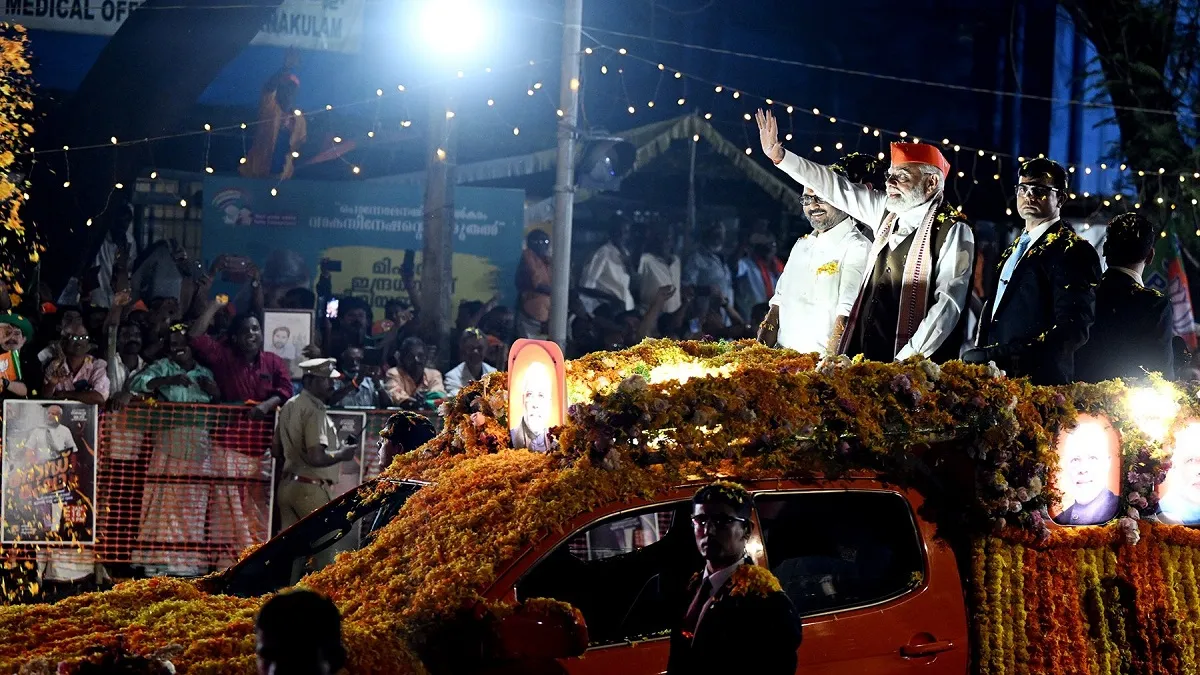
अजेयता का मिथक: 2024 में मोदी की वापसी होगी या 2004 की होगी पुनरावृत्ति?

2024 की शुरूआत में भारत एक प्रचंड बदलाव की दहलीज पर खड़ा है। सभी जनतंत्र प्रेमी, इन्साफ पसंद और अमन के चाहने वालों के सामने यही बड़ा सवाल मुंह बाए खड़ा है कि 2024 के संसदीय चुनावों में- जो मई माह के अंत तक संपन्न होगा तथा नयी सरकार बन जाएगी (अगर उन्हें पहले नहीं कराया गया तो)- का नतीजा क्या होगा?

क्या वह सत्ता के विभिन्न इदारों पर भाजपा की जकड़ को ढीला कर देगा, क्या वह जनतंत्र की विभिन्न संस्थाओं को निष्प्रभावी करने की या उनका हथियारीकरण करने की सोची समझी रणनीति को बाधित कर देगा, क्या वह धर्म के नाम पर उन्मादी तक हो चुकी जनता में इस एहसास को फिर जगा देगा कि 21वीं सदी में धर्म और राजनीति का घोल किस तरह खतरनाक है या वह भारतीय जनतंत्र की अधिकाधिक ढलान की तरफ जारी यात्रा को और त्वरान्वित कर देगा, भारत के चुनावी अधिनायकतंत्र ( electoral autocracy) की तरफ बढ़ने की उसकी यात्रा आगे ही चलती रहेगी

.

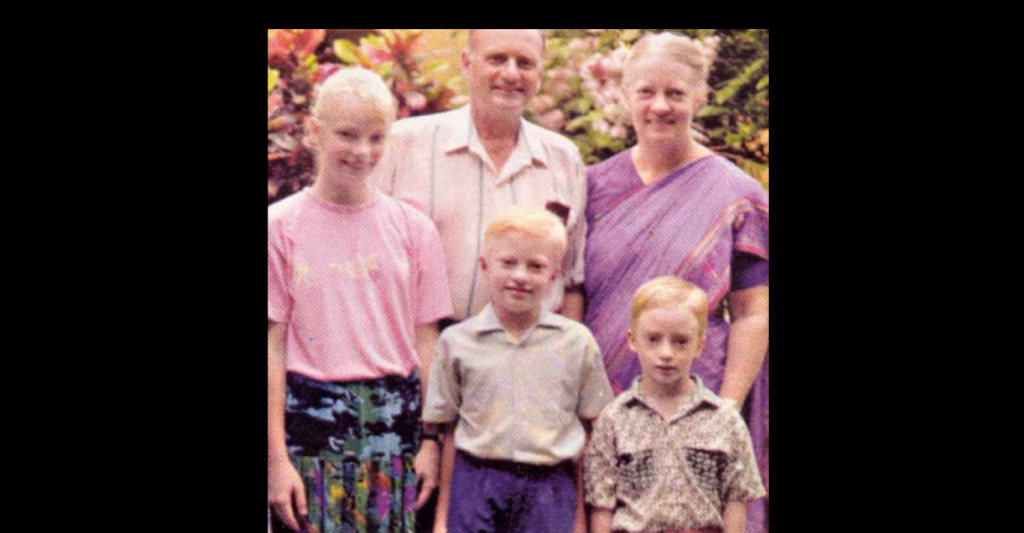
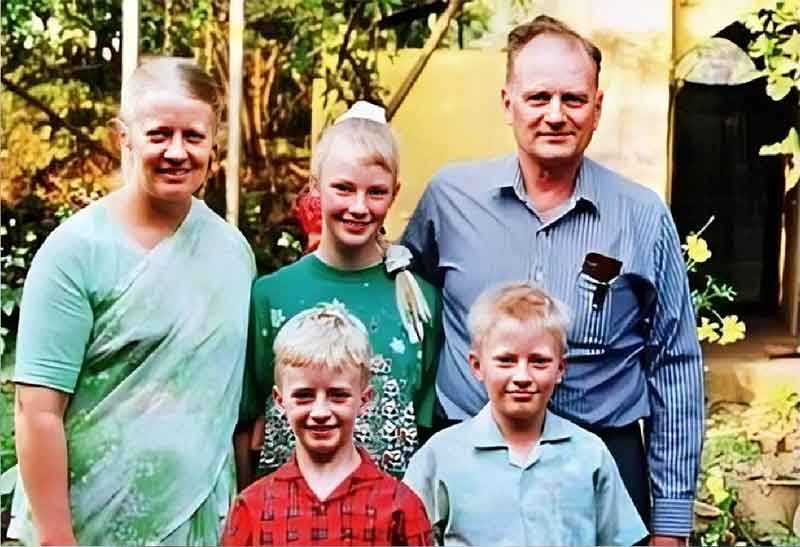
ग्राहम स्टेंस और उनकी संतानों की याद में…

‘Men never do evil so completely and cheerfully as when they do it from religious conviction.’
Blaise Pascal, French Mathematician and Physicist who lived some 400 years ago and died young (1623 to 1662 AD)

ग्राहम स्टेंस, जो ऑस्ट्रेलिया से भारत पहुंचे ईसाई पादरी थे और ओडिशा के बेहद पिछड़े आदिवासी बहुल इलाकों में गरीबों एवं कुष्ठरोगियों की सेवा में संलग्न थे, उन्हें और उनकी दो संतानों फिलिप और टिमोथी को कथित तौर पर हिंदुत्ववादी जमातों से जुड़े मानवद्रोहियों ने 22 जनवरी 1999 को जिंदा जलाया था.

22 जनवरी की तारीख की बीती तारीख को इस घटना की पच्चीसवीं सालगिरह थी.

राम मंदिर आयोजन की चकाचौंध में किसी ने इस बर्बर हत्या और उसके निहितार्थों को याद करना भी मुनासिब नहीं समझा, जबकि हम पाते हैं कि इस बर्बर हत्याकांड में वह तमाम संकेत मिलते हैं, जिन्हें 21वीं सदी की बहुसंख्यकवादी राजनीति में भरपूर प्रयोग में लाया गया.

Thinking Graham Staines and his Children in times of Jubilation over Ram Temple

The life of the dead is placed in the memory of the living.

– Marcus Tullius Cicero

Politics is nothing but theology in action

– Ambedkar


Right-wing politics suffers from a common syndrome everywhere.

It never feels confident to project its own icons for the rest of the humanity, whatever might be their claims about their worldview,  it knows that its own icons are detested by a wide spectrum of people.

The easiest way it finds to overcome this lacunae is to appropriate already established icons – who  were even opposed to their world view as well  and claim them their own. In fact, it does not have any qualms in utilising dates – bearing special significance for exploited and oppressed and marginalised of the world – to put their stamp on it.

The project of Hindutva Supremacism – which yearns / strives to transform a Secular, Socialist, Democratic and Sovereign Republic into a Hindu Rashtra has perhaps achieved near perfection in this kind of politics.

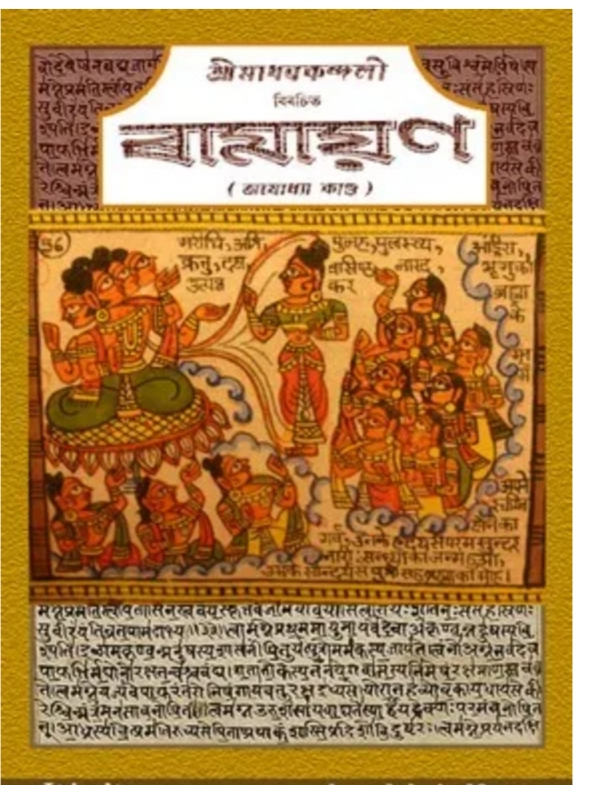
Sita’s Voice in the Assamese Ramayana: Tilottoma Misra

An excerpt from Sita’s Voice in the Assamese Ramayana: Selected Verses from the RAMAYANA of  Madhava Kandali and UTTARAKANDA by Sankaradeva, Translated, with Introduction and commentary  by TILOTTOMA MISRA (Zubaan: April 2024 Forthcoming) 

The figure of Rāma has seldom attracted the Assamese vaiṣnava devotees as much as that of Kṛṣṇa. Rāma has been considered as an incarnation of Viṣṇu, while Kṛṣṇa has been worshipped as Viṣṇu himself. Significantly, there is also no known religious sect in Assam which claims to be “exclusively Ramaite”. While there are many references to Kṛṣṇa in the copper-plate inscriptions found in Assam which date back to the early seventh century, there is hardly any mention of Rāma in the early literary records of the region. Biswanarayan Shastri has observed that while a large number of temples dedicated to Rāma or Māruti exist all over India, there is no evidence of the existence of such a temple with the images of Rāma or Maruti, intact or in ruins, in Assam. According to him even in the architecture of ancient Assam, there is no known evidence of the Rāma legend being represented anywhere.

The Rāmāyaṇa of Mādhava Kandalī, therefore, as well as the two kāṇḍas prefixed and appended to it by Mādhavadeva and Śaṅkaradeva, have never held “that exalted position in popular estimation which the Rāmacarita-mānasa of Tulsidas has been occupying for the last few centuries in north India.” Rāma and Sītā seldom attained the stature of divinity in the imagination of the Assamese people although the heroic and miraculous elements in the Rāmāyaṇa and ‘Rāma-kathā’ have continued to be a lively ingredient of folk-drama and musical performances of the ojā-pāli. It is understandable therefore that for the common people of this region the Assamese Rāmāyaṇa is hardly the religious text that the Bhāgavata-purāṇa is. Continue reading Sita’s Voice in the Assamese Ramayana: Tilottoma Misra

Letter to a Departed Mother About our Times: Vani Subramanian

Guest post by VANI SUBRAMANIAN

21 January 2024

My dearest Amma,

I’m relieved that you aren’t around these days. But I miss the sort of discussions we would have had if you were. Hence this letter, this sort of talking to you, this helpless and possibly meaningless, speaking into the ether because some things must just be said, remembered, felt, resisted, and held on to, even if everything around is telling you to move on, to get into the spirit of things and join the festivities, as it were.

I remember your reaction when you first saw my documentary film, Ayodhya Gatha. ‘Did you have to make our arguments about religion so public? If you get any recognition for this film, remember it’s thanks to me – like all your debating prizes!’ you said, loud enough for all to hear, both embarrassed and proud at the same time. We had a good laugh and a hug together. But in truth, over the years, religion was a topic on which we went from heated, impassioned arguments to considered, more careful discussions. You, tip toeing around my atheism (and asserting that deep down inside I was a believer) and me trying to be sensitive around your faith, even as we talked a lot about everything that’s been happening over the last four decades in the name of that religion.

Continue reading Letter to a Departed Mother About our Times: Vani Subramanian

Myth of Invincibility!

Whether Modi will get a third term in 2024 or these elections can spring a surprise?

India at the beginning of the year stands at the cusp of a Momentous Change

The biggest question before everyone is whether the elections for the Parliament – the lower house – which will be over by end of May ( if they are not advanced by the ruling dispensation) would be able to disturb the stranglehold of the BJP-RSS over the levers of power at the Centre, whether it will lead to loosening of sorts of the grip it holds over the various institutions of Democracy ( critics even call that they have been subverted, weaponised) or it will slide the Indian Democracy further into the electoral autocracy mode much to the chagrin of well wishers of democracy everywhere.

राम की अयोध्या : विवेक कुमार

Guest post by VIVEK KUMAR

यह पोस्ट सोशल मीडिया पर कई लोगों ने साझा की थी । बताया जा रहा था कि इसके लेखक सरोज मिश्र हैं। इस बीच इसके असल लेखक से हमारा संपर्क हुआ है जिनका नाम विवेक कुमार उर्फ़ विवेक असरी है। मूल लेख 2010 में छपा था जिसे यहाँ पढ़ा का सकता है

अंग्रेज़ी तर्जुमा क़ाफ़िला पर कुछ रोज पहले छपा था। कई लोगों ने मूल हिन्दी का लेख भी देखना चाहा है, लिहाज़ा पेश-ए-ख़िदमत है यह लेख।

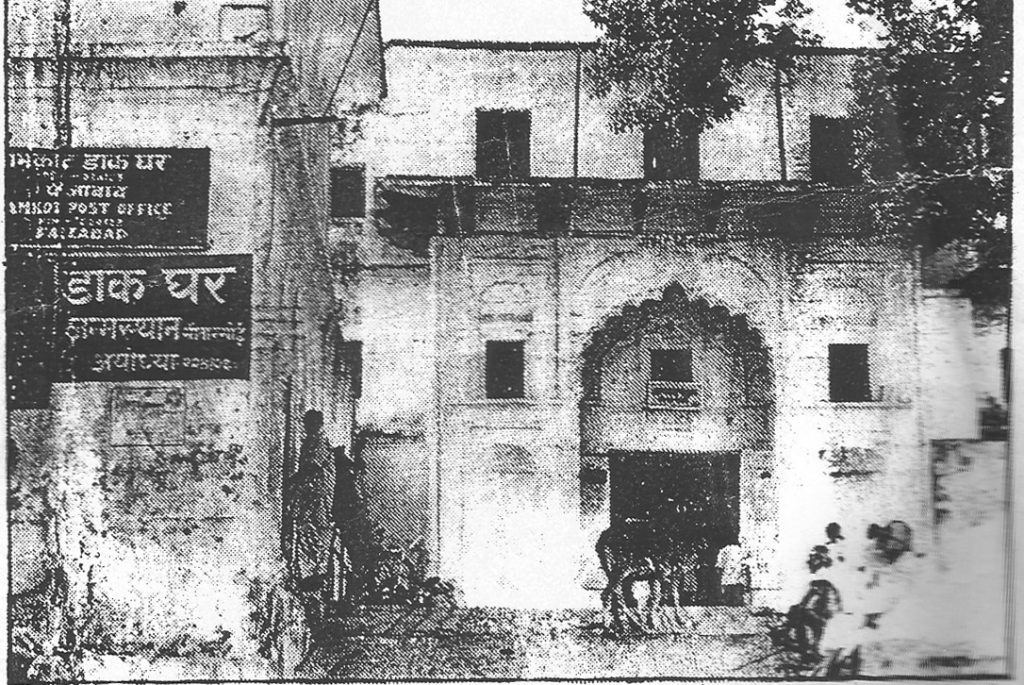
अयोध्या का यह 300 साल पुराना जन्मस्थान मंदिर था जिसके लिए ज़मीन एक मुसलमान ज़मींदार के दान की थी। नए राम मंदिर के विस्तार के लिए अगस्त 2020 में इसे ढहा दिया गया। (छवि साभार द वायर)

कहते हैं अयोध्या में राम जन्मे, वहीं खेले-कूदे, बड़े हुए, बनवास भेजे गये, लौटकर आये तो वहाँ राज भी किया। उनकी ज़िंदगी के हर पल को याद करने के लिए एक मंदिर बनाया गया। जहाँ खेले, वहाँ गुलेला मंदिर है। जहाँ पढ़ाई की, वहाँ वशिष्ठ मंदिर हैं। जहाँ बैठकर राज किया, वहाँ मंदिर है। जहाँ खाना खाया, वहाँ सीता रसोई है। जहाँ भरत रहे, वहाँ मंदिर है। हनुमान मंदिर है, कोप भवन है। सुमित्रा मंदिर है, दशरथ भवन है। ऐसे बीसियों मंदिर हैं, और इन सबकी उम्र 400-500 साल है। यानी ये मंदिर तब बने, जब हिंदुस्तान पर मुगल या मुसलमानों का राज रहा।

Continue reading राम की अयोध्या : विवेक कुमार

Ram’s Ayodhya: Vivek Kumar

Guest post by VIVEK KUMAR

(Translated by Nivedita Menon from a widely circulating post earlier attributed to Saroj Mishra, on social media, originally in Hindi.

UPDATE: We have since heard from the author himself. This post was written in 2010 by VIVEK KUMAR (Vivek Asri) and so we have made the necessary changes. Here is the link to VIVEK KUMAR’s  original post.

Update 2 : The Hindi original can also be read here on Kafila.)

This 300 year old Janmasthan temple in Ayodhya, built on land donated by a Muslim zamindar, was demolished in August 2020 to accommodate an expanded vision of the new Ram Mandir. Image courtesy The Wire

They say Ram was born in Ayodhya; in Ayodhya he played and roamed around as a youth, grew into adulthood, was sent from there into exile in the forest, and then returned to rule there. There are temples in Ayodhya to commemorate every moment of his life. Where he played, there is Gulela Mandir. Where he studied there is Vashishta Mandir. Where he sat and ruled, there is a mandir. Where he ate his meals, there is Sita Rasoi. Where Bharat stayed, there is a mandir. There’s Hanuman Mandir, Kop Bhavan. There’s Sumitra Mandir, Dashrath Bhavan. There are many many such temples and all of them are about 400 to 500 years old. That is to say, these temples were built when Hindustan was ruled by the Mughals, by Muslims.

How strange! How did Muslims permit these temples to be built? They are remembered after all, for destroying temples. Continue reading Ram’s Ayodhya: Vivek Kumar

Diwali in times of War against Children

Diwali, or Deepavali as it is called in the south, is a joyous occasion but this time it has brought only tears. What a bizarre Deepavali it is this year, with the awful blazing fires in the sky and the earth, with ear-splitting sound from non-stop bombing. I may not be in Gaza, but my mind refuses to leave the place and my very soul shudders each moment.

Continue reading Diwali in times of War against Children

Response to Law Commission of India on UCC: Feminist Working Group on Law Commission Submission on the UCC

In response to the LCI ‘s invitation to “stakeholders, including public and recognised religious organisations” to share their views on the Uniform Civil Code, some feminist groups and individuals came together in Delhi on July 4-5 2023 to draft a considered response. The UCC has been debated in feminist circles for decades, and a broad consensus has gradually emerged since the 1990s that gender justice and not uniformity should be the focus of reforms of laws pertaining to family, whether governed by Personal Laws (religious communities) or customary laws (Scheduled Tribes). The following response emerged on the basis of these discussions, which in turn drew on the long history of serious engagement with the issue in feminist circles for decades.

To,

The Hon’ble Chairperson and members,

Law Commission of India

14 July 2023

Sub: Response of feminist, queer and women’s rights groups and individual feminists to Public Notice of the Law Commission of India dated 14/06/2023, soliciting views on the Uniform Civil Code (UCC).

Respected Chairperson and members of the Law Commission of India,

We, the undersigned, write to you as representatives of feminist, queer and women’s rights groups, as well as concerned citizens, who have been working on issues related to gender justice and equality for women from diverse communities across the country. We draw upon our collective experience over many decades, as we respond to the current discussion on the proposed Uniform Civil Code.

Our submission is in three parts:

  1. Concerns related to the procedure adopted to initiate these discussions by the Law Commission of India (LCI).
  2. Comments on substantive issues of uniformity, equality and non-discrimination vis à vis gender justice.
  3. Governing principles for any efforts towards gender justice for all

Continue reading Response to Law Commission of India on UCC: Feminist Working Group on Law Commission Submission on the UCC

How to Draw a Line on the Ground : Ravi Sinha

Comments for the Washington DC Diaspora Program on “Karnataka Election Outcome and the Two Contesting Ideologies”

Guest Post by Dr Ravi Sinha

I must begin with a disclaimer. I am no expert on how elections are won or lost. Nor can I claim any competence in deciphering an electionresultfor what has worked and what has not. I will not be offering, therefore, any fresh insights into the results of recently concluded Assembly elections in Karnataka beyond what is already well-known from the media reports and analyses. I plan to focus primarily on the latter half of the title of the discussion today – the Two Contesting Ideologies.

The question of ideologies too is not easy to pose, let alone answer, especially when it comes to the muddy fields of politics on the ground. It is one thing to draw a clear ideological line on paper; it is quite another to do so on the actual ground of politics. In the normal course of politics – at least in a polity that has managed to settle into a normal course – ideological lines are seldom clearly drawn. Those whoinsist ondrawing a clear ideological line in all circumstances are invariably pushed to the margins of thenormal mode of politics.

There are times, however, when politics must undergo a paradigm shift. Ideological battle lines are,more or less,clearly drawn under such conditions, and sometimes, even if rarely, revolutionary transformations ensue from such shifts. The ideological lines may or may not be clearly visible during the actual political turbulence, but one can decipher them in hindsight after the polity and the society settle into a new normal.

One cannot say that India today sits on the brink of a political paradigm shift that promises a revolution. In fact, a shift of decidedly regressive kind has taken place with the rise of Hindutva. Nearly a decade after 2014, it is clear now, at least to those who would care to see, what a disaster India has brought upon itself. The damage done to the economy, to the social fabric, to theinstitutions of governance, and to the democratic process itself,is being felt in the bones of the country. India has been pushed back by decades in what has been at best a slow advance to a reasonably enlightened democratic republic with a moderately prosperous and not too uncaring economy. It will take many decades to recover what has been lost in just one decade. And yet, there is no guarantee that we will stop hurtling towards an even greater disaster in 2024.

Under these circumstances,one should not be considered naïve or conservative if one were to wish fora restorative kind of paradigm shift. One realises now that merelyturning the political clock back by a decade would bring a huge sigh of relief to the country. In times of disasters like this one, it is not a crime to hope for a kind of restoration, especially when revolutions are nowhere on the horizon. It is for this reason that the success of Rahul Gandhi’s Bharat Jodo Yatra followed by the resounding victory of Congress Party in the Karnataka Assembly elections have come as a big sigh of relief and a desperately needed ray of hope in the aware citizenry and, to a significant extent, even among the suffering masses and oppressed communities across the country.

One must, however, ask the question: has the Karnataka outcome resulted from clearly drawing an ideological line at the ground level? Disappointing as it may sound, the answer is largely in the negative. Actually, it should not be as disappointing as it sounds. As I said,drawing such a line in the muddy fields of electoral politics is not a simple or at times even a desirable thing to do. Insisting on this in all circumstances may in fact be counter-productive. One can however ask the converse question: do these results shed some useful light on how to draw an ideological dividing line on the ground? The answer to this question is clearly affirmative. I will be dwelling mostly on this apparently paradoxical situation.

First thing to be noted in the Karnataka outcome is that Congress, which confronted the BJP and the saffron brigade directly, did score a decisive victory, but it is far from the case that Hindutva has suffered a fatal blow. The BJP maintained its vote percentage of roughly 36 percent it had garnered in 2018. At this aggregate level of electoral analysis, the gains of Congress appear to have come at the cost of Janata Dal Secular (JDS),a regional party whose vote percentage has declined by the same 5 percentage points.Despite its name, this party has clearly moved closer to the BJP in the aftermath of the elections.

But one should not rush to conclusions just on the basis of aggregate numbers. Congress has not won only because of its gains in the Mysore region where JDS has been strong. It has won most of the seats in northern Karnataka adjacent both to the Telugu states and to Maharashtra. It has made gains in the rural areas all over the state. The point to note, however, is that not only has the BJP maintained its aggregate vote percentage, it has also made gains in many areas. It has gained ground wherever communal divide has been pronounced and Hindutva is entrenched. In the coastal region of Udupi-Mangalore it has stood its ground and even improved its vote percentage. Same is the case with the urban conglomerate of Bengaluru where it has won 15 out of 28 seats. Spectacular is the case of Srirangapatna where its vote share skyrocketed from 6.4 percent in 2018 to 22.8 percent in 2023. This is the place where an intense communal campaign has been around claims of yet another mosque being a temple. It will be foolhardy to think that Hindutva has lost its ground in Karnataka.

A tell-tale sign of the hold of Hindutva was in the episode of Bajrang Dal and Bajrang Bali. When none other than the Prime Minister himself equated the hooligans with the monkey god, and sought help from the muscle power of one and the blessings of the other, many across the country laughed at this mockery. And yet, it was not a laughing matter. Many leaders of Congress bent over backwards to put on display their religious credentials – even D K Shivakumar, a key architect of Karnataka victory, made well-publicized visits to temples and Congress campaigners began to count how many Hanuman temples Mallikarjun Kharge, the Congress President, had built in his native Hyderabad region of Karnataka. Those who knew the situation on ground, and those who knew a thing or two about how elections are won and lost in India, did not take this matter lightly.

In the electoral analyses splattered across the media, the victory of Congress has been attributed to multiple factors, but three among them stand out – the so-called anti-incumbency of an exceptionally corrupt government, the economic hardships of the poor who area vast majority of the population, and a relatively strong organizational presence of the Congress Party in Karnataka. Such analyses also factor-in the role ofvote bankssupposedly based on castes and communities – Lingayats, Vokkaligas, Kurubas, Dalits, Muslims and so on. But, managing such vote banks is a necessary detail of any electoral strategy – often expressed in the euphemistic phrase of social engineering. It does not define an ideological dividing line. If one tries hard to extract some such line from the enormous complexity of Indian politics, two large conglomerates of factors stand out – Hindutva, cultural nationalism, religious and other traditional identities form one such conglomerate and the issues of poverty, class, basic security of life and material well-being form the other.

Given the history of the 20th century, class has been the centre-piece of the canonical definition of ideological dividing line. Many who swear by this definition and reject the possibility of any other definition would underline the fact that the Karnataka election was won because the poor, especially in the rural hinterlands, supported Congress. While this underlines the fact that the class factor hasn’t gone away anywhere, it does not explaina far more effective presence of the other factors. As I have already mentioned, the victory of Congress does not mean that Hindutva has been defeated in Karnataka and it is not the case that the poor have voted for Congress because they detest Hindutva.

Fact of the matter is that there seem to exist two different axes along which ideological dividing lines can be drawn in today’s politics. The class axis has been the canonical one, but there seems to be another axis.For want of a well-thought-out nomenclature let us call it the cultural axis.It includes identities based on religion, caste, race, ethnicity, community, languages and even civilisations.This axis has become far more operational in the arena of democratic and electoral politics. Actually, part of the question can be posed even more sharply. Why is it that the ever-present class axis almost never gives rise to a politically operational class identity? (The same question can be posed in relation to the gender axis too, even if in a different way.) As many a leftist trade unionist would testify, the class that comes together on the factory floor seldom remembers the class identity and solidarity in the voting booth. Here I would not even try to get into the high theory of relationship between class and culture. For the purpose at hand, I will take a pragmatic tack and treat these two realms as relatively autonomous even if connected at some deep subterranean layer.

The rise of culture in politics is not confined to the so-called Third World. Samuel Huntington, the Harvard don famous for his Clash of Civilizations, can be easily chastised by other dons of the progressive kinds, especially after he showed his true colours by prodding the Americans to ask the question – Who Are We? – and encouraged them to be wary of the Latino immigrants who pose a threat, in his reckoning, to the American national identity. Chastising him is the easy part. But how does one explain the rise of Donald Trump in American politics which has happened more or less along the same lines Huntington theorised? Trumps do not arise just because the likes of Huntington construct their theories. The sources of Trumpism lie in the deeper layers of American society. Similarly, the political traction of Hindutva arises, at least in parts, from the deeper layers of the Indian social mind.

To add to the puzzle and to the tragedy, democracy itself, especially of the fiercely competitive kind, plays a role in bringing the worst out of the hidden layers of the social mind. Who in the world can claim to have a better alternative to democracy? And yet, there are examples galore of democracy landing itself in very strange places. The example of Hitler coming to power through democracy may sound hackneyed except that the phenomenon is far more ubiquitous in the world today. You in the United States had your Trump and I am told that Trumpism hasn’t gone away anywhere. We in India haveNarendra Modi; Turkey just re-elected Erdogan who has been in power since 2003, first as Prime Minister and subsequently as President; Bolsanaro of Brazil was barely defeated; Putin is too well-known an example to forget. One can go on and on and cite examples where democracy finds curious ways to commit suicide. But one thing would be common in all such examples.The cultural axis playsa crucially important political role.

In saying all this I am aware of the fact that the cultural axis does not become operationalon its ownin the political arena. Popular democracy with competitive elections is not exclusively a cultural phenomenon. After all, this whole exercise is for constituting a State and electing a government for running an economic and a political system. This system constitutes itself in the political arena and ostensibly operates in that arena, but competitive electoral processes force it to dig into the cultural unconscious of the social mind. In analogy with depth psychology, I often describe it as depth politics. The cultural unconscious of the Indian social mind, whose layers have been deposited over centuries and millennia, becomes operational in modern politics through competitive electoral democracy.

In the case of the United States,one often hears about the deep state that pulls the wires of democracy while itself remaining beyond the reach of constitutional and democratic powers and procedures. In India the deep state may not be as deep, but it is definitely there and the existence of a cultural unconscious comes very handy to it. In fact, the Indian deep state does not feel the necessity to remain invisible and confined to the depths. There are examples galore of unconstitutional, undemocratic and unscrupulous acts on the part of the political as well as economic forces and agents. All that is being done to the Indian economy, to the public resources, to the constitutional and democratic institutions, is not very hidden. But the point to note is that the state, whether deep or otherwise, finds it handy to manipulate the cultural unconscious and democracy itself becomes an accomplice in this exercise.

Michael Walzer, the Princeton political philosopher, has drawn attention to another curious phenomenon in which, I suspect, the cultural axis is deeply implicated. In his book, The Paradox of Liberation, he points out examples of national liberation movements that led to independence from foreign rule and to establishment of secular, liberal and enlightened democracies, but within a few decades the secular revolutionsmade way forreligious counter-revolutions. The irony is that the counter-revolutions were brought about through the same democratic process which had been instituted by the founding fathers for the purpose of erecting a secular, democratic and enlightened republic. India figures prominently in Walzer’s Paradox, although being a large and complex country the replacement of “revolution” by “counter-revolution” has taken its time. It took half a century after the departure of Jawaharlal Nehru for someone like Narendra Modi to come to power and replace the Nehruvian hegemony with the hegemony of Hindutva.

In saying all this my purpose is to underline the obvious that is often ignored by those who are accustomed to drawing the ideological dividing line only across the class axis. The dividing line on the actual ground of politics cuts across both the axes of class and of culture. In the rough and tumble of competitive electoral politics one is no wiser if one can prove that the latter is a derivative of the former. If class were to be the only operational axis, the Left would have conquered the world rather easily. On the other hand, if culture were to be the only operational axis,it would become impossible to ward off the ascendance of the right-wing. Fortunately, this is not the case on the ground. Even the Sangh Parivar cannot live by Hindutva alone. Even Narendra Modi has to see beyond the Hindu-Muslim divide and talk – at least talk – of Sabka Saath, SabkaVikaas.

It is in this light that the lessons of Karnataka should be read off. By and large the cultural axis was tilted against Congress while the class axis was tilted in its favour. The art of drawing an ideological line on the actual ground requires navigating the political topography along both these axes. Congress managed to do this in Karnataka this time. The BJP lost primarily because the class axis became steeply tilted against it. Hardships faced by the poor had been greatly exacerbated by corruption and misrule.

One should not, however, read too much into the relative importance of class in the Karnataka example. As I have mentioned already, Hindutva has not disappeared from Karnataka. Congress managed to hit the sweet spot because it could take advantage of the class dimension without hurting itself along the culture axis. This situation can be contrasted with a hypothetical situation if the Left were to be the principal opponent of BJP. An equally strong Left would not have fared as well as Congress mainly because it does not know how to navigate itself along the cultural axis which is tilted too steeply against it in most places on the subcontinent.

At the same time, one should not take the eyes off the absolute necessity of drawing a clear ideological line. In the situation that has arisen in India after nearly a decade of Modi Rule, this has become a must even for electoral battles. Given the importance of two axes and the uneven-ness of the political topography, such a line may not be straight, but it must be clear. One can see its importance in the example of the Janata Dal (Secular) debacle. It failed to take up a clear ideological position and planned for winning enough seats through its traditional influence and regular vote-bank politics to be in the position of a king-maker. This tactic has worked in the past but it backfired in the present situation. People were wary of its lack of ideological commitment.

Beyond uplifting the morale of forces opposed to Hindutva and in addition to appearing as a ray of hope in the distressing political atmosphere in India, Karnataka results also have reasonably clear lessons for the all-important battle of 2024. But there are no strong indications that these lessons are being learnt by the entire opposition. In theloud clamours for opposition unity, parties and leaders areadopting negotiating positions as if they are already on the table for seat-sharing. Everyone seems to be angling for the largest piece of the opposition cake. There are talks of putting up one candidate of united opposition against each BJP candidate. There is much advice to Congress to be large-hearted and make sacrifices for the sake of opposition unity.

The obvious necessity of drawing a clear ideological line is getting lost in this noise of opposition unity. There are only two political forces with a relatively unblemished record of fighting against Hindutva – the Congress and the Left. The record of every other force is tainted in varying degrees. Some have been confused or short-sighted while there are many who have been downright opportunists.

There are problems with the two resolute fighters too. Left, as mentioned already, has been especially inept at fighting along the axis of culture. This adds to its handicaps arising out of other ailments such as dogmatism, sectarianism or unthinking populism. Congress, on the other hand, is a much larger political force, but it also has had much bigger problems. Given its long and complicated history, and its more recent omissions and commissions in the political arena, it cannot entirely be absolved from accusations of paving the way for Hindutva. It has often functioned as a half-way-house between secularism and Hindutva and has had leaders and cadres who can cross over to the other side without batting an eye-lid. Congress has never been a shining example of a clear ideology or a cadre-based party. And yet, things have been changing for the better in recent months and years. There has been much internal churning and Congress has emerged as the central force around which all other anti-Hindutva forces could be mobilised for the battle at hand.

Emergence of Rahul Gandhi as an ideological leader and a resolute fighter has been a turning point in the recent history of Congress. Bharat Jodo Yatra has changed the political atmosphere in the country. And yet, Rahul’s Congress is not in a strong enough position to bring about an ideological unity among the disparate political forces of the opposition. The problem is further complicated by the fact that many of the regional parties stand to lose if Congress gains ground in their part of the country. Nearly everyone wants Congress to be strong elsewhere but weak or non-existent in their own areas.

People like us cannot really chart out the course for the opposition in India. We are neither at the drawing board nor at the negotiating table. All we can do is to have a reasonable wish-list.But we have to be receptive to complexity when it comes to larger strategies. One corner of India is so different from another. In Kerala, for example, where Congress and Left are faced with each other, it will be alright if they continue to be at each other’s neck provided they keep the doors shut for BJP. In West Bengal on the other hand, it is not unthinkable that Congress and Left together fight against Mamta Banerjee’s TMC but in such a way that they snatch the ground from BJP and become the main opposition to TMC. In that part of India, this may be the most effective way to fight BJP at the national level. There are other parts of the country where, for example, opposing BJP by putting up one united opposition candidate in each constituency will be tantamount to ensuring that BJP gets more than 50 percent of the votes. One could go on and on about the complexities of India’s political geography.

Ideological line must be drawn but we cannot expect it to be very straight. We should expect Congress to play the lead role in the battle at hand and yet we should not expect it to bind its hand and feet with ideological ropes in such a way that it becomes as ineffective in fighting the real battle against Hindutvaas, for example, Left has become.

In the end, we should also remember that fascists may come to power through elections but they are not very amenable to being dislodged from power through elections. January 6th in the United States had a happy outcome thanks to the relative robustness of American institutions. The Indian analogue of the January 6thwould more likely be a death knell for Indian democracy which is already under a great deal of stress.

On that depressing note, let me stop here.

June 10, 2023

( Ravi Sinha is an activist-scholar who has been associated with progressive movements for nearly four decades. He is one of the founders and a leading member of New Socialist Initiative.)

Aggressors Claim Hurt Sentiments While Victims Face Trial

History is a thin excuse for unrelenting majoritarianism in India and its neighbourhood

Recently, a senior advocate in Karachi was charged with blasphemy after another fellow lawyer complained about his having affixed ‘Syed’ to his name in an affidavit. This, supposedly, hurt the lawyer’s religious sentiments. The case is just one instance of the tremendous persecution the Ahmadiyya minority in Pakistan has faced since the eighties when the Benazir Bhutto regime declared it non-Muslim. Ever since, no Ahmadiyya can use Islamic symbols or names, such as Syed. Their persecution began with the notion that Islam has no space for another prophet, as the followers of Mirza Qadiani, founder of the sect, believed he was. That declaration brought the community into the spotlight of Pakistan’s blasphemy law, and their exclusion has continually expanded—from being denied space in public life, education, and employment, now they are even proceeded against for using certain names or titles.

The situation in India is sometimes no different. ( Read the complete article here)

Science as a Cultural Ideal – Ravi Sinha

Theme :

Science as a Cultural Ideal

Despite frequent misgivings about universal claims of modern science and despite it being taken often as an accomplice of western imperialism, it is impossible for any culture or civilization to avoid science or to create a culturally distinct version of it. And yet, how does science seep into and reshape a culture would have as many answers as there are cultures. The example of the West is invariably taken as canonical wherein science appears as a key factor in triggering the Great Divergence catapulting Western Europe in pole position ahead of far advanced civilizations such as China or India. It is far more tractable to draw some approximately generalizable lessons from this example than to comprehensively answer the famous Needham Question about why the rest of the world missed out on the Scientific Revolution and the subsequent percolation, even if partial and fragmentary, of the cognitive values promoted by science into the layers of cultural values.

Yet, the fact remains that the cultures and the civilization on the Subcontinent are irreducibly distinct from the West and also from the rest of the world. It is not possible to draw out serviceable prescriptions just from the western example for cultivating science in the cultural soil of the Subcontinent. It will be necessary to cast a bird’s eye-view on the civilizational contours of this vast land to have some idea about what have been the obstacles in the past and what possible pathways to future are available in the present.

While the right-wing of the Hindutva kind seeks glory in ancient India and considers the arrival of Islam as the despoiler of a great civilization, the left-wing, both of the liberal and the leftist kinds, puts all the blame at the doors of colonialism. Both miss out, in their respective ways, a very large fact. The thickest layer of the mass cultural soil on the subcontinent was deposited during the millennium between the 7th and the 17th century and in this the Bhakti Movement played the most important role. If in Europe the theological debates and religious wars led to modern philosophy and modern science, in India the philosophical debates, such as in the Upanishads and between the Buddhists and the Sanatanis, led to devotional movements of mass religions and theologies.

After sketching out these broad contours I will conclude this talk by making some tentative suggestions about how to seek pathways to a future in which science can attain the status of a cultural ideal, which in turn may facilitate emergence of an Indian modernity worthy of a glorious civilization.

About the Speaker :

Ravi Sinha is an activist-scholar who has been associated with progressive movements for nearly four decades. Trained as a theoretical physicist, Dr. Ravi has a doctoral degree from MIT, Cambridge, USA. He worked as a physicist at University of Maryland, College Park, USA, at Physical Research Laboratory, Ahmedabad and at Gujarat University, Ahmedabad before resigning from the job to devote himself full time to organizing and theorizing. He is the principal author of the book, Globalization of Capital, published in 1997, co-founder of the Hindi journal, Sandhan, and one of the founders and a leading member of New Socialist Initiative.

This will be a Zoom meeting which will also be live streamed at Facebook ( facebook.com/newsocialistinitiative.nsi). Please send an email at democracydialogues@gmail.com if you would like to have the zoom link.

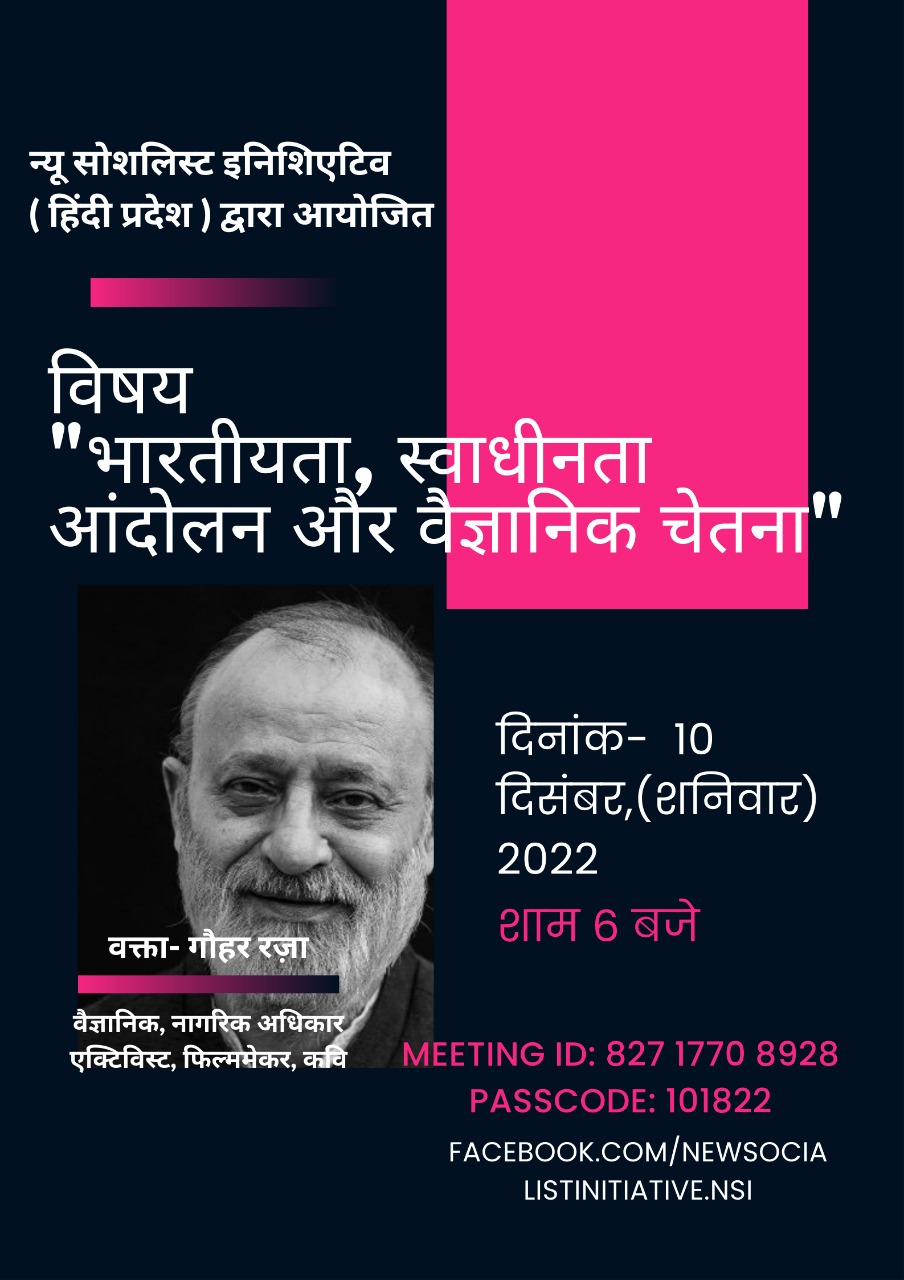
भारतीयता, स्वाधीनता आंदोलन और वैज्ञानिक चेतना : गौहर रज़ा

The next lecture ( 8 th one) in the ‘Sandhan Vyakhyanmala Series initiated by New Socialist Initiative ( Hindi Pradesh) will be delivered by Gauhar Raza, Former Chief Scientist, Council of Scientific and Industrial Research, Documentary Filmmaker on Social Issues, Civil Rights Activist and a  Poet 

He will be speaking on ‘Indian Identity, Freedom Movement and Scientific Temper’ ( भारतीयता, स्वाधीनता आंदोलन और वैज्ञानिक चेतना) on Saturday, 10 th December, 2022  6 PM ( IST). 

Time: Dec 10, 2022 06:00 PM India

Join Zoom Meeting
https://us02web.zoom.us/j/82717708928?pwd=SW1qMnRaVVpWbHVzZjdJb3lZK2dwUT09

Meeting ID: 827 1770 8928
Passcode: 101822

The lecture will also be live streamed on www.facebook.com/newsocialistinitiative.nsi

——————–

संधान व्याख्यानमाला : आठवां वक्तव्य 

विषय :  भारतीयता, स्वाधीनता आंदोलन और वैज्ञानिक चेतना

वक्ता :  गौहर रज़ा , पूर्व मुख्य वैज्ञानिक , कौन्सिल ऑफ़ साइंटिफिक एंड इंडस्ट्रियल रिसर्च , डॉक्युमेंटरी  फिल्म निर्माता , सामाजिक कार्यकर्ता और कवि  

शनिवार , 10  दिसंबर , शाम 6 बजे   
आयोजक :न्यू सोशलिस्ट इनिशिएटिव ( हिंदी प्रदेश )

आयोजक : न्यू सोशलिस्ट इनिशिएटिव ( हिंदी प्रदेश ) 

विषय : ‘ भारतीयता, स्वाधीनता आंदोलन और वैज्ञानिक चेतना

देश के पहले प्रधानमंत्री जवाहरलाल नेहरू ने देश के सामने दो बड़े सवाल रखे थे, पहला था ‘वैज्ञानिक चेतना’ का और दूसरा था ‘भारत माता कौन है’ यानी हमारी भारतीय पहचान का क्या अर्थ है.  इन दोनों सवालों पर आज फिर एक बार नज़र डालने की जरूरत है. आज एक तरफ़ तो  वैज्ञानिक चेतना पर बड़ा हमला है और दूसरी तरफ़ ‘सामूहिक भारतीय पहचान’ को बदलने की व्यापक कोशिश ने सामाजिक ढांचे को छिन्न भिन्न करने का ख़तरा खड़ा कर दिया है. 

ये व्याख्यान जंग-ए-आज़ादी के दौरान ब्रिटिश राज्य के दमन के ख़िलाफ़ गाढ़ी गयी ‘हिंदुस्तानी पहचान’ से जुड़े कुछ सवालों पर नज़र डालने की कोशिश करेगा. इस पहचान का गारा वैज्ञानिक चेतना से तैयार किया गया था, पर ये भी याद रखना चाहिए कि देश में वैज्ञानिक चेतना के खिलाफ़ शक्तियां हमेशा ही सक्रिय रही हैं, खास तौर से हिंदी पट्टी में. 2014 के बाद से इन शक्तियों की ताक़त बढ़ी है और साथ ही वैज्ञानिक चेतना और भारतीय पहचान पर हमले भी. 

The Two-Nation Theory, Partition and the Consequences – Prof Ishtiaq Ahmed

 Prof Ishtiaq Ahmed, Professor Emeritus of Political Science, Stockholm University and a leading authority on the Politics of South Asia and an eminent author will deliver next lecture (21 st one) in the Democracy Dialogues Series, organised by New Socialist Initiative

He will be speaking on ‘The Two-Nation Theory, Partition and the Consequences’ on Sunday, 27 th November 6 PM (IST) 

The lecture will also be live streamed at facebook.com/newsocialistinitiative.nsi

Topic : 

The Two-Nation Theory, Partition and the Consequences

1.    The Two-Nation Theory as an Idea and an Argument: The talk will contextualize the origins of the Two-Nation Theory in the background of pre-colonial and British colonial rule and analyse it in relation to competing ideas of a One-Nation Theory as well as the vaguer ideas of multiple nationalities deriving from language, ethnicity and religion. This section will also deal with British policy regarding such competing ideas of group identity and nation and nationalism. This will cover the period 1857 – 1932. However, most attention will be given to the 1928 Motilal Nehru Report (which a section of Muslims including one faction of the Muslim League was willing to accept) and Jinnah’s 14 points.

 2.      The Two-Nation Theory and the demand for Partition: The Government of India Act 1935, the election speeches and manifestos, election results and the Muslim League’s deployment of communalism as political strategy to demand partition on behalf of Muslims. The stands of the Indian National Congress, the Muslim League, the Communist Party of India, the Hindu Mahasabha, the Jamiat Ulema e Hind and other Islamist, regional and working-class parties of Muslims and the Sikhs of Punjab.

 3.      British policy on the future of India: from unwillingness to grant India freedom to retaining influence and control through defence treaty to finally deciding in favour of partition. The Cabinet Mission Plan, Wavell’s schemes to transfer power as an award, The British military’s transformation from opposition to support for partition; 3 June Partition Plan, the partitions of Bengal and Punjab, the 18 July 1947 Indian Independence Act.

 4.      The Partition as a flawed exercise in the transfer of power which claimed at least one million Hindu, Muslim and Sikh lives, caused the biggest migration in history (14 – 15 million) and bequeathed bitter disputes over the sharing of colonial assets, territory and claims to princely states. In this regard, the

 5.      The Partition as a referent for nation-building: while agreeing finally to the partition of India on a religious basis India held steadfastly to nation-building on a secular, liberal-democratic, inclusive and pluralist basis. The Indian constitution came to represent such a view of nation and nation-building. On the other hand, since Pakistan had been won in the name of Islam its nation-building was based on distinguishing Muslims from non-Muslims and generating different formulae of differential rights. More importantly, it brought to light the deep divisions among Muslims based on sect, sub-sect and ethno-linguistic criteria.

 6.      The Partition and settling of disputes between India and Pakistan: The two-nation theory continued to define and determine relations between India and Pakistan resulting in wars, terrorism and zero-sum games in international forums.

 7.      The Partition as a historical, political, ideological and intellectual phenomenon: An Evaluation

About the Speaker :

Prof Ishtiaq Ahmed

Professor Emeritus of Political Science, Stockholm University; Honorary Senior Fellow, Institute of South Asian Studies, National University of Singapore. Published several books with special focus on the politics of South Asia discussed in context of regional and international relations

Latest publications, Jinnah: His Successes, Failures and Role in History,  New Delhi: Penguin Viking, 2020 won the English Non-Fiction Book Award for 2021 at the Valley of Words Literary Festival, Dehradu, India; Jinnah: His Successes, Failures and Role in History, Vanguard Books, Lahore 2021;

Pakistan: The Garrison State, Origins, Evolution, Consequences (1947-2011), Karachi: Oxford University Press, 2013;

The Punjab Bloodied, Partitioned and Cleansed, Karachi: Oxford University Press, 2012- It won the Best Non-Fiction Book Prize at the 2013 Karachi Literature Festival and the 2013 UBL-Jang Groups Best Non-Fiction Book Prize at Lahore and the Best Book on Punjab Award from Punjabi Parchar at the Vaisakhi Mela in Lahore, 2016

He is working on a new book, The Partitions of India, Punjab and Bengal: Who What and Why

He is the Editor-in-Chief of the “Liberal Arts & Social Sciences International Journal (LASSIJ)” and also regularly writes columns in several Pakistani newspapers

Letter to Consul General, Iranian Consulate, Mumbai: Indian women’s organisations

The following letter, signed by over 300 individuals from different national and regional organisations was handed over at the  Iranian Consulate in Mumbai by six representatives on September 29, 2022.  It was received politely and acknowledged.

Mr. Abolfazi Mohammad Alikhani
Consul General,
Iran Consulate, Mumbai.

Sir,

We, women and women’s organization from India, are writing this letter to register our horror at the  brutal attacks on the women and citizens  of Iran as they protest the killing of Mahsa Amini at the hands of the Gasht-e-Ershad. These brutal attacks have resulted in and continue to result in further deaths and imprisonments.

These brave women of Iran are demanding freedom from the Morality Police and the State imposing upon them what they must or must not wear and how to wear it; what they must and must not do, or act, or behave. They are rejecting this control. The men of Iran are giving full support and putting their bodies on the line alongside them. The resulting violent repression is heinous and inhuman.

We stand in solidarity with the women of Iran who came out in public to protest killing of Mahsa Amini and to voice their demands for  freedom, equality and autonomy. Continue reading Letter to Consul General, Iranian Consulate, Mumbai: Indian women’s organisations