Category Archives: Right watch

Workers Struggle in Dehradun

The following is a statement from Uttarakhand Nav Nirman Mazdoor Sangh and the Inquilabi Mazdoor Sangh received via Shankar Gopalakrishnan

Between 12 and 1 yesterday, 15 April 2012, the Uttarakhand police lathi charged more than 300 workers who have been sitting on a protest in Dehradun for the last ten days. 11 workers who have been on hunger strike (six from April 6th and five who joined them on April 9th) have been forcibly hospitalised in Doon Hospital, where they are resisting attempts to force-feed them. 326 workers have been arrested and detained in various jails in the city.

The workers have been on strike for more than three weeks now. They are employees of the Rockman and Satyam Auto plants in Haridwar, both major suppliers of Hero Motors. As in Manesar, Haryana last year, these workers are being paid extremely low wages for more than 12 hours of work a day; when they sought to form a union to demand respect for labour laws, the five leaders of the union were illegally sacked immediately and the others threatened with a similar fate. On March 19th the majority of permanent workers at Rockman came out on strike in protest at this illegal brutality, and on March 22nd they were joined by all the permanent workers at Satyam. Continue reading Workers Struggle in Dehradun

On Sri Sri Ravi Shankar’s views about government-run schools

This press statement comes via Kavita Srivastava; see full list if signatories at the end.

PRESS RELEASE

Jaipur, 21st March, 2012: We are shocked and strongly condemn the statement made by the Global Corporate Brand “Art of Living” businessman, Ravi Shankar in Jaipur on 20th March, 2012, wherein he states that “Government schools are breeding grounds of violence and Naxalism ….that is why Government run schools and colleges must be handed over to private bodies….and that ‘Adarsh schools’ must reach all areas”. We would like to demand evidence from Ravi Shankar that Government schools, in which 16 crore children of the age group 6 to 14 years are studying are breeding grounds for violence and Naxalism. An army of Indian engineers, doctors, nurses, computer professionals, government servants army and police personnel and factory workers come from government schools. It would appear that this human resource that is the backbone of this country is wholly ‘Naxalite’ in the eyes of this completely irrational guru.

Continue reading On Sri Sri Ravi Shankar’s views about government-run schools

Reflections of a Refugee from Modi’s Gujarat: Reza Noorani

Guest post by REZA NOORANI

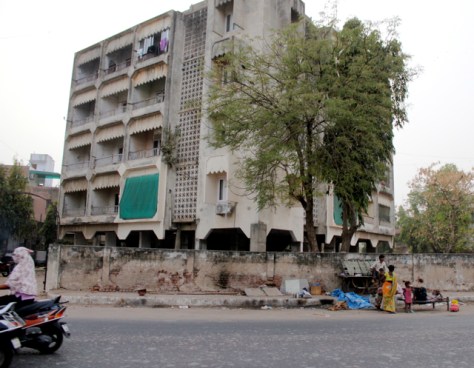
Kashana Flats, Paldi, Ahmedabad, as they stand today. Photo credit: Prateek Gupta

When the riots broke out in 2002 in Ahmedabad, after the burning of the Godhra coach, I was in the tenth standard. I remember listening to the news in the morning, just after which my best friend Ketan had called me and asked “Why did you guys do this?” I didn’t know how to respond to that. I think I just laughed it out and we began discussing what was happening in the city. My father took the phone away from me. I was preparing for my board exams and was just about to leave for one of the last days of school, after which we would go on a study leave. My father, who had experience with riots, told my two elder sisters and me to not go to school and stay at home that day. Continue reading Reflections of a Refugee from Modi’s Gujarat: Reza Noorani

On the low morale of Gujarat Police: RB Sreekumar

This guest post by former Gujarat DGP RB SREEKUMAR is a letter to the Union Minister of Home Affairs.

Dear Shri P. Chidambaram,

I belonged to Gujarat cadre of Indian Police service (IPS)-1971 batch-and retired from service on 27.2.2007 in the rank of Director General of Police (DGP), Gujarat state.

2. As a senior citizen (age-65 years) staying in Gujarat since 1970s, I am constrained to write the following for your kind consideration and urgent remedial action.

3. The morale, self esteem and image of the Gujarat Police in general and of IPS officers giving leadership to police force in the state in particular, have been in steady decline since 2002 anti-minority genocide. The media, reputed human rights activists and national bodies like the National Human Rights Commission, the National Commission for Minorities and the National Commission for Women have thrown light on serious intentional acts of commission and omission by Gujarat government functionaries (except in cities like Surat, Bhavnagar and a few districts in South Gujarat and Saurashtra), that facilitated extensive and gruesome mass violence against minorities.

Continue reading On the low morale of Gujarat Police: RB Sreekumar

We, the People of Gujarat: Urvish Kothari

This guest post by URVISH KOTHARI was originally written in Gujarati and has been translated by VISTASP HODIWALA

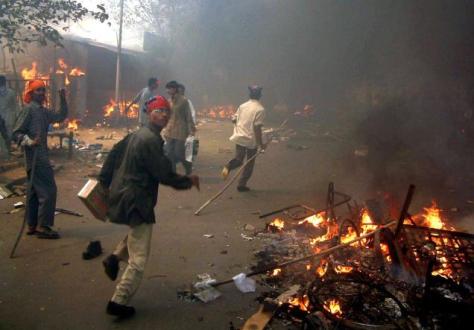
Associated Press

Some facts are so simple and self-evident that they elude you completely at the time they happen. Digesting them takes time – 2, 3,7, maybe even 10 years. By that time, the passion and the anger has abated a bit and there is a sense of composure that pervades our beings.

Like the fact about the communal violence that gripped the State of Gujarat in 2002.

Of course, a mere mention of this is enough to get the chief minister’s fanboys roll up their sleeves, even as their opponents ready themselves to launch a counter onslaught. But with the passage of ten long years, the first question should not be about whether the Chief Minister was complicit in the crime or not. No, it cannot be.

Continue reading We, the People of Gujarat: Urvish Kothari

75 Years of Bhonsala Military School: Militarising Minds, Hindutvaising the Nation

Image

..to bring about military regeneration of the Hindus and to fit Hindu youths for undertaking the entire responsibility for the defence of their motherland.

to educate them in the ‘Sanatan Dharma’, and to train them “in the science and art of personal and national defence”

– From the aims of ‘Central Hindu Military Education Society,’ NMML, Munje Papers, subject files, n 24, 1932-36)

This training is meant for qualifying and fitting our boys for the game of killing masses of men with the ambition of winning victory with the best possible causalities (sic) of dead and wounded while causing the utmost possible to the adversary.

– Preface to the scheme of the Central Hindu Military Society and Its Military School’NMML, Munje Papers, subject files, n 25, 1935

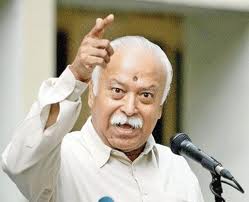
Nashik: Expressing concern over the dominance of ‘rich and powerful people’ in politics, besides the soaring inflation rate, Rashtriya Swayamsewak Sangh (RSS) chief Mohan Bhagwat said that India’s situation was better during the British rule…Speaking at a function organized by Bhonsala Military School (BMS) to celebrate its platinum jubilee year in Nashik on Monday, Bhagwat …laid stress on the need for imparting military education to students, citing rising threat to the nation.

– ‘India was better off under British rule: Mohan Bhagwat’, Times of India, Feb 22, 2012

Continue reading 75 Years of Bhonsala Military School: Militarising Minds, Hindutvaising the Nation

Three Stories of Resilience from Gujarat: Ayesha Khan

Guest post by AYESHA KHAN, Baroda-based journalist

Bilkis Bano. Photo via a grab from a recent NDTV report

To mine the detritus of the Gujarat pogrom for positive stories may seem like sacrilege. But when memories are dredged up to mark a decade of the horrors of 2002, a little blasphemy could help balance the account books.

Mostly what we recount of Gujarat 2002 is deaths. Yet, more than the murder and mayhem, the pogrom stood out for an unprecedented scale of sexual violence that Muslim women were subjected to. George Fernandese in his capacity as the Union defence minister had explained to the Parliament after a quick tour of Gujarat that women raped or molested during riots was not surprising or exceptional. I will not go here into the polemics of why violating women’s sexuality is considered a means of dishonouring a community,

There’s an untold story about how the community handled sexual violence. If the dominant community legitimised rape driven by its insecurities and politics that stemmed from history and identity issues, it was perhaps for the first time that the persecuted community reacted to rape in a progressive way.

Rape is double-edged sword, first leading to physical violation and second to social ostracisation in most societies. Which is common to mask the identity of rape victims for fear of social stigma. Strangely, during the 2002 riots, Muslim women, some of them burqa clad and most of them from tightly-knit rural communities never betrayed the kind of shame or guilt that rape victims are expected to show. What was their fault? Why should the victim feel shame and guilt? And so it was that many of them did not cloak their identities, and instead chose to come out publicly to demand justice. Continue reading Three Stories of Resilience from Gujarat: Ayesha Khan

The Gulberg Memorial

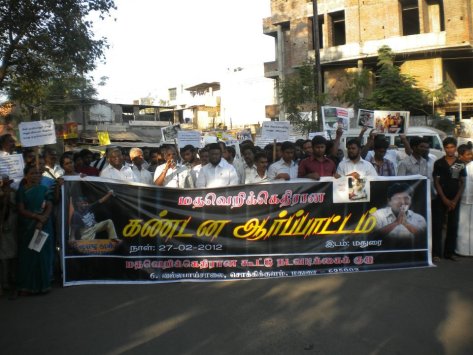
The photograph above is that of a small protest by People’s Watch yesterday, in Madurai, for justice and reparations in Gujarat. Such demonstrations were held across India. Nothing irks the Narendra Modi Fan Brigade than remembering. Move on, they say, move on, forget it. It happened. The struggle of man against power, said Milan Kundera, is the struggle of memory against forgetting.

The short film below, about making a memorial at Gulberg Society in Ahemdabad, was put out by the Teesta Setalvad-led Sabrang Trust in 2008. Yesterday, tenth anniversary of the day Gujarat began to burn for a few weeks in 2002, Sabrang Trust held a meeting at what is now the Gulberge Memorial. Given below the film is the text read out by Justice Hosbet Suresh read out at the Memorial meeting, which was webcast live by Sabrang Trust.

Continue reading The Gulberg Memorial

Gujarat genocide – the state, law and subversion: R B Sreekumar

Guest post by R B SREEKUMAR, former Director General of Police, Gujarat, who deposed before the Nanavati Commission.

Gujarat riot victims prevented from protesting against Narendra Modi during his sadbhavna fast in September 2011.

The Gujarat genocide in 2002, resulting in killing of nearly 1,500 innocent citizens, mostly from India’s major minority community and subsequent pervasive subversion of governmental machinery to sabotage justice delivery to riot victims, has to be understood as a man-made disaster. A disaster broughtabout by lack of professionalism and lack of integrity and commitment to the letter, spirit and ethos of the Constitution of India, on the part of all officials of the state, from the Chief Minister Narendra Modi to the police constables.

An analysis of the sequence of events from the time of the gruesome killing of 59 Hindu passengers in the train burning incident on 27 February, 2002 to this day, will bring up many unambiguous facts and data on deliberate acts of omission and commission by political leaders, bureaucrats and policemen, aiming at the actualization of the anti-Muslim carnage in Gujarat in 2002, and since then, the lopsided justice delivery to riot victims.

Continue reading Gujarat genocide – the state, law and subversion: R B Sreekumar

A decade on, Gujarat justice incomplete: Human Rights Watch

This release was put out on 24 February 2012 by HUMAN RIGHTS WATCH

(New York) – Authorities in India’s Gujarat state are subverting justice, protecting perpetrators, and intimidating those promoting accountability 10 years after the anti-Muslim riots that killed nearly 2,000 people, Human Rights Watch said today. The state government has resisted Supreme Court orders to prosecute those responsible for the carnage and has failed to provide most survivors with compensation.

The violence in Gujarat started on February 27, 2002, when a train carrying Hindu pilgrims was attacked by a Muslim mob and caught fire, killing 59 people. In a retaliatory spree by Hindu mobs, hundreds of Muslims were slaughtered, tens of thousands were displaced, and countless Muslim homes were destroyed. Continue reading A decade on, Gujarat justice incomplete: Human Rights Watch

Anatomy of an allegedly thwarted coup: Anwar Dayal

Prime Minister Sheikh Hasina

Guest post by ANWAR DAYAL

Bangladesh has seen more coups than Pakistan. It probably came close to one recently, by alleged Islamists in the army. I say probably because when it comes to military intervention in Bangladesh, who-what-why-when have often been unclear. For example, a few majors seized the country’s tanks and killed the founding president and his family in August 1975. Was it a few disgruntled officers with personal disputes, as was claimed by the contemporaneous foreign media? Or was it part of the complicated and brutal Cold War geopolitics, with the involvement of senior officers and politicians, as many believe? Even though the perpetrators of the massacre have been convicted, and a few hanged, Bangladeshis still debate these questions.

It’s been like that for all military interventions over the years. What may have happened in recent weeks is unlikely to be the exception. As such, one should not necessarily conclude that Saleem Samad’s officially sanctioned account in India Today is the full story.

Samad’s narrative goes something like this. Continue reading Anatomy of an allegedly thwarted coup: Anwar Dayal

Jashn-e-Azadi successfully screened at Delhi University despite right-wing threats & police pressure: AISA

Guest post by ALL INDIA STUDENTS’ ASSOCIATION (AISA)

AISA and Students of Sociology Department (DU) Successfully Screen Jashn-e-Azaadi in DU, Braving Attacks and Threats by ABVP and ‘Bhagat Singh Kranti Sena’! Hundreds of Delhi University Students Participate in Film Screening and Discussion with Sanjay Kak, Director of Jashn-e-Azadi!!

Today hundreds of DU students and teachers participated the screening of the documentary film  Jashn-e-Azaadi organized by AISA and students of sociology in the Department of Sociology, Delhi University. “Predictably this screening had to held in the teeth of opposition from right-wing fascist forces like ABVP and the Bhagat Singh Kranti Sena, who tried their level best to stall the screening. Moreover, the DU administration and the Delhi Police also shamefully sided with these forces and tried to pressurize the Sociology department to stop the screening”, said Harshvardhan Tripathi Secretary DU, AISA.

Continue reading Jashn-e-Azadi successfully screened at Delhi University despite right-wing threats & police pressure: AISA

My Abu Talha Moment: Sanjay Kak

Guest post by SANJAY KAK

Last week was my Abu Talha moment. That’s when dubious honours rain on you, unsolicited, undeserved. There I was, charged with wrecking a literary festival in Kashmir; links to the Parliament attack case; racism against Kashmiri pandits; scuttling a film screening in a women’s college in Delhi… And if that doesn’t create a frisson, I was also said to be on the radar of Mumbai’s Anti Terrorist Squad.

Unable to make the Abu Talha connection? Many in Kashmir know the name as a talisman, the kind that security forces brandish when they periodically feel its time to square their books. It doesn’t take much; they just have to produce a fresh corpse before a pliant media, although one with long hair and a beard, fatigues and an AK47, does make things easier. As Abu Talha, this all-purpose corpse can then be held responsible for fidayeen attacks, the murder of innocent civilians, the assassination of political workers, massacres, and explosions, whatever. Crucially, even as Abu Talha is lowered into the ground, all further investigations into those events can be safely laid to rest.

End of story: tamam shudh? Well, only sort of. Because Abu Talha will be called upon to perform again, dusted up and presented afresh to the world. Again. He’s not alone, for with so much happening in Kashmir, Abu Talha is part of a frequent fighters club: Abu Hamza, Abu Shakir, Abu Waqas, Ghazi Baba… The other day a friend from Kashmir invented one to cheer me up: Abu Tamam, he offered, Father of it All.

Continue reading My Abu Talha Moment: Sanjay Kak

To the Students and Faculty of Symbiosis University on the Censors in their Midst

Dear Students, Dear Teachers, Dear Friends at Symbiosis University, Pune

You are faced with an extraordinary situation. A symposium on Kashmir that was to be held in your institution with the support of the University Grants Commission, has been cancelled, postponed (see update at the end of the post) following complaints by activists of the Akhil Bharatiya Vidyarthi Parishad (the student wing of the extreme right-wing militia that goes by the name of the RSS) against the proposed screening of a documentary film ‘Jashn-e-Azadi‘ (‘This is How We Celebrate Freedom’) by the well known filmmaker Sanjay Kak. These complaints, which could more accurately be called threats, have unfortunately received the tacit endorsement of senior police figures in Pune and seem to have met with the approval of your principal. (Thanks to The Hindu – see links above –  for the two balanced reports on this issue.) While the seminar may or may not be held (it stands ‘postponed’ as of now) the administration of Symbiosis have succumbed to the insistence of the right wing groups that Jashn-e-Azadi’s screening remain cancelled. Continue reading To the Students and Faculty of Symbiosis University on the Censors in their Midst

How We Celebrate Freedom

The Hindu reports that a university in Pune has cancelled a planned screening of Sanjay Kak’s 2007 documentary film, Jashn-e-Azadi: How We Celebrate Freedom.
Speaking to The Hindu over telephone, Symbiosis College of Arts and Commerce principal Hrishikesh Soman stated that the ABVP had approached him on Friday, and that the college agreed to cancel the film screening “considering their [ABVP’s] emotions and feelings.” “I told them that the seminar is entirely academic, apolitical and non-religious. But the film has met with criticism from all corners. So we have decided to avoid unnecessary controversies and cancel the screening,” Mr. Soman said. “If people have a very strong reason to protest the film, then we should be tolerant enough,” he stated. [Link]

Shameful as this censorship is, it is a compliment to Sanjay Kak’s fabulous documentary film that the goons of the Akhil Bhartiya Vidyarthi Parishad don’t want people in Pune to see it. The truth about Kashmir must not be told. This is also an example of why the BJP props up its ‘minority morcha’ to oppose Salman Rushdie visiting Jaipur: they want the Congress and the ‘secularists’ and the Muslims to be seen as censor-happy so that they can get away with their own censorship.

Freedom of speech and expression in India, RIP.

Or, not.

Just as Satanic Verses freely circulates on the internet, you can also watch Jashn-e-Azadi online, for free.

Film synopsis:

Continue reading How We Celebrate Freedom

Hindus offended by lack of offence: Sajan Venniyoor

Guest post by SAJAN VENNIYOOR

In the first few weeks of the year 2012, when members of the Muslim, Christian and Sikh communities were successively offended and humiliated, Hindus are feeling left out.

Even as the Hindu community was reeling under the refusal by a Russian court to ban the Hare Krishna version of the Bhagavad Gita, the year began well for Christians when Oscar-winning composer AR Rahman offended their sentiments by using the word ‘Hosanna’ in a song for Ekk Deewana Tha. The Catholic-Christian Secular Forum, which in the past has been shamefully humiliated by other films, many of which were not released in India, demanded the deletion of the H-word “claiming it is a sacred term for Christians and Jews and should be used only in prayer.” They admitted it was negligent on their part not to have taken offence when the song was released with the same hurtful lyrics in a Tamil film in 2010. Continue reading Hindus offended by lack of offence: Sajan Venniyoor

SAHMAT invites Salman Rushdie to Delhi

This release comes from SAHMAT, the Safdar Hashmi Memorial Trust, Delhi

We have watched with dismay the unnecessary controversy which erupted over the presence of Salman Rushdie at the Jaipur Literary Festival. We strongly disapprove of the threats – real or perceived – issued against the participation of Rushdie. The state has once again succumbed to retrogressive forces using works of creative expression for their own narrow, partisan and divisive political agendas. SAHMAT has stood by Rushdie in the past, when we defied an unofficial ban on The Moor’s Last Sigh by readings on the street in Delhi in 1995. Rushdie has been a frequent visitor to India in the last few years with no problems being raised. Indeed, he visited us at SAHMAT and was serenaded by chance by some of the greatest singers of the Rajasthani Manganiyar tradition.

SAHMAT is issuing an open invitation to Salman Rushdie to come to Delhi to deliver a lecture or participate in a discussion on literature at any time of his choosing. We will host him under any circumstances along with an exhibition of the works of the late MF Husain, driven into forced exile by the similar retreat by the state in it’s cowardly unwillingness to stand up against communal politics.

SAHMAT
New Delhi

The Gandhi Chawl Incident: Meena Menon

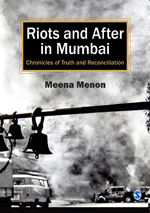
This guest post by MEENA MENON is an extract from her recently published book, Riots and after in Mumbai- Chronicles of Truth and Reconciliation

It was all in the eyes. Beneath the finely drawn brows, they were haunted and distant. For Naina Bane, the night of 8 January 1993 will remain a night of absolute terror. Her escape was miraculous as was her recovery. It took me several months and wrong leads before I met her finally at a family reunion in the suburbs. Dressed in a long mustard coloured ‘maxi’, her hair was drawn back tightly. I found it hard to recognize the same girl who was almost burnt alive on that fateful night in Gandhi chawl. Now 40, there is a faraway look about her and her eyes widen when I ask to speak to her. She got married in 1996 and lives outside Mumbai. Her 6-year-old son keeps her busy. Her husband worked for a mill which closed down, a typical story in Mumbai. He was a badli (temporary worker) and he lost his job. He now works as a watchman. Continue reading The Gandhi Chawl Incident: Meena Menon

Jaipur Literature Festival – Requiescat in Pacem

Did you know that the law had four corners? I didn’t, but whosoever writes press releases for the Jaipur Literature Festival does. Did you know that the ‘ideas can be exchanged and literature loved‘, ‘strictly‘ within these four corners? I didn’t, but whosoever writes press releases for the Jaipur Literature Festival does.

PRESS RELEASE SENT OUT BY THE JAIPUR LITERATURE FESTIVAL, January 20th, 2012

This press release is being issued on behalf of the organizers of the Jaipur Literature Festival. It has come to their attention that certain delegates acted in a manner during their sessions today which were without the prior knowledge or consent of the organizers. Any views expressed or actions taken by these delegates are in no manner endorsed by the Jaipur Literature Festival. Any comments made by the delegates reflect their personal, individual views and are not endorsed by the Festival or attributable to its organizers or anyone acting on their behalf. The Festival organizers are fully committed to ensuring compliance of all prevailing laws and will continue to offer their fullest cooperation to prevent any legal violation of any kind. Any action by any delegate or anyone else involved with the Festival that in any manner falls foul of the law will not be tolerated and all necessary, consequential action will be taken. Our endeavor has always been to provide a platform to foster an exchange of ideas and the love of literature, strictly within the four corners of the law. We remain committed to this objective. [via FirstPost]

Continue reading Jaipur Literature Festival – Requiescat in Pacem

‘सलमान रूश्दी के कार्यक्रम रद्द होने पर निराशा’; PUCL regrets cancellation of Salman Rushdie’s visit to Jaipur

Given below is the text of a press statement issued today by the PEOPLE’S UNION FOR CIVIL LIBERTIES, Rajasthan. The Hindi original is followed by an English translation.

प्रेस विज्ञप्ति
सलमान रूश्दी के कार्यक्रम रद्द होने पर निराशा
दिनांक: 20.01.2012

सलमान रूष्दी के जयपुर आने के कार्यक्रम के सम्बन्ध में जब कंछ मुस्लिम संगठनों ने हिंसक विरोध की चेतावनी दी थी तभी पी.यू.सी.एल. ने तुरन्त उसके विरोध में अपना वक्तव्य दिया था और कुछ प्रभावषाली मुस्लिम संगठनो तथा उस समाज के प्रबुद्ध नागरिकों से सम्पर्क कर उनसे विस्तृत चर्चायें की थीं। उन्होने भी हमारे दृष्टिकोण को समझा था और किसी प्रकार के हिंसक विरोध के सम्बन्ध में अपनी असहमति भी प्रकट की थी। परन्तु वह सलमान रूष्दी का जयपुर आगमन पर अपने विरोध के स्वरो को मुखरित करने के अधिकार को सुरक्षित रखना चाहते थे। इसमें कोई आपत्ति भी नहीं हो सकती थी परन्तु ऐसे विरोध की सीमायें कहॉं तक हांेगी इस पर चर्चा जारी थी। इसी बीच सरकार की ओर से यह वक्तव्य दिया गया कि सलमान रूष्दी के आने से कानून और व्यवस्था की स्थिति बिगड़ सकती है। इसलिए उनके आने पर पाबंदी लगाने पर विचार किया जा रहा है। पी.यू.सी.एल. ने सरकार के इस रवैये का जमकर विरोध किया था और इस पर एक प्रदर्षन भी आयोजित किया था। मुस्लिम संगठनों से इसके बाद विस्तृत चर्चा हुई और उन्होने भी यह स्वीकार किया कि कानून और व्यवस्था की स्थिति नहीं बिगड़ने देगें। लेकिन लगता है कि सरकारों को यह प्रयास रूचिकर नहीं लगे और आज सलमान रूष्दी ने ई-मेल सन्देष भेेजकर अपना कार्यक्रम रद्द करते हुए यह कहा है कि उन्हें राज्य सरकार से सन्देष प्राप्त हुआ है कि कुछ उग्रवादी तत्व किसी अन्य प्रदेष से आकर उनकी जान लेने की कोषिष कर सकते हैं। हंालाकि उन्होने स्वयं इस प्रकार की खबर को सन्देहात्मक बताया है परन्तु अपना कार्यक्रम रद्द करने का यही कारण बताया है। Continue reading ‘सलमान रूश्दी के कार्यक्रम रद्द होने पर निराशा’; PUCL regrets cancellation of Salman Rushdie’s visit to Jaipur

Satanic Versus Moronic: How Salman Rushdie Lost the UP Election

Oh, It’s silly season again. (Has it ever not been silly season? Silly me for making a silly rhetorical opening to this post). Anyway folks, aam aur khas janta, baba log and bibi log, it’s time, once monotonously again, for quarantines and piety, for bans and shoe-throwing contests, for frothing at the mouth and froth on the telly. Its Rushdie-Nasreen-Husain Time, again! Ta-Raa! And like a ‘sanjog’ made by a pretend-god in a made up marquee heaven, the stars of ‘Rushdie Time’ are crossed with the suddenly brightly shining stars of what would have otherwise been a lackluster, effigy-tarpaulined, mid-winter provincial election. Ta-Rant-Ta-Raa! Not even a Saleem Sinai or a Gibreel Farishta, let alone a jeeta-jagtaa Salman Rushdie in his weirdest magic-realist moment could have imagined himself mixed up in a plot as diabolical as this one. If this was a court case we could call it Satanic versus Moronic.  Whatever it is, there is no denying that it is a P2C2E – a ‘Process Too Complicated To Explain’. But explain we must. Process we can. Pyaar kiya to darna kya?

Continue reading Satanic Versus Moronic: How Salman Rushdie Lost the UP Election