Category Archives: Right watch

Everything you wanted to know about the Binayak Sen judgement

Great job, Balaji Narasimhan and Jyoti Punwani.

Swami Aseemanand’s Confessions: It’s time for an apology?: JTSA

This note comes from the JAMIA TEACHERS’ SOLIDARITY ASSOCIATION

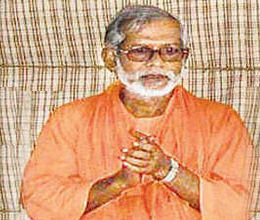
Swami Aseemanand

Swami Aseemanand’s confession before the metropolitan magistrate of Tees Hazari Court has finally put the seal of legal validity over what had been circulating for months now, since the surfacing of the audio tapes seized from Dayanand Pande’s laptop. That Hindutva groups had been plotting and executing a series of bomb blasts across the country—including Malegaon (2006 and 08), Samjhauta Express (2007), Ajmer Sharif (2007) and Mecca Masjid (2007).

For the past several years however, dozens of Muslim youth have been picked up, detained, tortured, chargesheeted for these blasts—with clearly no evidence, except for custodial confessions (which unlike Swami’s confessions have no legal value). Report after report has proved that the Maharashtra and Andhra police willfully refused to pursue the Hindutva angle preferring to engage in communal witch-hunt—or as in the case of Nanded blast—where the evidence was so glaring as to be unimpeachable—weakening the prosecution of these elements.

Continue reading Swami Aseemanand’s Confessions: It’s time for an apology?: JTSA

My Name is Pandey

Swami Aseemanand

With so much talk of Hindutva terrorism (see Kafila archive), I as a Hindu want to clarify that:

  • Not all Hindus are terrorists.
  • Not all terrorists are Hindus.
  • Not all Hindus are Hindutvawaadis.
  • All Hindutvawaadis are Hindus.
  • Not all Hindutvawaadis are terrorists
  • All Hindus who are terrorists are Hindutvawaadis. Continue reading My Name is Pandey

“I Am Still Alive”: Amitava Kumar

Guest post by AMITAVA KUMAR

Till a few days ago, I hadn’t heard of Aqeel Shatir. A friend sent me a link to a report in the Indian Express on December 20 about a poet who had been asked to pay for an anti-Narendra Modi remark in his anthology, Abhi Zindaa Hoon Main (I Am Still Alive). I got in touch with the reporter, in Ahmedabad, who had filed the story and soon after that spoke on the phone with Shatir.

Aqeel Shatir is his takhallus or literary alias. The name his parents gave him was Aqeel Ahmed. His ustad offered him a choice of two pen-names. One was Aazar, which means a sculptor, someone who carves beautiful forms from marble. The other was Shatir, whose literal meaning is chess-player but denotes someone who possesses cunning. Continue reading “I Am Still Alive”: Amitava Kumar

The Definition Shortchanges India

Guest post by DILIP D’SOUZA

Responding to Rahul Gandhi’s recent Wikileaked comment, Sadanand Dhume asks “What Terrorizes India?” (Wall Street Journal, December 20). It’s a good question that deserves an answer. Did Dhume answer it?

As is well known now, Gandhi said this to US Ambassador Tim Roemer last year: “The bigger threat [to India] may be the growth of radicalized Hindu groups, which create religious tensions and political confrontations with the Muslim community.” Dhume’s essay is a severe criticism of Gandhi’s comment, and in the end of the man himself. The criticism, I’m not particularly interested in: people have their varying opinions about Gandhi and that’s fine with me. But I wonder if Dhume has thought through the implication of his own title. Indeed, what does terrorize India, and Indians? Continue reading The Definition Shortchanges India

Villain in Life, Hero in Death: Hindutva’s New found Love for Hemant Karkare

…sources who were close to Karkare have said there was indeed a threat perception at that time and the former ATS chief was disturbed over allegations against his family after the Malegaon probe was made public.

However, they said “Karkare was not scared” and that “he was very practical and took adequate measures to ensure his family was safe”. According to sources, Karkare had raised the wall around his house just a week before his death and also brought home a dog. “The wall was raised around the garage-end of the house, as it faced the road outside,” sources said.

An officer, who did not wish to be identified, said, “Soon after the probe, there were news reports alleging various things about his family which disturbed him. He was not scared for his life nor was he the kind to be afraid of consequences of an honest probe. …It was the allegations against his family that disturbed him and he took practical measures to ensure their safety.”

(Indian Express, Posted: Tue Dec 14 2010, 03:31 hrs Mumbai) Continue reading Villain in Life, Hero in Death: Hindutva’s New found Love for Hemant Karkare

City in Terror: Dilip D’Souza

Guest post by DILIP D’SOUZA

Starting today eighteen years ago, for much of December and January (and then March 12), Indian killed Indian on the streets of my city. Terror at its most elemental: I felt it then. I saw it then. Others told me about it then.

Some memories of those weeks, in no particular order but they all still make my hair stand on end.

Will the Insecure Male at the News Desk Please Stand Up?

K.K. Shahina, of the Tehelka, some feel, may be a terrorist. No prizes for guessing who. After all, Shahina has been working, despite pressures of all sorts, to unravel the impossible web of lies that the police, the media, and political parties have been weaving around the figure of Abdul Nasar Madani, who was arrested again as an accused in the 2008 Bangalore blast case and denied bail. Madani, as is well-known, had already suffered enormous injustice at the hands of the Indian state but to the chagrin of the Hindutva ‘nationalists’, he re-entered the political arena. Whether one agrees with him on Islam or other matters, or about his choice of alliances, is a different matter. Choosing to demand space in the political public, he exercised his right as a citizen, and thereby indicated a preliminary implicit willingness to place his views before a critical public. Continue reading Will the Insecure Male at the News Desk Please Stand Up?

This Chhath Puja, Ram ke naam: Mahtab Alam

Guest post by MAHTAB ALAM

Last week, after a gap of almost 12 years, when I was asked by my family members to accompany them to see Chhatth Puja, an ancient Hindu festival dedicated to Surya, the Sun God, I could not resist myself and readily agreed to join them. As a school going boy, I had always enjoyed watching the festival and devotees performing the rituals observed for the Puja in my hometown Supaul, a district of Bihar, which borders the Tarai region of Nepal. In the last 12 years, I couldn’t get a chance to do so due to the mobile nature of work I am involved in. The Puja, most elaborately observed in Bihar, Jharkhand and the Terai regions of Nepal in modern times, and those areas where migrants from these regions have a presence. Chhath, usually observed six days after Diwali, was observed on 12 November this year. Continue reading This Chhath Puja, Ram ke naam: Mahtab Alam

The Hidden Arm – Criminals for Hindutva?

I.

Anyone ever heard about Sudhakar Rao Maratha alias Sudhakar Rao Prabhune ? A hardcore rightwing criminal who was nabbed by the M.P. police few months back in Jhansi which seized a car, a revolver and five cartridges from him. In fact one of Sudhakar’s colleague Shivam Dhakad was already under the custody of Ujjain police when Sudhakar was apprehended. According to the senior police officers Sudhakar Rao was in touch with RSS Pracharak -Terrorist Sunil Joshi, who was shot dead in Dewas in 2007 under mysterious circumstances.

Hardcore right-wing criminal Sudhakar Prabhune alias Sudhakar Rao Maratha, who could throw light on the mysterious murder of RSS pracharak Sunil Joshi, has been arrested in Madhya Pradesh. The 26-year-old was wanted in connection with a string of murders of Muslims in Ratlam and Mandsaur. The state police claimed he was arrested on Tuesday from Bilkhiria when he was on way to Bhopal from Sagar. …

Rao took to crime when he was 19. His name cropped in the murder of Jafar Khan, who was shot dead in Chittorgarh. ’ (Right-wing criminal’ held, to be questioned in Joshi murder case, Indian Express, Posted: Thu Sep 30 2010, 02:50 hrs Bhopal)

Continue reading The Hidden Arm – Criminals for Hindutva?

Remembering Balagopal – Thought, Action and the Moral Imagination of Human Rights: Arvind Narrain

Guest post by ARVIND NARRAIN, based on a talk given at the Kannada book release of Inner Voice of Another India: The Writings of Balagopal, at National College Basavangudi, Bangalore, 30 October, 2010

Remembering Balagopal: Thought, Action and the Moral Imagination of Human Rights  [i]

Introduction

One  year after Balagopal’s death, what remains with us are memories of the number of times he spoke with such eloquence on  human rights issues on his numerous visits to Bangalore.  We also go back to his writings in the EPW  which show the clarity of his thought. Be it his speeches or his writings , it was clear that for Balagopal words were tools he used to express thought. Language for him was not something which served to obfsucate meaning and muddy concepts, but rather a tool which had to be used to clarify difficult ideas and cut through conceptual confusions. In George Orwell’s striking phrase, both his writing and his speeches had the clarity of a windowpane. Continue reading Remembering Balagopal – Thought, Action and the Moral Imagination of Human Rights: Arvind Narrain

Whose Dishonesty? Arundhati’s or Media’s?: Mahtab Alam

Guest post by MAHTAB ALAM

‘Vicharon ki Be-imani (Dis-honesty of thought) cries the heading of the lead article of Dainik Bhaskar’s editorial page on 1st November 2010. The article is written by Venkateshan Vembu, foreign correspondent of DNA English daily, a newspaper published by the same group of publications. It was originally published on 27th October with the headline reading ‘Arundhati Roy is dangerously wrong on Kashmir’. The writer of the article claims that whatever Arundhati has said is not only dangerously wrong and beyond the tolerance level of any law-abiding citizen but, it also has the potential to arouse feelings of anger and violence among the masses. “Yeh kuch is tarah ki beimani hai, jo janmanas me krodh aur aakrosh ki bhawna upjati hai (This is a kind of dishonesty which generates feelings of anger and violence among the people”). Ironically, this turned out to be a ‘prophetic’ disclosure, as right after four days of publication of the original version in DNA, Arundhati’s house in Delhi was attacked by the writer’s ‘Janmanas’, the BJP’s women wing ‘Mahila Morcha’.

Continue reading Whose Dishonesty? Arundhati’s or Media’s?: Mahtab Alam

Bhagwat Purana of a Different Kind

(This post is by SUBHASH GATADE. It was initially inadvertently posted under Aditya Nigam’s name. The error is deeply regretted.)

I. Conflating Hinduism and Hindutva

Mr Mohan Bhagwat, the ‘young’ Supremo of an eighty plus year old exclusively male cultural organisation called Rashtriya Swayamsevak Sangh is in high spirits these days.

It is not very difficult to understand the glee on his face which has to do with the latest developments in the cause celebre of Sangh Parivar. One can even notice that every member of this different kind of ‘family’ also seem to be upbeat , whose representatives can be traced on neighbourhood playground in the morning doing drills, playing games or listening to ‘sermons’ of their seniors which they call Baudhik.

Continue reading Bhagwat Purana of a Different Kind

Reading Ayodhya Judgement II: Biswajit Roy

Guest post by BISWAJIT ROY

In my earlier piece, I had noted Justice Khan’s pluralist-nationalist sentiments and his anguished pleas to Muslims to ‘avail the opportunity to impress others with the message’ of ‘peace-friend ship- tolerance’ by accommodating Hindu faith-based claims to the area under the central dome of the demolished mosque as Ram Janamsthan. But I failed to find similar sentiments or espousal of the need of inter-community reconciliation on equal footing in the ‘bulky’ exposition of Justice Agarwal, despite his concurrence to Khan’s order for three-way partition of the disputed land, as well as justice Verma’s judgment that had awarded entire place to Hindus.

Continue reading Reading Ayodhya Judgement II: Biswajit Roy

The Ayodhya Verdict: Rohini Hensman

This is a guest post by ROHINI HENSMAN

Reactions to the Allahabad High Court verdict in the Babri Masjid case have varied widely, from triumphalism from some actors, through appeals for calm and hopes of reconciliation from others, to expressions of disappointment and dismay from yet others. This is partly a consequence of the complex character of the split verdict. On the issue of whether a Hindu temple had been destroyed in order to build the Babri Masjid in 1528, S.U. Khan, in a minority opinion, said that it was built on the ruins of a temple, but nothing was destroyed, while Justice D.V. Sharma and Justice S. Agarwal held that a Ram temple had been destroyed in order to build the mosque. On the issue of whether it was the Ram Janmabhoomi, Justice Sharma, in a minority judgment, ruled that the site was the birthplace of Lord Ram, and therefore the entire property should go to the Hindu litigants. The majority judgment of Justice Agarwal and Justice Khan stated that Hindus believed it was the birthplace of Ram, and divided the property three ways, giving one-third to the Sunni Waqf Board and two-thirds to Hindu litigants. The status quo was to be maintained for three months, during which the parties were free to appeal the judgment in the Supreme Court (Allahabad High Court 2010).

Continue reading The Ayodhya Verdict: Rohini Hensman

Reading the Ayodhya Judgement: Biswajit Roy

Guest post by BISWAJIT ROY

In this piece, I would like to share my reading of judgments on Ayodhya. I have only managed to go through the judgment of Justice Khan in detail and parts of justice Agarwal and Sharma’s expositions. Though the Lucknow bench of Allahabab High Court accepted the Hindu faith-based claims about Ram’s birth at the disputed site and the 2-1 verdict went for its three-way partition, all the three judges differed in their takes on the issues related to claims and counter-claims reflecting not only their individual subjectivity but also social loci. To be more candid, they hardly hide their community background and their stakes as insiders.

The bench has anchored its verdict it by referring to religious scriptures, medieval memoirs, foreigners’ travelogues, colonial records, and history books well as folklore and oral tradition. But the judges’ reading of these texts differed much less on legal nuances and more on interpretations and inferences based on their own religio-political understanding and beliefs.
Here is what I found interesting in Justice Khan’s judgment. He differed with other two judges on substantial points: the acceptance of disputed site, to be precise, the area under the central dome of the demolished mosque as Ram’s birthplace, Babar’s demolition of a pre-existing Hindu temple and the mosque’s validity as a proper mosque.

Continue reading Reading the Ayodhya Judgement: Biswajit Roy

Nirmohi Akhara and Ram Lalla Virajaman: Susmita Dasgupta

[In this guest post, Susmita Dasgupta throws light on some important aspects of the Ayodhya issue that have been misunderstood. First, she argues that there is an anomaly in treating the Nirmohi Akhara as a “Hindu” group, when in fact historically, akharas (aakhra in Bengali) were gymnasiums associated with sects that were usually opposed to organized and/or textual religions like Hinduism and Islam and claimed themselves to be non-Hindus. More importantly, she points out that the worship of the child-God – Ram Lalla, or Balkishan – was an important ingredient of defiance against organized religion. The Hindu appropriation of Ram Lalla, she argues, is therefore the greatest anomaly in the case, and this is the anomaly, she suggests, that historians should have focused on.]

Archaeologists are divided over the issue of whether a Ram Temple at all existed under the dome of the Babri Masjid and the Muslim theologicians are divided over whether the Babri is a legitimate mosque at all because in Islam if a mosque is built over a heathen’s structure of worship then it is not fit for prayers. Historians from JNU are almost universally concerned that whatever the archaeology is, the mosque should remain intact as a historical monument. The secularists are upset that the fictitious Ram Lalla be accepted as a party to a dispute and every structure of the Muslims could be pulled down on the flimsiest belief that the land archaeologically belonged to the Hindus. Such a judgment would then be a precedent in pulling down every mosque in the land and may even cast aspersions on the continued existence of the Taj Mahal and Red Fort !! I, too share similar concerns.

Continue reading Nirmohi Akhara and Ram Lalla Virajaman: Susmita Dasgupta

The Second Demolition: Ayodhya Judgement September 30, 2010

December 6, 1992

A shameful and shocking judgement.

I am shattered by what it does, by its implications for democracy, and by the statement it makes about what we can expect for the future.

My rage is growing with every statesman-like pronouncement from one pompous man after the other in the media, gravely holding forth on the maturity of the compromise that has been reached.

Continue reading The Second Demolition: Ayodhya Judgement September 30, 2010

How to Not Read the Ayodhya Judgement: Hilal Ahmed

Guest post by HILAL AHMED

There are three areas which I think we need to underline.

A. Technical problem: The question of applied principles

I ask a very fundamental question: How could a modern secular judiciary- technically an institutionalized ‘interpreter’ of the Constitution- determine the legal disputes related to religious places of worship on the grounds of ‘faith-based’ evidences?

All the three judges seem to recognize the fact that the Hindu beliefs should be (must be) taken as legal facts. Interestingly, these beliefs are supported by archeological report of 2003 to form an argument of judicial nature.

However, and quite astonishingly, the Sunni Wakf Board’s (SWB) case was dismissed on legal-technical grounds following a very mechanical interpretation of the Limitation Act.

But for Nirmohi Akhara and VHP case (referred as Ram Lalla virajman) the principle of faith was given primacy and in order to substantiate it further ASI report which is full of contradictions, is expanded to arrive on a conclusion.

Continue reading How to Not Read the Ayodhya Judgement: Hilal Ahmed

Opening Pandora’s box

Source: NDTV.com

The Ayodhya judgement is out; Pandora’s box has been opened and I suppose the hope fairy is fluttering amidst us all. That there haven’t been riots is being seen as a sign that “the country has moved on”.  My personal sense is that the absence of riots simply proves that riots are rarely spontaneous: adequate security has ensured an uneasy calm.

It’s still too early (at least for me) to make sense of this verdict, so I thought we could kick off the debate on Kafila by posting a list of links and resources and perhaps take the conversation forward as more and more information comes in.

To start off, the Judgements can be accessed at http://rjbm.nic.in/ . The top half of the page contains the gist of the judgments while your can find the entire judgement below the fold.

Continue reading Opening Pandora’s box

‘Shastra Pujas’ – What’s Religious About Worshipping Weapons ?

I.

Schools are meant for play and studies where kids slowly blossom into adolescents. Schools are meant for books, laboratories and other cultural activities which cater to the all round development of its students. Schools are meant for opening up of minds, inculcating inquisitiveness and curiosity, explain the wonder that is the world and lead the students towards further enquiries and promoting inclusiveness cutting across different ascriptive categories with which all of us are born with.

Of course, in emergency situations, schools even metamorphose into shelter homes for the victims of a natural calamity or a social catastrophe.

But certainly, no sane person can imagine that school premises can ever be used for worshipping deadly weapons – loaded pistols and illegal rifles. But it appears that on this count RSS – the all hindu male organisation – thinks differently. It is not for nothing that schools which run under the aegis of its affiliated organisation are freely handed over for such programmes under the specious reason that it is a religious programme. Any close watcher of the ground level situation can vouch that worshipping of weapons on Dusshera has nothing to with religion rather it is part of social tradition. Despite this reality organising of ‘shastra pujas’ has of late become a national phenomenon and hindutva organisations are known to play an important role in it. It serves a double purpose for them : consolidate their constituency by using religion as the legitimising force, terrorising the ‘others’ simply by taking out ‘religious processions’ brandishing weapons.

Continue reading ‘Shastra Pujas’ – What’s Religious About Worshipping Weapons ?