
Guest post by SWAGATO SARKAR
Montek Singh Ahluwalia (MSA) has taken over the English news channels [okay, perhaps not all, but two “exclusive” interviews to Headlines Today and CNN-IBN’s FTN (F stands for ‘Face’, btw)] tonight to shoot back at his opponents and detractors, the likes of Roys, Drezes, Aiyars. The discourse had three parts: the sermon, gloss and proto-penance, and the affirmation of the revealed Truth.
The Planning of Commission of the sovereign, socialist, secular, democratic republic of India is not a Stalinist Planning Commission. It has the solemn duty of finding India’s rightful place in the world at the average rate of 8% per year. But India is a poor country [exclusive news which cannot be shared at Davos]. The GDP has to enlarge. Market is what will make it happen. But market has limits. Hence, welfare. But MSA is not happy that the Growth-Decline story did not work out as he would have wished. But that is no reason to be anti-Growth [now go to the first line of the para and read it all over again.]
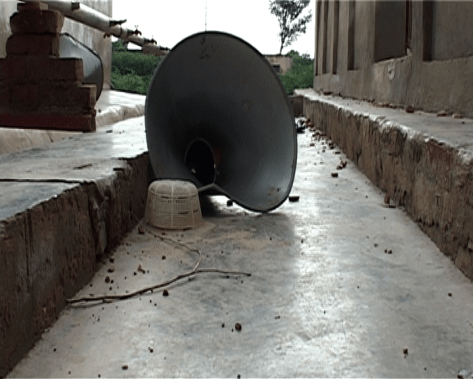

 The Supreme Court has held that the use of extra-legal armed forces in Chhattisgarh is unconstitutional. Responding to a PIL filed by Nandini Sundar, Ramachandra Guha and E.A.S. Sharma, the court’s decision turns on the nature of the Salwa Judum and the appointment of special police officers under the Chhattisgarh Police Act. But if it were a judgment that had merely ruled on the technicalities, it would have been a welcome and competent order, but would have missed its moment of constitutional greatness. This judgment attains such greatness by virtue of its deft combination of insightful legal analysis, the articulation of a moral vision of constitutionalism and development and its sharp invocation of rhetoric (in the best sense of the term) and fiction to buttress its arguments.
 KAFILA - COLLECTIVE EXPLORATIONS SINCE 2006