Category Archives: Theory

The Two Zizeks

Slavoj Zizek spoke on Tragedy and Farce in Delhi on January 5, 2010. He spoke for about an hour and a half, then I responded for about 18 minutes, then he came back spiritedly for about forty-five minutes. This post is in two parts. The first part is the brief intervention I made at Stein Auditorium. In the second part of this post, I expand on my critique in the light of his response. I could not of course, speak after he had spoken the second time, so I’m doing it here.

I

A jinn appeared to a man and granted him three wishes. First, said the man excitedly, I want to be Slavoj Zizek. You idiot, said the jinn. You are Slavoj Zizek.

This is one of the many stories that the internet throws up on the eminent Slovenian Lacanian whom it has been our pleasure to listen to today. His own jokes and anecdotes are of course legendary, the medium through which he makes complex theoretical points. It thus becomes the burden of every unfortunate person writing about him or commenting on his work, to tell a few jokes themselves. Often Profesor Zizek’s own.

So. It struck me that the truth of the joke with which I began is that Slavoj Zizek longs to be Slavoj Zizek. He never quite makes it, though, because Zizek keeps escaping himself. In an interview to The Guardian a couple of years ago, he was asked – What do you most dislike about your appearance? And he replied – That it makes me appear the way I really am.

Having followed Professor Zizek’s work for a while now in growing bewilderment, I understand his predicament There are at least two Zizeks in there, and whichever one manifests himself, Slavoj is taken aback and rather dissatisfied. This is me? He seems to ask.
Continue reading The Two Zizeks

The Žižekian Counter-Revolution

[Slovenian Lacanian-Marxist-Hegelian philosopher and cultural theorist, Slavoj Žižek is visiting India currently and will be delivering a few lectures here. This post is prompted by his visit. Interested Delhi-ites can catch him speak on

4 Jan 2010. 5 p.m. on
“Ideology in the Post-ideological World: The Case of Hollywood”
at Sarai-CSDS. 29 Rajpur Road, Civil Lines, Delhi
and
5 Jan 2010. 7 p.m.
“Tragedy and Farce”
Stein Auditorium, India Habitat Centre, New Delhi]


imaaN mujhe roke hai jo khiNche hai mujhe kufr
ka’aba mere peeche hai kaleesa mere aage

[Faith holds me back when infidelity beckons/
Behind me, the Kaaba; before me, the Church]

It is difficult to miss the immense subversiveness of the  dilemma encapsulated in Ghalib’s couplet above.  This dilemma of the believer is produced by the constant threat of corruption – the Kaaba behind the believing Muslim holds him back from indulging in, or falling prey to, the infidelities and temptations that always lie in wait.

Substitute Marxism for Kaaba  and ‘postmodernism’ for Church, and you have the perfect Žižekian incarnation of this classic Ghalibian dilemma: Not quite at home in the Faith (Lacan, jouissance, surplus-enjoyment, the Real…) and yet, not able to leave it either, for the fear of what might befall one deserting the Order. Faith is the anchor that holds one back from committing all kinds of blasphemies. Nevertheless, the seductions of infidelity force our philosopher to turn for sustenance precisely to the philosophers and ideas he mistrusts: unlike most members of the Marxist faith, he repeatedly returns to Nietzsche, Heidegger, to Derrida, Foucault, Laclau and Deleuze. He takes over their language and makes himself at home in it. Is there a hidden jouissance in thus frequenting this forbidden territory?

Continue reading The Žižekian Counter-Revolution

Data, and its relationship with Accountability and Transparency

Cross-posted from http://accountabilityindia.blogspot.com/2009/10/on-data-and-relationship-with.html

Notions of transparency and accountability have been evolving since late 1980s. It was advocated that people must be given information about budgets, especially details of heads where money was allocated and how it was spent. This would aid in enforcing transparency, accountability and participation. In the late 1990s, as cities developed, pressure on urban infrastructure increased and municipalities became unable to respond to people’s expectations owing to a variety of reasons. The prevalent view was that municipalities and local politicians are inefficient. Elected representatives were criticized for being corrupt and favouring their vote-banks by distributing city resources to them. It was also believed that use of discretionary powers perpetuates corruption. Contemporary accountability-transparency paradigm is aimed at making transparent to the public how and why discretion is exercised in different circumstances. This (presumably) will curb discretion as much as possible and tighten decision-making.

Publishing data in public domains as a way to enforce and enhance transparency and accountability has gained greater momentum in the current decade owing to the Right to Information (RTI) Act through which various kinds of information can be acquired. In this post, I am interested in exploring the concept of data to understand how accountability and transparency are reified by using data as a primary tool. With the help of examples, I will put forward the contention that what is presented as data is in fact produced through multiple histories and contexts. Organizing /interpreting data without an understanding of some of these histories can only enforce existing stereotypes and/or lead to oversight. Continue reading Data, and its relationship with Accountability and Transparency

And this song is dedicated to Buddhababu

CM Buddhadeb back, denies quit rumours

sar par paaon rakh kar bhaago
katne waala patta hai
suno ji ye kalkatta hai
hurr..

The Ghost of Jinnah, Advani and Jaswant Singh

[That the BJP expelled Jaswant Singh for writing a book on Jinnah is hardly surprising, even if it represents really the most rotten part of contemporary India’s political culture from the Right to the Left: intolerance of intellectual differences. What is intriguing is that Jaswant Singh wrote the bookknowing well that this would be the end of his political career; even LK Advani could not survive his praise of Jinnah and even though he came back, he remains a pale shadow of his former self. So Jaswant never really had a chance. I have not yet read the book but have tried to follow those who have. While a more detailed analysis will have to wait, I am posting a piece I had written sometime ago as part of a larger academic paper which deals with Advani’s Jinnah episode and the seductions of secularism. – AN ]

Advani Meets the Ghost of Jinnah
On 5 June 2005, Bharatiya Janata Party leader and former Deputy Prime Minister, Lal Krishna Advani unleashed a storm within his party and its allied organizations of the Hindu Right. On that day, speaking at a function organized by the Karachi Council on Foreign Relations, Economic Affairs and Law (KCFREAL), Advani referred to Mohammed Ali Jinnah’s speech in the Pakistan Constituent Assembly on 11 August 1947 and described it as ‘a classic exposition of a Secular State’ and Jinnah as a genuine secularist (Advani 2005). In this speech, sections of which Advani read out at length, Jinnah, the founder of the ‘Islamic state of Pakistan’ had said: ‘You are free, you are free to go to your temples. You are free to go to your mosques or any other places of worship in this State of Pakistan. You may belong to any religion or caste or creed; that has nothing to do with the business of the State…You will find that in the course of time Hindus will cease to be Hindus and Muslims would cease to be Muslims, not in the religious sense, because that is the personal faith of each individual, but in the political sense as citizens of the State’ (Jinnah 2005).

On the previous day, Advani had already fired his first salvo. He had visited the Qaid-e-Azam mausoleum where he made the following entry in the visitor’s book: ‘There are many people who leave an inerasable stamp on history. There are very few who actually create history. Qaid-e-Azam Mohammed Ali Jinnah was one such rare individual.’ And further, recalling Sarojini Naidu, underlined: ‘Sarojini Naidu, a leading luminary of India’s freedom struggle, described him as an ambassador of Hindu Muslim unity. His address to the Constituent Assembly of Pakistan on August 11, 1947, is really a classic, a forceful espousal of a secular state…’ (Sarwar 2005, Kapoor 2005). If there was any doubt in anybody’s mind that this was not just a polite entry in a visitor’s book, made in a formalistic way, Advani hastened to clear it in the speech that followed the next day.
Continue reading The Ghost of Jinnah, Advani and Jaswant Singh

Rakhi Sawant Ka Swayamvar!

“Yeah yeah, take a good show and spoil it by theorizing” said my labour lawyer/bollywood-gossip-junkie flat mate. All I said was that I thought Rakhi Sawant Ka Swayamvar was an “Interesting phenomenon that comments on the articulations of the notion of marriage within the context of fixed notions of culture among upper middle class north Indian families and within that the tropes of gender, normativity and melodrama! And so I should write about it on Kafila”.

Her comment wasn’t entirely unjustified.

The way in which one watches these shows in itself raises a range of questions. The show has taken over my life as of now. The final decision of who she will marry will be made soon and the restlessness and anxiety about it is immense and requires effort to contain. Continue reading Rakhi Sawant Ka Swayamvar!

Reservations for Women: ‘Am I That Name?’

[I am posting here the chapter from my book – Recovering Subversion. Feminist Politics Beyond the Law – that I referred to in response to demands for references on my previous post on the WRB.  I do apologize to those (including fellow-kafilaites!) who may rightly feel I have said enough on the topic.

The title of this chapter is a tribute to Denise Riley’s question “Am I that name?” referring to the label “Woman.” Am I That Name? Feminism and the Category of ‘Women’ in History Minneapolis, University of Minnesota Press, 1988].

When the Women’s Reservation Bill (WRB) first appeared as the 81st Amendment Bill in 1996, proposing to reserve 33% of seats in Parliament for women, it burst into public discourse full-blown as a “women’s” (indeed, a feminist) issue, and continues to be debated largely in terms of women’s rights. It is becoming increasingly clear however, that the questions thrown up by the timing of the Bill and the responses to it cannot be understood solely within the framework of women’s rights. This chapter attempts to relocate these questions in a complex matrix of political identities in order to realize their full significance. I also argue that the debates around the Bill reveal a more fundamental set of questions about the issues of citizenship, representation, and the subject of feminist politics.

Continue reading Reservations for Women: ‘Am I That Name?’

The Picnic Managers: Prasanta Chakravarty

This is a guest post by PRASANTA CHAKRAVARTY.

Writing in the Encounter, September 1961, Edward Shils characterizes the Indian student in the following terms:

“Your curiosity, idle or ordered, takes you to an Indian university or college. You walk across the dusty sun-stuck grounds or through damp, dark corridors and past malodorous lavatories; and you see clumps of boys, chirruping like birds, an occasional pair walking hand in hand, sometimes a little knot of girls in pigtails. They look extraordinarily childlike, with all the melting tenderness of children, terribly shy, soft-eyed, gentle, fragile, and very quick to smile…Their voices are low and soft, their movements light, elastic, lamb-like. If one of them, darting about in the suddenly ignited outburst of a boyish prank, nearly collides with you, he aplogises with timorous embarrassment. If you ask one of them where to find a certain professor or the head of a particular department, he will go far out of his way to lead you to the right place, and you will be impressed by his shyness and deferentiality. When he has delivered you to your destination, and you thank him, he will say something like ‘Not to mention’ and will turn and dash off as light-footedly as a young deer.”

Continue reading The Picnic Managers: Prasanta Chakravarty

Evangelist Zizek and the End of Philosophy – II

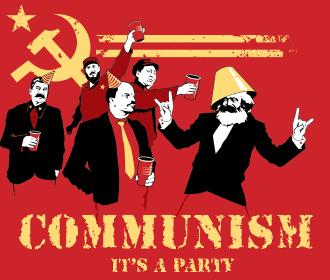
Idea of communism? Courtesy Oscar's global blog
Idea of communism? Courtesy Oscar’s global blog

Today was the third and final day of the ‘Idea of Communism’ conference and it was the truly most bizarre experience – bizarre philosophical experience, I should say – of my life. Let me start backwards today.

The preacher from Ljubliana was in full form and he closed his own hour-long (or was it 55 minutes) presentation ‘To Begin from the Beginning, Over and Over Again’ with the following: “If the rumour that Gilles Deleuze was writing a book on Marx before he died, is true then this should be seen as a sign that after having spent a life time away from the Church he wanted to come back to its fold…We welcome all those anti-communist Leftists who have spent their lifetimes attacking us to come and join us.” Continue reading Evangelist Zizek and the End of Philosophy – II

Re-booting Communism Or Slavoj Zizek and the End of Philosophy – I

Zizek - the postmodern Lenin?

Today, 13 March, a whole galaxy of philosophers and theorists got together for a three-day conference “On The Idea of Communism” under the auspices of the Birkbeck Institute for the Humanities, London University. The Conference opened to a jam-packed hall where all tickets had sold out (no jokes, this was a ticketed show where the likes of Alain Badiou, Slavoj Zizek, Jean Luc-Nancy, Toni Negri, Jacques Ranciere, Terry Eagleton and many many others are to perform on the ‘idea of communism’). The huge Logan hall with a capacity of about 800-900 was so packed that the organizers had made arrangements for video streaming in another neighbouring hall – and that too was half full! Very encouraging in these bleak days.

The conference began in the afternoon with brief opening remarks by Alain Badiou and Slavoj Zizek. Badiou made his general point (see below) about the continuing relevance of the ‘communist hypothesis’. Staid and philosopherly. Continue reading Re-booting Communism Or Slavoj Zizek and the End of Philosophy – I

Child prodigies and television news scripts… aaaw!

Guest post by KISHORE BUDHA

Continue reading Child prodigies and television news scripts… aaaw!

John Milton Takes a Stand? Prasanta Chakravarty

This is a guest post by PRASANTA CHAKRAVARTY

[Dissidence comes along with responsibility. If that sounds an utter sell out, one has to look back no further than the career and oeuvre of John Milton, whose 400th Anniversary is being celebrated around the world.]

Students of English literature usually do not prefer meddling too much with politics, especially if that comes in the way of appreciating the hermeneutics of the text, the lyricism set aside for the work of art. Sophisticated scholars have learnt to deftly negotiate and work with Marxism, new historicism and cultural criticism, without compromising on the finer points of close reading. They have also welcomed areas like textual studies and performance and newer genres like memoirs, broadsheets, travelogues, petitions, graphic fiction and so forth within the critical ambit with a careful eye that such forays do not destabilize the Great Book tradition. Students of politics and the political, on the other hand, have a certain distrust for soft aesthetic options. In one interesting recent interview, James Scott, who routinely uses Zola and Tolstoy in his classes and works, lamented in jest on his status at the Yale Political Science Department as an outlier, blaming it onto the ascendancy and monopoly of formal and rational choice models in the discipline.

Continue reading John Milton Takes a Stand? Prasanta Chakravarty

Mumbai terror, the revolt of the elites and Life itself

You have said everything there is to say, and felt everything there is to feel. You have shouted angrily or reflected seriously or stated in the calm tone of conviction that terrorists are as authoritarian as the states they target, that terrorists have no religion, that terrorists are cowards who target soft civilian populations. You have despaired at the carnage wreaked on a city sick and tired of having to be “resilient”; of having faced one disaster after the other – from floods to targeted attacks on specific communities to bomb blasts – and “emerged with its spirit intact”. Your heart has clenched painfully at the inconsolable tears of baby Moshe; at the blood-spattered, newly motherless one-year old Viraj in an exhausted Head Constable Salunkhe’s arms, entrusted to him by his father, a utensil seller wounded by bullets at CST. You have gazed numbly at the image of Maharashtra ATS Chief Hemant Karkare’s young son with drawn countenance bearing the ritual paraphernalia of his father’s cremation ceremonies. Despite yourself you felt a sudden glimmer of hope steal into you at the stony dignity in Kavita Karkare’s dry-eyed grief at her husband’s funeral, at her steadfast bindi and her coloured sari. You have hated yourself for being relieved that those you know in that poor torn city are safe, when hundreds you did not know were not.

In fear and foreboding the feeling has overcome you – “What lies ahead of us now?”

But after all of that, after all of the sorrow and the grieving, in the midst of absolute despair, when you start to think again – STOP. Continue reading Mumbai terror, the revolt of the elites and Life itself

The Fascist Mind: Reading Mein Kampf Today

NOTES ON THE THEORY OF IDEOLOGY

It is highly instructive to go through the range of comments that some of our recent posts on terrorism and violence have elicited. Apart from some of the more mindless ones, there have also been some that raise supposedly substantive questions but in a manner that presupposes the answers. The very manner of raising the ‘questions’ is such that any answer but the one contained in the ‘question’ is bound to bring forth a volley of charges to which the comments themselves stand witness.

Continue reading The Fascist Mind: Reading Mein Kampf Today

Ecstatic Archaisms of Aurobindo Ghose – Prasanta Chakravarty

Guest post by PRASANTA CHAKRAVARTY

In Reflections on Revolutionary Violence Aditya Nigam makes some nuanced points about the nature of Maoist violence and by contrast, comments on the bedrock character of democracy itself. Can we trace the sublime cult of blood and gore further down, to the founding principles of Forward Bloc, for instance? Or espy it in the millennial longings of a few Gita wielding swadeshis, for that matter? One may begin to see a pattern.

Continue reading Ecstatic Archaisms of Aurobindo Ghose – Prasanta Chakravarty

Reflections on Revolutionary Violence

In the last one year, I have often found myself going back to a conversation I had had with a Maoist ideologue. As it happened, it was he who started interrogating me about my stand on violence. ‘So, you have become a Gandhian?’ he demanded. I must confess I was a bit taken aback, not quite able to figure out the context of this poser. ‘What do you mean by Gandhian’, I kind of mumbled. Pat came his reply: ‘Well you have been making some noises lately about Maoist violence, haven’t you?’ Suddenly it all became clear. Through this ridicule, he was trying to appeal to that part of me that still remained marxist – presumably now buried in some remote past – and to resurrect it against my ostensible ‘non-marxist’, ‘liberal’ present (for which ‘Gandhian’ was some kind of a short hand code). I found myself at a loss of words. Does a criticism of the mindless and nihilistic violence of the Maoists make one a Gandhian? Is there no space left between these two polar positions? The conversation did not go very far that day but has kept coming back to me ever since.

Continue reading Reflections on Revolutionary Violence

Nationalisms, Militarization and the Politics of War in Sri Lanka: Ahilan Kadirgamar

Any discussion of Sri Lanka at the moment can not avoid discussion of the war.  And at the heart of discussions on the war in Sri Lanka, is the question of what will come after the war, at least after an end to the war in its conventional mode with defeats faced by the LTTE on the battlefield.  It is indeed important to grasp that the current state of anxiety is not only about the war but also what will come after the war.  From the London based Economist to Tamil activists in and outside Sri Lanka, this has become the central question.  I write this article as a dissenting Tamil activist and as a member of that diverse set of Tamil activists both inside and outside Sri Lanka, who chose to stand independent of the LTTE, but whose politics nevertheless at the moment is dispersed from the Left to the Right, across a whole range of issues from class, nationalism, caste to gender.  In thinking about the outcomes after the war, just as we could not predict the direction of the war prior to its resumption, we can not predict the outcomes after the war, which are part of the dynamic of war; it drastically changes the political landscape.  But we nevertheless take positions on the war; on either side or against the war.  And those positions are explicitly political, they are underpinned by a politics, whether they are pro-war or, as has been less commonly acknowledged that of anti-war.  Indeed, an anti-war position itself can be arrived at from different political positions, from a pacifist stand to that of political expediency depending on the military fortunes of one actor or another.  It is such politics of war that I intend to explore here in relation to the dynamics of nationalisms and militarization in Sri Lanka.

Continue reading Nationalisms, Militarization and the Politics of War in Sri Lanka: Ahilan Kadirgamar

On Tyranny and the Strauss-Kojeve Correspondences – Prasanta Chakravarty

On June 7, 2007 the opinion page of The New York Times carried a piece by Jenny Strauss Clay, daughter of Leo Strauss. With a candid fervor, she sought to distance her father’s legacy from the masterminds of the neo-conservative ideologues of the American foreign policy. She tells us that Leo Strauss believed in the intrinsic dignity of the political. He believed in and defended liberal democracy; although he was not blind to its flaws. He was an enemy of any regime that aspired to global domination. He despised unworked utopianism—in our time, Nazism and Communism—which is predicated on the denial of a fundamental and even noble feature of human nature: love of one’s own deepest concerns. And yes, Jenny Strauss reminds us that his greatest passions were to raise rabbits (Flemish Giants) and read Plato with his students.

The nephew of Wassily Kandinsky, Alexandre Kojeve/ Kozhevnikov’s seminars on Hegel from 1933-1939 at the Ecole Pratique des Hautes Etudes, as is well known, fundamentally influenced much of modern French thought, including that of Merleau-Ponty and Lacan, Bataille and Althusser, Breton and Queneau—all his students at some point. Kojeve’s thought also philosophically encouraged a different breed of social and political thinkers: Raymond Aron in France, Alan Bloom and Francis Fukuyama in the US, to name a select few. Kojeve himself spent the final 25 years of his life as a trade negotiator and civil servant under de Gaulle and helped establish the European Economic Community (now EU) as a model for his universal and homogenous state.

Continue reading On Tyranny and the Strauss-Kojeve Correspondences – Prasanta Chakravarty

Prasanta Chakravarty – Of Demos, Innovation and Affect

Carrying forward the debate around Partha Chatterjee’s article in EPW.

by PRASANTA CHAKRAVARTY

In the wake of the development debates around the nation, one witnesses an interesting array of articles—polemical as well as academic—that takes on headlong issues of political intervention by developing the terms of negotiation and deliberation in a certain direction. And that is the story of growing up—that democracy is the story of pragma, of mature understanding of the contestatory space. These are reminders that politics of good intentions is benign self-deception. Worse: it is apolitical, prophetic, self-indulgent.

Continue reading Prasanta Chakravarty – Of Demos, Innovation and Affect

Political Society and the Fable of Primitive Accumulation

This is a response to Partha Chatterjee, whose recent essay we had posted for further debate.

Partha’s work has been a central reference point for the work of many of us and his notion of ‘political society’ has provided an unprecedented opening, a possibility – that of thinking the ‘unthinkable’. I would go so far as to say that the enunciation of the idea of ‘political society’ has been one of the most important conceptual interventions of ‘postcolonial’ political theory – that is to say, political (and social theory) produced from/in the postcolonial world; an intervention in theory that for the first time brings in the postcolonial experience into its very heart. I shall even claim that the potential and possibilities of this concept are of far wider applicability than the geographical ‘third world’ and can provide a lens for looking at the so-called first world itself. But on that more later. Continue reading Political Society and the Fable of Primitive Accumulation

Democracy and Economic Transformation – Partha Chatterjee

[Political theorist Partha Chatterjee’s work has been the reference point for many contemporary theorizations of politics in India and others parts of the postcolonial world. Chatterjee has recently published an important essay, which we reproduce below. Many friends and colleagues in Kolkata and elsewhere have requested Kafila to provide the forum for this debate, considering the common interest that many of us have in issues raised here. Some reformulations by Chatterjee, especially in the aftermath of Nandigram, call for a more sustained political theoretical reflection. The article also raises issues directly related to questions of rural-to-urban migration that has seen some debate in Kafila lately. – AN]


Economic & Political Weekly

April 19, 2008 [Download PDF]


Democracy and Economic Transformation in India

With the changes in India over the past 25 years, there is now a new dynamic logic that ties the operations of “political society” (comprising the peasantry, artisans and petty producers in the informal sector) with the hegemonic role of the bourgeoisie in “civil society”. This logic is provided by the requirement of reversing the effects of primitive accumulation of capital with activities like anti-poverty programmes. This is a necessary political condition for the continued rapid growth of corporate capital. The state, with its mechanisms of electoral democracy, becomes the field for the political negotiation of demands for the transfer of resources, through fiscal and other means, from the accumulation economy to programmes aimed at providing the livelihood needs of the poor. Electoral democracy makes it unacceptable for the government to leave the marginalised groups without the means of labour and to fend for themselves, since this carries the risk of turning them into the “dangerous classes”.

Partha Chatterjee

The first volume of Subaltern Studies was published in 1982. I was part of the editorial group 25 years ago that launched, Continue reading Democracy and Economic Transformation – Partha Chatterjee