Category Archives: Violence/Conflict

Crime Foretold? Dileep Movies, Conspiracies, “Quotation Rapes”, and Rape Culture –1

[This is part of the series of analyses that Althea Women’s Friendship is circulating that takes a close and critical look at the movies by the actor Dileep so that the public memory about the atrocious exoneration of the Malayalam movie actor in the actor-assault case of 2017 by the Ernakulam Principal Sessions Court does not fade into oblivion, like so many earlier cases of patriarchal violence. On social media, the tide of anger continues to swell with the unbelievably crude mocking that Dileep engages in against the survivor in the new piece of dirt that he throws at the Malayali public, calling it a ‘movie’. This is the first segment in the series in which Gayatri Devi takes apart Dileep’s movies — and reminds us that this crime was, in a way, foretold. The signs that the depravity were there much earlier. Just that we did not see well enough.]

I belong to that group of Malayalis who have not been watching Dileep’s movies. But his notoriety as the eighth accused in a case in which an actor was kidnapped while returning from work, threatened to the point of immobilization from shock, and subjected to gang rape made me change my resolve not to watch his movies. On December 8, the Ernakulam Sessions Court acquitted him. That is but a temporary reprieve. The Kerala State’s Special Prosecutor has declared that the State will move against the verdict with an appeal at the High Court. This is very welcome indeed.

News from the world of Malayalam cinema indicates that Dileep is being protected by a section of his colleagues. It is not possible to discern the motives of these people from the news — whether it is sympathy, camaraderie, gratitude, love, respect, or fear. For example, a new movie starring Mohanlal along with Dileep has just been released — titled Bha-Bha-Ba. This is apparently an abbreviation of sorts for the Malayalam words Bhayam-Bhakti-Bahumanam (Fear-Devotion-Respect) but it sounds like the (cruel) caricature of stuttering. That makes one think that this movie must surely be about their own lives. There are many reports in the Malayalam press that point to the difficulties encountered by all individuals who attempted to challenge him and his ways. The Hema Committee Report itself mentions the split in film industry bodies like MACTA, and how technicians who questioned his ways were banned by such bodies as FEFKA and AMMA. Describing the latter issues, it mentions without naming him, the tensions between him and the directors Thulasidas and Vinayan. He emerges from these reports as a vindictive personality who would seek revenge as a way of getting past differences.

But in his movies, he is recognized as the funny guy. He employs many different vocal tones; imitates people; dresses in female clothes; delivers egregious patriarchal nonsense in ways that project it as humorous. The last type of ‘joke’ in Dileep movies has been noticed and widely critiqued. For example, the unbelievably crude and insensitive rape joke his character makes in the hit movie Meesha Madhavan — in which he sneaks up to the sleeping female lead, and says, kedanna kedappiloru rape angottu vachu thannaalondalla! Literally that means ” … and what if I shove a rape on you when you are lying here supine and senseless!” This does not make sense in English, but the emphasis is important: rape is an instrument that can be thrust at a woman when she is least anticipating it. After spitting out this filth, Dileep’s character continues his jest waddling around awkwardly saying, “In ten months, you’ll have a belly sticking out and [you’ll be moaning] Amme… Amme— caricaturing a heavily-pregnant woman walking with difficulty. This is supposedly, humour — in any case when this movie appeared in 2002, by all reports, audiences enjoyed it thoroughly, hooting and laughing in theatres. Meesha Madhavan was the biggest hit of the year. Our people, the Malayalis love rape jokes. This joke and the laughter it elicited shows that what we have here is indeed a rape culture. But it is doubtful if the scene will elicit the same kind of mirth in 2025, even though he has been acquitted in the gang rape case.

But I decided not to begin from his commercial movies, but from the ‘high cinema’ in which he has appeared. I started watching his filmography from the movie Pinneyum (Once Again) (2016) directed by none other than the leading figure in ‘high’ Malayalam cinema, Adoor Gopalakrishnan. In it, he played the role of a notorious criminal who once fascinated Malayalis : Sukumara Kurup. His notoriety stemmed from the peculiarly-cruel crime that he committed. Faking his own death for the sake of a fifty-lakh insurance payout in 1984, Kurup strangled to death in his car a man called Chacko near Karuvatta in the Alappuzha district, who had asked for a lift. He burned his body and tried to make it look like it was he who died. This crime was apparently planned by him and his family. Adoor Gopalakrishnan tries to retell the story of this warped mind as the tale of intensely-twisted love. It is one of Adoor’s least-watchable films, and the screenplay and dialogues are so bad and brash that one wonders if it were really written by Adoor at all. One would even think that the usual fare in his movies — long-drawn-out shots of women cooking and serving food to useless men who cram down endlessly — was so much better.

But then, this is indeed the same man who had the temerity to try to dismiss the critical remarks of the well-known singer and the Vice-Chairperson of the Kerala Sangeetha Nataka Akademi, P R Pushpavathi in the film conclave organised by the Kerala government early this year against his obviously-casteist claims: his actual words were, reportedly: “Who is this woman? The film conclave is not some marketplace where any woman who passes by can just step in and talk!” I fear that his wrath might land on me too. However, I am an address-less ‘just-a-woman’ and so it may bypass me.

Adoor may think poorly of marketplaces in general, but he is surely on the side of the man who holds the levers of commercial cinema in Malayalam, Dileep. After all, cinema is indeed a high-level, sophisticated market place where human beings are bought and sold. Adoor directed Pinneyum in 2016; just a year after, in the wake of the actor-assault case, he stated publicly that he believed in Dileep’s innocence. It is of course a total coincidence that Sukumara Kurup’s and Dileep’s real names are the same: if one is Gopalakrishna Kurup, the other is Gopalakrishna Pillai. Thus the movie involved three Gopalakrishnan’s. The wife of the protagonist in the movie, Devi, was played by Dileep’s present partner, Kavya Madhavan. This was her last movie; she married Dileep that year. The attack on the actor happened the next year, in February 2017. Ms Madhavan’s last outing on screen was as the wife of a notorious and unrepentant criminal. Just months later, her husband was accused of conspiracy to organise a hair-raising gang rape. What a coincidence, or maybe fate!

The court has dismissed the case against Dileep, but in the above-mentioned movie, he is indeed the master-conspirator. Though it is all highly coincidental, anyone watching the scenes in Pinneyum in which the criminal and his wife and their relatives gather around make a plan to find a dead body and burn it cannot helping thinking about the accusations against him in the 2017 case. When they watch the scenes in which they strangle Chacko to death in the car and pack straw to set him alight will surely recall the actor trapped in a moving vehicle being sexually assaulted by six thugs. (It is worth remembering that the actor-assault case differs quite significantly from the Nirbhaya case of 2012. If the latter was about a young woman mistaking an off-duty private bus for a DTC bus, this was about a young woman being trapped in the very vehicle arranged for her by her own employer. This, then, is a workplace crime). We can also hardly help remembering the testimony of the late film director Balachandrakumar who witnessed Dileep and his family members gathering together to watch the recording of the assault. “The Cruel Deeds of Pulsar Suni,” Dileep reportedly joked.

From now on, we cannot help seeing all his ‘family movies’ differently.

Of course, that raises the question whether these ‘family movies’ can be viewed within family contexts — if that means social spaces shared by people bound by love, care, notions of equal worth, and mutual respect. They are stuffed with not just cheap, salacious humour and rape jokes (as mentioned earlier) — more than that is a kind of obsession with rape that surfaces repeatedly in his movies. After Pinneyum (2016), I watched a commercial movie of his that predated it, Mr Marumakan (Mr Son-In-Law). It was released in 2012, the same year as the Nirbhaya case.

In this movie, the villain (played by Baburaj) who had a score to settle with the lead character played by Dileep, hires a thug (played by Suraj Venharammood) to rape his sister. The movie describes this as ‘quotation rape’. The thug receives his payment, touching the villain’s hand reverentially, as though to acknowledge the auspicious nature of the deal. These scenes are stuffed with filthy dialogues like: “Until now, I had to pay so that I could do this; this is the first time I am getting paid to do it!” The plan is to lure the young woman to a room in a lodge, then rape her, simultaneously inform the police of sex trafficking happening there so that the matter becomes public, and the lead character’s family drowns in shame.

The villain’s sister assists in this crime; she draws the other girl into the lodge on the pretext of introducing her to her parents. She is about to lock her in a room — when Dileep arrives and rescues her. Then, to extract revenge, he pushes the villain’s sister into the room and locks the door, knowing that the thug would soon arrive and rape her. Before he locks the door, he tells his sister to deliver a sharp slap on the other girls’ face. And smiles, seeing woman punish woman. Then he invites the villain and the local sleaze-sheets and the police to uncover the illicit goings-on in the lodge. The villain arrives, expecting to find Dileep’s sister, but finds his own sister and the thug trying to hide under the cot. Some people try to sneak away; others take photos. A girl tries to cover her breasts weeping as the cameras wink around her.

Wow, what a ‘family movie’!! But wonder if you remember any instance of ‘quotation rape’ in Kerala in the recent times?

There are bursts of laughter when Suraj Venharammood’s rapist-character appears on screen. They are our favourite jokers, aren’t they? Mr Marumakan was a bumper hit of 2012. The rapists who tore out the intestines of that young woman known as Nirbhaya and Dileep’s Mr Marumakan share something in common: the phenomenon called rape culture. Through deeds and words, characters and narrative styles, they make rape feel absolutely normal, trivial, and palatable to our sensibilities. That is what Dileep’s cinema has been doing.

Anyway, watching these two movies gave me a sense of what ‘Dileep’s cinema’ is. The man himself peeps out from behind them. ‘Dileep’s cinema’, ‘conspiracy’, and ‘quotation rape’ — these seem to be expressions made in the same breath. In his movies, he seems to have explored them quite thoroughly. This is the ‘comedy’ that has brought him wealth and fame.

I will write more about his other movies soon. Let the awful taste that these two films have left in me subside.

[Gayatri Devi is a scholar of English based in the US. She is part of Althea Women’s Friendship. Translated by J Devika.]

Wildlife-Human Conflict – Non-intervention is No Longer a Choice: Sandeep Menon

Guest post by SANDEEP MENON

[Earlier this year, Kerala government sought the permission of the central government to kill wild animals that “post a threat to life and property”, declaring human-wildlife conflict a state-specific disaster.  As wildlife-human conflicts rage with a new intensity across different parts of India, the author underlines the need to go beyond knee-jerk reactions and put in place proper policy measures. The issue itself is highly controversial and even emotive and we present this essay here to put things in perspective and proposes some measures that are currently being debated among wildlife enthusiasts. – AN]

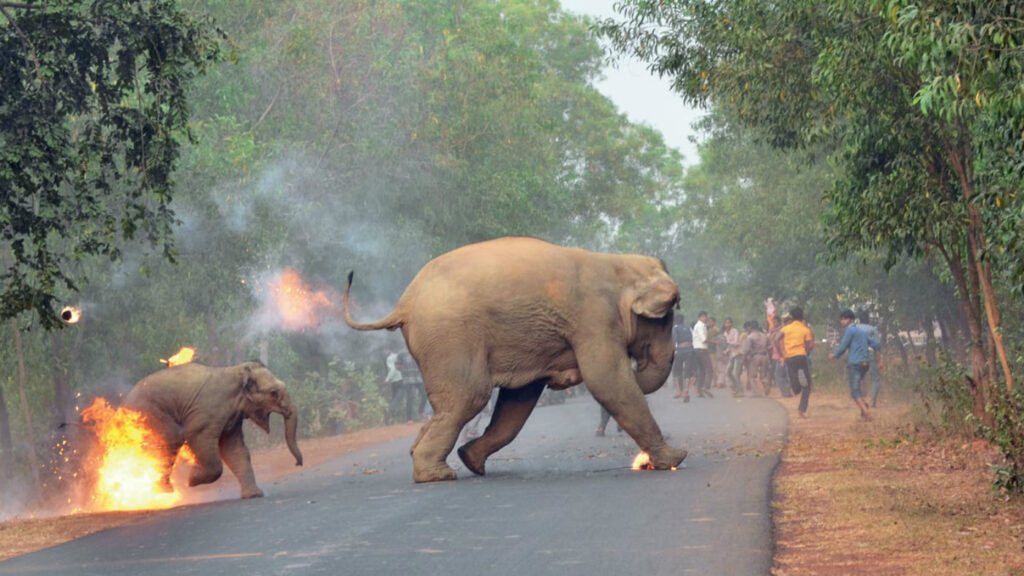
Photo courtesy Biplab Hazra and Think Wildlife Foundation

On the 24th of Nov 2025, a 70-year-old Adivasi woman was tending her goats on revenue lands near Masinagudi in Tamil Nadu, when she was killed and dragged into the bushes by a Tiger. It paid little heed to the shouts of witnesses who saw it moving the body to a nearby waterhole. Between late October and November, multiple attacks on people and livestock were reported from the Nugu region near Nagarhole in Karnataka, leaving 3 farmers dead and one critically injured. Including one farmer who had just recovered from a broken hip bone caused by an earlier elephant attack. In response to intense public pressure, over 23 tigers (including many cubs) have been captured from non-forest areas in a span of one month. A huge number for a small rural landscape around two sanctuaries. In many cases, operations were hindered by mobs, who screamed and pelted stones upon sighting the animal, leading to heightened aggression. One of the tigers was found to have a festering snare wound, while another was the mother of 5 healthy cubs. Things took an interesting turn, when experts found it hard to match one of the Tigresses to existing wildlife databases. Raising the possibility that she might have been completely raised outside protected areas. Nor were they all transitionary, weak or infirm animals. Some of them were found to be healthy individuals, simply finding new spaces to eke out a living. It is unclear what the department intends to do with all the captured tigers and cubs. If they end up in captivity, that would be a tragic outcome that serves neither the individual animal nor the species. Continue reading Wildlife-Human Conflict – Non-intervention is No Longer a Choice: Sandeep Menon

Protest Assault on Adivasi Youth Leader Rama Kankonkar, Lawless Casino-based Development in Goa: NAPM

Statement by NATIONAL ALLIANCE OF PEOPLE’S MOVEMENTS demands principled investigation to establish command responsibility. It also demands that Govt review the unsustainable and unjust ‘development’ model fuelled by land mafias and casino interests in Goa .

National Alliance of People’s Movements (NAPM) unequivocally condemns the heinous assault on adivasi youth leader, Rama Kankonkar on 18th September, the subsequent intimidation against another activist Swapnesh Sherlekar, and the alarming descent into lawlessness that these incidents in Goa exemplify. We extend unwavering solidarity to Rama Kankonkar, Swapnesh Sherlekar and the people of Goa who continue to fight for justice, environmental protection, and the preservation of their collective identity. We also demand adequate protection to these activists, principled investigation to establish command responsibility and a review of the current unsustainable, unjust and unsafe ‘development’ model; fuelled by land mafias and casino interests. Continue reading Protest Assault on Adivasi Youth Leader Rama Kankonkar, Lawless Casino-based Development in Goa: NAPM

ALIFA Condemns Rape and Death Threats to Naga Women’s Rights Leader Prof. Rosemary Dzuvichu

Statement by the All India Feminist Alliance – NAPM calls upon the State to ensure her safety, bring perpetrators to justice and uphold Naga women’s right to reservations in municipal bodies.

NAPM (All India Feminist Alliance – National Alliance of People’s Movements), a pan-India collective of feminist, grassroots organizations and individuals strongly condemns the threats of death and sexual violence made on social media to Kohima-based women’s rights activist and academic, Prof. Rosemary Dzuvichu, Advisor, Naga Mothers’ Association (NMA). The vile, violent and vicious threats on Facebook by one Mr. WJ Longkumer warn her to desist from advocating for women’s political reservation – a hard-won right of Naga women, also upheld by the Supreme Court.  We demand immediate legal action against the perpetrators and call upon the state to ensure the safety of Prof. Rosemary as well as other Naga women, facing similar threats. 

Prof Dzuvichu is no stranger to intimidation. Back in 2017, she was among those leading the struggle to ensure the long-delayed implementation of the Nagaland Municipal (First Amendment) Act of 2006, or the “Nagaland Reservation Bill of 2006″. Through this amendment of the 2001 Municipal Act, women were allotted 33% reservation in urban local bodies (municipalities and town councils), in accordance with the 74th Amendment to the Constitution of India. Article 243 T (3) of the Indian Constitution, mandates that at least one-third of all directly elected seats in every municipality in India must be reserved for women. Yet, all was not smooth as quotas for women in political bodies was posited as ‘going against the customs and culture of Nagaland’, and women who defied these customs were seen as legitimate targets of ire.

Continue reading ALIFA Condemns Rape and Death Threats to Naga Women’s Rights Leader Prof. Rosemary Dzuvichu

Conversations on Palestine: Teredide Mane O Baa Athithi

Conversations on Palestine with an activist, a poet, a scholar

Teredide Mane O Baa Athithi (Come in, I have opened my doors dear guest) is an offshoot of Mere Ghar Aakar Toh Dekho, a national campaign in India, in Karnataka. It aims to counter the forces of hate, bigotry and polarization that have gained ground in the country by redrawing boundaries and expanding notions of trust and community. The campaign involves participants from diverse backgrounds opening their own homes and hearts to guests from equally varied locations. Teredide Mane has grown as a community, learning and unlearning through practice the concepts of guest and host, home and house, consent and comfort, celebration and sharing, listening and observing—both commonalities and diversity. [Content and editing by Madhu Bhushan, Winnu and Anita Cheria. Illustrations and design by Winnu]

We invite you into this moving and powerful conversation that has been reproduced largely in the speakers’ own words, and hope that you will add to it and take it forward. Read the whole conversation here (https://shorturl.at/JzvI5). Or a shorter note on the conversation here (https://shorturl.at/NkLHz).

Over the past months, the genocide in Palestine has come up multiple times in our meetings. Apart from engaging in acts of protest and solidarity, there was a need to go beyond ‘news noise’, and meet people engaged with and from Palestine. We decided to create a virtual space, one that was safe and intimate, to be able listen deeply to friends we had connected with in the course of our work and life journeys. This conversation, with Lisa Suhair Majaj, Smadar Lavie and Issa Samander in October, 2024, came about as a result of this intention.

Lisa Suhair Majaj is a passionate Palestinian American poet whose writings and poetry echo with the spirit of the land and people that she was herself exiled and alienated from.

Continue reading Conversations on Palestine: Teredide Mane O Baa Athithi

The Everyday Ecological Justice Struggles Across India to save Commons, Humans & All Species: NACEJ

[We are publishing below a report of a press conference by the NATIONAL ALLIANCE FOR CLIMATE AND ECOLOGICAL JUSTICE that details the status of struggles for ecological justice from across the country. Lifting the mask off ritualistic official observances of the World Environment Day, while the government continues to wreak havoc on the ecology and the commons, this report gives a sense of the struggles in different parts of the country. At the end of this report is the link to its full online recording.]

As the world marked yet another Environment Day on 5th June, the National Alliance for Climate and Ecological Justice (NACEJ), a pan Indian forum of NAPM, brought together voices from different parts of the country in an online press conference on 6th June, to share the current status of ecological justice struggles. Speakers from Kashmir, Sikkim, Tamil Nadu, Madhya Pradesh, Maharashtra, Telangana, Rajasthan, Chhattisgarh, Haryana, Odisha, and other states addressed the Press Conference. These voices reinforced the reality that both the Central Govt and different states governments are majorly complicit in environmental violations, enabling large profiteering, extractive agendas of mega-corporations, unleashing repression on democratic movements. Moderated by well-known environmental activist Soumya Dutta, the meeting saw good participation from both media and movements.

Continue reading The Everyday Ecological Justice Struggles Across India to save Commons, Humans & All Species: NACEJ

भारत-पाकिस्तान की तनातनी पर सीएफडी का वक्तव्य

सिटीजन्स फॉर डेमोक्रेसी ने निम्नलिखित बयान 17 मई को नई दिल्ली में जारी किया।

सिटीजन्स फॉर डेमोक्रेसी ने पहलगाम में हुए भयानक आतंकी हमले के बाद अपनी चिंता व्यक्त की है कि यह हत्याकांड विश्व शांति के लिए खतरा है और इसके परिणाम स्वरूप, अंतर्राष्ट्रीय कानून के शासन में और अधिक गिरावट आने की संभावना है, इतना ही नहीं, भारत के  लोकतंत्र के लिए  भी गंभीर ख़तरा पैदा हुआ है।

पहलगाम में जो कुछ हुआ, वह निस्संदेह राजनीतिक उद्देश्यों को प्राप्त करने के लिए आतंक का उपयोग था और स्थानीय कश्मीरी मुसलमानों के नेतृत्व में भारतीय आबादी के सभी वर्गों ने इसकी निंदा की। कश्मीरी मुसलमान पीड़ितों की सहायता के लिए आगे आए और इस कृत्य के खिलाफ बड़े पैमाने पर प्रदर्शन किए। हालाँकि, भारत सरकार की प्रतिक्रिया न तो संयमित थी और न ही संतुलित थी, बल्कि सत्तारूढ़ भारतीय जनता पार्टी और संघ परिवार की विचारधारा और घरेलू राजनीतिक उद्देश्यों से प्रेरित थी। हालाँकि प्रधान मंत्री  सऊदी अरब की अपनी यात्रा  अधूरी छोड़ कर  वापस आ गए, लेकिन सरकार द्वारा बुलाई गई सभी दलों की बैठक में उपस्थित नहीं रहे। सर्वदलीय बैठक में पहलगाम में हुई सुरक्षा चूक के बारे में खुल कर जानकारी नहीं दी गई, न ही जांच की कोई रूपरेखा घोषित की गई। दोष का ठीकरा तुरंत पाकिस्तान पर फोड़ा गया, साथ ही सिंधु जल संधि को स्थगित करने जैसी कार्रवाई की गई, जिससे कुछ आतंकवादियों की कथित हरकतों के लिए सभी पाकिस्तानी लोगों को सामूहिक सजा दी गई। संयुक्त राष्ट्र सुरक्षा परिषद में पेश करने के लिए आतंकवादी हमले में पाकिस्तान की साँठगाँठ के  कोई ठोस सबूत जुटाने का प्रयास नहीं किया गया।

Continue reading भारत-पाकिस्तान की तनातनी पर सीएफडी का वक्तव्य

Statement on India-Pakistan hostilities by Citizens for Democracy

The following statement issued by the Citizens for Democracy in New Delhi on 17 May 2025 on the war and its aftermath.

Citizens for Democracy expresses its alarm at the aftermath of the horrific terror attack in Pahalgam, which endangers world peace and leads to further breakdown in the rule of international law, as well as poses a further threat to democracy within India itself.

What happened in Pahalgam was undoubtedly the use of terror to achieve political objectives and it was rightly condemned by all sections of the Indian population, led by local Kashmiri Muslims themselves, who rushed to the aid of the victims and held huge demonstrations against the act. The response of the Government of India was, however, neither measured nor balanced, but was dictated by the ideology and domestic political objectives of the ruling Bharatiya Janata Party and the Sangh Parivar. Though the Prime Minister cut short his visit to Saudi Arabia and rushed back, he did not address the meeting of all parties that was convened by the government itself. In the all-party meeting, the major security lapses in Pahalgam which allowed the terror attack to happen were not adequately explained, nor was any modality of enquiry announced. The finger of blame was immediately pointed at Pakistan, along with actions like putting the Indus Water Treaty in abeyance, thereby inflicting collective punishment on all Pakistani people for the purported action of a few terrorists. No effort was made to gather hard evidence to show the Pakistani state’s involvement in the terror attack and present to the UN Security Council.

Continue reading Statement on India-Pakistan hostilities by Citizens for Democracy

The Troll Army’s Inglorious War: Alok Ranjan

Guest post by ALOK RANJAN

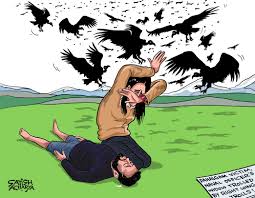
Image courtesy Satish Acharya

Given its organizational form and nourishment, it is difficult to imagine that the troll machine can genuinely feel. But it has been trained in demonstrations of outrage. One section of the online machine felt betrayed by the declaration of a ceasefire between India and Pakistan. Shocked by the ‘premature’ end of what was desired as a ‘decisive’ war, it lamented that the background conditions of an avenging solidarity and armed forces’ bravery were left under-utilised as Pakistan remained one nation, unlike its split during Indira Gandhi’s time in 1971.  

Continue reading The Troll Army’s Inglorious War: Alok Ranjan

Urgent Call for Peace by Indian and Pakistani Feminists​

The ceasefire is just the first step in the long walk to justice and peace​

In a show of historic cross-border feminist solidarity for peace, over 10 organizations and approximately 1000 people have come together to issue a powerful statement calling for immediate de-escalation, dialogue, and justice in the wake of renewed hostilities between the two nations. The signatories include feminists, peace activists, artists, journalists, academics, students, grassroots organizers and  other professionals from India and Pakistan.

11 May 2025

We, feminists from India and Pakistan, unequivocally welcome the ceasefire declared by our two nations today. The tension and escalation of the last fortnight remind us of how fragile peace is. The ceasefire is also a vindication of calls for de-escalation and peace by lakhs of ordinary people on both sides of the border. Even as we hope this indicates an absolute cessation of hostilities, we recall the recent events. 

We condemn the terror attack in Pahalgam that killed 25 tourists visiting Kashmir from different parts of India and one from Nepal. One local person also lost his life in the Pahalgam attack. The targeted attacks deepened the communal divide between Muslims and Hindus in India and were exploited to incite hatred, fear, and calls for collective punishment.

In the aftermath of the Pahalgam terror attack, it is the women—including as mothers, daughters, sisters, wives—who are left holding the unbearable weight of grief. Instead of respecting and sharing it, it has been weaponized and policed—especially when it refuses to follow the script of hate. Himanshi Narwal, the young widow of one of the slain victims, was among the survivors who amid unimaginable pain still found the strength to appeal for peace. She asked people not to direct their rage against Kashmiris and Muslims who, like her, are trapped in a cycle of violence they did not create. For that simple act of humanity, she has been trolled, vilified, and attacked by chest-thumping nationalists more committed to blood lust than truth. 

Continue reading Urgent Call for Peace by Indian and Pakistani Feminists​

Is an All-India Plan Underway to Foment Communal Conflicts?

President Rajendra Prasad had written to Sardar Patel, flagging cases of Hindutva activists dressing as Muslims to foment communal trouble. That trend continues.

“…I am told Hindutva activists have a plan of creating trouble. They have got a number of them dressed as Muslims and looking like Muslims who are to create trouble with the Hindus by attacking them.. …The result of this kind of trouble amongst the Hindus and Muslims will be to create a conflagration.’’

[Extracts of a letter, written by Dr Rajendra Prasad on March 14, 1948, cited in Nehru-Patel: Agreement within Differences, Select Documents and Correspondence, edited by Neerja Singh, Page 43]

‘How Hindutva activists plan to foment communal trouble?’

It was the year 1948 and Dr Rajendra Prasad, who later became the first President of India, wrote a letter to the first Home Minister of independent India, Sardar Vallabhbhai Patel, about the plan of Hindutva activists to foment trouble in the newly independent country. As per reports that he had received from different sources, Prasad wrote how these Hindutva supremacists get dressed up as Muslims and ‘looking like Muslims’ create trouble with Hindus by attacking them.’

Much time has passed since the time letter was written, but every now and then, this template, created and developed by Hindutva Supremacist formations during the Partition violence and later, is active with the aim to communalise and polarise the society further. [ Read the full article here : https://www.newsclick.in/all-india-plan-underway-foment-communal-conflicts]

Kulastree Kills? Thoughts on A Recent Honour Killing in Kerala

In the past weeks, the Malayalam press has been abuzz with a case of gruesome murder — by a young, highly-educated woman named Greeshma who plotted murder to end a relationship that she did not wish to continue. In 2022, she poisoned her boyfriend who was apparently reluctant to end the relationship. He died a slow and painful death. It was subsequently found that the murder was a family conspiracy — and that the woman’s mother and maternal uncle were accomplices. The police investigation revealed that Greeshma had committed premeditated murder; the Neyyatinkara Sessions Court awarded the 24-year-old the death sentence, calling the murder “brutal, gruesome, diabolical, and revolting.”

Continue reading Kulastree Kills? Thoughts on A Recent Honour Killing in Kerala

Urgent Letter to the DGP, Chhattisgarh Regarding Unlawful Detentions and Extra-Judicial Killings in Bijapur District : NAJAR

Following is a letter from the NATIONAL ALLIANCE FOR JUSTICE ACCOUNTABILITY AND RIGHTS regarding recent unlawful detentions and extra-judicial killings in Bijapur.

Urgent Letter to the DGP, Chhattisgarh Regarding Unlawful Detentions and Extra-Judicial Killings in Bijapur District 

13th Nov, 2024

To,

Director General of Police, Govt. of Chhattisgarh,  Raipur, Chhattisgarh 

Sub: Unlawful Detentions and Extra-Judicial Killings in Bijapur District – Seeking Immediate Release of all detenus and impartial inquiry – Reg

Sir,

We the undersigned, as members of a national collective of lawyers, law students, law professors, and other legal professionals, called National Alliance for Justice, Accountability and Rights (NAJAR) write to express serious concern regarding recent actions by security forces in Bijapur District, Chhattisgarh, on 8th Nov, 2024. The mass detention of individuals, including prominent activists, as well as reported killings, raises grave concerns about due process, excessive use of force, and adherence to legal standards.

Continue reading Urgent Letter to the DGP, Chhattisgarh Regarding Unlawful Detentions and Extra-Judicial Killings in Bijapur District : NAJAR

Beyond ‘Islamists vs Awami League’ – The Political Reality of July Uprising of Bangladesh: Sohul Ahmed

Guest post by SOHUL AHMED

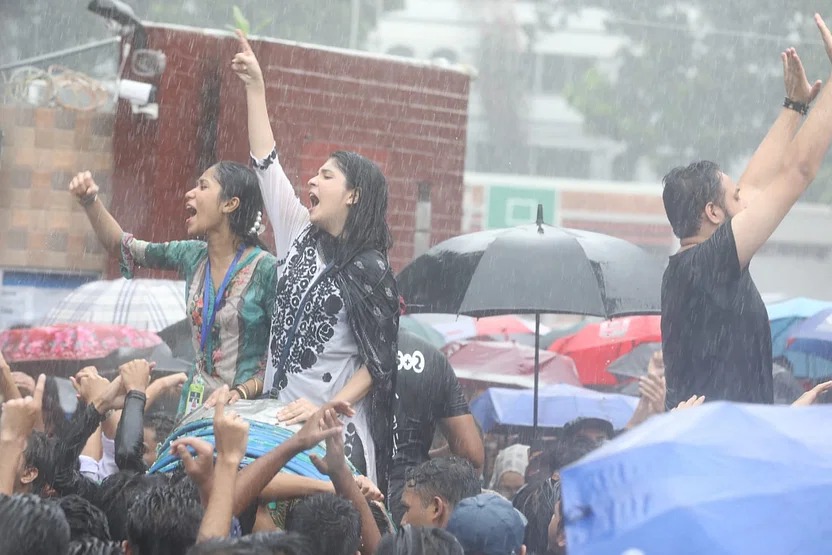
Students protesting in Uttara, Dhaka, August 2, 2024. Photo: Ashraful Alam

Sheikh Hasina, often labelled as fascist and autocratic leader in Bangladesh, was forced to flee the country following a popular uprising in July-August 2024. Many writings have appeared exploring the character of the movement and the consequent developments. Recently, renowned Indian historian and journalist Vijay Prashad published an article titled ‘Will Bangladesh be another Egypt?’, where he expressed the concern that Bangladesh could follow a path similar to Egypt’s. Vijay presents the  popular uprisings as both a continuation and, to some extent, a counter-response to the Shahbagh movement, while drawing parallels to the Arab Spring. However, his disregard for certain political realities in Bangladesh—such as the country’s long tradition of democratic movements and the presence of major centrist parties like the BNP—makes his comparison uneven and incomplete in some respects.

Continue reading Beyond ‘Islamists vs Awami League’ – The Political Reality of July Uprising of Bangladesh: Sohul Ahmed

A Misguided Narrative – A Response to the Lemkin Institute’s Statement on Bangladesh: Sohul Ahmed

Guest post by SOHUL AHMED

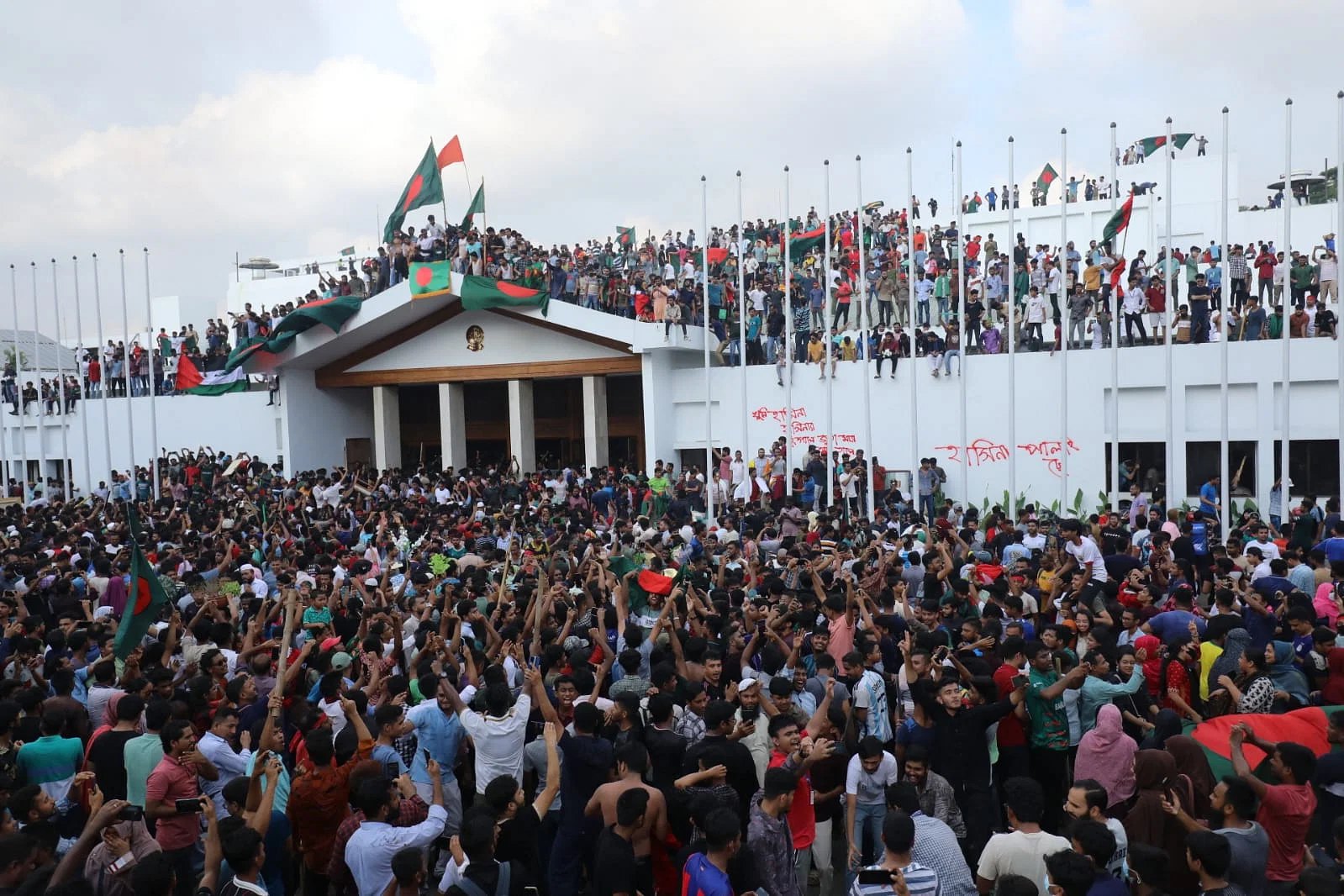
Crowds outside the prime minister’s office during the Uprising. Photograph by Dipu Malakar, courtesy Prothom Alo

The statement issued on 24 September 2024 by the Lemkin Institute for Genocide Prevention titled ‘Statement on Threats to Democracy in Bangladesh’[1] has drawn our attention not only due to misrepresentation of facts but also because it aligns more with the narrative of the ousted autocratic regime led by Sheikh Hasina and her party Awami League than with the aspirations of the people of Bangladesh. The statement has failed to capture the complexities of the situation in Bangladesh and thereby presents a misguided narrative about the uprising and its aftermath. Under the circumstances we feel obligated to respond to set the record straight and point out the inaccuracies in the statement.

Continue reading A Misguided Narrative – A Response to the Lemkin Institute’s Statement on Bangladesh: Sohul Ahmed

Long Live the Eternal Feminist, Anti-Fascist Fire and Flower Gauri! – A Letter from ALIFA

Following is an Open Letter from ALIFA (All India Feminist Alliance ) to Gauri Lankesh, marking 7 years of her cowardly killing. The Open Letter is in both English and Kannada. The Kannada version follows after the English one. ALIFA is linked to NAPM (National Alliance of People’s Movements). ಆತ್ಮೀಯ ಗೌರಿ ಲಂಕೇಶ್ ಅವರ ಹೇಡಿತನದ ಹತ್ಯೆಗೆ 7 ವರ್ಷಗಳಾಗಿ, ಅವರಿಗೆ ಅಲಿಫಾದಿಂದ (ALIFA) ಬಹಿರಂಗ ಪತ್ರ

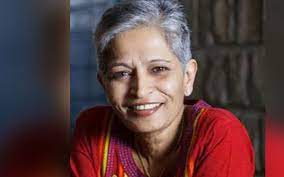
Gauri Lankesh, image courtesy Asianet Newsable

Gauri, dear sister, dear comrade!

It has been seven years. We still remember the day, the night! 5th September, 2017 – in fact the very moments – when the ‘news’ hit us. Gauri Lankesh shot in cold blood. Details poured in. Number of bullets. At your residence. By two men. We reeled with shock under immeasurable grief, loss and helplessness. Abandoning so many unfinished conversations, you left a void in all our hearts, the shape and size of a star!

Continue reading Long Live the Eternal Feminist, Anti-Fascist Fire and Flower Gauri! – A Letter from ALIFA

Women’s Rights Now! Citizens Speak Out Against Brutal Cases of Sexual Violence Across India

[More than 900 organizations and individuals speak out against brutal rape and cultures of impunity from Kolkata and Manipur to Uttar Pradesh, Gujarat and other parts of the country. Published below is their statement issued on 26 August 2024.]

WOMEN RIGHTS NOW!

CITIZENS SPEAK OUT AGAINST BRUTAL CASES OF SEXUAL VIOLENCE FROM KOLKATA TO MANIPUR, GUJARAT, UTTARAKHAND, BIHAR, UTTAR PRADESH…

DEMAND URGENT, INDEPENDENT AND UNBIASED INVESTIGATIONS AND INSTITUTIONAL ACCOUNTABILITY!

NO MORE SHIELDING OF PERPETRATORS AND THEIR PROTECTORS

JUSTICE TO VICTIMS AND THEIR FAMILIES!

Continue reading Women’s Rights Now! Citizens Speak Out Against Brutal Cases of Sexual Violence Across India

Freedom, not surveillance! Reclaim the Night Campaign Kolkata responds to measures suggested by the West Bengal government

Statement by Reclaim the Night Campaign, Kolkata 

‘Reclaim the Night’ is a mass movement demanding justice for the RG Kar rape and murder incident. It has united many people across West Bengal, across the country and even outside India in several places. It has brought people out onto the streets, united them in rage, and one could say it is making – not “history” – but her/queer/trans* story. This movement has brought school and college students, women working in call centres, nurses, doctors, health workers and women working in several other sectors out onto the streets to protest. Women from many villages and rural areas have added their voices to this movement and thousands upon thousands of people have occupied the streets at night, throughout the night, till the wee hours of morning. Muslim women have stepped out to reclaim the streets in several areas and Trans- queer persons have taken part and brought forward their demands. Everyone’s participation has really lifted ‘Reclaim the Night’ to a different height.

Our main objectives are to secure justice in all unresolved cases of sexual violence, including the RG Kar incident, and to secure safety and freedom for women and communities of marginalized genders/sexuality everywhere and at all times. We extend solidarity to all those who are working towards achieving this goal.

From what the combined voice of the movement has upheld, we wish to respond and clarify our standpoint regarding the statement made by Alapan Bandyopadhyay, Chief Administrative Advisor to the Chief Minister, Mamata Banerjee.

Continue reading Freedom, not surveillance! Reclaim the Night Campaign Kolkata responds to measures suggested by the West Bengal government

The End is Nigh – Bangladesh Report from Ground Zero: Shahidul Alam

This is a guest post by the well known Bangladesh photographer, SHAHIDUL ALAM. The article was earlier published in NEW AGE BANGLADESH and sent to us by SIMONE RUDOLPHI. The photographs are courtesy DRIK. Shahidul’s article actually answers many question that have been on Indian readers’ minds, including, not the least, the question of “quotas.” Interested readers may also find this article by academic Naveeda Khan useful, written as it is from within Dhaka, though she herself is based in the USA.

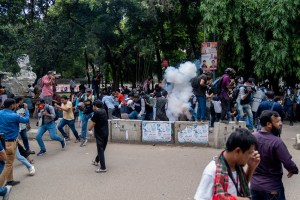
It would be a mistake to see this as simply a demand for more jobs. The quota movement, justified as it is, is simply the tip of the iceberg. A rampant government running roughshod over its people for so very long has led to extreme discontent. The quota issue has merely lit the fuse to this tinderbox. As citizens counted the dead and the injured, the prime minister fiddled, advising attendees at an aquaculture and sea food conference on tourism prospects in Cox’s Bazaar.

The original quota had been designed, shortly after independence in 1972 to be an interim arrangement to acknowledge the contribution of freedom fighters who constituted less than 0.25% of the population. Since a government known to be incredibly corrupt is responsible for creating the list of freedom fighters, over 50 years later the 120 fold allocation through a 30% quota has become an easy back door for party cadres to much sought after government employment. Confirmation came through senior Awami Leaguers saying, ‘just get through the initial screening and we’ll get you through in the viva’ and more tellingly, ‘government jobs will only go to party people.’

Continue reading The End is Nigh – Bangladesh Report from Ground Zero: Shahidul Alam

Anti Muslim violence after June 4th election results: APCR

Report prepared by Association for Protection of Civil Rights

Although the BJP came back with a much reduced majority (or perhaps because of that) the agenda of anti Muslim violence has been ramped up.  We, the people of India, who restored the dignity of the Constitution, must continue to bear witness, continue to fight against the hate filled politics of Hindu Rashtra, continue to assert  – Not in My Name.

Sab yaad rakha jayega, as the poet Aamir Aziz says.

We will remember these names, and the names of thousands of Muslims killed by lynch mobs, who have had their livelihoods destroyed, whose faith has been insulted, who suffer imprisonment without any basis till today.

Sab yaad rakha jayega.

There has been total of eight lynching incidents after the results of the General Elections were announced on June 4, 2024.

  • Twenty-three-year-old Salman Vohra, who had gone to watch a cricket tournament match in Chikhodra, Gujarat on 22 June, was mercilessly beaten to death by a group of men.
  • Three Muslim men, residents of Uttar Pradesh, were brutally attacked by a Hindutva mob in Chattisgarh’s Raipur on 7 June. Saddam Qureshi and his cousin Chand Miya Khan (23), both from Saharanpur district, and Guddu Khan (35) from Shamli district, were transporting cattle when they were allegedly chased by a mob in Raipur; two died on the spot, while one died after 10 days.

Continue reading Anti Muslim violence after June 4th election results: APCR

Release Prof Nadera Shalhoub-Kevorkian of Hebrew University Immediately

A Statement by Academics Worldwide on the Arrest of Hebrew University Professor Nadera Shalhoub-Kevorkian

Around 5 pm on Thursday, April 18, 2024, Hebrew University professor and internationally renowned feminist scholar Nadera Shalhoub-Kevorkian was arrested by Israeli police at her home in the Old City of Jerusalem on the charge of incitement to violence. The police raided and searched her home and she is currently undergoing harsh and dehumanizing interrogation. Her lawyer said the charges against her are serious. Information about her release is unknown. Palestinians in Israeli detention suffer physical, emotional, and mental violence. Professor Shalhoub-Kevorkian, who holds both Israeli and U.S. citizenship, has been subjected to violent repression and harassment by the Hebrew University for speaking out against the ongoing genocide in Gaza. Furthermore, she was suspended from her teaching duties in March, though later reinstated once it became clear that there is no basis for the allegations against her. 

Continue reading Release Prof Nadera Shalhoub-Kevorkian of Hebrew University Immediately