Category Archives: Violence/Conflict

Justice for Valsa John of Jharkhand, latest victim of the mining mafia

This press release was put out on 18 November 2011 by the NATIONAL ALLIANCE FOR PEOPLE’S MOVEMENTS (NAPM), the NATIONAL FISHWORKERS’ FORUM (NFF) and the NATIONAL FORUM OF FOREST PEOPLE AND FOREST WORKERS (NFFPFW)

Sr. Valsa, an activist of the Rajmahal Pahad Bachao Andolan (RPBA) and an ordained nun with the Sisters of Charity of Jesus & Mary, who had been working among Santhal Adivasis in the coal rich region of Dhumka, Jharkhand was brutally murdered by a group of about 40 armed men on the night of 15 November 2011. On behalf of Indian peoples’ movements and resistance struggles, NAPM, NFF and NFFPFW condemn this heinous and cowardly act, evidently conceived by the powerful mining mafia, aimed at essentially hunting down individuals and movements to silence the voices of resistance by people.  Continue reading Justice for Valsa John of Jharkhand, latest victim of the mining mafia

Govt must do more to protect minorities: Human Rights Commission of Pakistan

This press release was put out by the HUMAN RIGHTS COMMISSION OF PAKISTAN, Lahore, on 9 November 2011

The brazen murder of three brothers from the Hindu community in Shikarpur district on Eid day demonstrates that the perpetrators believe they can get away with murder simply because the victims are non-Muslim, the Human Rights Commission of Pakistan (HRCP) has said.

In a statement issued on Wednesday the Commission said: “HRCP is shocked at the brazen murder of the three Hindu citizens in Shikarpur and shares the sense of outrage of the Hindu community, not least because of the utter failure of the police to prevent the killings or arrest the killers even though threats of violence had been brought to their notice. Continue reading Govt must do more to protect minorities: Human Rights Commission of Pakistan

A Curious Silence and an Un-Crossed Line: In the Wake of A Disbanded Exhibition

A news item from some weeks ago, which has gone curiously unremarked and un-commented upon has made me think about the limits that the freedom of expression debate and the discourse on secularism in India unwittingly or knowingly does not seem to be able to cross, despite repeated provocation.

We all know that when the Hindu right comes to town –  declaring that this or that text should not be taught in the university, or this or that painting should not be seen, or this or that film should not be shown – the secular left-liberal intelligentsia in India automatically gets outraged, signs petitions, holds press conferences and generally vents it righteous anger. I know this because I do all these things, along with all my friends. I sign the online petitions, attend the demonstrations, express my anger and do some (or all) of that which needs to be done, that should be done. We should never give an inch to the hoodlums of Hindutva.

However, when it comes to responding to the equally aggressive, reactionary and utterly arbitrary actions of sections of the Muslim clergy and other self appointed leaders on the ‘Muslim Right’ a strange inertia seems to take hold of the best and boldest foot-soldiers of secularism in India.

Continue reading A Curious Silence and an Un-Crossed Line: In the Wake of A Disbanded Exhibition

Rain, Eid and Geelani: Sameer Bhat

Guest post by SAMEER BHAT

A fine rain was falling as I disembarked the aircraft. Srinagar was shivering at 7 degrees centigrade. Rams and ewes, all set for slaughter on Eid, looked forlorn. Meat-market persons in untidy pherans haggled with locals for rates. Half the male population, I noticed, had not seen a shaving blade for weeks, a very Kashmiri trait most noticeable in winters. While it continued to drizzle, queues outside ATM machines got fretful. At least three people entered the cashpoint at one time to witness your transaction. The invasion of financial privacy has a very harmless ring to it, which is very indigenous. Continue reading Rain, Eid and Geelani: Sameer Bhat

Mistaken Identity: Arif Ayaz Parrey

Guest post by ARIF AYAZ PARREY

The Indian army in Kashmir must be reading a lot of Manto these days. Or Borges. Or Kundera. Or –and this is most likely, given the approaching winter season and their ‘hearts and minds’ programme– Kashmiri folklore.

Not three months have passed since they made a highly publicized acknowledgement of “mistaken identity” after they had killed a mentally “challenged” “Hindu” youth in Poonch and declared that he was a “fierce” “Pakistani terrorist Abu-Usman killed after a 12-hour long gunbattle” (such valour exhibited by the Indian security forces is the stuff of legends in Kashmir) that they have followed it with another announcement of a (dis)similar “mistaken indentity”.

This time, like always, the culprits are the Kashmiri people (whose synonym in the Indian army’s dictionary is “miscreants”) Apparently, people beat to pulp a “member of a covert team of the army and J&K police” who were “sent to Sopore Town on getting info of presence of terrorists in the public rally addressed  by SA Geelani”. The person was carrying a camcorder and his service pistol. The people thought he was the terrorist.

Democracy? History? Or “mishtake”? Choose your option.

Kundera writes, “When the institutions of a state no longer feel the need to make sense or to give plausible explanations, the state can only survive as long as people allow it to lie shamelessly.”

See also:

Previously in Kafila by Arif Ayaz Parrey:

Adib Shishakly – The Rebel in the Hotel Room: Alia Allana

This guest post by ALIA ALLANA, a despatch from Istanbul, is the seventh in Kafila series of ground reports from the Arab Spring. Photos by Alia Allana unless otherwise mentioned

Adib Shishakly’s rebellion starts with a small pin on his blue blazer.

Embellishing the the blue of his jacket, clipped on to the left collar is a flag of Syria not seen since the days following the French mandate. Today the flag flies in the besieged areas of Homs, Hama and Dera’a where the protestors have posed Bashar al Assad’s regime with it’s biggest challenge to date. It’s this very flag, with its three golden stars that was outlawed by the Ba’ath Party, by strong man Hafez al Assad.

Continue reading Adib Shishakly – The Rebel in the Hotel Room: Alia Allana

The nuclear energy debate in India: Response to Dr APJ Abdul Kalam from Dr Surendra Gadekar

Dr. SURENDRA GADEKAR is a well-published physicist of international renown, and a Gandhian. After an MSc and PhD (in theoretical physics) in 1979 from IIT Kanpur, he worked for two years as a post-doctoral fellow at Iowa State University, US and then two years as a research associate at IISc in Bangalore. He resigned in 1986 (a little before Chernobyl) to do antinuclear work when the Kakrapar Nuclear Power Plant was started. In 1987, he started Anumukti A Journal Devoted to Non-Nuclear Indiaand has carried out and published studies of the impact of nuclear energy around the plants at Kakrapar, Rawatbata and Jadugoda.  He has also carried out a study at Pokharan, which is as yet unpublished. Dr Gadekar’s response follows:

Dr A P J Abdul Kalam and‭ ‬Mr.‭ ‬Srijan Pal Singh deserve a special thanks for their article in the Sunday edition of The Hindu‭ (‬November‭ ‬6,‭ ‬2011‭) ‬entitled‭ ‬“Nuclear power is our gateway to a prosperous future.‭”‬

Although most of what they write is irrelevant to their topic and the rest just plain wrong,‭ ‬the very fact that the establishment has to bring out its‭ ‬‘Big Guns‭’‬ to answer the questions raised by the Koodankulam movement,‭ ‬is a testimony to the success of the movement.

Originally I had intended to write a point by point refutation of their article,‭ ‬but I have been deterred by the sheer length of the article.‭ ‬What I intend to do here instead is to paraphrase their points and answer them one by one.‭ ‬I would urge activists to visit the Hindu website at and to read the article in the full. I make this request specially so that friends can point out if I have been unfair in summarizing their work or have missed something important.

Continue reading The nuclear energy debate in India: Response to Dr APJ Abdul Kalam from Dr Surendra Gadekar

Statement by SASI on People-to-People Solidarity with Palestine and Duplicity of South Asian States

A statement by the SOUTH ASIA SOLIDARITY INITIATIVE

SASI Calls for People-to-People Solidarity with Palestine and Condemns Duplicity of South Asian States in Palestine Bid for UN Recognition

The South Asia Solidarity Initiative (SASI) recognizes the importance and urgency of the Palestinian bid for recognition by the United Nations this September. Despite the threatened U.S. veto in the Security Council, all member nations have an opportunity to weigh in on the outcome through the General Assembly. We welcome the overwhelming support shown for Palestinian membership in the UNESCO. While noting the support for recognition of Palestine by South Asian states, SASI is dismayed by the duplicity of some of these states in continuing to build economic, military, and intelligence ties with Israel. SASI supports the efforts of all peoples movements in South Asia and elsewhere towards solidarity with the people of Palestine.
Continue reading Statement by SASI on People-to-People Solidarity with Palestine and Duplicity of South Asian States

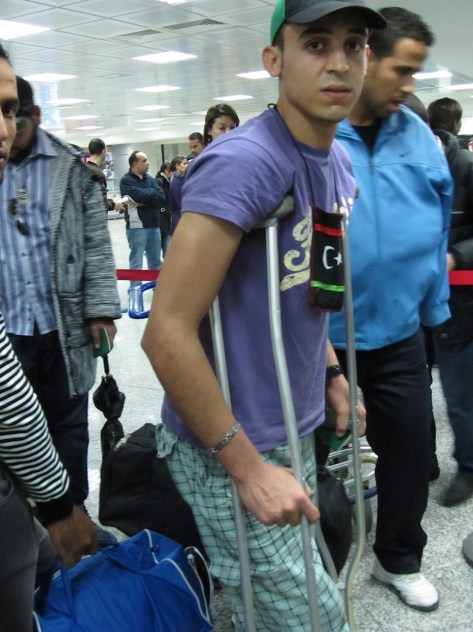
‘Who isn’t a Shabaab these days?’: Alia Allana reports from the Tunisia-Libya border

This guest post by ALIA ALLANA is part of a Kafila series of despatches from the Arab Spring

When does a boy become a shabaab?

Literally, in Arabic, shabaab means young men. Before the fever of the Arab Spring raged in the minds of the youth, back when boys used to gather in squares aimlessly, girls eyeing them would call them shabaab.

But that was then; before the political architecture of the Arab world was reconstructed.

Today the shabaab are the disenchanted youth, the angry boys of Benghazi with deathly toys devoid of opportunity, angry at their condition, aware of the world through the Internet and their mobiles, acting out their rebellion. Today the shabaab, the rebels of Libya, want what they think is theirs: the right to self-determination, a say in politics and freedom.

Continue reading ‘Who isn’t a Shabaab these days?’: Alia Allana reports from the Tunisia-Libya border

My Days with Nationalism in Assam: Ankur Tamuli Phukan

Guest post by ANKUR TAMULI PHUKAN

Many of us who have been studying the political process in Assam were surprised when we received the news in December 2009 that Chairman Arabindo Rajkhowa and some of his colleagues of United Liberation Front of Asom (ULFA) had been arrested in Bangladesh. This moment had to come some day, but we were not prepared to face it. We were familiar with the brave and somewhat legendary image they had created for themselves and needed time to believe that they could be defeated. Continue reading My Days with Nationalism in Assam: Ankur Tamuli Phukan

Kashmir’s Horcrux: Sameer Bhat

Guest post by SAMEER BHAT

Hectic parleys are on at the moment to jettison the dreaded AFSPA in the valley. By conservative estimates the army must have beaten about one in every five Kashmiris at one point or the other since this piece of horrible legislation was slapped on us. An unjust law, is no law at all, Martin Luther, the symbol of protestant reformation, verbalized the sentiment of St Augustine in the 15th century. Rings true to this day.

For more than twenty years people have been punched, thrown in the back of military trucks, knocked down by gun-butts, given kicks, pushed around as they got off a bus or simply slapped around for no apparent reason. Just for being themselves, perhaps. No you could not question the moral turpitude of a military-walla from Madras if he clubbed your aging father.  Continue reading Kashmir’s Horcrux: Sameer Bhat

The Synagogue and the Jihadi: Alia Allana reports from Jerba

This guest post by ALIA ALLANA is part of a Kafila series of ground reports from the Arab Spring

Inside the El Ghriba synagogue in Djerba, an island off the south coast of Tunisia

Out of all the outrageous questions I have asked in my life, this one has to be amongst the top ten:

“Are you a jihadi?” Continue reading The Synagogue and the Jihadi: Alia Allana reports from Jerba

A prologue to memory: Arif Ayaz Parrey

Guest post by ARIF AYAZ PARREY

Over the corner shop at the busy crossing near home hangs a white board on which the words ‘Muzaffar Pan-House’ are painted in bright red. On the right side of the words, an artistic rendition of the side-view of Muzaffar’s face can be seen. His left hand is also painted in, holding a cigarette. The grey smoke emanating from the cigarette does not vanish before it touches the top of the board.
Continue reading A prologue to memory: Arif Ayaz Parrey

AFSPA in Kashmir – “Armed Forces’ Say Prevails Anyway”: Gowhar Geelani

Guest post by GOWHAR GEELANI

There is a lot of noise in the media over AFSPA. Ask any senior Indian security official, a turn-coat politician or a retired Army General what AFSPA stands for. “Armed Forces Special Powers Act,” they will say. Now pose the same query to an ordinary Kashmiri living there in the hapless Vale for the past two decades. The answer perhaps would be: “Armed Forces’ Say Prevails Anyway”. Continue reading AFSPA in Kashmir – “Armed Forces’ Say Prevails Anyway”: Gowhar Geelani

End the culture of impunity, not just AFSPA: APDP

This is a press release from the ASSOCIATION OF PARENTS OF DISAPPEARED PERSONS

The Bund Amira Kadal, Srinagar – 190001, Jammu and Kashmir
28th October 2011

APDP feels that the recent announcement by the Chief Minister Omar Abdullah on the partial revocation of Armed Forces (Special Powers) Act (AFSPA) from some areas of Jammu and Kashmir would be insignificant for improving the human rights situation and also for providing justice to those affected by the mindless violence by armed forces.
Continue reading End the culture of impunity, not just AFSPA: APDP

Signs of improving times

Two incidents that took place recently provide hope, underlining that the India-Pakistan peace process must indeed be on track. One incident was related to the UN and the other to Kashmir, if you can believe it. Continue reading Signs of improving times

“We are not like Iran here”: Alia Allana reports from Tunisia

This guest post by ALIA ALLANA is an account of polling day in Tunisia

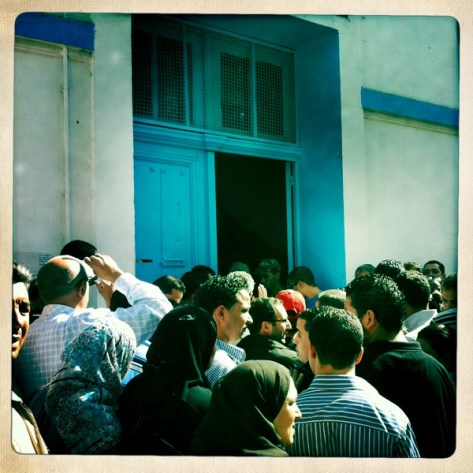
They had already waited so long, what was a few more hours? Continue reading “We are not like Iran here”: Alia Allana reports from Tunisia

Lies about sanctions under AFSPA: JKCCS

This press statement was issued by the JAMMU AND KASHMIR COALITION OF CIVIL SOCIETY on 19 October 2011 
 
Over the last 22 years in Jammu and Kashmir, the Armed Forces Special Powers Act (AFSPA) and Cr.P.C. 197 has provided absolute legal impunity to the armed forces and the Jammu and Kashmir Police.
The Government of India claims that despite the imposition of AFSPA, mechanisms of justice are functional and deliver whenever anyone is found indulging in human rights abuses, but facts provided by the state institutions contradict the claim of the Indian state. Continue reading Lies about sanctions under AFSPA: JKCCS

Mickey wants to be the first one to vote: Alia Allana reports from Tunisia

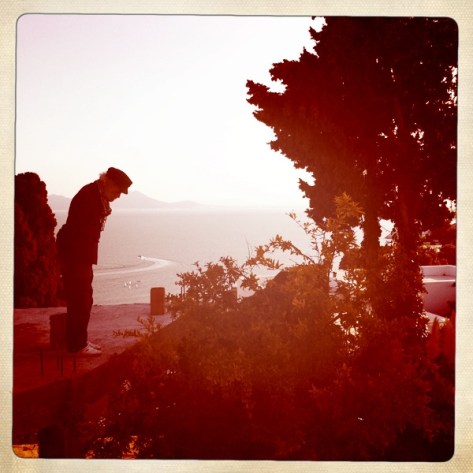
This guest post for Kafila by ALIA ALLANA from Sidi Bou Said on the outskirts of the capital Tunis captures the mood a day before Tunisia goes to the polls. Photos by Alia Allana

Continue reading Mickey wants to be the first one to vote: Alia Allana reports from Tunisia

Thinking Truth and Reconciliation in Kashmir: Shuja Malik

Guest post by SHUJA MALIK

“Truth and Reconciliation Commission (TRC)” is a recent addition in the lexicon of the Kashmir conflict/dispute. IT gained currency after recent confirmation of reports about presence of unmarked, unidentified and mass graves in Kashmir. The idea of a TRC for Kashmir raises questions about its relevance and context, especially unidentified graves and enforced disappearances.

Truth and reconciliation commissions have been established in the past with varied powers and purposes, usually at points where the parties involved are ‘emerging out of conflict’ or are at ‘transitional stage’, and after modalities have been established for conflict resolution.

Continue reading Thinking Truth and Reconciliation in Kashmir: Shuja Malik

The Minister of Information maintains that there is no revolution: Alia Allana reports from Damascus

This guest post by ALIA ALLANA is a despatch for Kafila from Damascus, the Syrian capital. All photos by Alia Allana

“You don’t think I’m afraid?” asked Bouthaina Shaaban, advisor to Syrian President, Bashar al Assad.

We were sitting in the Ministry of Protocol in Damascus and she tugged on her black pearl necklace and fidgeted with her black and white tweed jacket. She had more reason to be afraid, she said – not just because she was a woman but also because she is a supporter of the current regime.

Continue reading The Minister of Information maintains that there is no revolution: Alia Allana reports from Damascus