
Press release put out 24 March by the JAMMU AND KASHMIR COALITION OF CIVIL SOCIETY
Srinagar: The 21 March 2013, United Nations Human Rights Council [UNHRC] resolution is a welcome initial step in the ongoing struggle to hold countries responsible for human rights violations, ranging from Genocide, Crimes against Humanity and War Crimes to Enforced Disappearance, Torture, Rape and Extra-judicial executions. The watered down resolution, moved by the United States, and India’s support for the resolution, requires both commendation and severe criticism at the same time.
There can be no selective morality when it comes to standing against the commission of human rights violations by State’s. Every country must be held to the same standards, as Sri Lanka has been in the instant case, regardless of economic or geo-political concerns. In this regard, the United States and India stand accused of hypocrisy in their dealings with human rights violations in their regions or across the world. Similarly, Pakistan’s vote against the resolution raises serious questions on its own approach to human rights violations in the region or elsewhere. Continue reading India, International Law and an Act of Hypocrisy: JKCCS


 The Vishwa Hindu Parishad (VHP) is a powerful organization founded on the belief that the Hindu religion is eternal and unvarying, that it has existed in India for thousands of years (the VHP’s chronological estimates vary between 8,000 and 50,000 years), and that its essence has never been affected by any foreign influence or borrowing. Hinduism is unique to India, and India is a uniquely Hindu country: such is the logic of the VHP. And yet, occasionally, the VHP is assailed by a sense of doubt. It is all very well to thunder at Muslims and Christians in self-congratulatory public meetings, its leaders say to themselves, but it would be nice to have some proof with which to fight off the scoffing scientists. And so, as documents recently made available to researchers reveal, the high command of the VHP decided to sponsor a time travel project, sending a fact-finder back to the glorious Vedic age to collect evidence of how the ancestors of the Hindus performed their rituals, worshipped their gods, and conceived of their relationship to the Divine.
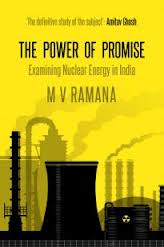 Ramana’s commentary is witty, articulate and rich with anecdotes. He makes a solid case for his central thesis – that delivering on the promises of power or security were never the actual goal of India’s nuclear program, and probably never will be. Rather, promises are the engines that power the program, he argues. By holding out the twin ideals of unlimited electricity and infallible security in the form of a credible nuclear deterrent, India’s nuclear establishment has carved for itself an enviable position. It is answerable to no one but the Prime Minister, and can spend billions over decades with nothing to show for the expense.

 KAFILA - COLLECTIVE EXPLORATIONS SINCE 2006