New friends of ISKCON? On the Gita controversy

The Parliament which has remained rather dysfunctional for different reasons all the year witnessed a strange bonhomie few days back. It was difficult to believe that they are the same representatives of people who could not see eye to eye on various issues of concern and were always keen to score their point over their political adversaries. Led by the likes of Laloo Prasad Yadav – interspersed with slogans of ‘Jai Krishna’ –  the government’s alleged silence on the developments in a faraway court in Russia was called into question.

Interestingly, BJP the party which happens to be the chief opposition party, found itself playing second fiddle to the troika of Laloo, Mulayam and Sharad Yadav on this matter. The issue related to proceedings in a court in Tomsk which supposedly had found portions of ‘Gita’ objectionable and ‘extremist’ and was contemplating to ban it.

Continue reading New friends of ISKCON? On the Gita controversy

Z for Zalim: Semiotics and the Occupation of Kashmir

Ours was the marsh country, down by the river, within, as the river wound, twenty miles of the sea. My first most vivid and broad impression of the identity of things, seems to me to have been gained on a memorable raw afternoon towards evening. At such a time I found out for certain, that this bleak place overgrown with nettles was the churchyard; and that Philip Pirrip, late of this parish, and also Georgiana wife of the above, were dead and buried; and that Alexander, Bartholomew, Abraham, Tobias, and Roger, infant children of the aforesaid, were also dead and buried; and that the dark flat wilderness beyond the churchyard, intersected with dykes and mounds and gates, with scattered cattle feeding on it, was the marshes; and that the low leaden line beyond, was the river; and that the distant savage lair from which the wind was rushing, was the sea; and that the small bundle of shivers growing afraid of it all and beginning to cry, was Pip. – Charles Dickens, Great Expectations

A for Apple and Z for Zebra. Children are taught the alphabet with the help of images. And the association of images with sound. It helps them associate the sound of A with the sound of Apple, and associate that in turn with the image of an apple. The alphabet book depends on images that may be familiar to children. The word Apple is a signifier, and the apple itself is the signified. This is, most simply, what semiotics or the study of signs and sign processes.

In a future world, if there are no zebras, alphabet books may have to replace the last entry with something else. What could it be? Zebra crossing? Zimbabwe?

Last week, the Jammu and Kashmir Police registered a case of sedition, defamation and criminal conspiracy against six officials of BoSE, the government’s very own Board of School Education, for this:
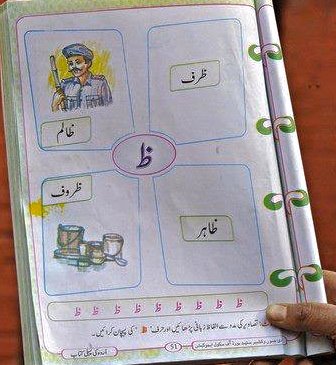
This is a page from a book called Baharistaan-e-Urdu. This attempt to teach Kashmiri children the Urdu alphabet (note to self: this is what I need to learn Nastaliq!) makes them say, “Zoi se Zalim,” Z for Zalim, meaning cruel. That is only one of four examples. The other two are: zaroof (utensils), zahir (visible) and zarf (ornamental cup holder).

Continue reading Z for Zalim: Semiotics and the Occupation of Kashmir

Merry Christmas, Rev. Khanna: Thinking about Freedom and Intolerance in Kashmir

I want to begin writing this by wishing a very happy Christmas to Reverend C.M. Khanna, a Protestant presbyter in the All Saint’s Church, Srinagar, Indian held Jammu & Kashmir, who has been facing a situation that no free man should ever have to countenance. He has had to face an arrest (though, thankfully now he is out on bail) and social ostracism for doing nothing that can be construed as criminal or harmful to any individual or society at large. I write this in solidarity with him and his family, and with all those who have been harassed for their faith, or for their lack of faith, anywhere.

(Please follow this link for a comprehensive report on Rev. Khanna’s situation, in the form of a press note submitted by John Dayal)

I know that many people in Kashmir continue to be in prison for reasons of conscience, because they want to be free of the occupation. And this Christmas, my greetings are to them and to their families too. I know that Reverend Khanna is out on bail now, and that many others are not. And I hope that they too will see freedom soon. I am writing about Reverend Khanna not because I value his freedom more than that of others incarcerated in Kashmir, but because if we value freedom, we should not have to measure its value, or calculate its worth depending on who happens to get bail, and who happens to rot in jail. Continue reading Merry Christmas, Rev. Khanna: Thinking about Freedom and Intolerance in Kashmir

Wither Wall Street: Challenge of the Occupy Movement

Over the last three months New York City has been electrified by the Occupy Wall Street movement. Prachi Patankar and I have been participating in some of the actions. We have also been part of a number of discussions within the South Asia Solidarity Initiative (SASI) on how an organisation like ours can bring an internationalist perspective to this movement. Prachi is also on the board of the War Resisters League (WRL). Through such discussions SASI and WRL organised Empire on Wall Street actions. With many of our comrades in India and Sri Lanka asking us about the impact of the Occupy Wall Street movement and its future, we decided to write this article. Continue reading Wither Wall Street: Challenge of the Occupy Movement

Why ban just a Facebook page when you can erase a holy book or two (or more)?

Following in the wake of the declarations of the well known Internet idiot, who doubles as the honorable minister of telecommunications of the Union of India, an esteemed additional civil judge of a Delhi court has also decided to issue an ex-parte order commanding Social Media networks, Facebook and Youtube to remove 21 (or is it 22?) ‘objectionable’ websites that ‘offend religious sentiments’.

This has been done in response to please entered by a ‘journalist’, a certain Mr. Vinay Rai, and a certain Mufti Aijaz Arshad Qasmi, who also delivers online fatwas on a variety of subjects, ranging from the very intimate to the magnificently cosmic. It is wonderful to behold the learned court acting with such sensitivity to the joint plea of two honorable Hindu-Muslim worthies. Hindu-Muslim-Sikh-Isai – busybodies of every stripe seem to have little other work to do than police and control what can and cannot be said online, shown in a film, performed in a play or depicted in an art work. And our ‘secular’ civil society, and the lower ranks of the judiciary faithfully acquiesce to their every demand. Continue reading Why ban just a Facebook page when you can erase a holy book or two (or more)?

Pakistan ki Tareef: Haseeb Asif

This guest post by HASEEB ASIF is in Urdu, in Roman script

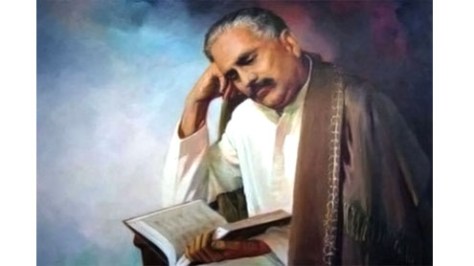
Allama Iqbal (1877-1938)

Islami Jamhooriya Pakistan ki tareekh Hindustan se bohut purani hai. Balkay Islam se bhi purani hai. Jab aathveen sadi mein Muhammad Bin Qasim Islam phelane bar-e-sagheer tashreef laye tau ye jaan ker sharminda huwe ke yahan tau pehle hi Islami riyasat maujood hai.

Yahan kufr ka janam tau huwa Jalaaludin Akbar ke daur mein, jo Islam ku jhutla ker apna mazhab banane ko chal diya; shayid Allah-ho-Akbar ke lughwi maani le gya tha.

Baharhal, in kafiron ne butparasti aur mehkashi jaisay gheir munaasib kaam shuro kerdiye aur apne aap ko Hindu bulaane lage. Sharaab ki aamad se Pakistan ke Musalmanon ki woh taaqat na rahi jo tareekh ke tasalsul se honi chahiye thi. Iski vaja ye nahin thi ke Muslaman sharaab peene lag paray the, balkay ye kay unki saari quwat-e-nafs sharab ko naa peene mein waqf hojati thi, hukmarani ke liye bachta hi kya tha.

Is ke bawajood Musalmanon ne mazeed do sau saal Pakistan per raaj kiya, phir kuch dinon ke liye angrezon ki hakoomat agayi (hamari tafteesh ke mutabiq yehi koi chalees hazaar din honge).

San 1900 tak Pakistan ke Musalmanon ki haalat nasaaz hochuki thi. Is dauran aik ahem shakhsiat hamari khidmat mein hazir huwi, jis ka naam Allama Iqbal tha. Continue reading Pakistan ki Tareef: Haseeb Asif

Kerala’s Lost and Found Object of Cinema: Bindu Menon M

Guest post by BINDU MENON M

The fascination for films by Kim Ki Duk, the iconoclast South Korean film maker, and his hold over cinematic imagination in Kerala has generated many anecdotal and apocryphal stories in the film festival circuit in Kerala. Given his popularity, its not surprising at all that Kim Ki Duk films are available in the original and pirated forms in electronic markets in major towns i the State. A recent Malayalam short film titled ‘Dear Kim’ is a letter written to Kim Di Duk by his fans from a remote village in the High Ranges of the Western Ghats. Against all odds, a small group of young men who are laborers set out to watch a Kim Ki Duk opening film in the city , but couldn’t make the journey. The CD that they procure of his film ‘Wild Animals’ turns out to be a pornographic film of the same name! They finally manage to send an email to Kim Ki Duk requesting for his original DVDs. The Korean wave , has taken distinct turns influencing mainstream Malayalam film production as well, prompting a wry and satirical remark from a popular internet portal film critic that at this rate Cochin might soon be declared as the capital of South Korea! Parodying another joke that pronounces Gabriel Garcia Marquez as the most popular Malayalam novelist, it is often said that Kim Ki Duk is the most popular contemporary Malayalam film maker!Kim Ki Duk wouldn’t have been a household name without the International Film festival of Kerala,the large number of film festivals that mushroomed all over the state in the last decade and the pirate DVD market.

Continue reading Kerala’s Lost and Found Object of Cinema: Bindu Menon M

Who’s afraid of Veena Malik?

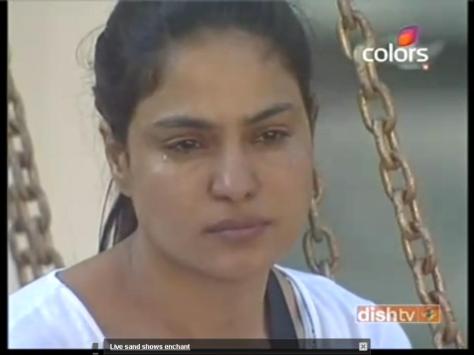
News broke of Veena Malik’s “nude” – more accurately, implied nude – photographs in FHM India magazine when the image of the magazine’s cover went viral on Twitter, even before the magazine was on newsstands. The media in India and all over the world reported “outrage” in Pakistan, in keeping with the international image of Pakistan as a country taken over by Islamists who would wreak havoc over a Pakistani woman posing without clothes for an Indian magazine with ISI tattooed on her arm.

FHM India itself magazine emphasised Malik’s nationality, calling her a “Pakistani WMD” and discussing burqas with her, even mentionining the word burqa on the cover, to reinforce the stereotype of a hot Pakistani model defying a country riven with Islamic extremism.

But in reality, there hasn’t been as much backlash in Pakistan as the world outside would expect or believe. Says Islamabad-based journalist Shiraz Hassan, “I am surprised that except a few news channels and papers nobody has been bothering about Veena Malik, as though they don’t care what she did. Haven’t seen anything from hardliners also.” Continue reading Who’s afraid of Veena Malik?

Does the Universal Declaration of Human Rights impose Western values?: Gita Sehgal

The Indian freedom fighter was a key drafter

Guest post by GITA SEHGAL

10 December was Human Rights Day, anniversary of the Universal Declaration of Human Rights. Does the idea of human rights with their firm assertions, their belief in the ‘rule of law’ and their globalised vision, remain relevant in the world? The idea that there are absolute standards has come under attack from both the left and the right. The philosopher Alasdair MacIntyre , author of ‘After Virtue’, said, Natural rights and self evident truths proclaimed in the American declaration of independence are tantamount to belief in witches and unicorns. While from the left,  in ‘Human Rights and Empire’, Costas Douzinas has called human rights the political philosophy of cosmopolitanism and argued that human rights now codify and ‘constitutionalise ‘ the normative sources of Empire. Continue reading Does the Universal Declaration of Human Rights impose Western values?: Gita Sehgal

Bangla rocks: Jyoti Rahman

Guest post by JYOTI RAHMAN

Lagaan was a groundbreaking film, but a Bollywood film nonetheless. My favorite song-dance sequence is the one where the villagers, well Gauri and Bhuvan and friends, celebrate Krishna’s birthday. In the song, the girl complains that Radha is anxious about Krishna’s philandering ways and the boy replies that Radha should be understanding because there’s no one else in Krishna’s heart but Radha.

When the meaning of the song is explained to her, Elizabeth asks Gauri: Is Radha Krishna’s wife?

Oh no, Krishna’s wife is Rukmini! 

Of course Radha-Krishna are anything but married. Imagine the shock the Victorian girl would have felt upon realizing that the villagers were celebrating an extra-marital affair with such fanfare.

It is not just that Bollywood village in the high noon of Raj. Gita Govinda and other songs celebrating Radha-Krishna are sung in every modern Indian language. And not just in India. Songs on the theme were thriving in an unexpected place, in an unexpected time. Among Bangladeshi youth, in the early years of this century, when the country seemed to increasingly Islamicising. Partly influenced by the music coming out of the diaspora in Londonistan, songs like this one, celebrating the union of Radha-Krishna in the Nikunja Temple became massive hits.

Over the fold, let me note a few examples of Bangla rock – and let’s not be pedantic here, I’ll use rock as a shorthand for western-influenced urban music, including pop, reggae, hip hop and other genres.

Continue reading Bangla rocks: Jyoti Rahman

News TV – Caught Between an Anna and a Hard Place: Abhishek Upadhyay

Guest post by ABHISHEK UPADHYAY

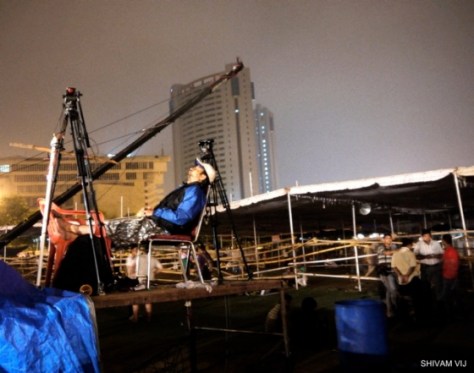
Taken in August 2011 at around 2 am one morning at Ramlila Maidan, this photo shows a news TV cameraperson taking sleeping on his chair.

Anna Hazare has returned with his protests and fasting. Should the media, particularly news TV, be more circumspect this time?

Is it time for the media to learn from the Ramlila Maidan experience in August, or should news channels stick to their earlier editorial line of broadcasting the Anna movement in great detail? Back in August, news TV broadcasted Anna’s “satyagrah” allegedly at the expense of the government. The stage is set again, the jury is out. Continue reading News TV – Caught Between an Anna and a Hard Place: Abhishek Upadhyay

Happy 100 Years of the Delhi Durbar

The Delhi media celebrated on 11 December the above event, which took place on 11 December 1911. The Delhi media will celebrate anything that is worth celebrating, and everything that is not worth celebrating. Someone just has to set the alarm bells and hours of programming, reams of newsprint will be dedicated to an orgy of unthinking celebration. The only thing other than Celebration that sells is Outrage.

Sohail Hashmi has written on Kafila about why 11 December could not be the centennial of “New Delhi” but only the Delhi Durbar. That was only one problem with the Celebrations; here are some more.

From Dehli to New Delhi, it wasn’t 1911

Amidst the cacophony of celebrating 100 years of Delhi, several details seem to have escaped the attention of our ever vigilant media, both print and electronic. This post is to draw your attention to a few of these ‘details’ in an attempt to place the celebrations in what appears to this author to be the correct perspective.

The 12th of December, 2011, can not by any stretch of imagination be described the centenary of Delhi, because there were at least 7 Dehlis before New Delhi came up, in fact 9 Dehlis if one were to add Kilokhri and Kotla Mubarakpurpur, Dehlis in their own right, to the generally accepted list of Qila Rai Pithora, Siri, Tughlaqabad, Jahan Panah, Firozeshah Kotla, Din Panah or Sher Garh or Purana Qila and Shahjahanabad. All of these came up at different times from the  11th century to the 17th century and all of these were more than a 100 years ago.

All that the 12th of December 2011 can claim to be the centenary of, therefore, is New Delhi. Let us look at even that claim a little more closely. What exactly transpired on the 12th of December 1911 that is causing so much excitement a 100 years later? Continue reading From Dehli to New Delhi, it wasn’t 1911

Three Years After 26/11: Raza Rumi

Guest post by RAZA RUMI

As a Pakistani it is difficult for me to talk about the ghastly attacks on Mumbai three years ago and the response of its vibrant citizens. This is not simply due to the nationality of Ajmal Kasab, the lone terrorist captured after the 26/11 Mumbai terror attacks. What happened in Mumbai was a sad reminder of how easy it has become for a handful of militants to wreak havoc, to hold an entire city hostage and undermine humanity. A vast majority of Pakistanis felt the pain and condemned the Mumbai attacks; targeting innocent civilians is heinous and unacceptable.

The Mumbai attacks changed the atmosphere created by President Asif Ali Zardari’s unprecedented offers of peace and cooperation. A few weeks before the carnage in Mumbai, Mr Zardari made historic remarks in a conclave organised by an Indian newspaper, which represented a consensus within Pakistan’s political class: “I do not feel threatened by India and India should not feel threatened from us… today we have a Parliament which is already pre-agreed upon a friendly relationship with India. In spite of our disputes, we have a great future together.” Mr Zardari also declared that Pakistan will not be the first country to use its nuclear weapons, thus altering a carefully constructed Pakistani nuclear doctrine of first-use. Continue reading Three Years After 26/11: Raza Rumi

Shahid in Srinagar: Arif Ayaz Parrey

Guest post by ARIF AYAZ PARREY

Photo by Muhabit-ul-Haq / TheKashmirWalla.com

I must go back briefly to a place I have loved
to tell you those you will efface I have loved [i]

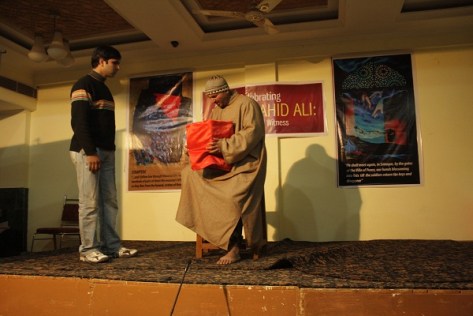
Exactly ten years after he left us, Aga Shahid Ali returned to his Kashmir. A couple of days earlier, many parts of the valley were blessed with the season’s first snowfall, signalling an end to Harud, the autumn season in Kashmir, and ushering in Wande, the winter. The sky over Srinagar was overcast too, as it has been for the past few days, maybe because this year Moharram has been particularly demanding, with mourners not being allowed to mourn because “the processions might be used by separatists to whip up anti-India sentiments”. The reason for the ban is announced from the same bureaucratic offices which, during the summer, employ the entire state machinery to ensure that people from the plains can climb up the mountains into a cave where Amarnath wants to spend some private time with Parvati so that he can explain to her the mysteries of immortality (Which must include, one would like to presume, the secrets of the longevity of a fragile mountain ecology.) Some like to define this variance in state policy and practice as “secularism”. The connection between the tyranny of Karbala and the present-day Kashmir is firmly established, once again. Continue reading Shahid in Srinagar: Arif Ayaz Parrey

Parveena Ahangar rejects CNN-IBN’s nomination for ‘Indian of the Year 2011’

This press release has been issued by the PARVEENA AHANGAR-led ASSOCIATION OF PARENTS FOR DISAPPEARED PERSONS

Srinagar, December 10, 2011:  On this ‘International Human Rights Day’, December 10, 2011, the APDP (Association of Parents of Disappeared Persons), Srinagar, wishes to state that there is something obscene and perverse in the manner the CNN-IBN has nominated our organization for the ‘Indian of the Year 2011’ award. Sometimes, human rights can be violated by merely mocking those who struggle for human rights. Continue reading Parveena Ahangar rejects CNN-IBN’s nomination for ‘Indian of the Year 2011’

The Absurd Tyranny of iSibal: Vrinda Gopinath

Guest post by VRINDA GOPINATH

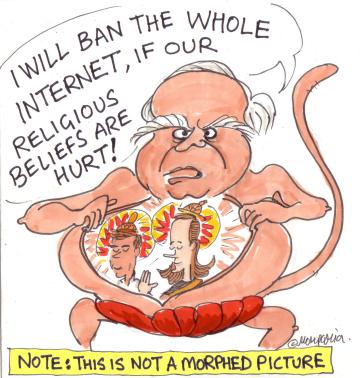
by Hemant Morparia

Well, Information and Technology Minister Kapil Sibal’s prickly suggestion to pre-screen content on social networks like Google, Facebook and Twitter, has invited such derision from the internet world that it has given him a tag to his name – Idiot Sibal. For iSibal, it’s not his status on Facebook that should bother him, but the ruinous unmasking of the minister in status-anxiety New Delhi. Sibal, after all, prides himself in belonging to the elite movers and shakers of the Capital – educated, connected, and gold card holder of the Stephen’s Old Boys Network. For the status seekers, this is a world of privilege and entitlement, cosmopolitanism and tolerance.

Now you would wonder what came over the blue-stockinged Technology Minister to make such an ill-thought out statement. Sibal’s liberal snobbery is not always what it seems to be, for there is a lurking autocratic and despotic streak, even archaic at times, that has surfaced time and again. And it is this aspect that has largely been ignored in the bedlam over his latest decree to social network companies.

Continue reading The Absurd Tyranny of iSibal: Vrinda Gopinath

Nationwide opposition to the government’s refusal to a peaceful fast in support of Irom Sharmila: NAPM

Press release issued today by the NATIONAL ALLIANCE FOR PEOPLE’S MOVEMENTS

New Delhi, December 10 : For some months now, Save Sharmila Solidarity Campaign (SSSC) has been spreading the word about Irom Sharmila and her struggle across the nation and beyond.

Started only by few organizations, campaign has now received support over more than 80 organizations and movements and thousands of supporters. Campaign has reached in almost every state of India and even outside. Campaign has organized various programs including its famous Nationwide Signature Campaign, Sri Nagar- Imphal Save Sharmila Jan Karwan in October and Ahemdabad- Srinagar Jattha in November this year. Continue reading Nationwide opposition to the government’s refusal to a peaceful fast in support of Irom Sharmila: NAPM

Of Cloaking, Colouring and Varnishing: Prasanta Chakravarty

Guest post by PRASANTA CHAKRAVARTY

“Then leave Complaints: Fools only strive
To make a Great and honest Hive.
T’enjoy the World’s Conveniences,
Be famed in War, yet live in Ease
Without great Vices, is a vain
Eutopia seated in the Brain.”

Bernard Mandeville (The Grumbling Hive, 1705)

Salutary falsehoods for a promising end, anyone? Try telling this to the ever righteous Anna Hazare or to the followers of Vaclav Havel, whose campaign assurance to ‘live in truth’ in the year 1989 so moved his virtuous flock. There is a politics of virtue and then there is realpolitik – or so we are told. Or is virtue above politics and vice below? What the deuce marks the ambiguous space in between?! That is what has been relentlessly, and ruthlessly, scanned by two masterful recent additions to the canons of contemporary Western political philosophy: Martin Jay’s The Virtues of Mendacity: on Lying in Politics and David Runciman’s Political Hypocrisy: the Mask of Power, from Hobbes to Orwell and Beyond.

At one level, both scholars acknowledge and emphasize the dangers of the ‘ethical turn’ in political studies.

Continue reading Of Cloaking, Colouring and Varnishing: Prasanta Chakravarty

Shivraj Patil hath no mercy! Why could he not pardon an old, ailing Ram Kumar?: PUCL

This statement has ben issued by the PEOPLE’S UNION FOR CIVIL LIBERTIES

Ram Kumar died of cancer in Jaipur Central Jail, waiting for the Governor to grant him mercy and Dr. Khalil Chishty waits in Ajmer Jail while his file sits with the Governor for several weeks now!

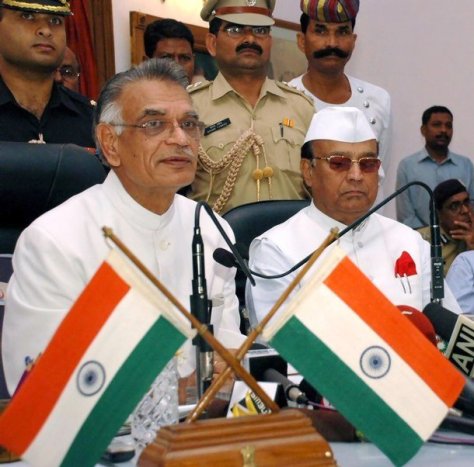
The Governor of Rajasthan Sh. Shivraj Patil’s attitude towards exercising his powers of granting mercy to convicted prisoners is absolutely negative. Article 161 of the Constitution of India confers “on the Governor of a State the right to grant pardons, remissions, reprieves or commute the sentence of any person convicted of any offence against any law relating to a matter to which the executive power of the State extends.” Continue reading Shivraj Patil hath no mercy! Why could he not pardon an old, ailing Ram Kumar?: PUCL

Jagdish Tytler will not attend the Maulana Mohd. Ali Jauhar Award ceremony

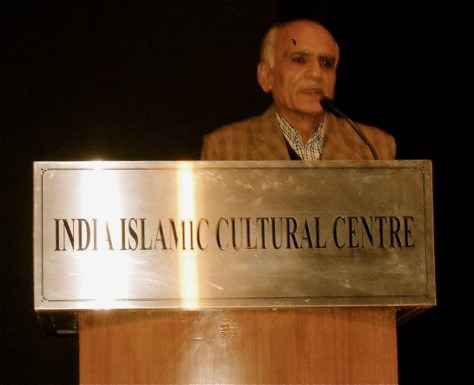
M. Saleem addressing the Maulana Jauhar Award ceremony at IICC in Delhi on 10 December 2011

Update on 11 December:

Twocircles.net reports:

“Zafar Agha was replaced by ex-MP and senior Journalist Santosh Bharatiya. However, M Saleem claimed that Sanjeev Bhatt could not attend the programme due to time constraint and the award may be given to him some other time. While referring to Santosh Bhartiya, being awarded in place of Zafar Agha, M. Saleem said that he has been nominated for the award and nobody has been replaced for the same. The organizer kept totally mum about both Zafar Agha and Jagdish Tytler. ” [Link]

*

On 3 December, an open letter signed by some of us, and posted here on Kafila, had appealed to seven distinguished individuals to not accept the Maulana Mohd. Ali Johar Award, to be given on 10 December at the India Islamic Cultural Centre. We had reasoned that since the eighth awardee was Jagdish Tytler, they should not share an award and a platform with someone accused of organising mass murder of Sikhs in Delhi in 1984.

Yesterday evening, the general secretary of the Maulana Jauhar Academy, M. Saleem, emailed one of the signatories, Mahtab Alam. The email contained a scanned copy of a letter sent by Jagdish Tytler to M Saleem, which said that Tytler would not attend the award ceremony so as to not embarrass the the other awardees and the organisers, because of this boycott campaign. He, however, stressed on his innocence in the 1984 anti-Sikh pogrom, and, notably, did not say that he would not accept the award. He would only not attend the ceremony. M. Saleem has also not announced whether he is withdrawing his decision to give the award to Mr Tytler. For more details on what has transpired in the last few days, please see Mahtab Alam’s article, Beware of the Sarkari Musalmaan.

Given below is the final list of 150 names who signed the original appeal.  Continue reading Jagdish Tytler will not attend the Maulana Mohd. Ali Jauhar Award ceremony

DISSENT, DEBATE, CREATE