
- Share on X (Opens in new window) X
- Print (Opens in new window) Print
- Share on Facebook (Opens in new window) Facebook
- Email a link to a friend (Opens in new window) Email
- Share on Reddit (Opens in new window) Reddit
- Share on LinkedIn (Opens in new window) LinkedIn
- Share on Pinterest (Opens in new window) Pinterest
- Share on Tumblr (Opens in new window) Tumblr
Semester Fever – Is it curable?: Alok Rai
This is a guest post by ALOK RAI. It was first sent to the Indian Express which refused to publish it.
Deepak Pental’s inter-personal skills are, of course, legendary. And this last – his parting shot in Indian Express (28 October) – merely strengthens his already formidable reputation, and ensures that he will be regarded with the customary affection even as he leaves. Thus, not only is the Teachers’ Association compared to a khap panchayat – could this conceivably be a compliment, either to his beloved teachers, or to the khap panchayats? – but an entirely gratuitous insult is directed at college teachers, en bloc. Thus, they are stagnant, distant from research, unlike (!) University professors. This is rich, but Professor Pental can manage his own friends and enemies, and I have no desire to engage with him at this point. However, this is being written in the hope that his successor – whoever he or she may be – would at least like to choose their own battles, and not merely fight inherited ones on the bloodied, toxic battlefield bequeathed to them. And, indeed, by way of doing my citizenly duty to assist the honourable judges of the High Court, who are periodically asked to take a stand on the vexed question of “semesterization”.
Anti-National Thoughts
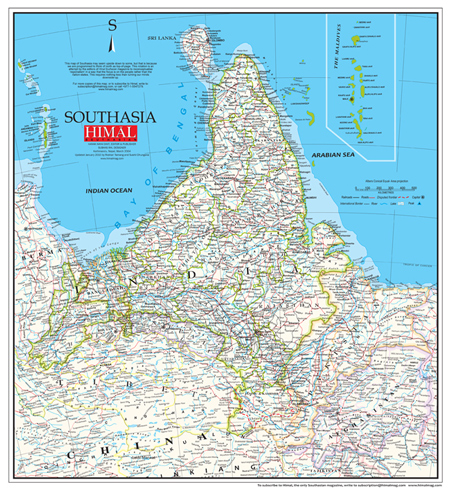
Nation-states have a logic of their own. So insidiously is this logic purveyed through the state’s institutions that it becomes common-sense, particularly among the educated. Perspectives that differ from this common-sense are then easily seen as signs of illiteracy, or more dangerously, treachery.
A woman employed for housework by a Pakistani living for a while in Delhi, could never quite understand where her employer was from. “Bahar se?” she would ask, “Amreeka se?” No, would come the patient reply: from outside, yes, but not from America, from Pakistan. Where is that? ‘Well, you know that “here”, yahan is Bharat? India? Hindustan? I am from vahan, there, Pakistan, another country’. But yet again, the domestic help’s bewildered response – yahan matlab Dilli? Here, meaning Delhi?
Bhagwan Das (1927-2010)
Bhagwan Das (23 April 1927–18 November 2010) legendary Ambedkarite and historian of the dalit movement passed away on 18 November 2010 at the age of 83. Continue reading Bhagwan Das (1927-2010)
Hope you’ve listened to all the Radia tapes?
If you haven’t, you’ve missed out on a lot. These five links lead you to all the phone calls, and you can even download them. This is history. The tapes are revelatory about the corporate media, but more than that, about the corporates. They have come out due to corporate wars. Internecine corporate wars seem to be our only hope for transparency and accountability in this nation. Please listen to every pause in every audio to for a clear insight into what today’s India is. And lament this Manmohan yug, ghor Manmohan yug. Also see Sevanti Ninan’s excellent analysis of the media black-out of the story.
|
Four transcripts that were submitted to the SC along with a total of eight recordings in May 2009 covering the cabinet formation, DMK politics and who’d get telecom portfolio
|
|
The conversations with M.Karunanidhi’s daughter M. Kanimozhi about keeping Dayanidhi Maran out from negotiations with the Congress and to get the telecom portfolio for A. Raja
|
|
In these Radia wants Sanghvi to tell the Congress not to negotiate with Dayanidhi Maran. He tells her that while he has been meeting Rahul and can’t “get into Sonia in the short term” he would “try and get through to Ahmed”
|
|
Recordings of conversations with the likes of Ratan Tata, Ranjan Bhattacharya, Barkha Dutt, Shankar Aiyar, Sunil Arora etc
|
|
The other big ‘national resource’ story involves the virtual who’s who: Ambani V/s Ambani V/s Tata, gas and power sector war involving big name journos, politicians, babus, corporates – this has the largest number of tapes, and perhaps the most important ones.
|
Scavengers: Hilal Mir
Guest post by HILAL MIR
Two monoliths of pro-India politics in Kashmir, Mufti Muhammad Sayeed and Dr Farooq Abdullah, are soaring high in the dark autumn skies of the valley like vultures. Below are the 110 bodies of warm-blooded children, boys, men and a lone woman. From these bodies will they and their offspring derive nourishment because serving a nation of 1 billion people is indeed an uphill task.
The way Madhu Kishwar and Prem Shankar Jha are lobbying for Mufti at every seminar in New Delhi demonstrates Mufti’s silence is really studied. What about Abdullah duo. They are neck deep in muck, which reminds one of those famous lines of Gunnery Sergeant Hartman in Kubrick’s masterpiece Full Metal Jacket—you are the lowest form of life on earth…
Before We Tape Our Mouths Forever…
It’s always better to begin with a caveat. Sets the tone, and prepares readers for what not to expect. I am one of those self-obsessed people who seldom see beyond their existence. I google my name twice a week, and inevitably find other people getting enriched when conversing with me. It’s an achievement if I could rescue their names from these conversations for my memory. So, you can imagine now my level of awareness.
But once in a while something gets my goat and then I start reading about it. One of those things has been the Nira Radia tapes recently. I first saw a mail from a friend in my inbox with the transcripts and links to the audio versions. I read the scripts and followed the audio links. It led me to more links. And soon I found it was all over the virtual world. First it was Nira Radia and Barkha Dutt, then Nira Radia and Vir Sanghvi, then Nira Radia and Ratan Tata, then Nira Radia and A. Raja, then… I don’t know what else is there. I was like what the f*#@? They just kept stumbling out. I thought Amar Singh was the most tapped guy but then I stopped following politics long back. I am told now that these days he doesn’t even make it to the 7th page. Continue reading Before We Tape Our Mouths Forever…
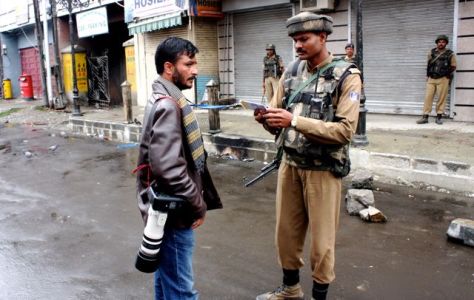
Report #3: Shooting the Messenger in Kashmir
This is the third of a series of fact-finding reports on the recent violence in Kashmir. The fact-finding has been conducted independently by a team of BELA BHATIA,VRINDA GROVER, SUKUMAR MURALIDHARAN and RAVI HEMADRI. For an introduction to this series, see here.
Continue reading Report #3: Shooting the Messenger in Kashmir
“Inside the networks of lobbyists and power brokers that dictate how this country is run”

This is explosive – you’ve heard of Niira Radia’s role in the 2G spectrum scam for months, and also that of two high profile journalists. Now, Open magazine has put out the phone transcripts, and even the audio, for all of us to listen in and know, as they put it, “how this country is run”. Many must have had the tapes with them for some time now, and god knows how many hundreds of hard disks have the CBI papers that made these allegations to begin with. But it takes courage to put this out.
For context, also read this profile of lobbyist Niira Radia, also in Open. Also see this April 2010 post from a media blog.
dissenting dialogues – New Social Justice Magazine on Sri Lanka
dissenting dialogues, a new social justice magazine on Sri Lanka was just launched. The introduction and the list of articles in the first issue are listed below. The entire magazine can also be downloaded
Introducing dissenting dialogues
Debates on the causes and consequences of the 30-year war in Sri Lanka, and its end in May 2009, continue to evoke heated exchanges in some quarters and a disempowered silence in others. A year and a half later, it is time to engage in an open discussion that is truly reflective. While there are both continuities and discontinuities from before, during and after the war, there is clearly a renewed need for dissent and dialogue to broaden and transform the debate. Continue reading dissenting dialogues – New Social Justice Magazine on Sri Lanka
Report #2: Palhallan Under Siege
This is the second of a series of fact-finding reports on the recent violence in Kashmir. The fact-finding has been conducted independently by a team of BELA BHATIA,VRINDA GROVER, SUKUMAR MURALIDHARAN and RAVI HEMADRI. For an introduction to this series, see here, and also see the first report.

Revisiting Obama’s Visit: Suvrat Raju
Guest post by SUVRAT RAJU
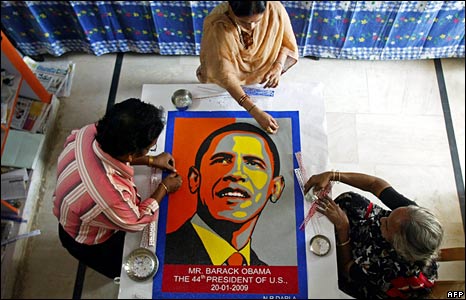
Although the Indian media collectively swooned on President Obama, and breathlessly informed its audience about how many rooms he had booked at various five-star hotels, there was surprisingly little discussion on two key questions. What is Obama’s foreign policy record? Moreover, what impact will his visit have on most Indians?
This Chhath Puja, Ram ke naam: Mahtab Alam
Guest post by MAHTAB ALAM
Last week, after a gap of almost 12 years, when I was asked by my family members to accompany them to see Chhatth Puja, an ancient Hindu festival dedicated to Surya, the Sun God, I could not resist myself and readily agreed to join them. As a school going boy, I had always enjoyed watching the festival and devotees performing the rituals observed for the Puja in my hometown Supaul, a district of Bihar, which borders the Tarai region of Nepal. In the last 12 years, I couldn’t get a chance to do so due to the mobile nature of work I am involved in. The Puja, most elaborately observed in Bihar, Jharkhand and the Terai regions of Nepal in modern times, and those areas where migrants from these regions have a presence. Chhath, usually observed six days after Diwali, was observed on 12 November this year. Continue reading This Chhath Puja, Ram ke naam: Mahtab Alam
Dilemmas of ‘Right of Nations to Military Occupation’: A Response to Rohini Hensman
Dear Rohini,
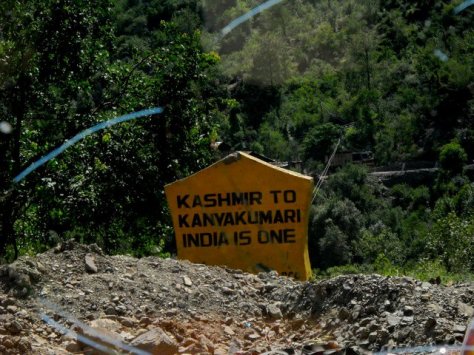
Apologies for taking the liberty of writing a separate post to respond to yours. I am doing so as a separate post not only because this response is rather too long for the comments space, but also because I have been wanting to address the issues you have raised. The issues are not new; I have been hearing them ad nauseaum since 2008, when the Kashmiri demand for independence from India took on a renewed momentum. In your post you bring in various external contexts – such as Rosa Luxemburg and the Sinhala-Tamil conflict. I am grateful that you do so, because it is always useful to learn from history and not repeat history’s mistakes. However, there are other recent histories of conflict and conflict resolution you don’t talk about, but which many Kashmiris are aware of – Kosovo, East Timor, Northern Ireland. Some new countries are being formed as we speak!
Also, there is history and context in Kashmir too, which you don’t go into. Your post talks more about LTTE than about Kashmir. Here, I will try to stick to Kashmir in responding to you.
 Continue reading Dilemmas of ‘Right of Nations to Military Occupation’: A Response to Rohini Hensman
Protesting FTII students write to Ambika Soni
Studnets at the Film and Television Institute of India, Pune, have been protesting against the commercialisation of India’s best known film school. In letters to the Union Information and Broadcasting Minister Ambika Soni, they write:
In the proposal, made by Hewitt at the behest of your ministry for the ‘up-gradation of FTII to international standards’, refers to FTII as a ‘brand’. What this company fails to understand that this ‘brand value’ it refers to has come into being because of the diploma films that the students of the ‘3 year subsidized course’ have made it in the last 50 years. The other ‘self sustained courses’ that exist today (with its self sustainence) exists and has any value, if at all, because of these 3 year diploma courses. Continue reading Protesting FTII students write to Ambika Soni
October 27, 1947: Dakota in my dell: Sameer Bhat
Guest post by SAMEER BHAT
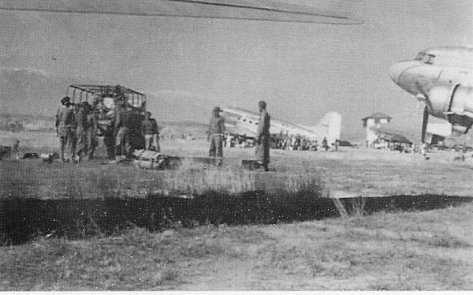
Continue reading October 27, 1947: Dakota in my dell: Sameer Bhat
Report #1: Attack and killing on Pattan hospital premises
This is the first of a series of fact-finding reports on the recent violence in Kashmir. The fact-finding has been conducted independently by a team of BELA BHATIA, VRINDA GROVER, SUKUMAR MURALIDHARAN and RAVI HEMADRI. For a introduction to this series, see here.

Continue reading Report #1: Attack and killing on Pattan hospital premises
Introduction: Fact Finding Team to Kashmir
This post introduces a fact finding team’s work on the recent violence in Kashmir. The contents of the report are being posted as separate posts and will be linked below as and when they’re posted.
Since June this year, the Kashmir valley has been torn by mass protests which have been met with overwhelming force by Indian security forces. Curfews and closures have been frequent, often shading into each other. No less than 111 deaths have been registered, of which a large number have been of students and youth in the age group of 8 to 25 years. There have besides, been hundreds of cases of injuries, of both protesters and those who just happened to be at the wrong place at the wrong time. An independent fact-finding team went to the Kashmir valley at the end of October to go into the totality of the situation, principally to inquire into the causes for the unconscionably large number of deaths that have occurred in the current phase of mass agitation. The team comprised of academic BELA BHATIA, advocate VRINDA GROVER, journalist SUKUMAR MURALIDHARAN and activist RAVI HEMADRI of The Other Media, a Delhi based campaign and advocacy organisation, at whose initiative the effort was organised. Each member of the team spent varying lengths of time in the valley, but in total, roughly about twenty-five person days were put in the fact-finding exercise. In groups or individually, the team met the families of almost 40 persons who had been killed since the beginning of the civil unrest. Several individuals who had suffered serious injuries were also met. The team worked out of the state capital of Srinagar, and visited villages and towns in five of the Kashmir valley’s ten districts: Baramulla in the north (Sopore and Baramulla tehsils); Anantnag (Bijbehara and Anantnag tehsils) and Pulwama (Pulwama tehsil) in the south; Badgam in the west (Chadura and Badgam tehsils) and Srinagar itself. Separate sessions were held with journalists and media practitioners, university teachers and students, doctors, lawyers and activists besides officials in the police headquarters and the civil administration. The findings of the team are being released in a series of short reports beginning with following two sections. Forthcoming reports will deal with various facets of the situation that civilians in the Kashmir valley face in a season of unabated turmoil.
Next in this series
Report #1: Attack and Killing on Pattan Hospital Premises
Report #2: Palhallan Under Siege
Report #3: Shooting the Messenger in Kashmir
The Hidden Arm – Criminals for Hindutva?
I.
Anyone ever heard about Sudhakar Rao Maratha alias Sudhakar Rao Prabhune ? A hardcore rightwing criminal who was nabbed by the M.P. police few months back in Jhansi which seized a car, a revolver and five cartridges from him. In fact one of Sudhakar’s colleague Shivam Dhakad was already under the custody of Ujjain police when Sudhakar was apprehended. According to the senior police officers Sudhakar Rao was in touch with RSS Pracharak -Terrorist Sunil Joshi, who was shot dead in Dewas in 2007 under mysterious circumstances.
Hardcore right-wing criminal Sudhakar Prabhune alias Sudhakar Rao Maratha, who could throw light on the mysterious murder of RSS pracharak Sunil Joshi, has been arrested in Madhya Pradesh. The 26-year-old was wanted in connection with a string of murders of Muslims in Ratlam and Mandsaur. The state police claimed he was arrested on Tuesday from Bilkhiria when he was on way to Bhopal from Sagar. …
Rao took to crime when he was 19. His name cropped in the murder of Jafar Khan, who was shot dead in Chittorgarh. ’ (Right-wing criminal’ held, to be questioned in Joshi murder case, Indian Express, Posted: Thu Sep 30 2010, 02:50 hrs Bhopal)
Dilemmas of ‘Right of Nations to Self Determination’: Rohini Hensman
Guest post by ROHINI HENSMAN
The hectic discussion over the Kashmir meeting in Delhi in October entitled ‘Azadi – The Only Way’ has made it urgent to revisit the debate between Lenin and Luxemburg on the right of nations to self-determination. Lenin, starting from his experience in imperialist Russia, insisted on the right of nations like the Ukraine to self-determination (in the sense of their right to form separate states), contending that denial of this right would merely strengthen Great Russian nationalism. In a colonial situation, Lenin was surely right. When a country is under foreign occupation, all sections other than a very small number of collaborators want to be free of the occupiers, even if there are sharp differences between these sections. A striking example is RAWA (the Revolutionary Association of the Women of Afghanistan) which, despite speaking for a section of the population which is sorely oppressed by the Taliban, and continuing to fight against it, nonetheless shares with the latter the goal of ending the occupation by US and NATO forces. In such situations, the right of an occupied nation to self-determination makes sense.
Continue reading Dilemmas of ‘Right of Nations to Self Determination’: Rohini Hensman
Remembering Balagopal – Thought, Action and the Moral Imagination of Human Rights: Arvind Narrain
Guest post by ARVIND NARRAIN, based on a talk given at the Kannada book release of Inner Voice of Another India: The Writings of Balagopal, at National College Basavangudi, Bangalore, 30 October, 2010
Remembering Balagopal: Thought, Action and the Moral Imagination of Human Rights [i]
Introduction
One year after Balagopal’s death, what remains with us are memories of the number of times he spoke with such eloquence on human rights issues on his numerous visits to Bangalore. We also go back to his writings in the EPW which show the clarity of his thought. Be it his speeches or his writings , it was clear that for Balagopal words were tools he used to express thought. Language for him was not something which served to obfsucate meaning and muddy concepts, but rather a tool which had to be used to clarify difficult ideas and cut through conceptual confusions. In George Orwell’s striking phrase, both his writing and his speeches had the clarity of a windowpane. Continue reading Remembering Balagopal – Thought, Action and the Moral Imagination of Human Rights: Arvind Narrain
 KAFILA - COLLECTIVE EXPLORATIONS SINCE 2006