
Release Piyush Sethia Manush! Coalition for Environmental Justice – India


Piyush-k0hB--621x414@LiveMint

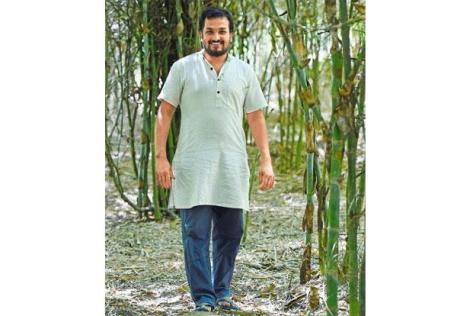
Piyush Sethia (Manush) (Image courtesy LiveMint)

Coalition for Environmental Justice – India has issued this statement:

We write as concerned citizens and environmental justice activists in support of Piyush Sethia of Salem, Tamil Nadu who has been arrested, denied bail and beaten  inside Salem Central prison. Piyush is a noted environmental activist of Salem Citizen’s Forum (SCF). He has been booked under IPC  sections 341,188, 353 and 506 (2).

On 8.07.2016, when Piyush and other members of SCF were protesting against the railway authorities for starting the construction work of Mulvadi gate over-bridge in Salem without giving prior notice to the people in the area and without laying an alternate road, police arrested Piyush and two other activists, Eesan Karthik and Muthu of SCF.

On 14.07.2016, the Salem Magistrate’s court dismissed Piyush’s bail application while granting conditional bail to the other two activists. Piyush has been kept in solitary confinement since the day of his arrest. And as per Piyush’s wife and his lawyer, Piyush is being subjected to physical and mental harassment and not allowed  to receive reading material or allowed to speak to his wife and other supporters freely. Infact, some of the supporters in Salem are being intimidated and threatened via phone calls to isolate Piyush. According to Piyush’s lawyer, Piyush was beaten ‘for a good half an hour before they sent him to solitary confinement’. Yesterday Piyush informed his lawyer that ‘he was abused by a group of unknown persons numbering nearly 30 inside the prison several times’. We are shocked at this high-handedness of prison authorities and custodial assault on Piyush.

Piyush has done commendable work in the field of Environmental Protection and Climate Change mitigation. We would like to bring to your notice some of them:

1. He leads Salem Citizens Forum to revive many water bodies in Salem city like Mukaneri, Ammapettai eri Kundukkal eri, Ismailkhan eri, Arisipalayam Theppakulam and Pallappatti well.

2. He has created a co-operative forest in Dharmpuri extending upto 150 acres, with the support of his friends and well wishers. This mountain forest acts as a water catchment area for Ettimarathupatti Canal which supplies irrigation water to 17 villages in the vicinity.

3. He has led many citizens’ initiative to protect the natural resources of Salem and its surrounding areas. He has also initiated many green and sustainable livelihood projects and protected the Salem, Yercaud and Hoggenekkal Dam areas from environmental damage.

4. In the recent floods of Chennai and Cuddalore, Piyush and members of SCF, Nizhal and Dharmapuri People’s Forum mobilized 35 containers of relief material and tirelessly worked to reach the materials in time. This won Piyush a CNN-IBN award recently. He was also named as one of the advisors of Nilam, Neer, Neethi (Land, Water, Justice) initiative of Ananda Vikatan group which was kicked off following the floods to protect water bodies in Tamil Nadu.

We demand:

Immediate release of Piyush and all charges foisted against him and other activists be withdrawn forthwith.

Sign the petition for the release of Piyush Manush 

Bangalore Police Revoke Permission for Protest on Kashmir: Greeshma Aruna Rai

Guest Post by Greeshma Aruna Rai, with Women against Sexual Violence and State Repression (WSS), Peoples’ Union for Civil Liberties (PUCL) & Karnataka for Kashmir Forum.
Police has revoked the permission which they had given yesterday to hold a democratic protest in solidarity with Kashmiris in Bangalore by concerned citizens and activists. This is another way in which the State shows its true colours to all Indian citizens who are against State repression and State colonialism in Kashmir.
Permission for today’s protest condemning atrocities on the people of Kashmir has been revoked by the Karnataka State Police. They have threatened us with legal action if we proceed.

As organisers we have been bombarded by the police, demanding that we withdraw this demonstration.

As we publish this message, the 11th day of curfew continues and valley remains awash with the blood of Kashmiris.
Today’s protest is postponed. We, however, refuse to be stifled by the very same state that is ravaging Kashmir. We have resolved to move against the actions of the Police. We’ll be releasing a Press Note shortly while discussing other options to challenge this.

[ Shortly after this post was uploaded, the organizers of the protest held a press conference where they released the following statement.]

Continue reading Bangalore Police Revoke Permission for Protest on Kashmir: Greeshma Aruna Rai

Statement On the Unfolding Situation in Kashmir : NSI Delhi Chapter

Guest Post by New Socialist Initiative, Delhi Chapter

The valley of Kashmir is on the boil again. Forsaking the so-called normal routines of their lives, people are on the streets. Not just young men, but even children and women are out, challenging the military might of the Indian state. Any fear of the police and army appears to have been discarded. Police stations and even CRPF camps have been attacked. A popular upsurge, it is energised by mass fury. Forty people have lost their lives in one week at the hands of the Indian security establishment. Hundreds of others have suffered serious eye and other injuries from presumedly ‘non-lethal’ pellets used by the police. While people are out confronting the police, para-military and army, the other organs of the Indian state in Kashmir, the elected government and its bureaucracy, elected members of the legislature, panchayats, etc. are in a rathole, fearing public appearance. It is just the people of Kashmir valley versus the institutions of organised violence of the Indian state.

While the immediate cause of popular anger is the killing of Hizbul Mujahideen militant Burhan Wani, reasons for this anger go much deeper and have a longer history. The stifling and repression of the Kashmiri people’s right to self-determination stands at the root of this conflict. This repression has taken on extreme violent forms. For twenty five years now, the Kashmir valley has been among the most militarised places in the world. More than half a million troops of Indian army and para-military forces have been stationed in the state and its border with Pakistan. Rashtriya Rifles and CRPF camps dot the land scape. Highway checkpoints and random searches are part of everyday life. Thousands of men have disappeared, been picked up by security forces, thrown in the black hole of interrogation camps, often ending up in unmarked graves. The hated AFSPA gives Indian security forces legal cover to assault basic rights of Kashmiris to live a life of elementary dignity. If an average valley resident is alienated from the normal practices of the Indian state such as elections and its administrative initiatives, s/he harbours deep resentment against the presence of Indian security forces in their homeland. This resentment has erupted in mass protests again and again.

Continue reading Statement On the Unfolding Situation in Kashmir : NSI Delhi Chapter

Kolkata Rally against Killings & Mayhem in Kashmir: Dwaipayan Banerjee

Guest Post by Dwaipayan Banerjee

Close to five hundred people came out in a rally yesterday, 15th July, to protest the ongoing killings and mayhem in Kashmir by the Indian State. The overwhelming majority of participants were students, but they were joined in good numbers by feminists, queer-activists, trade union activists, writers, journalists, academics, human rights activists, dalit rights activists, cultural activists, with many among them not affiliated with any organisation. Student and youth activists carrying flags and placards of PDSF (Progressive Democratic Student Federation), USDF ( United Students Democratic Front), AISA (All India Students’ Association), Progressive Youth League (PYL) and many from other student-youth organisations were present in good numbers, so were human rights activists from APDR (Association for Protection of Democratic Rights) and those from Bastar Solidarity Network (BSN). Many carried with them their own banners and posters. Like the rally in Delhi, protesters carried with them hand-written, hand-painted and printed placards with the names of civilians recently killed in Kashmir inscribed on it, and through those posters a connection of shared pain and solidarity flowed from the streets of Kolkata to the turbulent and stormy blood-stained streets in Kashmir. Those posters were reaching out to the people of Kashmir with messages that they were not alone in their hour of sorrow, anguish and mourning. Some of the protesters had written verses by the Kashmiri poet Agha Shahid Ali on their posters. One of those many posters summed up the mood of the rally, ‘Kashmir belongs to Kashmiris’.


[ Video by Peoples’ Camera]

Continue reading Kolkata Rally against Killings & Mayhem in Kashmir: Dwaipayan Banerjee

Uniform Civil Code – Once again, where is gender justice?

This article appeared in The Hindu today

For nearly eight decades, the women’s movement has discussed and debated the desirability and feasibility of a Uniform Civil Code (UCC), and has ended up posing a simple question – what is the value of uniformity? Is it for the “integrity of the nation” that uniformity in laws is required, as some judicial pronouncements have suggested?  If so, who exactly is the beneficiary? Which sections of people benefit from “integrity of the nation”, that abstract entity which is not exactly at the top of your mind as your husband throws you out on the street?

Or are uniform laws meant to ensure justice for women in marriage and inheritance?

In that case, a UCC would simply put together the best gender just practices from all Personal Laws. So yes, polygamy and arbitrary divorce would be outlawed (a feature derived from Hindu Personal Law). But conversely, as feminist legal activist Flavia Agnes has often pointed out, a UCC would require the abolition of the Hindu Undivided Family, a legal institution that gives tax benefits only to Hindus, and all citizens of India would have to be governed by the largely gender-just Indian Succession Act, 1925, currently applicable only to Christians and Parsis.

Muslim Personal Law is already modern in this sense, since it has since the 1930s, enshrined individual rights to property, unlike Hindu law, in which the family’s natural condition is assumed to be “joint”. In the decades of the 1930s and 1940s, contrary to later discourses about Muslim law being backward, it was Hindu laws that were considered “backward” and needing to be brought into the modern world of individual property rights. Continue reading Uniform Civil Code – Once again, where is gender justice?

Kashmir – A lost battle: Amya

Guest Post by AMYA

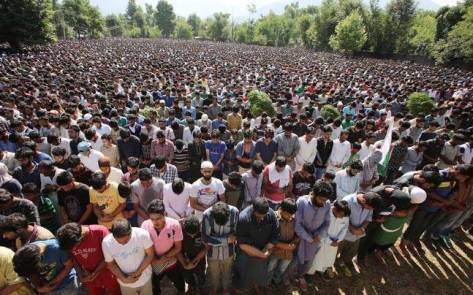
What’s happening in Kashmir? Why are the people living in the valley so angry? Why are they mourning at the death of a militant? What is giving them so much courage to shout slogans against the Indian state, even at the cost of their lives? Why do they assemble in large numbers at the funeral processions of the men killed in conflict?

As an Indian have you ever thought about these questions? Have you ever wondered that there must be something seriously turbulent in their reality that they are so resentful? Or, like the majority, you find yourself defending the unity of the country and calling the people living in Kashmir “traitors” or “anti-India.” If each and every person assembled in the funeral processions is a traitor then the best solution for the state is to kill all of them, stay happy with that piece of land and preserve the Indian unity. Has Indian nationalism become so narrow? We are the supposed carriers of the legacy of nationalism that Tagore had envisioned. But it’s now getting distorted into a revengeful and inhuman nationalism. We have lived the ‘unity in diversity’ phenomenon by being accommodative towards different communities. Why are we then so intolerant towards the people of Kashmir? Just because it is a matter of honour and pride for us to possess the land of Kashmir and further to prove our might, we keep eliminating any dissenting voice?

Continue reading Kashmir – A lost battle: Amya

The ‘Congress Question’ in the CPI(M) and the Problem of Historical Relevance

The CPI(M) is currently being rocked by an internal ‘debate’ over what has emerged, to put it in somewhat old-style communist speak, the ‘Congress Question’. I put the word ‘debate’ in quotation marks because, there is a touch of innocence to the way positions in support of a possible alliance with the Congress are being expounded by respected, senior intellectuals like Irfan and Sayera Habib in their letter to the party politbureau or Badri Raina in his article in a leading newspaper. These statements follow the dramatic exit of another widely respected Central Committee (CC) member, Jagmati Sangwan, from the party for precisely the opposite reason – of the CC going soft on the Bengal CPM for having gone against the commonly arrived at understanding in allying with the Congress. There is undoubtedly a potential debate here but since the common reference point in both – the Habibs’ letter as well as in Raina’s article – happens to be the recent election in West Bengal, one cannot help feeling that it is either a  ‘debate’ over a non-problem or is, at best, a question badly posed.

I say this for two reasons. First, the West Bengal CPI(M) [henceforth CPM-WB] is not really fighting any principled battle – all its exertions in West Bengal, contra Irfan and Sayera Habib, are directed, not against the proto-fascist Modi regime but against the Trinamool Congress whose local party apparatus is substantially what it has inherited from the CPM-WB itself. In the present context of West Bengal, what is urgently required is a different Left platform (with different faces that speak a different language) that can take the place vacated by the CPM-WB. In the absence of any such alternative, nothing can prevent the BJP from emerging as the main opposition party – and if that happens, that will be the end of any kind of Left politics for a very long time to come. A ramshackle CPM-Congress alliance as the opposition to the TMC is the surest way of making the Left (even in name) irrelevant in the state’s politics. The CPM-WB’s desire for an alliance with the Congress is motivated not by the need to defeat the Modi regime’s incursions but rather to return to power any which way. This seemed such a distant dream before the elections that the latter was prepared to go into an alliance with the Congress and entertain the possibility of a joint Congress-CPM-WB ministry, even as junior partner, were electoral fortunes to be reversed by the coming into being of the alliance. Thankfully, this possibility seems ever so remote now, following the election results, despite the alliance that we need not worry about it anymore. Continue reading The ‘Congress Question’ in the CPI(M) and the Problem of Historical Relevance

Hindu Nationalists and California’s History Curriculum: Pepper Chongh

Guest Post by PEPPER CHONGH

Gayatri Chakravorty Spivak once asked us to consider that the histories of people at the margins are constantly in competition with dominant histories– that when a marginal woman speaks in dissent, the narratives of more powerful social groups can silence or supplant others.[1] This concept is at the heart of controversies around the revision of history textbooks throughout the world. It’s at the heart of the current debates on South Asian history in the California public school curriculum, up for revision this year.

In 2005-6, U.S. wings of Hindu nationalist groups named together as the Sangh Parivar[2] (the Sangh) attempted to insert changes into California’s 6th grade history textbooks. Rewriting history is one of the Sangh’s political projects toward the realization of a Hindu nation, where upper-caste Hindus dominate and benefit from all aspects of society to the exclusion and subordination of all other groups. The 2005-6 effort follows another in India in 2002-2003, when the successful insertion of Hindu nationalist histories into Indian textbooks resulted in a protest walkout by education ministers from 16 states and a scholar-led suit filed before India’s Supreme Court to block the new textbooks. In 2006, South Asian scholars and minority and other progressive activists defeated the U.S. Sangh in a public clash.[3] The California State Board of Education (SBE) rejected most of the Sangh’s edits, leading the Sangh to file two lawsuits against the SBE, both of which lost on claims of discrimination against Hindus. Continue reading Hindu Nationalists and California’s History Curriculum: Pepper Chongh

Statement on Kashmir from concerned individuals

STATEMENT FROM CONCERNED INDIVIDUALS

We the undersigned, express our grave concern regarding the current state of affairs in Kashmir. The disproportionate use of state violence on unarmed protesters in Kashmir reflects severe human rights violations. Setting aside the paramount concerns in terms of continuous interventions in the normal lives of the people, the alarming loss of civilian lives and reports of serious injuries, including blinding from pellet wounds are deeply disturbing.

Attacking hospitals, ambulances, stopping funeral processions and even burning down residential buildings cannot be the response of a democratic nation. The attack on civilians and the ethical implications this has on our armed forces are not justifiable. Images of police, army and task force brutalities against women, children and youth are spreading across the social media. At the same time, partial and prejudiced reports on television and print are becoming the basis for racism, regionalism and religious intolerance among people who are not afraid to bully Kashmiris and other minorities.

We appeal to our government to consider the state of affairs in Kashmir democratically, prioritizing the right of Kashmiri citizens to normal lives. Continue reading Statement on Kashmir from concerned individuals

Citizens’ Protest in Delhi Against Killings of Kashmiris by the Indian State

Several hundred people from all walks of life (Civil Rights Activists, Labour Activists,  Peace Activists, Feminists, Queer Activists, Advocates, Students, Workers, Artists, Writers, Academics, Filmmakers,Independent Left Activists, and unaffiliated individuals across generations, from Jammu & Kashmir, from Delhi, and from other parts of India) gathered this afternoon (July 13, 2016) for a silent protest march and meeting at Jantar Mantar, to protest against the last three days of brutal assault by police, paramilitaries and armed forces in the Kashmir valley that have left 35 dead, several blinded (especially due to the indiscrimnate use of pellet guns) and scores of people critically injured over the last three days.

The protestors at Jantar Mantar wore black bands, and carried signs condemning the state’s violence. The protestors carried signs with the names of each of the thirty six individuals who have been identified as having died over the last three days. Each sign identified a deceased person by name, the town or village they were from, and asserted that they “will not be forgotten“. In this way, this corner of India’s capital bore witness to each person, man, woman or child killed by the Indian state since troops began firing into protests that began to mourn the extra-judicial assassination of Burhan Wani three days ago.

This slideshow requires JavaScript.

Continue reading Citizens’ Protest in Delhi Against Killings of Kashmiris by the Indian State

Terms of Endearment – Kashmir and the Possessive Cartography of the Indian Nation-State: Jhuma Sen

Guest Post by JHUMA SEN

Kashmir – the average Facebook trotting, Twitter wielding, middle-class Indian will assert – is an inalienable, inseparable part of Bharat Mata, the anthropomorphic representation of cartographic territorial sovereignty of India. Atoot Ang or inseparable organ. Yeh Fevicol ka majboot jod hai, tutega nahin.

The adhesive in this case is a deadly cocktail of an occupying power periodically using the spectacle of a ritualistic and performative violence to discipline and punish the colony, brutalizing every peaceful protest, responding to stone pelters with bullets, and prisoners with execution, to satiate some imagined collective conscience that sleeps like a baby when a three-year old is shot with his father, a ‘former terrorist’. But Kashmir belongs to India, in the same way Kiran belongs to Rahul in the famed Bollywood film of 1998, Darr: A Violent Love Story, the Wikipedia page of which describe it as a ‘romantic psychological thriller’. [i] The film traces the ‘romantic’ obsession of Rahul (Shah Rukh Khan) with Kiran (Juhi Chawla)—the serenading Rahul, the stalker Rahul, the fragile male ego Rahul, the violent Rahul, the abductor Rahul, the killer Rahul and a traumatized Kiran simply wanting to be left alone and desiring freedom from the wretchedness of Rahul’s ‘love’–Tu Haan Kar Ya Na Kar, Tu Hai Meri Kiran (Whether you agree to it or not, Kiran, you are mine’). The relationship between Rahul and Kiran (or for that matter any violent and delusional relationship) mirrors the relationship between the Indian State and Kashmir—the desire to control and the desire to be free. Continue reading Terms of Endearment – Kashmir and the Possessive Cartography of the Indian Nation-State: Jhuma Sen

Citizens’ Statement On Kashmir

Kashmir – Cry my beloved country: Gautam Navlakha

Guest Post by GAUTAM NAVLAKHA

burhan-wani-story_647_070916051953Image courtesy India Today

Burhan Muzaffar Wani and his comrades were born and died in the phase of militancy in Jammu and Kashmir that symbolizes the watershed in politics in J&K; pre and post ‘89-90. Unlike in the past, indigenous militants now neither travel to Pakistan for guns or for arms training. Armed resistance and its indigenous roots are etched on the faces of these young men.  Burhan’s killing on July 8 and following that, the turnout at his funeral as well as the protests that broke throughout the  state have rekindled memories of the early 90s, especially the death of Ashfaq Majid in 1990, which too had seen mass outpouring of rage.  Burhan and his comrades knew they would not survive for long; seven years is the average life span of a militant in Kashmir, as Burhan’s father poignantly stated long before his death.  Not because that was their own choice, but it was the only choice offered to a people by a ruthless military suppression by a state that has refused to recognize the popular demand for right of self determination.

Indians remain ignorant of the depth of the passion for ‘Azaadi’ from forced union with India, a union imposed in myriad ways. The policy of land grabbing to settle ex servicemen from outside the state (an old project of RSS); allowing non-state subjects unhindered access to land for industry, real estate, mining, for setting up fortified colonies for migrants; where control of the state government, especially Kashmir based ruling parties, over administration has always been circumscribed by New Delhi; and financial dependence  compounded by autonomy of the military from the purview of representative government – all of these point to the fact that the reins of government are held in New Delhi. Continue reading Kashmir – Cry my beloved country: Gautam Navlakha

The Killings in Kashmir: Kavita Krishnan

Guest Post by KAVITA KRISHNAN

An appeal to the conscience of every Indian citizen – to tune down the shrill media noise for a bit, take a step back from the easy, packaged ‘discourse’ being dished out, and ask try and ask ourselves some uncomfortable but necessary questions. 

I am being asked by various persons in the media to comment on my apparently ‘controversial’ and ‘shocking’ claim that Burhan Wani’s killing was extra-judicial’ and must be probed. Let me begin with a few remarks about this issue.

For most Kashmiris, it may not matter all that much whether or not Burhan Wani was killed in a ‘fake’ encounter or a ‘genuine’ one. What matters is that the Indian State killed him – just as it has killed and is killing so many other Kashmiri youngsters. Their grief, their rage, does not depend on the authenticity or otherwise of the encounter. They have no expectations of due process or of justice from the Indian State. It it civil liberties activists who – in what sometimes feels like an exhausting, futile exercise – demand that due process be followed, that the mandates of the Indian Constitution be respected, that the armed forces in conflict areas be held accountable.

Continue reading The Killings in Kashmir: Kavita Krishnan

Kashmir Burns, Again

A hundred and twelve lives, most of them young, some very young, were lost in Kashmir when the army, paramilitaries and police forces opened fire on several occasions from June to September in 2010. That was only six years ago. The latest reports indicate that around twenty three lives have already been lost in the last two days alone, in the aftermath of state troopers, soldiers and paramilitaries firing at funeral protests, after Burhan Wani, a twenty two year old insurgent, who had acquired the aura of a folk hero in Kashmir, was killed in an ‘encounter’, along with two of his associates, on Friday morning in a village in Kokernag.

Several more people have sustained serious injuries. The body count is likely to rise. Curfews have returned, phone and internet links are suspended, but nothing seems to keep people from spilling out onto the streets, and unlike previous instances, the communications ban seems to be unworkable. No one can pretend that Kashmir is not in crisis, again, today.

The people in power, at the state and the centre, were different in 2010. Omar Abdullah, then chief minister of Jammu and Kashmir, was offering mealy mouthed rationalizations for killing kids then, while Mehbooba Mufti, was weeping crocodile tears. It is the other way round right now. Omar is being ‘sensitive’, Mehbooba, who the roll of the dice has placed in the position of chief minister now, is ’sullenly’ presiding over a badly timed by-election victory. Prime Minister Manmohan Singh was silent then, Prime Minister Narendra Modi is playing percussion instruments in Africa now. If Nero played the harp while Rome burnt, Modi beats drums while Kashmir goes up in flames.

Continue reading Kashmir Burns, Again

How Background Works – Reflections on NLS Socio-Economic ‘Census’ 2015-16: Chirayu Jain

Guest post by CHIRAYU JAIN

Last year I carried out a study to record background and performance data of all students at NLS. Managing to get 97.9% compliance, the data helped in preparing the report “The Elusive Island of Excellence”, which provides a microanalysis of the institution touted as the country’s best law school, and answers two broad questions: who is likely to get admitted to NLS, and how much does background influence one’s performance within NLS? This article details why this year-long study was conducted, reflections on certain key findings and insights received from academics and scholars hypothesizing probable reasons for the outcomes of the report.

When the final figures of the Census were tabulated, the dearth of Muslims or the financial affluence of the under-graduate students at NLS came as no surprise. But what was shocking was the magnitude. Muslims form not even 1% of the student body and with average family incomes being higher than Rs. 20 lakhs per annum- majority of the NLS students come from top one percentile of the country! Not a single student who declared their caste as scheduled caste/tribe was admitted through general category, and Brahmins continue to be disproportionately dominate the numbers by forming more than a quarter of the student body. Likewise, 77.8% of the students came from families where even their grandparents had gone to college, while 26% are those with even longer history of graduates in their families.

Continue reading How Background Works – Reflections on NLS Socio-Economic ‘Census’ 2015-16: Chirayu Jain

Kashmir Under a State of Emergency: JKCCS

Guest Post by JKCCS : Jammu & Kashmir Coalition for Civil Society

Since the extra-judicial execution of Commander Burhan Wani and two other members of Hizbul Mujahideen, Indian armed forces and Jammu and Kashmir Police have used excessive force to thwart the mourners from protesting and participating in the funeral processions of the slain militants. So far, around 17 civilians have been killed in Islamabad, Kulgam, Shopian and Pulwama districts, while as more than 350 people have been injured from across all districts of the Kashmir valley. There are reports that CRPF and Police have been involved in the destruction of movable and immovable properties. Curfew has been strictly imposed in all districts of Kashmir, but people are defying the curfew at various places.

It is shocking and painful that Indian armed forces have yet again unleashed terror on the mourners and protesters, resulting in massive civilian casualties. The police and armed forces appear to have free hand to kill, injure, torture and destroy property. The government of India and Jammu and Kashmir lack the will to institute a crowd control policy, which can ensure no or minimized civilian casualties. On the one hand armed forces are preventing the injured to be ferried to hospitals, at the same time senior police officials without any credible investigations have begun to accuse the dead and the injured for their own bloodshed. Additional Director General of Police, S.M. Sahai, yesterday in the press conference accused the protestors of looting the weaponry from the Police Station Damhal Hanjipora and then for using it against the police men. Government should reveal the names of those police personnel who were injured by the firearm used by the civilians and where are they being treated; otherwise Mr. Sahai claim is part of the regular government psy-ops. Continue reading Kashmir Under a State of Emergency: JKCCS

[Kafila Audio] Dilli Tha Jiska Naam: Recollections of a Forgotten City

Last week I caught up with Shubhum Mishra, a cartographer/geographer/urban planner, in Sundar Nursery – a Mughal garden turned  colonial green house spanning 70 acres in the heart of Delhi – that shall should be open to the public sometime next year.

Shubhum has just transliterated Intizar Husain’s famous book – Dilli Tha Jiska Naam – from the original Urdu/farsi script to devnagari, in the hope of making this incredible resource more accessible to north Indian readers. In this conversation he reads excerpts from the book and I asked him why modern Indian cities are so spectacularly ugly.

Listen in for a fascinating description of Chandini Chowk and “Old Delhi” – back from when “Old Delhi” was the only Delhi around.  Shubhum will respond to comments on the site. His book is now available in most book stores around the city and you can buy it here


Moral Police-Police!


The Kerala police has once more revealed how utterly unreconstructed it is since colonial times, in their brutal attack on transgender people in the city of Kochi. Stuck in 19th century Victorian morality on the one hand, and in the unabashed sense of power that only colonial authority can bequeath, these policemen thought it perfectly alright to use violence to correct what they perceive as a ‘moral problem’, sex work and that too, by transgendered persons. Continue reading Moral Police-Police!

पवित्र किताब की छाया में आकार लेता जनतंत्र

भारतीय लोकतंत्र: दशा और दिशा को लेकर चन्द बातें

Never Be Deceived That the Rich Will Permit You To Vote Away Their Wealth
– Lucy Parsons


..लोग सोच रहे हैं कि आखिर जनतंत्र हर ओर दक्षिणपंथी हवाओें के लिए रास्ता सुगम कैसे कर रहा है, अगर वह ‘युनाईटेड किंगडम इंडिपेण्डस पार्टी’ के नाम से ब्रिटन में मौजूद है तो मरीन ला पेन के तौर पर फ्रांस में अस्तित्व में है तो नोर्बर्ट होफेर और फ्रीडम पार्टी के नाम से आस्टिया में सक्रिय है तो अमेरिका में उसे डोनाल्ड ट्रम्प के नाम से पहचाना जा रहा है। वैसे इन दिनों सबसे अधिक सूर्खियों में ब्रिटेन है, जिसने पश्चिमी जनतंत्र के संकट को उजागर किया है।

ब्रिटेन को यूरोपीयन यूनियन का हिस्सा बने रहना चाहिए या नहीं इसे लेकर जो जनमतसंग्रह हुआ, जिसमें सभी यही कयास लगा रहे थे कि ब्रिटेन को ‘अलग हो जाना चाहिए’ ऐसा माननेवालों को शिकस्त मिलेगी, मगर उसमें उलटफेर दिखाई दिया है; वही लोग जीत गए हैं। और इस बात को नहीं भुला जा सकता कि जो कुछ हो हुआ है उसमें प्रक्रिया के तौर पर गैरजनतांत्रिक कुछ भी नहीं है। दक्षिणपंथ के झण्डाबरदारों ने ऐसे चुनावों में लोगों को अपने पक्ष में वोट डालने के लिए प्रेरित किया है, जो पारदर्शी थे, जिनके संचालन पर कोई सवाल नहीं उठे हैं।

( For full text of the article click here : https://sabrangindia.in/article/pvitra-kitab-ki-chaaya-mein-aakar-leta-hai-jantanta)


सी पी एम के भीतर जनतांत्रिक विरोध के अधिकार का प्रश्न – जगमती सांगवान के बहाने

सी पी एम या भारतीय कम्युनिस्ट पार्टी (मार्क्सवादी) पिछले दिनों अपनी एक सदस्य की वजह से खबर में रही. अनुशासनहीनता के कारण जगमती सांगवान को पार्टी से निकालने का निर्णय किया गया,ऐसी सूचना उसके वक्तव्य में दी गई है. जगमती पार्टी की केन्द्रीय समिति की सदस्य थीं.

जगमती सांगवान को पार्टी से निकाला बाद में गया, केन्द्रीय समिति की बैठक के दौरान ही पहले वे बाहर निकल आई थीं और प्रेसवालों के सामने पार्टी छोड़ने का ऐलान कर दिया था.लेकिन कम्युनिस्ट पार्टी में ही नहीं,किसी भी पार्टी में शायद ही किसी सदस्य को खुद पार्टी से अलग होने का गौरव लेने दिया जाता रहा हो! यह फैसला पार्टी ही कर सकती है कि सदस्य का रिश्ता पार्टी से कैसा और कितना लंबा होगा.इसलिए कम से कम इस आधार पर सी पी एम की आलोचना करने के पहले पार्टियों के तंत्र की आलोचना करने की आवश्यकता होगी. Continue reading सी पी एम के भीतर जनतांत्रिक विरोध के अधिकार का प्रश्न – जगमती सांगवान के बहाने

DISSENT, DEBATE, CREATE