Guest post by VIVEK ASRI
Tag Archives: Ayodhya
Letter to a Departed Mother About our Times: Vani Subramanian
Guest post by VANI SUBRAMANIAN
21 January 2024
My dearest Amma,
I’m relieved that you aren’t around these days. But I miss the sort of discussions we would have had if you were. Hence this letter, this sort of talking to you, this helpless and possibly meaningless, speaking into the ether because some things must just be said, remembered, felt, resisted, and held on to, even if everything around is telling you to move on, to get into the spirit of things and join the festivities, as it were.
I remember your reaction when you first saw my documentary film, Ayodhya Gatha. ‘Did you have to make our arguments about religion so public? If you get any recognition for this film, remember it’s thanks to me – like all your debating prizes!’ you said, loud enough for all to hear, both embarrassed and proud at the same time. We had a good laugh and a hug together. But in truth, over the years, religion was a topic on which we went from heated, impassioned arguments to considered, more careful discussions. You, tip toeing around my atheism (and asserting that deep down inside I was a believer) and me trying to be sensitive around your faith, even as we talked a lot about everything that’s been happening over the last four decades in the name of that religion.
Continue reading Letter to a Departed Mother About our Times: Vani Subramanianराम की अयोध्या : विवेक कुमार
Guest post by VIVEK KUMAR
यह पोस्ट सोशल मीडिया पर कई लोगों ने साझा की थी । बताया जा रहा था कि इसके लेखक सरोज मिश्र हैं। इस बीच इसके असल लेखक से हमारा संपर्क हुआ है जिनका नाम विवेक कुमार उर्फ़ विवेक असरी है। मूल लेख 2010 में छपा था जिसे यहाँ पढ़ा का सकता है।
अंग्रेज़ी तर्जुमा क़ाफ़िला पर कुछ रोज पहले छपा था। कई लोगों ने मूल हिन्दी का लेख भी देखना चाहा है, लिहाज़ा पेश-ए-ख़िदमत है यह लेख।

कहते हैं अयोध्या में राम जन्मे, वहीं खेले-कूदे, बड़े हुए, बनवास भेजे गये, लौटकर आये तो वहाँ राज भी किया। उनकी ज़िंदगी के हर पल को याद करने के लिए एक मंदिर बनाया गया। जहाँ खेले, वहाँ गुलेला मंदिर है। जहाँ पढ़ाई की, वहाँ वशिष्ठ मंदिर हैं। जहाँ बैठकर राज किया, वहाँ मंदिर है। जहाँ खाना खाया, वहाँ सीता रसोई है। जहाँ भरत रहे, वहाँ मंदिर है। हनुमान मंदिर है, कोप भवन है। सुमित्रा मंदिर है, दशरथ भवन है। ऐसे बीसियों मंदिर हैं, और इन सबकी उम्र 400-500 साल है। यानी ये मंदिर तब बने, जब हिंदुस्तान पर मुगल या मुसलमानों का राज रहा।
Continue reading राम की अयोध्या : विवेक कुमारRam’s Ayodhya: Vivek Kumar
Guest post by VIVEK KUMAR
(Translated by Nivedita Menon from a widely circulating post earlier attributed to Saroj Mishra, on social media, originally in Hindi.
UPDATE: We have since heard from the author himself. This post was written in 2010 by VIVEK KUMAR (Vivek Asri) and so we have made the necessary changes. Here is the link to VIVEK KUMAR’s original post.
Update 2 : The Hindi original can also be read here on Kafila.)
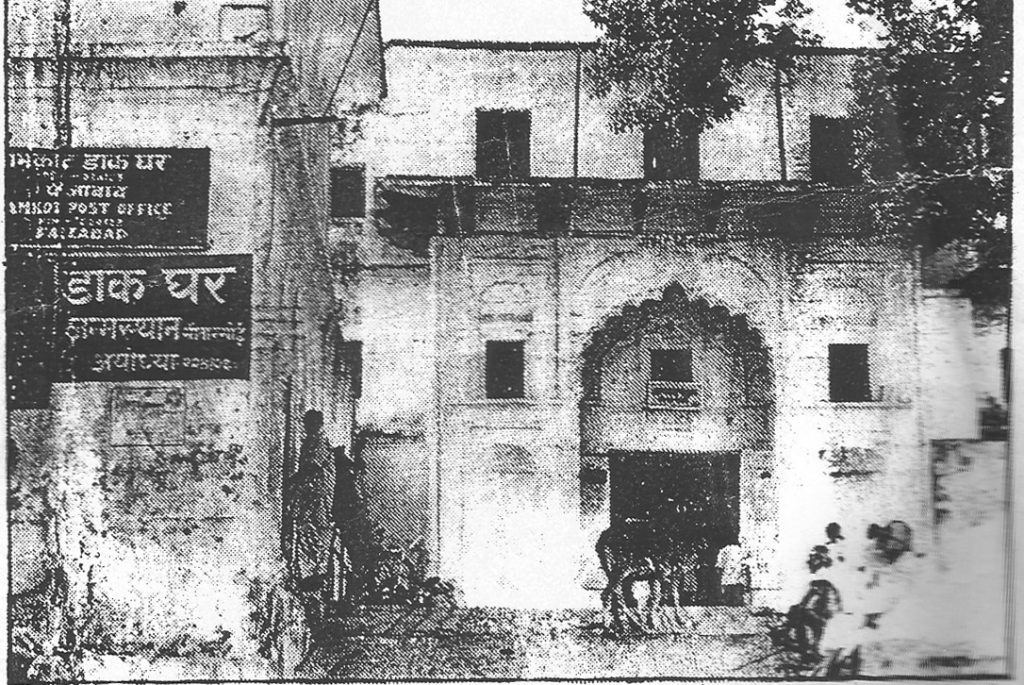
This 300 year old Janmasthan temple in Ayodhya, built on land donated by a Muslim zamindar, was demolished in August 2020 to accommodate an expanded vision of the new Ram Mandir. Image courtesy The Wire
They say Ram was born in Ayodhya; in Ayodhya he played and roamed around as a youth, grew into adulthood, was sent from there into exile in the forest, and then returned to rule there. There are temples in Ayodhya to commemorate every moment of his life. Where he played, there is Gulela Mandir. Where he studied there is Vashishta Mandir. Where he sat and ruled, there is a mandir. Where he ate his meals, there is Sita Rasoi. Where Bharat stayed, there is a mandir. There’s Hanuman Mandir, Kop Bhavan. There’s Sumitra Mandir, Dashrath Bhavan. There are many many such temples and all of them are about 400 to 500 years old. That is to say, these temples were built when Hindustan was ruled by the Mughals, by Muslims.
How strange! How did Muslims permit these temples to be built? They are remembered after all, for destroying temples. Continue reading Ram’s Ayodhya: Vivek Kumar
The BabriMasjid/Ayodhya Judgement of 2010 – Some questions for today
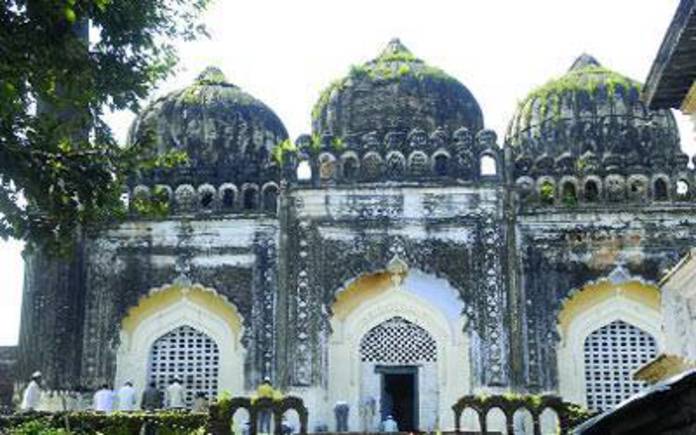
Babri Masjid before its demolition. It was still a mosque in 1992 when Hindutva mobs demolished it, and namaz was offered there until 1949 when under growing pressure from Hindutva forces, it was locked and made out of bounds for the public. However, Hindu puja was permitted there once a year.
This post is an analysis of the Allahabad High Court judgement of September 2010, on the BabriMasjid /Ayodhya issue. The final judgment ruled that the disputed land would be divided into three parts, one third going to the Hindu Maha Sabha which represented Ram Lalla, one third to Sunni Waqf Board and the rest to Nirmohi Akhada including Ram Chabutara and Sitaki Rasoi.
This essay was written at the time, and published in Economic and Political Weekly. Two of the key issues of this case arose in two of the recent judgments of the Supreme Court on other matters.
One, the status of ‘Next Friend’, which is central to the Ayodhya case, was brought up in the judgement on the Bhima- Koregaon Five. Regarding the PIL filed by historian Romila Thapar and four other eminent persons challenging the alleged-unlawful arrest of these five activists,
the court assumed that the writ petition has now been pursued by the accused themselves and was of the opinion that the petition, at the instance of the next friend of the accused for an independent probe or a court-monitored investigation cannot be countenanced, much less as a PIL as the petitioners cannot be heard to ask for the reliefs which otherwise cannot be granted to the accused themselves.
Two, the status of the deity as a person in law came up centrally in the judgement on Sabarimala.
Apologies for posting this long piece, which is not a blog post but an analytical essay closely examining the 2010 judgement by Allahabad High Court. I have not updated it in any way, as that is the judgement that currently stands. The case is currently in the Supreme Court.
The Ayodhya judgement: what next?
Published in Economic and Political Weekly Vol 46 No. 31 July 30 – August 05, 2011
Since the Allahabad High Court judgement on the Ayodhya dispute was delivered on September 30, 2010, a substantial body of reflection upon it has emerged. Historians, political commentators, legal scholars and lawyers have all produced serious and engaged critiques of the judgement, pointing out flaws in reasoning and flaws in law. In an engagement with the debate so far, particularly with the critical voices, of which I am one, I hope here to develop a composite picture of the problems with the judgement, currently under appeal in the Supreme Court. And to ask, what are its weakest links?
Continue reading The BabriMasjid/Ayodhya Judgement of 2010 – Some questions for today
Despatch from Ayodhya: Monobina Gupta
Guest post by MONOBINA GUPTA
Ayodhya, Faizabad: As our taxi approaches the site of the controversial Ram temple, two young men on motorcycle ride alongside our car. “ We will be your guides. Want to see the temple? Only hundred rupees,” they shout. My unofficial ‘guide’ Vineet Maurya, a fierce crusader against representing the site as the birthplace of Ram, rolls down the window and snaps back,” We are not here to see the temple.” Further down the lane, more young men run behind the car with similar offers. Temple sightseeing has turned into a veritable industry at Ayodhya.
From the narrow alley, the disputed plot, closely barricaded with high yellow railings and watched 24/7 by men from the Central Reserve Police Force (CRPF) and Provincial Armed Constabulary(PAC), images a heavily guarded fortress: one that is in danger of imminent attack. This is the holy site over whose ownership Hindus, led by the Bharatiya Janata Party (BJP), had waged such a fierce battle and spilled so much of blood. The manifestations of that unholy battle are overwhelmingly present in the form of deployment of countless security forces guarding Ram Lalla. What is lost in this murky stand-off is the sanctity of a holy place. Ayodhya ranks among the top holy sites of India. Continue reading Despatch from Ayodhya: Monobina Gupta
The muezzin’s last call at Babri Masjid: Krishna Jha and Dhirendra K Jha
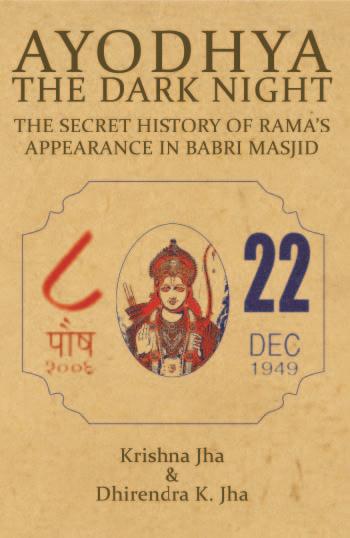
This guest post by KRISHNA JHA and DHIRENDRA K JHA is an excerpt from their book, Ayodhya: The Dark Night, about the original Ayodhya conspiracy of 22 December 1949

The sound of a thud reverberated through the medieval precincts of the Babri Masjid like that of a powerful drum and jolted Muhammad Ismael, the muezzin, out of his deep slumber. He sat up, confused and scared, since the course of events outside the mosque for the last couple of weeks had not been very reassuring. For a few moments, the muezzin waited, standing still in a dark corner of the mosque, studying the shadows the way a child stares at the box-front illustration of a jigsaw puzzle before trying to join the pieces together. Continue reading The muezzin’s last call at Babri Masjid: Krishna Jha and Dhirendra K Jha
The Uttar Pradesh administration has a prominent role in the burning of Bhadarsa: Rihai Manch
This release was put out by the RIHAI MANCH on 9 November

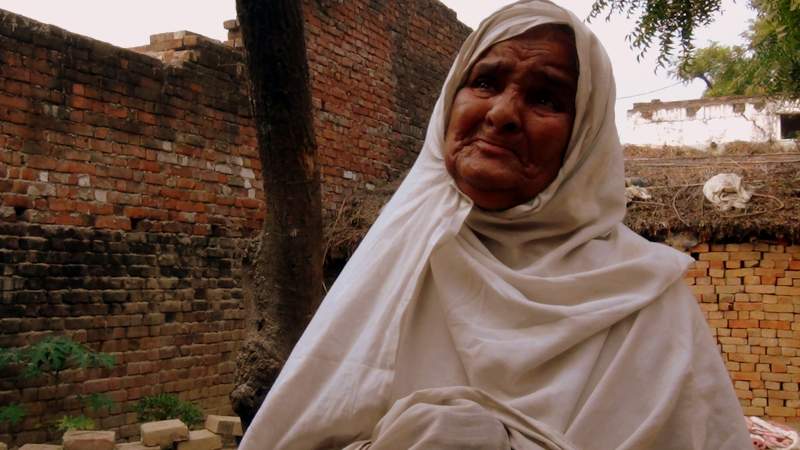
- Jannatunisa, a victim of violence in Bhadarsa
Faizabad 9 November 2012: An investigation team of Rihai Manch visited the Bhadarsa village which was affected by communal violence during Dussehra celebrations. The team found out that the violence was well planned and was executed by communal elements in connivance with the administration. The role of the media in this incident is also suspicious. The team also found that the administration is forcing the affected families to erase any evidence of the incident and they have not even been compensated. No FIR has yet been registered yet. The team has also requested the Sheetla Singh Investigation Commission (constituted by the Press Council of India) to visit the area. Continue reading The Uttar Pradesh administration has a prominent role in the burning of Bhadarsa: Rihai Manch
भदरसा के जलने में प्रशासन की अहम भूमिका: रिहाई मंच
This release in Hindi about recent communal violence in the Bhadarsa area of Faizabad district of Uttar Pradesh comes to us from the RIHAI MANCH. Please help us translate this into English by translating just one paragraph in the comments

- Jannatunisa
फैजाबाद, 9 नवम्बर 2012। रिहाई मंच के जांचदल ने दशहरा के दौरान हुयी साम्प्रदायिक हिंसा से प्रभावित भदरसा गांव का दौरा किया। जांच दल ने पाया कि भदरसा में हुयी हिंसा पूरी तरह सुनियोजित थी जिसे साम्प्रदायिक तत्वों और प्रशासन की मिलीभगत से अंजाम दिया गया जिसमें मीडिया की भूमिका भी संदिग्ध थी। जांच दल ने यह भी पाया कि प्रशासन की तरफ से आगजनी से पीडित परिवारों से घटना के साक्ष्य जबरन मिटवाए जा रहे हैं जबकि पीडि़तों को न तो उचित मुआवजा मिला है और ना ही एफआईआर दर्ज किये गये हैं। जांच दल ने प्रेस काउंसिल द्वारा गठित शीतला सिंह जांच आयोग से भी भदरसा जाने की मांग की है। Continue reading भदरसा के जलने में प्रशासन की अहम भूमिका: रिहाई मंच
Ayodhya for Buddhists: All India Confederation of SC/ST Organisations
Press release from the ALL INDIA CONFEDERATION OF SC/ST ORGANISATIONS
Neither Hindus nor Muslims are entitled to the disputed land at Ayodhya. SLP filed in Supreme Court claming the title for the Buddhists.
New Delhi, 7th January, 2011
Dr. Udit Raj, Chairman of Buddha Education Foundation and the All India Confederation of SC/ST Organisations, told the press that Special Leave Petition (SLP) no. DC 466/2011 has been filed in the Supreme Court against the judgment of Allahabad High Court, Lucknow Bench in the much disputed matter of Ayodhya.
Continue reading Ayodhya for Buddhists: All India Confederation of SC/ST Organisations
“Nobody Can Stop The Revolution”
Over the weekend, a number of journalists received the following statement from Ganapathy; General Secretary of the Communist Party of India (Maoist). In the text, Ganapathy clarifies the Maoist stance on a broad range of topics – particularly Kashmir, the Commonwealth Games, the Ayodhya Verdict, Mamta Bannerjee in Bengal, Obama and the North East.
However, the fact that the questions are posed by an obviously sympathetic “interviewer” and our inability to send any follow-up questions means that, I personally, treat this as a policy document rather than an “interview”. To get a quick newsy sum-up, you could read my report for The Hindu.
I felt it would be interesting for our readers to go through this text to get a sense of “What Maoists Want”. As a reporter, I am only too aware of how Maoist politics is severely under-reported as opposed to their military tactics.
As neither the Maoists, nor Mr Ganapathy are currently in a position to defend their views on Kafila; I have disabled comments on this post. Afzal’s acerbic (and spot on) comment has changed my mind. Have allowed comments on this piece.Hopefully, this document shall serve as a reference point for further discussions on the Maoist movement.
Ayodhya Verdict: Does it provide closure?
Guest post by WARISHA FARASAT
I was a child when the Babri Masjid was desecrated. After the news of the demolition spread across Uttar Pradesh, we were huddled in buses and packed off home from our boarding school. We were happy that the school had announced the winter break earlier than usual. That apart, we didn’t think much of the episode. In fact, I think that we were oblivious, almost entirely, to the gravity of the incident.
Much later, when I read the Sri Krishna Committee Report on the Bombay riots of 1992-93, and about thousands who had lost their life in the aftermath of the demolition, memories of 1992 returned. I remembered whispers. I remembered the fear in the eyes of our teachers accompanying us home. I remembered the instructions to the bus driver not to stop the bus if we were mobbed. I remembered leaving school at three in the morning. And, I remembered being asked not to tell my real name if we were stopped. Continue reading Ayodhya Verdict: Does it provide closure?