How saffron forces weaponise ignorance and stigmatise intellectauls
Silence gives consent
[Qui tacet consentire videtur – In Latin]
“Intellectual terrorists” are “more dangerous than cross-border terrorists”
These were the pearls of wisdom of the then Human Resource Development minister, who was addressing a conference of the Bharatiya Janata Yuva Morcha (December 19, 2001). Murli Manohar Joshi had even asked the ‘nationalist youths’ to counter ‘both types of terrorism effectively.’
…It would be 25 years soon since these objectionable remarks were targeted at India’s topmost historians, scholars, public intellectuals, even provoking followers to deal with them effectively’ like the way they deal with ‘cross border terrorists.’
Later commenting on these controversial remarks, the legendary historian Romila Thapar had famously said: ‘And then the government fell. But the books continued!”
Time for Thought Police?
As everybody can see, there is a sea change in the situation since the past more than a decade in this part of South Asia…
…..The target of attacks has now become broader, more expansive and more unpredictable. It is no longer restricted to ‘leftist’ ‘progressive’ writers, historians.
The recent move to ban 25 books on Kashmir history at a single go ‘for propagating false narrative and secessionism‘ — written by a spectrum of national and international scholars — which even do not share a similar world view, books which had been in circulation for years, even decades together is a case in point.
How saffrons are engaged in militarising Indian society not so surreptitiously.
Representational Image. Image Courtesy: Flickr
“…though this be madness, yet there is method in it“?
-Polonious, in ‘Hamlet’ by William Shakespeare
Pushback of ‘alleged foreigners’ It was May end, when the Assam government led by Bharatiya Janata Party’s (BJP) Himanta Biswa Sarma, was in the news for its policy of pushback where it was found literally pushing what it termed as ‘illegal foreigners’ into Bangladesh.
What was noticeable was that when its controversial pushback policy came under the scanner of national and international human rights organisations, the Assam government approved another scheme that has raised new questions?
This was a ‘special’ scheme to make the border areas, especially those inhabited by indigenous people living in “vulnerable and remote areas”, safe. ..
The following statement issued by the Citizens for Democracy in New Delhi on 17 May 2025 on the war and its aftermath.
Citizens for Democracy expresses its alarm at the aftermath of the horrific terror attack in Pahalgam, which endangers world peace and leads to further breakdown in the rule of international law, as well as poses a further threat to democracy within India itself.
What happened in Pahalgam was undoubtedly the use of terror to achieve political objectives and it was rightly condemned by all sections of the Indian population, led by local Kashmiri Muslims themselves, who rushed to the aid of the victims and held huge demonstrations against the act. The response of the Government of India was, however, neither measured nor balanced, but was dictated by the ideology and domestic political objectives of the ruling Bharatiya Janata Party and the Sangh Parivar. Though the Prime Minister cut short his visit to Saudi Arabia and rushed back, he did not address the meeting of all parties that was convened by the government itself. In the all-party meeting, the major security lapses in Pahalgam which allowed the terror attack to happen were not adequately explained, nor was any modality of enquiry announced. The finger of blame was immediately pointed at Pakistan, along with actions like putting the Indus Water Treaty in abeyance, thereby inflicting collective punishment on all Pakistani people for the purported action of a few terrorists. No effort was made to gather hard evidence to show the Pakistani state’s involvement in the terror attack and present to the UN Security Council.
Why the Yogi Adityanath-led BJP government’s move of using public funds for imparting religious instruction violates Article 28 of the Constitution.
Representational Image. Image Courtesy: Pexels
“No religious instruction shall be provided in any educational institution wholly maintained out of State Funds” unless “established under any endowment or trust which requires that religious instruction shall be imparted in such institution”. (Article 28 of the Indian Constitution)
It has been more than 75 years since the founding fathers (and mothers) of the Constitution took this bold stand when they were shaping the guidelines around which the newly independent country would move forward. ..
…..Much water has flown down the Ganges, the Jamuna and all rivers of the country and it appears that slowly, but not so silently, attempts are on to water down the provisions of this Article and facilitating religious instruction in government schools through the back door.
The manner in which Yogi Adityanath-led Bharatiya Janata Party (BJP) government in Uttar Pradesh has suddenly decided to hold summer workshops on the Ramayana and the Vedas in government schools across the state, without any broader consultation with the stakeholders involved in this endeavour, is symptomatic of the brazen attitude of the government. We are told that these workshops will be organised under the aegis of the International Ramayana and Vedic Research Institute, Ayodhya, and will include activities, like Ramlila, Ramcharitmanas recitation, Vedic chanting, painting, and mask-making.
David Headley remains inaccessible in the US, and so do the masterminds in Pakistan.
The extradition of Tahawwur Rana to India to face trial for his role in the 26/11 terror attack is big news in the media. One can sincerely hope that with the arrest of only the second suspect to face trial for the 26/11 attacks – the first one was Ajmal Kasab – we can unearth other critical links in the conspiracy, role played by the terrorist groups and the support the whole operation received from the Pakistani establishment or its deep state.
Of course, it will be rather premature to assume that this arrest can bring a closure to the dastardly 26 /11 terror attacks. We are yet far away from the possibility of the mastermind of the attack – Hafeez Saeed and his accomplices – facing trial in Pakistan or being extradited to India.
There is no clue yet whether David Headley, a close friend of Tahawwur Rana, who is called the main conspirator of the operation would ever face trial in India. In fact, it is still a mystery how and why the US entered into a plea deal with him – promising him that he will not be extradited to India.
Indian federalism is on the verge of breakdown for multiple reasons. A crucial contributor is the collapse of the system of revenue sharing between the Centre and the States and the weaponization of vertical transfers as an instrument for political contestation.
The conflict over resources in India’s quasi-federal political structure is by no means new. Framers of the Constitution, who recognised that the division of taxation rights and spending responsibilities between the two principal tiers of government in India was asymmetrical, sought to partially resolve this problem by providing for a share for the States in a defined set of tax revenues garnered by the Centre, with the principles governing the share devolved and distributed to individual States recommended by successive Finance Commissions. But State governments have been increasingly disappointed with the actual experience with devolution, because of the concentration of resources mobilised in the hands of the Centre.
The issue, however, is not one of mere competition for resources between the Centre and the states. Having gained control over the Lok Sabha, the BJP has made it clear that it is keen on establishing an opposition-free political space. To realise this objective, it has not only sought to undermine the legitimacy of individual opposition politicians with charges of corruption or “anti-national” activity, but of opposition-ruled State governments by eroding their ability to adopt economic policy measures and initiatives that could win them political legitimacy. Expenditures on building State infrastructure or social expenditures on subsidised food provision, a modicum of social protection, and employment guarantee schemes, do contribute to winning a party in power in a State a degree of political legitimacy. The attack on the fiscal capacity of the State governments helps limit such expenditures, even while Central claims on expanding infrastructural investments and social sector spending are advanced, with an increase in ‘central’ schemes, especially those attributed to the patronage of the highest authority, the Prime Minister.
Speaker :
Prof C P Chandrasekhar
Prof C. P. Chandrasekhar is emeritus professor at the Centre for Economic Studies and Planning, Jawaharlal Nehru University (JNU), New Delhi. He has published widely in academic journals and is the coauthor of Crisis as Conquest: Learning from East Asia (2021, Orient Longman), When Governments Fail – A Pandemic and Its Aftermath (with Jayati Ghosh et al) , 2021 ; Interpreting the World to Change It – Essays for Prabhat Patnaik (with Jayati Ghosh), 2018 ; After Crisis : Adjustment, Recovery and Fragility in East Asia ( with Jayati Ghosh) 2009 ; The Market that Failed: Neo-Liberal Economic Reforms in India (2002, Leftword Books), and
He received his MA and Ph.D (economics) from Jawaharlal Nehru University, where he served as a professor from 1997 until his retirement. He is a member of the executive committee at International Development Economics Associates (IDEAs) and the World Economics Association, as well as a contributor to Frontline, Economic and Political Weekly, and Businessline.
Chandrasekhar received the Malcolm Adiseshaiah Award for 2009 for contributions to economics and development studies.
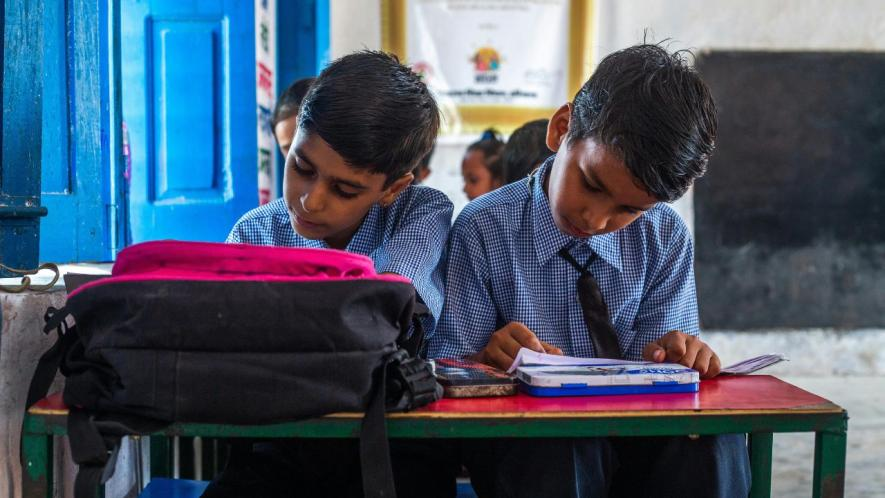
Aisha, a 7 year old girl living in Khajuri Khas Colony of Delhi, is yearning for a day when like her elder sister Asma, she would also be admitted to a nearby government school.(1)
This possibility is growing dimmer by the day, as the school has refused her admission and asked for Indian documents like Aadhar – which refugees do not possess.
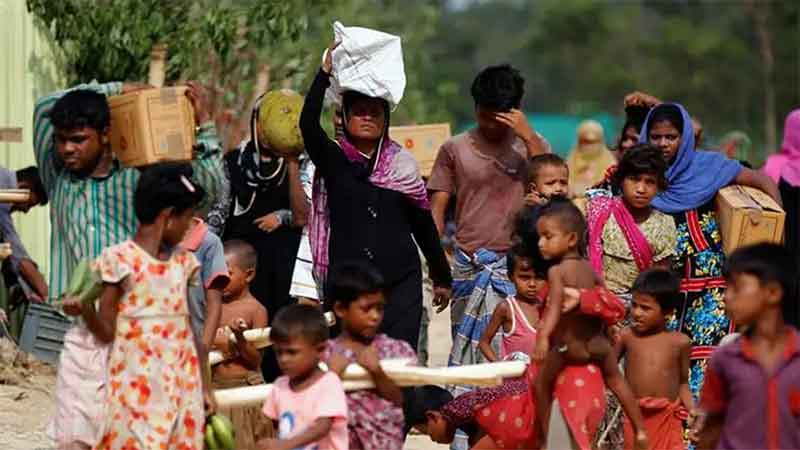
Aisha is the younger daughter of Ahmad, a Rohingya refugee who has finally reached Delhi and has duly received his UNHCR card – which refers to the document issued by the UN refugee agency.
Thanks to the circular issued by Delhi government ( Dec 24) led by AAP asking schools to ensure strict guidelines during admissions perhaps Aisha will have to remain satisfied with the same private school which lacks facilities.With a drive underway to ensure that children of “illegal Bangladeshi immigrants” are not allowed enrolment, Aisha knows very well that her fate is sealed. (2)
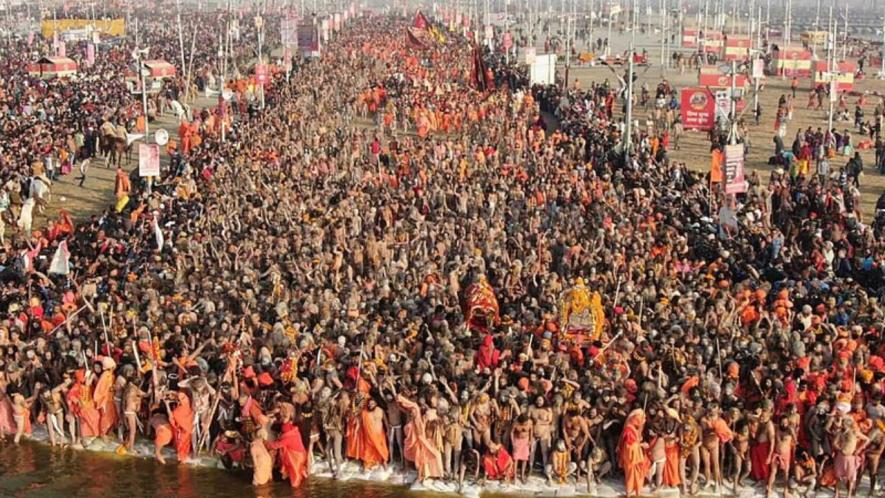
The Mahakumbh has provided Hindu Supremacist forces an opportunity to further marginalise and invisibilise Muslims, and further push for a ‘Hindu Constitution’.
Whether Uttar Pradesh Chief Minister Yogi Adityanath will be able to recover his image after the tragedy at Mahakumbh, which officially killed more than 30 people and wounded many, many more, is a question being raised in hushed voices in the corridors of power in Delhi.
Obviously, questions are also being raised about the great hiatus between the massive propaganda undertaken around the Mahakumbh and the level of preparations for this ‘biggest congregation on earth’….
For Chief Minister Adityanath, who had ‘positioned himself as the ‘host of the biggest congregation on earth’, the path ahead looks challenging, with the tremendous ineptness of the administration led by him on full display. Much has been reported about conscious attempts made allegedly to downplay the tragedy and how it continued for the whole day. A UP minister, supposed to be close to the Chief Minister, even made a controversial statement that “such small events keep happening in large gatherings.” The statement caused so much uproar that he had to issue an apology. The mainstream media added another page of shame to its track record when it continued to publish government handouts, and did not even deem it necessary to report the tragedy. ( Read the full article here : https://www.newsclick.in/road-kumbh-paved-hindu-rashtra-intentions)
How to denigrate India’s historic freedom struggle and humiliate the sacrifices of martyrs, and keep sermonising happily ever after
Image Courtesy: Wikimedia Commons
‘Though this be madness yet there is method in it…’
–‘Hamlet’, Shakespeare I.
The search for the real Independence Day has perhaps become longer in the Hindutva supremacist circles.
Close on the heels of the likes Kangana Ranaut, film actress and ruling Bharatiya Janata Party (BJP) Member of Parliament, who had (in)famously said that “India attained freedom in 2014 and 1947 was ‘bheek’”, or alms and Vikram Massey, another flop Bollywood hero, questioning the freedom of 1947 as “so-called” Independence, has come the news that the numero uno of the Sangh Parivar, Mohan Bhagwat, has joined the ranks.
Speaking on the first anniversary of the Ram Temple inauguration day in Indore (as per the Hindu calendar), the Rashtriya Swayamsevak Sangh (RSS) chief underlined that this day of consecration should actually be celebrated as “true independence” of Bharat, which faced enemy attacks “parachakra” for several centuries.
As expected, Bhagwat’s remarks have received widespread condemnation in Opposition circles. Congress leader Rahul Gandhi has even called it an act of “treason” and asserted that they were an affront to every Indian. He even underlined that the “[R]SS chief would have been arrested in any other country” for such controversial remarks.
Looking at the fact that Bhagwat happens to be the supremo of the ‘biggest cultural organisation in the world’, whose ideology drives India today, who has the complete liberty of sharing his pearls of wisdom whenever he deems it necessary, at times even boomeranging on the organisation, it is difficult to imagine that any action would be taken against him, or whether he will be censured for his controversial remarks, which are an attack on the sacrifices and historic legacy of the freedom fighters as also on the Constitution. ( Read the full text here :https://www.newsclick.in/bhagwat-puran-different-kind)
नरम हिन्दुत्व या ‘सेकुलर’ दलों की लड्डू पॉलिटिक्स?
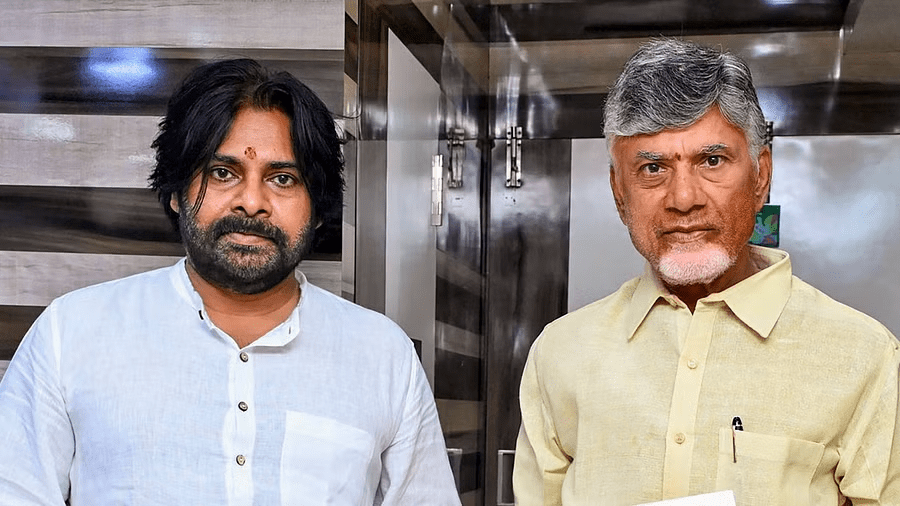
Credit: PTI photo
(क्या आंध्र प्रदेश दक्षिण में हिंदुत्व प्रयोग की नई प्रयोगशाला बनाने जा रहा है। दक्षिण के अग्रणी अख़बार डेक्कन हेराल्ड ने पिछले दिनों इस मसले पर विशेष सामग्री पेश की थी ा गौरतलब है कि इस सूबे की आंतरिक गतिविधियों पर शेष मुल्क की तब निगाह पड़ी, जब तिरुपति के लड्डू के मसले को सुर्खियां मिली . मगर ‘हिंदुत्व लाइट’ का यह सम्मोहन महज वहीं तक सीमित नहीं है )
सियासत भी अजीब होती है। अकसर इस बात का अंदाजा भी नहीं लग पाता कि कैसे वह शैतानों के सन्त में रूपांतरण को मुमकिन बना देती है और कैसे अन्य समुदायों के जनसंहारों को अंजाम देने वालों को ‘अपने लोगों’ के हृदयसम्राट या रक्षक के तौर पर स्थापित कर देती है।
शायद इसी विचित्रता की यह निशानी है कि अमेरिका के पूर्व राष्ट्रपति डोनाल्ड ट्रम्प द्वारा हैती से आए आप्रवासियों को लेकर फैलायी जा रही झूठी ख़बरें कि वे कुत्तों का भक्षण करते हैं, अमेरिका की आबादी के अच्छे-खासे हिस्से को अविश्वसनीय नहीं लग रही- जिनका लगभग अस्सी फीसदी हिस्सा साक्षर है। इन झूठी और नफरती ख़बरों को लेकर हैती से जुड़े समूहों को ही अदालत का दरवाजा खटखटाना पड़ रहा है।
जहां दुनिया का सबसे ताकतवर जनतंत्र कुत्तों को लेकर पैदा किए गए एक विवाद में उलझा दिखता है, वहीं खुद को दुनिया में डेमोक्रेसी की माता कहलाने वाले भारत में लड्डू के इर्द-गिर्द खड़े किए गए इसी किस्म के एक फर्जी विवाद में पिछले दिनों लचीले हिन्दुत्व की राजनीति के नए रणबांकुरे उलझे दिखे थे । ( Read the full article here : https://junputh.com/open-space/soft-hindutva-and-laddoo-politics-of-naidu/)
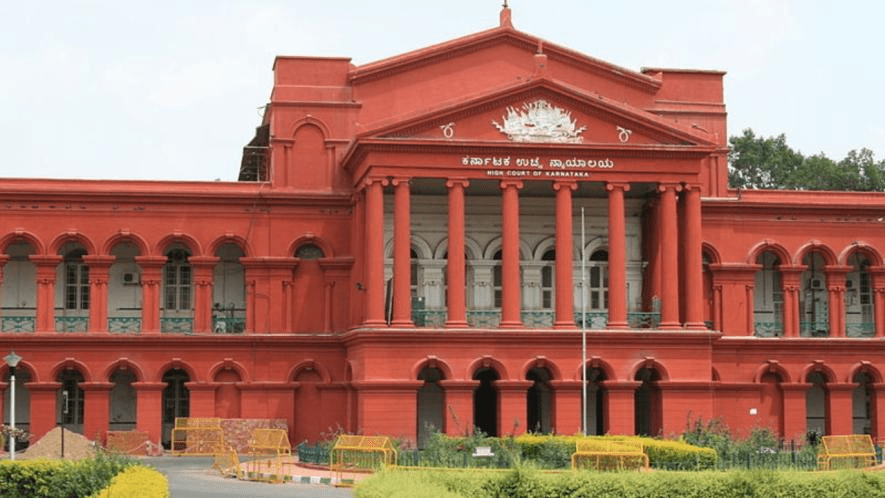
The Karnataka HC episode is a wake-up call for the judiciary, as the battle to save it from interference by the executive could have long-term consequences for democracy.
High Court of Karnataka. Image Courtesy: Wikimedia Commons
Justice Srishananda of the Karnataka High Court is in the news for wrong reasons.
What has caused tremendous unease is the way he openly referred to a Muslim-majority area in Bengaluru as “Pakistan” during a hearing and even made a misogynistic comment involving a woman lawyer.
The open display of prejudice toward a community and gender — by someone who is supposed to uphold the Constitution — infuriated a wide cross-section of people. A five-judge bench of the Supreme Court led by Chief Justice Chandrachud also lost no time in condemning these highly irresponsible remarks and asked the Karnataka HC to submit a report in this connection.
..The SC’s quick intervention in the Karnataka case is definitely a welcome development.
The question arises whether establishing such clear guidelines would really prove a dampener to such utterances in courts in future? Would it really put a stop on judges who have had no qualms in declaring that ”based on religion, India should have been declared Hindu nation after independence.’ or declaring‘Modi a model and a Hero’. ( Read the full article here : https://www.newsclick.in/your-honour-rot-runs-really-deep)
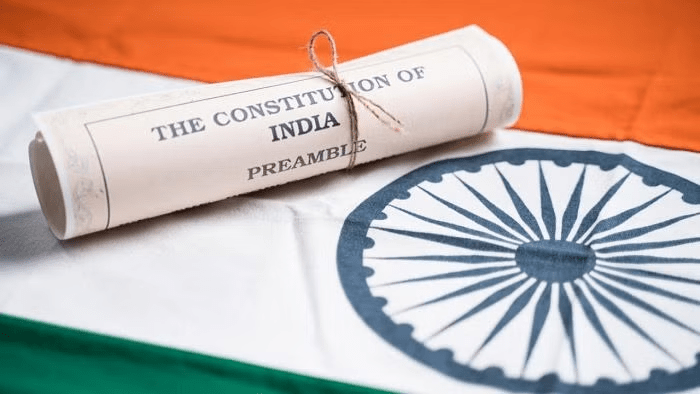
Towards 75 years of adopting the Constitution, it is time for a new beginning.
‘Secularism is the religion of humanity …. It is a protest against theological oppression, against ecclesiastical tyranny, against being the serf, the subject or slave of any phantom, or of the priest of any phantom. “
– Robert Green Ingersoll
Simple ideas are perhaps the most difficult to implement.
For a country of around 1.4 billion, which has witnessed internecine violence on religious lines at the time of Independence, and which has turned a new leaf by adopting a Constitution based on secularism, which abhorred even mentioning the word God, why it is still difficult to avoid religious rituals in public domain, at least in the precincts of the courts?
The Right-wing party has been justifying and legitimising Mir Jafar, Mir Sadiq and associates, while demonising Siraj-ud-Daulah and Tipu Sultan.
The tomb of Nawab Siraj-ud-Daulah. Image credit: Wikimedia Commons
Elections to the 18th Lok Sabha have broken records in many ways.
Right from the arrests of Opposition leaders on the eve of elections, the spinelessness shown by the Election Commission (EC) to the open mouthing of hateful speeches targeting a community by top members of the ruling dispensation, to complete metamorphosis of the mainstream media into a cheerleader of the government, all such signs are ominous for the future of democracy in the country.
May be one should add to it the open justification by ruling Bharatiya Janata Party (BJP) leaders of the betrayal by the likes of Mir Jafar and his associates like Raja Krishnachandra Roy, Jagat Seth, Omi Chand — which lead to defeat of the Siraj-ud-Daulah (1733-July 2,1757), the last independent Nawab of Bengal in the Battle of Plassey, which ultimately opened the gates of conquest of the rest of India by the Britishers.
If 2019 elections are still remembered because BJP had fielded candidates who were accused of involved in terrorist acts, the 2024 elections would also be remembered how they helped betrayals covered in glory. ( Read the full article here : https://www.newsclick.in/how-bjp-covers-betrayals-glory)
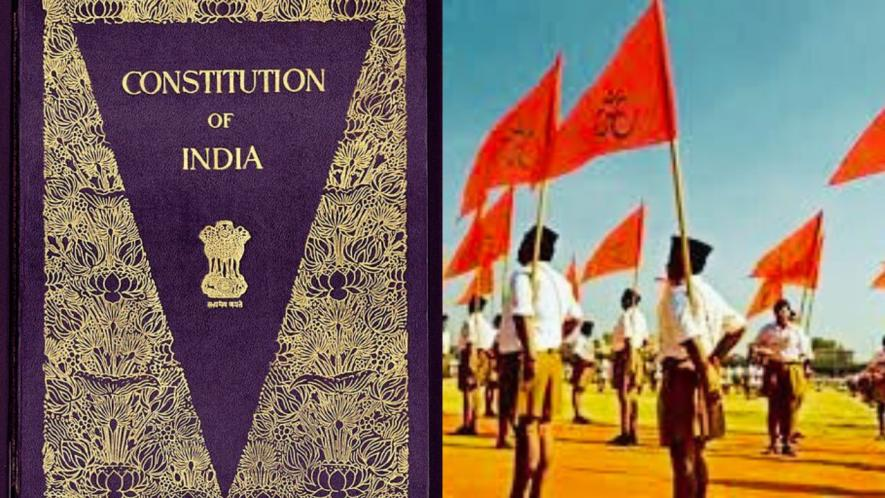
The Vajpayee government tried to change the Constitution, but lost in 2004. We must be vigilant, as a similar chorus is being raised again by Hindutva Supremacist forces.
..make India an independent sovereign republic and guarantee and secure for all the people of India social, economic and political justice; equality of status and opportunities and equality before law; and fundamental freedoms—of speech, expression, belief, faith, worship, vocation, association and action—subject to law and public morality;
and also ensure that
adequate safeguards shall be provided for minorities, backward and tribal areas, and depressed and other backward classes.
(Excerpts of Objectives Resolution in the Constituent Assembly, moved by Pandit Nehru on December 13, 1946 and adopted unanimously by the Constituent Assembly on January 22, 1947)
It was just another press conference in the national capital.
The only difference was that it was held at the house of a member of Parliament belonging to Bharatiya Janata Party (BJP), the main opposition party then…
This was on December 25, 1992. Less than three weeks before India had witnessed one of its deeply troubling, disturbing moment in its history where a mosque, which stood for more than 500 years, had been demolished by a horde of people who had gathered there from different parts of the Country, mobilised by the forces of Hindutva supremacism.
..Swami Muktanand and Vamdeo Maharaj, who were closely associated with the Ram Mandir movement (India Today, January 31, 1993) addressed the press meet.
‘This Constitution is anti Hindu‘ and needs to be rejected.”We have no faith in country’s laws‘ and ‘Sadhus are above the law of the land‘.’
..The press meet ended rather abruptly.
Journalists, who had gathered there to hear something about the movement, felt cheated that what unfolded there was an anti-climax.
‘The anger and anxieties over ‘Agnipath’ scheme – have not died down.
Gone is the period of open protests by youth and students and other ordinary people which rocked when the scheme was hastily announced (June 2022).
It does not mean that the youth are now happy about this scheme.
In an ambience of rising unemployment how is it possible to be happy about the fact that “[d]ue to the implementation of the Agniveer scheme, around 1.5 lakh candidates selected for the Indian Army, Air Force and Navy between 2019 and 2022 were allegedly denied joining.( 2)and all future possibilities of such an employment being closed forever.
Anyone who is keen to know how Agnipath has literally ‘destroyed’ thousands of jobs in military can take a tour of Kuchman City in Nagour ( Rajasthan) once a hub of more than 200 defence coaching academies preparing students from Rajasthan, Haryana and neighbouring parts of Western UP for entrance exams in Military..
…The anger and discontent of the Youth will continue to harm the ruling dispensation – whatever gloss they try to apply over the scheme.
Anantkumar Hegde, BJP MP from Uttari Karnataka, is again in the news.
Close on the heels of his controversial statement about demolition of a mosque and his invoking of Hindu community who would not rest ‘until more mosques are reclaimed ‘ (1) he has delivered another explosive statement.
This time the whole edifice of Constitution is under his attack, which according to him has ‘distortions introduced by the Congress to suppress Hindu society’. (2) ..
..Critics have rightly said how this suggestion exhibits real intentions of the saffron regime which wants to usher us into Hindu Rashtra, end reservation for scheduled and backward communities, reinforce caste system and also replace Constitution drafted by Dr Ambedkar with a worldview inspired by Manusmriti. The main opposition party Congress has expressed fear that all such statements, steps just go to vindicate how a ‘cloud of dictatorship’ now hovers over India. (3)
It is a different matter that neither BJP top guns nor PM Modi – who had famously declared way back in 2014 that for him ‘Constitution is the most sacred book’ deemed it important to condemn Hegde’s statements or ordered him to seek apology for his claim.
One learns that it has merely distanced itself from Hegde’s controversial statement to convey an impression that what he said was his ‘Mann ki Baat’ and not BJP’s Dil ki Baat’ .
UGC led by Chairman Jagdeesh Kumar refuses to remain beyond controversy for long time.
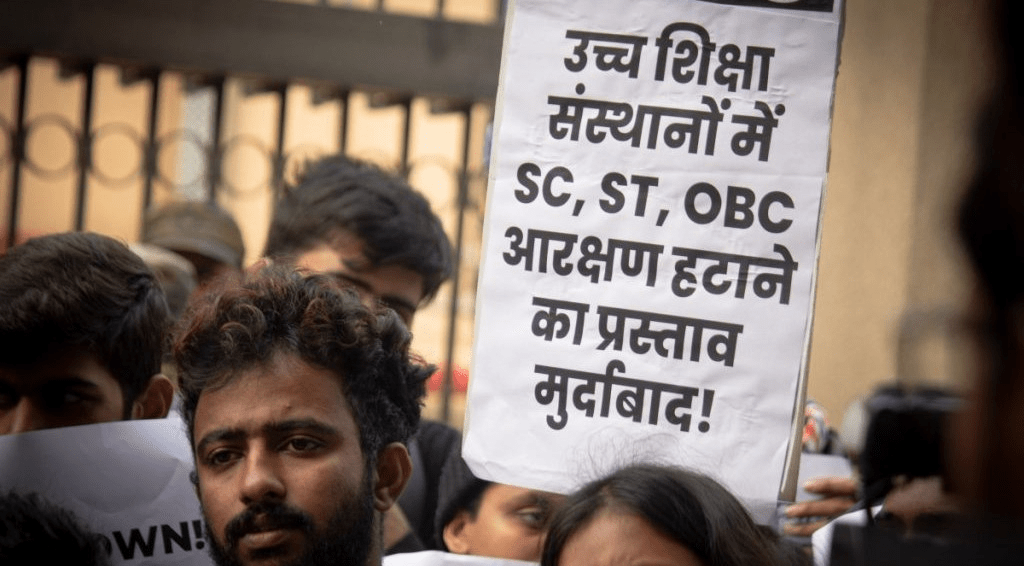
The latest being its draft proposal of ‘dereservation’ of seats if not a suitable candidate from reserved category is found wherein it asked people’s views till 28 th January.
As expected this proposal which smacked of the ruling dispensation’s surreptitious and even direct attempts at attacking or biting away at the affirmative action policies emanating from the Constitution rightly led to protests in various quarters, There were protests opposing this proposal on JNU and other campuses and even opposition parties attacked the ruling party for its compromising attitude towards reservation rights and its desire and moves to either dilute or hollow out the provisions of these socially progressive policies and this led to an intervention from the Human Resources Ministry underlining that there is no such proposal.
The life of the dead is placed in the memory of the living.
– Marcus Tullius Cicero
Politics is nothing but theology in action
– Ambedkar
Right-wing politics suffers from a common syndrome everywhere.
It never feels confident to project its own icons for the rest of the humanity, whatever might be their claims about their worldview, it knows that its own icons are detested by a wide spectrum of people.
The easiest way it finds to overcome this lacunae is to appropriate already established icons – who were even opposed to their world view as well and claim them their own. In fact, it does not have any qualms in utilising dates – bearing special significance for exploited and oppressed and marginalised of the world – to put their stamp on it.
The project of Hindutva Supremacism – which yearns / strives to transform a Secular, Socialist, Democratic and Sovereign Republic into a Hindu Rashtra has perhaps achieved near perfection in this kind of politics.
Whether Modi will get a third term in 2024 or these elections can spring a surprise?
India at the beginning of the year stands at the cusp of a Momentous Change
The biggest question before everyone is whether the elections for the Parliament – the lower house – which will be over by end of May ( if they are not advanced by the ruling dispensation) would be able to disturb the stranglehold of the BJP-RSS over the levers of power at the Centre, whether it will lead to loosening of sorts of the grip it holds over the various institutions of Democracy ( critics even call that they have been subverted, weaponised) or it will slide the Indian Democracy further into the electoral autocracy mode much to the chagrin of well wishers of democracy everywhere.
Writers, scholars, artists have always worried the powers that be.
There was a time when the Parisian police had been given the onerous task of keeping the greatest writers of late 18 th Century who were living in Paris at that time under their watch. Poor fellows, one can imagine their difficulty in maintaining files on writers and artists and scholars ‘beyond criminals and political figures.’
The present dispensation at the centre is no different.
It could be said that it may be a step ahead.
The French Monarchs – who within few decades witnessed a mass upheaval which finally overthrew them – were wise enough to ask their minions to be rather discreet in their activities, not to offend the writers, scholars directly ; the harbingers of today’s ‘New India’ have even abandoned that discreetness for good.










 KAFILA - COLLECTIVE EXPLORATIONS SINCE 2006