Tag Archives: caste

Swachchh Bharat – Beyond Charity and Symbolism to Legal Rights and Duties: Sujith Koonan

Guest post by SUJITH KOONAN

Sanitation and cleanliness seems to have become buzzwords. Celebrities and political leaders have started talking about sanitation. The call for Swachchh Bharat by the Prime Minister of India was welcomed by many taking brooms in their hands. Several institutions have uploaded prestigiously the photographs of its employees carrying brooms. All of a sudden, the sanitation consciousness seems to have increased in the country. Indeed, it is a good sign that we have started thinking and talking about the ‘unmentionables’ – shit and dirt.

Many of these actions and responses are symbolic and rhetoric in nature. While it may be acceptable to begin with symbolism, the seriousness needs to be demonstrated through concrete long term plans and actions. One can hope that the government will take such steps. One way to show that the ongoing sanitation talk is serious, and the state is sincere about it, is to recognise the legal aspects of sanitation. There are mainly three issues where the government has been a failure in fulfilling its constitutional and legal duties and these are supposed to be at the forefront of the Swachchh Bharat Mission (SBM). Continue reading Swachchh Bharat – Beyond Charity and Symbolism to Legal Rights and Duties: Sujith Koonan

Can Caste Be Swept Away? New Socialist Initiative

Statement by New Socialist Initiative, Delhi State Chapter
It is cleaning season in India. Country’s prime minister has gone to town with a broom. He started the campaign to clean India by sweeping a dalit neighburhood of erstwhile untouchables, seemingly breaking many caste barriers. There are very few public defenders of caste system nowadays. Upper caste men and women, whose ancestors only three generations ago fought tooth and nail to not yield even an inch of their caste privileges, now cry and organise under the slogan of Equality, once affirmative action for lower castes in educational institutions and government jobs has begun to have some traction. Is now not an opportune time to sweep away the garbage of caste into the dustbin of history?
Reality is too complex for this simple hope. If caste appears to be disregarded, or flouted, in some domains, its prejudices and violence are flourishing in others. The day country’s news channels were busy showing the prime minister sweeping a dalit basti in the heart of the capital, a young woman of Madurai in Tamil Nadu was burnt alive by her family for marrying a dalit. She could have been from anywhere in the country, from Haryana in the North to Maharashtra in the West, or Bihar in the East, to have met a similar fate; if not murder, certainly social ostracism. In all villages, where majority of Indians live, habitation areas are divided along caste lines; upper castes occupying the most secure central areas with easiest access to public utilities like road, school, and panchayat ghar; and dalits on the outskirts. In cities too, where caste markers are less visible, caste networks are the most potent resource the poor fall back upon while searching for job and habitation.

Continue reading Can Caste Be Swept Away? New Socialist Initiative

Learning from Babasaheb: Harsh Mander

Guest post by HARSH MANDER

Among most  secular progressive people in India today there is the belief – indeed an article of faith – that India has been, through most of its long history, a diverse, pluralist and tolerant civilization – the land of Buddha, Kabir and Nanak, of Ashoka, Akbar and Gandhi. It is a culture in which every major faith in the world found through the millennia the space and freedom to flourish and grow, where persecuted faiths have received refuge, where heterodox and sceptical traditions thrived alongside spiritual and mystical traditions, and where ordinary people live and instinctive respect for faith systems different from their own.

All of this is true, and this is why the rise of a narrow, monolithic and intolerant interpretations of Indian culture – what Romila Thapar describes as the right-wing Semitisation of Hinduism – in new India causes us deep disquiet. But what our analysis does not stress often or deeply enough is that all of India, both old and new, has been also built on the edifice of the monumental inequality and oppression of caste, and that this is equally the story of India, old and new. Continue reading Learning from Babasaheb: Harsh Mander

The Chunduru Caste Atrocity – Discussing a Retrograde Judgment: Anonymous

Guest post by An Anonymous Advocate from the AP High Court 

On 22nd April, 2014, two Judges of the Andhra Pradesh High Court held that there was no evidence in the Chunduru atrocity case. The court acquitted all the accused. Not just that. They blamed the Dalits for not being responsible enough in alerting the police immediately, and obliquely cast a doubt on their integrity.

The Chunduru atrocity has gained national importance as much for the atrocity itself as for its place in the Dalit movement. On 6th August 1991, eight dalits were hacked to death by the upper caste men of Chunduru village, located in Guntur district of Andhra Pradesh. The political mobilization that was generated around this atrocity became the corner stone for the Dalit movement in Andhra Pradesh, and an inspiration for Dalit movements elsewhere in the country. On the legal side, it has been one of those long-drawn trials, resiliently overcoming one hurdle after another, be it the controversy around who the victims are (Dalits or Christians), or regarding the choice of the Special Public Prosecutor for the trial, or the venue of the trial. The case went back and forth between the High Court and the trial court, having been contested viciously by the Reddy accused, their lawyers and their ideologues.

Continue reading The Chunduru Caste Atrocity – Discussing a Retrograde Judgment: Anonymous

Of Khap and AAP: Eight Myths about Culture and Caste : N. Balmurli

Guest Post by N. Balmurli

Delhi chief minister Mr. Kejriwal’s claim that “khaps serve a cultural purpose” reproduces some popular myths about culture and caste. These myths predate AAP and have been put into place over the last few years by official and expert statements in public discourse such that they are now part of a “commonsense” of worldviews about caste and culture.

Consider two other statements made by political figures whose parties are at pains to show how retrograde AAP’s statements are.

Continue reading Of Khap and AAP: Eight Myths about Culture and Caste : N. Balmurli

‘After falling in love, I saw the reality of caste’: E. Ilavarasan

Dalit youth E. ILAVARASAN, whose marriage to a Vanniyar girl had resulted in caste violence in Tamil Nadu last year, was found dead on a railway track yesterday. Given below is an interview Ilavarasan gave to KAVIN MALAR and was published in the Tamil edition of India Today magazine. This translation is by PRAKASH VENKATESAN.

ilavarasan_divya-350_070513040519

Did you realise you were going to be in the headlines in TN when you got married?

No. Certainly not. I thought ours would be just like any other marriage. Divya thought so too. We thought they (Divya’s parents) would be angry initially but can be eventually reconciled. We simply did not expect these things would happen. I now can really understand the horrendous nature of caste and the heinous things it is capable of after falling in love.

Why do you think Divya is suddenly saying now that she wants to go with her mother? Continue reading ‘After falling in love, I saw the reality of caste’: E. Ilavarasan

Killing it softly over two decades: Agrima Bhasin

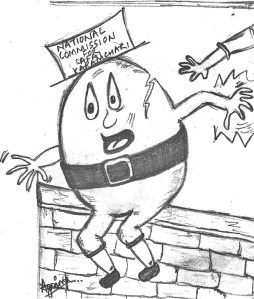
NCSK cartoon for Kafila

This is a guest post by AGRIMA BHASIN: No different from the caste hierarchy in India, the National Commission for Safai Karamcharis (NCSK) enjoys a marginal status, at the bottom, in the power hierarchy of commissions. “Why,” asked Former Prime Minister Narasimha Rao, “is it that the Commission for Safai Karamcharis is being subjected to the same discrimination as the safai karamcharis themselves? This is not something to be proud of.” He minced no words at the Conference of Welfare Ministers of States in 1996, to guilt the august gathering into recognising their culpability in deliberately weakening a competent commission. Continue reading Killing it softly over two decades: Agrima Bhasin

Theories of Oppression and another Dialogue of Cultures: Ashis Nandy

This is the text of the Ambedkar Memorial lecture delivered by ASHIS NANDY at the India International Centre on 14 April 2012, under the auspices of Ambedkar University, Delhi.

It was published in Economic and Political Weekly, July 28, 2010

Every generation likes to believe that it is living in momentous times, witnessing the death of one world and the birth of another, negotiating what pre-war Bengali writers used to grandly call yugasandhikshana, the moment when two epochs meet. This generation of Indians too believes that it is seeing such changes and even participating in them. Perhaps they are. However, I shall argue here that, along with transitions in society and politics to which they like to stand witness, there are transitions in cultures of knowledge and states of awareness of which they may be gloriously innocent. And they perhaps try to protect that innocence. The categories we deploy to construe our world images are parts of our innermost self and to disown them is to disown parts of ourselves and jeopardise our self-esteem. Even when we struggle to shed these categories, they survive like phantom limbs do in some amputees. Or perhaps they survive the way one of Freud’s three universal fantasies, the one about immortality, does. When you imagine yourself dead, you are still there, fully alive, looking at yourself as dead. Continue reading Theories of Oppression and another Dialogue of Cultures: Ashis Nandy

जहाँ वे सेतु बनते हैं: मिहिर पंड्‌या

Guest post by MIHIR PANDYA

गणतंत्र दिवस की सुबह। अौर उस सत्र का शीर्षक था ‘विचारों का गणतंत्र’। अशिस नंदी पहले उदाहरण द्वारा विस्तार से समझाते हैं कि क्यों एक सवर्ण एलीट का भ्रष्टाचार हमारी बनायी ‘भ्रष्टाचार’ की मानक परिभाषाअों में फिट नहीं होता अौर क्यों सिर्फ दलित का भ्रष्टाचार ही ‘भ्रष्टाचार’ नज़र अाता है। इसलिए जब वे यह कहते हैं कि भ्रष्टाचारियों का बहुमत वंचित जातियों से अाता है तो वह यह कहते हुए वापिस पुरानी बात दोहराना ज़रूरी नहीं समझते कि यहाँ दोष उनका नहीं, ‘भ्रष्टाचार’ की उस भ्रामक परिभाषा का है जिसमें एलीट का भ्रष्टाचार फिट ही नहीं होता। इसे वह अंत में जवाब देने के लिए मिले दो मिनट के समय भी दोहराते हैं कि उनके उक्त कथन को दो मिनट पहले कही बात के संदर्भ में देखा जाए। जैसा नंदी ने बाद में भी कहा, अौर उनकी अध्ययन शैली से परिचित लोग यह जानते भी हैं, वे किसी भी वक़्त यह नहीं कह रहे थे कि भ्रष्टाचार की कोई जाति होती है, बल्कि वे भ्रष्टाचार को पहचानने अौर निर्धारित करने की जो प्रचलित समाजदृष्टि है, उसके पीछे छिपी जातिवादी मानसिकता को पहचानने की अोर इशारा कर रहे थे। यह तर्क प्रणाली समझने में थोड़ी जटिल हो सकती है, लेकिन इसकी कोई वजह मुझे फिर भी नज़र नहीं अाती कि ठहरकर, ज़रा सा समय देने पर भी यह बात समझ न अाए। Continue reading जहाँ वे सेतु बनते हैं: मिहिर पंड्‌या

Ashis Nandy, Media and the Work of Acceleration: Anirban Gupta Nigam

Guest post by ANIRBAN GUPTA NIGAM

The hornet’s nest stirred by Ashis Nandy’s comments at the Jaipur Literature Festival might – hopefully – be dying down, but certain questions raised by the occurrences on the 26th probably require a little reflection on everyone’s part.

In the corporate and social media blitz, a lot of the details have been forgotten, excised and overlooked. Till yesterday it was not clear what his entire speech consisted of. The most quoted line from his talk at the festival is: “it is a fact that most of the corrupt come from the OBC, the Scheduled Castes and now increasingly the STs and as long as it is the case, the Indian republic will survive.” None of those attacking Nandy for being casteist or spewing hate-speech have in fact even attempted to explain the latter part of the quote: “as long as it is the case, the Indian republic will survive.” How is that a casteist statement? More importantly, media reproductions of his statement have excised a crucial disclaimer he himself gives at the beginning: “It will be an undignified, even vulgar statement, but it is a fact that most of the corrupt come from the OBC, the Scheduled Castes and now increasingly the STs and as long as it is the case, the Indian republic will survive.” Continue reading Ashis Nandy, Media and the Work of Acceleration: Anirban Gupta Nigam

Corruption and Political Correctness: A Severe Case of Intellectual Laziness: Meera Ashar

Guest post by MEERA ASHAR

Ashis Nandy has been called, rather, accused of being, many things—sociologist, historian, political theorist, public intellectual, philosopher, psychoanalyst, leftist, centrist, right wing, Dalit, Christian, Brahmanical, casteist (he describes himself, more poetically, as an intellectual street fighter and reason buster)—but ‘politically correct’ has never been one of them.

This time, Nandy’s political incorrectness has cost him more than before. As in the past, he has been attacked by politicians and the popular media for presenting his analysis of social phenomena—for doing his job well. The response of the Indian intelligentsia to Nandy’s threatened arrest by the right wing government of Gujarat in 2008 was markedly different from the response now. The difference this time, of course, is that Nandy has not offended the right people. He is seen to have betrayed the marginalized. This time, he has been unfashionably politically incorrect. The similarity between the two episodes is the ‘freedom of speech’ brigade, which has dutifully stood by Nandy. But I shall turn to them later.

Continue reading Corruption and Political Correctness: A Severe Case of Intellectual Laziness: Meera Ashar

Ashis Nandy’s Predicament and Ours

For the past few days I have been preoccupied in one part of my mind in dealing with two reasons for anguish. The first reason has to do with the profound sense of disappointment and anger with which I heard Prof. Ashis Nandy, a man I consider to be a great teacher, friend and in possession of one of the finest minds of our time, commit himself in public to a flippant and vulgar position when speaking of the relationship between caste and corruption at the Jaipur Literary Festival.

I was saddened because Prof. Nandy’s statements do a great disservice to the suppleness and ethical integrity of his thinking, and represent one of those sadly paradoxical situations where an intellectual can become their own worst adversary. I am unambiguously critical of the Nandy who chooses to be pompously opinionated and misinformed at a forum like the Jaipur Literary Festival or while riding the hot-air currents of television especially because I remain a partisan of the Nandy who can be (when he chooses to be) one of the most thoughtful and insightful witnesses to our time in his writing. Continue reading Ashis Nandy’s Predicament and Ours

Learning gender, learning caste: two reflections

We received two brief submissions separately sent by two women, reflecting on incidents in their childhood or youth that returned to haunt them more recently. Rethinking, reworking their own sense of self, they present before us questions both timely and urgent.

AYSHWARIA SEKHER looks back on her ignorance of caste, PRANETA JHA revisits a childhood game that taught her about sexual violence.

AYSHWARIA SEKHER

I was seventeen, and an undergraduate when I met this friend at hostel.  She was from a southern district of Tamilnadu almost near Kanyakumari. I was always amused by her southern dialect and teased her immensely, for it was very different from what I was used to speaking, being a northerner. She lived next door at hostel, so we got into conversations every time we bumped into each other. One evening she was sweeping her room and cleaning it.  I stopped by to see the way she swept so I could bully her.  As I observed I did realise that she was so much better than me at it and did it with ease. As we got talking, she revealed that she always did it at her home, and it was not a task for her.

Ignorantly I enquired why they did not have a help at home, which according to me was something that every household possessed. She looked at me, and brushed aside the question plainly, saying simply that they just didn’t have any help. I pestered with the question giving her no space. She stopped sweeping and rested her hand against the wall and said that people would not come to her house to work. I was amazed at why people would not go to a home for work.  So my cross questions persisted and she had no choice but to answer.

Continue reading Learning gender, learning caste: two reflections

Some thoughts on rape, sexual violence and protest – responding to responses: Devika Narayan

Guest Post by Devika Narayan

Rarely does a city experience the sort of upheaval that Delhi is witnessing.  Everyone is talking about it. Everyone has an opinion. It is impossible to walk down the street without overhearing snatches of conversation. Issues that usually find brief mention in some obscure corner of the newspaper are now being subject to analysis by every passer-by. A rickshaw driver refuses to take any money when he realises I am on my way to a protest. I remember the old man at a photocopy shop who had looked up and asked no one in particular: do you think she will die? The receptionist at the doctor’s clinic is distraught, providing waiting patients her explanation for the recent events. Men huddled around tiny fires littered across the foggy city carp on about the state of politics, the police and the government. Everyone is invested in this moment of reckoning.

An opportunity, in the most brutal manner, has been thrust upon us to challenge, critique and reconstruct unjust social relations. This is an opportunity to pledge our commitment to a vision of a gender just society. Unless we assert in powerful ways that women are autonomous beings and equal citizens it will not end. Continue reading Some thoughts on rape, sexual violence and protest – responding to responses: Devika Narayan

*hit still happens

“Approximately 13000 trains run daily out of which 9000 are Passenger trains and 13 million passengers traveling every day. As per Nanda report the railways have cited several reasons for the delay, including prohibitive costs, with one estimate pegging the amount required for bio-toilets at Rs.1,600 crore. Continue reading *hit still happens

Petition – End the Scourge of Manual Scavenging

This statement is based on a Seminar attended by representatives of Safai Karamchari Andolan, Republic Trade Union of India, Centre of Indian Trade Unions, Tamil Nadu Untouchability Eradication Front; Advocates, Doctors and Health Activists; Faculty and Students of MIDS, IIT-M, New College, ACJ, MSE, Madras University among others. The discussion was one among many incidents happening across the country to support the struggle for abolishing manual scavenging and rehabilitation of manual scavengers.

Others who would wish to endorse this statement may please use the link attached along with this post (from change.org) to sign it.  http://www.change.org/en-IN/petitions/end-the-scourge-of-manual-scavenging-now.

More than a million people (mostly Dalit women and children) in India are still being ordained by the caste-ridden social order to clean the refuse of society with their bare hands. They are systemically forced to sell their labour-power, at a minimal price, to perform this inhuman task – what is termed as “Manual Scavenging”. People from particular Dalit communities, cutting across region and religion, are vulnerable to early death due to fatal infections, disease and exposure to toxic gases that manual scavenging entails. Further, age old casteism, continues to stigmatize and humiliate manual scavengers suppressing them to the status of “lesser humans”. Continue reading Petition – End the Scourge of Manual Scavenging

A statement against the arrest of Punjabi publishers and editors for publishing the poetry of Babu Rajab Ali

Names of signatories given at the end; for more details on the campaign, see Whitewashing History

The arrest of two Punjabi publishers and two editors for reprinting old books of poet Babu Rajab Ali which allegedly contained some then used caste names, under the Prevention of Atrocities Against Scheduled Castes and Scheduled Tribes Act, is a totally thoughtless, callous and ruthless action taken by the Punjab government.

We understand that Mr. Amit Mittar of Tarak Bharti Prakashan and Mr. Ashok Garg of Sangam and editors Mr. Jagjeet Singh Sahoke from Moga and Mr. Swatantar from Samana, were arrested by the police on September 15 at the behest of the Punjab government. This is absolutely against academic freedom. Continue reading A statement against the arrest of Punjabi publishers and editors for publishing the poetry of Babu Rajab Ali

Cast Away Caste – Breaking New Ground …

‘Turn in any direction you like, caste is the monster that crosses your path. You cannot have political reform, you cannot have economic reforms unless you kill the monster.’

Annihilation of Caste, Ambedkar

‘If Lenin was born in India , he would not have even  let the idea of revolution come to his mind before he had completely  buried casteism and untouchability’

– Ambedkar

1.

The Indian left today presents a very contradictory picture. As opposed to many left formations/movements in different parts of the world which witnessed decline/3reverses after the Soviet collapse, it has been able to sustain itself and at places even expand itself. Yes, the movement is far from united, there are ruptures and divisions at various levels, which at times even prove deadly, but if one is able to look at the cumulative impact of what is known as left and contrast it with many other countries, situation does not appear that bleak.

It’s sustenance and continuation amongst heavy odds, does not mean that it is not beset with challenges. The challenge of outlining its emancipatory vision of social transformation for 21 st century, devising innovative strategies of mobilisation and rejuvenating itself organisationally still remains. It also needs to reboot itself to address few important issues which are of key importance for any radical restructuring of Indian society and state. Undoubtedly, its failure on this count has cost it heavily. Question of dalit emancipation or the whole struggle for annihilation of caste forms one such core issues which demand serious attention. Continue reading Cast Away Caste – Breaking New Ground …

Who wants a non-Brahmin sperm?

Not that we needed any evidence of the prevalence of caste in India – even amongst the elites who like to pretend caste doesn’t exists when it comes to the reservation debate. The Times of India reports from Mumbai:
In India, it’s well known that couples shopping for sperm demand both looks and brains. What isn’t so well known, despite being fairly commonplace, is a more outrageous request: caste-based sperm. Three years ago, Dr Saurav Kumar, a Patna gynaecologist, created a furore when he told a newspaper that childless couples insisted on knowing the caste of sperm donors. But while one may be tempted to assume that caste biases are entrenched only in states likeBihar, the city’s infertility experts insist otherwise.

Dilip Patil, founding president of Trivector, an infertility solutions firm, says there is a definite preference for Brahim donors in Mumbai. “Even among Muslims, couples want to know whether the donor is Sunni or Shiite,” he says. “However, going by Indian Council of Medical Researchguidelines, we reveal only the religion of the donor, not the caste.” [Link]

An Unrecorded Festival – Pictures from Parliament Street: Siddhi Bhandari

April 14 was Ambedkar’s birth anniversary. There is no single pan-India political icon, certainly not Gandhi, whose birth and death anniversaries are celebrated as public festivals, by the public, in the way the Ambedkar’s is. Some newspapers on 15 April typically had photos of the top leaders of the country paying homage to Ambedkar but that’s about all. When historians turn these pages they will not find, in the first drafts of history, any reports about how people celebrated Ambedkar’s birthday like a festival. They will not find a record of the singing and dancing, of drums and plays, of Dalit housing socities and employees’ unions holding celebrations bang under the nose of the Indian Parliament at Parliament Street as much as in Dalit bastis is villages across India. Such is the public ignorance of this celebration at Parliament Street in Delhi that most Delhites enjoying a free holiday don’t even know about it. Parliament street is where SIDDHI BHANDARI took these photos in 2010.

This slideshow requires JavaScript.

Jai Bhim, Comrade Patwardhan

How many murdered Dalits does it take to wake up a nation? Ten? A thousand? A hundred thousand? We’re still counting, as Anand Patwardhan shows in his path-breaking film Jai Bhim Comrade (2011). Not only are we counting, but we’re counting cynically, calculating, dissembling, worried that we may accidentally dole out more than ‘they’ deserve. So we calibrate our sympathy, our policies and our justice mechanisms just so. So that the upper caste killers of Bhaiyyalal Bhotmange’s family get life imprisonment for parading Priyanka Bhotmange naked before killing her, her brother and other members of the family in Khairlanji village in Maharashtra, but the court finds no evidence that this may be a crime of hatred – a ‘caste atrocity’ as it is termed in India. Patwardhan’s film documents the twisted tale of Khairlanji briefly before moving to a Maratha rally in Mumbai, where pumped-up youths, high on testosterone and the bloody miracle of their upper caste birth are dancing on the streets, brandishing cardboard swords and demanding job reservations (the film effectively demolishes the myth that caste consciousness and caste mobilisation are only practised by the so-called ‘lower castes’). Asked on camera about the Khairlanji murders, one Maratha manoos suspends his cheering to offer an explanation. That girl’s character was so loose, he says, that the entire village decided to teach her a lesson.

Continue reading Jai Bhim, Comrade Patwardhan