
Guest post by text by RIJUL KOCHHAR photos by CHANDAN GOMES
Each person, withdrawn into himself, behaves as though he is a stranger to the destiny of all the others. His children and his good friends constitute for him the whole of the human species. As for his transactions with his fellow citizens, he may mix among them, but he sees them not; he touches them, but does not feel them; he exists only in himself and for himself alone. And if on these terms there remains in his mind a sense of family, there no longer remains a sense of society.
~Alexis de Toqueville (Epigraph to Richard Sennett, The Fall of Public Man)
Friends! You drank some darkness
and became visible
~Tomas Tranströmer (“Elegy”)
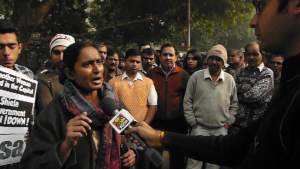
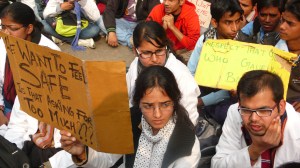
An hour is what it took for a band of six males to show a woman, a paramedic, ‘her place’ in contemporary Delhi. Often, in our pathological public places, it takes a mere moment. This case is different because it compels us to think through the limits of brutality of the living; it compels us to confront the limits of our capacity to inflict violence. But the night of December 16, 2012 also confronts us with the kind of cities we are building and the kind of places we want to inhabit. It is a different, by no means less important, matter that this woman—from whatever one has gathered these past weeks through the periodic medical bulletins—has battled to compel us to confront all of this and more, for the pain of her body and the brutality of an experience that she had survived for two weeks, serves a specular role—through it, we bear witness to ourselves, or so one hopes.

 This is to clarify a small misunderstanding. I know a part of the protests made you believe that women in Delhi are asking to take policemen away from their VIP duties and put them on Delhi streets. This is incorrect. Many of the protestors are too young to understand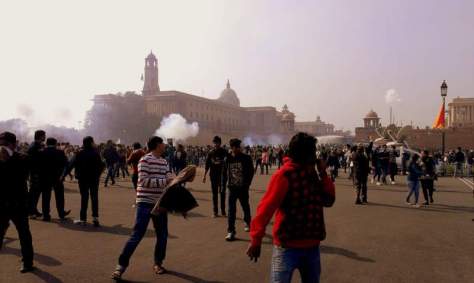




 KAFILA - COLLECTIVE EXPLORATIONS SINCE 2006