Tag Archives: Hindutva

When the Vishwa Hindu Parishad went time travelling: Ilija Trojanow and Ranjit Hoskote

3_3

This is an excerpt from Confluences: Forgotten Histories of East and West by ILIJA TROJANOW and RANJIT HOSKOTE (Yoda Press, 2012). In defiance of the current tide of national and cultural neo-tribalism, the authors argue that the lifeblood of culture is confluence. No culture has ever been pure, no tradition self-enclosed, no identity monolithic. Employing a variety of approaches, ranging from the essayistic to the poetic, from rigorous historical analysis to the playfulness of fiction, they follow the journeys of stories, ideas, people and songs, and trace the umbilical connections between Europe and Asia, Zoroastrianism and Christianity, Western revolutionary thought and the annihilatory politics of Jihad and Hindutva. In this particular section, titled ‘Travelling Back in Faith’, history is presented through the prism of science fiction:

vhp2The Vishwa Hindu Parishad (VHP) is a powerful organization founded on the belief that the Hindu religion is eternal and unvarying, that it has existed in India for thousands of years (the VHP’s chronological estimates vary between 8,000 and 50,000 years), and that its essence has never been affected by any foreign influence or borrowing. Hinduism is unique to India, and India is a uniquely Hindu country: such is the logic of the VHP. And yet, occasionally, the VHP is assailed by a sense of doubt. It is all very well to thunder at Muslims and Christians in self-congratulatory public meetings, its leaders say to themselves, but it would be nice to have some proof with which to fight off the scoffing scientists. And so, as documents recently made available to researchers reveal, the high command of the VHP decided to sponsor a time travel project, sending a fact-finder back to the glorious Vedic age to collect evidence of how the ancestors of the Hindus performed their rituals, worshipped their gods, and conceived of their relationship to the Divine. Continue reading When the Vishwa Hindu Parishad went time travelling: Ilija Trojanow and Ranjit Hoskote

Modi and me: Sharad Mathur

This is a guest post by SHARAD MATHUR

1999

In the summer of 1999, practising our family tradition, we were availing a government LTC that my father was entitled to, being a senior central government officer.  Since we could travel by air, we decided to take a trip to Darjeeling, while halting at Allahabad, Varanasi, Lucknow, and Calcutta for some sight-seeing. Those were the days when flying was an experience for most Indians; yet the emotional memory of this trip did not record much of the excitement induced by flying, but took vivid account of disappointment – with a chance conversation and of missing another.

It was on our flight from Lucknow to Calcutta, I was sitting with my younger brother while my parents were sitting together in a row behind us. I was on the window seat and was too occupied with the process of luggage sliding inside the plane, to notice two gentlemen who came and sat next to my parents and my brother respectively. My gawking was however interrupted by my father excitedly introducing me to one Devi Singh ji, who I was told happened to be Personal Assistant to Shri Bhairon Singh Shekhawat. Being a big BJP enthusiast, partly because of their mesmerizingly bright coloured flags, I looked up to this BJP heavyweight and was elated to meet his personal assistant. My excitement was doubled when Devi Singh ji introduced us to a gentleman sitting next to my brother, on the aisle seat, as Modi ji who was accompanying Bhairon Singh ji to the Bihar convention of BJP. However, this excitement remained short lived.

Continue reading Modi and me: Sharad Mathur

राज्‍य हिंसा का एक और नमूना – धुले

(An edited version of this Fact-Finding Report appeared in February issue of Samayantar)

गुजरात और मध्यप्रदेश की सीमा से लगे हुए महाराष्ट्र के धुले जिले में 6 जनवरी को होटल में पैसे के लेन-देन के आपसी विवाद को लेकर शुरू हुआ झगड़ा जल्द ही हिन्दू एवं मुस्लिम समुदाय के बीच पत्थर बाजी में तब्दील हो गया। इस हिंसा की परिणति पुलिस की गोली से मारे गए छः मुस्लिम नौजवानों (1) इमरान अली कमर अली (25) (2) असीम शेख नासिर  (21) (3) सउद अहमद रईस पटेल (18) (4) हाफिज मो. आसीफ अब्दुल हलीम (22) (5) रिजवान हसन शाह (24) (6) युनुस अब्बास शाह (20) के रूप में हुई। लगभग 55 मुस्लिम नौजवानों, जिनमें से लगभग 40कोगोली लगी, पुलिस की हिंसा के शिकार हुए। 58ऐसे लोग हैं जिनके घर,वाहन, दुकान, ठेलागाड़ी को क्षतिग्रस्त किया गया। धुले में हुई इस साम्प्रदायिक हिंसा की खासियत यह है कि न तो पुलिस और न ही कोई साम्प्रदायिक संगठन झूठ बोल सकता है, क्योंकि धुले में लगभग 3 बजे के आसपास जब विवाद ने पत्थरबाजी का रूप ले लिया तब उसके बाद के ज्यादातर फुटेज वीडियोक्लिपिंग अथवा फोटोग्राफ के रूप में मौजूद हैं। धुले में हुई इस हिंसा की हकीकत जानने के लिए वर्धा के हिंदी विश्‍वविद्यालय के अध्‍यापक, छात्र, सामाजिक कार्यकर्ता एवं पुणे के स्‍वतंत्र पत्रकार ने 19-20 जनवरी को धुले जिले का दौरा किया। Continue reading राज्‍य हिंसा का एक और नमूना – धुले

Elements of Bomb (Blast) Making – Understanding Dilsukhnagar: Biju Mathew

hydblast2

This is a guest post by BIJU MATHEW: The story is always the same, isn’t it? A perfectly ordinary day becomes extraordinary. A day when the daily tribulations of thousands of workers and small merchants is instantly transformed into tragedy. 15 dead, 5 still critical and over 100 others injured– some of them maimed for life – thinking of what recovery might mean. Ravinder, a farm hand from a Nalgonda village has lost a leg. His wife, Lakshmi might still yet lose her foot. Their 1 year old is missing. And they were in Dilsukhnagar for a hospital visit because the 1 year old has a congenital heart condition. There is no justice to be had here. Continue reading Elements of Bomb (Blast) Making – Understanding Dilsukhnagar: Biju Mathew

तार्किकता, भावुकता और फासिज्म

 28 फरवरी को याद करने पर अब कहा जाने लगा है कि यह नकारात्मक स्मृति है और इंसानी फितरत के मुताबिक़ हमें आगे बढ़ना  चाहिए. हिन्दुओं को, खासकर गुजराती हिन्दुओं, यह नागवार गुजरता है कि उन्हें  बार-बार 28 फरवरी , 2002 की याद दिलाई जाए. आखिर गुजरात में 2002 के बाद पूरा अमन है और वह विकास के मार्ग पर एक दृढसंकल्प मुख्यमंत्री के नेतृत्व में संकल्पपूर्वक बढ़ा जा रहा है और वहां के मुसलमान भी अब कुछ और बात करना चाहते हैं.

दरअसल भुलाने और आगे बढ़ जाने की शुरुआत 2002 में ही हो गई थी. 28 फ़रवरी से राज्य-संरक्षण में शुरू हुए मुसलमानों के कत्लेआम ने भारत के उद्योगपतियों के एक हिस्से को भी झकझोर दिया था. लेकिन कुछ समय बाद ही पूंजीवाद के तर्क ने मानवीयता की कमजोरी पर विजय पा ली और उन्होने नाराज़ मुख्यमंत्री से क्षमायाचना करके गुजरात की प्रगति में उन्हें हिस्सा लेने की इजाजत माँग ली  थी. सार्वजनिक रूप से उन्हें गांधी और पटेल से तुलनीय बताया जाना अब अटपटा भी नहीं लगता, बल्कि उलट कर कहा जा सकता है कि गांधी और पटेल में  ऐसे कई गुण नहीं थे जो गुजरात के ह्रदय-सम्राट में पाए जाते हैं , इसलिए यह तुलना वस्तुतः इन दोनों के प्रति पक्षपात है. पूंजीवाद के मूल अंतर्राष्ट्रीय चरित्र ने अंततः युरोपियन यूनियन को अपनी मानवीय हिचक को किनारे करके गुजराती यथार्थ को कबूल करते हुए कारोबारी नज़रिया अपनाने को प्रेरित किया. यह संभव नहीं था कि आर्थिक निवेश के ठोस आकर्षक आमंत्रण को   न्याय के अमूर्त आग्रह  के चलते ठुकरा दिया जाए. Continue reading तार्किकता, भावुकता और फासिज्म

On Ram Setu: ‘Mahakaal ka ling kiya hain?’

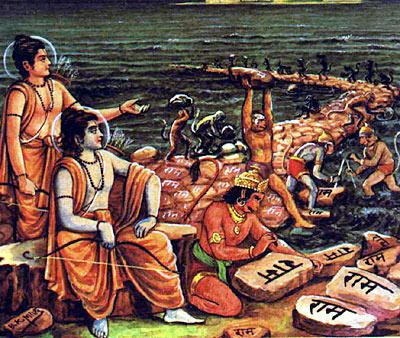
The Government of India again seems to be in the mood of going ahead with the Sethusamudram Shipping Canal Project that would reduce travel time for ships around coastal Tamil Nadu and Sri Lanka, and bring economic advantages to both countries. The project involves breaking limestone shoals that some regard to be the remains of the mythological Ram Setu. The controversy is an old one. In 2007, I had interviewed Hindutva ideologue Bharatendu Prakash Singhal, who was particularly vocal against the ‘destruction’ of the limestone shoals. Singhal is a former Rajya Sabha MP and a retired Indian Police Service officer. The bits from the interview that were directly about the Ram Setu controversy had appeared in Tehelka, but Singhal was more interested in talking about “mind, body and soul” than about Ram Setu. Here are the unpublished bits – though I had put them on my blog back then. Every word was transcribed faithfully from the recorded audio. Continue reading On Ram Setu: ‘Mahakaal ka ling kiya hain?’

Talk Hindutva, Sell Narcotics?

Curbing Freedom of Press: The Karnataka Way

ImageA 10-member group allegedly assaulted a staff member of Kannada daily Karavali Ale at Kulai here on Wednesday night.According to B.V. Seetaram, director and chairman of Chitra Publications, which publishes the paper, Harish Putran (36), office assistant, was attacked when he was waiting near Vishnumurthy temple to catch a bus back home.He was hit with iron rods and wickets and chased by the attackers, Mr. Seetaram said. Mr. Putran managed to save himself by hiding behind a shop.

Mr. Seetaram suspected the involvement of a rightwing group in the attack. He said Karavali Ale published a report on Wednesday alleging the rightwing group’s involvement in the sale of narcotics in the city. Copies of the newspaper were burnt and some vendors were threatened against selling the Wednesday’s edition, he said.Mr. Putran has been admitted to a private hospital. A complaint has been filed with the Surathkal police.

(Karavali Ale employee attacked : Staff Correspondent, The Hindu – Mangalore, February 7, 2013)

It has been a ‘happening’ week. Celebrations around one billion rising held in different parts of the world.Soni Sori acquitted in four cases. Dr Sunilam and two of his associates getting bail from Jabalpur high court after spending three months in Bhopal jail. More than two hundred intellectuals, activists writing to President of India about the manner in which Afzal Guru was hanged.  Interestingly in the melee of news certain troubling developments in south of Vindhyas have not got enough attention they deserve. And they concern the curbing of media by majoritarian elements with due connivance of the people in power. Continue reading Talk Hindutva, Sell Narcotics?

राष्ट्रवादी न्याय से करुणा की विदाई

“अगर हम ‘लोकतांत्रिक सरकारों के छिपे इरादों और गैरजवाबदेह खुफिया शक्ति संरचनाओं की जांच करने और उन पर सवाल उठाने से इनकार करते हैं तो हम लोकतंत्र और मानवता, दोनों को ही खो बैठते हैं.” पत्रकार जॉन पिल्जर का यह वाक्य आज हमारे लिए कितना प्रासंगिक हो उठा है! हमें नौ जनवरी को खुफिया तरीके से अफज़ल गुरु को दी गयी फांसी के अभिप्राय को समझना ही होगा. काम कठिन है क्योंकि इसे लाकर न सिर्फ़ प्रायः सभी संसदीय राजनीतिक दल एकमत हैं बल्कि आम तौर पर देश की जनता भी इसे देर से की गई सही कार्रवाई समझती है.

नौ जनवरी के दिन के वृहत्तर आशय छह दिसम्बर जैसी तारीख से कम गंभीर नहीं क्योंकि इस रोज़ भारतीय राज्य ने गांधी और टैगोर की विरासत का हक खो दिया है.अगर अब तक यह साबित नहीं था तो अब हो गया है कि भारत की ‘संसदीय लोकतांत्रिक राजनीति’ का मुहावरा उग्र और कठोर राष्ट्रवाद का है. और राजनीतिक दलों में इस भाषा में महारत हासिल करने की होड़ सी लग गयी है.

Continue reading राष्ट्रवादी न्याय से करुणा की विदाई

On the arrest of Nilim Dutta

The Times of India reports that Nilim Dutta has been arrested by the police in Assam on charges of financial fraud and impersonation. The Indian Express reports:

“While there are now six cases registered against him in Guwahati, what we have gathered is that the Delhi Police had also registered a case against him last year,” Assam DGP J N Choudhury told The Indian Express. [Link]

Dutta announced his own arrest on Twitter some days ago, claiming the police had assaulted his family and him, and so on.

I first discovered Nilim Dutta on Twitter in July or August last year. Bodo groups in Kokrajhar and other BTAD area of Assam had killed Muslims and driven them out, many of whom still live in refugee camps there, too afraid to go home. Intellectual cover to this pogrom was being given not only by the mainstream media but also in social media by Hindutva fanatics, with the excuse that all Mulims in Assam are illegal Bangladeshi immigrants. Dutta had been tweeting against this claim, and published a rebuttal to one such claim by a Bodo IAS officer in the Indian Express.

I thus invited Dutta to write a long piece for Kafila, which was published here on 16 August. “The Myth of the Bangladeshi” became a very popular piece, initiating many discusssions and disagreements in Assam, Delhi and elsewhere. Hindutva fanatics who were unsettled by Dutta’s excellent piece in Kafila and similar pieces elsewhere, and his appearance in TV channels and so on. Now that Dutta is arrested on charges of financial fraud, these people are saying on Twitter and elsewhere that this nullifies Dutta’s claims about Muslims/’Bangladeshis’ in Assam. Continue reading On the arrest of Nilim Dutta

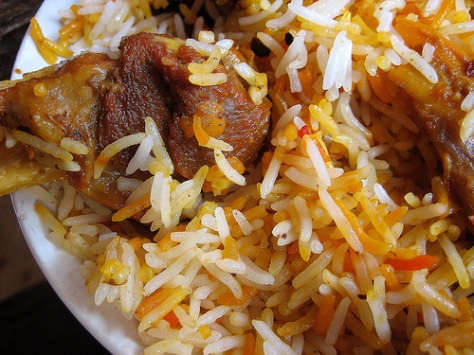
Ajmal Kasab, Tajinder Pal Singh Bagga, biryani and me

biryani-kafila

A large number of people have been asking me on Twitter over the last few days why I had signed a petition asking for Ajmal Kasab to be granted mercy and spared capital punishment. Kasab was hanged 21 November, why have all these people woken up to that petition now? That’s thanks to a belated but concerted online campaign initiated by the Tajinder Pal Singh Bagga-led Bhagat Singh Kranti Sena (BKSS), a rag-tag vigilante organisation which goes around threatening and committing violence against people it has political disagreements with. Continue reading Ajmal Kasab, Tajinder Pal Singh Bagga, biryani and me

On Hindutva terrorism

This joint public statement, signed by 34 citizens whose names are given at the end, was put out on 25 January

Swami Aseemanand (second from right): Terrorist?

While one may or may not agree with the terminology employed by the Home Minister in his recent speech at Jaipur, we feel that for long prejudice has ruled investigations, obscuring the role of organizations and their multiple affiliates in planning and executing of attacks and bombings in the country. The veneer of ‘nationalism’ — narrow, exclusionary and based on hatred for minorities as it is– cannot hide the violence that Sangh and its affiliates beget and peddle.  Continue reading On Hindutva terrorism

Now that Owaisi is in jail, how about Praveen Togadia?: Mahtab Alam

Guest post by MAHTAB ALAM

Akbaruddin Owaisi, an MLA of Andhra Pradesh Legislative Assembly, who belongs to a Hyderabad-based political party All India Majlis-e-Ittihad al-Muslimin, better known as MIM, and its floor leader in the Assembly made an inflammatory speech against Hindus on 24 December 2012 at a public meeting in Adilabad District. The speech attracted widespread condemnation by Muslim activists, rightly so, apart from left, liberal individuals and organizations. Dr. Zafarul Islam Khan, President, All India Muslim Majlis e Mushawarat (AIMMM), an umbrella body of prominent Indian Muslim organizations termed it ‘a hate and rash speech’ arguing, ‘words that should never have been uttered by a responsible person, let alone a political leader, were used’.

Shabnam Hashmi, a prominent social activist and who has been relentlessly working on the issue of minority rights registered an FIR in Delhi against Owaisi stating, ‘the whole speech is highly objectionable, inflammatory and against the values of our constitution, democracy and secular values’. Similarly, FIRs were also registered in the State invoking section 295 A (for deliberate and malicious acts intended to outrage religious feelings) and 153 A (promoting enmity between different groups) of Indian Penal Code (IPC). Owaisi was arrested finally arrested on Tuesday (8th January) and sent to 14-day judicial custody. Continue reading Now that Owaisi is in jail, how about Praveen Togadia?: Mahtab Alam

The muezzin’s last call at Babri Masjid: Krishna Jha and Dhirendra K Jha

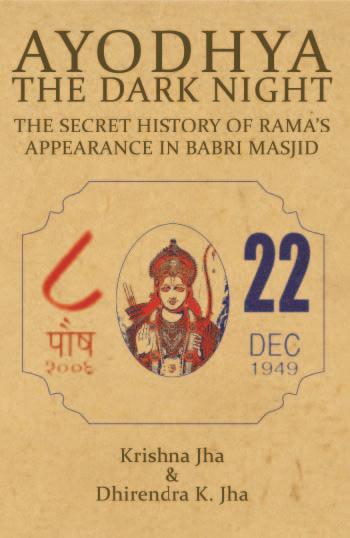
This guest post by KRISHNA JHA and DHIRENDRA K JHA is an excerpt from their book, Ayodhya: The Dark Night, about the original Ayodhya conspiracy of 22 December 1949

Published December 2011 by HarperCollins India;Rs 499; Pages 232
Published December 2011 by HarperCollins India; Rs 499; Pages 232

The sound of a thud reverberated through the medieval precincts of the Babri Masjid like that of a powerful drum and jolted Muhammad Ismael, the muezzin, out of his deep slumber. He sat up, confused and scared, since the course of events outside the mosque for the last couple of weeks had not been very reassuring. For a few moments, the muezzin waited, standing still in a dark corner of the mosque, studying the shadows the way a child stares at the box-front illustration of a jigsaw puzzle before trying to join the pieces together. Continue reading The muezzin’s last call at Babri Masjid: Krishna Jha and Dhirendra K Jha

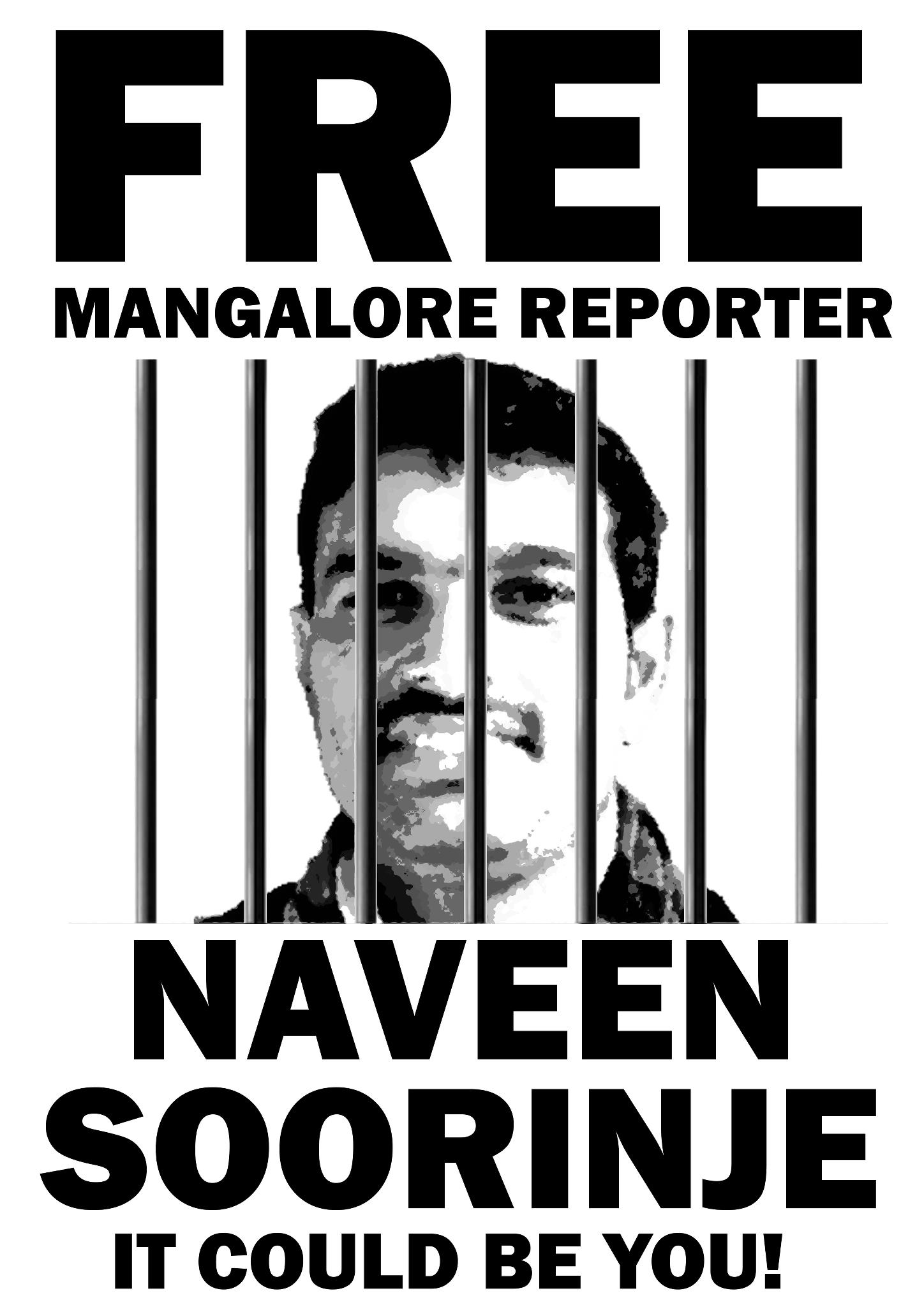
Free Naveen Soorinje

333487_10152333238225258_544394853_o

It is a matter of shame that instead of being celebrated, Naveen Soorinje, who followed journalism’s best traditions in reporting the attack by Hindutva vigilantes in Mangalore earlier this year, is now languishing in jail.

The Myth of the Muslim Vote Bank

The recently concluded assembly elections in U.P were marked once again by an intensified debate on ‘Vote Bank Politics’. The debate was not provoked by the emergence of any new trends in political mobilization but was the standard fare that is dished out by so called commentators, experts, political analysts and people who not only think that they have inside information about how entire communities think and react, they also claim that there are agencies capable of engineering conditions that programme these communities to go and vote for this or that party.

The essential argument behind this discourse hinges on two presuppositions, one that particular religion or caste based communities can be mobilised and made to move in one pre-determined direction and two that this becomes possible because such communities react and behave as one individual and therefore all that is required is to catch hold of a handful of community leaders and you can as good as have the entire community in your pocket. Continue reading The Myth of the Muslim Vote Bank

Partition Revisited: 2 October 2011, Rudrapur

This is a film by RAJEEV YADAV and SHAHNAWAZ ALAM of the Uttar Pradesh unit of the PEOPLE’S UNION FOR CIVIL LIBERTIES

This is to introduce our documentary film ‘PARTITION REVISITED’ on the Rudrapur riot of 2nd October 2011, where four persons were killed. Policemen and mobs led by leaders of the Bhartiya Janta Party, the Congress and the Bahujan Samaj Party had ransacked shops and settlements of Muslims in their third successful attempt within two years to stoke communal violence. The riot, which took place on Gandhi Jayanti, led to a massive outmigration of the victimised community, reminding one of the days of the 1947 Partition. This film focuses on precisely this yet unnoticed phenomenon that we could trace out in this first-ever state-sponsored communal riot since the formation of the hill state of Uttarakhand, engineered by the Rashtriya Swayamsewak Sangh, which has been working for a long time in this area to arouse anti-Muslim sentiments in the Bengalis, Sikhs & Panjabi Hindus who settled in Rudrapur after the Partition to India. At a time when the state is going to polls this riot assumes an electoral importance.

Oxford University Members Demand that OUP-India Stand by Ramanujan Essay

Shahid Amin has earlier written about the role of the Oxford University Press (India) in the censorship of AK Ramanjuan’s essay on the Ramayana. This press release, signed by a group of Indian scholars at Oxford University, comes to us via Agrima Bhasin.

Press Statement
Oxford, England
Date: 30 November 2011

A petition by members of Oxford University has condemned Oxford University Press (OUP) India’s unflattering role and its deafening silence on the controversy surrounding Delhi University’s recent decision to drop A.K. Ramanujan’s essay (Three Hundred Ramayanas: Five Examples and Three Thoughts on Translation). This petition has gained the abounding support of Oxford intelligentsia across 15 departments and 20 constituent colleges. Signatories include distinguished faculty members, senior academics and students.

In 2008 OUP India unceremoniously decided to stop publication of the only two books (Paula Richman’s Many Ramayanas and Vinay Dharwadker’s The Collected Essays of A.K. Ramanujan) containing Ramanujan’s essay. This happened to coincide with legal proceedings instituted inter alia against OUP India by fringe religious and cultural groups. OUP India’s prolonged subsequent silence on this matter lent widespread credence to the contention that OUP India caved in to external pressure thereby compromising its stated goals of “…[furthering] excellence in research, scholarship… by publishing worldwide.”

Continue reading Oxford University Members Demand that OUP-India Stand by Ramanujan Essay

A note of protest to Aditya Sinha, editor, DNA

To: asinha at dnaindia dot net

Aditya Sinha,
Editor,
DNA, Mumbai.

Dear Sir,

I have long been a fan of your column, tweets and have admired The New Indian Express and DNA under your editorship. I am, however, saddened to se that you chose to publish Subramanian Swamy’s column that is Islamophobic in the extreme, presumes the people behind the Mumbai blasts were Muslims without evidence, and in hardly veiled terms calls for violence against Muslims. Continue reading A note of protest to Aditya Sinha, editor, DNA

निनाद: कुलदीप कुमार

Guest post by KULDEEP KUMAR

जिन लोगों को यह ग़लतफ़हमी थी कि भारतीय जनता पार्टी हिन्दू धर्म और हिन्दुओं की बहुत बड़ी हितैषी है और व्यक्तिगत एवं सार्वजनिक जीवन में शुचिता की हिमायती है, उनकी यह ग़लतफ़हमी अब तो दूर हो जानी चाहिए. उसके शासन वाले राज्य उत्तराखंड में एक संन्यासी गंगा को स्वच्छ किये जाने और अवैध खनन को रोके जाने की मांग को लेकर अनशन करता रहा लेकिन पार्टी और सरकार के कान पर जूँ तक न रेंगी. गंगा का सभी भारतवासियों, विशेष रूप से हिन्दुओं, के लिए भावनात्मक महत्व है. अनशन भी शासन के विरोध में नहीं बल्कि एक सकारात्मक मांग को उठाने के लिए किया गया था. लेकिन स्वामी निगमानंद न तो राज्य सरकार का ध्यान अपनी ओर खींच पाए और न ही मीडिया का. जब उनकी ओर ध्यान गया तब तक बहुत देर हो चुकी थी.पंजाबी सूबे की मांग को लेकर अनशन करने वाले दर्शन सिंह फेरुमान की मृत्यु के बाद शायद यह पहला अवसर है जब किसी ने अनशन के कारण प्राण त्यागे हैं. Continue reading निनाद: कुलदीप कुमार

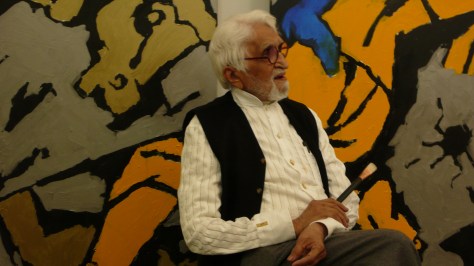
Alvida, Maqbool Fida: M.F. Husain, Free at Last

M. F. Husain at the Serpentine Gallery during the Installation of 'Indian HIghway', December 2008

Like possibly several other children growing up in the kind of lower-middle class metropolitan households that attempted to reconcile their aspirations towards culture with their frugal habits in the 1970s and1980s in Delhi, my first introduction to the art of our time was the framed print of a Husain painting. We had no television. And my parents had no gods. The only icons in our modest house were two framed pictures – an inexpensive N.S. Bendre, (Lalit Kala Akademi) print of a few women at a well and the reproduction of a Husain painting, possibly detached lovingly and carefully from an Air India calendar, possibly featuring the kind of goddess image that incensed the zealots who made it impossible for M. F. Husain to live out his final years in India. Continue reading Alvida, Maqbool Fida: M.F. Husain, Free at Last

Four years after the Mecca Masjid Blast, Justice Still Denied: Lateef Mohd. Khan

This note comes from LATEEF MOHD. KHAN of the Civil Liberties Monitoring Committee, Hyderabad

The Makkah Masjid bomb blast is completely different from all the other blasts of the country because on 18th May 2007, at a time many terrorist attacks took place in the Makkah Masjid. First of all the Hindutva terrorists planted the bombs and targeted the people praying on Friday in the house of Allah i.e. Makkah Masjid, immediately after that, the Hindutva police of Hyderabad through using the firing experts, fired at the praying people and those who were helping the victims. After this, the third terrorist act done by the Police was that they blamed Muslim community itself for the blast through media. Muslims were shocked at this layer by layer terror acts; they never thought that Hyderabad which is considered as the fort of Muslims, the bomb would be blasted at the historical Makkah Masjid. In fact, this act was to attack the fort of Muslims. With this the confidence of Muslims is shaken. Continue reading Four years after the Mecca Masjid Blast, Justice Still Denied: Lateef Mohd. Khan