Tag Archives: Indian Muslims

The unspeakable horrors of Delhi, 1947

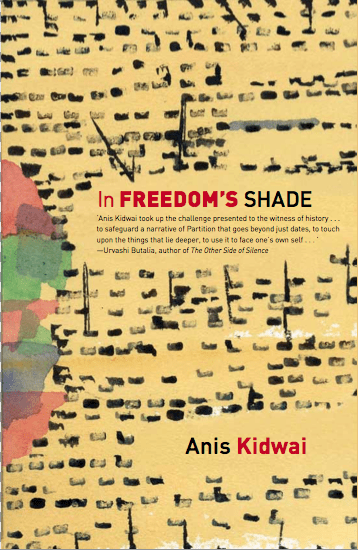
In Freedom’s Shade, by Anis Kidwai; translated from Urdu by Ayesha Kidwai; Penguin Books India 2011, Pp 382, price Rs. 450

Anis Kidwai belonged to the illustrious Kidwai family of Barabanki. The family has made more than a signal contribution to the making of India. Not only in politics and governance but also in diverse fields of creative endeavour. This short piece, though, is not about her or about her family but her most remarkable record of the unfolding tragedy in the Capital of India and in its surroundings in the aftermath of independence and partition.

Anis Kidwai, though extremely politically aware with sharp and clear views on what she saw happening, was not a political activist and would have probably continued to lead a well settled, almost sedentary life in Mussoorie, had the unthinkable not happened. Her husband, Shafi Ahmad Kidwai, the administrator of the Municipality, who had almost single handedly tried to keep peace in Mussoorie when everyone else had either given up or joined the rioters, was murdered.
Continue reading The unspeakable horrors of Delhi, 1947

Fast Backward: Aijaz Zaka Syed

Guest post by AIJAZ ZAKA SYED

What a farce! What a farce of a fast! One doesn’t quite know whether to laugh or cry over this state of affairs in the world’s largest democracy. It is a sad day in a nation’s history when someone who presided over a state-sanctioned genocide goes on fast in the name of “peace and harmony” and media vultures and assorted politicians rush to canonize him as the apostle of peace. When it comes to political theatre, few can beat our politicians. They have no qualms in mimicking their more successful fellow travelers if it can get them a few more votes or push them a couple of notches up the popularity ladder.

Continue reading Fast Backward: Aijaz Zaka Syed

‘Every eye-witness said there was no death before the police intervened’

This release comes from the PEOPLE’S UNION FOR CIVIL LIBERTIES, Rajasthan

Gopalgarh (Bharatpur, Mewat) Police Firing Incident
Preliminary Findings of the Fact Finding Team released in the Press Conference on 19th Sept, 2011

Photo credit: PUCL Rajasthan

This preliminary report of the PUCL team pertains to the incident of the police firing in Gopalgarh, district Bharatpur, Rajasthan. As per the media reports, the police resorted to firing to quell rioting mobs. The government has acknowledged eight deaths and 23 injured in this incident. Following this, the PUCL, Rajasthan constituted a Fact Finding Team to conduct independent inquiry into this incident. The team comprised Kavita Srivastava, National Secretary, PUCL, Professor Shail Mayaram (Delhi), Professor Yogendra Yadav(Delhi), Ms. Nishat Hussain (Vice President, PUCL, Rajasthan) Mr. Sawai Singh (Organising Secretary PUCL, Rajasthan), Mr. Noor Mohammed (PUCL, Alwar), Mr Virendra Vidrohi (PUCL, Alwar), Adv. Ramjan Chowdhary (PUCL, Mewat district, Haryana), Mr Gaurav Srivastava(PUCL intern). Mr. Neelabh Mishra, Editor, Outlook (Hindi) and a section of progressive members of the Gurjar and Meo community also accompanied and assisted the fact finding team. Continue reading ‘Every eye-witness said there was no death before the police intervened’

Lessons from Malegaon: JTSA

This is a statement put out by the JAMIA TEACHERS’ SOLIDARITY ASSOCIATION

Punish those guilty of misleading probes
Compensate the victims NOW!

13 September 2011: The NIA has finally put the official seal on what many activists, the families of the accused and the people of Malegaon had been saying for long: that the arrest of nine Muslim men for the 2008 Malegaon blast was a result of a communal witch-hunt, which passes for investigations into terror charges. As a consequence of the investigating agencies’ hubris and prejudice, nine innocent men had to spend five long years in jail, while their families suffered and they were stigmatized.  Continue reading Lessons from Malegaon: JTSA

‘Muslim Quota’: Keep it Simple, Silly! – Khalid Anis Ansari

Guest post by KHALID ANIS ANSARI

In an interview last month, Mr. Salman Khursheed was posed the query: ‘There are reports that you are considering Muslim reservations within the OBC quota?’ He responded affirmatively: ‘Absolutely. Sachar described them as SEBC, socially and educationally backward classes. This is a special segment within OBC.’

Nowhere in the Sachar report are Muslims categorized as SEBC (Socially and Educational Backward Classes). They are categorised merely as one of many SRCs (Socio-Religious Communities). Moreover, the Sachar Report has acknowledged caste-based stratification within Muslims and has suggested quite unequivocally: ‘Thus, one can discern three groups among Muslims: (1) those without any social disabilities, the ashrafs; (2) those equivalent to Hindu OBCs, the ajlafs, and (3) those equivalent to Hindu SCs, the arzals. Those who are referred to as Muslim OBCs combine (2) and (3) [p. 193 (emphasis added)]’.

So, according to the Sachar Report all Muslims cannot be conceived as a socially and educationally backward class (OBC) because the forward Muslims (ashrafs) are ‘without any social disabilities’. Well, one may ask if the minister who exhorted everyone to read the Sachar Report critically and not as gospel truth, has failed to practice what he himself preached. The honorable minister seems to have read the report incorrectly.

Strange are the ways politics affects one’s judgment! Continue reading ‘Muslim Quota’: Keep it Simple, Silly! – Khalid Anis Ansari

Every time there is a bomb blast in India

Jyoti Punwani writes:

Expectedly, the questions were the same. What were you doing on the day of the blasts? Had you gone to Cheetah Camp? Do you know anyone from the Indian Mujahideen? How many times have you been to Pakistan? Why does only your information come to us? Get your house documents.

Amanullah was ready with the answers and documents… [Must Read]

From Kafila archives:
What does it mean to be a Muslim in India today?

Chidambaram khush hua: Mahtab Alam

Guest post by MAHTAB ALAM

On Friday morning, when I started for the Supreme Court to attend the bail hearing of Dr. Binayak Sen, like many of our friends and comrades I was not sure of whether he would be granted bail. I was afraid that the case would be adjourned once again, as many of us who are regular visitors of courts expect, aware of the delaying tactics of government counsels, and the history of tareekh par tareekh. Kavita Srivastava, who has been following the case closely and campaigning tirelessly for Binayak’s release along with others, put the spirit back in me. It couldn’t get any worse, she said.

Fortunately, it turned out to be a good Friday. I was happy, as were my friends and comrades. We wanted to scream out of joy and happiness but we restrained ourselves for we were in the court premises and could be booked for ‘contempt of the Court’. Naturally, it was one of the happiest moments our life. Binayak and Ilinia a source of inspiration for hundreds of students and youth like me. I am happy for Binayak, for his family, especially for his mother, for ordinary (read extra-ordinary) people of Chattisgarh and for thousands of his supporters and justice loving people. Continue reading Chidambaram khush hua: Mahtab Alam

Ghettoes of the Mind: Khalid Anis Ansari on ‘minority status’ for Jamia Milia Islamia

Guest post by KHALID ANIS ANSARI

Teri azaān mein nahin meri sahar ka payām. [Your call to prayer heralds not my dawn] – Allama Iqbal

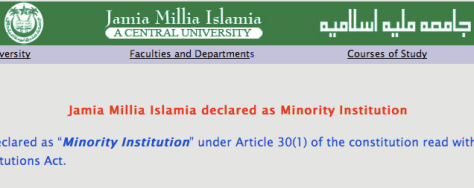
A grab from the university's website

The recent judgment of the National Commission for Minority Educational Institutions (NCMEI), favoring ‘minority status’ for Jamia Millia Islamia University, has generated vigorous debate. While it seems to me that most of the articulations have probably been reluctant in staging the immanent logics governing the entire controversy, I see this debate as offering yet another opening for democratic transformation within the Muslim community. While I will resist from taking a straightforward for/against position on the issue, it would be my endeavor to trace the discursive ruptures that instantiated the articulation around the ‘minority status’ for Jamia, and to indicate at the need to frame the Muslim ‘community’ now as a contested terrain with multiple sites of negotiations, cleavages and transformations.

Continue reading Ghettoes of the Mind: Khalid Anis Ansari on ‘minority status’ for Jamia Milia Islamia

What does it mean to be a Muslim in India today?: Mahtab Alam

Guest post by MAHTAB ALAM

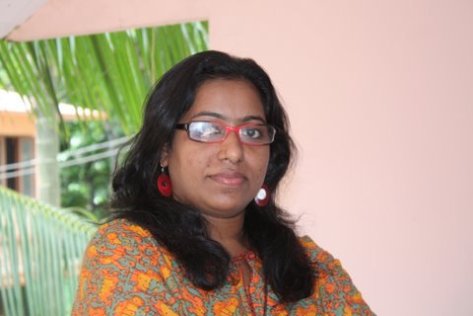
Shahina KK

Recently, Shanina K K, a journalist from Kerala, who worked with Tehelka news weekly and now works with Open magazine, received the Chameli Devi Award for being an outstanding woman journalist. While receiving the award she said, “See, I happen to be a Muslim, but I am not a terrorist.” What made her say that and what was she trying to convey or explain? It means, as she explains, “If you belong to the minority community, they will also profile you. It is very difficult to prove that you are not a terrorist. It is equally difficult to prove that you are not a Maoist in our life and times.” Continue reading What does it mean to be a Muslim in India today?: Mahtab Alam

You Fill in the Rest: Dilip D’Souza on the Godhra verdict

Guest post by DILIP D’SOUZA

Here’s a crime: February 27 2002, 59 people killed when a train is set on fire in Godhra. 90+ people are arrested and accused of the slaughter. Bail is denied to them all. The trial takes nine years, the trial verdict acquits 63 of them, finds the other 31 guilty. The judge sentences 11 of those 31 to death, the other 20 to life in prison.

Here’s another crime: February 28 2002 (the next day), 69 people killed when a building called Gulberg Society is set on fire and its residents attacked in Ahmedabad.

You fill in the rest. How many arrested and accused of this slaughter? How many denied bail? How long does the trial take? How many are acquitted? How many are found guilty? How many are sentenced to anything at all? Continue reading You Fill in the Rest: Dilip D’Souza on the Godhra verdict

The myth of India’s Hajj subsidy: Muhammad Farooq

Guest post by MUHAMMAD FAROOQ

Recently the Supreme Court of India upheld the constitutional validity of extending subsidy on air fare to the Hajj Pilgrims. This year Rs.280 Crores were reportedly spent by the Government of India to subsidise the air fare of one lakh pilgrims. This amounts to a subsidy of Rs.28000/- per pilgrim. The subsidy provided to the pilgrims has understandably generated a lot of debate within political and social circles in India. While the right wing political parties, when not in power, consider it as an unnecessary appeasement of Indian Muslims, the governments formed by any party have always seen it as a necessary expenditure to help Muslims perform their religious obligation of Hajj.

Since I have also performed my Hajj this year, I decided to do some quick calculations to check the veracity of the tall claims made by the GoI and the Hajj Committee regarding the subsidy amount (see box). The results were quite shocking. I checked with one of the service providers —‘makemytrip.com’— and it showed up the Saudi Airline’s fare of a little over Rs.26000/- for a return Delhi-Jeddah ticket with a gap of around forty days. It was amazing to find that the total airfare of Rs.26,000 for a hajj pilgrimage is even lower than the subsidy amount  of Rs.28,000 thousand which is allegedly paid by GoI to airlines to subsidise the “high cost” of the air tickets. Continue reading The myth of India’s Hajj subsidy: Muhammad Farooq

Teaching Harmony, Practicing Disharmony

This was presented as a paper at a symposium on Peace Education organised as part of National Conference on Indian Psychology, on 6 February 2011 at the India International Centre.

This piece seeks to underscore the cleavages that exist in our society, explore the foundations upon which the edifice of intolerance has risen and to look at the tools, like education for peace and harmony, with which we try to dismantle this citadel of intolerance.

Peace education, you would agree, cannot be confined merely to teaching the message of Love and brotherhood, our text books have been teaching this message for as long as I remember and my memories of our text books go back, at least to my senior school days in the mid sixties, almost 45 years ago.

If telling students in their classes that we should all love each other because we are all Indians and that we are all equal was enough then we would not have many of the problems that we are confronting today. Continue reading Teaching Harmony, Practicing Disharmony

“I Am Still Alive”: Amitava Kumar

Guest post by AMITAVA KUMAR

Till a few days ago, I hadn’t heard of Aqeel Shatir. A friend sent me a link to a report in the Indian Express on December 20 about a poet who had been asked to pay for an anti-Narendra Modi remark in his anthology, Abhi Zindaa Hoon Main (I Am Still Alive). I got in touch with the reporter, in Ahmedabad, who had filed the story and soon after that spoke on the phone with Shatir.

Aqeel Shatir is his takhallus or literary alias. The name his parents gave him was Aqeel Ahmed. His ustad offered him a choice of two pen-names. One was Aazar, which means a sculptor, someone who carves beautiful forms from marble. The other was Shatir, whose literal meaning is chess-player but denotes someone who possesses cunning. Continue reading “I Am Still Alive”: Amitava Kumar

Ramzan in Jamia Nagar

It is Ramzan time in Jamia Nagar – municipal workers clean the streets and line it with chuna lime, bakeries are piled high with sewain, and halwais have begun preparing the special iftar food. The police are busy too, but residents can comfort themselves with the thought that it is only to regulate traffic in the congested lanes. As the clock ticks towards iftar, the road from the Jamia Milia Islamia University towards Batla House is made one-way: the way in, to help the rushing crowd reach home in time, picking up fruit and pakwan (snacks) on the way.

The residents’ relationship with the police here is notoriously complicated. Until 2007, Jamia Nagar only had a police post, but during Ramzan that year a policeman was accused of desecrating the Quran, and the dispute led to the police post turning into a full-fledged police station. In 2008, it was during Ramzan that the police engaged alleged bomb-plotters in a firefight, an “encounter” that’s widely regarded to have been fake. A few weeks later, a jeepful of Noida policemen in plainclothes attempted to kidnap a local man, but residents poured out and chased them away. Continue reading Ramzan in Jamia Nagar

Godhra, arson, terrorism, stone-pelting, Dalits and Muslims, and other such issues in village Lehna

A fact-finding report released today by PUCL Uttar Pradesh

Fact Finding Report on the murder of MNREGA and labour activist Shri Hari Lal, Village Lehna, Block Manjhanpur, District Kaushambhi on 15.08.2010

A fact finding committee to investigate the incident was formed with the following: members

  1. Mr. S.R.Darapuri, Retired IPS, Vice President UP PUCL.
  2. Mrs. Arundhuti Dhuru, Consultant to Commissioner Right To Food Committee of Supreme Court.
  3. Mr. Ram Kumar, Vice President UP PUCL.
  4. Mr. Jawed Rasool, Dyanmic Action Group.
  5. Dr. Nisha Srivastav, Professor  (Deptt. of Economics ), Allahabad University .
  6. Mr. Rajni Kant Rai, HRLN, Allahabad .
  7. Mrs. Bindu Singh, Convener UP Right To Food Campaign .
  8. Mr. Sanjay Singh, convenor, Parmarth, Oriye, Jalaun

The committee visited the site of incident in village Lehna  on 21.08.10 .The fact finding committee met the family members of the late Hari Lal, other residents of the village, and workers and officials of Voice of People’s (VOP). The committee also met the district magistrate and spoke to the superintendent of police. The following facts about the incidents came to light through this enquiry:

Background to the Incident

The main issue behind this incident was of MNREGA and payment of labour wages. According to the available evidence, a pond was dug in the village by 250 labourers from the panchayat quota of MNREGA in April, May and June 2007. However, the gram pradhan, Tirath (Dhobi), did not pay the labourers full wages. The gram pradhan is a mere puppet in the hands of a former gram pradhan, Bassan, and his son Fateh and a criminal named Nakkan. Continue reading Godhra, arson, terrorism, stone-pelting, Dalits and Muslims, and other such issues in village Lehna

Madhuri and Zeenat

I recieved a mail today about the  deafening silence on the 24X7 newsbreakers regarding La affaire Madhuri and it got me thinking.

Is it not a bit strange that an OB van is not stationed permanently at the Vikaspuri residence of Ms Gupta? How is it that her milk man, her vegetable seller, the retired army major/ or a school principal or an old acquaintance who lives a few houses away have not been interviewed 200 times in the last two days?

How is it that archival shots of Ms Gupta driving away in her car, or recent shots of her being led away  in hand-cuffs, pan shots of her house from across the road, shots of authentic looking documents, of the schools she went to, of interviews with her old parents asking them how does it feel to be parents of a traitor? etc., etc. are not being run in a 24 hour loop? Continue reading Madhuri and Zeenat

Tilting at Wind Mills Aren’t We

The Jamiat Ulama-e-Hind Conference held recently, has raised Cain through one of the 25 resolutions that were passed at the conference. The kind of noise that has been generated by this resolution has virtually air-brushed the other resolution out of reckoning. Did the remaining 24 resolutions not deserve closer scrutiny, especially in view of the fact that many of these resolutions had taken off from the recommendations of the Sachar Committee report.

The 24X7 “News” channels that claim to keep us updated on developments even before they occur, have by and large concentrated all their energies on this one resolution which claims that the “Singing of Vande Maatram is Un-Islamic”. Given the kind of attention that this resolution has already received, it may be worth our while to talk about some of the other resolutions before getting into the raging debate of Vande Maatram. Continue reading Tilting at Wind Mills Aren’t We

The Discreet Poison of Aamir

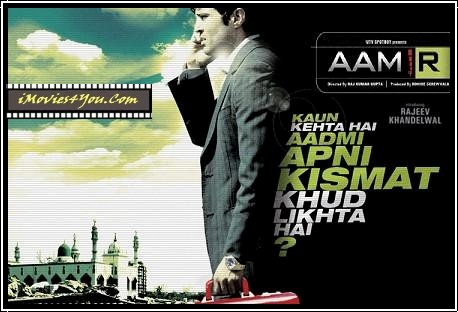
Aaamir the film

Aamir, a film about a man on the run, was released in June 2008, it was one of those rare films that was praised by critics and liked by viewers. I did not like the film, I was in fact very upset and disturbed about the film and thought about giving expression to my angst in writing, but this outpouring of powerful emotions never materialised, I would probably have never gotten down to writing this piece had Delhi 6 not arrived on the scene. Continue reading The Discreet Poison of Aamir

How ‘news’ became ‘interesting’

Our friend, like all stringers, would send Lucknow a lot of stories but all would go waste. A story a month, at the most, just a thousand bucks. Something interesting, get something interesting, the input editor on the other side of the mobile phone would say. Continue reading How ‘news’ became ‘interesting’

Muslim Madrasa Modernisation

A rather animated debate is on among different sections of the Muslims as also among the civil and the uncivil society in India about the Madrasa, their importance, the role they play and the need to make them more modern, thereby converting them into institutes that are more relevant to the contemporary requirements of both the Muslims and the market. The former is openly stated while the latter is rarely articulated.

Before proceeding with an exploration of some of these concerns and to try to understand the trigger behind the proselytising zeal to modernise the madrasa, let us understand the institution of the madrasa itself. Continue reading Muslim Madrasa Modernisation