Tag Archives: Kashmir

Reclaiming the Republic from the Alleged Perpetrators of Violence

As I sit writing this, on the 26th of January, 2013, in various parts of the territory of the Republic of India, soldiers either already have, or are about to begin marching in formation. In New Delhi, the capital of India, their parade is accompanied by tanks, heavy artillery and replicas of nuclear warheads. In the part of the province of Jammu & Kashmir administered by the Indian Union, in several provinces of the north-east, and other areas where the writ of the state runs entirely on the basis of its armed might, Republic Day, as this date is called, is an occasion for search and cordon operations, ‘crackdowns’ and the creation of a Potemkin village like ambience in the zones (usually heavily guarded stadia) where the republic insulates itself from the public. In New Delhi, the naked, obscene exhibitionism on the axial avenue of Rajpath of a nuclear weapons power that maintains the second largest armed forces in the world, even as millions of its subjects subsist at sub-Saharan levels, is an annual ritual. Apparently, this ritual is conducted to commemorate the founding of the Indian republic through the coming into force of its constitution in 1950.

Continue reading Reclaiming the Republic from the Alleged Perpetrators of Violence
In Multiples of Ten Ravanas

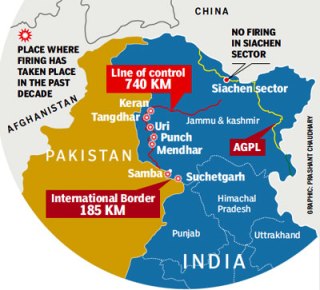
Some (more) thoughts on Indian and Pakistani soldiers beheading each other at the ceasefire line in Jammu & Kashmir

Hindustan Times Graphic
From the Hindustan Times

In the early hours of 10 January 2013, I published a post here that asked, “Was an Indian soldier decapitated at the Line of Control or not?” Soon thereafter, the family of Lance Naik Hemraj Singh of 13 Rajputana Rifles cremated his body and went on a hunger strike, demanding the government get the head. Several readers commented that now that it was clear a beheading did take place, I owe them an apology. I do not see why I owe them such an apology considering  I never said that an Indian soldier wasnot beheaded. I only pointed to the conflicting reports, the absence of official mention about whether or not a soldier was beheaded, a quoted a Reuters report that categorically said that according to the official spokesperson of the Northern Command, no soldier was beheaded, though the two soldiers’ bodies were mutilated. Despite such an official denial quoted in a trusted news source, I had written, “It is possible the anonymous sources are right, because this is not the first time both sides are blaming each other of showing disrespect to bodies of dead soldiers in violation of the Geneva convention.” Continue reading In Multiples of Ten Ravanas

Dear Barkha Dutt: The Buck Stops Where?

On the of latest edition, (telecast a few hours ago, on the evening of the 15th of January, 2013) of ‘The Buck Stops Here’, (a flagship news show on NDTV anchored by Barkha Dutt) – ‘India-Pakistan:Another Tipping Point‘, Admiral (Retd.) Ramdas, former chief of the Indian Navy said he knew that Indian forces have beheaded Pakistani soldiers in the past. Gen. (Retd.) V.P. Malik, former chief of the Indian Army contradicted him, and said this had never happened. Barkha Dutt was silent on this matter.

Below is a summary of some highlights of the discussion. Continue reading Dear Barkha Dutt: The Buck Stops Where?

A petition to end tensions at the Line of Control from citizens on both sides of the LoC

Signatures given at the end. Should you want to add your signature to this petition, write to Anuradha Bhasin at anusaba[at]gmail[dot[com]. The petition with the final list of signatories will be sent to the heads of state in both India and Pakistan.

To,
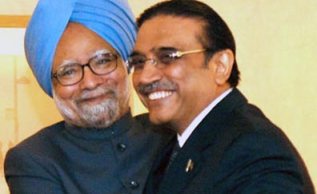
Indian Prime Minister Manmohan Singh and Pakistan President Asif Ali Zardari,

Dear Sirs,

We, the people of Jammu and Kashmir on both sides of the Line of Control, have been observing with great concern the escalation of tensions at the LoC that have been building up gradually since June 2012 and have suddenly taken an ugly turn since the first week of January, 2013.

We express grave concern at the loss of lives of the soldiers and any casualties to civilians on both the sides. At the same time, we are also concerned about the safety and security of the people of Jammu and Kashmir, particularly the people living at the borders, who are directly hit by sporadic incidents of shelling and firing. Continue reading A petition to end tensions at the Line of Control from citizens on both sides of the LoC

Suran: A poem by Uzair

This guest post is a poem by UZAIR, who grew up near the Indian side of the ‘Line of Control’ in Poonch

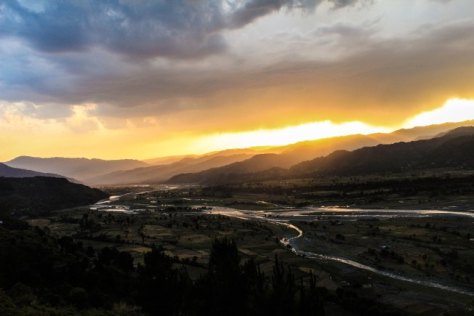
The poet took this photograph in Poonch by the river Suran last summer.Across the second ridge lies the Line of Control. Taken from the Indian side, the photo captures the sun setting on the Pakistani side.
The poet took this photograph in Poonch by the river Suran last summer. Across the second ridge lies the Line of Control. Taken from the Indian side, the photo captures the sun setting on the Pakistani side.

The river carries with it
Snow of distant peaks,
Floating memories
Twigs, leaves.

Only a few miles west
it would be stripped
at the border, asked
to produce a permit,
shot dead or may be not.

Waters were negotiated upon;
so the river travels seamlessly
only a few miles west
to another country.

On its bank, I heard
a cuckoo speak
“The sun shines during day
and stars illuminate the night sky
even across the border”

“And a few collect the twigs
like memories of childhood;”

“smell of dead wood, so familiar
grief and longing, so natural
decades of hope; still alive,
even across the border”

One day the river would flow
eastwards, said the old man
whose corpse floated across,
only a few miles west
and met his children
across the border.

(Uzair blogs at Untitled Untitled.)

See also:

The Country With A ‘Balancing Office’: Suvaid Yaseen

Guest Post by Suvaid Yaseen

Of late there has been a rising trend of Kashmiris – professionals, artists, writers, musicians et al presenting their works on Kashmir on a much wider level than before. The larger impression that comes out of it all is that the narrative has been taken up by the people for themselves. A welcome contrast to outsiders flying in and telling us what we want, how we think, and what is actually good for us.

So, every time a Kashmiri artist is presenting his/her work on Kashmir, the expectations among Kashmiris tend to go up. People start feeling that finally their narrative, of how they saw the things, what they went through, would be told to the world, bereft of the lenses of security paradigm through which Kashmir has been usually viewed  –  a strategic territory, with not-so-strategic, dispensable people.

This can be fortunate as well as unfortunate. On one hand there is a ready audience to appreciate and applaud your work. On the other hand there are expectations to ‘perform’. For the artists themselves, there are additional pressures of ‘balancing’ and having a ‘non-biased’ view from the other side.

Continue reading The Country With A ‘Balancing Office’: Suvaid Yaseen

Was an Indian soldier decapitated at the Line of Control or not?

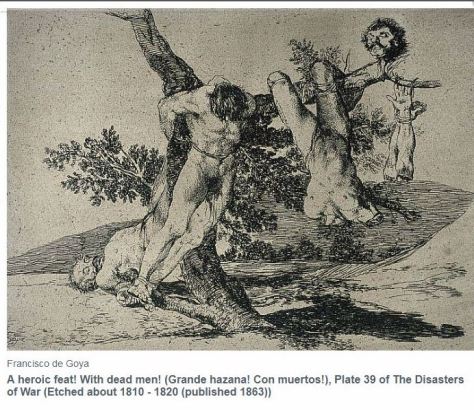
"In this sickening image, one of the most extreme in The Disasters of War series, the naked bodies of mutilated, tortured and castrated men are shown hung from a tree as a warning to others. Goya was one of the first artist to reveal the grim reality of warfare, stripped of all chivalry, romance and idealism. He captured something quintessential about modern war which has found resonance with succeeding generations of audiences. This print was controversially adapted in the 1990s by the artists Jake and Dinos Chapman. It formed the basis for one of their gory, three-dimensional tableaux, in which scenes from the series were recreated using dismembered mannequins covered in fake blood." - Image and caption via nationalgalleries.org
“In this sickening image, one of the most extreme in The Disasters of War series, the naked bodies of mutilated, tortured and castrated men are shown hung from a tree as a warning to others. Goya was one of the first artists to reveal the grim reality of warfare, stripped of all chivalry, romance and idealism. He captured something quintessential about modern war which has found resonance with succeeding generations of audiences. This print was controversially adapted in the 1990s by the artists Jake and Dinos Chapman. It formed the basis for one of their gory, three-dimensional tableaux, in which scenes from the series were recreated using dismembered mannequins covered in fake blood.” – Image and caption via nationalgalleries.org

*

In a skirmish on the Line of Control on Tuesday, 8 January 2013, did Pakistani soldiers behead an Indian soldier or did they not? Or did they behead two soldiers and take away the head of one of them? Or did they behead one and slit the throat of another? Reports in the Indian media have left me utterly confused. I’ll let you decide. Continue reading Was an Indian soldier decapitated at the Line of Control or not?

Indians and Pakistanis Condemn Exchange of Fire and Killings on LoC

List of signatories from both countries given at the end.

We, the undersigned Indians & Pakistanis, are deeply disturbed with the recent exchange of firings and killing of two Indian and one Pakistani soldier across the Line of Control (LoC). The incidence as reported is highly deplorable and no sane person or society can accept such unwarranted and gruesome incidences. The said incidences have a potential to derail the ongoing peace process that has shown remarkable progress in recent times in easing the visa regime, improving trade relations and securing many other confidence building measures that hold great promise for both the countries.

We are happy that the Director Generals of Military Operations (DGMOs) of both countries have spoken to each other after the incidents. We urge that suitable mechanisms must be evolved and implemented immediately to ensure that the concerned authorities on both sides are in constant touch to avert recurrence of any such incidence rather than meet after some damage is done. Continue reading Indians and Pakistanis Condemn Exchange of Fire and Killings on LoC

January 6, 1993 – A Town Torched: Remembering the Sopore Massacre Twenty Years After: Sameer Bhat

Guest post by SAMEER BHAT

In Memory of the Massacre in Sopore, Kashmir, by the 94th Battalion of the Border Security Force on January 6, 1993.

[YouTube Video – Compiled from various sources – including a report by Savyasachi Jain, now with NDTV, for Eyewitness – a VHS delivered video news magazine active in the early 1990s.]

There was sound of a huge bang that morning, like someone blowing up a cartful of dynamite. Just before the cockcrow. Most of the townspeople were asleep. The dawn prayers had thin attendance, mostly because it gets very cold in January. By nine o’clock a military patrol was out, doing rounds of the main marketplace. Suddenly gunmen emerged from a narrow alley and shot random bullets at the party before quickly disappearing in the maze that old Sopore is. Taken rather off guard, the security detail ran back to their barracks only to emerge again as Frankenstein’s monsters, spitting hell fire. In the next fifty odd minutes, they murdered fifty five people in cold blood. And burnt the town down. Continue reading January 6, 1993 – A Town Torched: Remembering the Sopore Massacre Twenty Years After: Sameer Bhat

A review of human rights in Jammu & Kashmir in 2012: JKCCS

This brief has been put out by the JAMMU AND KASHMIR COALITION OF CIVIL SOCIETY

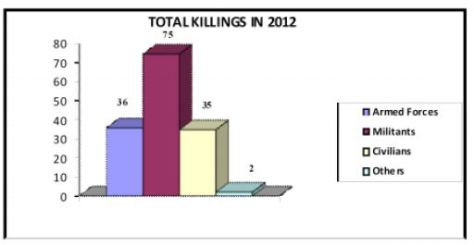
TOTAL KILLINGS

The year 2012 has just passed, and yet again like previous years, the government of Jammu and Kashmir has disgracefully claimed the year to be peaceful. This hyped peace is void of justice & peace and is packed with violence & injustice. In the year 2012 the people of Jammu and Kashmir in routine have witnessed unabated violence, human rights abuses, denial of civil and political rights, absence of mechanisms of justice, heightened militarization and surveillance. The figures of violent incidents suggest that 2012 as usual has been the year of loss, victimization, lies, mourning and pain for the people. Continue reading A review of human rights in Jammu & Kashmir in 2012: JKCCS

Armed Forces Special Powers Act provides impunity for rape: Warisha Farasat

Guest post by WARISHA FARASAT

The protests against the brutal gangrape of a young 23 year-old girl in Delhi have been unprecedented. Finally, it appears that the impunity with which crimes against women in our country are committed is causing outrage, and both men and women are demanding justice. What is encouraging is that although the protests were triggered by the recent incident of rape in Delhi, it has also forced us to reflect on the larger issue of impunity for rape and other crimes against women, particularly when it happens against women belonging to the marginalized communities. Moreover, it is also politicizing an entire generation of young people that are realizing that their voice can create ripples in the political establishment in Delhi.

Shuddhabrata Sengupta in his earlier post has lucidly articulated about how our response to sexual violence should not be selective, and our protests should recognise the brutality of crimes against women in the conflict areas of Kashmir, Manipur and Chhattisgarh. In Kashmir, accusations of rape have been repeatedly made against the security force personnel. It has been alleged that rape and assaults have occurred during crackdowns, cordon and search operations. During these operations the men were held for identification outside their houses, near mosques or in a common ground while the security forces searched their homes. During these search operations, safeguards such as inclusion of a women officer in the search teams were never followed. Continue reading Armed Forces Special Powers Act provides impunity for rape: Warisha Farasat

Play Haze Kay not Honey Singh: Music from Kashmir against Rape for Delhi

“Justice to the girls who were so innocent,
Justice so our sisters can be roaming free,
Justice to Aasiya and Neelofar,
Justice to the girl from Delhi.”

– a song by HAZE KAY (Rapper from Kashmir)

Haze Kay
Haze Kay

Yesterday, we saw placards on Jantar Mantar that sought to draw linkages of solidarity between young people asking for justice for the gang-rape survivor in Delhi and those committed to the memory of the rape and murder of Neelofar and Aasiya in Shopian and many others in Kashmir.

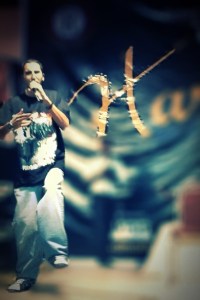
Today, a Facebook post by Fahad Shah alerted me to a song by Haze Kay – a Kashmiri rapper that made the same linkage of solidarity, from Kashmir, to Delhi.

Here is the song. No further words are necessary. Except to say, call up radio stations in Delhi, and ask RJs to find and play Haze Kay, not Honey Singh.

LYRICS

In the memory of Aasiya and Neelofar and thousands of other girls and women who have been victimized by the crime called Rape ..

intro –

their guns and their clicks , i don’t fear all that .
when the police comes around , i don’t fear all that .
disappeared without a trace , i don’t fear all that .
cause i am from Kashmir so i don’t fear all that. Continue reading Play Haze Kay not Honey Singh: Music from Kashmir against Rape for Delhi

A song for snow: Arif Ayaz Parrey

Guest post by ARIF AYAZ PARREY

The beloved is like snow after a chilly wind. The beloved is a bright sun after snowfall. The lover is like the cinders in a kãger that refuse to die. The lover is the immortal heat of ashes.

     In the 2008 Hindi movie Oye Lucky! Lucky Oye! the playing out of virtues of theft in a world of (corrupt) systems is not the only delicious element. As a matter of fact, even more lovable is the song Tu raja ki raj dulari which echoes Shiv’s plea to Parvati after she has hopelessly fallen in love with him, and chosen a path of austerity competing with his asceticism. Tu raja ki raj dulari mein sirf langoti aala sun, bhaang ragd ke piya karoun mein kunde sote aala sun.  He tells her. “You are a king’s royal darling, I possess only a loincloth (Will tiger-cloth be a more helpful description here?), I drink ashes which I grind on a pistil and mortar.” Now there are several ways of looking at this parable. At the surface, and then again at its very core, it is a narration of one of the major themes of storytelling: An independent, beautiful and strong woman poignantly falling for a clumsy, reclusive and basically loser-type man, against better advice and to much heart-ache all around. But this characterisation holds only at the surface, the patriarchy of this theme works through the neat device of depth, the woman is strong, but only on the outside, quite literally when you know that Parvati once shed her outer mantle which became a powerful warrior-goddess in its own right, but in depth and beyond the obvious, she is a woman after all, while the man, clumsy, reclusive, scrawny on the surface, has an inner strength which can gulp Halahal (funnily enough called zahr-e-Hilal or ‘poison of the crescent-moon’ in Kashmiri) without much ado or do the Tandav when he feels like it. Continue reading A song for snow: Arif Ayaz Parrey

Full report: Alleged Perpetrators – Stories of Impunity in Jammu & Kashmir

Given below is a report put out this morning by the Srinagar-based INTERNATIONAL PEOPLES’ TRIBUNAL ON HUMAN RIGHTS AND JUSTICE IN INDIAN-ADMINISTERED KASHMIR [IPTK] and ASSOCIATION OF PARENTS OF DISAPPEARED PERSONS [APDP].

Given below is a press release and the executive summary of the report.

Continue reading Full report: Alleged Perpetrators – Stories of Impunity in Jammu & Kashmir

Can we solve Siachen without solving the Jammu and Kashmir dispute?

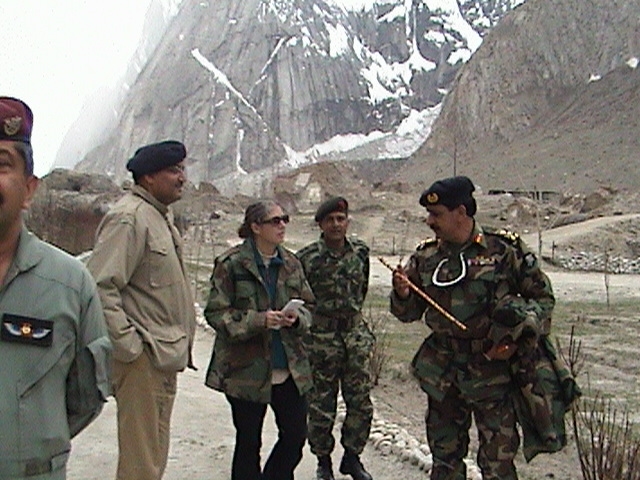
Myra MacDonald with Pakistani Army officers in the Gyari sector in 2004

Myra MacDonald is a London-based journalist with Reuters and a long-time observer of South Asia. She tracks the turning points in Pakistan politics at the Pakistan: Now or Never. MacDonald is best known for her book on the Siachen conflict, Heights of Madness: One Woman’s Journey in Pursuit of a Secret War. Published in 2007, the research for the book took her to both sides of the conflict, on helicopter and on ground. She was bureau chief of Reuters in India in 2000-2003. She then took leave-of-absence to research the Siachen conflict, becoming one of the very few people to visit the war zone on both the Indian and Pakistani sides. She has given presentations on Siachen to the Royal Military Academy Sandhurst and to the International Institute for Strategic Studies in London. Amidst alarmist rumours that track-two parleys between India and Pakistan are urging India to ‘give up Siachen’, MacDonald tells Shivam Vij in an e-mail interview why resolving Siachen without resolving the Jammu and Kashmir dispute may not be easy.

Q1) The idea of demilitarising Siachen is being seen by some in India as a demand to hand Siachen over to Pakistan, or at the very least, to ‘lose’ the territory for which Indian soldiers have made great sacrifices. Do you agree with such an interpretation of demilitarising the glacier? Do you think India has real strategic advantage with its occupation of the glacier? Continue reading Can we solve Siachen without solving the Jammu and Kashmir dispute?

Satyameva Jayate? On the impending execution of Afzal Guru

Someday, we will count how many minutes it took for television in India to start baying for Afzal Guru’s blood (once again) after Ajmal Kasab was buried in Yerwada Central Jail in Pune.

A man called Mohammad Afzal Guru, son of Habibullah Guru, currently resident in Ward Number 6 of Jail Number 1 in Tihar Central Prison in Delhi will hang to satisfy the bloodlust of the Indian Republic, unless the President of India decides otherwise. This text is an attempt to make us think about this decision and its ramifications carefully.

Continue reading Satyameva Jayate? On the impending execution of Afzal Guru

Why Manmohan Singh should not visit Pakistan

Dr Manmohan Singh is the longest serving Indian prime minister since Jawaharlal Nehru, but history will perhaps note more pertinently that he was the most discredited and unpopular prime minister since Chandra Shekhar Singh, who was in office for a mere eight months. So spectacularly disastrous has his second term in power been that the speed of political crises he battles is now more than one a week. Few will be able to count a single achievement of UPA-2.

And yet there is one achievement, and that is his handling of Pakistan.

The Indian home secretary was returning from a very positive visit to Pakistan when 26/11 happened. The 2008 terrorist attacks in Mumbai shocked not just India but the world. They were not like the bomb blasts we have become accustomed to; their impact was much more than 166 lives. They held India’s commercial capital hostage. They were an act of war and few even in Pakistan pretend that those attacks did not originate from Pakistani soil, across the Arabian Sea. Few in India buy the theory that state actors in Pakistan were not involved. Continue reading Why Manmohan Singh should not visit Pakistan

Allah Baksh, a people’s obituary: JKCCS

This release was put out yesterday by the

JAMMU & KASHMIR COALITION OF CIVIL SOCIETY

On 24 October 2012, the news of the death of former Deputy Inspector General [DIG] Allah Baksh broke out. Politicians, government officials, business groups, and certain elite sections of the Kashmir valley shamelessly competed with each other in offering condolences.

It is a shocking phenomenon which JKCCS condemns as Allah Baksh was notoriously known for his involvement in the 21 January 1990 Gaw Kadal massacre when he was the Deputy Superintendent of Police [DSP]. The Gaw Kadal massacre was one of the first massacres in the post-1990 armed conflict in which reportedly more than 50 civilians were killed. For this massacre an FIR was registered against the dead and surviving civilians [3/1990 Police Station Kralkhud] but no one was held accountable for the massacre itself.

Continue reading Allah Baksh, a people’s obituary: JKCCS

To Build A Bridge in Kashmir: A fable by Abhijit Dutta

Guest post by ABHIJIT DUTTA

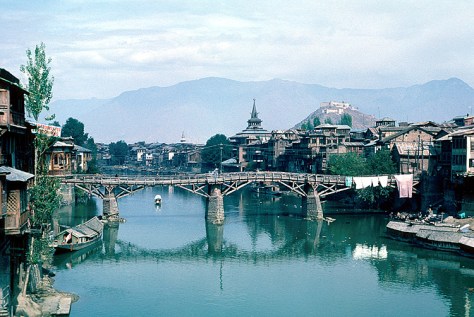
Once upon a time, a young politician – young enough to have a ‘baba’ appended to his name – came to Kashmir to build a bridge in Srinagar. Now as anyone who knows Srinagar knows, the city is filled with bridges. Some are famous, like Gawkadal, some are pretty, like Zero Bridge, and some are simply without charm, like the Abdullah Bridge that goes from fountain square to Rajbagh. There are several others too, each with their own unique character, their own unique relation to the Jhelum.

When he was told about the many bridges in Srinagar, the politician shouted, “I want to build a bridge.”

“But we don’t need a bridge,” said a man softly to him, wanting not to embarrass this well-meaning man who had come to Kashmir from aafar. In response, the young politician turned around and shouted once again: “I want to build a bridge.” Continue reading To Build A Bridge in Kashmir: A fable by Abhijit Dutta

Fifty villages

This report was released in Srinagar today by THE CITIZENS’ COUNCIL FOR JUSTICE. It is a statistical study of violence in north Kashmir between 1990 and 2011

Allow UNWGEID to probe disappearances in Jammu and Kashmir: APDP

This press release was put ou on 28 September 2011 by the ASSOCIATION OF PARENTS OF DISPLACED PERSONS, The Bund, Amira Kadal, Srinagar – 190001
In Pakistan the judiciary is attempting to provide justice to the family members of those who have been subjected to enforced disappearance. In 2008, the Chief Justice of Pakistan entered into confrontation with the then President of Pakistan for taking a pro-active stance against disappearances. That confrontation ultimately emboldened the judicial system in Pakistan to be more pro-active on human rights issues. This judicial intervention on enforced disappearances has created an atmosphere in Pakistan which has pushed Pakistani government to invite United Nations Working Group on Enforced or Involuntary Disappearances (UNWGEID). The UNWGEID recently concluded its first 10 day visit to Pakistan and have begun their investigations on enforced disappearances. Continue reading Allow UNWGEID to probe disappearances in Jammu and Kashmir: APDP