Tag Archives: Kashmir

A Response from the Harud Literature Festival

In response to the open letter expressing a set of concerns about the forthcoming Harud Literature Festival, the festival organisers have responded:

We wish to categorically state that the Harud literature festival is not government sponsored. It has been conceived with the intent of creating a platform for free and open debate, discussion and dialogue through contemporary narratives, literary fiction and poetry.

The festival seeks to showcase writing in urdu, kashmiri, dogri and english from the region and other Indian writers. We seek support for the spirit of the festival which is plural, inclusive and supports freedom of speech and expression. [Link]

An open letter on the ‘Harud’ literary festival

Srinagar-based photojournalist Showkat Shafi is seen in this photograph being assaulted by the Jammu and Kashmir Police on 19 August 2011. He was carrying out his professional duties, as is clear from the camera in his hand that the police is trying to snatch away. He and his Mexican photographer colleague were detained at the police station and beaten up, allowed to go and be hospitalised only five hours later. The police said they mistook them for stone-pelters. Photo credit: Faisal Khan

*
Given below is an open letter signed by fourteen of us. Should you want to add your name to it, please do so in the comments section of this post. I shall update the names of the signatories on the post itself. Please clearly indicate that you want your name added, and write your full name and profession.

Continue reading An open letter on the ‘Harud’ literary festival

When the State Celebrates the People’s Independence but the People Don’t: Twelve Questions for the Press Trust of India

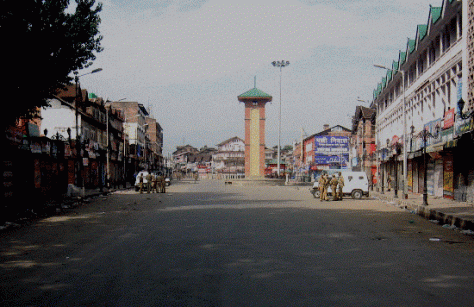
Srinagar's Lal Chowk on 15 August 2011. Photo credit: Zahoor Zargar / KashmirDispatch.com

To:

The Editor,
The Press Trust of India,
New Delhi.

Dear Editor:

This is regarding your news report, “I-Day Celebrated Peacefully in Kashmir Valley“.

While the news report tells us how the celebrations were held by the chief minister in Srinagar and the deputy chief minister in Jammu, and what arrangements were made for the celebrations to take place, there’s one line in that report that tells us:

Meanwhile, normal life was was affected in Kashmir Valley due to a shutdown called by both factions of Hurriyat Conference and tight security restrictions for the Independence Day.

I have a few questions for you.

Continue reading When the State Celebrates the People’s Independence but the People Don’t: Twelve Questions for the Press Trust of India

Half Widow, Half Wife? Responding to Gendered Violence in Kashmir: APDP

This is a press release from the ASSOCIATION OF PARENTS OF DISAPPEARED PERSONS, The Bund Amira Kadal, Srinagar, 190001. It is about a new report, which you can download in .pdf format at the end of this press release.

Srinagar, July 28, 2011 – The Association of Parents of Disappeared Persons (APDP) today released the report Half Widow, Half Wife? Responding to Gendered Violence in Kashmir. It examines the situation of women in Indian-administered Kashmir whose husbands have ‘disappeared,’ but not yet been declared deceased. Members of APDP who are themselves half widows released this report at SK Municipal Park, Srinagar. Continue reading Half Widow, Half Wife? Responding to Gendered Violence in Kashmir: APDP

The question we are not asking about Fai, Tramboo and Shawl

GN Fai

(Please see two updates at the end of this post.)

‘Gotcha!’ That is the sound I hear in the Indian media and amongst patriotic fellow-Indians in response to the arrest of Syed Ghulam Nabi Fai, an American citizen of Indian origin, by the Unites States Federal Bureau of Investigation.

Most analyses of the Fai arrest say it’s part of the ongojng tussle between the American CIA and the Pakistani ISI but some in India think it’s part of the American reward to India for opening up its nuclear energy and other markets to American corporations, thus creating jobs for Americans. This may have some truth in it, considering that the Americans asked their ambassador to take a flight to Srinagar four months ago to pat Omar Abdullah on the back for successfully presiding over the killing of 120 Kashmiris the previous summer, and for halting the killings when President Obama was in Delhi, so that the media attention on the President’s visit is not diluted. (And then Americans wonder why ‘Muslims hate us’). Continue reading The question we are not asking about Fai, Tramboo and Shawl

A rape in Kulgam; the dishonouring of India continues

Imagine there had been a rape in Delhi. Imagine the headlines in the papers. They would have been loud and angry. As they are, and as they must be. Do you think any of the papers would have said that the woman in question has ‘accused’ or ‘alleged’ who the perpetrator was? But there has been a rape in Kashmir and your media wants you to know that a woman has ‘accused’ an army jawan of having done so. Journalistic restrain and caution are good things when they are useful. After all, let an inquiry establish this is the truth.

Continue reading A rape in Kulgam; the dishonouring of India continues

Martyrs’ Days: Memorializing 13 July 1931 in Kashmir: Mridu Rai

Guest post by Mridu Rai

It is widely believed that the Kashmir conflict has its roots in the Partition of India in August 1947. This view perpetuates the understanding of the conflict as one between India and Pakistan. However, recognising that the roots of the conflict lie in an earlier history – indeed, that there was a history before August 1947 – changes our understanding of the ‘intractable’ conflict in Kashmir. This guest post by MRIDU RAI, author of the book, Hindu Rulers, Muslim Subjects: Islam, Rights and the History of Kashmir (2004), discusses the salience of the events in Srinagar on this day, exactly 80 years ago.

While "separatists" were placed under house arrest to prevent commemorative mass gatherings, policemen took part in Kashmir Martyrs' Day ceremonies at the Martyrs' graveyard in Srinagar, July 13, 2011. Photo credit: Reuters

Continue reading Martyrs’ Days: Memorializing 13 July 1931 in Kashmir: Mridu Rai

Speaking of Synthesis

This slideshow requires JavaScript.

Ask any first time visitor to Kashmir about their impressions and you will, in all likelihood, be inundated with superlatives about the landscape, the mountains, the greenery, the hospitality, the gardens, the lakes and what not, but there is one thing that both the first timer and the old Kashmir hand rarely talk about and that is the historical monuments of the valley. The mosques, shrines and ancient temples of the valley are rarely mentioned in all this recounting. I am as much guilty of this neglect as all the others that I have met, perhaps more guilty because I have been to Kashmir scores of times.

This piece is an attempt to make amends. The sites are far too many to cover in one article so I have decided to confine myself to a handful of structures and monuments that lie scattered in and around Srinagar. Hopefully there will be more occasions to write about the others soon. Before we commence this sight-seeing tour of Srinagar, let us start with a few words about the history of Srinagar and of Kashmir.

Continue reading Speaking of Synthesis

Goodbye UN, Hello Sarpanch: Jahangir Rana

Guest post by JAHANGIR RANA

It has now become an established trend for the Indian political establishment to beat the drums of ‘victory’ after every electoral process in Kashmir. Almost invariably, prior to an election, this establishment maintains that the issue of resolution is not linked to elections in the disputed state. However, as soon as the electoral process is over, the same establishment is out to cash the participation in elections as an implicit approval for the status quo.

In an interview last week, senior Congress politician Mani Shanker Aiyer went as far as claiming that Azadi can be attained through Panchayat, pointing at the recent participation in Panchayat elections. These bombastic claims are now bordering on the absurd. To assume that the twenty-year resistance in Kashmir has been about devolution of power and development at grass roots, Aiyar and his colleagues within the establishment continue to live in denial. Continue reading Goodbye UN, Hello Sarpanch: Jahangir Rana

The Ice-Cream Flavour Mint’s Editors Don’t Like

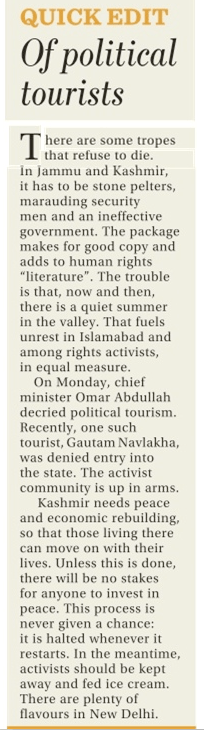
“There are some tropes that refuse to die,” said a “Quick Edit” titled “Of Political Tourists” in Mint on Tuesday, 14 June, “In Jammu and Kashmir, it has to be stone pelters, marauding security men and an ineffective government.” The edit forgot another trope there: the lies and obfuscation that the Delhi media indulges in when it comes to Kashmir. A good example of this is the “Quick Edit” itself, even if it was just 157 words long.

The “Quick Edit” derided human rights work as if it ‘human rights’ is an anti-national and unconstitutional ideology. It supported the Jammu and Kashmir government’s decision to disallow the journalist and human rights activist Gautam Navlakha into the Kashmir Valley. In doing so, it echoed the views of the Jammu and Kashmir chief minister, Omar Abdullah, that activists should be kept away from Kashmir in the summer as they cause political unrest. No wonder that Mr Abdullah recommended the “Quick Edit” on Twitter with a brief comment: “LOL. Short but says it all :-)”.

The edit derisively called activists like Navlakha “political tourists”; would the editors describe the security forces stationed in Kashmir as ‘military tourists’? The edit argued that allowing Navlkaha and activists like him into Kashmir would affect “peace and economic rebuilding,” and said that such people “should be kept away and fed ice cream. There are plenty of flavours in New Delhi.” This suggests that last year’s bloody summer in Kashmir was caused or at least aided by Mr Navlakha and other human rights activists. Perhaps Mint‘s editors were enjoying ice-cream in Delhi and did not want to indulge in conflict tourism. Ignorance, however, should not lead to lies. It is thus pertinent to recall what happened in Kashmir last year.

On 8 January 2010, Inayath Khan, 16, was returning from a computer coaching in Srinagar and was killed by CRPF personnel who were chasing away protestors. After the bullet hit his thigh, he was hit by a CRPF vehicle and eyewitnesses say, CRPF personnel trampled upon him with their boots and beat him with their gun butts.

On 31 January, a 13-year-old, Wamiq Farooq, was shot in his head by the J&K police with a tear gas shell. He was playing carrom in a room when this happened.

Continue reading The Ice-Cream Flavour Mint’s Editors Don’t Like

The Mountains Are Coming Closer

(This article by me has appeared in the Sunday Guardian, Delhi, and the Friday Times, Lahore.)

The voices that reverberate in your head after a visit to Kashmir leave you numb, making you sadder the more you think about them. You know that it is going to be worse when you visit next year. The mountains that you see faintly from over the bridges on the Jhelum river in downtown Srinagar, a thousand-year-old settlement, you know they are coming closer.

An old man you see on the road wants your attention. No, not here. Let’s get inside a parked car. You wonder what secrets are to be passed on. From inside his pheran he takes out a bundle of papers. Both his sons were picked up from Kathmandu in Nepal in 2000, where they were eking out a living. Had they been militants why would they have … look, look, this paper, certificate of registration of Indian nationals in Nepal? The last he heard of his sons some years ago was that Indian intelligence had detained him in Delhi. He is coming to Delhi next month. Could you help? All he wants to know is what happened to his sons, which prison are they in, could he see them once? Read more…

Gautam Navlakha detained, denied entry into Kashmir: Press note from IPTK

Press Note: For immediate release
INTERNATIONAL PEOPLE’S TRIBUNAL ON HUMAN RIGHTS AND JUSTICE IN INDIAN-ADMINISTERED KASHMIR (IPTK)
www.kashmirprocess.org

From: Dr. Angana Chatterji, Convener IPTK and Professor, Anthropology, California Institute of Integral Studies; and advocate Parvez Imroz, Convener IPTK and Founder, Jammu and Kashmir Coalition of Civil Society

TRIBUNAL CO-CONVENER DENIED ENTRY INTO KASHMIR

Srinagar, May 28, 2011: On May 28, 2011, Mr. Gautam Navlakha, Convener, International People’s Tribunal on Human Rights and Justice in Kashmir (IPTK) and Editorial Consultant, Economic and Political Weekly, was stopped at Srinagar airport on his arrival from New Delhi, and asked to go back. Officials invoked Section 144 of the Code of Criminal Procedure. By the time the authorities finalized their decision regarding his return, there were no remaining flights out of Srinagar. Mr. Navlakha is being detained and taken to an undisclosed location until May 29, when he will be allowed to return home.

Mr. Navlakha is a noted public intellectual and peace activist. His denial of entry raises urgent concerns about the status of freedom of speech and movement in Kashmir. Given the egregious violence that was inflicted on people by state forces in the Summer of 2008, 2009, and 2010 in Kashmir, we are deeply concerned that state forces not suppress democratic activities in the Summer of 2011, and not isolate Kashmiris from human rights defenders that travel to Kashmir to bear witness to atrocities and speak for peace and justice.

We understand that harassment, intimidation, and threats to IPTK members or their families are acts aimed to target and obstruct the work of the Tribunal. In November 2010, Professor Richard Shapiro, an academic from the United States and life-partner of IPTK Co-convener Angana Chatterji, was denied entry into India without any charges or due process.

Earlier, in June 2008, IPTK Co-convener Pravez Imroz and his family were targeted and an explosive device was thrown at his home. Imroz has been denied a passport. In July 2008, a First Information Report charged Angana Chatterji and IPTK Co-convener Zahir-Ud-Din, then editor of Etalaat English Daily, with acting to incite crimes against the state, following his publication of an article on mass graves written by Chatterji. IPTK Liaison Khurram Parvez has been threatened and is extensively surveilled. All Tribunal communications and the movements of its members in India and abroad are monitored.

We remain gravely concerned about the physical and psychological safety and integrity of all Tribunal members. We remain gravely concerned about our ability to continue our work, and the ability of out-of-state Tribunal members to travel to Kashmir.

अफ्स्पा: एक काले कानून की आधी सदी: महताब आलम

Guest post by MAHTAB ALAM

आज  बाईस मई की सुबह जब ऑफिस या काम पर जाने की चिंता से बेफिक्र हम सोते रहेंगे, उसी समय नॉर्थ-ईस्ट और कश्मीर की जनता जो सुबह देखेगी, वह कानून के नाम पर बर्बरता की  53 वीं  सालगिरह होगी.  जी हाँ, मैं आर्म्ड फोर्सेस स्पेशल पावर्स एक्ट (अफ्स्पा) की  बात कर रहा हूँ. कानून के नाम पर, ला-कनूनियत नाफ़िज़ करने का घिनौना हथियार. जिसके खाते में अगर कुछ लिखा है, तो सिर्फ ला-क़नूनियत और बरबरियत की न खत्म होने वाली दास्तानें.

 बाईस मई 1958 को नागा लोगों को ‘नियंत्रित’ करने के लिए ये कानून अमल में लाया गया. नागा जनता के पुरजोर विरोध के बावजूद, अपनी आदत के मुताबिक भारतीय संसद ने 18 अगस्त 1958 को इस कानून पर अपनी मुहर लगा दी. पहले- पहल ये कानून  सिर्फ नागा जनता को ‘नियंत्रित’ करने के लिए बना और कहा गया कि जल्द ही हटा लिया जायेगा. पर ऐसा कभी हुआ नहीं. बल्कि धीरे-धीरे ये ‘कानून’ पूर्वोत्तर के 7 राज्यों से निकलता हुआ कश्मीर की घाटी तक पहुँच गया. आख़िरकार, कानून के हाथ लम्बे होते हैं. वैसे भी, अगर भेड़िये को एक बार खून का स्वाद मिल जाये तो फिर उसे कौन रोक सकता है और खासतौर पर खून ‘विदेशी’ या अलग नस्ल का हो. इस पूरे मामले में भी कुछ ऐसा ही दिखता है. Continue reading अफ्स्पा: एक काले कानून की आधी सदी: महताब आलम

The Ghosts Will Walk: Sanjay Kak reviews Mirza Waheed’s “The Collaborator”


By SANJAY KAK

Kashmir will haunt India the way Algeria haunts France.

I remember that from ten years ago, on one of those early e-groups, the provocation almost buried in the dense threads that made up conversation there. “It will haunt Indian intellectuals”, the young Kashmiri correspondent had promised darkly, “in the way Algeria continues to haunt the French”. From its first pages, as the eponymous young narrator of The Collaborator walks us into the heart of his terrors, and introduces us to his hell, Mirza Waheed’s novel gives notice that the long overdue time of that haunting may be upon us.

The book is set somewhere in the mountains of Kashmir, but not the unchanging, pastoral idyll of Bollywood cinema, of Gulmarg’s meadow and Pahalgam’s river; nor the ordered beauty of the Mughal imagination, of Shalimar and Nishat bagh. Instead it’s located in the present, in its “militarized wilderness”, in Nowgam, a “new village” settled in the violent aftermath of 1947. The mortal cut of the partition of Kashmir between India and Pakistan put a sudden end to the nomadic life of this community of Gujjar pastoralists, and Nowgam has grown in the way scarred tissue forms over wounds. Almost half a century later, sandwiched between the belligerence of those two nations, in the shadow of Koh-i-gham, the mountain of sorrow, the sound of heavy artillery fire being exchanged across these rugged peaks has become routine.

Read the full review, published in Bibliohere (download .pdf).


The Disappearance of Susheel Raina: APDP protests unabated disappearances in Kashmir

Susheel Raina

Press Release issued on 28 April 2011 by the ASSOCIATION OF PARENTS OF DISAPPEARED PERSONS, led by Parvez Imroz. The APDP also staged a protest in Srinagar. 

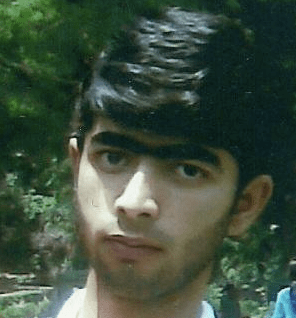
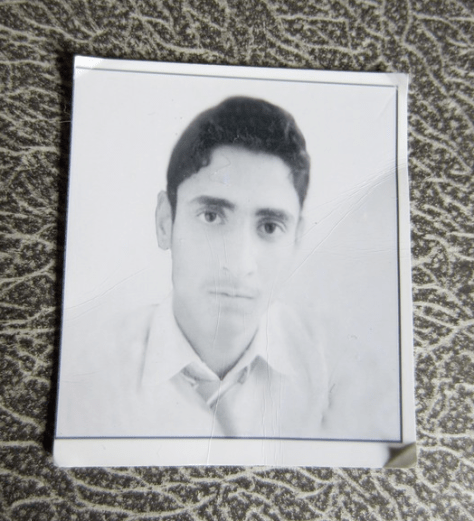
Susheel Raina, 21, son of Badrinath Raina disappeared from Chandergam, Aishmuqam in district Anantnag (Islamabad) on 4th April 2011. Susheel left his home to collect a certificate from Boys Degree College Anantnag (Islamabad) and since then never returned.

Police is said to be investigating, as they claim about hundreds of others who have disappeared in last two decades. These investigations either never begin or never end and in very rare cases where police investigations have indicted the perpetrators, no one has been prosecuted. Continue reading The Disappearance of Susheel Raina: APDP protests unabated disappearances in Kashmir

The Present of the Absent State

[An edited version of this review has appeared in Biblio.]

The Absent State: Insurgency as an Excuse for Misgovernance
by Neelesh Misra and Rahul Pandita
Hachette India, 2010
272 pages, 495 Rs

Indian journalists have written books on conflict as diaries of their years of reportage, putting together their stories and experiences. The task of looking at conflicts with a broader perspective has been left to the security experts who mostly write from, well, a security ‘angle’. It is great, then, to see a book by two journalists, on the conflicts in Kashmir, the north-east and the Maoist belt. Journalists won’t give you footnotes but at least they can write lucid prose. Continue reading The Present of the Absent State

India’s Kashmir policy described in one photograph by Javed Dar

This photograph of an Ikhwani camp in south Kashmir was taken by JAVED DAR in 2008. Standing in the middle is a well-known ‘government gunman’, Jehangir Khan. Photo courtesy Conveyor.

Cricket, Azadi and Pakistan: Mir Laieeq Ishtiyaq

Guest post by MIR LAIEEQ ISHTIYAQ

As all of India celebrated the well-deserved Indian victory in the cricket world cup finals, the mood in the Kashmir valley was different. Their favourite team was ousted in the semi-final itself. On the eve of the semi-final between India and Pakistan at Mohali, a friend asked on Facebook: “That Kashmiris don’t support the Indian cricket team is well understood, but why is there so much support for Pakistan? Seems INDEPENDENCE IS JUST A MYTH…” There are no simple answers to this question.

This slideshow requires JavaScript.

[Pictures taken in Kashmir during the India-Pakistan Mohali semi-final by ISHAN TANKHA for Open magazine.] Continue reading Cricket, Azadi and Pakistan: Mir Laieeq Ishtiyaq

Free Murtaza Manzoor

This release comes from AMNESTY INTERNATIONAL

Urgent Action: Child Detained Without Charge or Trial

UA: 115/11 Index: ASA 20/015/2011 India Date: 14 April 2011

Murtaza Manzoor has been held in administrative detention since 8 February by police in Jammu and Kashmir, India. His official birth certificate states that he is only 17 years old.

Murtaza Manzoor was arrested on 21 January by police in Srinagar, the capital of Jammu and Kashmir. He was arrested in relation to a case from June 2010 on allegations of attempted murder, assault and rioting. According to the police, he is an “incorrigible antisocial element” who was leading a protest march that resulted in protestors pelting police with stones. Continue reading Free Murtaza Manzoor

JKCCS demands probe into killings of political workers

Press release from the JAMMU KASHMIR COALITION OF CIVIL SOCIETY

11th April 2011

Jammu Kashmir Coalition of Civil Society (JKCCS) is concerned at the spate of killing of civilian political workers belonging to different religious and political parties. So far in this year, five civilian political workers have been killed.

A Lesson in Kashmiri: Hilal Mir

Guest post by HILAL MIR

On a clear spring day in the year 2000, the first year of my masters in journalism at Kashmir university, the class was taken to Sogam for a field trip. Zafar Hyderi, our esteemed teacher much respected for his integrity than scholarship was keen on students having practical experience. We were supposed to visit areas where only radio works because the mountains girding these areas don’t allow television signals from Srinagar Doordarshan to enter the homes. Imagine the relief of not having to watch 24X7 the official propaganda. Since Zafar Sir taught radio, these places provided him a cathartic vindication of the superiority of his medium (though secretly he might have aspired to make a name in TV). Such places are aptly called Shadow Zones. These could well be called shadow zones for other reasons too, as much of the barbarity unleashed by the state in such areas remains buried under shadows, itching to be put into words or images. Continue reading A Lesson in Kashmiri: Hilal Mir