An Example of the Liberal Media Defending Powerful Neoliberal Elites: Aditya Velivelli

Guest post by ADITYA VELIVELLI

A wife’s career taking a backseat due to her husband’s work is no trivial issue. However, Outlook magazine used this issue to defend a powerful couple who had giant conflicts of interest among them.

In the recent cabinet reshuffle, Minister of State for Finance, Jayant Sinha, was shifted out of the finance ministry. A few news articles came out speculating that Sinha’s transfer was due to his wife Punita Sinha’s conflicts of interest and because a Tea party organised by Jayant Sinha involved schmoozing between Corporates and bank officers. Jayant Sinha was in the process of organising a bailout fund for the bad corporate loans at that time. This bailout fund would be paid for by the tax payers.  Continue reading An Example of the Liberal Media Defending Powerful Neoliberal Elites: Aditya Velivelli

Relaa – Singing in dark times

mynah-1-768x328

RELAA is a collective of cultural activists and independent artists across the country, on an ongoing journey to keep the space for dissent alive, for diverse understandings, imaginations and embodiments of resistance. Relaa does not wish to use the arts as an instrument for politics, but to create forms with rigour, passion, boldness and conviction – forms that can haunt, move, disturb and provoke people to think beyond facts.

Here is a song from them

FOR MORE SONGS AND INFORMATION ABOUT RELAA, VISIT THEIR WEBSITE.

Operation #BetiUthao – How the Sangh Parivar Hinduises tribal girls: Neha Dixit

An investigative report by NEHA DIXIT in Outlook on how the Sangh Parivar has flouted every law, to traffic 31 young tribal girls from Assam to Punjab and Gujarat to ‘Hinduise’ them, leaving their parents forlorn. In a three-month-long investigation, Outlook accessed government documents to expose how different Sangh outfits trafficked 31 tribal girls as young as three years from tribal areas of Assam to Punjab and Gujarat. Orders to return the children to Assam—including those from the Assam State Commission for the Protection of Child Rights, the Child Welfare Committee, Kokrajhar, the State Child Protection Society, and Childline, Delhi and Patiala—were violated by Sangh-run institutions with the help of the Gujarat and Punjab governments.

Excerpts from Neha Dixit’s five part story:

“I never wanted to send my daughter so far. What if she fell sick? What if she needed me? Where will I go looking for her? But this guy forced me,” says Adha Hasda, his eyes bloodshot with anger.

Mangal Mardi, his neighbour and a Rashtriya Swayamsevak Sangh (RSS) worker, stood by the barbed-wire fence marking out the small cowdung-plastered patch on which Adha Hasda’s house stood. He got me to meet Adha to hear for myself about the excellent welfare work that the RSS was doing in Bashbari village of Gossaigaon area in Kokrajhar district. Adha’s unexpected outburst has stunned him. He uttered something in Assamese but Adha was undeterred.

“Then where is Srimukti? Tell me? You sent her!” says Adha, breaking down. His wife Phoolmani consoles him.

“Do you plan to send the other three children too, like Srimukti?” I ask.

“No,” he says, looking up in anger. “Not even if they pay me money.”

Mangal smirks at this exchange, kneeling by the pillar of house as he twirls a smartphone in his hand.

Continue reading Operation #BetiUthao – How the Sangh Parivar Hinduises tribal girls: Neha Dixit

The Gaze of the Developmental State and the Narmada Action Plans: Ashwin V.S

Guest Post by ASHWIN V.S

Malud-Jal-satyagrah

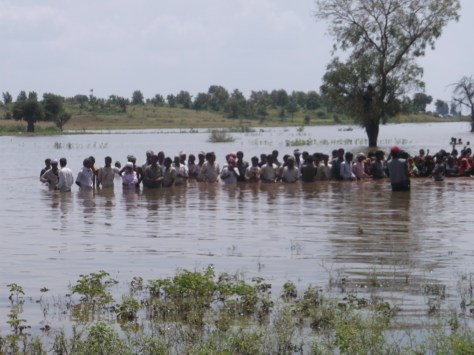
Jal Satyagraha in Narmada valley 2013

The years following the Second World War were characterized by a renewed focus on the ‘Modernization’ of nation-states. While the constant feature of the post-war years was the high-stakes rivalry and arms race between the USA and the USSR; both tread a common ground as regards high-modernization and ‘development’. ‘Development’ fuelled growth was considered a panacea to all ills and soon became dominant across the post-colonial world. WW Rostow’s The Stages of Economic Growth was a significant work which argued for five stages of growth in which “traditional societies” could transform themselves into the “age of high mass-consumption”. It was no wonder therefore as to which nation-states were characterized as ‘traditional’ under this rubric and pushed towards ‘development’.

A standard feature of ‘development’ in India has been the showcasing of large scale industrial and apparently ‘public purpose’ projects; an instance of this is seen in the construction of large dams. As much as ‘modernization’ or ‘development’ can be witnessed through the industrial or ‘public’ projects themselves; the ambition of the ‘developmental state’ and its vision can certainly be understood through the one-constant feature of the bureaucratic machinery – paperwork.

Therefore, for the purposes of this essay, I attempt to evaluate the ambition of the post-colonial ‘developmental state’ in India by analyzing the language of a few planning documents. In this case, I consider the Narmada Valley Development Authority’s (NVDAs) Action Plans prepared in the years 1991, 1993, 1995 and 2000 for the Resettlement and Rehabilitation (R&R) of Sardar Sarovar Project ‘oustees’ in Madhya Pradesh. These Documents are revealing in aspects of the modern state’s enterprise and it’s most significant undertaking, planning.

The State’s gaze and legibility:

James Scott’s magnificent work Seeing Like a State characterizes a crucial difference between the pre-modern state and the modern state: while the former “was in many crucial respects, partially blind” and “knew precious little about its subjects”, the modern state is consumed by a desire to know. Armed with statistics and other tools of ‘accuracy’, the modern state stakes its claim to the accurate depiction of the social world, which it then tries to alter in accordance to its designs of ‘development’. Continue reading The Gaze of the Developmental State and the Narmada Action Plans: Ashwin V.S

In Solidarity With Irom Sharmila – Repeal AFSPA: Forum Against Oppression of Women

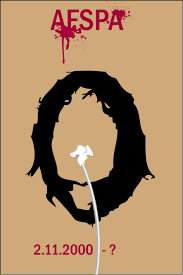
Statement issued by FORUM AGAINST OPPRESSION OF WOMEN
index

Let Us Work Together To Create New Strategies Of Struggle Against Armed Forces Special Powers Act (AFSPA)

We wholeheartedly support the decision of Irom Sharmila to withdraw, her fast of nearly 16 years for the revocation of AFSPA, we salute Irom Sharmila for her undying spirit, heroic struggle and undeterred determination in struggle against AFSPA.
It is our responsibility to take the struggle further and also support Irom Sharmila in her continuing struggle against AFSPA.
 
The history of post-Independence India is also the history of subjugation of the citizens of the North-eastern region. There has been a systematic crushing by the Indian state of their aspirations, and a consistent betrayal of promises made. The Armed Forces Special Powers Act (AFSPA) was enacted as long ago as 1958, in order to suppress the genuine protests of the region’s inhabitants.
 
What is essentially a political issue has been treated simplistically as a law and order problem. AFSPA gives unbridled powers to the army and airforce. (Mizoram is the only part of India where the air force has actually bombed its own people.) The original Act allowed state governments to declare an area to be ‘disturbed’ and to call in the army. A 1972 amendment further allowed the central government to override state governments in order to do the same in any area.
 
AFSPA gives army officers the power to arrest without warrant, to shoot and kill on mere suspicion, to destroy property, and many other such draconian powers. The armed forces are required to act “in aid of” civilian authorities, but that caveat exists only on paper. In reality the army has virtually taken over large areas for decades together now, becoming a force unto itself, answerable to none. No army personnel may be prosecuted without permission from the central government – a permission hardly ever granted. Even bodies like the National and State Human Rights Commissions have little jurisdiction when it comes to human rights violations in the context of AFSPA.
 
What might have served at best as a short-term measure has become a permanent feature in Manipur and most of the North East (except Tripura where AFSPA was withdrawn in May 2015) and some parts of Kashmir. Yet the AFSPA is in violation of various international instruments that India has ratified, such as the Universal Declaration of Human Rights (UDHR), the International Covenant on Civil and Political Rights (ICCPR), the Convention Against Torture, the UN Code of Conduct for Law Enforcement Officials, the UN Body of Principles for Protection of All Persons Under Any Form of Detention, and the UN Principles on Effective Prevention and Investigation of Extra-Legal and Summary Executions.  It is patently unconstitutional, which makes it all the more unfortunate that the Indian Supreme Court got carried away by security concerns and upheld the constitutional validity of the Act.
 
In Manipur there has been widespread unhappiness, with the continuing abuse of human rights by the armed forces under cover of AFSPA causing bitter grievances to surface. Protests against these abuses are a constant feature. In one unique protest in 2004, angered by the custodial rape, torture and killing of 32-year-old Manorama who was picked up from her home on “suspicion”, a number of women paraded naked in front of an army base in protest against the army’s atrocities against women. The other unique and non-violent protest has been that of Irom Sharmila, poet and activist from Manipur. In what has possibly been the longest fast-unto-death anywhere, she has spent more than fifteen years now refusing food and demanding the repeal of AFSPA. For these fifteen years she has lived under arrest and been kept alive through intravenous force-feeding by the authorities.

Continue reading In Solidarity With Irom Sharmila – Repeal AFSPA: Forum Against Oppression of Women

Kashmir’s Freedom is India’s Freedom: Hum Kya Chahte? Azadi

I do not think ordinary Indians support the brutality of army occupation in Kashmir. Despite what the Indian state says, and despite what the Indian army and CRPF are doing, I honestly do not believe that any ordinary Indian supports the torture of young men, the blinding of people attending a funeral, the rape of women, the killings and maiming and abuse and humiliation that are now a routinized fact of daily life in the Kashmir valley. To believe that ordinary Indians enjoy watching this spectacle of violence, that ordinary Indians take pleasure in the torture of children, would be to think India is now a country comprised of sadistic psychopaths. I honestly do not think ordinary Indians are psychopaths. I do think, however, that ordinary Indians, and I count myself amongst them, have somehow managed, till now, to keep some distance between what is happening in Kashmir and the idea of India as a whole. After all, India is a large and complex country, a huge and diverse society. Everything that happens in Kashmir, the brutality of the army and the security forces, cannot signify the whole truth of India we tell ourselves. It seems somehow unfair to us ordinary Indians that what happens in Kashmir reflects on us all.

But the time has come now to squarely face some hard truths about ourselves, and the dissimulations, psychological and social, by which we continue to live in this country and call ourselves ‘Indians’. Continue reading Kashmir’s Freedom is India’s Freedom: Hum Kya Chahte? Azadi

Reflections on Dissent -How Is Hannah Arendt Relevant for Contemporary Israel and India? Ira Chadha-Sridhar

This is a guest post by IRA CHADHA-SRIDHAR

In 2016, the age-old conflict between Israel and Palestine has become tougher and more violent at the ground level. The year has come with several disturbing developments in the region- the intensification of the Gaza blockade, the subsequent statement by the Hamas threatening to implement an explosion unless the blockade is lifted and Israel’s rejection of the French peace treaty for the region. Jean-Marc Ayrault, French Foreign Affairs Minister said, in April 2016 that, “The two sides are further apart than ever.” In other news, Ken Livingstone, the former mayor of London, has been criticized for his statements claiming Hitler himself was a Zionist before “he went mad and ended up killing six million Jews”. The merits of Livingstone’s statements and the fallacious reasoning he employs has been rightly criticized by several international commentators. However, he has unknowingly raised larger, more important questions by his statements about how to criticize the Israeli state without being branded as “anti-Semitic” within international discourse- a problem that several commentators critical of the Israeli regime have faced. How can the international community legitimately advance its criticism of the Israeli state? Although critics of Israel are usually non-Jews, there has been a vibrant critique of the oppressive Israeli regime from the Jewish diaspora itself. For historical instruction, in this article, I draw upon the work of one of the earliest and most controversial voices of critique from the Israeli diaspora- the brutally honest voice of 20th century political philosopher, Hannah Arendt. Her book of unparalleled political influence, ‘Eichmann in Jersulelam: A Report on the Banality of Evil’, created what scholars often refer to as a “war” amongst intellectuals across the world that brought to question the validity of her theories and their political and global ramifications. (Elon 2006) Amongst the Jews, and, in particular, in Israel, Arendt’s work was met with anger and severe political backlash. She was labelled “Anti-Jew”, “Nazi” and a “Jew-hater”- labels that were intended to act as violent threats against her distinct, free intellectual voice. (Elon 2006). Continue reading Reflections on Dissent -How Is Hannah Arendt Relevant for Contemporary Israel and India? Ira Chadha-Sridhar

The Paths of Piety: Nandagopal R. Menon

This is a guest post by Nandagopal R. Menon

The recent disappearance of 21 Muslims (men and women) from Kerala – allegedly to join the IS – has created considerable panic in the state. Media and public discourses are rife with speculative reports about their whereabouts, their motives (or pathologies rather), the Islamic networks and scholars with whom they were associated and so on. In this note I want to think about one aspect of this discourse about the disappeared. What is striking is how a specific form of Islamic piety (Salafism) is sought to be, advertently or inadvertently, linked to the IS’ violent extremism. That is, though they are not exactly the same, practicing a certain kind of Salafism could or will lead to embracing the ideology of the IS. To be fair, there is no overt claim made on these lines, but the inordinate focus on Salafism and its practices in the context of IS-related panic creates the impression that there is some kind of organic, straightforward connection between Salafism and IS. Now whatever the precise definition of Salafism given by scholars, what concerns me here is the alleged nature of its “problematic” variant that is at the centre of the controversy in Kerala. This interpretation, sometimes termed “extreme” or “ascetic” Salafism to distinguish it from its “moderate” versions represented by some of Kerala’s major Muslim organisations, apparently stresses a “puritanical” piety that demands a literal interpretation of the Islamic tradition (primarily the Qur’an and hadith, or traditions of what the Prophet said, did or approved). For instance, since there are hadith which say that the Prophet kept goats, Muslims who strive to be pious should also take up herding goats. Similarly, this piety requires one to separate oneself from all kinds of “un-Islamic” ways of life – avoid using products brought with money involving paying or receiving interest, shunning various forms of arts like music and cinema, rejecting certain sartorial styles (trousers that fall below the ankles for men or dress that do not cover the face for women) etc. This form of “puritanical” Salafism thus marks out its practitioners as separate, distinct and even encourages one to (literally) seclude oneself from not only the rest of the society, but also from other Muslims (even family members) who do not adhere to this form of piety. Some “ascetic” Salafis are said to have travelled to Sri Lanka and Yemen, or carved out a separate space in Kerala itself, in their search for the perfect and complete Islamic way of life. Continue reading The Paths of Piety: Nandagopal R. Menon

Black and Blue: A Short Story by Saunvedan Aparanti

This is a guest post by SAUNVEDAN APARANTI

[Based on Gujarat Dalit flogging. It chronicles the fictionalised life of one of the victims.]

What comes to your mind when you think of India? If you’ve been seduced by films, books, pictures and anglophile Indians over the last century then you will no doubt paint a happy picture. You might romanticise the poor yet happy people, the colours, the cuisine, the attire, the mystics, the music, the dance, the cacophony, the heat and the sensory overload of this one country. The only colour missing in your picture will be any shade of black because black is a colour that India hides.Black is a colour that India detests whether it be the colour of your skin or the colour of the sewer that you’re lowered in. A bottomless pit is where you will find the true colour of India. Continue reading Black and Blue: A Short Story by Saunvedan Aparanti

Eminent Citizens of Gujarat Demand Judicial Inquiry into Attacks on Dalits in Una

The following is a Memorandum to the Governor of Gujarat, initiated by statement issued by the Movement for Secular Democracy and signed by many eminent personalities in the state, demanding a judicial inquiry into the attacks on Dalits in Una by cow-vigilantes. The memorandum was sent on 16 July 2016.

(079) 26404418

MOVEMENT FOR SECULAR DEMOCRACY (M.S.D.)

C/o. Narmad Meghani Library, Opp. Natraj Railway Crossing, Meethakhali, Ahmedabad- 380 006.

Date: 14-7-2016

To,

The Honourable Governor,

Gujarat,

Gandhinagar.

Sub: Appointing a Judicial Commission for the Investigation in the Matter of Atrocities on Dalits in Una of Gir Somnath District

Dear Sir,

It is a matter of pain that when the entire nation is celebrating 125th Birth anniversary of Dr. Babasaheb Ambedkar, the Gujarat has created a precedent of atrocities on Dalits! Continue reading Eminent Citizens of Gujarat Demand Judicial Inquiry into Attacks on Dalits in Una

Killing of 5 civilians in Gumudumaha: Statement by GASS and HRF

Statement issued by Ganatantrik Adhikar Surakhya Sangathan (GASS, Odisha) and the Human Rights Forum (HRF, AP and Telangana).

We demand that personnel of the Special Operations Group (SOG) who participated in the firing that resulted in the death of five civilians of Gumudumaha village in Paranpanga panchayat of Tumdibandha block in Kandhamal district of Odisha on July 8, 2016 be duly charged under relevant provisions of the IPC as well as those of the SC, ST (Prevention of Atrocities) Act and criminally prosecuted.

A four-member team of the Ganatantrik Adhikar Surakhya Sangathan (GASS, Odisha) and the Human Rights Forum (HRF, AP and Telangana) visited Gumudumaha village on July 17 and spoke with local residents including eyewitnesses to the killings. Over 15 residents of the village had hired an auto-rickshaw at Balliguda on the evening of July 8 to take them to their village. Most of them were returning home after having collected their MGNREGS wages at the sub-divisional headquarters (Balliguda). At about 8.20 pm the auto was close to the village but had to get over a steep incline. The passengers got down and while the women, two of them carrying infant sons, walked ahead, the men pushed the auto up the kutcha road.

Upon reaching the top, the women first began to get into the auto when SOG personnel lying in wait amidst bushes not more than 10 to 15 metres away to the left of the road opened fire with no warning whatsoever. Five people, including three women, and a two-year old boy were killed instantly while seven others were wounded, five of them seriously. The dead and wounded belong to the adivasi Kondh and the Scheduled Caste Pano communities. Continue reading Killing of 5 civilians in Gumudumaha: Statement by GASS and HRF

Kashmir, Summer 2016: Angana Chatterji

Guest Post by Angana Chatterji 

In 2011, I had written an essay on Kashmir entitled: “The Militarized Zone,”which was published in an anthology on Kashmir (Verso Books).

What was apparent then is all too real now. I reproduce an edited fragment here today, in solidarity with Kashmiris who are being asphyxiated in their land and subjected to life under conditions akin to collective internment, and their allies across India who are being intimidated to conserve the silence. Speaking up on Kashmir is inevitably accompanied by fear for many even as silence is a betrayal of humanity. Continue reading Kashmir, Summer 2016: Angana Chatterji

Statement Against State Violence in Kashmir: Ashoka University Students and Alumni

Guest Post by Ashoka University Students and Alumni

Letter condemning the State Violence in Kashmir

To

The Govt of India. and the Govt. of Jammu and Kashmir.

We, the undersigned—current students, alumni of the Young India Fellowship, and faculty of Ashoka University—write to voice our deepest anguish and grave concern at the violent turn of events in Kashmir in the past few days. The violence perpetrated by the Indian State after the extra-judicial execution(1) of 22-year old Hizbul Mujahideen Commander Burhan Wani (2) is highly condemnable. The Indian Army, Kashmir Police and other task forces have reacted violently with bullets, pellets and lathis in the clashes that erupted after Burhan’s funeral. This was immediately followed by many more protests and demonstrations as part of Kashmiri resistance to the military occupation of Kashmir by the Indian State. In the violent repression of the protests which had a huge ground support (evident from the large attendance to Burhan’s funeral) , 55 civilians (3) have been killed and around 3100 people (4) were severely injured by the pellets(5), lathis and bullets, some of whom have lost their eyesight. We, unequivocally, condemn this brutal use of force by the Indian State in dealing with the protests after the killing of Burhan Wani. Continue reading Statement Against State Violence in Kashmir: Ashoka University Students and Alumni

Cow Vigilantism as Terror : New Socialist Initiative

Guest Post by  New Socialist Initiative

Can the Saffron Establishment ever wash its hands of the growing menace?

(For Hindi version, click the link http://nsi-delhi.blogspot.in/2016/07/blog-post_26.html)

( Courtesy : Cartoonist Satish Acharya, https://www.facebook.com/cartoonistsatishacharya/)

Cow vigilantism which has received tremendous boost since the ascendance of BJP at the centre got its first fitting reply in Gujarat recently. The way in which a self-proclaimed Gau Rakshak Dal – owing allegiance to Shiv Sena – attacked a group of Dalits in Una (11 th July 2016) who were skinning a dead cow, publicly flogged them, led them to the police station charging them with cow slaughter and even circulated a video of the whole incident on social media to spread further terror, has caused tremendous uproar. Continue reading Cow Vigilantism as Terror : New Socialist Initiative

बरवक्त यहां ‘गाय’ कानून तोड़ने का सुरक्षित तरीका

cow politics

..उना, गुजरात की इस घटना ने पूरे देश को स्तब्ध कर दिया है. पिछले दिनों इस मसले पर बात करते हुए गुजरात सरकार के चीफ सेक्रेटरी जीआर ग्लोरिया ने गोरक्षा के नाम पर चल रही गुंडागर्दी को रेखांकित किया. उन्होंने बताया कि समूचे गुजरात में दो सौ से ज्यादा ऐसे गोरक्षा समूह उभरे हैं जो ‘अपने हिंसक व्यवहार के चलते और जिस तरह वो कानून को अपने हाथ में लेते हैं, उसके चलते कानून और व्यवस्था का मसला बन गए हैं.’

ग्लोरिया ने अपने बयान में यह भी जोड़ा कि ऐसे समूहों के खिलाफ हम सख्त कार्रवाई करनेवाले हैं क्योंकि भले ही यह ‘स्वयंभू गोभक्त हों मगर वास्तव में गुंडे हैं.’ शहर से गांव तक फैले उनके नेटवर्क तथा स्थानीय पुलिस के साथ उनकी संलिप्तता आदि बातों को भी उन्होंने रेखांकित किया.

ध्यान रहे कि यह पहली दफा नहीं है जब गोरक्षा के नाम पर बढ़ रही असामाजिक गतिविधियों की तरफ संवैधानिक संस्थाओं या उनके प्रतिनिधियों की तरफ से ध्यान खींचा गया हो. अभी ज्यादा दिन नहीं हुआ जब पंजाब-हरियाणा हाईकोर्ट ने भी इसी बात को रेखांकित किया था.

अदालत का कहना था कि ‘‘गोरक्षा की दुहाई देकर बने कथित प्रहरी समूह जिनका गठन राजनीतिक आंकाओं एवं राज्य के वरिष्ठ प्रतिनिधियों की शह पर हो रहा है, जिनमें पुलिस भी शामिल है, वह कानून को अपने हाथ में लेते दिख रहे हैं.’..

( Click here for complete article : http://hindi.catchnews.com/india/protection-of-cow-violation-of-law-1469285844.html/fullview)

Students Protest in JNU Over Rising Civilian Casualties in Kashmir

The number of unarmed civilians killed in instances of firing by the armed forces, police and paramilitaries enforcing the occupation of Kashmir by the Indian state in the latest wave of violence has crossed fifty. Many more have been blinded by pellet guns. Hundreds have been injured and hospitalized. Reports of protests are coming not only from the Kashmir valley, Kargil, Drass and Jammu, but also from many cities in India. From Delhi (where there has been a public protest at Jantar Mantar, a press conference at Gandhi Peace Foundation and a student protest at Jawaharlal Nehru University), from Kolkata, which saw a massive turn out in a public march, from Chennai, from Patna, and from Kochi and Tricky in Kerala.

On Friday 22nd July, I went to a night protest march and public gathering by students at Jawaharlal Nehru University, Delhi. The march was called by Shehla Rashid, Vice President, JNUSU and Rama Naga, General Secretary, JNUSU (Both AISA activists) There were perhaps two hundred students gathered peacefully. The march began around 10:00 pm, made its way around the university campus and the protest continued well past midnight. Several student organizations, AISA, BASO, Hundred Flowers, Collective, DSU and individual students participated in the march. Shehla Rashid, Vice President, JNUSU and an AISA student activist, addressed the gathering before the march began, stating clearly, that this was going to be a peaceful expression of the democratic right to protest against the atrocities being enacted by the Indian state on the people of the part of Kashmir that is under Indian occupation. She asked the students to be vigilant in case any disruptive slogans were raised by planted agent-provocateurs. The entire march, and the protest meeting was documented by the students, so as to ensure that no ‘doctored videos’ would raise their ugly digital heads in the days to come. The students raised the demand for freedom for the people of Kashmir, and for people in all parts of South Asia. The slogans connected the realties of the people of Kashmir, the North East, Bastar, Jharkhand, with the experiences of Dalits, Workers, Peasants, Women, Students and Minorities. Slogans were raised against the killings and blindings by pellet guns in Kashmir. against torture, again rape, against draconian acts like AFSPA and PSA. The march made its way through the entire campus and culminated outside Chandrabhaga Hostel, where a meeting was held on the steps. The meeting lasted over two hours, was completely peaceful,and more than two hundred students listened to the speakers with close attention.

Police officers and campus security guards were present, and recorded everything. The students also recorded everything. And the indefatigable Shamim Asghor Ali made video recordings of several speeches, and uploaded them on to youtube, which we are lucky to be able to share here. We are also grateful for the still images uploaded by V. Arun, several others also took pictures and videos, which are now being shared on Facebook. Continue reading Students Protest in JNU Over Rising Civilian Casualties in Kashmir

Where Judges Lead Societies Astray: Bobby Kunhu

This is a guest post by BOBBY KUNHU

Background

That subjective morality influences judicial interpretation of law is a given. But, this influence has to remain within the paradigm set by the law and cannot operate outside it or breaking it. So there are two moralities that effect the outcome of any case, one the morality of the law itself and second how the morality of the judge works in the interpretation of the law. It is in this context that judicial attitude towards sexuality has to be analyzed. And for this first the entrenched patriarchy of the legal profession has to be acknowledged. The best evidence for this is the representation of women at every level of the profession from the bench to senor advocates to advocates on record to the lowest echelons of the bar and judicial bureaucracy.
Indian law with respect to sexuality is in a Victorian time warp. It continues to criminalize any sexual activity that is not penile-vaginal penetration, so much so that till recently when the definition of rape was amended and the Protection of Children from Sexual Offences Act was enacted this was the paradigm of penalizing non-consensual sexual predation. Add to it the ingredients of individual judges’ patriarchy and accumulated religious and social conditioning.

Continue reading Where Judges Lead Societies Astray: Bobby Kunhu

The Outsiders: Jagjit Pal Singh

This is a guest post by JAGJIT PAL SINGH

It was the year 2013; I took an auto-rickshaw from Dal Gate to Shankaracharya temple. As the auto-rickshaw took a right from the Boulevard towards the road that goes to the temple it was halted by a long queue of vehicles, mostly cars. I could see a security-check post from the distance, men in uniform grilling the drivers and their automobiles with the same thirst. You have to clear it before you pay visit to the deity. In Kashmir, these security-checks posts are just like traffic signals we habitually obey and cross in Delhi or in any other city, every day, every few kilometres. As I got off from the auto to take some fresh air a faujee approached me. He inquired from where I was coming, a very friendly tone in his voice. I was not new to these security-checks. I am half-Kashmiri, half-Punjabi, half-Sikh, half-Indian, half-Pakistani, half- refugee, and many others halves I could never put together to give a name to. He was visibly happy to see an ‘Indian’ in the land of ‘terrorists’, probably mistaken by my Punjabi/Sikh appearance. I’m more Kashmiri than a Punjabi though. If it were 1980’s or 1990’s the approach would have been different. Punjabis, mostly Sikhs, were terrorists those days. There are few other adjectives he used for Kashmiris I would like to skip. I instantly gathered all my Indian-ness and replied in an equally friendly-Indian tone to his friendly-Indian questions. It was a casual chat. Then, he went to the auto-driver in his role as a uniformed Indian in a ‘conflict-zone’; spoke to him in a dialect ‘only Kashmiris understand’, gave a green signal and in few minutes our middle-class auto-rickshaw bypassed all the expensive cars with JK number at the rear. Continue reading The Outsiders: Jagjit Pal Singh

What Made Burhan a Hero?: Muzaffar Ali

This is a guest post by MUZAFFAR ALI

Around two lakh people participated in the funeral procession of Burhan Wani: the slain Hizb militant from Shareifabad, Tral. Without a break Kashmiris are offering prayers in absentia and paying tributes to the `martyr.` Community kitchens in his locality have been set up to feed people who come to pay tributes. Defying curfew, people are crossing hills and hamlets on foot to reach his native place. Graffities in the Lalchowk area of Srinagar hail him as a hero who lives in “our hearts.” Never before has anyone witnessed such a tremendous support or tribute base for a slain militant. Militants have died before as well, but his death has given life to something unprecedented. Banners in his honour have been installed across the valley to convey the message that he will be remembered. The valley is on boil, and people are risking lives to attack armed police officers and CRPF personals. The death toll according to reports in Rising Kashmir has reached 43 and thousands of people are injured, many of them critically. While the state and the propagandistic TRP driven media emphasize Burhan being a ‘terrorist’, Kashmiris hail him as their ‘hero’ and ‘saviour.’ The question is what turned Burhan into a hero and why are Kashmiris across age groups eulogizing him? What is inspiring people to raise a slogan like, “mubarak tas maajeh yes ye zaav: shaheed hai aav, shaheed hai aaav” (congratulations to the mother who gave birth to Burhan—the Martyr). Continue reading What Made Burhan a Hero?: Muzaffar Ali

Kashmir is a Feminist Issue: Sonam Mittal

Guest Post by SONAM MITTAL

To understand why Kashmir is a feminist issue, let’s take up a hypothetical, or not-really-so-hypothetical-after-all, situation of an abusive relationship.
A woman, gorgeous, graceful and delicate is in need of rescue. A man, mighty, strong and resourceful, offers to help. His only condition is that she should be his and only his for now and forever. She agrees.
It could have been the beginning of a beautiful love story if not for the underlying patriarchy and misogyny threatening to burst out. All it needed was an excuse. See, this woman had an acquaintance, a friend, with whom she had shared a part of her life. Her culture, her values and various elements that added to her charm were influenced by this friend. One fine day, this friend returned to lay claim on her. The man got angry, quite obviously. Fists and punches were thrown around and all three parties were badly hurt. Several grudges were adopted and nursed. Days went by but the memory of this brutality never faded away.
The man started placing restrictions on the woman. For her safety, obviously. Silly girl, he said, what if ‘your friend’ comes back again?
Then came in the taunts and verbal attacks. Are you really mine? Is this how you repay the help I gave you? Is this how you behave for sharing my life? Am sure you must have done something to provoke him and make him feel like he owns you.
The neighbors started talking and debating on who had a rightful claim on her. Nobody asked her what she wanted.
Day by day, the atrocities committed by the man, under the garb of protecting her, became unbearable. It was cruel enough that she had suffered many wounds on her body, some which were still hurting. The man would keep poking her, pinching and questioning her. Every action taken only for her ‘protection.’ It was almost as if he gained some perverse pleasure from her torture, knowing that no one can question him.

Continue reading Kashmir is a Feminist Issue: Sonam Mittal

URGENT ACTION / APPEAL regarding deteriorating political and humanitarian situation in Jammu and Kashmir

On behalf of  JAMMU KASHMIR COALITION OF CIVIL SOCIETY [JKCCS]

To:

  1. Zeid Ra’ad Al Hussein, United Nations High Commissioner for Human Rights
  2. Christof Heyns, Special Rapporteur on extrajudicial, summary or arbitrary executions
  3. Juan Ernesto Mendez, Special Rapporteur on torture and other cruel, inhuman or degrading treatment or punishment
  4. Maina Kiai, Special Rapporteur on the rights to freedom of peaceful assembly and of association
  5. David Kaye, Special Rapporteur on the promotion and protection of the right to freedom of opinion and expression


From:

Jammu Kashmir Coalition of Civil Society [JKCCS]

Srinagar, Indian-administered Kashmir

July 16, 2016 

Re.: URGENT ACTION / APPEAL regarding deteriorating political and humanitarian situation in Jammu and Kashmir

 Excellencies,

  1. With grave concern and urgency we write to you today to bring to your immediate attention the ongoing State violence and repression against civilians in Jammu and Kashmir including repeated attacks on medical services, particularly hospital ambulances, carrying the dead and critically injured civilians. Jammu and Kashmir once again faces a humanitarian crisis that requires urgent international attention and intervention.
  2. With the presence of an estimated 7, 00,000 armed forces, Jammu and Kashmir is today the most militarized zone in the world and its civilians have faced widespread and systematic attacks at the hands of Indian State forces over the last 26 years. Thus far, the region has seen the commission of human rights violations, including war crimes that have resulted in70,000+ killings, 8000+ enforced disappearances and innumerous cases of torture and sexual violence. The armed forces, through special legislation but more importantly due to direct political support of the Indian state, enjoy total impunity and to date not a single armed forces personnel has been prosecuted for criminal actions in civilian courts of law. Continue reading URGENT ACTION / APPEAL regarding deteriorating political and humanitarian situation in Jammu and Kashmir