10,000 Academics, Students, Teachers and Civil Society Against Police Brutality at Jamia Millia Islamia and Aligarh Muslim University

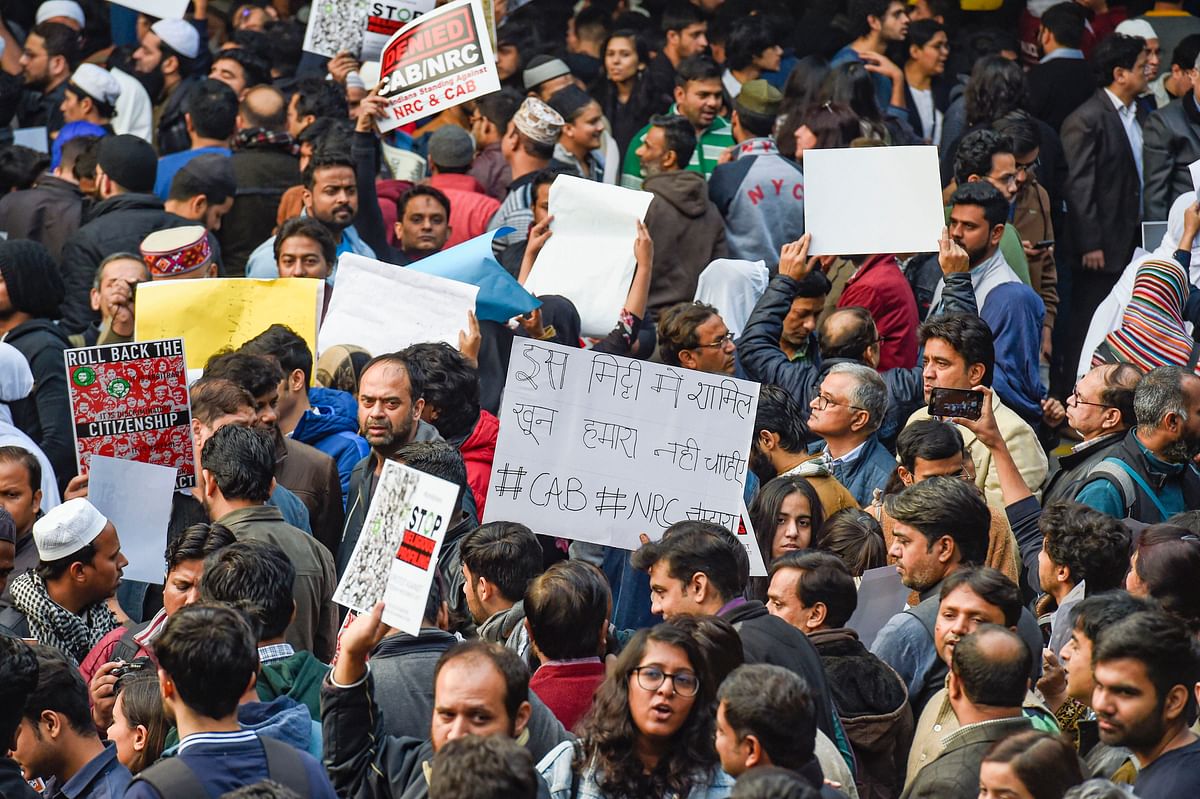
We, the undersigned, condemn in the strongest possible terms the police brutality in Jamia Millia Islamia University, New Delhi, and the ongoing illegal siege and curfew imposed on Aligarh Muslim University, Aligarh. On 15th December 2019 Delhi police in riot-gear illegally entered the Jamia Millia campus and attacked students who are peacefully protesting the Citizenship Amendment Act. The Act bars Muslims from India’s neighboring countries from the acquisition of Indian citizenship. It contravenes the right to equality and secular citizenship enshrined in the Indian constitution.

On the 15th at JMIU, police fired tear gas shells, entered hostels and attacked students studying in the library and praying in the mosque. Over 200 students have been severely injured, many who are in critical condition. Because of the blanket curfew and internet blockage imposed at AMU, we fear a similar situation of violence is unfolding, without any recourse to the press or public. The peaceful demonstration and gathering of citizens does not constitute criminal conduct. The police action in the Jamia Millia Islamia and AMU campuses is blatantly illegal under the constitution of India.

We stand in unconditional solidarity with the students, faculty and staff of Jamia Millia Islamia and Aligarh Muslim University, and express our horror at this violent police and state action. With them, we affirm the right of citizens to peaceful protest and the autonomy of the university as a non-militarized space for freedom of thought and expression. The brutalization of students and the attack on universities is against the fundamental norms of a democratic society.

As teachers, students, scholars and members of civil society across the world, we are watching with extreme concern the situation unfolding at Jamia Millia Islamia and Aligarh Muslim University. We refuse to remain silent at the violence unleashed on our colleagues (students, staff, and faculty) peacefully protesting the imposition of a discriminatory and unjust law.

This statement with a full list of signatories is available here: Jamia Millia and AMU solidarity statement.

CAA-NRC: Turning India Into a Warzone of ‘Peace’

Is the Indian state turning into a religious dystopia, like some of its neighbours?

CAA-NRC: Turning India Into a Warzone of ‘Peace’

Image Courtesy: Free Press Journal

The Bharatiya Janata Party-led central government has pushed the Citizenship Amendment Act through, but it is struggling to manage its fallout and the national outrage that a related proposal to create a National Register of Indian Citizens or NRIC has generated. At first, BJP leaders desperately assured those who were excluded in the NRC, or national register of citizens, that was finalised in October this year for the people of Assam. Its pleas were meant to reassure the Hindus who were excluded in the state’s citizen-count that it would hold a fresh all-India count of citizens, in which they will be included. The reason for the BJP’s desperation was the outcome of the Assam NRC, which turned out to be contrary to its expectations: out of 19 lakh found “illegal” in the state, only about 5 lakh are Muslim, almost all the rest are Hindu.

Yet, the fears of the citizenship law, combined with the resistance to an all-India NRC, have now given rise to tremendous mass resistance across India. There have been massive marches and rallies in many places, some of them culminating in aggressive confrontations with police and security forces. There is an ongoing massive crackdown on several universities, including in Lucknow, Aligarh, and Delhi where students were agitating against the new citizenship law and the all-India listing of citizens or NRIC.

( Read the full story here : https://www.newsclick.in/CAA-NRC-turning-india-earzone-peace)

Why the JNU #FeesMustFall is a Mass Intersectional Movement: Paresh Hate

Guest Post by PARESH HATE

It has been more than a month that students in JNU have been protesting against the new IHA Hostel Manual. The fight had initially begun against the exorbitant fee hikes, introduction of curfew timings and dress codes, lack of reservations and deprivation points in the manual, and the undemocratic manner in which the manual was passed. At this juncture, the movement has become broader, and articulates its resistance to the National Education Policy and its defence of the idea of public university and what it stands for.

While there have been many attempts to characterize the students’ movement as anti-national and free-loading as usual by the right-wing media, it is clear that the political articulation of students has managed to transcend these limited dimensions offered by the discourse set by the public perception. Even the propagandists are this time at a loss as to how to demonise the movement. All they have been able to come up with is that the protests ‘disrupted traffic’ and that the protests are ‘political’. One is unable to understand how the latter is a jibe, when protests are obviously always political in nature, especially this one. The demonization of JNU is not simply about the social sciences, or left-oriented student politics, but also a manufacturing of consent toward the commercialization and a legitimizing of this government’s agenda to destroy public avenues of welfare. However, due to the developments that have taken place in the last few weeks, politics itself of the campus is churning, wherein what is emerging is a cultivated intersectional discourse that has resulted in the breathing of new life into the campus. Continue reading Why the JNU #FeesMustFall is a Mass Intersectional Movement: Paresh Hate

Faculty Feminist Collective, JNU, condemns police violence on students

December 11, 2019

We, members of Faculty Feminist Collective, Jawaharlal Nehru University, condemn in the strongest terms the unprovoked police brutality on the peaceful protest marches of JNU students against the illegal adoption of a revised Hostel Manual by the JNU administration and the proposed steep rise in fees. Three times since November 11, 2019, the day of the JNU Convocation, the police have lathi-charged assembled and marching students. The first time, students were expressing a legitimate demand to meet the Vice Chancellor who now conducts all business outside the campus and has not met any member of the JNU community for some time now. On the second occasion it was a march to Parliament, to meet the elected representatives of this country; and the third time, to meet the President of India who is also the Visitor of JNU, to press upon them the urgency of the situation in which nearly half of the current students of JNU will not be able to come back next semester if the IHA Manual and the fee hike is not rolled back. Continue reading Faculty Feminist Collective, JNU, condemns police violence on students

Withdraw the Citizenship Amendment Bill! Not in My Name

JOIN THE PROTEST ORGANIZED BY ‘NOT IN MY NAME’ AGAINST THE CAB ON 14TH DECEMBER 3 TO 5 PM AT JANTAR MANTAR, DELHI.

WHAT IS THE CAB?

The Citizenship Amendment Bill proposes to offer Indian citizenship to Hindu, Sikh, Jain, Buddhist and Christian refugees from Afghanistan, Bangladesh and Pakistan. Muslims have been excluded. It is the Government’s argument that minorities of these three countries face persecution on the basis of religion.

WHAT DOES THE INDIAN CONSTITUTION SAY?

The framers of our Constitution made sure that religion and citizenship were delinked. Put together in the immediate aftermath of Partition, which witnessed the barbaric killing of lakhs of people and the uprooting of millions, the Constitution of India chose to strike out in a direction that surprised the world: our constitution guarantees citizenship irrespective of religion or any other identity. India was to be a country that belonged to all who were born here – and irrespective of their other identities. It is this sense of belonging that has kept India together.

WHY IS CAB DANGEROUS?

In the next few days Parliament will decide whether we continue to be an India that belongs to all. With the CAB we are being dragged back by more than seventy years, to follow the path of nations with a narrow minded view of citizenship, with the inevitable consequence of further divisions, partitions, enmity and violence. Continue reading Withdraw the Citizenship Amendment Bill! Not in My Name

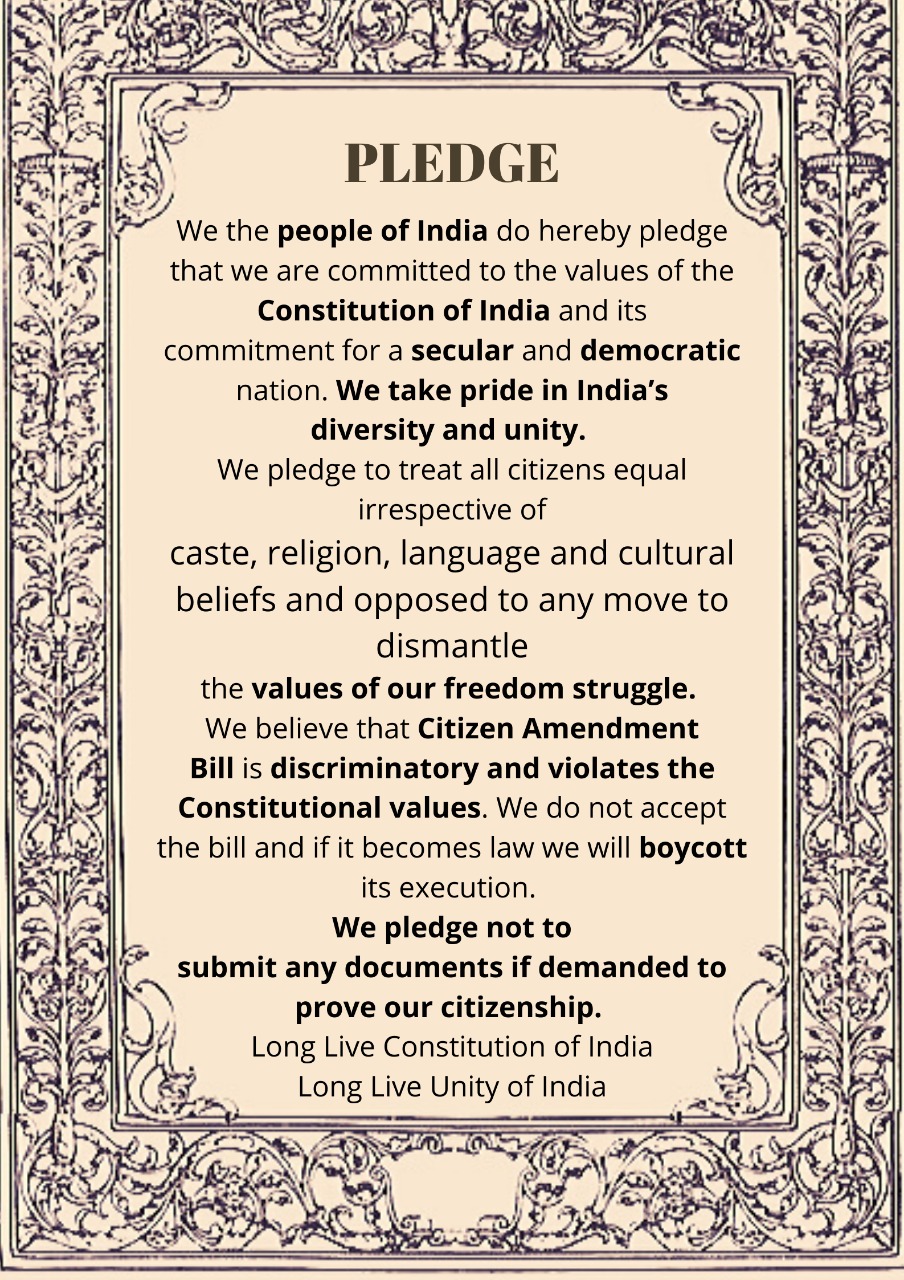
We the people of India, Reject the Citizenship Amendment Bill

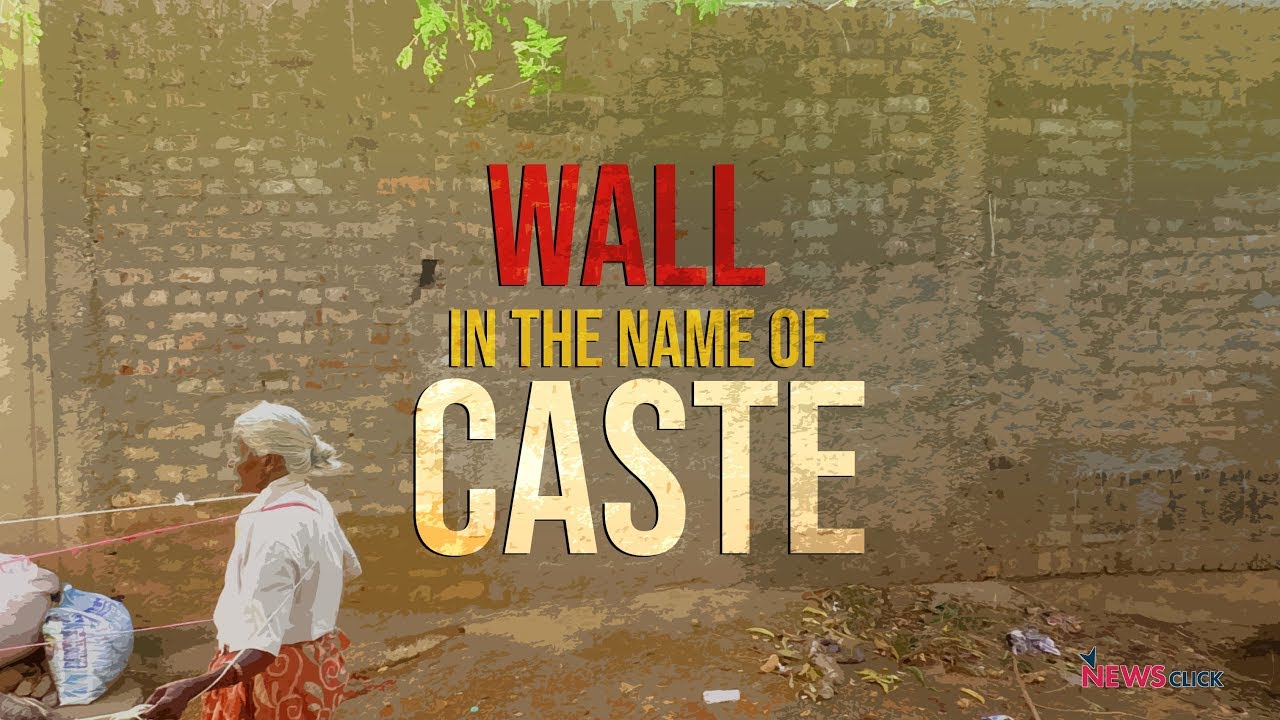
Whatever Happened to Struggle Against Untouchability

Untouchability Walls keep rising and falling in Tamil Nadu.

Whatever Happened to Struggle

BR Ambedkar wrote in Annihilation of Caste that “…the world owes much to rebels who would dare to argue in the face of the pontiff and insist that he is not infallible. I do not care about the credit which every progressive society must give to its rebels. I shall be satisfied if I make the Hindus realize that they are the sick men of India, and that their sickness is causing danger to the health and happiness of other Indians.”

In 2008, Uthapuram, a village in Madurai, Tamil Nadu, had made national headlines. It was the year when the Karunanidhi-led DMK state government had taken the initiative to demolish a portion of a thirty-metre wall that had been raised by the dominant Pillaimar community, an OBC caste which had wanted to keep residents of the Devandra Kula Vellalar community, which falls under the Scheduled Caste category, out of the Mariamman temple.

Built in 1989, this wall had become a symbol of segregation based on caste and organisations like Tamil Nadu Anti Untouchability Front, along with other groups and individuals had been conducting agitations to end this discrimination. Finally, the DMK government was forced to take action.

This was perhaps the first time that the rest of India came to know about the prevalence of this pernicious practice in Tamil Nadu. The demolition of the wall was projected as a significant step to move towards caste annihilation.

The recent death of 17 dalits in Mettupalayam wall collapse, in which members of the arunthathiyar dalit caste lost their lives is a reminder of how our celebrations were premature. And that when it comes to caste and its attendant exclusions and discriminations, India still has miles to go.

(Read the full article here https://www.newsclick.in/Whatever-Happened-Struggle-Against-Untouchability)

Remembering December 6 – A letter to the people of India: Constitutional Conduct Group

Statement by CONSTITUTIONAL CONDUCT GROUP

We, a collective of retired civil servants deeply committed to the values and guarantees of the Indian constitution, share with our fellow Indians our extreme grief and deep concern about where India stands today, 27 years after the demolition of the Babri Masjid in Ayodhya on 6 December, 1992.

We recall that 6 December is also the anniversary of the day on which the man who led the creation of one of the finest constitutions in the world, Dr Bhimrao Ambedkar, left this world.

The battle for the land on which the medieval mosque in Ayodhya stood was at its core a battle for the defence of the highest values of this constitution.

This was not simply a title dispute over a tiny piece of land in a dusty small town. It was not even a contest between a medieval mosque, now razed, with a grand temple, still imagined. It was a dispute about what kind of country this is and will be in the future, to who does it
belong, and on what terms must people of different identities and beliefs live together in this vast and teeming land.
4. We feel intense anguish because 27 years after the mosque was demolished, those who were responsible for this crime which tore India apart and led to the highest levels of communal bloodletting after the Partition riots, have still not been punished, even though
the Supreme Court directed that this criminal case be heard on a day-to-day basis. Instead, many of those who led and participated in this assault not just on a mosque but on India’s constitutional morality, have held some of the highest offices in this country.

We worry also that the recent judgment of the Supreme Court of India in effect rewards this grave crime. It also creates a false and illusory notion that a verdict favouring those who claim to speak for the majority community can result in peace and reconciliation and
everyone should move on, injustice notwithstanding. Continue reading Remembering December 6 – A letter to the people of India: Constitutional Conduct Group

कितनी आज़ाद है ग्रामीण पत्रकारों की कलम? : पी. साइनाथ

Guest Post by P Sainath

(बनारस के पराड़कर स्मृति सभागार में 29 नवंबर, 2019 को “पत्रकारों पर हमले के विरुद्ध समिति” CAAJ द्वारा आयोजित कार्यक्रम में दिया गया व्याख्यान)

मैं पांच भाषाओं में बराबर खराब बोल सकता हूं। यहां मैं मुंबइया हिंदी में बोलूंगा। आप लोगों ने सम्मान दिया, किताब रिलीज करने को बुलाया, यह मेरे लिए सम्मान की बात है क्योंकि ग्रामीण भारत के बारे में बहुत कम छपता है। इस किताब में दस राज्यों से रिपोर्टें हैं। ये वे दस राज्य हैं जहां देश की आधी आबादी, करीब साठ−सत्तर करोड़ लोग रहते हैं। इसलिए ये बहुत अहम है। इसकी अहमियत समझने के लिए आप ये आंकड़े देखिए।

हिंदुस्तान के नेशनल अखबारों में ग्रामीण खबरें कितना छपती हैं, इसके लिए इनके फ्रंट पेज लीजिए। दिल्ली में एक संस्था है सेंटर फॉर मीडिया स्टडीज़। एन. भास्कर राव की। वो तीस साल से रिसर्च कर रहे हैं मीडिया के ऊपर। अभी उनका आपरेशन कमती हो रहा है क्योंकि मीडिया में रिसर्च को लेकर इंटरेस्ट नहीं रह गया है। अब मीडिया वाले मार्केट रिसर्च एजेंसी के पास जाते हैं, इनके पास नहीं जाते। सीएमएस की स्टडी में ग्रामीण खबरों पर एक रिसर्च निकला था। ये नेशनल डेली का पांच साल का डेटा है। नेशनल डेली का मतलब वे अखबार जिनका एक एडिशन दिल्ली से निकलता हो। हो सकता है कि एक ही एडिशन निकलता हो कुल दिल्ली से, लेकिन वो भी नेशनल डेली है। बाकी सब एंटी-नेशनल डेली हैं। तो नेशनल डेली के फ्रंट पेज पर पांच साल का एवरेज ग्रामीण खबर का स्पेस है 0.67 परसेंट। ग्रामीण इलाके में जनसंख्या क्या है? 69 परसेंट, 2011 के सेंसस में। 69 परसेंट आबादी को आप देते हैं 0.67 परसेंट जगह। अगर जनसंख्या के 69 परसेंट को आप 0.67 परसेंट जगह अखबार के फ्रंट पेज पर देते हैं तो बाकी पेज किस पर जाते हैं? फ्रंट पेज का 67 परसेंट नर्इ दिल्ली को जाता है। और यह 0.67 परसेंट भी एग्ज़ैग्जरेशन (अतिरेक) है। ऐसा क्यों दिखा रहा है? क्योंकि पांच साल का यह एवरेज है। इसमें एक साल चुनाव का साल है। अगर चुनाव का साल निकाल दें, तो डेटा 0.20 परसेंट आता है।

एक पत्रकार जो काम करता है, बिना इनसेंटिव के करता है। अपने आदर्शवाद के चलते करता है। आपको ग्रामीण पत्रकारिता से कोर्इ प्रमोशन नहीं मिलने वाला है। कोर्इ रिकग्नीशन नहीं मिलने वाला है। मैंने जब “एवरीवन लव्ज़ अ गुड ड्रॉट” किताब लिखी, तब ज़माना बदल रहा था। तब मुझे थोड़ा रिकग्नीशन मिला। इस किताब का नाम मैंने नहीं दिया। एक छोटे से किसान ने मुझे ये नाम दिया था। वो मेरे साथ गया था पलामू, डालटनगंज। लातेहार में हम पहुंचे एक दिन। मैंने सोचा सर्किल आफिस में जाएंगे। किसान का नाम था रामलखन। वो मेरे साथ गया। सरकारी आफिस में एक आदमी नहीं बैठा था। सर्किल अफसर नहीं, बीडीओ नहीं, कुछ नहीं था। वहां बीडीओ को बीटीडीओ कहते हैं। ब्लॉक द डेलपमेंट अफसर। मैंने पूछा− रामलखन, ये लोग कहां गया यार। उसने बोला, सब तीसरी फसल लेने के लिए गया है। आइ फेल्ट अ लिटिल स्टुपिड… ये तीसरी फसल क्या चीज़ है। मैंने बोला− मैं जानता हूं रबी, खरीफ़। डेढ़ सौ साल पहले एक तीसरी फसल थी जायद। ये तीसरी फसल क्या है मैं नहीं समझ पा रहा। उसने बोला− ये तीसरी फसल है ड्रॉट रिलीफ (सूखा राहत)। उसने कहा− यहां बड़े लोग इस तीसरी फसल को बहुत पसंद करते हैं। ये लोग अकाल को बहुत पसंद करते हैं। इस तरह मेरी किताब का नाम पड़ा।

( Read the full text here : https://www.mediavigil.com/event/how-free-are-rural-journalists-sainath-lecture-in-varanasi/)