All posts by Aditya Nigam

“SIR” Is a Process of Mass Disenfranchisement

The Solution

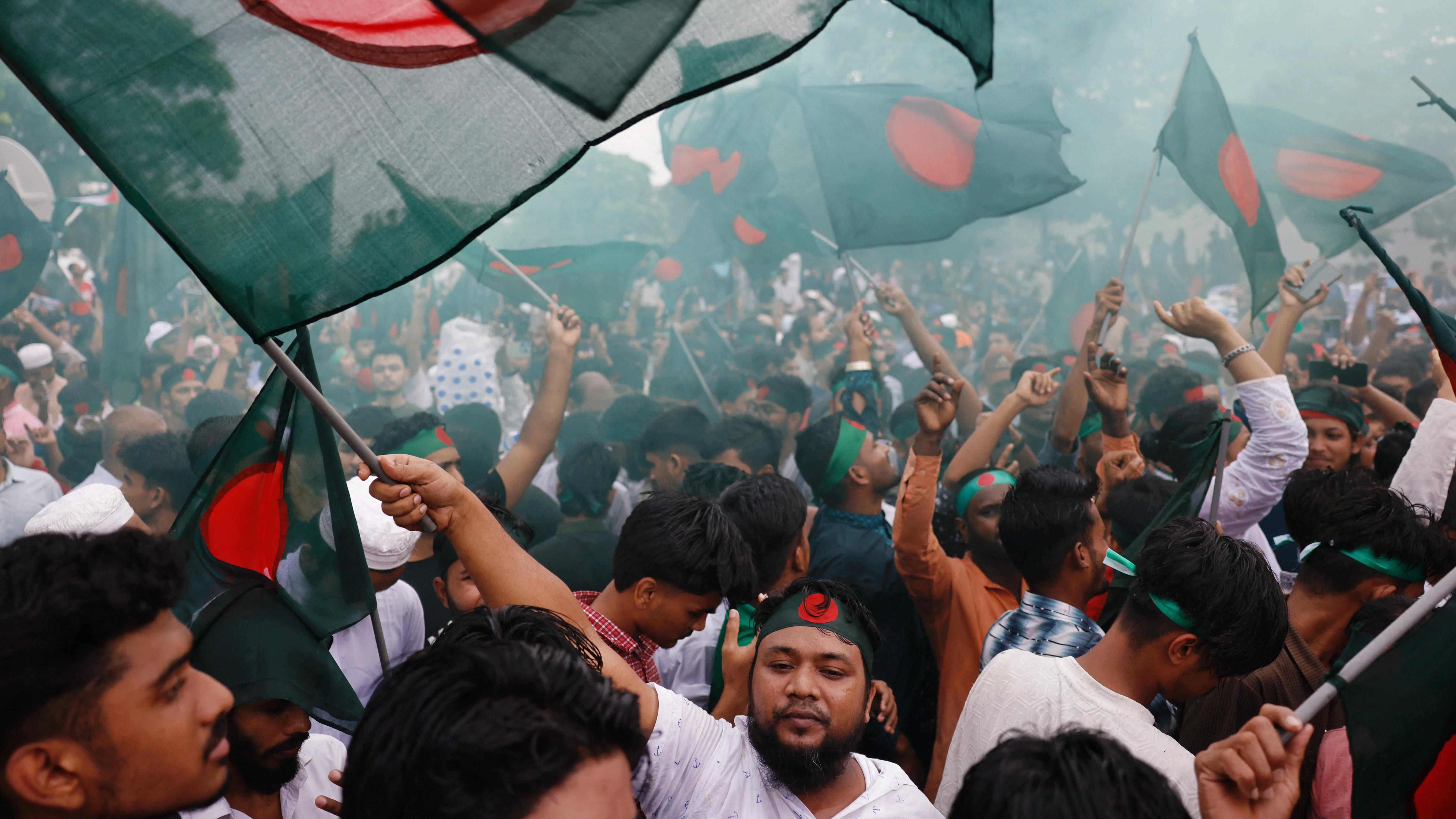
After the uprising of the 17th June Election of 2024

The Secretary of the Writers Union Prime Minister’s Office

Had leaflets distributed in the Stalinallee the message sent out via Nagpur

Stating that the people

Had forfeited the confidence of the government

And could win it back only

By redoubled efforts. Would it not be easier

In that case for the government

To dissolve the people

And elect another? – [Courtesy Bertolt Brecht]

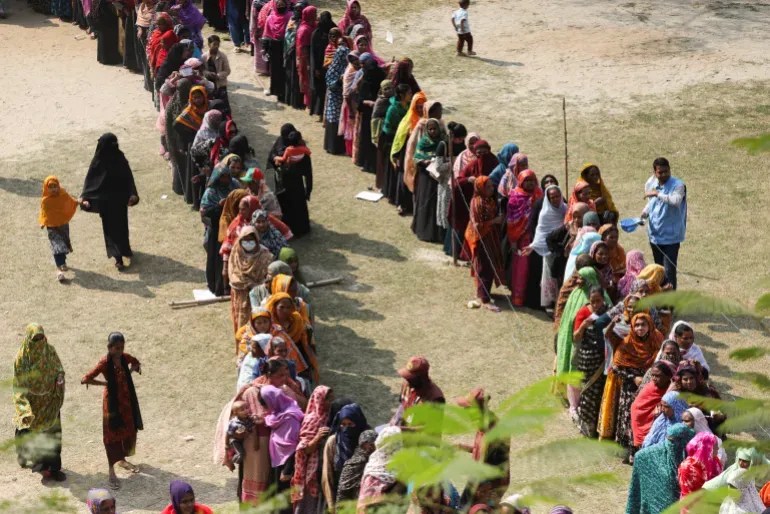
The way things are going with the SIR, we are heading for the regime “electing its people” – with the full participation of the Opposition parties, who despite the knowledge of the process, have become unwilling participants. Not knowing how to respond, they seem to be running around like headless chickens. “Vote Chori” and the so-called “Special Intensive Revision” (SIR) are closely tied together and though Rahul Gandhi seems to have got the import of what this means, reports suggest that RSS “sleeper cells” within and outside the Congress Party are hyperactive now, trying to undermine the campaign against vote chori. Some INDIA bloc parties have even openly distanced themselves from it. Continue reading “SIR” Is a Process of Mass Disenfranchisement

Beware of Aadhaar – A Warning on India’s Biometric Identity Model: Statement by Organizations and Concerned Individuals

Following is a statement issued on 10 December 2025, by over 50 organizations and 200 plus individuals on the reported adoption of the “Aadhar model” by some other countries.

We, concerned Indian citizens and organisations, are alarmed to note that efforts are being made to promote biometric identity systems similar to Aadhaar in other countries.

Aadhaar is India’s unique identity number, linked with a person’s biometrics (fingerprints, iris and photograph as of now). The number was rolled out with fanfare from 2009 onwards. The use of this number, and of Aadhaar-based biometric authentication (ABBA), was promoted to the hilt by the Indian government in close collaboration with the IT industry. Aadhaar was supposed to be voluntary, but it quickly became clear that living without it would be very difficult for most. Today, it is as good as compulsory. Most social benefits are out of reach without Aadhaar.

Aadhaar was rolled out in an explicitly “evangelistic” mode from day one. In recent years, it has been projected as a grand success by its promoters. Their friends in high places (like Davos, the World Bank, and the B&M Gates Foundation) are on board. There is an attempt, partly successful already, to project Aadhaar as a model and “export” it to other countries. Continue reading Beware of Aadhaar – A Warning on India’s Biometric Identity Model: Statement by Organizations and Concerned Individuals

Wildlife-Human Conflict – Non-intervention is No Longer a Choice: Sandeep Menon

Guest post by SANDEEP MENON

[Earlier this year, Kerala government sought the permission of the central government to kill wild animals that “post a threat to life and property”, declaring human-wildlife conflict a state-specific disaster.  As wildlife-human conflicts rage with a new intensity across different parts of India, the author underlines the need to go beyond knee-jerk reactions and put in place proper policy measures. The issue itself is highly controversial and even emotive and we present this essay here to put things in perspective and proposes some measures that are currently being debated among wildlife enthusiasts. – AN]

Photo courtesy Biplab Hazra and Think Wildlife Foundation

On the 24th of Nov 2025, a 70-year-old Adivasi woman was tending her goats on revenue lands near Masinagudi in Tamil Nadu, when she was killed and dragged into the bushes by a Tiger. It paid little heed to the shouts of witnesses who saw it moving the body to a nearby waterhole. Between late October and November, multiple attacks on people and livestock were reported from the Nugu region near Nagarhole in Karnataka, leaving 3 farmers dead and one critically injured. Including one farmer who had just recovered from a broken hip bone caused by an earlier elephant attack. In response to intense public pressure, over 23 tigers (including many cubs) have been captured from non-forest areas in a span of one month. A huge number for a small rural landscape around two sanctuaries. In many cases, operations were hindered by mobs, who screamed and pelted stones upon sighting the animal, leading to heightened aggression. One of the tigers was found to have a festering snare wound, while another was the mother of 5 healthy cubs. Things took an interesting turn, when experts found it hard to match one of the Tigresses to existing wildlife databases. Raising the possibility that she might have been completely raised outside protected areas. Nor were they all transitionary, weak or infirm animals. Some of them were found to be healthy individuals, simply finding new spaces to eke out a living. It is unclear what the department intends to do with all the captured tigers and cubs. If they end up in captivity, that would be a tragic outcome that serves neither the individual animal nor the species. Continue reading Wildlife-Human Conflict – Non-intervention is No Longer a Choice: Sandeep Menon

The Day the Colloquium Fell Silent – Bureaucratic Diktat and the Fate of Thought: S. M. Faizan Ahmed

Guest post by S. M.  FAIZAN AHMED

Image courtesy The India Forum

The resignation of Professor Nandini Sundar from the convenorship of the seminar colloquium at the Department of Sociology, Delhi School of Economics, has left an emptiness that language struggles to fill and words can barely cover. The seminar she was to host, titled Land, Property and Democratic Rights, was to be delivered by Dr. Namita Wahi, a senior fellow at the Centre for Policy Research and one of India’s most thoughtful legal scholars on land rights.

The event formed part of the department’s long-standing Friday Colloquium series—among the oldest and most cherished intellectual traditions in Indian academia. Over the decades, nearly every major figure in the social sciences has presented a paper here at least once. More than a seminar, it has been a ritual of conversation—one that has weathered political shifts, personal rifts, intellectual disagreements, and institutional flux, sustaining across generations a living legacy of thought, dialogue, and learning. Continue reading The Day the Colloquium Fell Silent – Bureaucratic Diktat and the Fate of Thought: S. M. Faizan Ahmed

A Shadowed Present and the Onus of Thought – Remarks, Non-Polemical or Otherwise: Sasheej Hegde

[This concluding essay of the series in Kafila titled Decolonial Imaginations. Links to the previous essays are given at the end.

The terms ‘decolonization’ or ‘decolonial’ have become quite critical now, given that the impulse of justice lies at the core of these concepts. Neither postcolonial nor decolonial perspectives are compatible with right-wing ideologies but the fact that Hindutva ideologues in India and the rightwing globally are now trying to appropriate that language makes it seem to some that the very idea of the postcolonial or decolonial is suspect. We believe that this demonizing of decolonial theory from a position defensive of the European Enlightenment needs to be unpacked in the interests of a mutually productive debate. Kafila has been publishing a series of interventions on what the idea of the decolonial imagination involves, locating decolonial theory as speaking from the margins, drawing attention to identities which the orthodox Left subsumed under ‘class’ and which the rightwing in India seeks to assimilate into Brahminism. Additionally the orthodox Left’s rejection of spiritual beliefs and inability to engage with them is also a factor that may have produced the space for right wing appropriations of a field marked “religion”. 

We hope that these interventions will clear the ground for productive conversations on the Left rather than polarised and accusatory claims that mark some spurious claims to ‘correctness’.]

Register

In a superbly crafted, and provocative, essay titled ‘In Defense of Presentism,’ the historian David Armitage (2023) has tried to re-present the prospects of ‘presentism’ for historians particularly (even though the essay has its lessons for various practitioners across domains, critical or otherwise).  As he notes: ‘Historians are trained to reject presentism: we are likely to argue that our duty is to the past and its inhabitants – and not to the present and certainly not to the future.’  But, as he shows with great analytical acuity and detail, historians are deploying the word ‘presentism’ in a variety of ways, which he then goes on to unravel, while making a case for what historians ought to be opposing and what about the present they can comfortably be accepting.  My brief is surely not to detail the intricacies of Armitage’s argument for my readers here – although I would urge them to read and absorb the essay themselves (even as my moves here have been made possible by it).  Rather, my effort is to quickly address some critical aspects of the ‘presentism’ that underwrites contemporary scholarship in India (and elsewhere) – although, again, for the purposes of this formulation, I shall limit myself to Meera Nanda (2025) and the terms of her critique of postcolonial and decolonial theory (henceforth PDT).  My own relationship with PDT has been an ambivalent one – and, hopefully, a recent contribution will clarify that (Hegde 2025) – and there are also aspects of the critique mounted by Meera Nanda that I agree with.  But this is not the ground that I will be traversing here in this short note. Continue reading A Shadowed Present and the Onus of Thought – Remarks, Non-Polemical or Otherwise: Sasheej Hegde

Left, Right, Left – Notes on Radical Post/De-Coloniality: Gita Chadha

[This post is the ninth – and penultimate – essay of the series in Kafila titled Decolonial Imaginations. Links to the previous essays are given at the end.

The terms ‘decolonization’ or ‘decolonial’ have become quite critical now, given that the impulse of justice lies at the core of these concepts. Neither postcolonial nor decolonial perspectives are compatible with right-wing ideologies but the fact that Hindutva ideologues in India and the rightwing globally are now trying to appropriate that language makes it seem to some that the very idea of the postcolonial or decolonial is suspect. We believe that this demonizing of decolonial theory from a position defensive of the European Enlightenment needs to be unpacked in the interests of a mutually productive debate. Kafila has been publishing a series of interventions on what the idea of the decolonial imagination involves, locating decolonial theory as speaking from the margins, drawing attention to identities which the orthodox Left subsumed under ‘class’ and which the rightwing in India seeks to assimilate into Brahminism. Additionally the orthodox Left’s rejection of spiritual beliefs and inability to engage with them is also a factor that may have produced the space for right wing appropriations of a field marked “religion”. 

We hope that these interventions will clear the ground for productive conversations on the Left rather than polarised and accusatory claims that mark some spurious claims to ‘correctness’.]

Much has already been said in this set of essays on the difference between two kinds of Indian responses to colonial western modernity. These responses can be classified as the left leaning post(de)-colonial theories and the right-wing responses that may also be classified, by some, as post(de)-colonial theory. This set of essays are in conversations around the allegation that the former feeds into the latter. It is evident to many of us doing post(de)-colonial theory on the left that the difference between the two is unmistakable. Yet, this is missed by many on the left, leading to much misrepresentation; and by many on the right, leading to much appropriation. We also know that the responses to modernity from post(de)-colonial theories on the left are fractured on multiple axes, religion and faith being a major one. Due to the common worlds we inhabit, it is indeed possible for much confusion to occur. I think the act of demarcating the players, the fields, and the actions of the oeuvres, the right and the left is important, especially for a pedagogic purpose.  Each generation seeks clarification in the classroom on several of these confusions and debates. While demarcating the difference regularly and rigorously is an important intellectual exercise for everyone in the discourse, doing this is also an ethical responsibility, particularly for those who do not wish to be either misrepresented or appropriated, which is basically those who are not bedfellows with the orthodox left and definitely not with the orthodox right. The demarcation is required to be done in multiple domains of theory as well as practice. This set of essays seeks to precisely do that. Continue reading Left, Right, Left – Notes on Radical Post/De-Coloniality: Gita Chadha

When Decolonisation turns Inward – On the Dangers of Methodological Nationalism: Sabah Siddiqui

[This post is the eighth essay of the series in Kafila titled Decolonial Imaginations. Links to the previous essays are given at the end.

The terms ‘decolonization’ or ‘decolonial’ have become quite critical now, given that the impulse of justice lies at the core of these concepts. Neither postcolonial nor decolonial perspectives are compatible with right-wing ideologies but the fact that Hindutva ideologues in India and the rightwing globally are now trying to appropriate that language makes it seem to some that the very idea of the postcolonial or decolonial is suspect. We believe that this demonizing of decolonial theory from a position defensive of the European Enlightenment needs to be unpacked in the interests of a mutually productive debate. Kafila has been publishing a series of interventions on what the idea of the decolonial imagination involves, locating decolonial theory as speaking from the margins, drawing attention to identities which the orthodox Left subsumed under ‘class’ and which the rightwing in India seeks to assimilate into Brahminism. Additionally the orthodox Left’s rejection of spiritual beliefs and inability to engage with them is also a factor that may have produced the space for right wing appropriations of a field marked “religion”. 

We hope that these interventions will clear the ground for productive conversations on the Left rather than polarised and accusatory claims that mark some spurious claims to ‘correctness’.]

When I first encountered postcolonial theory as a young scholar, it felt like an opening into a new way of understanding the world. Much of my introduction came through Indian thinkers, some of whom were not located in India, yet their work spoke powerfully to questions of colonial legacies, subjectivity, and the politics of knowledge. These early engagements helped me grasp the goals of postcolonial scholarship: to make visible the structures of power that colonialism left behind and to explore the ways in which it continues to shape our systems of knowledge and self-representation. Over time, however, I noticed a subtle shift; the language of postcolonial studies seems to have receded somewhat, while the term decolonial has gained prominence as a way to address questions of knowledge and authority in the present moment. Other contributors to this blog series have traced the rise and relative decline of postcolonial thinking in South Asia. I still resonate with postcolonial analysis, and have used it within my own work, but for the purposes of reflecting on the current politics of knowledge in Indian universities, I am choosing to engage now with the decolonial project.

Continue reading When Decolonisation turns Inward – On the Dangers of Methodological Nationalism: Sabah Siddiqui

Colonialism, Modernity and Science: K. Sridhar

[This post is the seventh essay of the series in Kafila titled Decolonial Imaginations. Links to the previous essays are given at the end.

The terms ‘decolonization’ or ‘decolonial’ have become quite critical now, given that the impulse of justice lies at the core of these concepts. Neither postcolonial nor decolonial perspectives are compatible with right-wing ideologies but the fact that Hindutva ideologues in India and the rightwing globally are now trying to appropriate that language makes it seem to some that the very idea of the postcolonial or decolonial is suspect. We believe that this demonizing of decolonial theory from a position defensive of the European Enlightenment needs to be unpacked in the interests of a mutually productive debate. Kafila will be publishing a series of interventions on what the idea of the decolonial imagination involves, locating decolonial theory as speaking from the margins, drawing attention to identities which the orthodox Left subsumed under ‘class’ and which the rightwing in India seeks to assimilate into Brahminism. Additionally the orthodox left’s rejection of spiritual beliefs and inability to engage with them is also a factor that may have produced the space for right wing appropriations of a field marked “religion”. 

We hope that these interventions will clear the ground for productive conversations on the left rather than polarised and accusatory claims.]

It is impossible to think of modernity and colonialism, without thinking of their third sibling – science. They are not just siblings, in fact, but a set of triplets which took birth within the same western context and period – and hence, the adjectives ‘modern’ and ‘western’ are used to qualify science, often by the colonizers themselves. Just as the notion of ‘savage native’ was a part of colonial construction, so was the idea of ‘modern science’. Not only did the colonial powers conquer people and knowledge systems across the world, but they also established hegemony within their own societies, colonizing them from within. This was done using complex mechanisms of power, control and appropriation. Continue reading Colonialism, Modernity and Science: K. Sridhar

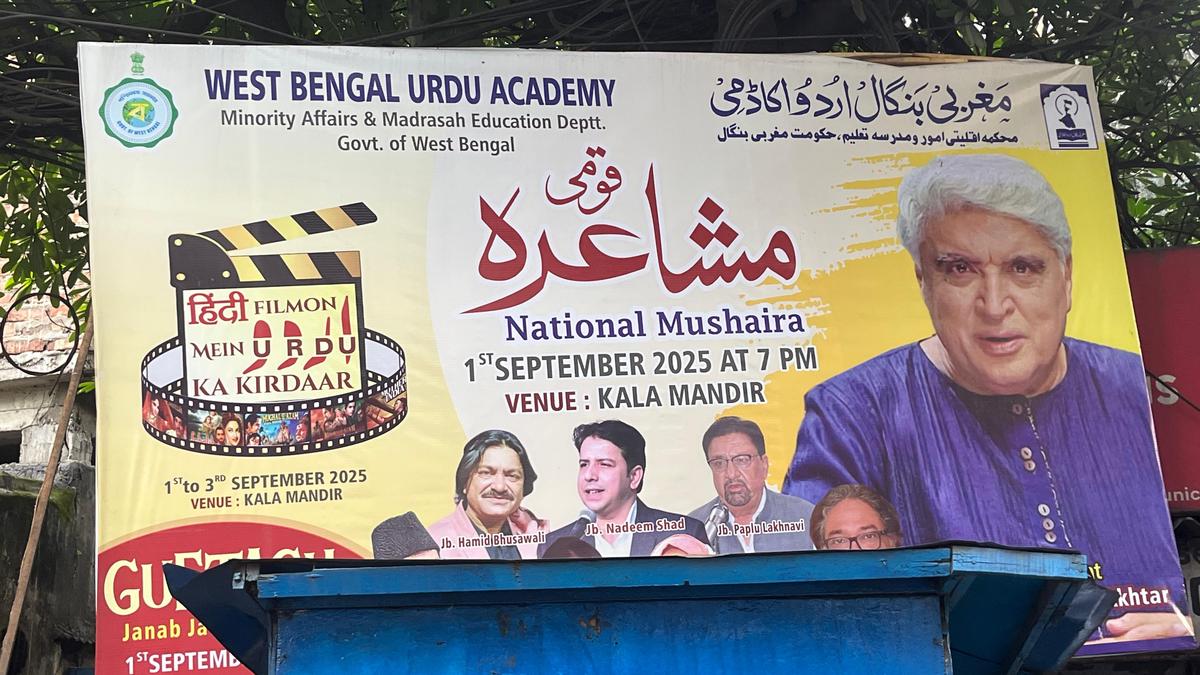
Javed Akhtar, Bollywood and Urdu’s Ghostly Existence – Rashid Ali

Guest post by RASHID ALI

Image courtesy The Hindu

Javed Akhtar’s recent ‘exile’ from the West Bengal Urdu Academy event did more than generate headlines. It dwarfed a bigger debate about Urdu in Hindi cinema, which was the event’s main theme. The media precipitately reduced the whole issue to the conflict between the lyricist and the Urdu Academy. The controversy carried a tinge of ‘Muslim fundamentalism,’ reflecting today’s cultural and political ideologemes. However, the discussion on Bollywood’s uneven relationship with Urdu was lost in the sound and fury of cultural climate of the country. Et tu, Brutus?’ finds a new stage – ‘Et tu, Bollywood?’ You speak against the very world that gives you voice. Continue reading Javed Akhtar, Bollywood and Urdu’s Ghostly Existence – Rashid Ali

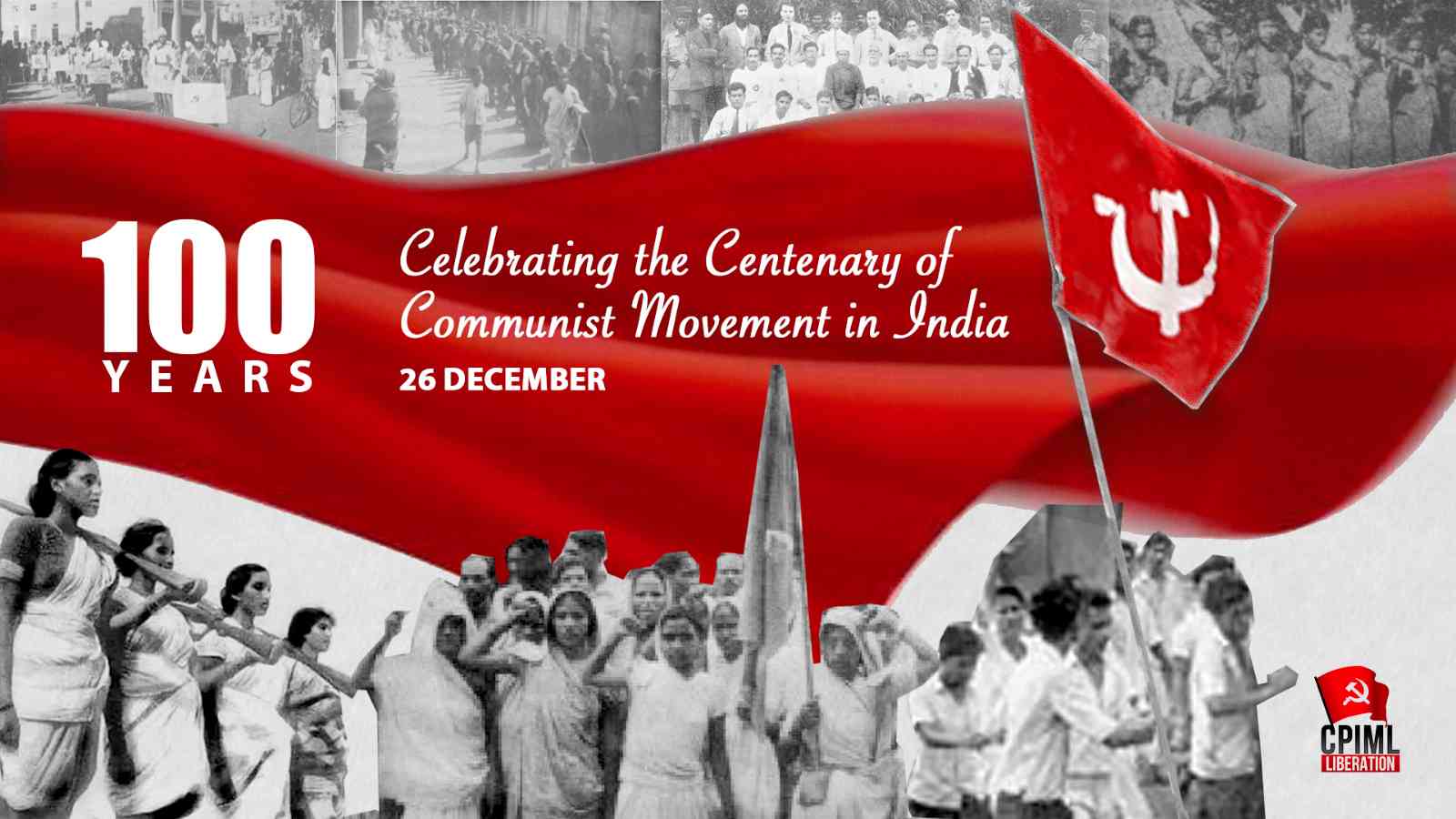
Red Dreams, Saffron Marches – Longue Durée of India’s Struggles and Strategies of Power: S. M. Faizan Ahmed

Guest post by S.M. FAIZAN AHMED

[The author writes about the current scenario, reflecting on the one hundred years of the communist movement as well as of the RSS. In these important reflections Ahmed recounts the great achievements of the communist Left, while at the same time speculating on where the RSS scored over it – leaving us with a number of questions to seriously ponder about. – AN]

Image courtesy Liberation

On October 1, 2025, a day before Gandhi’s birth anniversary, long revered and associated with ahimsa and moral conscience, the government unveiled a ₹100 coin at the Dr. Ambedkar International Centre, 15 Janpath, marking a century of the Rashtriya Swayamsevak Sangh. A day earlier, as if to turn ideology into spectacle,  a Shakha parade, named Path Sanchalan, traced its way through Jawaharlal Nehru University—once a fortress of dissent and the audacious poetry of thought. The rhythmic march of uniformed bodies through corridors once alive with debate did more than display ceremony; it signaled a shift in the republic’s moral conscience, where the choreography of discipline seeks to mute the dialectic of doubt, and the university—once a sanctuary of questioning minds—becomes a stage for the theatre of obedience. Continue reading Red Dreams, Saffron Marches – Longue Durée of India’s Struggles and Strategies of Power: S. M. Faizan Ahmed

Decolonizing the ‘Colonial-Brahmanical’ – Thinking outside Modernity: Sunandan K N

[This post is the sixth essay of the series in Kafila titled Decolonial Imaginations. Links to the previous essays are given at the end.

The terms ‘decolonization’ or ‘decolonial’ have become quite critical now, given that the impulse of justice lies at the core of these concepts. Neither postcolonial nor decolonial perspectives are compatible with right-wing ideologies but the fact that Hindutva ideologues in India and the rightwing globally are now trying to appropriate that language makes it seem to some that the very idea of the postcolonial or decolonial is suspect. We believe that this demonizing of decolonial theory from a position defensive of the European Enlightenment needs to be unpacked in the interests of a mutually productive debate. Kafila will be publishing a series of interventions on what the idea of the decolonial imagination involves, locating decolonial theory as speaking from the margins, drawing attention to identities which the orthodox Left subsumed under ‘class’ and which the rightwing in India seeks to assimilate into Brahminism. Additionally the orthodox left’s rejection of spiritual beliefs and inability to engage with them is also a factor that may have produced the space for right wing appropriations of a field marked “religion”. 

We hope that these interventions will clear the ground for productive conversations on the left rather than polarised and accusatory claims.]

This short essay builds on the articles published in this series and has already explored the various ways in which the concept of de-colonization is articulated, appropriated and adapted in various historical contexts in India and elsewhere. This note aims to map, in a preliminary fashion, the divergent engagements with questions concerning caste across three key groups – colonialists, nationalists (including the Hindutva nationalists), and postcolonial and decolonial practitioners in the last two centuries. This note does not purport to break new empirical ground but instead assembles and juxtaposes existing academic and public arguments to construct a focused framework for comparison.

It is important to begin with the now established argument that concepts are not static but dynamic entities, formed, transformed and deployed along historical processes. In larger Humanities and Social Science disciplines, historians, philosophers, anthropologists and linguists have increasingly shifted the question from ‘what does a concept or a category or just a noun mean’ to ‘what does it do’.  This shift posits that meaning is not a stable core but a secondary effect created from practice through a process of ‘densification’. We can observe this in Foucault’s inquiries into the concept of madness or Wittgenstein’s exploration of the performative nature of language. While the dominant forces have the power to deploy a category more widely and to limit its interpretations or in other words have the power to solidify and concretize the uses and effects of the category, they cannot guarantee to reduce this category to a singular use/meaning or limit its interpretation.  Hence the importance of the analysis of the travel and transformation of categories in various routes, its adaptations and mutations across various historical contexts and times.

Colonialism held divergent meanings and ‘affected’ differently for different groups of colonised, who in turn responded differently in varied temporal and spatial contexts. In what follows, I will briefly describe how colonialism affected the discourse and practice of caste and how different sections of the colonised reciprocated and acted on these colonial interventions. By doing so, I will demonstrate that, while colonialists, upper caste and Hindutva nationalists, and Leftists at some or other point have taken ostensibly anti-caste positions, their intentions or outcomes were not similar and all of them varied drastically from the radical project of annihilation of caste proposed by Ambedkar.

A parallel divergence exists within academic scholarship, where the analysis of caste from nationalist, postcolonial and decolonial perspective have criticized caste system but from different standpoints and with different objectives. It will therefore be both analytically trivial and politically dangerous to equate Ambedkar’s radical anti-caste position with Hindutva rhetoric against caste. Similarly equating a genuine decolonial position on caste with Hindutva’s strategic engagement with caste or about any other issues, can only stem from either a misreading or a cynical anxiety of losing one’s own relevance.

Colonial practice was never governed by a single monolithic principle; instead it was characterised by contradictions, ironies and exceptions that became the very norm of colonial rule. A pivotal moment in this history was the orientalist introduction of ‘Hindu’ as a unified religious category which fundamentally reshaped the colonial discourse on caste in India. Earlier, the category jathi dominated in the organisation of social practices and in the reflection of these practices. This does not mean jathi remained static in the precolonial period. As a dynamic system jathi underwent many transformations but remained hierarchical all through this period. The orientalists understood jathi as the essential principle of Hindu religion but also created a historical myth in which there existed a Hindu golden past which was destroyed by the Islamic invasions. This enabled many problematic concepts such as the idea that Hindu religion existed from the Vedic period onwards, and that all precolonial kingdoms were religious or something articulated as Sanathana Dharmam was part of this Hindu religion.

These notions are dominant even in contemporary debates and in common sense. The Hindutva history is completely premised on this colonial historical myth (not on the postcolonial or decolonial critique of these concepts) which the Hindutva propagandist will never admit. While they wholeheartedly embrace this part of colonial history, they vehemently oppose the theory of ‘Brahmanical despotism’ which was also an integral part of the colonial understanding of the Hindu religion.  In the so called ‘decolonisation project’ of the Hindutva only the latter part is to be decolonised. To be exact, even the other versions of nationalist history in the first half of the twentieth century – Gandhian, Ambedkarite, Nehruvian, Marxist – incorporated some or other elements of this colonialist orientalist interpretation. Decolonisation project attempts to point out not only the overlaps of the nationalist project with colonial one, but also focuses on how this enables the current forms of domination and subordination.

Postcolonial and decolonial histories challenged both colonial interpretation of caste and its nationalist adaptations as well. Nicholas Dirks explained how caste identities were re-constructed and even rigidified through various colonial governing practices. This was often misinterpreted as though he was arguing that caste was a pure colonial construction, which is clearly a Hindutva argument which, unlike Dirks, completely overlooks the inhuman caste domination and violence in the precolonial period. G Aloysius in his book Nationalism without a Nation analysed how caste was central to the nationalist political position of anti-colonialism. Lata Mani’s work on Sati (Contentious Traditions: The Debate on Sati in Colonial India) shows how colonialist and the upper castes together reconstructed ‘traditions’ which also became the basis for the reform narrative which attempted to separate good traditional practices from superstitions.

The idea that jathi was an exception that accidently emerged in the long history of Hindu religion was central to Hindu reform attempts and this was the exact point that Ambedkar rejected in his essay ‘Annihilation of Caste’.  While this essay premises existence of Hindu religion based on Shasthras (Orthodoxy), which one can now see as an orientalist construction, his arguments were anchored against the colonial and nationalist narratives of a Hindu golden past and against the possibility of an egalitarian reformed Hinduism as depicted by Hindu reformers of the period. The fact that the Hindutva propagandists attempt to make him one of the many Hindu reformers does not make him a ‘strange bedfellow’ or ‘enabler’ of Hindutva politics. On the contrary, his political philosophy has become the inspiration for anti-Hindutva politics in the twenty-first century.

Ambedkar’s critique focused on the social practices and political ideology of casteism embedded in Hindutva politics. Decolonial historians have extended this critique by analysing the role of caste not just in traditions but also in what is described as modern as well. This scholarship is inspired by feminist standpoint theories and black and queer feminist (many among them are scientists) critique of Science (Sandra Harding, Karen Barad, Chanda Prescod-Weinstein etc.), critique of modern forms of knowledge production from indigenous perspective (Linda Tuhiwai Smith, Dian Million, Candis Callison) and Indigenous critique of modernity and its genocidal developmental practices in India (Abhay Xaxa, Hansda Sowvendra Shekhar, Jacinta Kerketta) and so on. In a close reading of these works one could easily recognize that they are all part of a politics that challenges racist, casteist, patriarchal dominations and other right wing ideologies.

Ajantha Subramanian in her book Caste of Merit: Engineering Education in India shows how brahmanical notions of merit were embedded from the very beginning of IITs in India. Her analysis shows that the upper caste dominance in the so-called Nehruvian temples of modernity is not an exception but by design. The history of IIT Roorkee will also tell a similar story.   Started as Thomason College of Civil Engineering in 1847 to train Indians as engineers for the Ganga Canal Project, the engineering education here was based on the workshop model as it was in Europe and other places. However as most of the students in the first three batches were upper caste Bengalis, the learning based on doing was not successful. After an inquiry committee report it was decided that there should be a three tier system in which the top tier will be a fully theoretical (mental labour based) education in the classroom, the middle level will be half classroom and half workshop based and the lowest level will be fully in the workshop. This is the model that was replicated in technical education as the three tier system of Engineering College, Polytechnic, and ITIs. Here caste hierarchy was clearly mapped into the hierarchy of knowledge in which mental labour is separate from the manual labour and superior to the latter. This separation of theory from practice (mental labour from manual labour) is central to all forms of modern knowledge practices not only in India but everywhere in the world. Hence wherever these institutions emerged in the eighteenth and nineteenth centuries, they incorporated the local power hierarchies into their notion of knowledge. Considering this history, it is not an accident that the Science and Technology institutions and science and technology departments in Universities are the worst domains of caste discrimination and exclusion.  This is not to say that Social Science as a discipline or the departments are egalitarian. It is the same modernist and casteist notion that established the divide between theoretical Brahmins and empirical Shudras, a Gopal Guru has already pointed out.

In my book Caste, Knowledge and Power: Ways of Knowing in the Twentieth Century Malabar, I have demonstrated that caste discrimination in the domain of knowledge production in India is not just institutional but epistemological as well. Hence, I have argued that the dominant form of modernity in India in general and its forms of knowledge production in particular need to be understood not as Western, Scientific, Eurocentric or Universal but as Colonial-Brahmanical. Brahmanical understanding of jathi and gender are part of the epistemology and practices of all modern institutions. In other words, any attempt of decolonisation will be anti-colonial as well as anti-Brahmanical and will inherently be an anti-Hindutva project as well.

In conclusion, It is critical to recognise that the Hindutva appropriation of icons like Gandhi or Ambedkar, their attack on Nehru or their revivalist understanding of Science and Technology, should not circumscribe one’s own critique of Gandhi or Nehru or Science or be apologetic in fear of appropriation. An appropriate response would not be that ‘we are not abandoning rationality’ or ‘we are not relativists’ or ‘we believe in different kinds of Science’. Rather, we must reject the foundational role of the very binaries of – Rational/ irrational, absolute / relative, modernity / tradition – to advance a politics of equality and fraternity. The more productive analytical framework would be to ask what these concepts do: Do they enable and intertwine with other actions for a more democratic and equal world or do they reinforce social hierarchy?

Sunandan KN is Associate Professor, Azim Premji University, Bangalore. The opinions are personal.

Sleeping with the enemy? Postcolonialism, misread and misjudged: Shamayita Sen

Beyond philosophical gaslighting – seven theses on decolonization/ decoloniality: Aditya Nigam

Anti-colonial thought and the global right – an untenable alliance: Ishan Fouzdar

The Hopeless Quest for a Pure Incorruptible Knowledge – Decoloniality and its Discontents: Nivedita Menon

The Struggle for a ‘Coloured Modernity’: Meghna Chandra and Archishman Raju

 

Protest Assault on Adivasi Youth Leader Rama Kankonkar, Lawless Casino-based Development in Goa: NAPM

Statement by NATIONAL ALLIANCE OF PEOPLE’S MOVEMENTS demands principled investigation to establish command responsibility. It also demands that Govt review the unsustainable and unjust ‘development’ model fuelled by land mafias and casino interests in Goa .

National Alliance of People’s Movements (NAPM) unequivocally condemns the heinous assault on adivasi youth leader, Rama Kankonkar on 18th September, the subsequent intimidation against another activist Swapnesh Sherlekar, and the alarming descent into lawlessness that these incidents in Goa exemplify. We extend unwavering solidarity to Rama Kankonkar, Swapnesh Sherlekar and the people of Goa who continue to fight for justice, environmental protection, and the preservation of their collective identity. We also demand adequate protection to these activists, principled investigation to establish command responsibility and a review of the current unsustainable, unjust and unsafe ‘development’ model; fuelled by land mafias and casino interests. Continue reading Protest Assault on Adivasi Youth Leader Rama Kankonkar, Lawless Casino-based Development in Goa: NAPM

The Struggle for a ‘Coloured Modernity’: Meghna Chandra and Archishman Raju
[This post is the fifth essay of the series in Kafila titled Decolonial Imaginations. Links to the previous essays are given at the end.

The terms ‘decolonization’ or ‘decolonial’ have become quite critical now, given that the impulse of justice lies at the core of these concepts. Neither postcolonial nor decolonial perspectives are compatible with right-wing ideologies but the fact that Hindutva ideologues in India and the rightwing globally are now trying to appropriate that language makes it seem to some that the very idea of the postcolonial or decolonial is suspect. We believe that this demonizing of decolonial theory from a position defensive of the European Enlightenment needs to be unpacked in the interests of a mutually productive debate. Kafila will be publishing a series of interventions on what the idea of the decolonial imagination involves, locating decolonial theory as speaking from the margins, drawing attention to identities which the orthodox Left subsumed under ‘class’ and which the rightwing in India seeks to assimilate into Brahminism. Additionally the orthodox left’s rejection of spiritual beliefs and inability to engage with them is also a factor that may have produced the space for right wing appropriations of a field marked “religion”. 

We hope that these interventions will clear the ground for productive conversations on the left rather than polarised and accusatory claims.]

The excerpt published in The Wire of Meera Nanda’s “Decolonising Ourselves into a Hindu Rashtra” argues that postcolonial and decolonial theorists bear the blame, at least in part, for the rise of Hindu nationalism in India. In eschewing “Enlightenment Secular Humanism”, Nanda argues, these theorists have opened epistemic space for right wing ideologues to justify reactionary politics. Furthermore, she argues that the ideas of postcolonial theory have their roots in the “neo-Hindu revivalist strains of anti-colonial nationalism.”, who she identifies with “Gandhi, Vivekananda, Aurobindo, and even Tagore”. These thinkers were apparently seeking an escape from the idea of modernity present in the “legacy of the British Raj”. This, apparently against the “enlightenment thinkers” of India in which she presents a bizarre counter grouping of “Ambedkar, Periyar, Nehru, M.N. Roy, and Narendra Dabholkar”. This opposition that Nanda sets up is so ludicrous to someone who has even spent a minimal amount of time studying our freedom struggle or any of these thinkers that it requires little comment.

Continue reading The Struggle for a ‘Coloured Modernity’: Meghna Chandra and Archishman Raju
ALIFA Condemns Rape and Death Threats to Naga Women’s Rights Leader Prof. Rosemary Dzuvichu

Statement by the All India Feminist Alliance – NAPM calls upon the State to ensure her safety, bring perpetrators to justice and uphold Naga women’s right to reservations in municipal bodies.

NAPM (All India Feminist Alliance – National Alliance of People’s Movements), a pan-India collective of feminist, grassroots organizations and individuals strongly condemns the threats of death and sexual violence made on social media to Kohima-based women’s rights activist and academic, Prof. Rosemary Dzuvichu, Advisor, Naga Mothers’ Association (NMA). The vile, violent and vicious threats on Facebook by one Mr. WJ Longkumer warn her to desist from advocating for women’s political reservation – a hard-won right of Naga women, also upheld by the Supreme Court.  We demand immediate legal action against the perpetrators and call upon the state to ensure the safety of Prof. Rosemary as well as other Naga women, facing similar threats. 

Prof Dzuvichu is no stranger to intimidation. Back in 2017, she was among those leading the struggle to ensure the long-delayed implementation of the Nagaland Municipal (First Amendment) Act of 2006, or the “Nagaland Reservation Bill of 2006″. Through this amendment of the 2001 Municipal Act, women were allotted 33% reservation in urban local bodies (municipalities and town councils), in accordance with the 74th Amendment to the Constitution of India. Article 243 T (3) of the Indian Constitution, mandates that at least one-third of all directly elected seats in every municipality in India must be reserved for women. Yet, all was not smooth as quotas for women in political bodies was posited as ‘going against the customs and culture of Nagaland’, and women who defied these customs were seen as legitimate targets of ire.

Continue reading ALIFA Condemns Rape and Death Threats to Naga Women’s Rights Leader Prof. Rosemary Dzuvichu

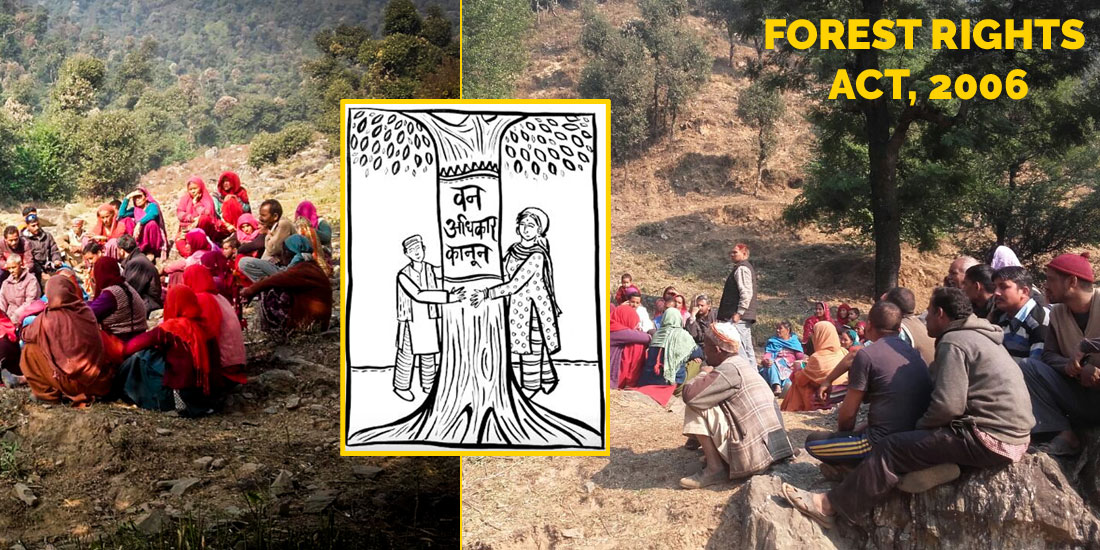
Whose Forest is it Anyway? The Forest Rights Act (FRA) and its unintended consequences: Sandeep Menon

Guest post by SANDEEP MENON

Image courtesy Himachal Watcher

The road to hell is paved with good intentions. That’s the first, visceral reaction that many passionate wildlife conservationists have, when you utter the 3 letters: FRA. The Forest Rights Act (2006) aims to give native tribal and forest dwelling populations ownership of, and decision-making rights over what happens in the wildlife areas that they are residents of. But many conservationists see it as a gateway for rampant encroachment into protected areas.

I was initially a bit more circumspect, having been a longtime advocate for community-based conservation. Having always believed that ivory tower conservation can never work, without putting the people involved at the center of it. But I have also had to temper my position over time, as I witnessed the complexities of how it was playing out on the ground. (ref- https://india.mongabay.com/2020/07/commentary-making-communities-central-to-conservation/ )

Continue reading Whose Forest is it Anyway? The Forest Rights Act (FRA) and its unintended consequences: Sandeep Menon

Beyond Philosophical Gaslighting – Seven theses on Decolonization/ Decoloniality

[This post by Aditya Nigam is the second essay of the series in Kafila, titled Decolonial Imaginations. The first essay can be read here.

The terms ‘decolonization’ or ‘decolonial’ have become quite critical now, given that the impulse of justice lies at the core of these concepts. Neither postcolonial nor decolonial perspectives are compatible with right-wing ideologies but the fact that Hindutva ideologues in India and the rightwing globally are now trying to appropriate that language makes it seem to some that the very idea of the postcolonial or decolonial is suspect. We believe that this demonizing of decolonial theory from a position defensive of the European Enlightenment needs to be unpacked in the interests of a mutually productive debate. Kafila will be publishing a series of interventions on what the idea of the decolonial imagination involves, locating decolonial theory as speaking from the margins, drawing attention to identities which the orthodox Left subsumed under ‘class’ and which the rightwing in India seeks to assimilate into Brahminism. Additionally the orthodox left’s rejection of spiritual beliefs and inability to engage with them is also a factor that may have produced the space for right wing appropriations of a field marked “religion”. 

We hope that these interventions will clear the ground for productive conversations on the left rather than polarised and accusatory claims.]

The question of decolonization/ decoloniality keeps surfacing periodically in ill-informed writings and tracts. The target may be postcolonial studies or more recently, decolonial theory, but the attack is always launched in the name of “the Enlightenment” (notice the definite article). The idea behind making what was the European Enlightenment into “the Enlightenment” for the whole world is to claim – as has been done for a couple of centuries since – that the world was lying in “darkness” and “superstition” before the dazzling light of the Enlightenment rescued the inhabitants of the different continents. What were Latin Christendom’s (Europe) “dark middle ages” became the convenient and imagined dark ages of all societies in the world.

Continue reading Beyond Philosophical Gaslighting – Seven theses on Decolonization/ Decoloniality

Sleeping With the Enemy? Postcolonialism, Misread and Misjudged: Shamayita Sen

Guest post by SHAMAYITA SEN

[This post is the first of a series in Kafila, titled Decolonial Imaginations.

The terms ‘decolonization’ or ‘decolonial’ have become quite critical now, given that the impulse of justice lies at the core of these concepts. Neither postcolonial nor decolonial perspectives are compatible with right-wing ideologies but the fact that Hindutva ideologues in India and the rightwing globally are now trying to appropriate that language makes it seem to some that the very idea of the postcolonial or decolonial is suspect. We believe that this demonizing of decolonial theory from a position defensive of the European Enlightenment needs to be unpacked in the interests of a mutually productive debate. Kafila will be publishing a series of interventions on what the idea of the decolonial imagination involves, locating decolonial theory as speaking from the margins, drawing attention to identities which the orthodox Left subsumed under ‘class’ and which the rightwing in India seeks to assimilate into Brahminism. Additionally the orthodox left’s rejection of spiritual beliefs and inability to engage with them is also a factor that may have produced the space for right wing appropriations of a field marked “religion”. 

We hope that these interventions will clear the ground for productive conversations on the left rather than polarised and accusatory claims.]

This article comes as a response born from a deep sense of intellectual anguish and frustration. It is a rebuttal to a YouTube video titled The Left’s Accidental Gift to Hindu Nationalism posted by one of India’s leading independent news portals, The Wire on 14th August 2025. The video attempts to summarize Meera Nanda’s critique of Postcolonial Left as elaborated in her latest treatise, Postcolonial Theory and the Making of Hindu Nationalism: The Wages of Unreason (2025). While I have read the newly published work, including the excerpt published in The Wire which have been shared widely in popular social media platforms, this piece restricts itself to the Video which comprehensively outlines Nanda’s arguments. An extensive engagement with the critique that Nanda mounts is reserved for some other time.

Continue reading Sleeping With the Enemy? Postcolonialism, Misread and Misjudged: Shamayita Sen

Teachers, Straw, and the Combine Harvester – Peasant Household’s Ecological Ledger in Assam: Bonojit Hussain

Guest post by BONOJIT HUSSAIN

I did not come to the village to do research. I came to farm for the market—and to do it without breaking the village’s social and ecological ledger. I returned as a nephew and a neighbour. For six years I have lived inside this world of muddy fields, failed pumps, anxious harvests, and commonsense wisdom passed across haat stalls. Six years on, I am only now seeing a glimmer of hope for a workable path.

Photograph by Bonojit Hussain of his own farm

What I write here is not sociology in the professional sense, but a testimony from within the living contradictions. My focus is on the choices and constraints of the khilonjiya peasant household—native, often subsistence-oriented communities whose economic logic is deeply tied to ecological and social reproduction. This is a distinct reality from the highly commercialized production systems found in some other parts of the state.

Continue reading Teachers, Straw, and the Combine Harvester – Peasant Household’s Ecological Ledger in Assam: Bonojit Hussain

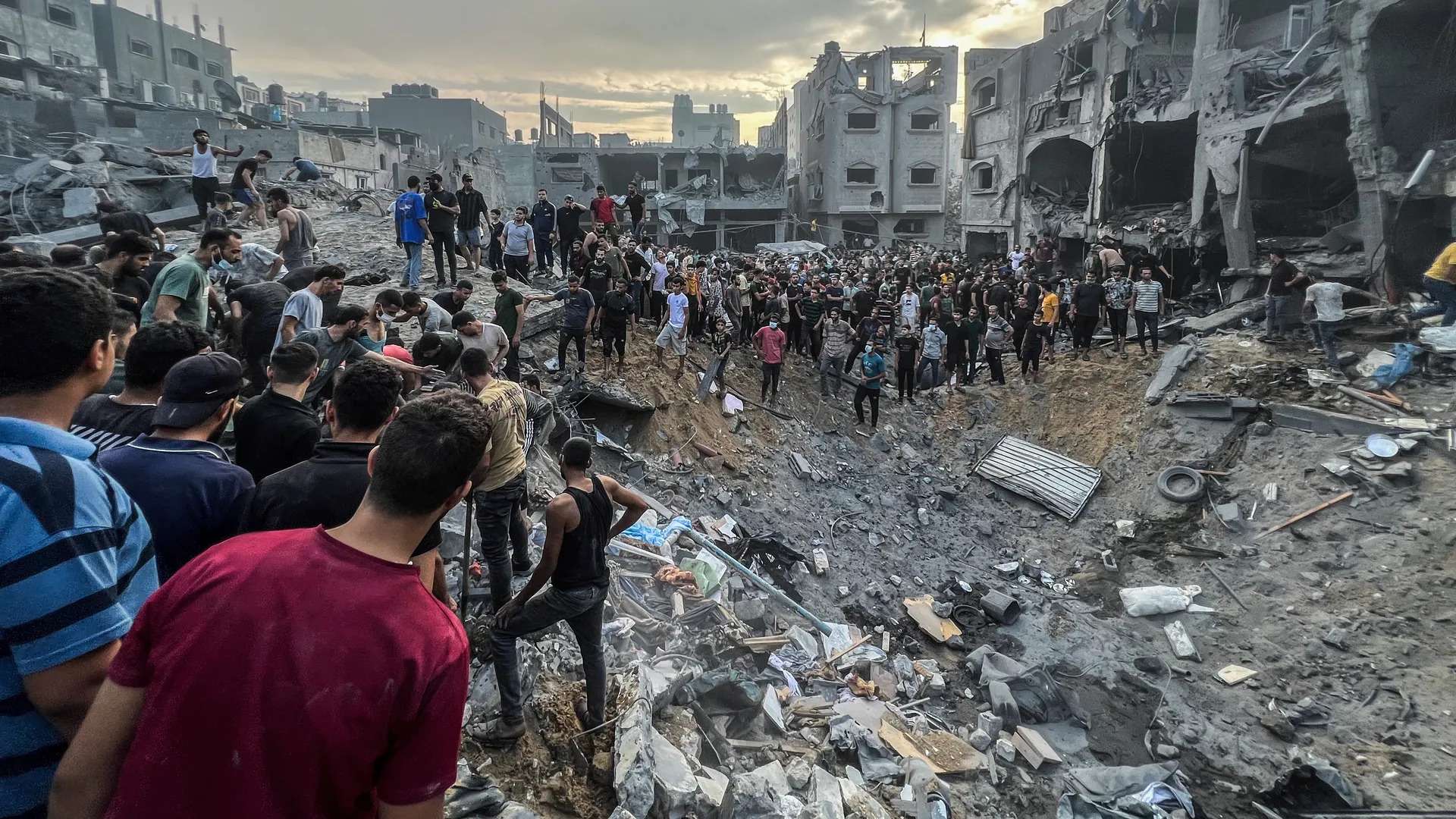
Genocide in Gaza – All the Perfumes of Arabia Will Not Sweeten These Hands…

As the ongoing livestreamed genocide in Gaza reaches its most despicable and horrendous phase of killing masses people through forced starvation, I am posting here a piece that I wrote for the art journal Art Deal last year. It was also delivered as a talk in a discussion organized by the All India Students’ Association (AISA) in JNU in September 2024. I am publishing it here with some minor additions/ changes.

Israelis watch the bombing of Gaza in picnic mode outside a town called Sderot, in 2014, nine years before October 7, 2023. Image courtesy Menahem Kahana, Agence France-Presse.

‘Israel told U.S. officials in 2008 it would keep Gaza’s economy “on the brink of collapse” while avoiding a humanitarian crisis, according to U.S. diplomatic cables published by a Norwegian daily on Wednesday.

Three cables cited by the Aftenposten newspaper, which has said it has all 250,000 U.S. cables leaked to WikiLeaks, showed that Israel kept the U.S. Embassy in Tel Aviv briefed on its internationally criticized blockade of the Gaza Strip.’

 – Reuters, 5 January, 2011, Jerusalem.

I

No, it did not begin on 7 October 2023. Notwithstanding all the gaslighting by Israel and its guardians and arms-suppliers in the USA and Europe, the evidence says something else. The US cables leaked to Wikileaks show that not only had Israel been carrying out its genocidal activities for a very long time, its sponsors in the USA knew everything all along.

Continue reading Genocide in Gaza – All the Perfumes of Arabia Will Not Sweeten These Hands…

Restore independence of Election Commission of India: Citizens for Democracy

The following is an appeal made by the Citizens for Democracy to the President of India to restore the independence of the Election Commission of India.

A public appeal to the Hon’ble President of India

The apex court is seized of the matter of Special Intensive Revision of voter rolls in Bihar, which the Election Commission of India (ECI) has ordered. The matter being sub judice, the Citizens for Democracy, as a responsible organisation, a defender of people’s democratic rights, would abide by the rules and traditions and refrain from commenting on the matter. In any case, several organisations, political parties and individuals have, as petitioners, already presented their point of view before the highest court of the land.   Needless to say, we are with the petitioners.

We, however, do not hesitate to do our duty to expose the sins of omission and commission of the ECI ever since the BJP government came to power in 2014. ECI, an independent constitutional body, has surrendered its autonomy to the ruling party and has become a willing tool in the party’s efforts to crush democracy in India. Things have taken many turns for the worse with every succeeding incumbent to the exalted position of Chief Election Commissioner.

EC – now a Government Department

In 2023 the Supreme Court suggested the appointment of the Chief Election Commissioner and other commissioners by a committee comprising the Prime Minister, the Leader of the Opposition and the Chief Justice of India and asked the government to amend the Act of 1991 suitably.  The government promptly amended the Act and, as if to mock the Supreme Court, did not include the CJI in the committee. Instead, it made a minister appointed by the Prime Minister as one of its three members. With the Prime Minister leading the Committee, and one of his appointees at his beck and call, the government effectively reduced the existence of the Leader of the Opposition (LoP) in Parliament, the third member of the Committee, to a permanent minority. This has brought down the ECI’s status to that of a government department. One cannot expect fairness from such a body.

Continue reading Restore independence of Election Commission of India: Citizens for Democracy

Oppose The Inhuman Eviction in Dhubri: Hiren Gohain et al

Following is a statement on the violent displacement and dispossession in Dhubri, Assam by some leading civil society members of the state who were also the conveners of the Assam United Citizens Convention.

We strongly condemn the  inhuman, brutal and cruel eviction of more than thousands of farmers and labourers from  Chap Revenue Circle of Dhubri district by the government of Assam. Such atrocities against innocent people are unusual and indicative of a perverted mind. We don’t know who could be the next victims of such atrocities.  The government says the people are ‘encroachers’. However, the attitude of the ruling classes  towards land has been exploitative since the colonial times. Although the direct use of land is for settlement, agriculture, and other productive livelihoods of citizens, but for the government it is primarily a means of generating revenue. Since the colonial era, the government has not focused on the leasing and resettlement of landless indigenous people and other legal residents. However, the preceding governments at least allowed the people residing on government land to live in peace with some degree of humanitarian sympathy. But the BJP government has evicted these citizens like heartless zamindars. They are planning to hand over the land of the indigenous  residents of Assam to the big capitalists at home and abroad. Thus, the poor tribals, backward castes and char people have been turned into s beggars on the streets within a day. It is supposed to be a step forward for  ‘development’ and ‘industrialisation’. The ‘development’ of the state by killing people has assumed a demonic form now. We have also seen an anti-Muslim propaganda campaign openly and sometimes subtly launched  day and night by the government-owned media to cover up this evil character. Therefore, we demand the government to stop such evictions and warn the people to be vigilant against this evil government conspiracy.

Hiren Gohain, Harekrishna Deka, Ajit Kumar Bhuyan, Paresh Malakar, Abdul Mannan, Santanu Borthakur
Conveners, Assam United Citizens Convention