All posts by Nivedita Menon

Gareebon ko adrenalin rush nahin aati; unko aati hai majboori – the trapped miners of Meghalaya: Abhineet Mishra

Fifteen people have been trapped in an illegal rat-hole mine in East Jaintia Hills in Meghalaya since December 13, 2018.

Three helmets are all that have been found so far. Authorities were callous enough to presume the miners dead on the very day of the accident.  The district administration wrote to the National Disaster Response Force on December 13 asking for help in recovering the “dead bodies”.

But as citizens, we are all equally responsible for a pervasive national culture of violence, exploitation and abuse of power. Abhineet Mishra delivers the shock to our conscience that is long overdue.

Stop The Criminalisation of Triple Talaq: Women’s rights activists

We, the undersigned individuals, women’s rights activists and allies of the women’s movements, are opposed to the Muslim Women (Protection of Rights on Marriage) Bill, 2018 in its present form. We appeal to the Members of Rajya Sabha to completely withdraw the Bill and significantly re-draft it in the interest of Muslim women.
The Muslim Women (Protection of Rights on Marriage) Bill, 2017, was passed by the Lok Sabha on December 28, 2017 and is pending before the Rajya Sabha. This Bill was not referred to a Select Committee as urged by the members of Rajya Sabha, but the Union Cabinet incorporated three amendments based on the issues raised by the Opposition. It included the provision of bail when the wife appears before the Magistrate, allowing only the aggrieved woman and her relatives (by blood or marriage) to file a complaint, and making the offence compoundable. Owing to severe opposition to this Bill in the Rajya Sabha, the Union Cabinet issued the Muslim Women (Protection of Rights on Marriage) Ordinance on September 19, 2018, which criminalised the pronouncement of triple talaq (or talaq-e-bidat) with punishment of up to 3 years of imprisonment and with fine.
We are writing on behalf of Muslim women from across the country and women’s groups to oppose this Bill, which is arbitrary, excessive, and violative of fundamental rights enshrined in the Indian Constitution. Overall, if this Bill is passed it would make Muslim women more vulnerable to violence, as well as harm their economic, household and social security.

Continue reading Stop The Criminalisation of Triple Talaq: Women’s rights activists

JNU GSCASH statement on ICC punishments for complainant

We, the undersigned faculty and student members of Gender Sensitisation Committee Against Sexual Harassment (GSCASH) who have been elected by the faculty and students of JNU to ensure gender justice in the university (2017), are shocked by the news report on the recommendations of the Internal Complaints Committee’s (ICC) for a specific case. The report published in Indian Express (13.12.2018) states that the ICC found the complaint a frivolous one after inquiry and consequently has recommended that the complainant be completely debarred from entering JNU Campus, her degree should be withdrawn, and that she should never be allowed to take up any course or employment in JNU.

As per the ICC Rules and Procedure, Rule No. 11 states the “Action against frivolous complaint” in order “to ensure that the provisions for the protection of employees and students from sexual harassment do not get misused”. It further states “If the ICC concludes that the allegations made were false, malicious or the complaint was made knowing it to be untrue, or forged or misleading information has been provided during the inquiry, the complainant shall be liable to be punished as per the provisions of sub- regulations (1) of regulations 10, if the complainant happens to be an employee and as per sub-regulation (2) of that regulation, if the complainant happens to be a student. However, the mere inability to substantiate a complaint or provide adequate proof will not attract attention against the complainant. Malicious intent on the part of the complainant shall not be established without an inquiry, in accordance with the procedure prescribed, conducted before any action is recommended”. Continue reading JNU GSCASH statement on ICC punishments for complainant

Statement by JNU faculty against targeting of complainants of sexual harassment by ICC

We, the undersigned faculty at the Jawaharlal Nehru University express our shock and outrage at the extreme penalties recommended against a doctoral student for bringing a sexual harassment complaint against her teacher.

According to a report in the Indian Express (dated 13 December 2018),  JNU’s Internal Complaints Committee (ICC) has decided to punish a student for allegedly filing a ‘false’ sexual harassment complaint against a teacher in what it has deemed to be a ‘frivolous’ complaint. While we are not privy to either the details of the complaint or the justification the ICC has for arriving at this conclusion — rather than simply noting the failure to substantiate a complaint— we find the severity of the penalties imposed extremely troubling.

Continue reading Statement by JNU faculty against targeting of complainants of sexual harassment by ICC

Justice denied – the Dharmapuri rape: Ila Ananya

Guest Post by ILA ANANYA

IMG-20181114-WA0002

On the night of November 12th 2018, more than fifty people from Sittilingi, a village in Dharmapuri district of Tamil Nadu, made their way back home from Dharmapuri Government Medical College Hospital with the body of a 16-year-old Adivasi (Malaivasi) girl. The girl had been raped on November 5th by two drunk men, and had died in the hospital five days later – a death that her family have described as linked to blatant police negligence, beginning with their refusal to file an FIR, and involving the questionable role of the Child Welfare Committee (CWC) in Dharmapuri. Manjunathan*, a resident of Sittilingi, says that on November 12th, around ten police vehicles and 100 policemen had followed the girl’s funeral procession through the village, all the way to the graveyard. “Till now we have never seen the police,” Manjunathan attests, “now suddenly, since the day of the protest, they have remained in the village, especially at the junction, harassing people.”

This large and unusual police presence in Sittilingi began on November 10th, after around 2000 people gathered on the main road of the village, frequented by buses connecting Salem and Thiruvannamalai, to protest against the rape and death of the girl. Continue reading Justice denied – the Dharmapuri rape: Ila Ananya

Remote Islands, Savage Tribes: Sajan Venniyoor

Guest post by SAJAN VENNIYOOR

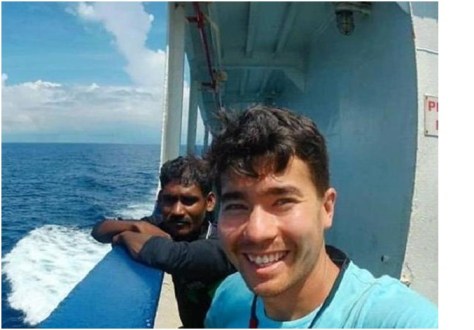
If you key in “remote island” on Google, most of the news stories it throws up are about an unfortunate and very dead young man named John Allen Chau. If you type in “remote Indian island”, Google will take you immediately to North Sentinel Island.

We are all, by now, familiar with sad tale of John Allen Chau and his ill-fated voyage to Sentinel Island. A young evangelical from the United States, Chau was – apparently from a very tender age – fired with zeal to convert to Christianity the natives of a very specific island in the Bay of Bengal: viz., North Sentinel Island in the Andaman & Nicobar archipelago.

John Allen Chau

Continue reading Remote Islands, Savage Tribes: Sajan Venniyoor

Of Angry Women and Insecure Men – Hindi cinema and the MeToo Age: Rama Srinivasan

Guest Post by RAMA SRINIVASAN

Men have had every advantage of us in telling their own story. Education has been theirs in so much higher a degree; the pen has been in their hands. I will not allow books to prove anything.”
― Jane Austen, Persuasion

Austen’s words, a searing commentary on how patriarchy controls the narrative, remains relevant today despite tenacious efforts by women to wrest authorial control from men and narrate our own stories. Even as the struggle to find one’s voice and to be heard continues, we might also ask ourselves what we will be left with after we have successfully challenged male authority and supremacy in our stories, the idea of heroes and villains, of chaste wives and women of disreputable characters. In the moment of triumph, is there also a need of introspection? The MeToo movement, in India and elsewhere, opens our world(s) up to these and many other questions that do not have easy or ready answers. A standard reply, reproduced in several platforms when questions like ‘why now’ or ‘what next’ are raised is illuminating of the problem societies face when women tell stories: “For now, we should just listen to the women who want to speak up.” It not only represents the struggle to tell our stories on our own terms but also tell them without a fixed agenda or plan.

The current moment in Hindi cinema has been complementing these societal struggles, perhaps even foreshadowing the MeToo challenges to patriarchy by both wresting authorial power to tell stories of relatable people, especially of women, but also displacing plot devices and narrative arcs familiar to stories that end up reaffirming patriarchal authority. Continue reading Of Angry Women and Insecure Men – Hindi cinema and the MeToo Age: Rama Srinivasan

Seasons of Violence: Vikas Bajpai


Guest post by VIKAS BAJPAI

Sometimes, memories stacked away for long, come tumbling out. If these are not just about personal nostalgia, dwelling upon them could serve some public good.

It was 31 October, 1984. The time may have been around 11 am. I was taking my second term exams for class XI in a room on the ground floor of the science block of the Delhi Public School, R K Puram, New Delhi. Unfortunately, mine was the first seat very close by to the only entrance and the exit for the room. ‘Unfortunately’ because  this made seeking the help and guidance of fellow examinees in this ordeal a rather adventurous proposition. Nevertheless, I focussed on the question paper intently, trying to make sense of what was expected of me.

A while after the examination had taken off, the teacher invigilating in our room and other teachers in the adjacent rooms flocked together at the door of our room for a conference of sorts, each having a cup of tea in their hands which had been duly served by that time. Barely a minute or so into their hushed conference, I over heard one of the teachers remark – ‘madam ko to goliyan lag rahin hain’ (madam is being riddled with bullets). I was a bit startled as to what that could mean; but then, I had a task at hand and got immersed in it before long. Continue reading Seasons of Violence: Vikas Bajpai

The Imposition of CCS Rules in Central Universities: Statement by JNU faculty

THIS IS A STATEMENT PREPARED BY JNU FACULTY

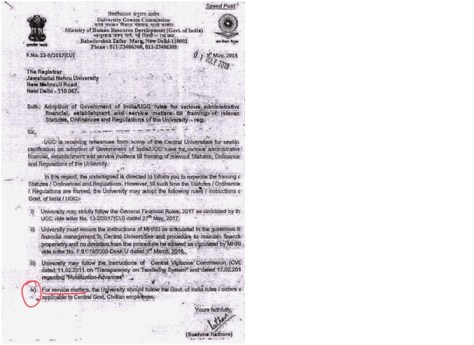
In the wake of the protests in universities about a number of disastrous policy level changes — huge fund cuts for the University Grants Commission, state governed divestment from the higher education in the name of graded autonomy, tampering with reservation policy in both drawing up recruitment and in college administration, casualisation and reduction of employment in universities, widespread corruption, as well as authoritarian clampdown on free speech and thought — the government has now sought to muzzle teachers voices through the induction of the Central Civil Service (Conduct) Rules to govern the conduct of faculty in Central Universities.


Continue reading The Imposition of CCS Rules in Central Universities: Statement by JNU faculty

Pinjra Tod – DU Against Curfew – All Night Protest

The BabriMasjid/Ayodhya Judgement of 2010 – Some questions for today


Babri Masjid before its demolition. It was still a mosque in 1992 when Hindutva mobs demolished it, and namaz was offered there until 1949 when under growing pressure from Hindutva forces, it was locked and made out of bounds for the public. However, Hindu puja was permitted there once a year.

This post is an analysis of the Allahabad High Court judgement of September 2010, on the BabriMasjid /Ayodhya issue. The final judgment ruled that the disputed land would be divided into three parts, one third going to the Hindu Maha Sabha which represented Ram Lalla, one third to Sunni Waqf Board and the rest to Nirmohi Akhada including Ram Chabutara and Sitaki Rasoi.

This essay was written at the time, and published in Economic and Political Weekly. Two of the key issues of this case arose in two of the recent judgments of the Supreme Court on other matters.

One, the status of ‘Next Friend’, which is central to the Ayodhya case, was brought up in the judgement on the Bhima- Koregaon Five. Regarding  the PIL filed by historian Romila Thapar and four other eminent persons challenging the alleged-unlawful arrest of these five activists,

the court assumed that the writ petition has now been pursued by the accused themselves and was of the opinion that the petition, at the instance of the next friend of the accused for an independent probe or a court-monitored investigation cannot be countenanced, much less as a PIL as the petitioners cannot be heard to ask for the reliefs which otherwise cannot be granted to the accused themselves.

Two, the status of the deity as a person in law came up centrally in the judgement on Sabarimala.

Apologies for posting this long piece, which is not a blog post but an analytical essay closely examining the 2010 judgement by Allahabad High Court. I have not updated it in any way, as that is the judgement that currently stands. The  case is currently in the Supreme Court.

The Ayodhya judgement: what next?

 Published in Economic and Political Weekly Vol 46 No. 31 July 30 – August 05, 2011

Since the Allahabad High Court judgement on the Ayodhya dispute was delivered on September 30, 2010, a substantial body of reflection upon it has emerged. Historians, political commentators, legal scholars and lawyers have all produced serious and engaged critiques of the judgement, pointing out flaws in reasoning and flaws in law. In an engagement with the debate so far, particularly with the critical voices, of which I am one, I hope here to develop a composite picture of the problems with the judgement, currently under appeal in the Supreme Court. And to ask, what are its weakest links?

Continue reading The BabriMasjid/Ayodhya Judgement of 2010 – Some questions for today

Release arrested Manipur University professors and students NOW! Appeal to Visitor

We, the undersigned academics and members of civil society, unequivocally condemn the arbitrary arrest and incarceration of six teachers and nine students of Manipur University. Six teachers and seven students have been sent to judicial custody for fifteen days, and the remaining two students for five days.

The arrests have been made under sections of the Indian Penal Code that invoke ‘an attempt to murder’, ‘wrongful confinement’, ‘extortion’, ‘kidnapping’ and ‘criminal conspiracy’ on the basis of a complaint made by Manipur University faculty, K. Yugindro Singh (and the suspended registrar M. Shyamkesho) on charges of attempt to murder and kidnapping. The six arrested professors — Dr. N. Santomba, (Dept. of. Manipuri), Prof. Chungkham Yashawanta (Dept. of Linguistics, also Dean of Humanities, and in-charge Dean of Students Welfare), Prof. Sougaijam Dorendrajit (Dept. of. Physics and Registrar-in-charge), Dr. L. Bishwanath Sharma (Dept. of. Philosophy), Prof. L. Sanjukumar (Dept. of. Biotechnology and Secretary MUTA), and Dr. Yengkhom Raghumani (Dept. of. Earth Sciences) have also been suspended with immediate effect. Following these arrests, the Manipur University campus has been turned into a cantonment, the boys hostel has had tear gas shells and mock bombs rained down upon it all of Thursday night (20 September), Internet services shut down, and all normal academic life has come to a complete halt.

Manipur University has witnessed a peaceful (in the face of great police brutality) 85 day long united agitation by its teachers, students, and staff asking for the removal of the Vice-Chancellor A P Pandey, and the constitution of an Independent Enquiry Committee to look into the allegations of his administrative and financial lapses. This agitation was successful, with a probe being announced on August 16, 2018 and the VC being placed on suspension pending inquiry on 18 September 2018. The details of the egregious misdemeanours of the suspended VC that have formed the basis of agitation by the greater student and teacher communities and have been the cause of disruption of academic activities, are to be found in the news item links provided below.

Read the rest of the statement and sign the appeal here.

Allahabad University Vice Chancellor’s misdemeanours: Open letter to President of India

OPEN LETTER TO THE VISITOR BY FORMER OFFICE BEARERS OF ALLAHABAD UNIVERSITY TEACHERS’ ASSOCIATION and ALLAHABAD UNIVERSITY CONSTITUENT COLLEGES TEACHERS’ ASSOCIATION

To

The Hon’ble Visitor, University of Allahabad, President’s Secretariat (Rashtrapati Bhawan), New Delhi

Sir,

On the eve of the 131st Foundation Day of the University of Allahabad, the under-noted former and serving teachers of the University of Allahabad and its Constituent Colleges, who are or have been office-bearers of the Teachers’ Associations of the University and its Constituent Colleges, respectfully seek to invite your kind attention by means of this Open Letter to certain crucial aspects of the present institutional predicament of the University, arising proximately from shocking revelations of grave improprieties by the Vice-Chancellor Prof. Rattan Lal Hangloo, and cumulatively from the general expositions of the manifestly freewheeling mode of his working over the past three years.

The facts of the Vice-Chancellor’s indecorous personal conduct involve the seeking of personal intimate favours from an individual by proffering employment and promising career-building opportunities. This sordid episode, and the outrage it has engendered in the members of the University community (students, alumni, and serving and former teachers and employees) as well as concerned citizens and well-wishers of the institution, are in the public domain, for they have been covered in graphic presentations in the print, electronic and social media. These have also been communicated by different sources to the Hon’ble Visitor’s establishment, the Ministry of Human Resource Development (MHRD) and other agencies of the Government of India. Some of the individuals subscribing to this Open Letter have also conveyed their dismay over the style and substance of his administrative and financial transactions in separate communications to higher authorities, but have experienced a disheartening absence of critical engagement on the part of the concerned dignitaries and offices with the transgressions of Prof. Hangloo which have also been in glaring public spotlight for almost three years, from his earliest days in office. Continue reading Allahabad University Vice Chancellor’s misdemeanours: Open letter to President of India

Constructing Democratic Rights Activists as Conspirators: Preeti Chauhan

Guest Post by PREETI CHAUHAN

The recent arrest of activists and intellectuals, and raids on various others connected with rights activism across five states in India is a grim reminder of the shrunken space for protest, criticism and dissent in our democracy today. This tendency to muzzle opposing voices has been on brazen display over the past four years though earlier governments had also tried to brand civil rights activists as ‘Maoists’ and as anti-development and anti-progress in a sense. The case against Dr. Binayak Sen, an office bearer of People’s Union for Civil Liberties comes to mind who was also alleged to be a Maoist.

The entire episode raises many questions on the motives of the government for this kind of concerted clampdown on human rights defenders. As of now, the charges against the activists seem far-fetched and entirely fabricated. Most of the activists who are now in jail or under house arrest are long-time members of the civil liberties movement in our country in the post-emergency period. Civil and democratic rights organizations and their activists have faced the charge of being fronts of this and that organization earlier too, and some have been attacked and killed also as in Andhra Pradesh. But what is important to understand is the location of the civil and democratic rights movement vis a vis democracy in India. Continue reading Constructing Democratic Rights Activists as Conspirators: Preeti Chauhan

Condemn the conspiracy of Hindutva fascist forces against democratic students’ organizations

Statement by COSTISA

On September 4th, 2018 in an important Bengali newspaper Anandabazar Patrika, it was declared that the Central Intelligence has marked some organizations in West Bengal which reportedly act as a frontal organization of the “Maoists”. In the list of organizations, a constituent organization of COSTISA, Ambedkar Bhagat Singh Study Circle (ABSC) has been named.

This event has to be looked at in connection with the nationwide crackdown on Human Right activists, Professors, lawyers and poet as a drive to “clear” “Urban Naxals”. This kind of sensational news shows that the central government is utterly desperate to curb and silence any voices that are raised against them. ABSC has been active in raising voices against the commercialization and saffronization of education and condemning nationwide brahminical fascist attacks on Dalits, Adivasis, Muslims, and other minorities. The students involved in ABSC have also been an important part of the fee hike movement at 2016 in IIT Kharagpur which compelled the administration for a partial rollback of the semester fees and have stood with all students issues which demanded better democracy and proper student rights in the campus.

With all these facts in mind, the reason behind ABSC becoming an eyesore of the government is clear that they have stood for justice and constitutional rights of our people. The state has been using the tactic of labeling the pro-people organizations in an attempt to mobilize public sentiment against them and other activists. Moreover, the sensation created by these announcements serves the purpose of diverting the people’s attention from the real problems of our nation like unemployment, increasing costs of education, health and livelihood, increasing of attacks on Dalits, Adivasis, and Muslims by the Hindutva fascists, anti-people steps like demonetization and GST etc.

COSTISA condemns this act of which hunting and false sentimentalization by the state. We appeal all the patriotic, democratic, pro-people students and intellectuals to stand and raise your voice against it.

Let us not let our country lose all of the democratic ethos it has!

Coordination of Science and Technology Institutes’ Student Associations (COSTISA)

(www.facebook.com/supportcostisa)

Ambedkar Periyar Study Circle (APSC), IIT Madras

Ambedkar Periyar Phule Study Circle (APPSC), IIT Bombay

Students For Change (SFC), IIT BHU

Students For Change (SFC), IMS BHU

Ambedkar Bhagat Singh Study Circle (ABSC), IIT Kharagpur

Forum For Critical Thinking (FCT), IIT Kanpur

Statement against the police raid on Dr. Satyanarayana’s house

Statement by academics in American universities

We, the undersigned, strongly condemn the raid on Dr. Satyanarayana and Pavana’s official university residence, conducted by the Pune police as part of their recent raids on activists in India.

Dr. Satyanarayana is currently Head of the Department of Cultural Studies and Dean of the School of Interdisciplinary Studies at the English and Foreign Languages University, Hyderabad. He has been instrumental in establishing Dalit Studies as an academic discipline and he has co-edited landmark books on dalit studies and vernacular dalit literatures, including Steel Nibs are Sprouting, No Alphabet in Sight and Dalit Studies. Pavana is a lecturer in Hyderabad and a founding member of the Andhra Pradesh Chaitanya Mahila Samakhya, an organization working for women’s rights. She was also editor of the Telugu feminist magazine Mahila Margam. Dr. Satyanarayana and Pavana are the son-in-law and daughter of poet and activist Varavara Rao, one of five people arrested in the raids.

Continue reading Statement against the police raid on Dr. Satyanarayana’s house

Three decades after Ameena, ‘Bride-Bazars’ continue to thrive in Hyderabad: Lovish Garg

Guest Post by LOVISH GARG

Ameena Begum was only ten years old when she was married to a man old enough to be her grandfather. The man- a 60-year-old Arab from Saudi Arabia had come to her house in Hyderabad to see Ameena’s elder sister for marriage but found her to be too ‘ugly and dark.’ He instead expressed desire to marry the young Ameena which the father readily agreed in exchange for a paltry sum of Rs 6,000.  She was later rescued by Amrita Ahluwalia- then an air-hostess with Indian Airlines after she found the young girl crying inconsolably on the Hyderabad-Delhi flight in-route to Saudi Arabia.

This incident put the global spotlight for the first time on the practice of ‘bride-shopping’ in the old city area of Hyderabad where minor Muslim girls from poverty-stricken families are married to older, mostly Arab men for a small sum of money. About three decades after this incident of August 1991- nothing much has changed and the practice of Sheikh marriages continue unabated with estimates suggesting around 2000 of such marriages performed only in the last one year.

The genesis of Sheikh marriages can be traced to the late 19th century when the Nizam of Hyderabad started hiring Chaush Arabs from what is the present-day Yemen. These men served as the military guards and later on high positions in the Nizam’s army and administration. The Arabs also brought with them the ritual of offering gifts and dowry to families who would marry their daughters to them. However, when oil stuck in the Gulf and situation in Hyderabad turned chaotic because of the rising peasant movement and later fall of Nizam- many such Chaush Arabs returned to their homelands.

Continue reading Three decades after Ameena, ‘Bride-Bazars’ continue to thrive in Hyderabad: Lovish Garg

This bundle of sticks tied to an axe-ist RSS-BJP regime!

Stylized image of fasces

There is a rumour circulating which is best dispelled as soon as  possible in the interests of factual knowledge (which is rather shy and rarely seen these days. Sometimes you see its shadow slip past, from the corner of your eye). So, no, absolutely not, the word fascism does not come from faeces.

It might as well have, but no. Really it doesn’t. The Vedic goddess vac (she who personifies speech) is not renowned for a sense of humour.

What the word fascism does come from is the aforementioned “bundle of sticks tied to an axe” or fasces,  that the bodyguard of the Roman magistrate carried in ancient Rome, as a symbol of his authority. Then Mussolini came along and resurrected the thing as a reminder  of ancient pride (although, not much pride for the minion carrying the symbol of another’s authority) and unity (sticks tied together are harder to break than sticks on their own).

Hence fascism. Hence the extreme allergy to being called fascist among Sanghis and the BJP because, really – Italy? Italy as the source of a name for their government? How fair is that, mitron? Continue reading This bundle of sticks tied to an axe-ist RSS-BJP regime!

Statement against police action on Prof. Anand Teltumbde and others – Students, Faculty and Alumni of IIT Kharagpur

Image courtesy Scroll.in

We, the undersigned students, faculty and others from IIT Kharagpur are shocked with the treatment that the police forces have meted out to our ex-colleague, Prof. Anand Teltumbde and other intellectuals. His residence in Goa, where he is working as a Senior Professor and Chair, Big Data Analytics at Goa Institute of Management (GIM), was intruded by the police forces without permission in his absence. This police action was part of the large scale raids and arrests of eminent scholars, intellectuals and lawyers across the country on Tuesday.
Continue reading Statement against police action on Prof. Anand Teltumbde and others – Students, Faculty and Alumni of IIT Kharagpur

Response to Critics of AAS-in-Asia boycott: Ajantha Subramanian et al

Continuing the debate on the controversial Association of Asian Studies conference recently held in Delhi, to which Pakistani participants were denied visas by the Indian government, following which there was a call to boycott the conference.

Nandini Sundar wrote an article in The Wire which we re-posted on Kafila. This is a response to that article by Ajantha Subramanian, Suvir Kaul, Rupa Viswanath, Rebecca Karl, Ania Loomba and Nate Roberts, also in The Wire.

As signatories to the call for a boycott of the AAS-in-Asia conference in Delhi (July 4-8, 2018), we have been vocal critics of how the Association for Asian Studies – a membership-funded professional organisation based in the US for scholars of Asia around the world – has handled the government of India ban on Pakistani scholars (based on both nationality and descent). We now write because the debate that our call for action provoked raises important questions about location, ethics and nationalism when it comes to the right to protest. These questions are important in our age of escalating international exchange as well as national chauvinism.

Our critique has focused on the AAS, an organisation that was informed of the preemptive ban and which, in conjunction with Ashoka University, their private university partner in New Delhi, concealed it from the general membership – as well as the general public – for months. Although the organisation claims it did its part by putting the letter banning Pakistanis on its conference website, no one would find it unless they were looking for it. Knowledge of the ban only became public when The Wire broke the story on June 7, 2018.

Read the rest of this article here.


Statement condemning the attack on Advocate Sudha Bhardwaj

​​We the undersigned wish to place on record our utter disgust, contempt and outrage at the latest in the series of machinations by Republic TV, working to its brief as a propagandist for the ongoing crusade against all those who take public stands in defence of democracy, secularism, human rights, Constitutional propriety and rule of law.

Republic TV’s latest target is Advocate Sudha Bharadwaj, National Secretary of the People’s Union for Civil Liberties, Vice President of the Indian Association of Progressive Lawyers and Visiting Professor at the National Law University Delhi. She is widely-known for her three decades of work as a trade unionist, human rights defender, environmental lawyer and a respected advisor to several state institutions including the state legal aid bodies and the National Human Rights Commission. Continue reading Statement condemning the attack on Advocate Sudha Bhardwaj