All posts by Nivedita Menon

Baiting Desire – The Politics of Women’s Sexualities in Popular and Other Indian Cinemas: Brinda Bose

Guest Post by BRINDA BOSE

To return to questions about women’s imperiled sexual desires and freedoms that have been spilling around us in recent weeks – with a middle-aged ‘Rosie’ emerging as a blissful mascot of women’s ageless pleasures in a multiplex film – I had unexpected occasion on a long-haul flight recently, to watch a film in a completely different register, Buddhadeb Dasgupta’s Tope (‘The Bait’, 2016, Bengali with English subtitles).

https://www.youtube.com/watch?v=kEuFS6qRciQ

Tope had done the round of international film festivals last year, and I believe released in Indian theatres (mostly if not only in Bengal, I would think) in the early summer of 2017.

Continue reading Baiting Desire – The Politics of Women’s Sexualities in Popular and Other Indian Cinemas: Brinda Bose

हरियाणा की औरतें घूंघट को शान नहीं मानती: कशिश बदर

Guest post by KASHISH BADAR

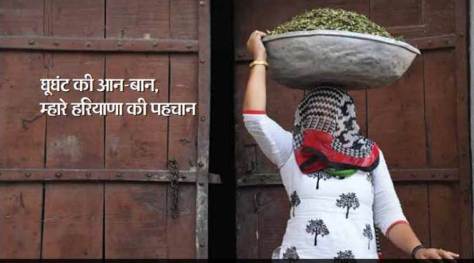
हरियाणा सरकार को घू़ंघट पर कुछ बोलने से पहले इन महिलाओं की बात सुन लेनी चाहिए थी.

जब हरियाणा सरकार ने अपनी मासिक पत्रिका में एक घूँघट काढ़ी हुई औरत को राज्य की आन, बान और पहचान कहा तो मीडिया में इसका काफ़ी विरोध हुआ. फ़ेस्बुक पर लोगों का यह कहना था कि जब साक्षी मालिक, गीता फोगत, संतोष यादव और कल्पना चावला जैसी औरतें हरियाणा का नाम दुनिया भर में रौशन कर रही हैं, तब भी हरियाणा सरकार क्यूँ घूँघट वाली औरतों को ही अपनी शान समझती है. क्या उन औरतों की मेहनत, लगन और सफलता राज्य की शान नहीं है? क्या सिर्फ़ पुरुष खिलाड़ी ही राज्य को गर्व महसूस करवा सकते हैं?

स्वयं हरियाणा की औरतों के इस विषय पर विचार लेने मैं रेवाड़ी ज़िला गयी. वहाँ कुछ औरतों से घूँघट के और उनकी शान के विषय में बात की.


ममता यादव, सेंतिस साल की शादी शुदा औरत हैं.

Continue reading हरियाणा की औरतें घूंघट को शान नहीं मानती: कशिश बदर

And THIS is how you deal with threats of defamation charges! The strange case(s) of Red FM and EPW

Red FM’s RJ Malishka features in a peppy video that went viral, mocking Mumbai’s Municipal Corporation (BMC) for the dismal lack of civic amenities and the havoc the rains can wreak in the city. In a lively parody of the popular Marathi folk song Sonu Tuza Mazyavar Bharosa Nahi Kay (Sonu, Don’t you Trust me?), she sang cheekily, Sonu, don’t you trust BMC?

http://https://www.youtube.com/watch?v=ZDR2CbutaQY

Potholes, traffic jams, slow trains, all the woes of the Mumbaikar in the fabled rains of Western India.

But Shiv Sena which runs the BMC was not amused.  Continue reading And THIS is how you deal with threats of defamation charges! The strange case(s) of Red FM and EPW

#BreakTheSilence – Chennai against mob lynching: Madhura Balasubramaniam and Padmapriya Govindarajan

Guest Post by Madhura Balasubramaniam and Padmapriya Govindarajan 

On July 1, 2017 a gathering of citizens congregated at the Valluvar Kottam monument in Chennai, India, in solidarity with the spate of demonstrations across the nation condemning the rise in instances of mob lynching and violence that disproportionately targeted Dalit and Muslim citizens for beef consumption. The protests were triggered by the murder of 16 year old Junaid Khan by a train mob. Since July 28, peaceful citizen gatherings have joined a wave that attempts to call out government silence, and thereby perceived tacit complicity, regarding the actions ofGau Rakshaks and other vigilante mobs that engage in lynching with a strongly communal or casteist skew. They have been collectively termed as #NotInMyName protests, alluding to the argument that these murders occurred in the name of the cow and in the name of Hinduism. Continue reading #BreakTheSilence – Chennai against mob lynching: Madhura Balasubramaniam and Padmapriya Govindarajan

Bharat Mata and her unruly daughters

Bharat Mata’s daughter? But the Hindutvavadi motherland produces only sons – Hindu, savarna sons – to protect their mother’s ever fragile honour.

Let us begin these reflections with a moment from Nisha Pahuja’s disturbing film the World Before Her, which tracks two young women – Ruhi, a beauty pageant contestant and Prachi, a trainer with the Durga Vahini, women’s wing of the Vishwa Hindu Parishad.

While Ruhi and her fellow participants emerge as conventional and pallid, Prachi is fierce and questioning, independent minded. But towards the end of the film, you realize that for both women (and not for Ruhi alone), this period of training was only a small window that gave them a brief glimpse of broader horizons. It was only a brief moment of excitement and hope, and what seemed like freedom, before real life – the real lives of real women – closed in on them.

Throughout the film, Prachi has been telling the film-maker that she will never get married, she will live her life as a Hindutva activist. She emphatically rejects the ordinary life of a wife and mother. But towards the end, her father declares quite explicitly that this is out of the question. She can never be a full time activist. Of course she must get married. She has a womb, do men have wombs? Her responsibility then, is to bring up children. Initially in this sequence, Prachi argues against him vehemently, verges on the insolent, but gradually she falls silent. Her expression, still rebellious, but devastated, resigned, signals to us her recognition that the daughter of the Hindu nation is only in training to be a mother. That is the highest ambition she can have.

Continue reading Bharat Mata and her unruly daughters

Eid in solidarity, united against Hindu Rashtra

At some point during the Khalistan movement, I came across a brief news item about a constable of the Punjab Police killed by Delhi Police personnel. The two teams had completed their interrogation of a suspected militant. Whose job was it to clean up the blood? Disagreement, a scuffle, a killing.

Legitimized brutality; the stench of blood inflaming the senses; the knowledge of absolute power and absolute impunity.

All of India is that interrogation room now.

Hindu Rashtra is here.

Has there not been violence earlier in this land? Yes of course there has been. A full seven decades of an independent state’s violence against the people of the land declared to be India – against dispossessed peasants and tribal people, against industrial workers, against the people of Kashmir, and of the states of the North East; centuries of violence by savarna Hindu society against the Dalit-bahujan; misogynist, sexist violence against women, up to and including female foetuses in the womb; decades of coldly planned and executed communal violence by institutionalized systems of riot production coordinated by the organizations of the RSS – against Muslims, against Christians, and as a secondary force, against Sikhs in 1984.

What is unique about this conjuncture, then? Continue reading Eid in solidarity, united against Hindu Rashtra

Boycott Republic TV – the hounding of S. P. Udayakumar

Is it not time for this channel that sets new lows with each programme, to be totally boycotted by all right-thinking people?

Don’t watch Republic TV, don’t participate in its programmes.

Dr SP Udayakumar’s complaint to the Press Council of India follows. He is
Coordinator, People’s Movement Against Nuclear Energy (PMANE) and
Pachai Tamizhagam Katchi (Green Tamil Nadu Party)

June 21, 2017

Hon’ble Mr. Justice Chandramauli Kumar Prasad
The Chairman, Press Council of India

Dear Sir:

Greetings! I write to bring your kind attention to the ongoing deceit and harassment of me and my family by Mr. Arnab Ranjan Goswami and a few of his colleagues such as Shweta and Sanjeev from the Republic TV.

On April 8, 2017, one “Shweta Sharma” (I later found out that her real name was Shweta Kothari) came to my home at Nagercoil and introduced herself as a “research scholar” from the Cardiff University in the UK. She asked for my help with her dissertation research. She had been accompanied by her “local friend” Sanjeev. I gave her several books and answered her questions.

On April 9, 2017 she requested me to stop by her hotel room as she had a few more questions. There she told me that “one of her British professors” was very keen on supporting our struggle against the Koodankulam nuclear power plant. I told her that we did not accept money from foreigners and our movement had no bank account also. She then asked me if there was any other way of donating money to us. I told her that my personal account was frozen and that even our party account could not receive foreign funds.

X ways in which Modi is different from Trump: Rama Srinivasan

Guest post by RAMA SRINIVASAN

Prime Minister Modi is set to meet President Trump on June 26 and we can anticipate an exciting contest between bear hugs and crushing handshakes. We indeed live in interesting times where symbols rather than spoken words determine the fate of nations (Trump is rumoured to have partly pulled out of the Paris Agreement after losing a handshake duel with the new French President). Both Modi and Trump deploy symbols effectively to further a conservative agenda that is in many ways self-serving rather than ideologically dogmatic. I wondered if a list of ways in which they are different despite being strikingly similar in many ways might be an interesting experiment but all my points could be bracketed under one larger word: privilege. Everything that follows in this article are ways in which this privilege operates in the case of Trump and how the lack of the same has shaped much of Modi’s career.

Continue reading X ways in which Modi is different from Trump: Rama Srinivasan

और इस बार नंबर आईआईएमसी का था : Rohin Kumar

Guest Post by ROHIN KUMAR

संस्थान के गेट पर सरस्वती की प्रतिमा थी ही. नारद पहले पत्रकार बताए जाते रहे हैं. अब बचा था हवन वो भी होने ही वाला है. आईआईएमसी मीडिया स्कैन नामक संस्था के साथ मिलकर ‘वर्तमान परिदृश्य में राष्ट्रीय पत्रकारिता’ पर सेमिनार आयोजित करने जा रहा है. इसकी शुरुआत हवन से होनी है. उसमें पांचजन्य के संपादक और बस्तर का खूंखार आईजी कल्लूरी आमंत्रित है. चौंकाने वाली बात है कि कल्लूरी जिसने सबसे ज्यादा आदिवासियों, पत्रकारों, सामाजिक कार्यकर्ताओं को तंग किया, उनपर फर्जी केस डाले वो ‘वंचित समाज के सवाल’ पर बोलने आ रहा है.

हमें इसकी सूचना दो दिन पहले मिली. सोशल मीडिया पर इसके पोस्टर रिलीज़ किये गए थे.

सबसे पहले हम छात्रों ने इसका सोशल मीडिया पर विरोध दर्ज किया. इसमें कई पूर्व छात्रों का हमें समर्थन भी प्राप्त हुआ. संस्थान में पढ़़ाने वाले शिक्षकों को फ़ोन किया, उनसे जानना चाहा कि आखिर उनकी इसपर कोई राय है?

जानकर हैरानी हुई कि उन्होंने छात्रों से बिलकुल डरे सहमे अंदाज़ में बात किया. इस बाबत जानकारी से इनकार कर दिया. फिर डिप्लोमेटिक जवाब देने शुरू किये- “चुंकि हमें कोई आधिकारिक सूचना इस कार्यक्रम के बारे में नहीं मिली है इसलिए मैं इसे फेक न्यूज़ मान रहा हूं.” इतना कहकर मीडिया एथिक्स पढ़ाने वाले टीचर ने कन्नी काट लिया.

Continue reading और इस बार नंबर आईआईएमसी का था : Rohin Kumar

JNU Teachers on allegations of motive behind car vandalism

STATEMENT FROM JNU TEACHERS

We, members of the JNU faculty, are deeply shocked at the kinds of allegations and speculations being made because a faculty member’s car was vandalised a couple of nights ago. Obviously the incident in which the windshield of the car was found shattered in the morning,  is worrisome, and cause for concern – yet this is not an isolated incident on an otherwise safe campus. In past months other faculty members living on campus have had similar experiences, where random acts of vandalism have occurred, in different parts of the university. However, no one, until now, has made either baseless allegations or blamed students’ groups, or levelled charges against any particular political ideology.

This is the first time that such quick, and hasty conclusions have been drawn. Instead of investigating a matter of vandalism, this is being recast as some kind of political conspiracy and vendetta. This does not reflect the spirit of JNU – which has always been collegial despite its many differences. It is only since early 2016 that we are seeing this sense of reflective engagement fraying – which ought to be a cause of concern for us all.

We would also wish to state that the untimely loss of every life is, and should be, one of great sorrow. And it is particularly so in the cases of ordinary jawans, most of whom come from impoverished families and have few opportunities, especially to study, and to make a better life for themselves. Who knows – had their families had the wherewithal for educating their children – they too could have been university professors. The baseless allegations against JNU being levelled at the moment, purportedly in support of the killing of jawans in Sukma, neither respects their lives and immense challenges, nor does it show any concern for the university and its community.

At a time when the JNU community is facing grave challenges, and its excellent academic environment is at risk, it is the duty of the faculty to maintain calm. Instead, such baseless allegations are adding to a situation of anxiety and distress, especially for students who are in the midst of examinations, other than facing an uncertain future.  An attack on JNU at this moment not merely adds to existing conditions of worry, but is, in the last instance, an attack on public universities and the values they stand for. As B.R. Ambedkar famously said, “Education is something which ought to be brought within the reach of everyone… the policy therefore ought to be to make higher education as cheap to the lower classes as it can possibly be made.” JNU is one of those universities in India that has enabled students from socially and economically deprived backgrounds to achieve their dreams. No retroactive condolences will absolve us of the responsibility of killing those dreams and futures.   Continue reading JNU Teachers on allegations of motive behind car vandalism

It could have been me: Rajamathangi S

Guest Post by RAJAMATHANGI S

I am one of the fortunate PhD scholars lucky enough to study in JNU. I am a Dalit woman.  My mother is my family’s main breadwinner and my father struggles as a daily wager. I have two siblings who are younger than me. My mother is a low paid private school teacher today because of the education, which her single mother provided to her. My maternal grandmother who became a widow at a young age, didn’t sit inside the house after her husband passed away, she works as a sanitation worker even today, a profession that is considered a taboo by her community people. It is the hard work of these two women that has helped me reach this position.

Because of my family situation my school education was scattered all over Tamil Nadu and Pondicherry. I never studied in one school for more than two years. So one can understand how many types of schools and people I have experienced with. I started my schooling in a convent in Pondicherry. Then I went to three matriculation schools before I completed my 6th standard; after that because of my family’s economic condition I was put in Government and aided schools from class 7 till the completion of class 12. Irrespective of changing schools every alternate year I was good at my studies, I was always encouraged and motivated by my friends and by my teachers. I was always fortunate when it came to teachers: teachers stood by me in all my obstacles throughout my education wherever I went and JNU has been no exception to this.

Continue reading It could have been me: Rajamathangi S

Statement of Solidarity with student protests in Panjab University, Chandigarh: Coordination of Student Forums of the five IITs

Statement by Coordination of Science and Technology Institutes’ Student Associations (COSTISA)

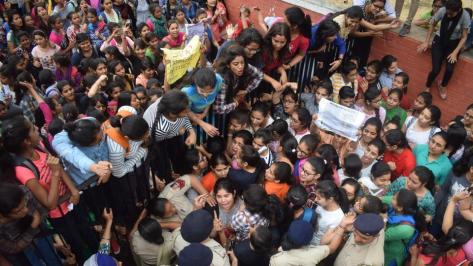
Image Courtesy Hindustan Times

On April 11 2017, Punjab University turned into a war zone. Tear gas, water cannons, lathis, belts and police boots were unleashed on unsuspecting students, along with the choicest of casteist and misogynist abuses. Hundreds of students were mercilessly attacked by Chandigarh police (Police even entered ladies’ hostels) for having the temerity to challenge the jaw dropping fee increase announced by the University (100-1100 percent, across various streams). The protests against fee hike were called by Panjab University Students’ Joint Action Committee, which includes student organizations such as Students for Society (SFS), NSUI, PUSU, SOI, AISA, PSU (Lalkaar). The peacefully protesting students demanded the roll back of fee hike by convening a meeting of the senate at the earliest. Their demand to meet the vice chancellor was met with the ferocious brutality of Chandigarh police.

Continue reading Statement of Solidarity with student protests in Panjab University, Chandigarh: Coordination of Student Forums of the five IITs

Ban self-styled vigilante groups in India – Petition

PETITION ON CHANGE.ORG

Parts of the petition are reproduced below. Follow the link given at the end to sign the petition.

Incidents of mob violence by vigilante groups have become alarmingly common in many parts of India. These groups have frequently committed serious crimes, including harassment, assault and murder…

In spite of these groups repeatedly committing atrocities against minorities, nothing substantial has been done to stop them. The Central and several State Governments have remained silent. In addition, the authorities have extended no support to the victims, predominantly Muslims and Dalits, who have lost their lives and livelihoods.

The recent debates in the Rajya Sabha and the intervention of the Supreme Court are a step towards improvement. An earlier criticism by the Prime Minister proved to be inefficient as the vigilantes continued to operate as before.

Clearly, greater social awareness and resistance is needed to combat vigilante groups. Through this petition, we express our support for the decision of the Supreme Court and demand

1. An immediate ban on vigilante groups irrespective of any cause that has brought them into existence.

2. Unconditional and unequivocal condemnation of vigilantism from the National and State Governments.

3. Social support and compensation for victims.

SIGN THE PETITION HERE.

Statement Condemning Minority Minister’s Statement In Parliament That Alwar Killing Did Not Happen

Statement by concerned citizens
We are writing this statement to strongly condemn minister Mukhtar Abbas Naqvi’s comment in Parliament that Alwar killing  did not happen. In spite of, repeated reporting in media about the Alwar killing, this denial from the minister only strengthens the anti social elements as well as communal ideology. We are working with women against violence, protecting socio-economic rights of weaker sections and minority community across states over many years now. In recent time, with the atrocious rise of ‘gau rakshaks’ in our country, there is a simmering growth of threat and insecurity among the Muslims and Dalit communities who are associated with cattle business and in its various forms. However when the government who should be proactive in protection of minorities ends up with a stoic silence on the unfortunate incident like the killing of Pehlu Khan in Alwar, in turn, ascribes impunity to these fascist forces. Post Dadri killing of 2015, the strategic silence of government on the rise of cow vigilantes attacks the democratic and constitutional rights of citizen; and successively there will be a collapse of constitutional machinery.

Why Ahmadis are Victims of Persecution: Rameez Raja

Guest post by RAMEEZ RAJA

Ahmadiyya Muslim Community (AMC) was founded by Hadhrat Mirza Ghulam Ahmad in 1889 in village Qadian, District Gurdaspur, Punjab. He claimed to be the “Reformer” of the age and fulfilled all the revelations of the Prophet Muhammad (pbuh) regarding the second advent of the Promised Messiah and Mahdi (the Guided One). Hadhrat Mirza Ghulam Ahmad had written over 80 books and one of his greatest scholarly works was The Philosophy of the Teachings of Islam. After his claims, he was criticized by the mainstream Muslim as well as the Christian community. The reason put forth was his book Jesus in India which describes that Jesus is dead and is buried in Khanyar area of Srinagar, Kashmir and above mentioned claims.

After his demise in 1908, AMC has been headed by respective successors and currently Hadhrat Mirza Masroor Ahmad is spiritual head of the AMC worldwide. Hadhrat Mirza Masroor Ahmad has delivered speeches in several parliaments in the West regarding the futility of the nuclear weapons and has sent official letters to the heads of the states which possess nuclear warheads. Most of his speeches and letters are collected in a book World Crises and the Pathway to Peace and is distributed free all over world in order to save this world from nuclear destruction.

Continue reading Why Ahmadis are Victims of Persecution: Rameez Raja

Protesting fee hike is sedition? Student protests in Panjab University: Navprit Kaur

Guest post by NAVPRIT KAUR\

Chandigarh  is an expensive city to live in. It is more so for Buta Singh, a student belonging to a poor family in Punjab and pursuing a BA degree course in the evening studies department of the university. To meet his expenses, Buta at times stands on one of the many labour chowks as he searches  for  work as daily wager to survive in the city. He works as a newspaper vendor also. On April 11th 2017 Buta Singh was so brutally beaten by the police that he could not walk. He was arrested by the police on many charges including sedition. His crime is that he was one of the hundreds of students  protesting against the massive fee hike (600-1100 percent) by the university. On April 11, thousands of students of Panjab University and its affiliated colleges were boycotting the classes on a bandh call given by Panjab University Students’ Joint Action Committee against fee hike. The PUSJAC consists of all the major student organizations except ABVP, such as Students for Society (SFS), NSUI, PUSU, SOI, AISA, PSU (Lalkaar). The protest against recent fee hike has been going on in the university and its affiliated colleges for last many days. Minor scuffles had been  happening between the protesting students and police over last some days.

However, Tuesday 11th April was unprecedented in the history of Panjab University for the kind of violence that was unleashed on the students inside the campus by the police. Police was right inside the campus chasing students everywhere with lathis and tear shells – inside departments, hostels (including women’s hostels), parking lots, the Student Centre, in front of the university library. Continue reading Protesting fee hike is sedition? Student protests in Panjab University: Navprit Kaur

New UGC Regulations not recommended by Expert Committee? JNUTA nails more lies

JNUTA Press Release

UGC/MHRD’s Duplicity Exposed! Was the Nigavekar Committee really behind the 2016 Regulations?

The following response was given to a question asked by Mr. Hussain Dalwai in the Rajya Sabha.


As can be seen from this MHRD Circular, the terms of reference of this Committee never included the formulation of any minimum or maximum regulations for the award of M.Phil. and PhD degrees! Rather, it was tasked with “Evaluation of PhD NET qualifications for entry of teachers and to accordingly suggest a policy for selections.”  Continue reading New UGC Regulations not recommended by Expert Committee? JNUTA nails more lies

Love In The Time Of Hate: Nikita Azad

Guest Post by NIKITA AZAD

It is easy to hate. In fact, one of the strongest emotions to have lasted so long and so vividly in our minds is hate. From La La Land to competitions in schools, we are taught to become self-serving narcissists; we are fed jealousy and hatred strategically. From the day we are born, we learn hating. We learn to mock our classmates for following a different faith, belonging to another caste, non-confirming to given genders, and everything else. As we grow, we learn to despise them for their grades and perhaps, reservations they deserve. And, when looking for jobs, we start hating them absolutely because we believe they are the cause of all our problems.

People hate what others eat. They hate what others wear. They hate Africans who study in this country because they wear ‘revealing’ dresses; they hate Muslim women because they do not wear those dresses. We let our lives be governed by this continuous production of systematic hatred that encompasses all our choices and decisions. For example, some people would never rent a room to independent women or Muslims because they cannot stand the sight of something or someone who doesn’t accrue to their ostensibly ‘homogenous’ culture. And, some would threaten a woman with rape, a woman who wants nothing else but peace and non-violence.

Then there are people like me. Who hate hate; who hate bigotry and prejudices, and who wish to transform this scenario and end this vicious cycle of reproduction of hatred and self-centeredness amongst humans. Continue reading Love In The Time Of Hate: Nikita Azad

Scientism, familism and women scientists: V Sujatha

Guest Post by V. SUJATHA

That the first woman to win the Fields Medal for mathematics in 2014 was an Iranian is important to note. Not only because Maryam Mirzakhani is the first woman to make it in the field of mathematics which is considered to be a male bastion[1], but also because her Persian background deserves some attention. There are certain enabling factors in Eastern cultures that facilitate women excel in the hard sciences, in spite of entrenched patriarchy. The point is not that everything is great in the East versus the West, but that cultural stereotypes about women are not homogenous; they vary from culture to culture and produce gender asymmetries with different effects. This is a sociologist’s
delight; let me explain.

During a literature survey in sociology of science, I was pleasantly surprised to see that the figures on women’s entry and achievements in science and technology education (S&T) in the global south were not only not bad, but were better than the countries in the Anglo-Saxon world that offered better civil liberties for women (Sujatha 2015). While there were fewer women in apex positions in the S&T sector and even lesser numbers to receive prestigious awards everywhere in the world, it is a fact that women from erstwhile socialist countries and from Asian and Latin American societies enrolled in larger numbers in science and technology courses and also made it higher in the career ladder in S&T than their counterparts in western Europe and North America.  The literature on women in science however, attributed everything to the ‘glass ceiling effect’ i.e., soft variables like gender bias in the organisational processes. I do not deny it, but it seems to me that this does not explain why the glass ceiling worked differently in some countries. Continue reading Scientism, familism and women scientists: V Sujatha

Solidarity with Africans in India: Students’ organisations and Unions from North East India

The undersigned students’ organisations and unions from North East India, would like to extend solidarity with people of African origin living in India and particularly those who were attacked in Greater Noida recently. We empathise with the violence, ordeals, and humiliation faced by Africans in India. We are distressed to learn of the ongoing situation, and denial of the Indian government to term the incident as racist is worrying. Various incidents of racism against people of African origin in India from the past are not isolated incidents, they stemmed from the deep rooted prejudice mindset of the majority of Indians. We condemn racial discrimination against anyone (particularly people of African origin) and caricatures people make by creating stereotypes like cannibalism and drug users/peddlers. These stereotypes are reflection of racist mindset which we, people from North East India are also at receiving end over and over again.

Continue reading Solidarity with Africans in India: Students’ organisations and Unions from North East India

Shut down JNU if not one way then another? JNUTA statement on UGC regulations

JNU administration has drastically cut intake into the university for the next academic session and perhaps for years to come, using the UGC ‘caps’ on research as a pretext. JNU Teachers’ Association demonstrates conclusively here through a survey of 46 Central Universities, that barring a handful which have definitively adopted them, most others are still operating with other Regulations based on the preceding 2009 version. And even the few universities that have adopted them, barring JNU, have implemented modifications by way of harmonisation with the statutes, objects, and past practices of the institutions.

JNU not being targeted using the UGC Regulations as a pretext? Right.

Over the past few weeks we have been told that the mandatory nature of the UGC Regulations require them to be implemented by universities immediately and in a chapter-and- verse fashion. JNUTA’s survey of 46 Central Universities however shows that barring a handful who have definitively adopted them, most others are still operating with other Regulations based on the preceding 2009 version. And for even the few universities that have adopted them, barring JNU, modifications in the way of harmonisation with the statutes, objects, and past practices of the institution have inevitably resulted.

Table 1 presents the facts of 46 Central Universities, the year of their founding, and the research programmes they take admission to. To determine whether they had adopted the 2016 UGC Regulations, we examined the Ordinances and notifications on the university website in order to detect its adoption. (The value label unclear is to mark the cases where no explicit information of either type was posted on the university’s website.)CENTRAL UNIVS WITH UGC 2016 Continue reading Shut down JNU if not one way then another? JNUTA statement on UGC regulations