All posts by Nivedita Menon

Vedanta-Sterlite – Dangerous by Design: Nityanand Jayaraman

Guest Post by  NITYANAND JAYARAMAN 

Tuticorin Oct 2010 298

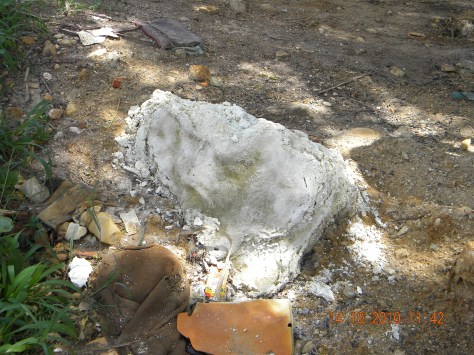
A toxic hotspot in the backyard of a house in Therkuveerapandiapuram, a village adjoining the Sterlite factory.  Dangerous levels of iron and arsenic were found in the soil here. (Picture by Nityanand Jayaraman)

On 23 March, 2013, a toxic gas leak from Vedanta-subsidary Sterlite’s copper smelter in Thoothukudi spread panic and discomfort for several kilometres around the plant. The leak once again highlighted the increased potential for major catastrophes due to an atmosphere of collusion between regulators and polluters. The company, which was shut down for maintenance, resumed operations in the early hours of 23 March. Within hours, people in the nearby areas complained of suffocation and eye and nose irritation. A 35-year old Bihari contract labourer, who was working at Sterlite’s thermal power plant nearly a kilometre away, reportedly succumbed to the effects of the toxic gas. Irate residents rallied to the District Collector’s office demanding permanent closure of the offending factory. Continue reading Vedanta-Sterlite – Dangerous by Design: Nityanand Jayaraman

The Delhi University Four Year Structure – Myths and Reality

This document has been prepared by the  JOINT ACTION BODY OF DELHI UNIVERSITY.

Myth 1

The four-year system is a measure of reform that is necessitated by the state of higher education in India today.

Reality

There is no clarity in the objective of why Delhi University is moving to a four-year undergraduate system. Is it to introduce more value based courses, or is to elevate the university to “global standards”? Unless the issue is understood, debated and discussed publicly and democratically, reforms will be ill-conceived and not in general public interest as the following sections will show. Continue reading The Delhi University Four Year Structure – Myths and Reality

“Politics Pulls at Me” – The Palestinian Youth Movement: Sunaina Maira

bab-al-shams

The establishment of Bab Al Shams, a direct action against Israel’s settlement enterprise. (Photo credit: Issam Rimawi / APA images)

SUNAINA MAIRA writes in muftah.org 

The eruption of resistance villages is an extension of popular struggles in which young Palestinians have been actively involved since March 15, 2011. During Palestine’s so-called Arab Spring, a series of protests organized by youth erupted in Ramallah and in other sites across the West Bank, as well as in Gaza and within the 1948 borders of Israel among the “’48 Palestinians.”

Inspired partly by the Arab revolutions and in solidarity with the Palestinian prisoners, this new “youth movement” is but one phase in ongoing resistance against Israeli occupation, colonialism, and apartheid. Nevertheless, as the second anniversary of the Palestinian youth movement approaches, it is important to reflect on a phenomenon that largely remains in the shadows of much more dramatic revolts in North Africa, and the more difficult struggle, in a sense, that Palestinian activists have been waging for democracy as well as national liberation.

Read the full article

Responding to a debate on the Kudankulam struggle against nuclear energy

Taking the debate on nuclear energy forward (after the wonderful review of MV Ramana’s book by Nityanand Jayaraman), here’s an exchange between Rahul Siddharthan and Madhumita Dutta in The Hindu in September 2012, Siddharthan advocating nuclear power, Dutta pointing to its utter indefensibility.

nuke-protest_350_091412024253

Jal satyagraha at Kudankulam in September 2012

Dutta says, in her response to Siddharthans initial article:

In the case of Kudankulam, the fisherfolk have been…asking to see the disaster management plan which, till date, remains a secret, even under the Right to Information Act. Given the inherent uncertainties of natural disasters, questions about preparedness to mitigate impact of calamities such as tsunami waves of higher magnitude are being asked. Continue reading Responding to a debate on the Kudankulam struggle against nuclear energy

Understanding the Empty Promises of Nuclear Energy: Nityanand Jayaraman

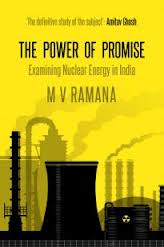
This is a review by NITYANAND JAYARAMAN of M.V. Ramana’s book The Power of Promise: Examining Nuclear Energy in India (Penguin/Viking).

Narayanasamy’s monthly promises of power from the Koodankulam nuclear plant may be something of a joke in Tamil Nadu. But the periodic promises served a function. They kept one section of Tamil Nadu hopeful that commissioning Koodankulam will solve the state’s power crisis, and therefore resentful of the agitators who were seen to be putting their own lives, livelihoods and safety over the needs of the state.

In late 2012  Penguin published the first solo book by Princeton University-based physicist M.V. Ramana. The book is titled The Power of Promise: Examining Nuclear Energy in India.

downloadRamana’s commentary is witty, articulate and rich with anecdotes. He makes a solid case for his central thesis – that delivering on the promises of power or security were never the actual goal of India’s nuclear program, and probably never will be. Rather, promises are the engines that power the program, he argues. By holding out the twin ideals of unlimited electricity and infallible security in the form of a credible nuclear deterrent, India’s nuclear establishment has carved for itself an enviable position. It is answerable to no one but the Prime Minister, and can spend billions over decades with nothing to show for the expense.

Continue reading Understanding the Empty Promises of Nuclear Energy: Nityanand Jayaraman

Women – rights-bearers, economic assets, or stranded starfish? Uma Narayan

This is a review by UMA NARAYAN of the book Half the sky: Turning Oppression into Opportunity for Women Worldwide by Nicholas D. Kristof and Shirley WuDunn (2010). This review was first published in Perspectives on Politics, Vol. 8, No. 1, March 2010.

Why are we republishing a three year old review? The book has since then become a “movement” with celebrity advocates and a Facebook game that was launched this year. While being widely celebrated across the media in the US, it is also being sharply attacked for its “your women are oppressed, but ours are awesome” rhetoric. 

8065751089_c4fd818f4e

Asks Sayantani Dasgupta in her blog post from which the image above is taken:

For example, would Kristof, a middle-aged male reporter, so blithely ask a 14-year-old U.S. rape survivor to describe her experiences in front of cameras, her family, and other onlookers? Continue reading Women – rights-bearers, economic assets, or stranded starfish? Uma Narayan

Myths and Facts About the Criminal Law (Amendment) Bill, 2013

This document has been put together by the group pursuing advocacy related to CLRB 2013, in Delhi. It addresses several myths about the new Criminal Law Amendment Bill that are circulating in the media. The note also explains the one change feminists  continue to push for and did not get – to make the victim of rape a person, that is to say, gender neutral. The new law must be expanded to protect all persons, and not be limited to women – because all persons/ anyone can be raped.

The Justice Verma Committee (JVC) report was a landmark statement, applauded by all citizens, welcomed by all Political Parties. JVC was significant because it showed a mirror to the Constitution of India, and reflected its wise and just guarantees of women’s equality. Today the women and youth of India are looking with hope and expectation towards Parliament, and towards all Political Parties. We urge all Members of Parliament to pass a law upholding the spirit and letter of the Justice Verma Committee; to pass a law that makes a step forward in our collective struggle to end sexual violence in India.

Myth 1: The Criminal Law (Amendment) Bill 2013 is against men

Fact: The new anti-sexual violence Bill is NOT against men. For our fathers, brothers, husbands, partners, neighbours and colleagues are men too. Are these Men in our lives not committed to seeking an end to the constant threat of sexual violence lurking around every corner? Continue reading Myths and Facts About the Criminal Law (Amendment) Bill, 2013

Why was Ram Singh killed in Tihar jail?

The chief accused in the Delhi gang rape “found dead” in his cell? Killed with his own shirt? Hanging from a grill, with his three cell mates sound asleep all the while? The moment I heard the news  on Monday, every conspiracy theory-oriented cell in my body did a quick cartwheel. Promptly I sent out a mail to the sisterhood on the Feminists India e-list:

I’m wondering whether there is something more than police negligence involved here. I have always felt that the role of the police on that night was more than simply their usual laparwahi – that bus may have been used often in the past for such activities, remember they didn’t follow up the complaint of the man who had been earlier that night robbed by the same guys? And how they located the bus from their hafta diaries? I’m wondering – and going to sound paranoid and like a loony conspiracy theorist – whether the key accused in court would have revealed more about police complicity in rapes and other activities on buses like Yadav’s than we imagine. Prisoners in jail often carry out attacks on other prisoners on the orders of the police themselves.

Yes, Indian prisons are violent and brutal, and the police callous and vicious. Yes, there should be an enquiry to assign responsibility. But I’m pretty certain I know who killed Ram Singh – some other prisoners. And I think that they did it on orders from the police. Continue reading Why was Ram Singh killed in Tihar jail?

The Irony of Iconhood – The life and times of Bhanwari Devi: Laxmi Murthy

08MN_DEVI_1389073f

Bhanwari Devi (right) with her daughter Rameshwari, in Mangalore 

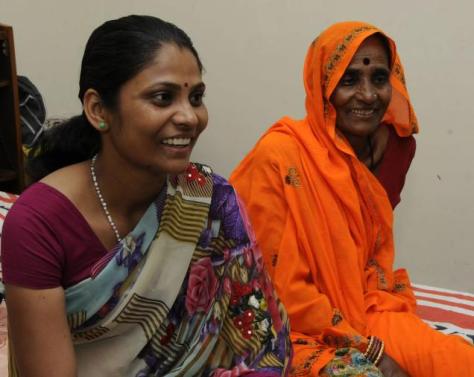
This is a guest post by LAXMI MURTHY: “Only justice can fill my belly, not awards,” says Bhanwari Devi in response to a question from the audience about whether or not she had been recognised by international awards. She was speaking at a meeting organised by the Alternative Law Forum, Bangalore. The previous day, along with other leaders, Bhanwari had roused a massive rally in Mangalore with her fiery calls for solidarity and action against violence against women. The Mangalore March 8th program itself was phenomenal, from all accounts The unprecedented coalition of women’s and progressive groups (almost a hundred groups) to raise a voice against the saffronization of Karnataka’s coastal belt and increasing attacks on women, has been the outcome of dedicated work by the Forum Against Atrocities on Women (the Mahila Dourjnya Virodi Vedike, Karnataka). With delicious irony, Bhanwari, Urmila Pawar and other invited activists were accommodated at “Morning Mist’, the homestay that was ransacked by right-wing goons who broke up a private celebration there last June. That none of the events, which saw the mobilization of more than 5000 women, made it to even the Bangalore editions of the dailies (can’t even dream of the national media bothering!) is a matter of dismay, but won’t go into that right now. Continue reading The Irony of Iconhood – The life and times of Bhanwari Devi: Laxmi Murthy

The Mind And Heart Of Lotika Sarkar, Legal Radical, Friend, Feminist: Usha Ramanathan

LOTIKA-SARKARUSHA RAMANATHAN via Women’s Feature Service: We have to marvel at how the world has changed since r*** was a four letter word, and young Lotika Sarkar (1923-2013), the first woman lecturer in the Faculty of Law, University of Delhi, shocked the department by teaching rape to her students.

This is what happens when you let women into hallowed institutions of learning:  They don’t understand that, even when they are allowed to be seen, they may not be heard about the obscene. This was our LS-given, early version of the Vagina Monologues, without the theatre. Shift to the present: I suspect some will tell us that the battle to take rape to the classroom is far from over; except, thanks to LS, it is prudery that is on the back foot now. Continue reading The Mind And Heart Of Lotika Sarkar, Legal Radical, Friend, Feminist: Usha Ramanathan

Campaign for Affordable Trastuzumab

KALYANI MENON-SEN (on behalf of the Campaign for Affordable Trastuzumab)
 
The Campaign for Affordable Trastuzumab has called on the Commerce Minister to mark International Women’s Day 2013 with an announcement of compulsory licensing for Trastuzumab, a life-saving drug for women with HER2+ breast cancer. Trastuzumab, the patent for which is held by Swiss pharma giant Roche, is currently priced at Rs.6-8 lakhs for a full course of 12 injections, and is out of reach for all but the most privileged. An estimated 25,000 new cases of HER2+ breast cancer are recorded in India every year, with younger women in the majority among patients.
Trastuzumab has been recommended for compulsory licensing by an Expert Committee set up by the Health Ministry. The recommendation is currently under the consideration of the Department of Industrial Policy and Promotion in the Ministry of Commerce. Continue reading Campaign for Affordable Trastuzumab

Gender Just, Gender Sensitive, NOT Gender Neutral Rape Laws

images

Statement by feminist and queer groups and individuals:

The report of the Parliamentary Standing Committee on the 2012 Criminal Law (Amendment) Bill as well as the 2013 Criminal Law (Amendment) Ordinance not only violates the letter and spirit of the Justice Verma Committee (JVC) recommendations but endangers and deepens women’s vulnerability in this country.

Representatives of women’s groups, democratic and human rights groups and activists are alarmed about major lacunae in current legislative protection to women, upheld by the Standing Committee report, and we insist on the following:

The Accused Must Be Male.

One pernicious provision of the Ordinance 2013, upheld by the Committee report, is blanket gender neutrality of the perpetrator of sexual harassment, assault and rape. Put simply: unlike in existing law where the accused is male, the Committee recommendations if enacted into a proposed new Bill, will make it possible for women to be charged with these offences. This is wholly unacceptable for the following reasons: Continue reading Gender Just, Gender Sensitive, NOT Gender Neutral Rape Laws

Indian Land Grab in Africa: Sputnik Kilambi

images

This is a guest post by SPUTNIK KILAMBIThe rise of China and India in Africa has important implications for the continent’s development. While the two Asian giants provide a much needed alternative to the old and until now sole paradigm of dependence on the West, both countries are accused of being part of the global land grabbing club. Many African governments are complicit in this whole sale plunder of their land, which the FAO has compared to the ‘wild west’.  India’s role in the land take-over underway in Africa raises serious questions about the direction of south-south relations.

Just before the 2010 World Cup of soccer in South Africa, the Indian food and beverages giant Parle Agro ran an ad campaign to promote its new lemon drink LMN. One spot showed a couple of Bushmen digging in the sand for water when their stick breaks. Suddenly, they see a tap and wrench it off.

Fortunately, the Advertising Standards Council of India forced the company to make changes because the spot was racist and made fun of water scarcity, an acute problem in Africa and India.

The Parle ad is an apt metaphor for growing fears in Africa about India’s seemingly insatiable demand for the continent’s land and water. Water scarcity at home and global fears of a looming water and food crisis are among the reasons India has joined the club of land predators.

India now ranks third in the amount of land grabbed from other countries. It is, says environmental journalist Darrel De Monte, “the irony of a former British colony turning into a neo-coloniser”.  Continue reading Indian Land Grab in Africa: Sputnik Kilambi

Aspirational India? Raj Nandy

Guest post by RAJ NANDY

0209-delhi-homeless-children_full_600

Image of homeless children from For Donald

Mainstream media recently carried stories about Prema Jayakumar, daughter of an auto-rickshaw driver who topped the Chartered Accountancy exam, and of several other young men and women who have made the journey from village to city, overcoming ‘poverty, social discrimination and even political strife to succeed in life‘ and are now set to step into elite professions.

The same story linked to above, suggested that Prema-type examples also show that “this tale of personal courage and excellence is embedded in the ethos of aspirational India” and that the “idea of aspiration has proved to be one of the most binding factors in the country”.

I disagree. To glorify and salute such examples of exceptional hard work and determination is, of course, apt and well deserved. However, to present a tiny fraction – say, a few hundreds or thousands as reflecting the temper or character of millions muddling through crippling poverty and malnutrition seems like mistaking the shadow for the substance. Continue reading Aspirational India? Raj Nandy

Justice for a rape survivor: Majlis Legal Centre

As we note the unprecedented, if not always productive, attention being drawn to widespread sexual violence in India, we need to remember that in the shadows of media attention, legal activists routinely wage long, arduous and painful struggles in courts. One such set of activists located at MAJLIS LEGAL CENTRE, Mumbai, recently secured the conviction in Sessions Court, of a 60 year old man for the sexual assault of a toddler. Here is the inspiring (and infuriating!) account of this battle in the words of Majlis. Some of us have been making an argument for CCTV’s in police stations, to monitor the behaviour of the police towards complainants, especially of sexual violence. This case only reinforces our belief that the surveillance by citizens, of the coercive apparatus of the state is imperative.

majlisIt’s been two long years of trials and tribulations as we journeyed a difficult path with a very young rape survivor.  In fact, this case started off the ‘Socio-Legal Support to Survivors of Sexual Assault’ Programme of Majlis.

The incident had taken place within the premises of Kalina Education Society in Kalina in February, 2011. When the mother noticed an injury on her child and rushed to the police station, the police, instead of registering a case, recording her complaint and sending the child for medical examination, preferred to call the school principal to the police station.  The Principal, in the presence of the lady Police Sub-Inspector, threatened the mother that if she filed a complaint, her child would be thrown out of the school. This led to valuable medical evidence being lost. The next day the mother was asked to bring to the child to school by the lady Sub-Inspector, for “investigations”.  While the mother was asked to wait outside  the school compound, the child was interrogated alone  by the principal and teachers in the presence of the police, and was threatened.   The case was recorded only when the mother, on the third day, at her own initiative, took the child to a private doctor, who after noticing the injury  referred the child to the Sion Hospital (which is a Government Hospital). Continue reading Justice for a rape survivor: Majlis Legal Centre

Ram Setu: The ecological argument against the Sethusamudram project

Science and discourses claiming the authority of Science routinely make their appearance in order to settle contentious issues in the domain of politics. The invocation of Science is meant to establish the truth of one position over another, even when, as often happens, conflicting views are expressed by different sets of experts all claiming the authority of Science. The Sethusamudram Ship Canal Project is a recent example.

1171876859_ram_bridge

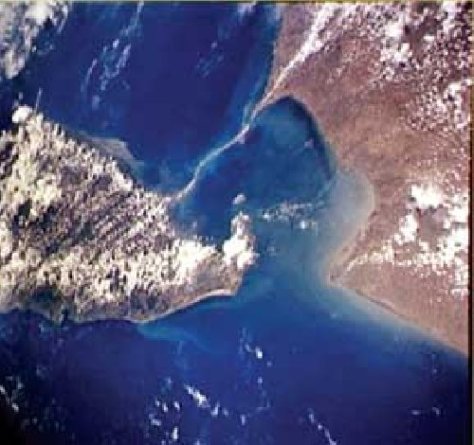
This project aims to reduce the shipping distance from the southern tip of the east coast of India to the northern parts of the coast, by constructing a route through the Gulf of Mannar to the Bay of Bengal. Ships will then be able to go northwards directly through the narrow Palk Strait between the east coast of India and the west coast of Sri Lanka, rather than swinging around Sri Lanka as at present. It is claimed that this project will save time and money for shipping companies, and is expected to radically increase the volume of traffic in that region.

In order to build the canal, an underwater bridge connecting India and Sri Lanka along the Palk Strait would have to be destroyed. Depending on your point of view this bridge is either a natural formation of limestone shoals (Adam’s Bridge), which linked Sri Lanka to the Asian continent in the last Ice Age, or it was built by Hanuman’s army to cross over to Sri Lanka to rescue Sita (Ram Setu as it tends to be referred to in English and North Indian media, but known locally as Ramar Sethu, in Tamil). Continue reading Ram Setu: The ecological argument against the Sethusamudram project

Even you are very beautiful: Nikitha Suryadevara

Guest post by NIKITHA SURYADEVARA

Bhopal: Janata Dal (United) President Sharad Yadav today stunned many at a press conference in Bhopal when he called a woman reporter “beautiful.”

The journalist asked him whether he prefers Madhya Pradesh or Bihar – he has represented both in Parliament.

The chief of the Janata Dal (United) dodged a bullet by saying, “The whole country is beautiful.”

Then came the unexpected remark – “Even you are very beautiful,” he said.

Read the complete article here at NDTV


So I figuratively raised an eyebrow when I first read this (raising just one eyebrow is much harder than it looks, trust me I’ve tried). The reporter asked him a question designed to make the man fumble, but Mr Sharad Yadav is just too suave. When asked to pick between one of his two constituencies, he swiftly pointed to the reporters beauty instead. Well that seems like a logical conclusion. Continue reading Even you are very beautiful: Nikitha Suryadevara

Dalit and Adivasi Women Warriors Question Caste and Gender Oppression: Sujatha Surepally

Posted at Round Table India

SUJATA SUREPALLY shares her impressions from the first National Dalit and Adivasi Women’s Congress held on February 15-16, 2013, at Tata Institute of Social Sciences, Mumbai.

We live in nature! We die in Nature! It’s our life, if you occupy our land where should we go and how do we live? Whose land is this?

dayamani

The hall is echoing with the furious voice of Dayamani Barla, veteran Adivasi activist from Jharkhand. She is trying to unite people against mining in Jharkhand, around 108 mining companies are waiting to destroy Adivasi life in the name of mining, first they come for coal, next they say power houses, it continues, we are pushed out and out further. How do we live without our land? Spectacular speech for an hour, pin drop silence all around, everyone is identifying with her pain and agony. At the end of it, what is she is trying to convey?

Humko Jeene Do! Let us live our own life! If this is called development, we care a damn about it!  Blanket statement. [Continue reading]

Dear Sisters (and brothers?) at Harvard

Letter from  Indian feminists VRINDA GROVER, MARY E JOHN, KAVITA PANJABI, SHILPA PHADKE, SHWETA VACHANI, URVASHI BUTALIA and others, to their siblings at Harvard

We’re a group of Indian feminists and we are delighted to learn that the Harvard community – without doubt one of the most learned in the world – has seen fit to set up a Policy Task Force entitled ‘Beyond Gender Equality’ and that you are preparing to offer recommendations to India (and other South Asian countries) in the wake of the New Delhi gang rape and murder. Not since the days of Katherine Mayo have American women – and American feminists – felt such a concern for their less privileged Third World sisters. Mayo’s concern, at that time, was to ensure that the Indian State (then the colonial State) did not leave Indian women in the lurch, at the mercy of their men, and that it retained power and the rule of the just. Yours, we see, is to work towards ensuring that steps are put in place that can help the Indian State in its implementation of the recommendations of the Justice Verma Committee, a responsibility the Indian State must take up. This is clearly something that we, Indian feminists and activists who have been involved in the women’s movement here for several decades, are incapable of doing, and it was with a sense of overwhelming relief that we read of your intention to step into this breach. Continue reading Dear Sisters (and brothers?) at Harvard

What is wrong with this picture? Carole Vance

Guest post by CAROLE VANCE

Two faculty members at Harvard, associated with gender studies, convene a Policy Task Force, designed to “to offer recommendations to India and other South Asian countries in the wake of the New Delhi gang rape and murder” and in this semester “to produce a working paper that advises on the implementation of the recommendations from the Verma Committee”.   This is not a student initiative, though a meeting with students is scheduled to invite their input, along with that of the larger Harvard community. Continue reading What is wrong with this picture? Carole Vance

Unintended consequences of feminist action: Prabha Kotiswaran

Guest post by PRABHA KOTISWARAN

Taking off from the debate here on the Harvard Task Force, I’d like to flag some  disagreements among feminists on law reforms. There are many strains to this debate – I will only engage with a few.

No feminist, whether of Indian origin or not, whether primarily located in India or not, is insecure about feminists/lawyers around the world working on rape in India. Circuits of feminist scholarship and activism become so inter-disciplinary and transnational that maintaining and policing turf (if at all that were possible) is an utterly useless endeavour. Continue reading Unintended consequences of feminist action: Prabha Kotiswaran