All posts by Nivedita Menon

How not to read Rakesh Tikait: Nakul Singh Sawhney

This article by NAKUL SINGH SAWHNEY was first published in Raiot.in

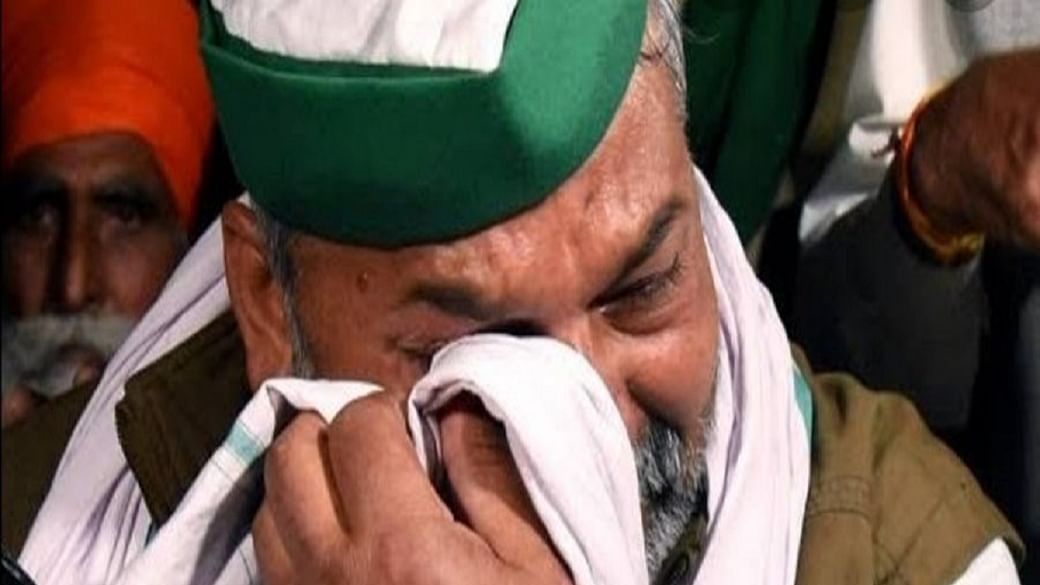
Rakesh Tikait (Image courtesy Twitter/ @iHShaheen at National Herald)

I have read several posts on social media the last few days where people are expressing apprehensions and even anger over all the excitement around Rakesh Tikait. Most of that anger stems from Bhartiya Kisan Union’s (BKU) irresponsible role in the 2013 sectarian violence in Muzaffarnagar and Shamli districts.

It’s been over seven and a half years since that madness engulfed West UP. We saw BKU split and many new factions emerged. The noticeable split was the breaking away of Gulam Mohammad Jaula, the biggest Muslim leader of BKU and often considered the late, Baba Tikait’s right hand man.

Interestingly, once Ajit Singh and Jayant Chaudhry lost their elections in 2014, many older Jats in the region were crestfallen. Many of them sobbed ‘Humne Chaudhry sahab ko kaise hara diya’. Many Jats (particularly of the older generation) were always upset with their younger generation for indulging in the violence of 2013. Secretly, between sobs they’d often say, ‘I hope it’s not too late before our youngsters realize where they’ve gone wrong’.

Continue reading How not to read Rakesh Tikait: Nakul Singh Sawhney

JNUTA REPORT ON THE UNIVERSITY 2016-2021 PART III – On Academic Programmes

This is the third part of a series of reports on Jawaharlal Nehru University (2016-2021) by the JNU Teachers’ Association.

Part I – Delhi High Court Orders .

Part II – Security on JNU Campus

On Academic Programmes

The directive issued by the Ministry of Education on the evening of 22 January announcing an extension for Prof. Jagadesh Kumar as Vice Chancellor till the time that the new incumbent is appointed, serves as yet another reminder of how consistently over the last five years, despite several representations backed by relevant Court Orders, the powers that be at the Centre have chosen to shut their eyes to the misdemeanours committed by the man heading JNU. The University Statutes and Act do not allow a second term for any Vice Chancellor and define the term of the Vice-Chancellor as five years only. The MHRD order does not award him a second term, and merely continues him in office until his successor is appointed. Yet, the Vice Chancellor on the 27th of January, called an emergency meeting of the Executive Council, at one hour’s notice and ‘reappointed’ all three Rectors, despite the fact that the tenure of the Rectors was not over. The JNUTA finds this disregard for the University Statutes shocking, as the VC cannot claim any knowledge that the new VC will not be appointed before the Rectors’ terms will be over. It strongly objects to the scant regard that the incumbent VC has for the Statutes of University he heads. Continue reading JNUTA REPORT ON THE UNIVERSITY 2016-2021 PART III – On Academic Programmes

JNUTA Report on the university 2016-2021 Part II – Security on JNU Campus

This is the second part of a series of reports on Jawaharlal Nehru University (2016-2021) by the JNU Teachers’ Association.

Part I – Delhi High Court Orders can be found here.

Growing Concerns over Security on JNU Campus

This statement, the second in the series brought out by JNUTA, focuses on the unprecedented deterioration of security issues on campus over the last five years. The word ‘unprecedented is consciously used because never have residents which includes faculty, students and non-teaching staff of the university felt so vulnerable and unsafe inside their 1000 acre campus. For a residential university like JNU, security on campus is a very important concern. However, as in other matters, in this area too, the responses of the university administration has been lax and has failed miserably in ensuring that residents feel secure and less vulnerable on campus.

Enumerated below are some of the serious events that have taken place on campus over the last five years, that have put a big question mark on the Vice Chancellor’s capabilities to effectively manage and deliver on this issue. Continue reading JNUTA Report on the university 2016-2021 Part II – Security on JNU Campus

Reclaiming the Republic – January 26, 2021

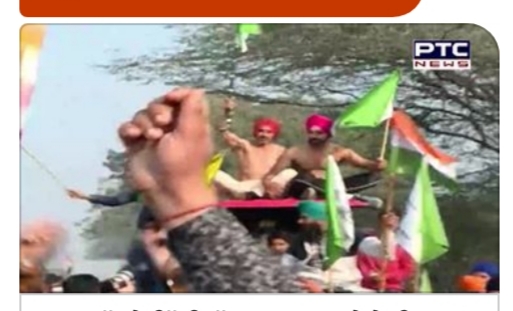
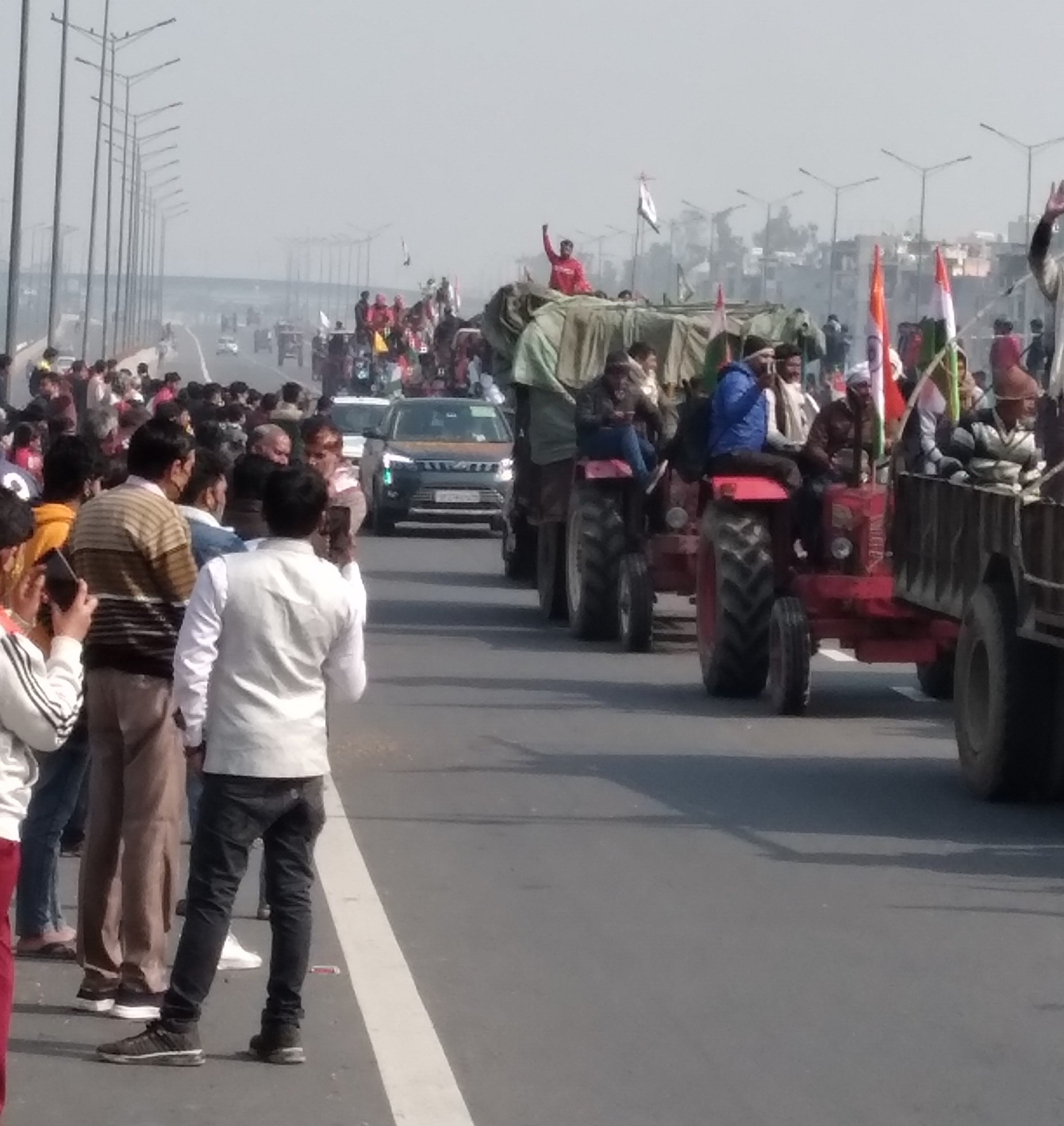
Farmers break barricades to enter Delhi, peacefully, disciplined.  Police have blocked off roads, but people gather along the roads, on rooftops, to greet our heroes.


At NH 24, Patparganj around 12.30 pm

For live, and unbiased coverage, stay tuned to this link.

Kisan Ekta Morcha

And a short video here

Bharti Kisan Union Ekta Ugrahan

By “unbiased” I mean coverage that does not allege chaos, Pakistani tweets, a few tukdas misleading innocent farmers, “Khalistani” infiltration etc.

These are farmers, they are here in their thousands, they know exactly what they are doing, and they may be our last line of defence against the devastation being wreaked by Hindutva politics and  corporate capitalism on an India that we stood by and were also deeply critical of, too.

If we want to continue being critical, it’s the farmers who will ensure us our freedom  to do so.

JNUTA Report on the university 2016-2021 Part I – Delhi High Court orders

This is the first part of a series of reports on Jawaharlal Nehru University (2016-2021) by the JNU Teachers’ Association.

On 26th January 2021, the five-year tenure of Prof. Mamidala Jagadesh Kumar as Vice Chancellor of JNU will formally come to an end. While there are press reports that confirm that the Search Committee constituted for identifying a replacement has yet to begin its work, which indicates the probability of Prof. Jagadesh Kumar getting an extension till the new incumbent finally takes over; his inevitable departure from JNU is significant.

Over the next few days, JNUTA would like to share with you relevant documentation that shows as to how a public university of the stature of JNU was single handedly destroyed over the last five years by none other than the Vice Chancellor who administered JNU as if it was his personal fiefdom, showing scant regard for the Statutes and Ordinances that had governed  University practices in the past.

In the first part of this series, starting today we would like to reproduce important observations made by the Honourable Delhi High Court on various cases concerning matters of the university. Over the five-year period 2016-21, there have been nearly over 150 cases that have been filed by the JNU community against the current Vice Chancellor and his administration. This high increase in legal cases, represents the tip of the iceberg. Deep within lies the rot which stems from the inability of the Vice Chancellor to engage in dialogue and resolve matters through correct interpretation of UGC guidelines as well as statutes and ordinances of the university, a lacuna in his personality that stems from inordinate conceit in his own abilities or some other ulterior motives. Continue reading JNUTA Report on the university 2016-2021 Part I – Delhi High Court orders

Malathi de Alwis 1963- 2021 – beloved friend, feminist comrade

Malathi de Alwis in Delhi, May 2014.

This is my Mala.

Every person touched by her friendship felt this sense of unique connection to Mala. To receive the gift of her attention was to forever feel the tug of a thread that attached you to a part of her heart. She would remember you at some point or the other even if you were not constantly in touch, with that fine-tuned sensitivity that brought to you the exact poem or thought or photograph or  experience that linked the two of you.

It was nothing short of magical, her capacity to make very single person in her widespread community of friends across the globe, feel special to her, linked to her through one or the other of her passionate interests. A feminist activist and scholar committed to understanding and countering ethno-nationalism in Sri Lanka, she was part of the wider community of South Asian feminists who constantly struggle to transcend the barbed wire borders of our nation-states in solidarity and hope. Her friends and colleagues in Sri Lanka can speak more about her activism, but one of the feminist enterprises with which she was involved was the collective, anonymous column called Cat’s Eye, which began in the Lanka Guardian in the late 1970s, and through several incarnations, is now a blog. Continue reading Malathi de Alwis 1963- 2021 – beloved friend, feminist comrade

Condemn the arrest warrant against Paranjoy Guha Thakurta: Media Foundation

Statement by MEDIA FOUNDATION

The Media Foundation notes with deep dismay that a lower court in Gujarat’s Kutch region has issued an arrest warrant against senior journalist Mr Paranjoy Guha Thakurta in a defamation case filed by the Adani group.

In June 2017, Mr Thakurta co-authored an expose in the Economic & Political Weekly outlining how the Adani group was able to evade paying the required amount of duty for an export venture with some help from the government. This series of articles was later reproduced in a news website, The Wire. Subsequently, the Adani group dropped the defamation charges against the publishers, the website and the co-authors of the investigation, barring Mr Thakurta.

While we hope that the higher judicial forums will provide immediate relief to Mr Thakurta, it does need to be emphasized that this defamation case is a vindictive act and intended to intimidate journalists and discourage professional journalism. This is part of a larger emerging trend of powerful vested interests misusing the processes of law to harass and hound independent and intrepid reporters and commentators.

The Media Foundation expresses its solidarity with Mr Thakurta and stands by him.

Harish Khare, President

Mannika Chopra, Honorary Secretary

A lesson in political theory from farmers’ unions

A little bemused, I heard a writer addressing the farmers’ protests recently say in all solidarity and sincerity – “What we have been writing about for long, you have demonstrated at ground level.”

On the contrary, I believe that this massive and electrifying protest against the farm laws is at the cutting edge of political theory and political practice, from which writers and academics must listen and learn.

Please listen to the statement by Kanwaljeet Singh on the Supreme Court judgement staying the farm laws, and setting up an “expert” committee to “negotiate” between the farmers and the government.

Speaking on behalf of the joint forum of farmers’ unions, Kisan Ekta Morcha, Kanwaljeet (of Punjab Kisan Union) makes what I think are two critical points regarding the law and how movements can relate to it. These thought provoking points have larger resonance and require wide ranging debate and consideration. Continue reading A lesson in political theory from farmers’ unions

Farmers’ discontent – a report from Karnataka: Ganesh Devy

Guest post by GANESH DEVY

9 January 2021

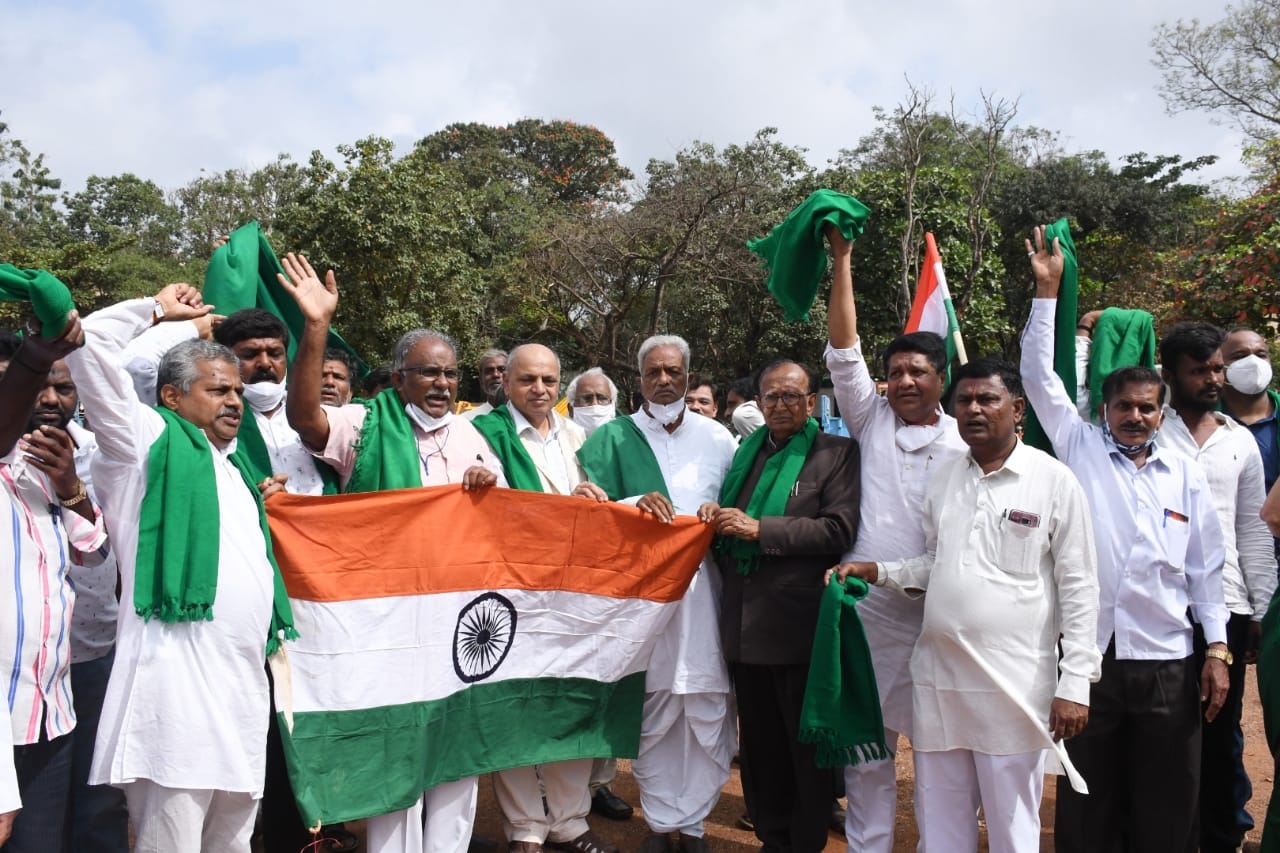
 As a spontaneous reaction to the failure of the government to bring the discussions with the farmers to a conclusion even after eight rounds of discussion, many farmer-organizations in North Karnataka took out a tractors protest rally today. A broad-spectrum of farmer organizations, civil society organizations and members of political parties participated in it.

One saw active presence of the former BJP Union Minister in Atal Bhari Government  Baba Gowda Patil, now in JDS , Gururaj Hansimarad, JDS, farmer activist Gangadhar Patil-Kulkarni, CPM-Union activist Abdul Khan, Gandhian social worker Adv. Nerlikar, Congress member Basavaraja Malkari, Secular Unity activist Ashraf Ali and many other prominent figures form North Karnataka standing on tractors and shouting slogans.

Continue reading Farmers’ discontent – a report from Karnataka: Ganesh Devy

A confession of its own loss of legitimacy – the Modi government must resign

Farmers across the country have geared up to escalate their protests against the farm laws, as the government remains adamant in its commitment to its crony capitalists. The talks yesterday failed as three Union ministers part of the negotiations said it was not possible to commit to a rollback of the legislation without “consultations with higher authorities”.  

Who are these mysterious higher authorities whom they dare not name? Do they mean the Pradhan Sevak Himself, who is after all, within tweeting distance at all times, and could have deigned to talk to the farmers’ representatives; or do they mean his paymasters? 

Meanwhile 60 farmers have died at the Singhu Border protest site alone, according to doctors, to deafening silence from this utterly shameless government, that has tear-gassed and lathi charged its people, and forced them to brave the bitter cold and torrential rain in protest at these laws, which will wreak devastation on agriculture and on food security for all.

But the most revealing statement of all comes from the Union Agriculture Minister Narendra Singh Tomar, an explicit admission of the total loss of legitimacy of his government. Continue reading A confession of its own loss of legitimacy – the Modi government must resign

Stand by farmers – boycott Adani and Reliance

The farmers unions have called for a boycott of all products of Adani and Reliance, the two corporates closest to the Modi-Shah regime and which stand to benefit the most from the opening up of the farm sector to agribusiness, which will not only destroy farmers’ livelihoods but affect food security for everyone.  The new laws have been drafted to facilitate ease of doing business for these corporations, eliminating safeguards for both farmers and consumers.

This post is simply a quick, not comprehensive, list of products we could all boycott (compiled with help from Anindita Bose and Rohit).

And just a reminder – the rapacious Adani corporation is wreaking havoc on Australia’s ecology too, and there is a huge people’s campaign there against Adani – #StopAdani . Continue reading Stand by farmers – boycott Adani and Reliance

Mera Gaon, Mera Desh: Kabir Kidwai

A short film on the handloom weavers of Barabanki, UP, by KABIR KIDWAI

http://https://www.youtube.com/watch?app=desktop&feature=share&v=ZB9NItEmZHI&fbclid=IwAR3JwKN-8zYXg-EZdrkRjgcJozsH5O4A9kQRmdEi5tkde_NHa8Wm_lbtW0g

Kabir Kidwai is a student and independent film-maker.  You can see his other work on his YouTube channel.

Statement condemning the murder of Gulnaz Khatun

Statement Condemning the murder of Gulnaz Khatun and demanding a speedy investigation

We the undersigned feminist groups, activists and individuals are deeply anguished at the killing of a 20-year-old poor Muslim girl, Gulnaz in a village in Bihar‘s Vaishali district. The young girl, an economic support to the family and about to be married was killed after her stalkers poured kerosene oil on her and burnt her alive on 30 October 2020. The girl was admitted in a nearby hospital with 75 percent burns and later moved to Patna Medical College. In her video statement when she was in excruciating pain, she clearly identified the three attackers. She succumbed to her injuries on 15th November 2020. The case has made hardly any progress. There is very limited coverage about the case in electronic Media and print media. According to the reports one accused has been arrested and police is still looking for the other two.. There are also reports that the family of victim is being harassed by the accused. Continue reading Statement condemning the murder of Gulnaz Khatun

CAA and dissent – the mere passing of a law does not imply democratic consensus: Abhik chimni

Guest post by ABHIK CHIMNI

The Citizenship Amendment Act, 2019 (CAA) is a legislation which along with the National Register of Citizens (NRC)  gives rise to a legal regime which is not consistent with the tenets of the Indian Constitution.

The CCA/NRC violates the basic structure of the Indian Constitution, primarily the equality clause and the principle of secularism embedded within the constitutional framework.

I further argue that Fundamental Rights are in fact dissenting rights.

The Indian Constitution – A story in three parts

The Constitution can be broadly divided into three parts.

The first accounts for protection of individual liberty through the fundamental rights chapter stipulated in Part III of the Constitution.

The second seeks to create independent institutions such as the constitutional courts, the Election Commission, the Comptroller Auditor General and the Governor’s office etc.

Continue reading CAA and dissent – the mere passing of a law does not imply democratic consensus: Abhik chimni

Post Covid world and Bahujan: Pramod Ranjan

Guest Post by PRAMOD RANJAN

Translated from the original Hindi by Ekta News and Features

It is said that had the spread of the Novel Coronavirus not been contained by imposing lockdowns, by now, it would have consumed a substantial chunk of the human residents of the earth. But this claim requires closer examination.

Lockdown killed lakhs of persons the world over and its after-effects have ruined the economies of scores of low- and middle-income countries like India. Crores of persons have been condemned to a life of poverty and misery.

What is going to change
Offices and educational institutions were a gift of modern age. By bringing human minds together, the places of work and the centres of education not only scripted a new chapter in the development of the human race but also brought diverse communities on common platforms. It is almost certain that in the post-Covid world, schools and offices would not exist as we know them today.[1] A new law for bringing about changes in educational institutions has come into force in India.[2] Labour laws have been almost abolished and companies have been given the licence to exploit the workers.[3] Not only manual labourers but white-collar workers, too, would be caught in this web of exploitation and mental turmoil[4]. The rights of journalists and media employees, related to their service conditions and salary and allowances, have been withdrawn through changes in the law.[5]

There is also a real danger that globalization (the spurt in commercial and business activities at the global level around the 1990s) would be reversed. This will spell disaster for the economies of the developing countries. In India and many other countries, the poor could join the middle-income group only due to globalization[6]Continue reading Post Covid world and Bahujan: Pramod Ranjan

Sifting Evidence – A review of “Delhi Riots 2020: The Untold Story”: Karwan-e-Mohabbat, Anhad and Muslim Women’s Forum

This review has been prepared by a  voluntary  citizens’  collective of academics and activists, anchored by Karwan-e-Mohabbat, Anhad and Muslim Women’s Forum.

The review is based on a PDF of the  ‘book’,  Delhi Riots 2020: The Untold Story by Monika Arora, Sonali Chitalkar and Prerna Malhotra, which went viral after the original publishers (Bloomsbury India) withdrew.  The PDF was widely circulated on social media by the book’s supporters, who believed its message must be spread far and wide. At the virtual book launch, BJP leader and Chief Guest, Kapil Mishra, tweeted “The book is public now”.

The review, titled Sifting Evidence, given below, is largely in tabular form, which makes for a quick read.

The book Delhi Riots 2020 was originally a fact-finding report by a group called GIA (Group of Intellectuals and Academicians), which was submitted to the Home Ministry on March 11th, 2020.  A version of it was accepted for publication by Bloomsbury India.  BJP leader Kapil Mishra, whose hate speeches allegedly triggered the riots in February 2020, was a guest of honour at the book launch event held on August 22, 2020. On the day of the launch, Bloomsbury India decided to withdraw publication.

The authors claimed their freedom of expression was violated. But the facts are clear – there was no call to ban the Delhi Riots 2020 book. Established and reputable publishers get their reputation because they fact-check, and stay away from publishing material that may amount to libel. Other publishers may not care, and therefore do not achieve that reputation. Continue reading Sifting Evidence – A review of “Delhi Riots 2020: The Untold Story”: Karwan-e-Mohabbat, Anhad and Muslim Women’s Forum

Jadavpur alumni in solidarity with Dr. Maroona Murmu in face of casteist/racist violence in Indian academia

Statement of solidarity from JU alumni

As alumni of Jadavpur University (JU), we condemn the casteist abuses hurled against a renowned professor of History at Jadavpur University, Dr. Maroona Murmu, because of her identity as an Adivasi.

The remarks were made in response to Dr. Murmu’s comment that an academic year was not more important than a student’s life and that in-person examination during the ongoing deadly coronavirus pandemic was not a good idea. This was admittedly a reasonable stand in face of the government’s decision to hold exams during the Covid-19 outbreak. In response, she received casteist abuses from an undergraduate student who called her out on social media as a “worthless, undeserving idiot” (“jogyotaheen opodartho” in Bengali). It questioned both her scholarly credibility and her right to speak out on any aspect of academic life (the security and well-being of students during a contagious disease outbreak, for instance). The student then went on to “remind” Dr. Murmu of her identity as an Adivasi Santhal and her inferior position in the caste hierarchy that made her unworthy of any consideration. This was followed by over 1800 trolls and rebukes. It is continuing. Continue reading Jadavpur alumni in solidarity with Dr. Maroona Murmu in face of casteist/racist violence in Indian academia

JNU Teachers Association condemns the arrest of Umar Khalid

Statement issued by JNUTA, representing the voices of JNU faculty 

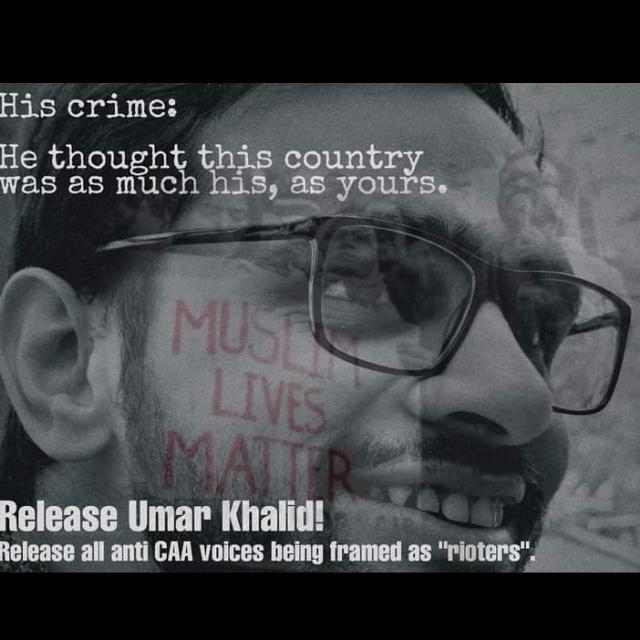
The JNUTA condemns the arrest by the Special Cell of the Delhi Police of former JNU student, Umar Khalid, under the draconian UAPA. This is yet another instance of the never ending witch hunt being conducted by the Delhi Police in the name of inquiring into the February 2020 riots in Delhi, an inquiry with which Umar Khalid had been voluntary cooperating. The JNUTA notes that Umar Khalid had also been one of those specially targeted during the vicious slander campaign unleashed against JNU in February 2016 and had then been charged with ‘sedition’. That smear campaign fuelled by sections of the media had put his life in danger and in 2018 he fortuitously survived a murderous attack against him. Since then he was supposed to be under the ‘protection’ of the Police and yet he is accused of having been part of a ‘conspiracy’ for instigating the violence in North-East Delhi. It is clear, therefore, that his safety is at risk even when he is in custody and not just because of the Covid-19 pandemic.

Continue reading JNU Teachers Association condemns the arrest of Umar Khalid

Delhi Police inquiry into Delhi violence 2020: Statement by Prof Apoorvanand

Delhi Police continues its motivated “enquiry” into the systematic and planned violence  in NE Delhi in February 2020, framing through fake “disclosure statements” and “confessions”, students, teachers, film makers, activists and other citizens who peacefully protested the unconstitutional CAA.

In this context, reports in the media yesterday stated that Delhi Police have filed a supplementary chargesheet naming, among others, Apoorvanand, Professor of Hindi at Delhi University, well known academic, fellow Kafila collective member and a relentless defender of democracy, which is under severe threat from this regime. 

The following statement has been issued by him in response.

Statement by Prof Apoorvanand

It has been brought to my notice that a supplementary Chargesheet filed in connection with FIR 50/2020 has certain disclosure statements by accused in custody, that mention my name, together with that of Rahul Roy, Umar Khalid, Jayati Ghosh , Sita Ram Yechuri and Yogendra Yadav. These names are mentioned in uncorroborated statements attributed to accused who are in custody, where it is claimed that they provided support in organising the anti- CAA protests. Continue reading Delhi Police inquiry into Delhi violence 2020: Statement by Prof Apoorvanand

Sursamalaya’s Documentary Series “Folk Stories” – Assam Beyond Bihu, Borgeet and Sattriya: Dipanjali Deka

Guest post by DIPANJALI DEKA

I recently finished watching Sursamalaya’s “Folk Stories” on Youtube, a documentary series made during the lockdown.

 “Folk Stories” depicts the art and life of folk artists from many lesser known genres of Assam. It has released one season as of now and is amply promising, for many reasons. One of them is the accessibility offered, in short crisp episodes, to the social and cultural landscape of Assam beyond the genres of Bihu, Borgeet and Sattriya popularly known to the mainstream.

In the first episode, we meet Mehu Bora from Golaghat who builds traditional instruments like tokari (stringed instrument), dotara (stringed instrument), bahi (flute), pepa (hornpipe) etc.

Sur Samalaya Resource Centre for Arts was established in 1990 by renowned folk artist Dijen Gogoi. What began with a small workshop on instrument-making, later took off to train many local youth in producing almost 100 indigenous musical instruments belonging to various communities of North East India. The Research and Documentation cell of Sursamalaya looks into research, publication and documentation on indigenous cultures, under the ambit of which the series “Folk Stories” has come into fruition. Continue reading Sursamalaya’s Documentary Series “Folk Stories” – Assam Beyond Bihu, Borgeet and Sattriya: Dipanjali Deka

सब चंगा सी: मुरीद बरघूती/अनुवाद: आयेशा किदवई

You can see the English translation by Radwa Ashour of the original poem in Arabic by the Palestinian poet Mourid Barghouti , after this translation into Hindustani by AYESHA KIDWAI

The Roadmap Creeps in the Page of My Notebook by Arpita Singh

सब चंगा सी

मैं अपने आप को देखता हूँ:

सब चंगा सी.

अच्छा ही तो दिखता हूँ,

और कुछ लड़कियों को तो,

मेरे पक्के बाल भी भा जाएं;

मेरा चश्मा सुड़ौल है,

शरीर का तापमान ठीक ३७ डिग्री.

इस्त्री-की हुई कमीज़ है मेरी, और मेरे जुते काटते नहीं.

सब चंगा सी. Continue reading सब चंगा सी: मुरीद बरघूती/अनुवाद: आयेशा किदवई